

Maximizing the Grating Precision in Complex Optical Systems
APR 29, 20269 MIN READ
Generate Your Research Report Instantly with AI Agent
PatSnap Eureka helps you evaluate technical feasibility & market potential.
Optical Grating Precision Background and Objectives
Optical gratings have emerged as fundamental components in modern optical systems, serving as critical elements for wavelength dispersion, beam steering, and spectral analysis applications. The evolution of grating technology spans over two centuries, beginning with Fraunhofer's early diffraction gratings in the 1820s and progressing through mechanical ruling techniques to contemporary holographic and electron-beam lithography methods. This technological progression has consistently pursued higher precision, improved efficiency, and enhanced spectral resolution capabilities.
The complexity of modern optical systems has intensified the demand for ultra-precise grating performance. Contemporary applications in telecommunications, spectroscopy, laser systems, and quantum optics require gratings that can maintain exceptional accuracy across multiple operational parameters simultaneously. These systems often integrate hundreds or thousands of optical components, where even minor grating imperfections can cascade into significant system-level performance degradation.
Current technological trends indicate a convergence toward nanometer-scale precision requirements, driven by emerging applications in quantum computing, advanced laser interferometry, and high-resolution spectroscopic analysis. The semiconductor industry's demand for extreme ultraviolet lithography has particularly accelerated the need for gratings with unprecedented precision levels, where surface roughness tolerances approach atomic scales.
The primary objective of maximizing grating precision in complex optical systems encompasses several critical performance metrics. Wavelength accuracy must achieve sub-picometer stability across operational temperature ranges, while maintaining consistent diffraction efficiency exceeding 95% for primary orders. Angular precision requirements demand arc-second level accuracy in beam steering applications, with long-term stability over thousands of operational hours.
Spectral resolution enhancement represents another fundamental objective, targeting resolving powers exceeding 10^6 for high-end spectroscopic applications. This requires minimizing phase errors, reducing stray light contributions, and optimizing groove profile consistency across the entire grating surface. Additionally, polarization-dependent losses must be minimized to ensure consistent performance regardless of input beam characteristics.
The integration challenge within complex optical systems necessitates gratings that maintain precision while accommodating mechanical stress, thermal cycling, and environmental variations. These objectives collectively define the technological frontier for next-generation grating development, establishing the foundation for advanced optical system capabilities.
The complexity of modern optical systems has intensified the demand for ultra-precise grating performance. Contemporary applications in telecommunications, spectroscopy, laser systems, and quantum optics require gratings that can maintain exceptional accuracy across multiple operational parameters simultaneously. These systems often integrate hundreds or thousands of optical components, where even minor grating imperfections can cascade into significant system-level performance degradation.
Current technological trends indicate a convergence toward nanometer-scale precision requirements, driven by emerging applications in quantum computing, advanced laser interferometry, and high-resolution spectroscopic analysis. The semiconductor industry's demand for extreme ultraviolet lithography has particularly accelerated the need for gratings with unprecedented precision levels, where surface roughness tolerances approach atomic scales.
The primary objective of maximizing grating precision in complex optical systems encompasses several critical performance metrics. Wavelength accuracy must achieve sub-picometer stability across operational temperature ranges, while maintaining consistent diffraction efficiency exceeding 95% for primary orders. Angular precision requirements demand arc-second level accuracy in beam steering applications, with long-term stability over thousands of operational hours.
Spectral resolution enhancement represents another fundamental objective, targeting resolving powers exceeding 10^6 for high-end spectroscopic applications. This requires minimizing phase errors, reducing stray light contributions, and optimizing groove profile consistency across the entire grating surface. Additionally, polarization-dependent losses must be minimized to ensure consistent performance regardless of input beam characteristics.
The integration challenge within complex optical systems necessitates gratings that maintain precision while accommodating mechanical stress, thermal cycling, and environmental variations. These objectives collectively define the technological frontier for next-generation grating development, establishing the foundation for advanced optical system capabilities.
Market Demand for High-Precision Optical Gratings
The global optical components market has experienced substantial growth driven by increasing demands across telecommunications, aerospace, defense, and scientific instrumentation sectors. High-precision optical gratings represent a critical segment within this ecosystem, serving as fundamental components in spectrometers, wavelength division multiplexing systems, and laser applications. The proliferation of fiber-optic communications infrastructure and the expansion of 5G networks have created unprecedented demand for precision optical components capable of managing complex wavelength requirements.
Telecommunications infrastructure represents the largest market segment for high-precision gratings, where dense wavelength division multiplexing systems require gratings with exceptional spectral resolution and thermal stability. The ongoing global fiber-to-the-home deployments and data center expansions continue to drive consistent demand growth. Additionally, the emergence of coherent optical communication systems has elevated requirements for grating precision, as these systems demand components capable of maintaining phase coherence across multiple wavelength channels.
Scientific and analytical instrumentation markets demonstrate robust growth patterns, particularly in spectroscopy applications for pharmaceutical, environmental monitoring, and materials analysis sectors. Advanced spectrometers used in drug discovery, food safety testing, and environmental compliance monitoring require gratings with superior resolution and low stray light characteristics. The increasing adoption of portable and field-deployable spectrometric devices has created new market opportunities for compact, high-performance grating solutions.
Aerospace and defense applications constitute a specialized but high-value market segment, where precision gratings enable advanced imaging systems, target identification, and atmospheric monitoring capabilities. Military and satellite-based optical systems require gratings that maintain performance under extreme environmental conditions while delivering exceptional precision for mission-critical applications.
The semiconductor manufacturing industry presents emerging opportunities as lithography systems advance toward smaller feature sizes. Extreme ultraviolet lithography and advanced metrology systems demand gratings with unprecedented precision and surface quality. This sector's growth trajectory aligns with continued semiconductor technology advancement and increasing chip complexity requirements.
Market dynamics indicate strong preference for customized grating solutions tailored to specific application requirements. End users increasingly seek suppliers capable of delivering application-optimized designs rather than standard catalog products, driving demand for advanced manufacturing capabilities and precision control technologies.
Telecommunications infrastructure represents the largest market segment for high-precision gratings, where dense wavelength division multiplexing systems require gratings with exceptional spectral resolution and thermal stability. The ongoing global fiber-to-the-home deployments and data center expansions continue to drive consistent demand growth. Additionally, the emergence of coherent optical communication systems has elevated requirements for grating precision, as these systems demand components capable of maintaining phase coherence across multiple wavelength channels.
Scientific and analytical instrumentation markets demonstrate robust growth patterns, particularly in spectroscopy applications for pharmaceutical, environmental monitoring, and materials analysis sectors. Advanced spectrometers used in drug discovery, food safety testing, and environmental compliance monitoring require gratings with superior resolution and low stray light characteristics. The increasing adoption of portable and field-deployable spectrometric devices has created new market opportunities for compact, high-performance grating solutions.
Aerospace and defense applications constitute a specialized but high-value market segment, where precision gratings enable advanced imaging systems, target identification, and atmospheric monitoring capabilities. Military and satellite-based optical systems require gratings that maintain performance under extreme environmental conditions while delivering exceptional precision for mission-critical applications.
The semiconductor manufacturing industry presents emerging opportunities as lithography systems advance toward smaller feature sizes. Extreme ultraviolet lithography and advanced metrology systems demand gratings with unprecedented precision and surface quality. This sector's growth trajectory aligns with continued semiconductor technology advancement and increasing chip complexity requirements.
Market dynamics indicate strong preference for customized grating solutions tailored to specific application requirements. End users increasingly seek suppliers capable of delivering application-optimized designs rather than standard catalog products, driving demand for advanced manufacturing capabilities and precision control technologies.
Current Grating Precision Limitations in Complex Systems
Complex optical systems face significant precision limitations that constrain their performance across various applications. The fundamental challenge lies in achieving nanometer-level accuracy while maintaining system stability under varying environmental conditions. Current grating-based systems typically exhibit precision limitations ranging from 10-50 nanometers in standard configurations, which proves insufficient for advanced semiconductor manufacturing, precision metrology, and high-resolution spectroscopy applications.
Thermal fluctuations represent one of the most critical limiting factors in grating precision. Temperature variations cause thermal expansion and contraction of optical components, leading to dimensional changes that directly impact grating pitch accuracy. Even minor temperature shifts of 0.1°C can introduce positioning errors exceeding several nanometers, significantly degrading overall system precision. This thermal sensitivity becomes particularly problematic in industrial environments where temperature control is challenging.
Mechanical vibrations and structural instabilities further compound precision limitations. External vibrations from building movement, air conditioning systems, and nearby machinery can introduce dynamic positioning errors that exceed static precision capabilities by orders of magnitude. The resonant frequencies of optical mounts and support structures often coincide with common environmental vibration sources, amplifying these effects and creating systematic measurement uncertainties.
Optical aberrations and wavefront distortions impose additional constraints on achievable precision. Imperfections in optical elements, including surface irregularities, material inhomogeneities, and alignment errors, contribute to systematic measurement errors. These aberrations become increasingly significant as system complexity increases, with multi-element optical trains accumulating errors that can substantially degrade final positioning accuracy.
Electronic noise and signal processing limitations create another category of precision constraints. Photodetector noise, amplifier drift, and analog-to-digital conversion errors introduce measurement uncertainties that directly impact grating precision. The signal-to-noise ratio becomes particularly critical when attempting to resolve fine grating features or when operating under low-light conditions.
Manufacturing tolerances of grating elements themselves establish fundamental precision boundaries. Current fabrication techniques, while highly advanced, still exhibit inherent limitations in achieving perfect periodicity and surface quality. Grating pitch variations, line edge roughness, and duty cycle inconsistencies contribute to systematic errors that propagate through the entire measurement chain, establishing practical limits on achievable precision in complex optical systems.
Thermal fluctuations represent one of the most critical limiting factors in grating precision. Temperature variations cause thermal expansion and contraction of optical components, leading to dimensional changes that directly impact grating pitch accuracy. Even minor temperature shifts of 0.1°C can introduce positioning errors exceeding several nanometers, significantly degrading overall system precision. This thermal sensitivity becomes particularly problematic in industrial environments where temperature control is challenging.
Mechanical vibrations and structural instabilities further compound precision limitations. External vibrations from building movement, air conditioning systems, and nearby machinery can introduce dynamic positioning errors that exceed static precision capabilities by orders of magnitude. The resonant frequencies of optical mounts and support structures often coincide with common environmental vibration sources, amplifying these effects and creating systematic measurement uncertainties.
Optical aberrations and wavefront distortions impose additional constraints on achievable precision. Imperfections in optical elements, including surface irregularities, material inhomogeneities, and alignment errors, contribute to systematic measurement errors. These aberrations become increasingly significant as system complexity increases, with multi-element optical trains accumulating errors that can substantially degrade final positioning accuracy.
Electronic noise and signal processing limitations create another category of precision constraints. Photodetector noise, amplifier drift, and analog-to-digital conversion errors introduce measurement uncertainties that directly impact grating precision. The signal-to-noise ratio becomes particularly critical when attempting to resolve fine grating features or when operating under low-light conditions.
Manufacturing tolerances of grating elements themselves establish fundamental precision boundaries. Current fabrication techniques, while highly advanced, still exhibit inherent limitations in achieving perfect periodicity and surface quality. Grating pitch variations, line edge roughness, and duty cycle inconsistencies contribute to systematic errors that propagate through the entire measurement chain, establishing practical limits on achievable precision in complex optical systems.
Existing High-Precision Grating Solutions
01 Grating manufacturing and fabrication methods
Various manufacturing techniques and fabrication methods are employed to create high-precision gratings. These methods focus on controlling the manufacturing process to achieve precise groove spacing, depth, and profile consistency. Advanced fabrication techniques include photolithography, electron beam lithography, and mechanical ruling processes that enable the production of gratings with nanometer-level accuracy.- Grating fabrication and manufacturing methods: Various manufacturing techniques and processes are employed to create high-precision gratings with improved accuracy and consistency. These methods focus on controlling the fabrication parameters, material selection, and processing conditions to achieve desired grating specifications. Advanced manufacturing approaches include precision machining, etching processes, and specialized coating techniques that enhance the overall quality and performance of the grating structures.
- Optical measurement and detection systems for grating precision: Sophisticated optical systems and measurement techniques are developed to evaluate and ensure grating precision. These systems utilize various detection methods, interferometry, and advanced sensing technologies to monitor grating performance and accuracy. The measurement approaches enable real-time assessment of grating characteristics and provide feedback for precision control and quality assurance.
- Grating structure design and optimization: The geometric design and structural optimization of gratings play crucial roles in achieving high precision performance. This involves careful consideration of grating parameters such as pitch, depth, profile shape, and dimensional tolerances. Advanced design methodologies incorporate computational modeling and simulation techniques to optimize grating structures for specific applications and performance requirements.
- Error correction and compensation techniques: Various error correction methods and compensation algorithms are implemented to improve grating precision and minimize measurement uncertainties. These techniques address systematic errors, environmental influences, and manufacturing imperfections that can affect grating performance. Compensation strategies include software-based corrections, calibration procedures, and adaptive control systems that enhance overall measurement accuracy.
- Environmental stability and precision control systems: Environmental factors and control systems significantly impact grating precision performance. These systems address temperature variations, vibrations, humidity, and other environmental conditions that can affect grating accuracy. Stabilization techniques include thermal compensation, vibration isolation, and environmental monitoring systems that maintain optimal operating conditions for high-precision grating applications.
02 Grating measurement and metrology systems
Precision measurement systems and metrology techniques are essential for evaluating grating performance and accuracy. These systems utilize optical interferometry, laser-based measurement methods, and advanced sensing technologies to characterize grating parameters such as pitch accuracy, groove profile, and surface quality. The measurement systems enable real-time monitoring and feedback control during grating production.Expand Specific Solutions03 Optical grating design and structure optimization
The design and structural optimization of optical gratings involves careful consideration of groove geometry, blazing angles, and substrate materials to achieve desired diffraction characteristics. Advanced design methodologies incorporate computational modeling and simulation to optimize grating performance for specific wavelength ranges and applications. Structural parameters are precisely controlled to minimize aberrations and maximize diffraction efficiency.Expand Specific Solutions04 Environmental compensation and stability control
Environmental factors such as temperature variations, humidity, and mechanical vibrations can significantly affect grating precision. Compensation techniques and stability control systems are implemented to maintain consistent performance under varying conditions. These include thermal compensation mechanisms, vibration isolation systems, and environmental monitoring with active feedback control to preserve measurement accuracy.Expand Specific Solutions05 Signal processing and error correction algorithms
Advanced signal processing techniques and error correction algorithms are employed to enhance grating-based measurement precision. These methods include digital filtering, phase correction algorithms, and statistical analysis techniques that reduce noise and systematic errors. Sophisticated data processing approaches enable sub-nanometer resolution and improved measurement repeatability in precision positioning and displacement measurement applications.Expand Specific Solutions
Key Players in Precision Optical Grating Industry
The grating precision optimization in complex optical systems represents a mature yet rapidly evolving market driven by semiconductor lithography, telecommunications, and emerging AR/VR applications. The industry exhibits a multi-tiered competitive landscape with established leaders like Carl Zeiss SMT and Tokyo Electron dominating high-end semiconductor applications, while companies such as II-VI Delaware and Finisar focus on telecommunications markets. Technology maturity varies significantly across segments - semiconductor lithography gratings from players like TRUMPF and Mitsubishi Electric have reached advanced stages, whereas AR diffraction gratings from companies like Greatar Tech remain in development phases. Research institutions including Tsinghua University and ITRI contribute fundamental innovations, while precision measurement specialists like Mitutoyo and Heidenhain provide critical metrology solutions. The market shows strong growth potential, particularly in emerging applications, with technology leaders like NVIDIA driving computational approaches to grating optimization.
Carl Zeiss SMT GmbH
Technical Solution: Carl Zeiss SMT develops advanced grating systems for extreme ultraviolet (EUV) lithography applications, utilizing sophisticated diffraction grating designs with nanometer-scale precision. Their technology incorporates adaptive optics correction systems and real-time wavefront sensing to maintain grating precision across complex optical paths. The company employs proprietary ion beam etching techniques and advanced metrology systems to achieve sub-nanometer surface roughness control, ensuring optimal diffraction efficiency and minimal stray light in high-numerical-aperture optical systems.
Strengths: Industry-leading precision manufacturing capabilities and extensive experience in high-end optical systems. Weaknesses: High cost and complex manufacturing processes limit accessibility for smaller applications.
Mitutoyo Corp.
Technical Solution: Mitutoyo develops precision optical gratings for coordinate measuring machines and optical measurement systems, focusing on linear and rotary encoder applications with high accuracy requirements. Their technology incorporates advanced photolithographic techniques combined with precision glass substrate processing to achieve grating periods with exceptional uniformity. The company utilizes proprietary error compensation algorithms and temperature-stable materials to maintain measurement accuracy across varying environmental conditions, while implementing advanced optical design principles to minimize Abbe errors and cosine errors in complex measurement geometries.
Strengths: Decades of experience in precision measurement and strong reputation for reliability and accuracy. Weaknesses: Limited focus on cutting-edge optical applications beyond traditional metrology systems.
Core Innovations in Grating Precision Enhancement
High Precision Code Plates and Geophones
PatentInactiveUS20080297807A1
Innovation
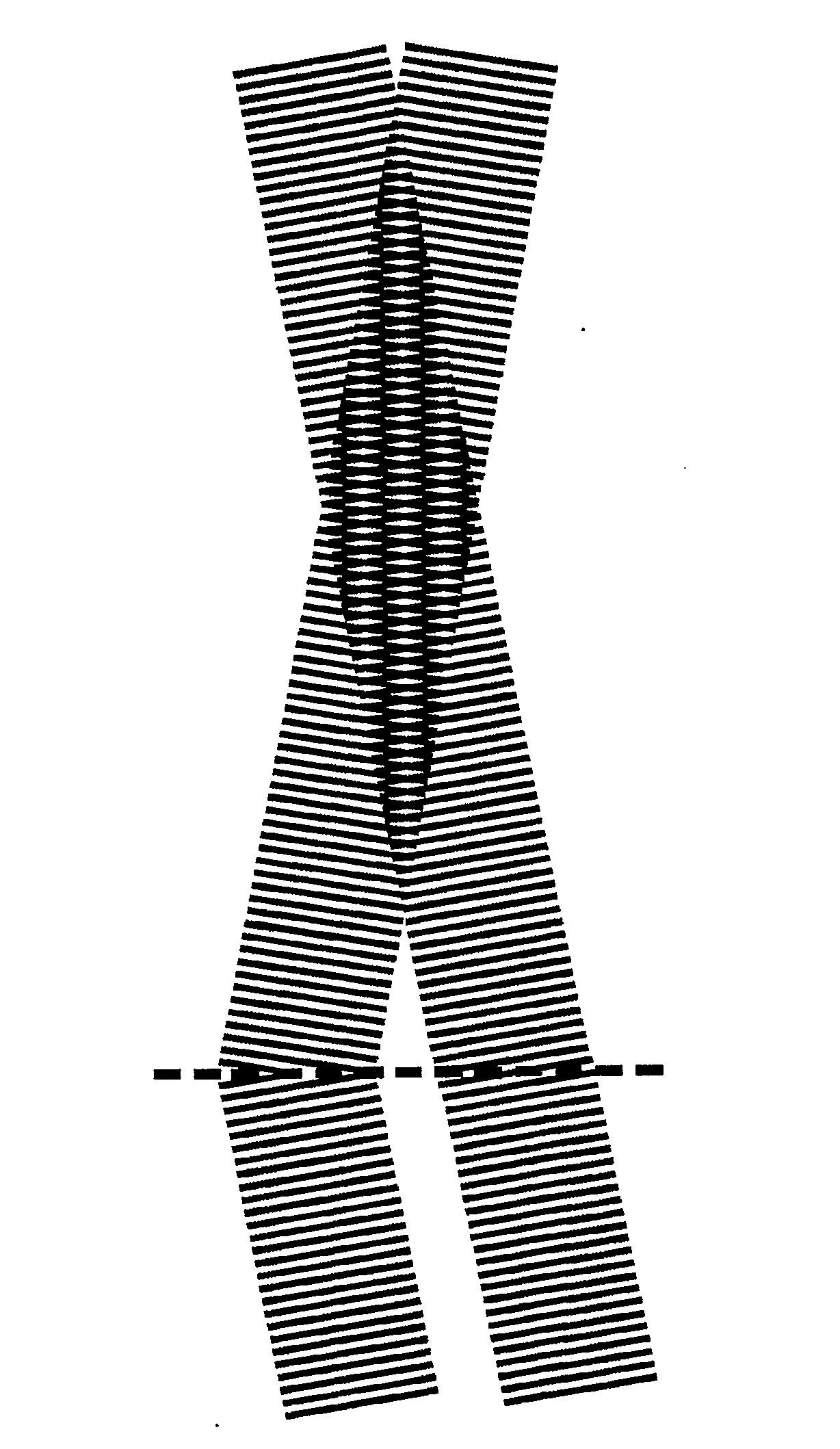
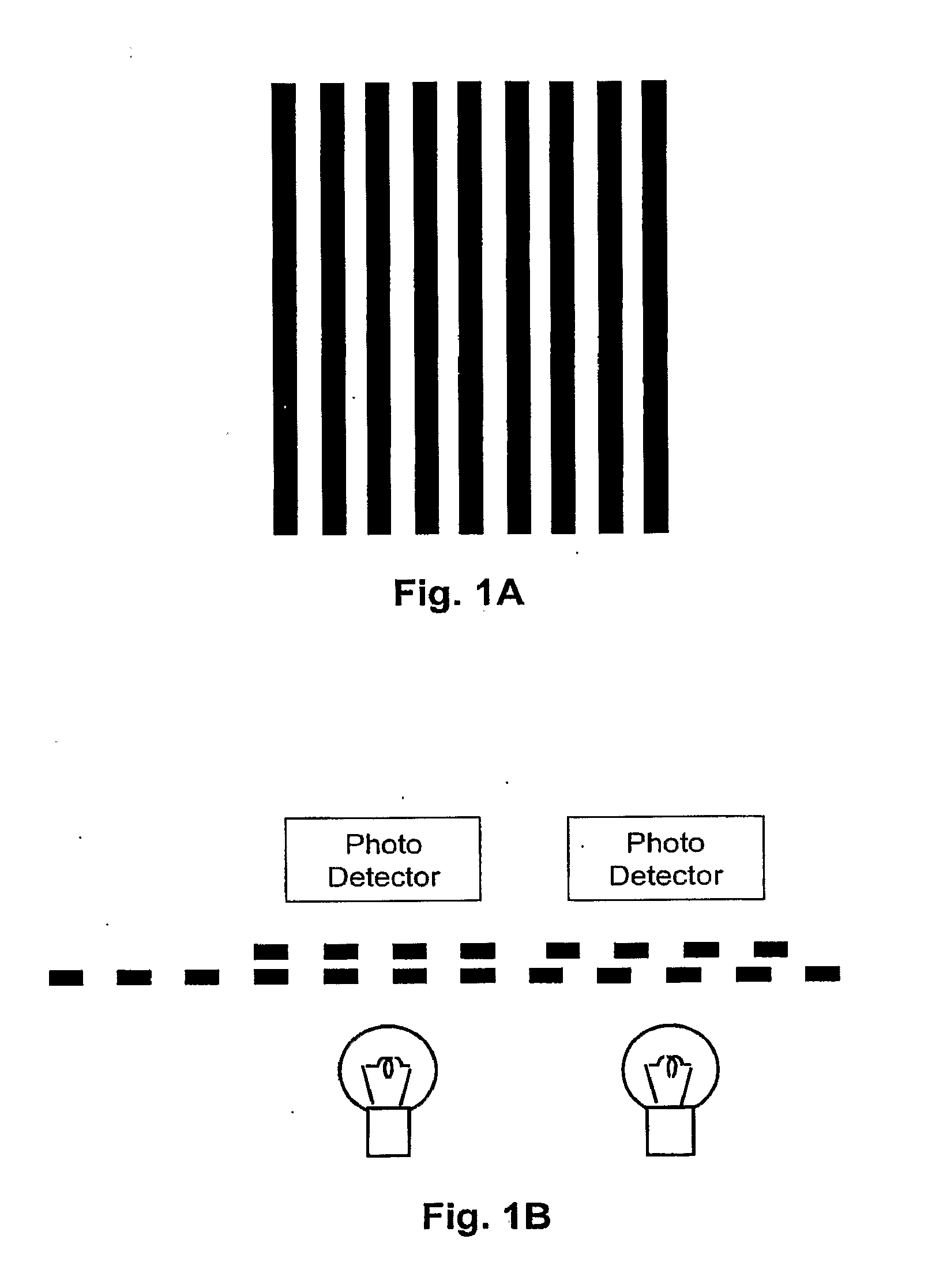
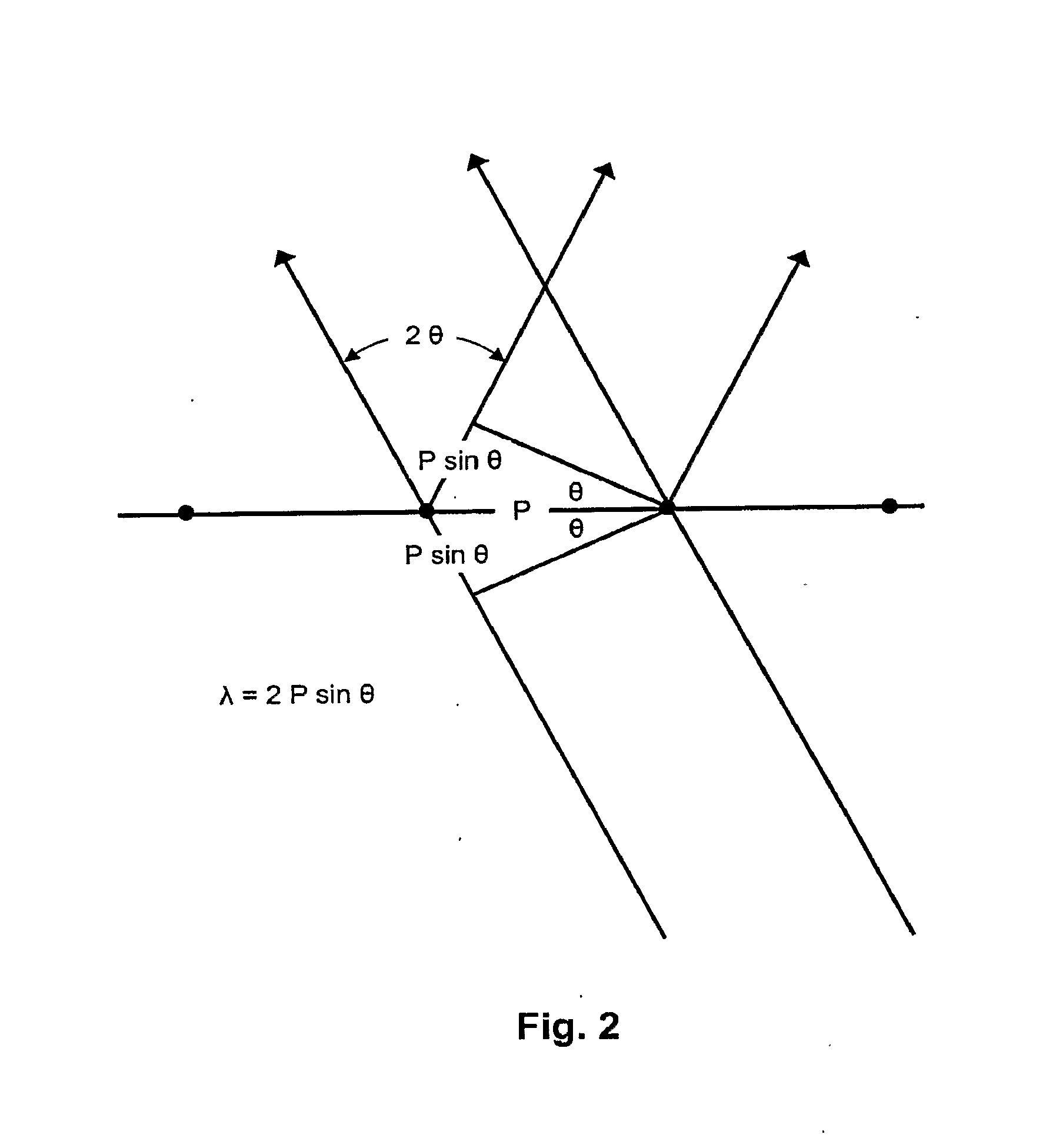
- The use of two-beam oblique illumination with mutually coherent laser beams forming interference fringes at a distance from the diffraction grating, which are then imaged onto a second grating for measurement, allowing for high contrast and large depth of focus, enabling precision measurements down to 1 nm or sub-nanometer levels.

Plane grating calibration system
PatentActiveUS11940349B2
Innovation
- A plane grating calibration system with a dual-frequency laser and individual vibration isolators for the optical subsystem and workpiece stage, using a shared light source and phase modulator to correct errors caused by vibration and air disturbances, and employing dual-frequency orthogonal polarizing laser light for precise calibration.


Manufacturing Standards for Precision Optical Components
Manufacturing standards for precision optical components in complex optical systems represent a critical foundation for achieving maximum grating precision. These standards encompass dimensional tolerances, surface quality specifications, and material purity requirements that directly impact optical performance. International standards such as ISO 10110 series provide comprehensive frameworks for specifying optical elements, while specialized standards like SEMI P37 address specific requirements for diffractive optical elements including gratings.
Surface roughness specifications constitute a fundamental aspect of manufacturing standards, with typical requirements ranging from 0.5 to 2 nanometers RMS for high-precision gratings. The manufacturing process must maintain groove depth variations within ±2% of the nominal value to ensure consistent diffraction efficiency across the grating surface. Angular accuracy of groove orientation typically requires tolerances of ±0.1 arcseconds for applications demanding maximum precision.
Material specifications define critical parameters including homogeneity, stress birefringence, and thermal stability. Substrate materials must exhibit refractive index variations below 2×10^-6 across the clear aperture, while maintaining thermal expansion coefficients matched to the optical system requirements. Coating specifications for reflective gratings demand adhesion strength exceeding 50 N/mm² and environmental durability under specified temperature and humidity cycles.
Metrology standards establish measurement protocols for verifying grating performance parameters. These include interferometric testing procedures for wavefront quality assessment, spectroscopic methods for efficiency verification, and coordinate measuring machine protocols for dimensional validation. Traceability to national measurement standards ensures consistency across manufacturing facilities and enables reliable performance prediction in complex optical systems.
Quality assurance frameworks integrate statistical process control methods with real-time monitoring systems. Manufacturing environments require Class 100 or better cleanroom conditions, with particulate contamination levels strictly controlled to prevent defect formation during fabrication processes. Temperature stability within ±0.1°C and vibration isolation below 1 μm displacement amplitude are essential for maintaining manufacturing precision throughout production cycles.
Surface roughness specifications constitute a fundamental aspect of manufacturing standards, with typical requirements ranging from 0.5 to 2 nanometers RMS for high-precision gratings. The manufacturing process must maintain groove depth variations within ±2% of the nominal value to ensure consistent diffraction efficiency across the grating surface. Angular accuracy of groove orientation typically requires tolerances of ±0.1 arcseconds for applications demanding maximum precision.
Material specifications define critical parameters including homogeneity, stress birefringence, and thermal stability. Substrate materials must exhibit refractive index variations below 2×10^-6 across the clear aperture, while maintaining thermal expansion coefficients matched to the optical system requirements. Coating specifications for reflective gratings demand adhesion strength exceeding 50 N/mm² and environmental durability under specified temperature and humidity cycles.
Metrology standards establish measurement protocols for verifying grating performance parameters. These include interferometric testing procedures for wavefront quality assessment, spectroscopic methods for efficiency verification, and coordinate measuring machine protocols for dimensional validation. Traceability to national measurement standards ensures consistency across manufacturing facilities and enables reliable performance prediction in complex optical systems.
Quality assurance frameworks integrate statistical process control methods with real-time monitoring systems. Manufacturing environments require Class 100 or better cleanroom conditions, with particulate contamination levels strictly controlled to prevent defect formation during fabrication processes. Temperature stability within ±0.1°C and vibration isolation below 1 μm displacement amplitude are essential for maintaining manufacturing precision throughout production cycles.
Environmental Factors Affecting Grating Performance
Environmental conditions play a critical role in determining the precision and stability of optical gratings within complex systems. Temperature fluctuations represent one of the most significant environmental challenges, as thermal expansion and contraction directly affect grating pitch accuracy. Even minor temperature variations of 1-2°C can introduce measurable changes in diffraction angles and spectral resolution. Advanced grating systems typically require temperature stabilization within ±0.1°C to maintain optimal performance specifications.
Humidity variations pose another substantial threat to grating precision, particularly for systems operating in non-sealed environments. Moisture absorption can cause dimensional changes in grating substrates, leading to pitch distortions and reduced diffraction efficiency. Hygroscopic materials used in grating construction are especially susceptible, with relative humidity changes of 10-15% potentially causing measurable performance degradation.
Mechanical vibrations from external sources significantly impact grating stability and measurement precision. Low-frequency vibrations below 100 Hz are particularly problematic as they can cause periodic displacement of grating elements, resulting in spectral line broadening and reduced resolution. High-precision applications often require active vibration isolation systems with sub-nanometer stability to maintain optimal grating performance.
Atmospheric pressure variations affect the refractive index of air surrounding the grating, influencing the effective optical path length and diffraction characteristics. Pressure changes of several millibars can introduce wavelength shifts that compromise precision measurements, particularly in high-resolution spectroscopic applications where sub-picometer accuracy is required.
Electromagnetic interference from nearby electronic equipment can induce unwanted signals in photodetectors and control systems associated with grating mechanisms. Radio frequency interference and magnetic field fluctuations may cause positioning errors in motorized grating systems, affecting wavelength accuracy and repeatability.
Contamination from airborne particles, chemical vapors, and organic compounds gradually degrades grating surface quality over time. Dust accumulation on grating grooves reduces diffraction efficiency and introduces scattering losses, while chemical contamination can cause permanent surface modifications that alter optical properties. Regular maintenance protocols and environmental enclosures are essential for preserving long-term grating precision in demanding applications.
Humidity variations pose another substantial threat to grating precision, particularly for systems operating in non-sealed environments. Moisture absorption can cause dimensional changes in grating substrates, leading to pitch distortions and reduced diffraction efficiency. Hygroscopic materials used in grating construction are especially susceptible, with relative humidity changes of 10-15% potentially causing measurable performance degradation.
Mechanical vibrations from external sources significantly impact grating stability and measurement precision. Low-frequency vibrations below 100 Hz are particularly problematic as they can cause periodic displacement of grating elements, resulting in spectral line broadening and reduced resolution. High-precision applications often require active vibration isolation systems with sub-nanometer stability to maintain optimal grating performance.
Atmospheric pressure variations affect the refractive index of air surrounding the grating, influencing the effective optical path length and diffraction characteristics. Pressure changes of several millibars can introduce wavelength shifts that compromise precision measurements, particularly in high-resolution spectroscopic applications where sub-picometer accuracy is required.
Electromagnetic interference from nearby electronic equipment can induce unwanted signals in photodetectors and control systems associated with grating mechanisms. Radio frequency interference and magnetic field fluctuations may cause positioning errors in motorized grating systems, affecting wavelength accuracy and repeatability.
Contamination from airborne particles, chemical vapors, and organic compounds gradually degrades grating surface quality over time. Dust accumulation on grating grooves reduces diffraction efficiency and introduces scattering losses, while chemical contamination can cause permanent surface modifications that alter optical properties. Regular maintenance protocols and environmental enclosures are essential for preserving long-term grating precision in demanding applications.
Unlock deeper insights with PatSnap Eureka Quick Research — get a full tech report to explore trends and direct your research. Try now!
Generate Your Research Report Instantly with AI Agent
Supercharge your innovation with PatSnap Eureka AI Agent Platform!