Mechanical Energy Simulations for Predictive Analyses
JAN 12, 20269 MIN READ
Generate Your Research Report Instantly with AI Agent
PatSnap Eureka helps you evaluate technical feasibility & market potential.
Mechanical Energy Simulation Background and Objectives
Mechanical energy simulations have emerged as a critical technological domain driven by the increasing complexity of engineering systems and the imperative for cost-effective design optimization. Historically, mechanical systems were evaluated through physical prototyping and empirical testing, processes that proved both time-consuming and resource-intensive. The advent of computational mechanics in the late twentieth century marked a paradigm shift, enabling engineers to model dynamic behaviors, stress distributions, and energy transformations within virtual environments before physical implementation.
The evolution of simulation technologies has been propelled by advances in computational power, numerical methods, and algorithmic sophistication. Early finite element analysis tools provided static assessments, while contemporary platforms integrate multi-physics capabilities, real-time data assimilation, and machine learning algorithms to enhance predictive accuracy. This progression reflects a broader industry transition toward digital twins and virtual commissioning, where simulations serve not merely as design validation tools but as integral components of operational decision-making frameworks.
The primary objective of mechanical energy simulations for predictive analyses is to forecast system performance under diverse operational scenarios with quantifiable confidence levels. This encompasses predicting failure modes, optimizing energy efficiency, and identifying performance degradation patterns before they manifest in physical assets. Such capabilities are particularly valuable in sectors where downtime carries substantial economic penalties, including aerospace, automotive manufacturing, renewable energy infrastructure, and industrial machinery.
Beyond performance prediction, these simulations aim to enable proactive maintenance strategies by correlating mechanical energy patterns with component health indicators. The integration of simulation outputs with sensor data streams facilitates anomaly detection and remaining useful life estimation, transforming maintenance paradigms from reactive to predictive and ultimately prescriptive approaches.
Furthermore, the technology seeks to accelerate innovation cycles by reducing dependency on physical testing iterations. By establishing validated virtual environments, organizations can explore design alternatives, assess trade-offs between competing performance metrics, and conduct sensitivity analyses that would be prohibitively expensive through experimental methods alone. This objective aligns with broader sustainability goals, as simulation-driven optimization contributes to material conservation and energy consumption reduction across product lifecycles.
The evolution of simulation technologies has been propelled by advances in computational power, numerical methods, and algorithmic sophistication. Early finite element analysis tools provided static assessments, while contemporary platforms integrate multi-physics capabilities, real-time data assimilation, and machine learning algorithms to enhance predictive accuracy. This progression reflects a broader industry transition toward digital twins and virtual commissioning, where simulations serve not merely as design validation tools but as integral components of operational decision-making frameworks.
The primary objective of mechanical energy simulations for predictive analyses is to forecast system performance under diverse operational scenarios with quantifiable confidence levels. This encompasses predicting failure modes, optimizing energy efficiency, and identifying performance degradation patterns before they manifest in physical assets. Such capabilities are particularly valuable in sectors where downtime carries substantial economic penalties, including aerospace, automotive manufacturing, renewable energy infrastructure, and industrial machinery.
Beyond performance prediction, these simulations aim to enable proactive maintenance strategies by correlating mechanical energy patterns with component health indicators. The integration of simulation outputs with sensor data streams facilitates anomaly detection and remaining useful life estimation, transforming maintenance paradigms from reactive to predictive and ultimately prescriptive approaches.
Furthermore, the technology seeks to accelerate innovation cycles by reducing dependency on physical testing iterations. By establishing validated virtual environments, organizations can explore design alternatives, assess trade-offs between competing performance metrics, and conduct sensitivity analyses that would be prohibitively expensive through experimental methods alone. This objective aligns with broader sustainability goals, as simulation-driven optimization contributes to material conservation and energy consumption reduction across product lifecycles.
Market Demand for Predictive Simulation Solutions
The global demand for predictive simulation solutions in mechanical energy systems has experienced substantial growth driven by the convergence of digital transformation initiatives and the imperative for operational efficiency across multiple industries. Manufacturing sectors, particularly automotive and aerospace, have emerged as primary adopters seeking to reduce physical prototyping costs and accelerate product development cycles. Energy generation facilities, including wind farms and hydroelectric plants, increasingly rely on predictive simulations to optimize equipment performance and prevent catastrophic failures through advanced condition monitoring.
Industrial equipment manufacturers face mounting pressure to deliver products with higher reliability and lower lifecycle costs, creating significant demand for simulation tools that can predict mechanical behavior under diverse operating conditions. The shift toward predictive maintenance strategies has fundamentally altered procurement priorities, with organizations prioritizing solutions that integrate seamlessly with existing IoT sensor networks and enterprise asset management systems. This integration capability has become a critical differentiator in vendor selection processes.
The renewable energy sector represents a rapidly expanding market segment where predictive mechanical simulations address unique challenges related to variable loading conditions and environmental stresses. Offshore wind turbine operators, for instance, require sophisticated modeling capabilities to anticipate structural fatigue and optimize maintenance scheduling in harsh marine environments. Similarly, the electric vehicle industry demands advanced simulation tools to predict battery thermal management system performance and mechanical stress on lightweight structural components.
Small and medium enterprises have begun entering the market as cloud-based simulation platforms reduce traditional barriers related to computational infrastructure and specialized expertise. This democratization trend has expanded the addressable market beyond large corporations to include regional manufacturers and engineering consultancies. However, adoption rates vary significantly across geographical regions, with developed markets showing higher penetration due to established digital infrastructure and greater awareness of simulation technology benefits.
Regulatory pressures related to safety standards and environmental compliance further amplify market demand, particularly in sectors such as nuclear energy and chemical processing where mechanical failure consequences carry severe implications. Organizations increasingly view predictive simulation capabilities not merely as competitive advantages but as essential components of risk management frameworks and regulatory compliance strategies.
Industrial equipment manufacturers face mounting pressure to deliver products with higher reliability and lower lifecycle costs, creating significant demand for simulation tools that can predict mechanical behavior under diverse operating conditions. The shift toward predictive maintenance strategies has fundamentally altered procurement priorities, with organizations prioritizing solutions that integrate seamlessly with existing IoT sensor networks and enterprise asset management systems. This integration capability has become a critical differentiator in vendor selection processes.
The renewable energy sector represents a rapidly expanding market segment where predictive mechanical simulations address unique challenges related to variable loading conditions and environmental stresses. Offshore wind turbine operators, for instance, require sophisticated modeling capabilities to anticipate structural fatigue and optimize maintenance scheduling in harsh marine environments. Similarly, the electric vehicle industry demands advanced simulation tools to predict battery thermal management system performance and mechanical stress on lightweight structural components.
Small and medium enterprises have begun entering the market as cloud-based simulation platforms reduce traditional barriers related to computational infrastructure and specialized expertise. This democratization trend has expanded the addressable market beyond large corporations to include regional manufacturers and engineering consultancies. However, adoption rates vary significantly across geographical regions, with developed markets showing higher penetration due to established digital infrastructure and greater awareness of simulation technology benefits.
Regulatory pressures related to safety standards and environmental compliance further amplify market demand, particularly in sectors such as nuclear energy and chemical processing where mechanical failure consequences carry severe implications. Organizations increasingly view predictive simulation capabilities not merely as competitive advantages but as essential components of risk management frameworks and regulatory compliance strategies.
Current State and Challenges in Mechanical Energy Modeling
Mechanical energy simulations have become indispensable tools for predictive analyses across industries ranging from aerospace to renewable energy systems. The current state of mechanical energy modeling demonstrates significant maturity in certain domains while revealing persistent challenges that constrain broader application and accuracy. Computational methods such as finite element analysis, multibody dynamics, and computational fluid dynamics have established themselves as standard approaches for simulating mechanical systems. These techniques enable engineers to predict energy transfer, conversion efficiency, and system behavior under various operating conditions without extensive physical prototyping.
Despite these advances, several fundamental challenges continue to impede progress in mechanical energy modeling. The primary technical obstacle remains the computational complexity associated with high-fidelity simulations. Accurate modeling of energy dissipation mechanisms, including friction, damping, and material hysteresis, requires extremely fine discretization and sophisticated constitutive models, resulting in prohibitive computational costs for large-scale systems. This limitation forces practitioners to compromise between model accuracy and computational feasibility, often leading to oversimplified representations that may not capture critical energy loss pathways.
Another significant challenge lies in the multiscale nature of mechanical energy phenomena. Energy conversion processes often involve interactions spanning multiple temporal and spatial scales, from molecular-level material deformation to system-level structural dynamics. Current modeling frameworks struggle to seamlessly integrate these disparate scales within unified simulation environments. The lack of robust multiscale coupling methodologies results in discontinuities at scale interfaces and potential loss of critical energy transfer information.
Model validation and uncertainty quantification present additional constraints. Mechanical energy systems exhibit complex nonlinear behaviors that are difficult to validate comprehensively through experimental means. Limited sensor capabilities, measurement uncertainties, and the impracticality of testing all operational scenarios create gaps between simulated predictions and real-world performance. Furthermore, parameter identification for energy dissipation models remains challenging, as many material and interface properties exhibit variability that is difficult to characterize precisely.
The integration of transient thermal effects with mechanical energy simulations represents another area requiring advancement. Energy dissipation inevitably generates heat, which alters material properties and system behavior, creating coupled thermomechanical phenomena that demand sophisticated modeling approaches. Current solutions often treat thermal and mechanical domains separately, limiting predictive accuracy for systems where thermal feedback significantly influences mechanical energy distribution.
Despite these advances, several fundamental challenges continue to impede progress in mechanical energy modeling. The primary technical obstacle remains the computational complexity associated with high-fidelity simulations. Accurate modeling of energy dissipation mechanisms, including friction, damping, and material hysteresis, requires extremely fine discretization and sophisticated constitutive models, resulting in prohibitive computational costs for large-scale systems. This limitation forces practitioners to compromise between model accuracy and computational feasibility, often leading to oversimplified representations that may not capture critical energy loss pathways.
Another significant challenge lies in the multiscale nature of mechanical energy phenomena. Energy conversion processes often involve interactions spanning multiple temporal and spatial scales, from molecular-level material deformation to system-level structural dynamics. Current modeling frameworks struggle to seamlessly integrate these disparate scales within unified simulation environments. The lack of robust multiscale coupling methodologies results in discontinuities at scale interfaces and potential loss of critical energy transfer information.
Model validation and uncertainty quantification present additional constraints. Mechanical energy systems exhibit complex nonlinear behaviors that are difficult to validate comprehensively through experimental means. Limited sensor capabilities, measurement uncertainties, and the impracticality of testing all operational scenarios create gaps between simulated predictions and real-world performance. Furthermore, parameter identification for energy dissipation models remains challenging, as many material and interface properties exhibit variability that is difficult to characterize precisely.
The integration of transient thermal effects with mechanical energy simulations represents another area requiring advancement. Energy dissipation inevitably generates heat, which alters material properties and system behavior, creating coupled thermomechanical phenomena that demand sophisticated modeling approaches. Current solutions often treat thermal and mechanical domains separately, limiting predictive accuracy for systems where thermal feedback significantly influences mechanical energy distribution.
Mainstream Predictive Analysis Solutions
01 Simulation methods for mechanical systems and structures
Various simulation techniques are employed to model and analyze mechanical systems and structural components. These methods enable the prediction of mechanical behavior, stress distribution, and deformation under different loading conditions. Advanced computational approaches allow for accurate representation of complex mechanical interactions and dynamic responses in virtual environments.- Simulation methods for mechanical systems and energy conversion: Various simulation techniques are employed to model mechanical systems and analyze energy conversion processes. These methods utilize computational algorithms to predict system behavior, optimize performance, and evaluate energy efficiency. The simulations can incorporate finite element analysis, dynamic modeling, and thermodynamic calculations to provide comprehensive insights into mechanical energy transformations and system dynamics.
- Virtual testing and validation of mechanical energy systems: Simulation platforms enable virtual testing and validation of mechanical energy systems before physical prototyping. These approaches allow engineers to evaluate different design configurations, identify potential issues, and optimize system parameters in a cost-effective manner. The virtual environment supports iterative design processes and reduces development time by providing accurate predictions of system performance under various operating conditions.
- Multi-physics simulation for coupled energy systems: Advanced simulation frameworks integrate multiple physical domains to analyze coupled mechanical and energy systems. These multi-physics approaches consider interactions between mechanical, thermal, electrical, and fluid dynamics phenomena. The integrated simulations provide holistic understanding of system behavior and enable optimization of complex energy conversion devices where multiple physical processes occur simultaneously.
- Real-time simulation and hardware-in-the-loop testing: Real-time simulation technologies enable dynamic testing of mechanical energy systems with actual hardware components. These methods combine computational models with physical devices to create hybrid testing environments. The approach facilitates validation of control strategies, assessment of system responses, and evaluation of energy management algorithms under realistic operating scenarios while maintaining flexibility for parameter adjustments.
- Optimization algorithms for mechanical energy efficiency: Computational optimization techniques are integrated into simulation frameworks to enhance mechanical energy efficiency. These algorithms systematically explore design spaces, identify optimal configurations, and minimize energy losses. The optimization processes can incorporate machine learning methods, genetic algorithms, and gradient-based approaches to achieve improved performance metrics while satisfying operational constraints and design requirements.
02 Energy conversion and harvesting simulation
Simulation technologies focus on modeling energy conversion processes and mechanical energy harvesting systems. These simulations evaluate the efficiency of converting mechanical motion into electrical energy or other forms of usable power. The techniques help optimize design parameters for energy harvesting devices and predict their performance under various operational conditions.Expand Specific Solutions03 Dynamic mechanical analysis and motion simulation
Advanced simulation tools are utilized to analyze dynamic mechanical behaviors and motion characteristics of systems. These simulations capture time-dependent responses, vibration patterns, and kinematic properties of mechanical assemblies. The methods enable engineers to predict performance metrics and identify potential issues before physical prototyping.Expand Specific Solutions04 Multiphysics and coupled field simulations
Integrated simulation approaches combine mechanical energy analysis with other physical phenomena such as thermal, electromagnetic, or fluid dynamics effects. These multiphysics simulations provide comprehensive understanding of complex interactions in mechanical systems. The coupled analysis enables more accurate predictions of real-world performance where multiple physical domains interact simultaneously.Expand Specific Solutions05 Virtual prototyping and optimization platforms
Comprehensive simulation platforms enable virtual prototyping and optimization of mechanical energy systems. These tools integrate various analysis capabilities to evaluate design alternatives and optimize performance parameters. The platforms facilitate iterative design processes and reduce development time by identifying optimal configurations through computational analysis rather than physical testing.Expand Specific Solutions
Key Players in Simulation Software Industry
The mechanical energy simulation field for predictive analyses is experiencing rapid maturation, driven by increasing demand for digital twin technologies and physics-based modeling across industrial sectors. The market demonstrates substantial growth potential, particularly in automotive, energy, and aerospace applications, with established technology giants like Microsoft Technology Licensing LLC, Google LLC, IBM, Siemens AG, and SAP SE leading digital simulation platforms. Energy sector players including ExxonMobil Upstream Research, Saudi Arabian Oil Co., Baker Hughes, and Électricité de France SA are advancing domain-specific predictive capabilities. Automotive innovators GM Global Technology Operations and General Motors LLC are pioneering vehicle performance simulations. The competitive landscape reflects a mature technology stage with sophisticated computational methods, though continuous innovation in AI-enhanced predictive analytics and cloud-based simulation platforms indicates ongoing evolution toward more accessible, accurate, and real-time predictive modeling solutions across industries.
Microsoft Technology Licensing LLC
Technical Solution: Microsoft has developed Azure Digital Twins platform that incorporates mechanical energy simulation capabilities for predictive analytics across manufacturing, infrastructure, and energy sectors. The platform utilizes physics-based modeling combined with machine learning to simulate mechanical behavior, stress distribution, thermal dynamics, and energy transfer in complex systems[1]. Their solution enables real-time predictive analysis by integrating sensor data with simulation models to forecast equipment failures, optimize energy consumption, and predict maintenance requirements. The system employs cloud-based computational resources to run high-fidelity simulations at scale, supporting applications from wind turbine performance prediction to automotive component fatigue analysis. Microsoft's approach combines traditional finite element methods with data-driven models to improve prediction accuracy over time through continuous learning from operational data[1].
Strengths: Scalable cloud infrastructure enabling complex simulations without local computational constraints; strong integration with enterprise data ecosystems and AI services. Weaknesses: Dependency on cloud connectivity may limit real-time applications in remote locations; generic platform requires significant customization for specific mechanical systems.
International Business Machines Corp.
Technical Solution: IBM has developed advanced simulation and predictive analytics solutions through its Watson IoT platform and computational modeling capabilities for mechanical energy systems. Their approach combines physics-based simulations with cognitive computing to predict mechanical failures, energy losses, and performance degradation in industrial equipment, power generation systems, and transportation infrastructure[3]. IBM's solution utilizes hybrid modeling that integrates traditional mechanical engineering simulations (stress analysis, vibration modeling, thermodynamics) with AI-powered pattern recognition from operational sensor data. The platform can predict bearing failures, shaft misalignment, and energy inefficiencies weeks in advance by analyzing subtle changes in vibration signatures, temperature profiles, and power consumption patterns. Their quantum computing research is also exploring applications in complex multi-body mechanical simulations that are computationally prohibitive for classical systems[3].
Strengths: Strong AI and machine learning capabilities for pattern recognition in complex mechanical systems; pioneering quantum computing applications for advanced simulations. Weaknesses: Solutions often require extensive data infrastructure and integration efforts; higher focus on enterprise-scale implementations rather than mid-market applications.
Core Algorithms in Energy Simulation
Method for simulating a characteristic of a physical system
PatentInactiveEP1179202B1
Innovation
- The method involves discretizing the physical system into volumetric cells, associating transportability values with cell boundaries, ranking these values, and constructing topologically one-dimensional strings of cells to solve matrix equations iteratively, allowing for block-based numerical solutions and improved convergence.


System and method for numerically exploiting symmetry when using the boundary element method to perform computer-aided engineering
PatentInactiveUS20060173658A1
Innovation
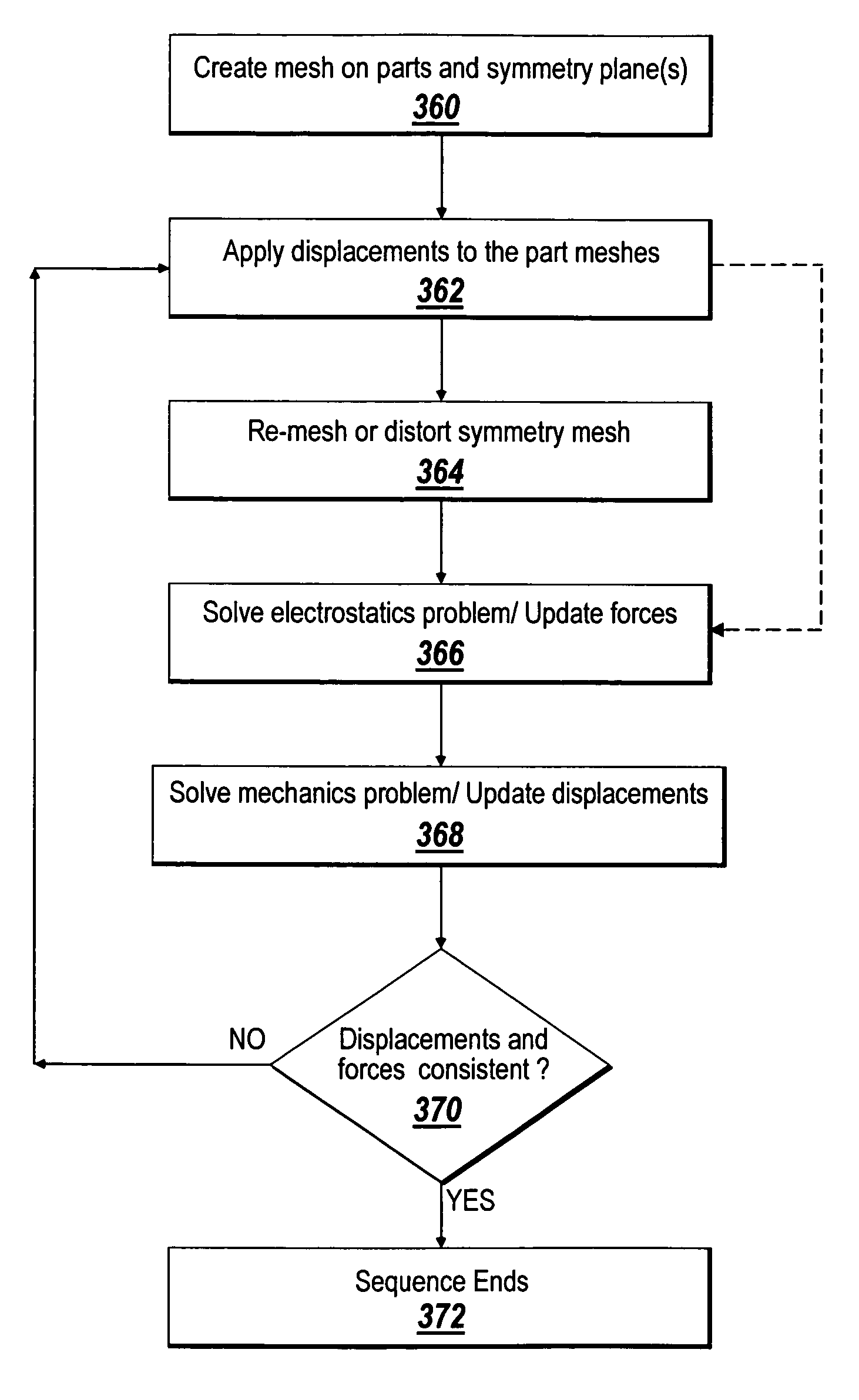
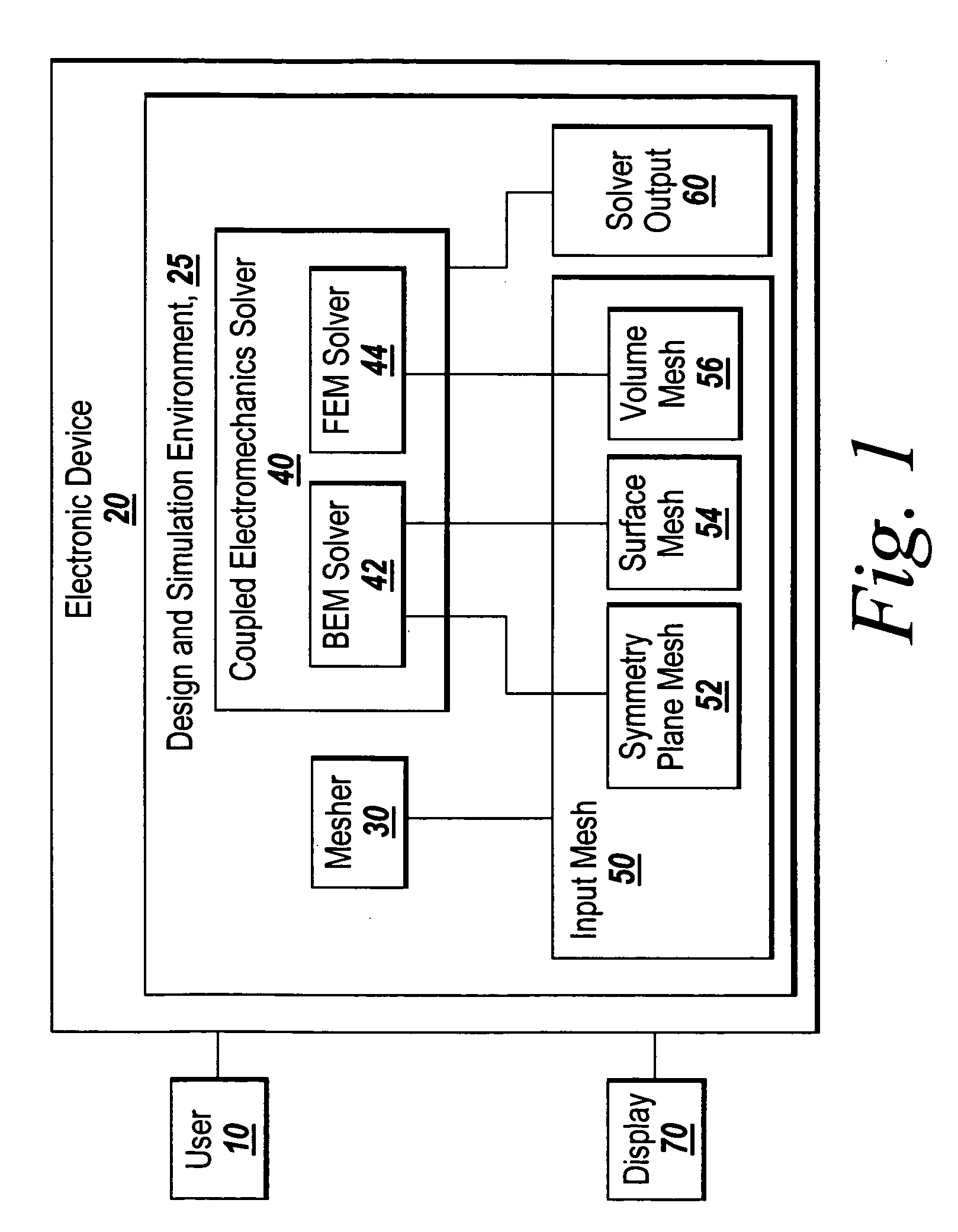
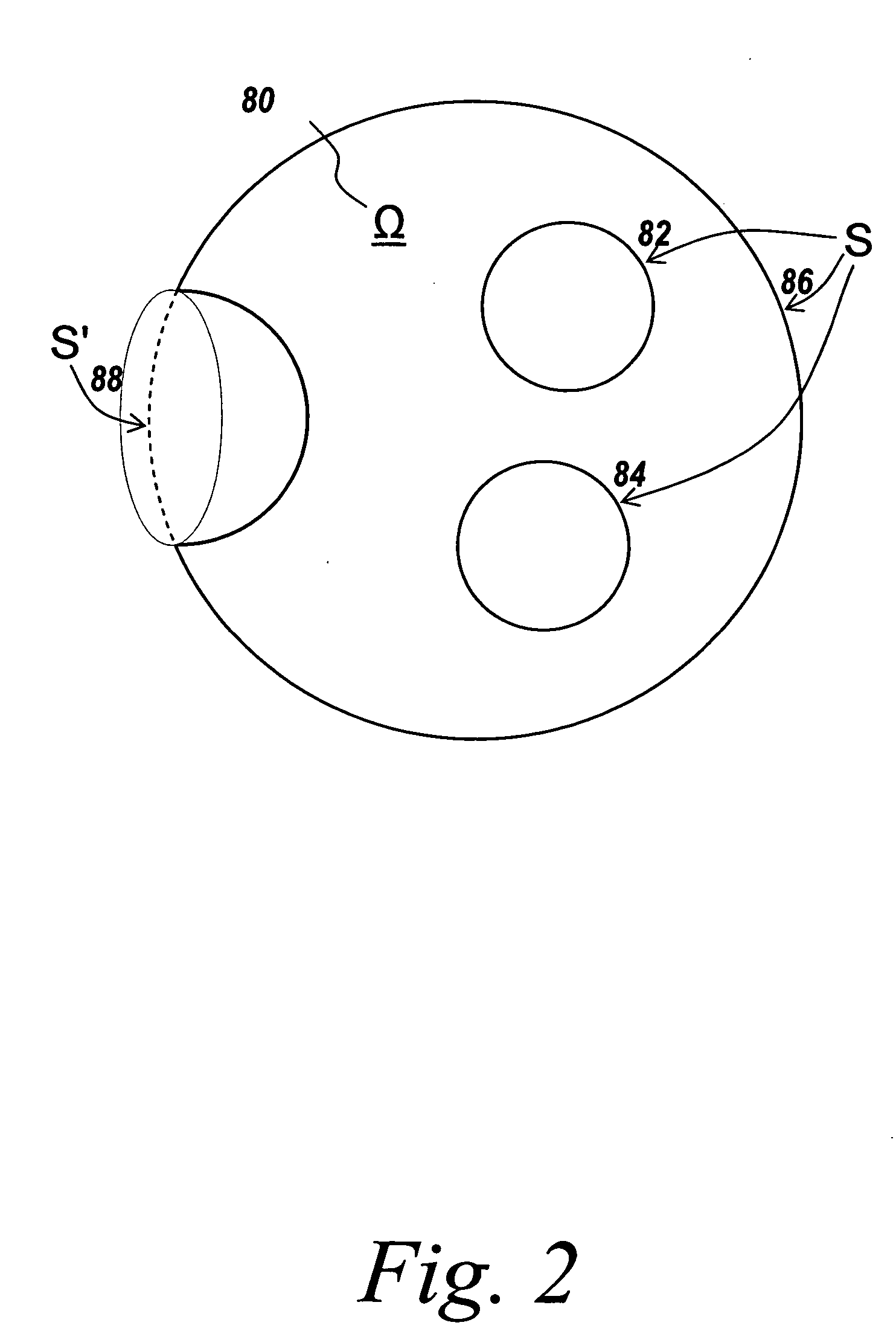
- The method involves introducing numerical symmetry planes and meshing areas that intersect with device parts, allowing for a consistent mesh that remains unchanged during part movement, by altering the application of Green's theorem to avoid re-meshing and maintain computational efficiency.

Computational Performance Optimization
Computational performance optimization represents a critical enabler for mechanical energy simulations in predictive analyses, where the balance between accuracy and computational efficiency determines practical applicability. The inherent complexity of mechanical systems, involving nonlinear material behaviors, contact mechanics, and multi-physics coupling, generates substantial computational demands that can render high-fidelity simulations prohibitively expensive for real-time or iterative predictive applications.
Modern optimization strategies focus on algorithmic efficiency improvements, including adaptive mesh refinement techniques that concentrate computational resources on regions of high gradient or critical interest while maintaining coarser discretization elsewhere. Parallel computing architectures, leveraging both multi-core CPUs and GPU acceleration, have become essential for handling large-scale simulations, with domain decomposition methods enabling effective workload distribution across computing nodes. The implementation of reduced-order modeling techniques, such as proper orthogonal decomposition and model order reduction, allows for the creation of surrogate models that capture essential system dynamics while dramatically reducing computational overhead.
Hardware acceleration through specialized processors and the adoption of cloud-based computing infrastructure provide scalable solutions for computationally intensive predictive analyses. The integration of machine learning algorithms for adaptive time-stepping and convergence acceleration has emerged as a promising approach to enhance simulation efficiency without compromising accuracy. Memory management optimization, including efficient data structure design and cache utilization strategies, plays a crucial role in minimizing computational bottlenecks.
The trade-off between simulation fidelity and computational cost requires careful consideration of solver selection, with implicit and explicit integration schemes offering distinct advantages depending on problem characteristics. Advanced preconditioning techniques and iterative solver optimization significantly reduce solution times for large linear systems arising from discretized mechanical equations. The development of hybrid approaches combining analytical solutions for simplified subsystems with numerical methods for complex components represents an effective strategy for achieving computational efficiency while maintaining predictive capability across diverse mechanical energy simulation scenarios.
Modern optimization strategies focus on algorithmic efficiency improvements, including adaptive mesh refinement techniques that concentrate computational resources on regions of high gradient or critical interest while maintaining coarser discretization elsewhere. Parallel computing architectures, leveraging both multi-core CPUs and GPU acceleration, have become essential for handling large-scale simulations, with domain decomposition methods enabling effective workload distribution across computing nodes. The implementation of reduced-order modeling techniques, such as proper orthogonal decomposition and model order reduction, allows for the creation of surrogate models that capture essential system dynamics while dramatically reducing computational overhead.
Hardware acceleration through specialized processors and the adoption of cloud-based computing infrastructure provide scalable solutions for computationally intensive predictive analyses. The integration of machine learning algorithms for adaptive time-stepping and convergence acceleration has emerged as a promising approach to enhance simulation efficiency without compromising accuracy. Memory management optimization, including efficient data structure design and cache utilization strategies, plays a crucial role in minimizing computational bottlenecks.
The trade-off between simulation fidelity and computational cost requires careful consideration of solver selection, with implicit and explicit integration schemes offering distinct advantages depending on problem characteristics. Advanced preconditioning techniques and iterative solver optimization significantly reduce solution times for large linear systems arising from discretized mechanical equations. The development of hybrid approaches combining analytical solutions for simplified subsystems with numerical methods for complex components represents an effective strategy for achieving computational efficiency while maintaining predictive capability across diverse mechanical energy simulation scenarios.
Digital Twin Integration
Digital twin integration represents a transformative approach in mechanical energy simulations for predictive analyses, establishing virtual replicas of physical systems that enable real-time monitoring, analysis, and optimization. This integration bridges the gap between theoretical simulation models and actual operational environments, creating bidirectional data flows that continuously refine predictive accuracy. By synchronizing physical assets with their digital counterparts, organizations can leverage historical performance data, real-time sensor inputs, and advanced simulation algorithms to forecast mechanical behavior under various operational scenarios.
The implementation of digital twin technology in mechanical energy simulations involves sophisticated data acquisition systems that capture multi-dimensional parameters including stress distributions, thermal profiles, vibration patterns, and energy consumption metrics. These data streams feed into computational models that update dynamically, allowing simulations to reflect current system states rather than relying solely on initial design specifications. This continuous calibration mechanism significantly enhances the reliability of predictive analyses, particularly for complex mechanical systems subject to degradation, environmental variations, and operational uncertainties.
Integration architectures typically employ cloud-based platforms or edge computing solutions to manage the computational demands of simultaneous physical monitoring and virtual simulation. Advanced middleware frameworks facilitate seamless communication between IoT sensors, data processing units, and simulation engines, ensuring minimal latency in data synchronization. Machine learning algorithms increasingly augment these systems, identifying patterns in operational data that inform predictive maintenance schedules and performance optimization strategies.
The value proposition of digital twin integration extends beyond predictive maintenance to encompass design validation, operational optimization, and lifecycle management. Engineers can test hypothetical modifications in the virtual environment before implementing physical changes, reducing experimental costs and minimizing operational disruptions. Furthermore, the accumulated operational intelligence from digital twins creates valuable datasets for training next-generation predictive models, establishing a continuous improvement cycle that enhances both simulation fidelity and operational efficiency across mechanical energy systems.
The implementation of digital twin technology in mechanical energy simulations involves sophisticated data acquisition systems that capture multi-dimensional parameters including stress distributions, thermal profiles, vibration patterns, and energy consumption metrics. These data streams feed into computational models that update dynamically, allowing simulations to reflect current system states rather than relying solely on initial design specifications. This continuous calibration mechanism significantly enhances the reliability of predictive analyses, particularly for complex mechanical systems subject to degradation, environmental variations, and operational uncertainties.
Integration architectures typically employ cloud-based platforms or edge computing solutions to manage the computational demands of simultaneous physical monitoring and virtual simulation. Advanced middleware frameworks facilitate seamless communication between IoT sensors, data processing units, and simulation engines, ensuring minimal latency in data synchronization. Machine learning algorithms increasingly augment these systems, identifying patterns in operational data that inform predictive maintenance schedules and performance optimization strategies.
The value proposition of digital twin integration extends beyond predictive maintenance to encompass design validation, operational optimization, and lifecycle management. Engineers can test hypothetical modifications in the virtual environment before implementing physical changes, reducing experimental costs and minimizing operational disruptions. Furthermore, the accumulated operational intelligence from digital twins creates valuable datasets for training next-generation predictive models, establishing a continuous improvement cycle that enhances both simulation fidelity and operational efficiency across mechanical energy systems.
Unlock deeper insights with PatSnap Eureka Quick Research — get a full tech report to explore trends and direct your research. Try now!
Generate Your Research Report Instantly with AI Agent
Supercharge your innovation with PatSnap Eureka AI Agent Platform!