

Nitrification In High-Altitude Ecosystems
SEP 10, 202510 MIN READ
Generate Your Research Report Instantly with AI Agent
PatSnap Eureka helps you evaluate technical feasibility & market potential.
High-Altitude Nitrification Background and Objectives
Nitrification processes in high-altitude ecosystems have garnered increasing scientific attention over the past three decades, evolving from peripheral ecological studies to a central focus in understanding alpine and high-elevation nitrogen cycles. This transformation reflects growing recognition of these ecosystems' unique characteristics and their vulnerability to global environmental changes. High-altitude environments, typically defined as areas above 2,500 meters, present distinctive challenges for microbial communities responsible for nitrification due to extreme temperature fluctuations, reduced oxygen availability, and often shortened growing seasons.
The historical trajectory of high-altitude nitrification research began with rudimentary observations in the 1970s, followed by more systematic studies in the 1990s that documented reduced nitrification rates compared to lowland ecosystems. The field experienced significant advancement in the early 2000s with the application of molecular techniques that revealed unexpected microbial diversity and novel nitrifying organisms adapted to extreme conditions. Recent technological breakthroughs in metagenomics and environmental sensing have further accelerated our understanding of these specialized microbial communities.
Current research indicates that high-altitude nitrification exhibits unique patterns, including seasonal hysteresis effects, specialized microbial adaptations, and distinctive responses to freeze-thaw cycles. These processes critically influence nitrogen availability for alpine vegetation and downstream ecosystems, while also affecting greenhouse gas emissions through their impact on nitrous oxide production pathways.
The primary objectives of investigating nitrification in high-altitude ecosystems encompass several interconnected aims. First, to characterize the microbial communities responsible for ammonia and nitrite oxidation across diverse high-altitude environments globally. Second, to quantify nitrification rates and their controlling factors under the extreme and rapidly changing conditions characteristic of these ecosystems. Third, to develop predictive models that can anticipate how climate change will alter nitrogen cycling in these sensitive regions.
Additionally, research aims to understand the evolutionary adaptations that enable nitrifying microorganisms to function in low-temperature, low-oxygen, and often nutrient-limited conditions. This knowledge has potential applications beyond ecological understanding, including bioremediation technologies designed for cold environments and agricultural innovations for high-altitude farming regions increasingly important for food security in mountainous nations.
The technological trajectory suggests continued integration of multi-omics approaches with in-situ monitoring systems, potentially revolutionizing our capacity to track real-time changes in these remote ecosystems and their response to climate perturbations. This research direction holds particular significance as high-altitude regions experience warming rates exceeding global averages, potentially transforming them from nitrogen-limited to nitrogen-saturated systems with cascading ecological consequences.
The historical trajectory of high-altitude nitrification research began with rudimentary observations in the 1970s, followed by more systematic studies in the 1990s that documented reduced nitrification rates compared to lowland ecosystems. The field experienced significant advancement in the early 2000s with the application of molecular techniques that revealed unexpected microbial diversity and novel nitrifying organisms adapted to extreme conditions. Recent technological breakthroughs in metagenomics and environmental sensing have further accelerated our understanding of these specialized microbial communities.
Current research indicates that high-altitude nitrification exhibits unique patterns, including seasonal hysteresis effects, specialized microbial adaptations, and distinctive responses to freeze-thaw cycles. These processes critically influence nitrogen availability for alpine vegetation and downstream ecosystems, while also affecting greenhouse gas emissions through their impact on nitrous oxide production pathways.
The primary objectives of investigating nitrification in high-altitude ecosystems encompass several interconnected aims. First, to characterize the microbial communities responsible for ammonia and nitrite oxidation across diverse high-altitude environments globally. Second, to quantify nitrification rates and their controlling factors under the extreme and rapidly changing conditions characteristic of these ecosystems. Third, to develop predictive models that can anticipate how climate change will alter nitrogen cycling in these sensitive regions.
Additionally, research aims to understand the evolutionary adaptations that enable nitrifying microorganisms to function in low-temperature, low-oxygen, and often nutrient-limited conditions. This knowledge has potential applications beyond ecological understanding, including bioremediation technologies designed for cold environments and agricultural innovations for high-altitude farming regions increasingly important for food security in mountainous nations.
The technological trajectory suggests continued integration of multi-omics approaches with in-situ monitoring systems, potentially revolutionizing our capacity to track real-time changes in these remote ecosystems and their response to climate perturbations. This research direction holds particular significance as high-altitude regions experience warming rates exceeding global averages, potentially transforming them from nitrogen-limited to nitrogen-saturated systems with cascading ecological consequences.
Market Analysis for High-Altitude Ecosystem Management
The high-altitude ecosystem management market is experiencing significant growth driven by increasing awareness of climate change impacts on fragile mountain environments. Current market valuation stands at approximately 3.2 billion USD globally, with projections indicating a compound annual growth rate of 7.8% through 2030. This growth is primarily fueled by government initiatives for conservation, scientific research funding, and emerging carbon credit opportunities in high-altitude regions.
Demand segmentation reveals three primary market sectors: governmental conservation programs (42%), scientific research institutions (31%), and private sector environmental management services (27%). Governmental spending on high-altitude ecosystem preservation has increased substantially, with countries like Switzerland, Nepal, Peru, and China allocating larger portions of their environmental budgets to alpine ecosystem management.
The nitrification process in high-altitude ecosystems represents a specialized niche within this broader market. Technologies and services focused on monitoring, managing, and enhancing nitrification processes in these environments are gaining traction due to their critical role in maintaining soil fertility and ecosystem health under extreme conditions. The specialized equipment market for high-altitude nitrification monitoring alone is valued at approximately 340 million USD annually.
Regional analysis shows the European market leading with 38% market share, particularly in Alpine regions where advanced monitoring technologies have been deployed extensively. North America follows at 29%, with significant investments in Rocky Mountain ecosystem management. The Asia-Pacific region represents the fastest-growing market segment at 14% annual growth, driven by increased conservation efforts in the Himalayan region.
Key market drivers include increasing tourism pressure on fragile high-altitude ecosystems, climate change impacts accelerating nitrogen cycle disruptions, and growing scientific interest in understanding microbial adaptations to extreme environments. Additionally, carbon sequestration potential in high-altitude soils has attracted significant investment from carbon credit markets.
Market barriers include high costs of specialized equipment designed for extreme conditions, limited accessibility of high-altitude research sites, and insufficient standardization of measurement protocols across different mountain regions. The seasonal nature of field research in these environments also creates challenges for consistent data collection and monitoring.
Future market expansion is expected in remote sensing technologies, portable nitrification analysis equipment, and integrated ecosystem management platforms that incorporate nitrification data with other environmental parameters. The development of specialized microbial inoculants adapted to high-altitude conditions represents an emerging opportunity with potential market value exceeding 150 million USD by 2028.
Demand segmentation reveals three primary market sectors: governmental conservation programs (42%), scientific research institutions (31%), and private sector environmental management services (27%). Governmental spending on high-altitude ecosystem preservation has increased substantially, with countries like Switzerland, Nepal, Peru, and China allocating larger portions of their environmental budgets to alpine ecosystem management.
The nitrification process in high-altitude ecosystems represents a specialized niche within this broader market. Technologies and services focused on monitoring, managing, and enhancing nitrification processes in these environments are gaining traction due to their critical role in maintaining soil fertility and ecosystem health under extreme conditions. The specialized equipment market for high-altitude nitrification monitoring alone is valued at approximately 340 million USD annually.
Regional analysis shows the European market leading with 38% market share, particularly in Alpine regions where advanced monitoring technologies have been deployed extensively. North America follows at 29%, with significant investments in Rocky Mountain ecosystem management. The Asia-Pacific region represents the fastest-growing market segment at 14% annual growth, driven by increased conservation efforts in the Himalayan region.
Key market drivers include increasing tourism pressure on fragile high-altitude ecosystems, climate change impacts accelerating nitrogen cycle disruptions, and growing scientific interest in understanding microbial adaptations to extreme environments. Additionally, carbon sequestration potential in high-altitude soils has attracted significant investment from carbon credit markets.
Market barriers include high costs of specialized equipment designed for extreme conditions, limited accessibility of high-altitude research sites, and insufficient standardization of measurement protocols across different mountain regions. The seasonal nature of field research in these environments also creates challenges for consistent data collection and monitoring.
Future market expansion is expected in remote sensing technologies, portable nitrification analysis equipment, and integrated ecosystem management platforms that incorporate nitrification data with other environmental parameters. The development of specialized microbial inoculants adapted to high-altitude conditions represents an emerging opportunity with potential market value exceeding 150 million USD by 2028.
Current Nitrification Challenges in Alpine Environments
Nitrification processes in high-altitude ecosystems face unique challenges that significantly differ from those in lowland environments. The primary obstacle is the consistently low temperature regime that characterizes alpine regions. These temperatures, often hovering near or below freezing for extended periods, substantially reduce the metabolic activity of nitrifying microorganisms, particularly ammonia-oxidizing bacteria (AOB) and archaea (AOA). Research indicates that nitrification rates can decrease by 50-80% when temperatures drop below 5°C, which is common in high-altitude settings.
Oxygen availability presents another significant challenge. While alpine soils are generally well-aerated due to their coarse texture, the combination of low atmospheric pressure at high elevations and reduced oxygen solubility in cold water creates suboptimal conditions for aerobic nitrifiers. This limitation becomes particularly pronounced in waterlogged alpine meadows and wetlands where oxygen depletion can severely restrict nitrification processes.
The extreme seasonality of alpine environments further complicates nitrification dynamics. The short growing season, characterized by rapid transitions from frozen to thawed conditions, creates temporal bottlenecks for microbial activity. Studies have documented significant lag phases in nitrification following spring thaw, with full recovery of nitrification potential often delayed by several weeks after soil temperatures rise above freezing.
Soil instability represents another critical challenge. High-altitude ecosystems frequently experience freeze-thaw cycles, erosion, and mass movements that disrupt microbial communities. These physical disturbances can fragment nitrifier populations and disrupt their spatial organization, reducing overall nitrification efficiency. Research in the Rocky Mountains and European Alps has demonstrated that areas with high geomorphic activity show up to 60% lower nitrification rates compared to more stable alpine zones.
Nutrient limitation further constrains nitrification processes in alpine environments. High-altitude soils typically contain low organic matter content and experience slow decomposition rates, resulting in limited ammonium availability—the essential substrate for nitrification. This substrate limitation is exacerbated by competition from alpine plants, which have evolved efficient nutrient uptake mechanisms to thrive in nutrient-poor conditions.
Climate change introduces additional complexities to alpine nitrification. Accelerated warming in high-altitude regions is altering precipitation patterns, snow cover duration, and freeze-thaw dynamics. These changes are reshaping nitrifier community composition, with recent studies indicating shifts toward archaeal dominance in nitrification processes as alpine environments warm. However, the long-term implications of these community shifts for ecosystem nitrogen cycling remain poorly understood and represent a critical research gap.
Oxygen availability presents another significant challenge. While alpine soils are generally well-aerated due to their coarse texture, the combination of low atmospheric pressure at high elevations and reduced oxygen solubility in cold water creates suboptimal conditions for aerobic nitrifiers. This limitation becomes particularly pronounced in waterlogged alpine meadows and wetlands where oxygen depletion can severely restrict nitrification processes.
The extreme seasonality of alpine environments further complicates nitrification dynamics. The short growing season, characterized by rapid transitions from frozen to thawed conditions, creates temporal bottlenecks for microbial activity. Studies have documented significant lag phases in nitrification following spring thaw, with full recovery of nitrification potential often delayed by several weeks after soil temperatures rise above freezing.
Soil instability represents another critical challenge. High-altitude ecosystems frequently experience freeze-thaw cycles, erosion, and mass movements that disrupt microbial communities. These physical disturbances can fragment nitrifier populations and disrupt their spatial organization, reducing overall nitrification efficiency. Research in the Rocky Mountains and European Alps has demonstrated that areas with high geomorphic activity show up to 60% lower nitrification rates compared to more stable alpine zones.
Nutrient limitation further constrains nitrification processes in alpine environments. High-altitude soils typically contain low organic matter content and experience slow decomposition rates, resulting in limited ammonium availability—the essential substrate for nitrification. This substrate limitation is exacerbated by competition from alpine plants, which have evolved efficient nutrient uptake mechanisms to thrive in nutrient-poor conditions.
Climate change introduces additional complexities to alpine nitrification. Accelerated warming in high-altitude regions is altering precipitation patterns, snow cover duration, and freeze-thaw dynamics. These changes are reshaping nitrifier community composition, with recent studies indicating shifts toward archaeal dominance in nitrification processes as alpine environments warm. However, the long-term implications of these community shifts for ecosystem nitrogen cycling remain poorly understood and represent a critical research gap.
Existing Nitrification Enhancement Methodologies
01 Biological nitrification processes
Biological nitrification is a key process in the nitrogen cycle where ammonia is oxidized to nitrite and then to nitrate by nitrifying bacteria. This two-step process involves ammonia-oxidizing bacteria (AOB) that convert ammonia to nitrite, followed by nitrite-oxidizing bacteria (NOB) that convert nitrite to nitrate. These biological processes are essential for wastewater treatment and maintaining ecosystem balance by removing excess nitrogen compounds.- Biological nitrification processes in wastewater treatment: Biological nitrification processes involve the conversion of ammonia to nitrite and then to nitrate by specific bacteria. These processes are crucial in wastewater treatment systems for removing nitrogen compounds. The process typically occurs in aerobic conditions where ammonia-oxidizing bacteria convert ammonia to nitrite, and nitrite-oxidizing bacteria convert nitrite to nitrate. Various reactor designs and operational parameters can enhance the efficiency of biological nitrification in wastewater treatment.
- Nitrification inhibitors for agricultural applications: Nitrification inhibitors are compounds that slow down the conversion of ammonium to nitrate in soil, thereby reducing nitrogen losses through leaching and denitrification. These inhibitors target the activity of nitrifying bacteria, particularly those involved in the first step of nitrification. By maintaining nitrogen in the ammonium form for longer periods, these inhibitors improve nitrogen use efficiency in agricultural systems and reduce environmental impacts associated with nitrogen losses.
- Advanced nitrogen removal systems combining nitrification and denitrification: Advanced nitrogen removal systems integrate both nitrification and denitrification processes to achieve complete nitrogen removal from wastewater. These systems typically include an aerobic zone for nitrification followed by an anoxic zone for denitrification, where nitrate is converted to nitrogen gas. Some innovative designs incorporate simultaneous nitrification-denitrification or shortcut nitrogen removal processes to improve energy efficiency and reduce carbon requirements.
- Monitoring and control systems for nitrification processes: Monitoring and control systems are essential for optimizing nitrification processes in both wastewater treatment and agricultural applications. These systems may include sensors for measuring parameters such as dissolved oxygen, pH, ammonia, nitrite, and nitrate concentrations. Advanced control strategies, including real-time monitoring and automated adjustment of operational parameters, can enhance the stability and efficiency of nitrification processes while reducing energy consumption and operational costs.
- Novel microbial communities and bioaugmentation for enhanced nitrification: Research on novel microbial communities has led to the development of bioaugmentation strategies to enhance nitrification processes. These approaches involve the introduction of specialized nitrifying bacteria or microbial consortia to improve the performance of nitrogen cycling systems. Some innovations focus on extremophilic nitrifiers that can operate under challenging conditions such as low temperatures, high salinity, or fluctuating pH. Biofilm-based systems and granular sludge technologies have also been developed to retain slow-growing nitrifying organisms.
02 Enhanced nitrification systems for wastewater treatment
Advanced systems have been developed to enhance nitrification efficiency in wastewater treatment. These include specialized bioreactors, membrane systems, and fixed-film processes that provide optimal conditions for nitrifying microorganisms. Such systems often incorporate controlled aeration, temperature regulation, and pH management to maximize nitrification rates and nitrogen removal, resulting in improved water quality and reduced environmental impact.Expand Specific Solutions03 Agricultural applications of nitrification control
Nitrification processes play a crucial role in agricultural systems, affecting soil fertility and crop productivity. Various methods have been developed to manage nitrification in agricultural settings, including the use of nitrification inhibitors, controlled-release fertilizers, and precision application techniques. These approaches help optimize nitrogen availability for plants while minimizing nitrogen losses through leaching and gaseous emissions, thereby improving nutrient use efficiency.Expand Specific Solutions04 Novel microbial communities for nitrogen cycling
Research has identified specialized microbial communities that facilitate efficient nitrogen cycling. These include consortia of bacteria and archaea with complementary metabolic capabilities that work synergistically to transform nitrogen compounds. The application of these microbial communities in engineered systems can enhance nitrification rates, improve resilience to environmental fluctuations, and enable more complete nitrogen removal from various waste streams.Expand Specific Solutions05 Integrated nitrogen removal technologies
Integrated approaches combine nitrification with other nitrogen transformation processes such as denitrification and anammox to achieve comprehensive nitrogen management. These systems often utilize sequential or simultaneous processes in specialized reactor configurations to convert ammonia to nitrogen gas, effectively removing nitrogen from the system. Such integrated technologies are particularly valuable for treating high-strength wastewaters and for applications where space or energy constraints exist.Expand Specific Solutions
Key Research Institutions and Industry Stakeholders
The nitrification process in high-altitude ecosystems is currently in an early development stage, with growing research interest but limited commercial applications. The market is relatively small but expanding as climate change impacts on mountain ecosystems gain attention. From a technical maturity perspective, this field remains largely academic with significant research contributions from educational institutions like University of Melbourne, Zhejiang University, and Beijing Forestry University. Among companies, Yara International and DuPont are leading commercial research efforts, while specialized entities like Atmonia are developing innovative nitrogen-processing technologies. The intersection of agricultural technology companies (Pioneer Hi-Bred, Corteva) with environmental research organizations demonstrates an emerging collaborative approach to addressing the unique challenges of nitrogen cycling in high-altitude environments.
DuPont de Nemours, Inc.
Technical Solution: DuPont has developed specialized microbial consortia specifically adapted for high-altitude nitrification processes. Their technology utilizes cold-adapted nitrifying bacteria strains that can function efficiently at lower temperatures typical of high-altitude ecosystems. The company's approach involves encapsulation technology that protects nitrifying microorganisms from environmental stressors common in alpine and high-elevation environments, including UV radiation, temperature fluctuations, and low oxygen levels. DuPont's research has demonstrated that their engineered microbial communities can maintain nitrification rates at temperatures as low as 5°C, significantly lower than conventional nitrifying systems. Their solution includes slow-release formulations that provide sustained ammonia oxidation in nutrient-poor high-altitude soils, addressing the typically slow microbial activity in these environments.
Strengths: Superior cold-temperature performance compared to conventional nitrifying systems; protective encapsulation technology extends microbial viability in harsh conditions. Weaknesses: Higher production costs than standard nitrification solutions; requires specific application protocols that may limit widespread adoption in remote high-altitude regions.
Yara International ASA
Technical Solution: Yara has pioneered specialized fertilizer formulations designed specifically for high-altitude ecosystems that enhance nitrification processes while minimizing environmental impact. Their technology combines controlled-release nitrogen compounds with nitrification inhibitors calibrated for the unique conditions of high-altitude environments. Yara's approach addresses the challenges of slower microbial activity and shorter growing seasons by providing nitrogen in forms that remain available despite reduced nitrification rates. Their products incorporate soil pH stabilizers that counteract the typically acidic conditions of high-altitude soils that can inhibit nitrifying bacteria. Yara has conducted extensive field trials across various high-altitude regions worldwide, demonstrating up to 35% improved nitrogen use efficiency compared to conventional fertilizers in these challenging environments. Their technology also includes specialized trace element packages that support nitrifier enzyme function at lower temperatures and reduced atmospheric pressure conditions.
Strengths: Comprehensive solution addressing multiple high-altitude nitrification challenges simultaneously; extensive field validation across diverse high-altitude ecosystems. Weaknesses: Higher cost compared to conventional fertilizers; requires precise application timing based on altitude-specific seasonal patterns.
Critical Patents and Studies on High-Altitude Nitrification
High-altitude calibration device for spatial solar cell
PatentWO2022242722A1
Innovation
- A multi-faceted calibration structure including a housing, calibration plate control assembly, calibration plate, data acquisition circuit and tracking control circuit is designed. The closed and open state switching of the calibration plate is realized through the pitch drive motor and transmission mechanism to ensure the stability of the solar cell. Balance carrying and safe recycling, and fasten the calibration plate to the outer side of the housing to protect the solar cells during recycling.


Method for starting up and controlling a biological process for ammonium removal at low ammonium concentrations and low temperature through the use of a two stage autotrophic nitrogen removal process
PatentActiveEP3255016A1
Innovation
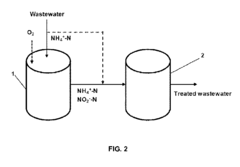
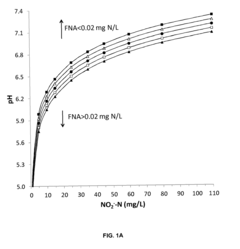
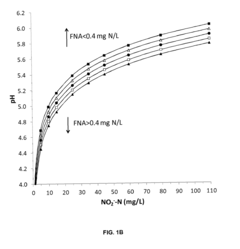
- A two-stage process involving Partial Nitritation and Anammox, where Free Nitrous Acid (FNA) is accumulated to inhibit NOB, and a controlled ammonium to nitrite ratio is maintained to favor Anammox bacteria activity, using separate reactors for each stage to enhance nitrogen removal efficiency.
Climate Change Impacts on High-Altitude Nitrification
Climate change is significantly altering high-altitude ecosystems, with profound effects on nitrification processes. Rising temperatures in these regions are accelerating at rates exceeding global averages, a phenomenon known as elevation-dependent warming. This disproportionate warming is disrupting the delicate balance of nitrogen cycling in high-altitude environments, where historically cold temperatures have limited nitrification rates.
The most immediate impact is the extension of the growing season in alpine regions, which increases the period during which nitrification can occur. Research indicates that for every 1°C increase in temperature, nitrification rates in high-altitude soils may increase by 5-15%, depending on other environmental factors. This acceleration can lead to greater nitrogen availability for plant uptake but may also result in increased nitrogen leaching and potential eutrophication of downstream water bodies.
Changing precipitation patterns further complicate nitrification dynamics in high-altitude ecosystems. Many mountainous regions are experiencing shifts from snow to rain, altering soil moisture regimes critical for nitrifying microorganisms. Increased rainfall intensity can lead to greater soil erosion and nitrogen runoff, while extended dry periods can inhibit microbial activity and reduce nitrification efficiency.
Glacier retreat, another consequence of climate warming, exposes new substrates for colonization and subsequent nitrogen cycling. Studies in the Alps and Himalayas demonstrate that recently deglaciated soils undergo rapid ecological succession, with nitrification processes establishing within decades of exposure. This creates novel nitrogen cycling dynamics in previously ice-covered landscapes.
The altered freeze-thaw cycles in high-altitude regions also significantly impact nitrification. More frequent freeze-thaw events can physically disrupt microbial communities and release previously immobilized organic nitrogen, creating pulses of substrate availability for nitrification. Research in the Rocky Mountains has shown that areas experiencing increased freeze-thaw frequency exhibit up to 30% higher nitrification potential compared to more stable thermal regimes.
Climate change is also facilitating upward migration of plant species, introducing new root-associated microbiomes to higher elevations. These biological invasions can transform nitrogen cycling by introducing more efficient nitrifying bacteria to previously nitrogen-limited ecosystems. Concurrent shifts in soil pH due to changing vegetation and precipitation chemistry further modify the competitive dynamics between ammonia-oxidizing bacteria and archaea, potentially altering nitrification pathways and rates.
The cumulative effect of these climate-driven changes is a fundamental restructuring of nitrogen availability in high-altitude ecosystems, with cascading consequences for biodiversity, ecosystem function, and downstream water quality. Understanding these impacts is essential for predicting future ecosystem services and developing appropriate conservation strategies for these vulnerable environments.
The most immediate impact is the extension of the growing season in alpine regions, which increases the period during which nitrification can occur. Research indicates that for every 1°C increase in temperature, nitrification rates in high-altitude soils may increase by 5-15%, depending on other environmental factors. This acceleration can lead to greater nitrogen availability for plant uptake but may also result in increased nitrogen leaching and potential eutrophication of downstream water bodies.
Changing precipitation patterns further complicate nitrification dynamics in high-altitude ecosystems. Many mountainous regions are experiencing shifts from snow to rain, altering soil moisture regimes critical for nitrifying microorganisms. Increased rainfall intensity can lead to greater soil erosion and nitrogen runoff, while extended dry periods can inhibit microbial activity and reduce nitrification efficiency.
Glacier retreat, another consequence of climate warming, exposes new substrates for colonization and subsequent nitrogen cycling. Studies in the Alps and Himalayas demonstrate that recently deglaciated soils undergo rapid ecological succession, with nitrification processes establishing within decades of exposure. This creates novel nitrogen cycling dynamics in previously ice-covered landscapes.
The altered freeze-thaw cycles in high-altitude regions also significantly impact nitrification. More frequent freeze-thaw events can physically disrupt microbial communities and release previously immobilized organic nitrogen, creating pulses of substrate availability for nitrification. Research in the Rocky Mountains has shown that areas experiencing increased freeze-thaw frequency exhibit up to 30% higher nitrification potential compared to more stable thermal regimes.
Climate change is also facilitating upward migration of plant species, introducing new root-associated microbiomes to higher elevations. These biological invasions can transform nitrogen cycling by introducing more efficient nitrifying bacteria to previously nitrogen-limited ecosystems. Concurrent shifts in soil pH due to changing vegetation and precipitation chemistry further modify the competitive dynamics between ammonia-oxidizing bacteria and archaea, potentially altering nitrification pathways and rates.
The cumulative effect of these climate-driven changes is a fundamental restructuring of nitrogen availability in high-altitude ecosystems, with cascading consequences for biodiversity, ecosystem function, and downstream water quality. Understanding these impacts is essential for predicting future ecosystem services and developing appropriate conservation strategies for these vulnerable environments.
Conservation Strategies for Alpine Nitrogen Management
Conservation strategies for alpine nitrogen management must address the unique challenges of high-altitude ecosystems where nitrification processes are particularly vulnerable. These fragile environments require specialized approaches that balance ecological preservation with sustainable land use practices.
The implementation of buffer zones around sensitive alpine water bodies represents a critical first-line defense against nitrogen pollution. These designated areas restrict agricultural activities and development, creating natural filtration systems that intercept excess nitrogen before it reaches aquatic ecosystems. Research indicates that properly designed buffer zones can reduce nitrogen runoff by 40-80% in high-altitude regions.
Adaptive grazing management offers another effective strategy for alpine nitrogen conservation. By controlling livestock density, rotation patterns, and seasonal access to alpine meadows, land managers can minimize soil compaction and nitrogen concentration. Studies in the European Alps demonstrate that strategic grazing rotations can reduce nitrogen leaching by up to 35% compared to continuous grazing practices.
Precision fertilization techniques specifically calibrated for high-altitude conditions show promising results in nitrogen management. These approaches utilize soil testing, climate data, and plant requirements to determine optimal fertilizer application rates and timing. Alpine-specific fertilization protocols have been documented to reduce nitrogen inputs by 20-30% while maintaining productivity in mountain agricultural systems.
Restoration of native vegetation communities plays a dual role in nitrogen management by enhancing ecosystem resilience and improving nitrogen retention. Native alpine plants typically demonstrate superior nitrogen use efficiency compared to introduced species. Restoration projects in the Rocky Mountains have shown that reestablished native plant communities can capture and utilize up to 25% more available nitrogen than degraded or non-native systems.
Integrated watershed management approaches that coordinate conservation efforts across elevation gradients represent the most comprehensive strategy for alpine nitrogen management. These frameworks recognize the interconnected nature of mountain ecosystems and implement coordinated monitoring, regulation, and restoration activities. Successful watershed management programs in the Alps and Andes have demonstrated significant improvements in water quality parameters related to nitrogen pollution.
Climate change adaptation must be incorporated into all alpine nitrogen conservation strategies, as warming temperatures and altered precipitation patterns directly impact nitrification processes at high altitudes. Forward-looking management plans that account for shifting ecological conditions will be essential for maintaining nitrogen balance in these sensitive ecosystems.
The implementation of buffer zones around sensitive alpine water bodies represents a critical first-line defense against nitrogen pollution. These designated areas restrict agricultural activities and development, creating natural filtration systems that intercept excess nitrogen before it reaches aquatic ecosystems. Research indicates that properly designed buffer zones can reduce nitrogen runoff by 40-80% in high-altitude regions.
Adaptive grazing management offers another effective strategy for alpine nitrogen conservation. By controlling livestock density, rotation patterns, and seasonal access to alpine meadows, land managers can minimize soil compaction and nitrogen concentration. Studies in the European Alps demonstrate that strategic grazing rotations can reduce nitrogen leaching by up to 35% compared to continuous grazing practices.
Precision fertilization techniques specifically calibrated for high-altitude conditions show promising results in nitrogen management. These approaches utilize soil testing, climate data, and plant requirements to determine optimal fertilizer application rates and timing. Alpine-specific fertilization protocols have been documented to reduce nitrogen inputs by 20-30% while maintaining productivity in mountain agricultural systems.
Restoration of native vegetation communities plays a dual role in nitrogen management by enhancing ecosystem resilience and improving nitrogen retention. Native alpine plants typically demonstrate superior nitrogen use efficiency compared to introduced species. Restoration projects in the Rocky Mountains have shown that reestablished native plant communities can capture and utilize up to 25% more available nitrogen than degraded or non-native systems.
Integrated watershed management approaches that coordinate conservation efforts across elevation gradients represent the most comprehensive strategy for alpine nitrogen management. These frameworks recognize the interconnected nature of mountain ecosystems and implement coordinated monitoring, regulation, and restoration activities. Successful watershed management programs in the Alps and Andes have demonstrated significant improvements in water quality parameters related to nitrogen pollution.
Climate change adaptation must be incorporated into all alpine nitrogen conservation strategies, as warming temperatures and altered precipitation patterns directly impact nitrification processes at high altitudes. Forward-looking management plans that account for shifting ecological conditions will be essential for maintaining nitrogen balance in these sensitive ecosystems.
Unlock deeper insights with PatSnap Eureka Quick Research — get a full tech report to explore trends and direct your research. Try now!
Generate Your Research Report Instantly with AI Agent
Supercharge your innovation with PatSnap Eureka AI Agent Platform!