

Optimization Techniques for Solar Farm Cable Infrastructure
MAR 24, 20269 MIN READ
Generate Your Research Report Instantly with AI Agent
PatSnap Eureka helps you evaluate technical feasibility & market potential.
Solar Cable Infrastructure Background and Optimization Goals
Solar photovoltaic technology has experienced unprecedented growth over the past two decades, evolving from small-scale residential installations to massive utility-scale solar farms spanning thousands of acres. This rapid expansion has fundamentally transformed the renewable energy landscape, with global solar capacity reaching over 1,400 GW by 2023. As solar installations continue to scale up, the complexity of supporting infrastructure has grown exponentially, particularly in the realm of electrical distribution systems.
The cable infrastructure within solar farms represents a critical yet often underestimated component of the overall system architecture. These networks must efficiently collect and transmit power from thousands of individual photovoltaic modules through a hierarchical distribution system comprising DC collection circuits, combiner boxes, inverters, and AC transmission lines. The sheer scale of modern solar installations has created unprecedented challenges in cable routing, power loss minimization, and system reliability.
Historical development of solar farm cable infrastructure has progressed through distinct phases, beginning with simple radial configurations in early installations to today's sophisticated grid-tied networks incorporating advanced monitoring and control systems. Early solar farms typically employed basic string configurations with minimal optimization, resulting in significant power losses and maintenance challenges. The evolution toward centralized and string inverter architectures has necessitated more complex cable routing strategies and optimization approaches.
Current market dynamics reveal that cable infrastructure costs can represent 8-15% of total solar farm capital expenditure, making optimization efforts economically compelling. Power losses in poorly designed cable networks can reduce overall system efficiency by 2-5%, directly impacting long-term revenue generation. These factors have driven increased focus on sophisticated optimization techniques that balance initial capital costs with operational performance.
The primary optimization goals for solar farm cable infrastructure encompass multiple interconnected objectives. Power loss minimization remains paramount, requiring careful consideration of conductor sizing, routing topology, and voltage level selection. Cost optimization involves balancing cable material costs against performance benefits while considering installation complexity and long-term maintenance requirements.
Reliability enhancement represents another critical goal, as cable failures can result in significant power generation losses and expensive repair operations. Modern optimization approaches must also accommodate future expansion capabilities, regulatory compliance requirements, and integration with smart grid technologies. Environmental considerations, including minimizing land disturbance and material usage, have become increasingly important in contemporary solar farm design.
Advanced optimization techniques now leverage sophisticated algorithms, machine learning approaches, and multi-objective optimization frameworks to address these complex, interrelated challenges simultaneously rather than treating them as isolated design parameters.
The cable infrastructure within solar farms represents a critical yet often underestimated component of the overall system architecture. These networks must efficiently collect and transmit power from thousands of individual photovoltaic modules through a hierarchical distribution system comprising DC collection circuits, combiner boxes, inverters, and AC transmission lines. The sheer scale of modern solar installations has created unprecedented challenges in cable routing, power loss minimization, and system reliability.
Historical development of solar farm cable infrastructure has progressed through distinct phases, beginning with simple radial configurations in early installations to today's sophisticated grid-tied networks incorporating advanced monitoring and control systems. Early solar farms typically employed basic string configurations with minimal optimization, resulting in significant power losses and maintenance challenges. The evolution toward centralized and string inverter architectures has necessitated more complex cable routing strategies and optimization approaches.
Current market dynamics reveal that cable infrastructure costs can represent 8-15% of total solar farm capital expenditure, making optimization efforts economically compelling. Power losses in poorly designed cable networks can reduce overall system efficiency by 2-5%, directly impacting long-term revenue generation. These factors have driven increased focus on sophisticated optimization techniques that balance initial capital costs with operational performance.
The primary optimization goals for solar farm cable infrastructure encompass multiple interconnected objectives. Power loss minimization remains paramount, requiring careful consideration of conductor sizing, routing topology, and voltage level selection. Cost optimization involves balancing cable material costs against performance benefits while considering installation complexity and long-term maintenance requirements.
Reliability enhancement represents another critical goal, as cable failures can result in significant power generation losses and expensive repair operations. Modern optimization approaches must also accommodate future expansion capabilities, regulatory compliance requirements, and integration with smart grid technologies. Environmental considerations, including minimizing land disturbance and material usage, have become increasingly important in contemporary solar farm design.
Advanced optimization techniques now leverage sophisticated algorithms, machine learning approaches, and multi-objective optimization frameworks to address these complex, interrelated challenges simultaneously rather than treating them as isolated design parameters.
Market Demand for Efficient Solar Farm Cable Systems
The global solar energy market has experienced unprecedented growth, driving substantial demand for efficient cable infrastructure systems that can optimize power transmission and minimize energy losses. Solar farms require sophisticated cable networks to connect photovoltaic panels, inverters, and transmission equipment, making cable efficiency a critical factor in overall system performance and return on investment.
Market demand for advanced solar farm cable systems is primarily driven by the need to reduce electrical losses during power transmission. Traditional cable systems can result in significant energy losses, particularly in large-scale installations where power must be transmitted over considerable distances. This has created a strong market pull for high-conductivity cables, optimized routing solutions, and smart cable management systems that can enhance overall farm efficiency.
The commercial solar sector represents the largest demand segment, with utility-scale solar installations requiring extensive cable infrastructure capable of handling high voltage and current loads. These installations prioritize cable systems that offer superior durability, weather resistance, and long-term reliability to minimize maintenance costs and maximize operational uptime over decades of service life.
Emerging markets in Asia-Pacific, Latin America, and Africa are experiencing particularly strong demand growth as these regions rapidly expand their solar capacity. Local content requirements and cost optimization pressures in these markets are driving demand for cable solutions that balance performance with affordability, creating opportunities for innovative cable designs and manufacturing approaches.
The integration of energy storage systems with solar farms has created additional market demand for specialized cable infrastructure that can handle bidirectional power flows and varying load conditions. This trend is expanding the addressable market for cable manufacturers and creating new technical requirements for cable system design and optimization.
Regulatory frameworks promoting renewable energy adoption, including feed-in tariffs and renewable portfolio standards, continue to sustain market demand by ensuring predictable revenue streams for solar farm operators. This regulatory support encourages investment in higher-quality cable infrastructure that can deliver superior long-term performance and reliability.
Market demand for advanced solar farm cable systems is primarily driven by the need to reduce electrical losses during power transmission. Traditional cable systems can result in significant energy losses, particularly in large-scale installations where power must be transmitted over considerable distances. This has created a strong market pull for high-conductivity cables, optimized routing solutions, and smart cable management systems that can enhance overall farm efficiency.
The commercial solar sector represents the largest demand segment, with utility-scale solar installations requiring extensive cable infrastructure capable of handling high voltage and current loads. These installations prioritize cable systems that offer superior durability, weather resistance, and long-term reliability to minimize maintenance costs and maximize operational uptime over decades of service life.
Emerging markets in Asia-Pacific, Latin America, and Africa are experiencing particularly strong demand growth as these regions rapidly expand their solar capacity. Local content requirements and cost optimization pressures in these markets are driving demand for cable solutions that balance performance with affordability, creating opportunities for innovative cable designs and manufacturing approaches.
The integration of energy storage systems with solar farms has created additional market demand for specialized cable infrastructure that can handle bidirectional power flows and varying load conditions. This trend is expanding the addressable market for cable manufacturers and creating new technical requirements for cable system design and optimization.
Regulatory frameworks promoting renewable energy adoption, including feed-in tariffs and renewable portfolio standards, continue to sustain market demand by ensuring predictable revenue streams for solar farm operators. This regulatory support encourages investment in higher-quality cable infrastructure that can deliver superior long-term performance and reliability.
Current Cable Infrastructure Challenges in Solar Installations
Solar farm cable infrastructure faces significant challenges that directly impact system performance, operational costs, and long-term reliability. These challenges stem from the complex interplay between environmental factors, technical requirements, and economic constraints that characterize large-scale photovoltaic installations.
Thermal management represents one of the most critical challenges in solar farm cable systems. Cables buried in soil or exposed to direct sunlight experience substantial temperature variations throughout daily and seasonal cycles. High ambient temperatures, particularly in desert installations, can cause cable insulation degradation and increased resistive losses. The ampacity derating required under elevated temperature conditions often necessitates oversized conductors, significantly increasing material costs and installation complexity.
Voltage drop optimization across extensive solar arrays presents another fundamental challenge. Large solar farms spanning hundreds of acres require cable runs extending several kilometers from individual panels to central inverters and collection points. The cumulative voltage drop across these extended networks can substantially reduce energy harvest efficiency. Traditional cable sizing approaches often result in either excessive material costs or suboptimal electrical performance.
Environmental degradation poses persistent threats to cable infrastructure integrity. Ultraviolet radiation exposure causes polymer jacket deterioration in above-ground installations, while soil chemistry variations can accelerate corrosion in underground systems. Moisture ingress through compromised cable sheaths leads to insulation breakdown and potential ground faults. Additionally, mechanical stress from thermal expansion, ground settlement, and wildlife interference creates ongoing reliability concerns.
Installation and maintenance accessibility challenges compound operational difficulties. Dense panel arrays limit access for cable routing and future maintenance activities. The need to minimize shading while maintaining adequate clearances for cable management creates complex geometric constraints. Furthermore, the distributed nature of solar installations makes fault location and repair procedures time-intensive and costly.
Economic optimization remains a persistent challenge as project developers balance initial capital expenditure against long-term operational performance. The tension between minimizing upfront cable costs and ensuring optimal energy yield over 25-year project lifecycles requires sophisticated analysis of multiple design variables and their interdependencies.
Thermal management represents one of the most critical challenges in solar farm cable systems. Cables buried in soil or exposed to direct sunlight experience substantial temperature variations throughout daily and seasonal cycles. High ambient temperatures, particularly in desert installations, can cause cable insulation degradation and increased resistive losses. The ampacity derating required under elevated temperature conditions often necessitates oversized conductors, significantly increasing material costs and installation complexity.
Voltage drop optimization across extensive solar arrays presents another fundamental challenge. Large solar farms spanning hundreds of acres require cable runs extending several kilometers from individual panels to central inverters and collection points. The cumulative voltage drop across these extended networks can substantially reduce energy harvest efficiency. Traditional cable sizing approaches often result in either excessive material costs or suboptimal electrical performance.
Environmental degradation poses persistent threats to cable infrastructure integrity. Ultraviolet radiation exposure causes polymer jacket deterioration in above-ground installations, while soil chemistry variations can accelerate corrosion in underground systems. Moisture ingress through compromised cable sheaths leads to insulation breakdown and potential ground faults. Additionally, mechanical stress from thermal expansion, ground settlement, and wildlife interference creates ongoing reliability concerns.
Installation and maintenance accessibility challenges compound operational difficulties. Dense panel arrays limit access for cable routing and future maintenance activities. The need to minimize shading while maintaining adequate clearances for cable management creates complex geometric constraints. Furthermore, the distributed nature of solar installations makes fault location and repair procedures time-intensive and costly.
Economic optimization remains a persistent challenge as project developers balance initial capital expenditure against long-term operational performance. The tension between minimizing upfront cable costs and ensuring optimal energy yield over 25-year project lifecycles requires sophisticated analysis of multiple design variables and their interdependencies.
Existing Cable Optimization Methods for Solar Farms
01 Cable management and routing systems for solar installations
Specialized cable management systems are designed to organize and route electrical cables in solar farm installations. These systems include cable trays, conduits, and routing structures that protect cables from environmental damage while maintaining efficient power transmission. The infrastructure ensures proper spacing, support, and accessibility for maintenance operations in large-scale solar installations.- Cable routing and management systems for solar installations: Solar farm infrastructure requires specialized cable routing and management systems to organize and protect electrical cables connecting solar panels to inverters and grid connection points. These systems include cable trays, conduits, underground ducting, and support structures designed to handle the high voltage DC and AC power transmission while protecting cables from environmental factors. Proper cable management ensures efficient power transmission, reduces installation time, and facilitates maintenance operations.
- Underground cable installation and protection methods: Underground cable infrastructure for solar farms involves trenching, direct burial, and horizontal directional drilling techniques to install power cables beneath the ground surface. Protection methods include the use of cable ducts, conduit systems, and protective layers to shield cables from mechanical damage, moisture, and soil conditions. These underground systems minimize visual impact, reduce exposure to weather elements, and provide long-term durability for power transmission networks in large-scale solar installations.
- Cable connection and junction systems: Junction boxes, connection terminals, and splicing systems are essential components for establishing reliable electrical connections between solar panels, inverters, and transmission lines. These systems provide weatherproof enclosures, facilitate cable branching, and enable efficient power distribution across the solar farm. Advanced connection technologies include quick-connect systems, pre-fabricated harnesses, and modular junction solutions that reduce installation complexity and improve system reliability.
- Cable monitoring and fault detection infrastructure: Monitoring systems integrated into solar farm cable infrastructure enable real-time detection of cable faults, temperature anomalies, and performance degradation. These systems utilize sensors, communication networks, and diagnostic equipment to identify issues such as insulation breakdown, connection failures, or cable damage. Early fault detection minimizes downtime, prevents safety hazards, and optimizes maintenance scheduling for large-scale solar installations.
- Modular and scalable cable infrastructure design: Modular cable infrastructure solutions allow for flexible expansion and reconfiguration of solar farms as capacity increases or layout changes occur. These designs incorporate standardized cable assemblies, plug-and-play connections, and scalable distribution networks that accommodate phased construction and future upgrades. Modular approaches reduce installation costs, simplify maintenance procedures, and provide adaptability for evolving solar farm requirements.
02 Underground cable installation and protection methods
Underground cable infrastructure for solar farms involves trenching, burial techniques, and protective measures for electrical cables. These methods include the use of conduits, cable burial depths, and protective layers to shield cables from mechanical damage, moisture, and environmental factors. The infrastructure design considers soil conditions, cable loading, and future maintenance requirements.Expand Specific Solutions03 Cable connection and junction systems
Junction boxes, connection systems, and termination methods are critical components of solar farm cable infrastructure. These systems provide secure electrical connections between solar panels, inverters, and grid connection points. The infrastructure includes weatherproof enclosures, connector technologies, and distribution systems that ensure reliable power transmission and facilitate system expansion or modification.Expand Specific Solutions04 Cable monitoring and diagnostic systems
Advanced monitoring systems are integrated into solar farm cable infrastructure to detect faults, measure performance, and predict maintenance needs. These systems utilize sensors, communication networks, and diagnostic tools to monitor cable temperature, current flow, insulation integrity, and connection quality. The infrastructure enables real-time monitoring and remote diagnostics to minimize downtime and optimize system performance.Expand Specific Solutions05 Modular and scalable cable infrastructure design
Modular cable infrastructure solutions allow for flexible and scalable solar farm installations. These designs incorporate standardized components, pre-fabricated cable assemblies, and expandable distribution systems that can accommodate future capacity increases. The infrastructure supports phased construction, easy reconfiguration, and integration with various solar panel configurations and inverter technologies.Expand Specific Solutions
Major Players in Solar Cable Infrastructure Solutions
The solar farm cable infrastructure optimization market is experiencing rapid growth driven by the global renewable energy transition, with the industry currently in an expansion phase characterized by increasing utility-scale solar deployments and grid integration requirements. Market dynamics are shaped by established industrial giants like Siemens AG, ABB Ltd., and Sumitomo Electric Industries, who bring mature electrical infrastructure expertise, alongside specialized solar companies such as Trina Solar, Soltec Energias Renovables, and Sungrow New Energy that focus on photovoltaic-specific solutions. Technology maturity varies significantly across the competitive landscape, with traditional electrical equipment manufacturers like Panduit Corp. and Huawei Digital Power Technologies leveraging proven cable management systems, while emerging players and research institutions including China Agricultural University and Advanced Industrial Science & Technology drive innovation in optimization algorithms and smart grid integration technologies.
Siemens AG
Technical Solution: Siemens develops comprehensive digital twin solutions for solar farm cable infrastructure optimization, integrating advanced grid management systems with predictive maintenance capabilities. Their approach combines IoT sensors throughout cable networks with machine learning algorithms to monitor cable performance, temperature variations, and electrical losses in real-time. The company's SICAM GridEdge platform enables dynamic load balancing across cable segments, while their digital asset management tools provide lifecycle optimization for cable infrastructure. Siemens also implements advanced cable routing algorithms that minimize installation costs and maximize energy transmission efficiency through optimal path planning and load distribution strategies.
Strengths: Comprehensive digital integration, proven grid management expertise, strong IoT and analytics capabilities. Weaknesses: High implementation costs, complex system integration requirements.
Sumitomo Electric Industries Ltd.
Technical Solution: Sumitomo Electric specializes in advanced cable materials and design optimization for solar farm applications, developing high-performance photovoltaic cables with enhanced UV resistance and temperature tolerance. Their optimization approach focuses on cable cross-sectional area calculations, conductor material selection, and insulation technologies that reduce power losses while extending operational lifespan. The company implements sophisticated cable sizing algorithms that account for ambient temperature variations, current carrying capacity, and voltage drop optimization. Their XLPE insulated cables incorporate proprietary compounds that maintain performance under extreme weather conditions, while their cable management systems feature modular designs that simplify installation and maintenance procedures.
Strengths: Superior cable materials technology, extensive R&D capabilities, proven reliability in harsh environments. Weaknesses: Limited software integration, higher material costs compared to standard solutions.
Core Patents in Solar Cable Layout Optimization
Photovoltaic cabling optimization for solar trackers using a plug and play harness configuration
PatentInactiveUS20200083837A1
Innovation
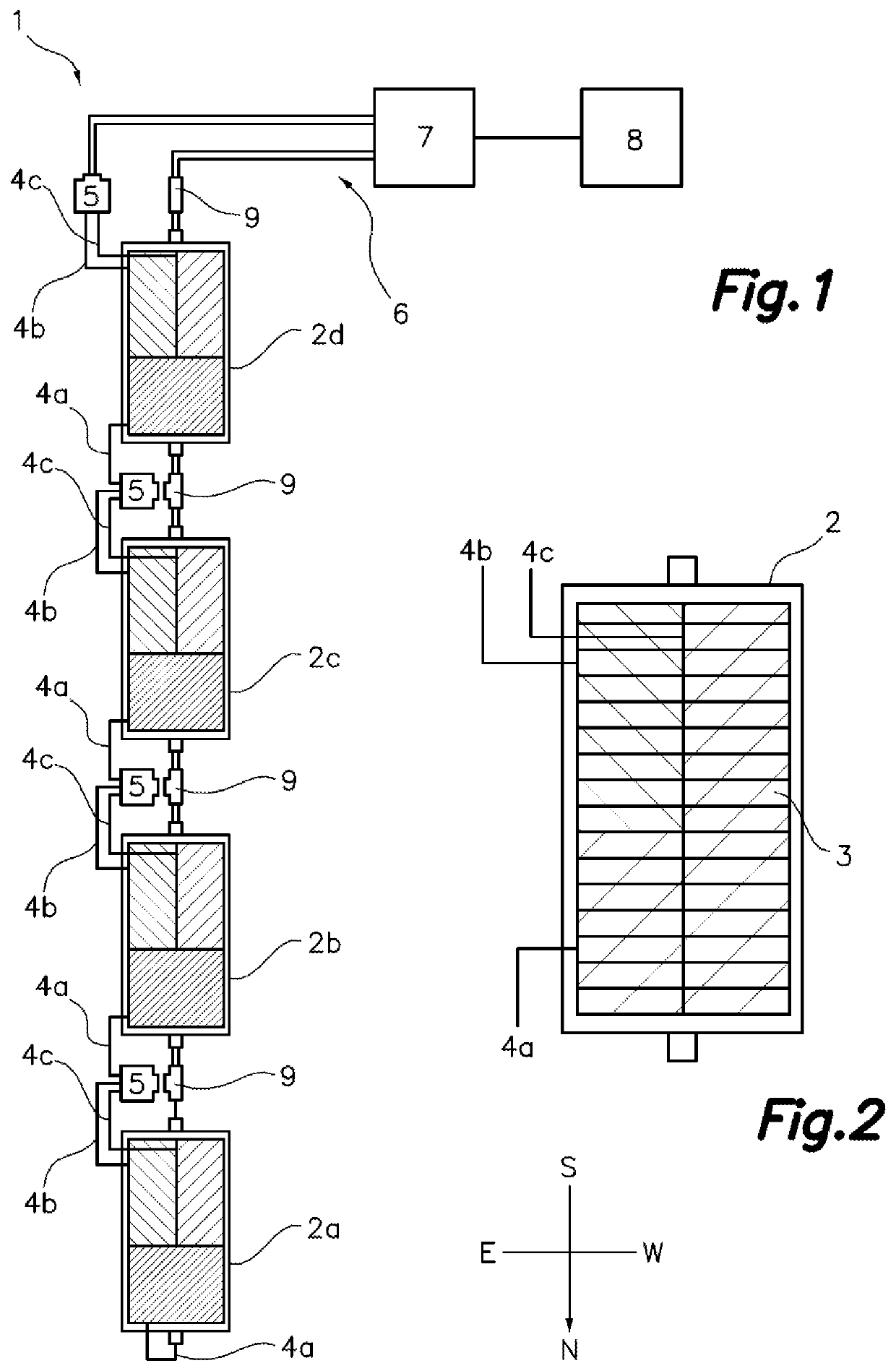
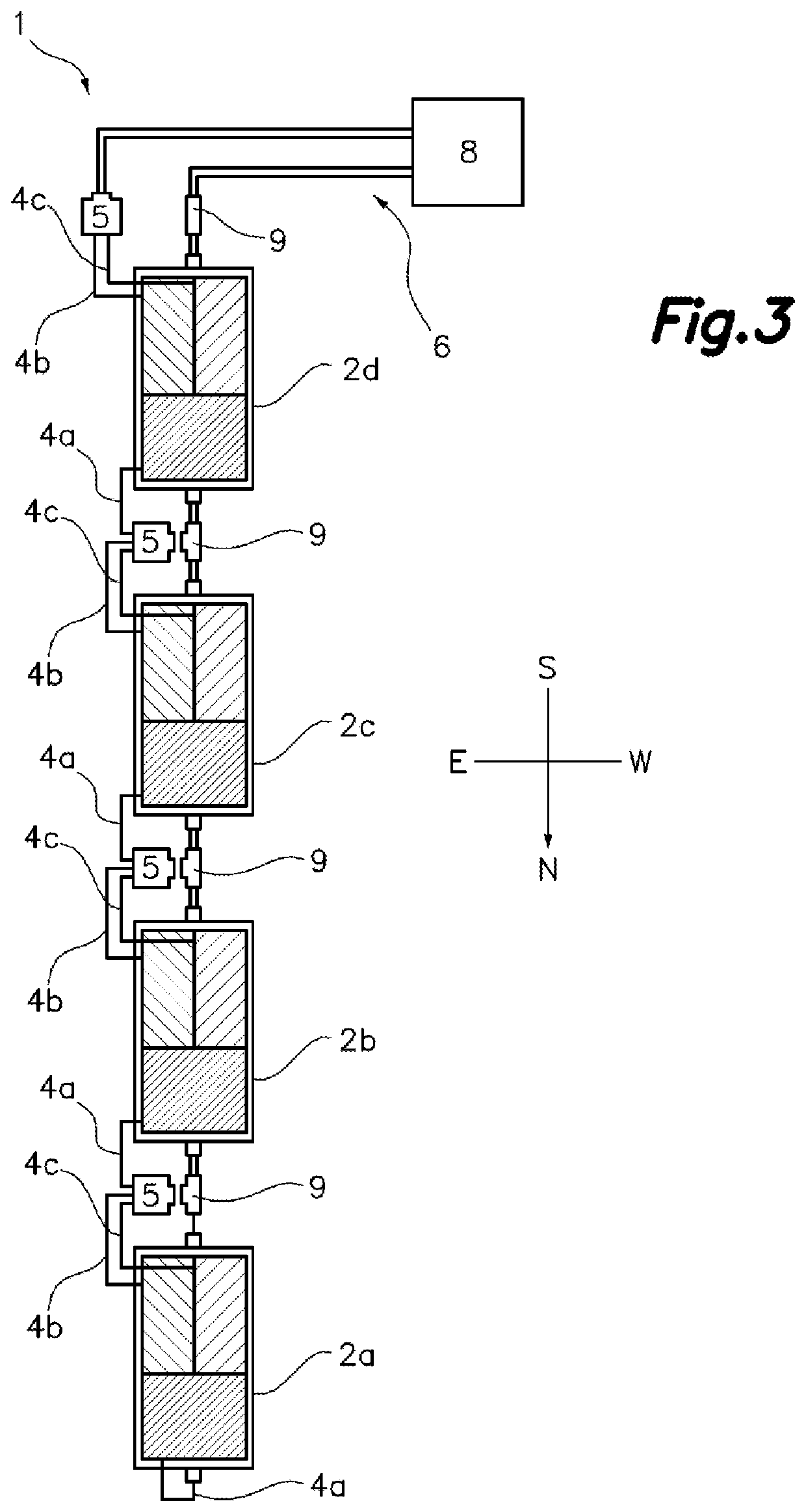
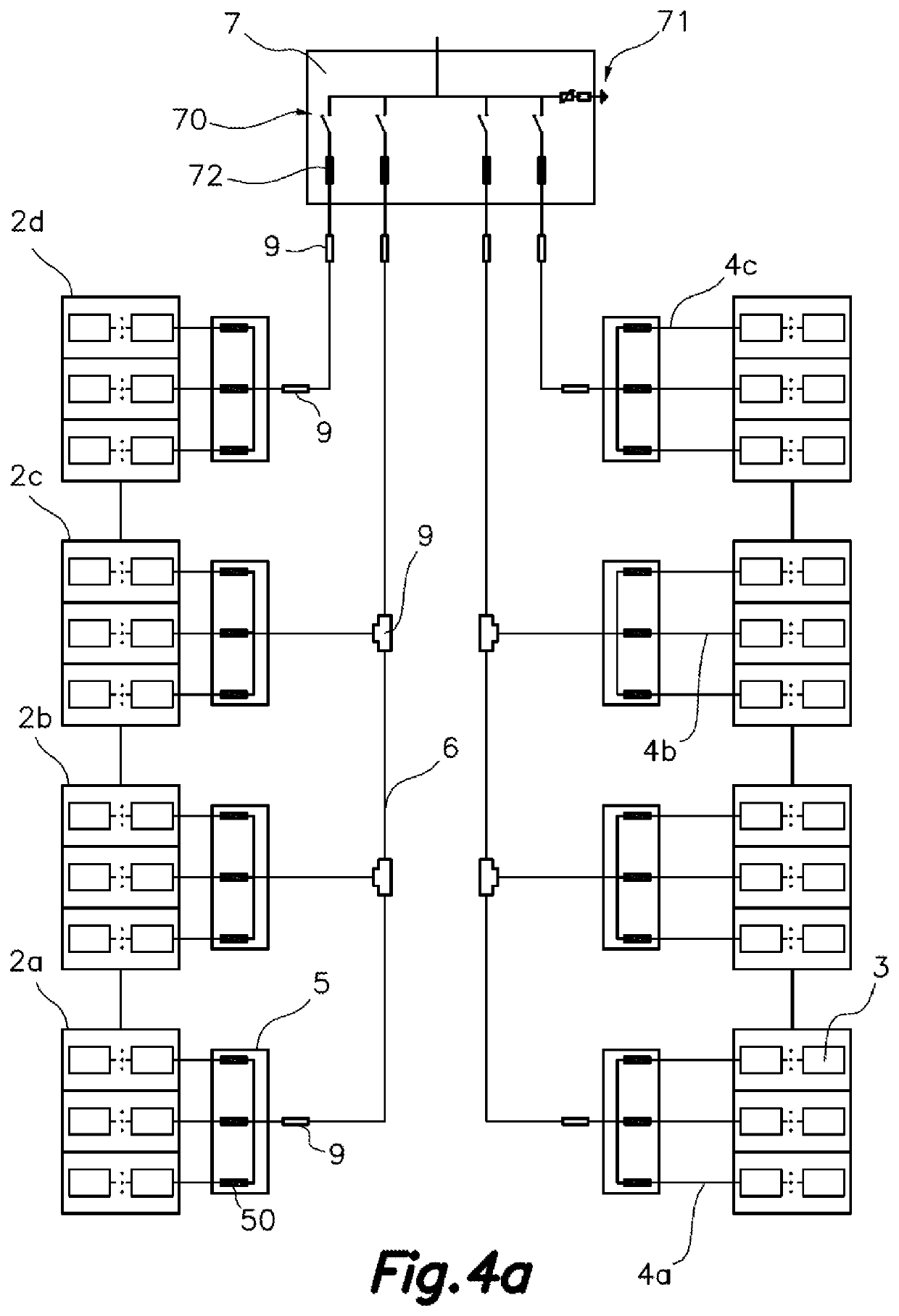
- A plug and play cable harness configuration that reduces cable volume and set-up time by using a string-runner case with integrated fuse-boxes and wireless current measurement, eliminating the need for combiner boxes and optimizing cabling through configurations like 10+2 wiring, which connects solar trackers in parallel and series with inline fuses and T-connectors.

Cabling method
PatentInactiveUS20160294321A1
Innovation
- A method that generates a cabling chart based on specified regulations, determines preferred paths by minimizing cable lengths and duct lengths, and uses heuristic selection and mixed-integer optimization to reduce complexity and workload, allowing for rapid identification of optimum cable routes.


Environmental Impact Assessment of Solar Cable Systems
The environmental impact assessment of solar cable systems represents a critical evaluation framework that examines the ecological footprint throughout the entire lifecycle of photovoltaic infrastructure cabling. This assessment encompasses multiple environmental dimensions, from raw material extraction and manufacturing processes to installation, operational performance, and end-of-life disposal considerations.
Material composition analysis reveals that solar cables typically contain copper or aluminum conductors, cross-linked polyethylene insulation, and various protective sheathing materials. The extraction and processing of these materials generate significant carbon emissions, with copper mining particularly contributing to soil degradation and water contamination. Manufacturing processes involve energy-intensive procedures that release greenhouse gases, while the production of synthetic polymers for cable insulation creates persistent organic compounds with long-term environmental implications.
Installation phase impacts include soil disruption during trenching operations, potential habitat fragmentation, and temporary ecosystem disturbance. Underground cable installation requires extensive excavation that can affect soil structure, drainage patterns, and root systems of existing vegetation. Surface-mounted cable systems may create barriers for small wildlife movement and alter local microclimates through shading effects.
Operational environmental considerations focus on electromagnetic field emissions and their potential effects on local fauna, particularly ground-dwelling species and migratory animals. Long-term exposure studies indicate minimal direct biological impacts, though cumulative effects in large-scale installations require ongoing monitoring protocols.
End-of-life environmental challenges center on cable recycling and waste management. Copper recovery rates exceed 95% through established recycling processes, significantly reducing environmental burden. However, polymer insulation materials present disposal challenges, with thermal recycling generating emissions and landfill disposal creating persistent waste streams.
Mitigation strategies include implementing biodegradable cable sheathing materials, optimizing installation techniques to minimize soil disturbance, and developing comprehensive recycling programs. Advanced cable designs incorporating recycled materials and reduced toxic additives demonstrate promising environmental performance improvements while maintaining electrical reliability standards.
Material composition analysis reveals that solar cables typically contain copper or aluminum conductors, cross-linked polyethylene insulation, and various protective sheathing materials. The extraction and processing of these materials generate significant carbon emissions, with copper mining particularly contributing to soil degradation and water contamination. Manufacturing processes involve energy-intensive procedures that release greenhouse gases, while the production of synthetic polymers for cable insulation creates persistent organic compounds with long-term environmental implications.
Installation phase impacts include soil disruption during trenching operations, potential habitat fragmentation, and temporary ecosystem disturbance. Underground cable installation requires extensive excavation that can affect soil structure, drainage patterns, and root systems of existing vegetation. Surface-mounted cable systems may create barriers for small wildlife movement and alter local microclimates through shading effects.
Operational environmental considerations focus on electromagnetic field emissions and their potential effects on local fauna, particularly ground-dwelling species and migratory animals. Long-term exposure studies indicate minimal direct biological impacts, though cumulative effects in large-scale installations require ongoing monitoring protocols.
End-of-life environmental challenges center on cable recycling and waste management. Copper recovery rates exceed 95% through established recycling processes, significantly reducing environmental burden. However, polymer insulation materials present disposal challenges, with thermal recycling generating emissions and landfill disposal creating persistent waste streams.
Mitigation strategies include implementing biodegradable cable sheathing materials, optimizing installation techniques to minimize soil disturbance, and developing comprehensive recycling programs. Advanced cable designs incorporating recycled materials and reduced toxic additives demonstrate promising environmental performance improvements while maintaining electrical reliability standards.
Cost-Benefit Analysis of Cable Optimization Strategies
The economic evaluation of cable optimization strategies in solar farm infrastructure requires a comprehensive assessment of both immediate capital expenditures and long-term operational benefits. Initial investment considerations include the cost differential between standard copper cables and advanced aluminum conductors, with aluminum options typically offering 30-40% cost savings per linear meter while maintaining comparable performance characteristics. High-voltage DC transmission systems, though requiring higher upfront investment, demonstrate significant cost advantages in large-scale installations exceeding 100MW capacity.
Operational cost analysis reveals substantial benefits from optimized cable routing algorithms, which can reduce total cable length requirements by 15-25% compared to conventional grid layouts. Advanced cable management systems incorporating real-time monitoring capabilities require additional initial investment of approximately $50-80 per monitoring point, but generate measurable returns through predictive maintenance scheduling and reduced downtime incidents.
Energy loss reduction represents the most significant long-term benefit category, with optimized cable sizing and routing strategies typically achieving 2-4% improvement in overall system efficiency. For a 50MW solar installation, this efficiency gain translates to approximately $180,000-360,000 in additional annual revenue, assuming average electricity prices of $0.08-0.12 per kWh. The payback period for comprehensive cable optimization implementations generally ranges from 3.5 to 5.2 years.
Maintenance cost reductions constitute another critical benefit stream, with optimized cable infrastructure demonstrating 40-60% fewer failure incidents compared to standard installations. Preventive maintenance scheduling enabled by integrated monitoring systems reduces emergency repair costs by an estimated 70-80%, while extending average cable lifespan from 20-25 years to 25-30 years.
Risk mitigation benefits, though challenging to quantify precisely, provide substantial value through reduced insurance premiums and improved system reliability ratings. Financial institutions increasingly recognize optimized cable infrastructure as a risk reduction factor, often resulting in 0.2-0.5% lower financing costs for solar projects incorporating advanced cable management strategies.
Operational cost analysis reveals substantial benefits from optimized cable routing algorithms, which can reduce total cable length requirements by 15-25% compared to conventional grid layouts. Advanced cable management systems incorporating real-time monitoring capabilities require additional initial investment of approximately $50-80 per monitoring point, but generate measurable returns through predictive maintenance scheduling and reduced downtime incidents.
Energy loss reduction represents the most significant long-term benefit category, with optimized cable sizing and routing strategies typically achieving 2-4% improvement in overall system efficiency. For a 50MW solar installation, this efficiency gain translates to approximately $180,000-360,000 in additional annual revenue, assuming average electricity prices of $0.08-0.12 per kWh. The payback period for comprehensive cable optimization implementations generally ranges from 3.5 to 5.2 years.
Maintenance cost reductions constitute another critical benefit stream, with optimized cable infrastructure demonstrating 40-60% fewer failure incidents compared to standard installations. Preventive maintenance scheduling enabled by integrated monitoring systems reduces emergency repair costs by an estimated 70-80%, while extending average cable lifespan from 20-25 years to 25-30 years.
Risk mitigation benefits, though challenging to quantify precisely, provide substantial value through reduced insurance premiums and improved system reliability ratings. Financial institutions increasingly recognize optimized cable infrastructure as a risk reduction factor, often resulting in 0.2-0.5% lower financing costs for solar projects incorporating advanced cable management strategies.
Unlock deeper insights with PatSnap Eureka Quick Research — get a full tech report to explore trends and direct your research. Try now!
Generate Your Research Report Instantly with AI Agent
Supercharge your innovation with PatSnap Eureka AI Agent Platform!