

Optimize Actuation Systems for Poppet Valve Longevity
FEB 24, 20269 MIN READ
Generate Your Research Report Instantly with AI Agent
Patsnap Eureka helps you evaluate technical feasibility & market potential.
Poppet Valve Actuation Background and Longevity Goals
Poppet valves represent a fundamental component in fluid control systems, characterized by their disc or cone-shaped closure element that moves perpendicular to the valve seat to regulate flow. These valves have evolved from simple mechanical designs in early steam engines to sophisticated electronically controlled systems in modern automotive, aerospace, and industrial applications. The basic operating principle involves linear motion of the poppet element, which either seals against or lifts from a valve seat to control fluid passage.
The historical development of poppet valve technology spans over two centuries, beginning with rudimentary designs in 19th-century steam applications and progressing through mechanical cam-operated systems to today's advanced electromagnetic and piezoelectric actuation mechanisms. This evolution has been driven by increasing demands for precision, speed, and reliability across diverse industrial sectors.
Contemporary poppet valve applications encompass critical systems including automotive engine management, hydraulic control circuits, pneumatic automation systems, and high-pressure industrial processes. Each application domain presents unique operational requirements regarding response time, pressure differentials, temperature ranges, and cycle frequency, directly influencing actuation system design parameters.
The primary longevity goals for poppet valve actuation systems center on extending operational lifespan while maintaining consistent performance characteristics. Key objectives include minimizing wear-related degradation of sealing surfaces, reducing mechanical stress concentrations in actuator components, and optimizing control algorithms to prevent excessive cycling or harsh operational transitions.
Specific longevity targets typically encompass achieving millions of operational cycles without significant performance degradation, maintaining sealing integrity across extended service intervals, and ensuring consistent response characteristics throughout the valve's operational lifetime. These goals directly correlate with reduced maintenance requirements, improved system reliability, and enhanced overall equipment effectiveness.
The pursuit of enhanced longevity involves addressing multiple technical challenges including material selection for wear resistance, actuation force optimization to minimize impact stresses, and implementation of predictive maintenance strategies. Advanced monitoring systems increasingly play crucial roles in achieving longevity objectives by enabling condition-based maintenance and early detection of performance degradation patterns.
Modern longevity enhancement strategies also incorporate sophisticated control methodologies such as soft-landing algorithms, adaptive force modulation, and real-time performance feedback systems. These approaches aim to optimize the balance between operational performance requirements and component preservation, ultimately extending service life while maintaining system effectiveness across diverse operating conditions.
The historical development of poppet valve technology spans over two centuries, beginning with rudimentary designs in 19th-century steam applications and progressing through mechanical cam-operated systems to today's advanced electromagnetic and piezoelectric actuation mechanisms. This evolution has been driven by increasing demands for precision, speed, and reliability across diverse industrial sectors.
Contemporary poppet valve applications encompass critical systems including automotive engine management, hydraulic control circuits, pneumatic automation systems, and high-pressure industrial processes. Each application domain presents unique operational requirements regarding response time, pressure differentials, temperature ranges, and cycle frequency, directly influencing actuation system design parameters.
The primary longevity goals for poppet valve actuation systems center on extending operational lifespan while maintaining consistent performance characteristics. Key objectives include minimizing wear-related degradation of sealing surfaces, reducing mechanical stress concentrations in actuator components, and optimizing control algorithms to prevent excessive cycling or harsh operational transitions.
Specific longevity targets typically encompass achieving millions of operational cycles without significant performance degradation, maintaining sealing integrity across extended service intervals, and ensuring consistent response characteristics throughout the valve's operational lifetime. These goals directly correlate with reduced maintenance requirements, improved system reliability, and enhanced overall equipment effectiveness.
The pursuit of enhanced longevity involves addressing multiple technical challenges including material selection for wear resistance, actuation force optimization to minimize impact stresses, and implementation of predictive maintenance strategies. Advanced monitoring systems increasingly play crucial roles in achieving longevity objectives by enabling condition-based maintenance and early detection of performance degradation patterns.
Modern longevity enhancement strategies also incorporate sophisticated control methodologies such as soft-landing algorithms, adaptive force modulation, and real-time performance feedback systems. These approaches aim to optimize the balance between operational performance requirements and component preservation, ultimately extending service life while maintaining system effectiveness across diverse operating conditions.
Market Demand for Enhanced Poppet Valve Durability
The global poppet valve market is experiencing significant growth driven by increasing demands for enhanced durability and reliability across multiple industrial sectors. Traditional poppet valves face substantial operational challenges in high-pressure, high-temperature environments where frequent cycling leads to premature wear, seal degradation, and actuator failure. These limitations create substantial maintenance costs and operational downtime, particularly in critical applications such as aerospace hydraulic systems, automotive fuel injection systems, and industrial process control equipment.
Aerospace and defense industries represent the most demanding market segment for enhanced poppet valve durability. Aircraft hydraulic systems require valves capable of withstanding extreme temperature variations, high-frequency operation cycles, and stringent safety requirements. The increasing complexity of modern aircraft systems and the push toward more electric aircraft architectures are driving demand for poppet valves with extended service intervals and improved fault tolerance capabilities.
The automotive sector presents another substantial market opportunity, particularly with the evolution toward advanced fuel injection technologies and hybrid powertrains. Direct injection systems require poppet valves capable of precise control under extreme pressures while maintaining durability over millions of operating cycles. Electric vehicle adoption is also creating new demands for specialized poppet valves in battery cooling systems and thermal management applications.
Industrial process industries, including oil and gas, chemical processing, and power generation, are increasingly prioritizing valve longevity to reduce total cost of ownership. These sectors face growing pressure to minimize unplanned maintenance shutdowns while operating in increasingly harsh environments. Enhanced poppet valve durability directly translates to improved plant availability and reduced lifecycle costs.
Market analysis indicates that end users are willing to invest in premium valve solutions that demonstrate measurable improvements in mean time between failures and reduced maintenance requirements. The total addressable market encompasses not only new valve installations but also retrofit opportunities for existing systems seeking performance upgrades. This dual market approach significantly expands the commercial potential for advanced actuation systems designed to optimize poppet valve longevity.
Aerospace and defense industries represent the most demanding market segment for enhanced poppet valve durability. Aircraft hydraulic systems require valves capable of withstanding extreme temperature variations, high-frequency operation cycles, and stringent safety requirements. The increasing complexity of modern aircraft systems and the push toward more electric aircraft architectures are driving demand for poppet valves with extended service intervals and improved fault tolerance capabilities.
The automotive sector presents another substantial market opportunity, particularly with the evolution toward advanced fuel injection technologies and hybrid powertrains. Direct injection systems require poppet valves capable of precise control under extreme pressures while maintaining durability over millions of operating cycles. Electric vehicle adoption is also creating new demands for specialized poppet valves in battery cooling systems and thermal management applications.
Industrial process industries, including oil and gas, chemical processing, and power generation, are increasingly prioritizing valve longevity to reduce total cost of ownership. These sectors face growing pressure to minimize unplanned maintenance shutdowns while operating in increasingly harsh environments. Enhanced poppet valve durability directly translates to improved plant availability and reduced lifecycle costs.
Market analysis indicates that end users are willing to invest in premium valve solutions that demonstrate measurable improvements in mean time between failures and reduced maintenance requirements. The total addressable market encompasses not only new valve installations but also retrofit opportunities for existing systems seeking performance upgrades. This dual market approach significantly expands the commercial potential for advanced actuation systems designed to optimize poppet valve longevity.
Current Actuation Challenges and Wear Mechanisms
Poppet valve actuation systems face significant operational challenges that directly impact valve longevity and system reliability. The primary challenge stems from the high-frequency cycling demands in modern applications, where valves must operate at rates exceeding 1000 Hz while maintaining precise timing and sealing performance. This intensive operational regime creates substantial mechanical stress on actuator components, leading to accelerated wear patterns and reduced service life.
Electromagnetic actuators, commonly employed in poppet valve systems, encounter specific challenges related to magnetic saturation and eddy current losses. The rapid switching requirements generate excessive heat buildup, causing thermal expansion that affects clearance tolerances and magnetic field strength. Additionally, the electromagnetic coils experience voltage spikes during switching transitions, contributing to insulation degradation and eventual actuator failure.
Mechanical wear mechanisms represent the most critical factor limiting poppet valve longevity. Contact wear occurs at multiple interfaces, including the valve seat, stem guides, and actuator linkages. The repetitive impact forces during valve closure create micro-fractures and surface deformation, particularly when operating under high-pressure differentials. Fretting wear develops at contact points where small-amplitude oscillations occur, generating abrasive particles that accelerate system degradation.
Hydraulic and pneumatic actuation systems face distinct challenges related to fluid contamination and seal degradation. Particulate contamination in hydraulic fluid causes abrasive wear on cylinder walls and piston seals, while temperature fluctuations affect fluid viscosity and seal elasticity. Pneumatic systems suffer from moisture accumulation and pressure fluctuations that compromise actuator response consistency and contribute to corrosion-related wear.
Dynamic loading conditions create additional stress concentrations that exceed static design parameters. Valve flutter phenomena, caused by fluid flow instabilities, introduce high-frequency vibrations that propagate through the actuation system. These vibrations cause fatigue crack initiation in structural components and accelerate bearing wear in pivot mechanisms.
Lubrication challenges significantly impact wear mechanisms, particularly in high-temperature applications where conventional lubricants degrade rapidly. Insufficient lubrication leads to boundary lubrication conditions, increasing friction coefficients and wear rates. Conversely, over-lubrication can attract contaminants and create hydraulic lock conditions that impede proper valve operation.
Material compatibility issues arise when dissimilar metals in the actuation system create galvanic corrosion cells, particularly in marine or chemical processing environments. This electrochemical wear mechanism causes preferential material removal and dimensional changes that affect actuator alignment and performance consistency over extended operational periods.
Electromagnetic actuators, commonly employed in poppet valve systems, encounter specific challenges related to magnetic saturation and eddy current losses. The rapid switching requirements generate excessive heat buildup, causing thermal expansion that affects clearance tolerances and magnetic field strength. Additionally, the electromagnetic coils experience voltage spikes during switching transitions, contributing to insulation degradation and eventual actuator failure.
Mechanical wear mechanisms represent the most critical factor limiting poppet valve longevity. Contact wear occurs at multiple interfaces, including the valve seat, stem guides, and actuator linkages. The repetitive impact forces during valve closure create micro-fractures and surface deformation, particularly when operating under high-pressure differentials. Fretting wear develops at contact points where small-amplitude oscillations occur, generating abrasive particles that accelerate system degradation.
Hydraulic and pneumatic actuation systems face distinct challenges related to fluid contamination and seal degradation. Particulate contamination in hydraulic fluid causes abrasive wear on cylinder walls and piston seals, while temperature fluctuations affect fluid viscosity and seal elasticity. Pneumatic systems suffer from moisture accumulation and pressure fluctuations that compromise actuator response consistency and contribute to corrosion-related wear.
Dynamic loading conditions create additional stress concentrations that exceed static design parameters. Valve flutter phenomena, caused by fluid flow instabilities, introduce high-frequency vibrations that propagate through the actuation system. These vibrations cause fatigue crack initiation in structural components and accelerate bearing wear in pivot mechanisms.
Lubrication challenges significantly impact wear mechanisms, particularly in high-temperature applications where conventional lubricants degrade rapidly. Insufficient lubrication leads to boundary lubrication conditions, increasing friction coefficients and wear rates. Conversely, over-lubrication can attract contaminants and create hydraulic lock conditions that impede proper valve operation.
Material compatibility issues arise when dissimilar metals in the actuation system create galvanic corrosion cells, particularly in marine or chemical processing environments. This electrochemical wear mechanism causes preferential material removal and dimensional changes that affect actuator alignment and performance consistency over extended operational periods.
Existing Actuation Optimization Solutions
01 Advanced coating materials and surface treatments for poppet valves
Application of specialized coating materials and surface treatment technologies to enhance wear resistance and corrosion resistance of poppet valves. These treatments can include hard coatings, thermal spray coatings, and surface hardening processes that significantly extend valve service life by protecting against high-temperature oxidation, erosion, and chemical attack. The coatings create a protective barrier that reduces friction and wear during valve operation.- Advanced coating materials and surface treatments for poppet valves: Application of specialized coating materials and surface treatment technologies to enhance wear resistance and corrosion resistance of poppet valves. These treatments can include hard coatings, thermal spray coatings, and surface hardening processes that significantly extend valve service life by protecting against high-temperature oxidation, erosion, and chemical attack. The coatings create a protective barrier that reduces friction and wear during valve operation.
- Optimized valve seat design and materials: Implementation of improved valve seat configurations and material selections to reduce wear and extend operational life. This includes the use of wear-resistant alloys, optimized seating angles, and enhanced contact surface geometries that distribute stress more evenly. The design considerations focus on minimizing impact forces and improving sealing performance over extended service periods.
- Heat-resistant alloy compositions for valve construction: Development and utilization of specialized heat-resistant alloy compositions for manufacturing poppet valves that operate in high-temperature environments. These alloys are formulated to maintain mechanical properties, resist thermal fatigue, and prevent degradation under extreme operating conditions. The material compositions are engineered to provide superior creep resistance and thermal stability.
- Valve stem and guide improvements: Enhancements to valve stem design and guide systems to reduce friction, minimize wear, and improve operational reliability. This includes modifications to stem geometry, surface finish optimization, and the use of advanced guide materials that provide better lubrication and heat dissipation. These improvements help maintain proper valve alignment and reduce side loading that can cause premature failure.
- Cooling and thermal management systems: Integration of cooling mechanisms and thermal management strategies to control valve operating temperatures and prevent thermal degradation. These systems may include internal cooling passages, enhanced heat dissipation features, and thermal barrier designs that protect critical valve components from excessive heat exposure. Effective thermal management extends valve life by reducing thermal stress and preventing material property degradation.
02 Optimized valve seat design and materials
Implementation of improved valve seat configurations and material selections to reduce wear and extend operational life. This includes the use of wear-resistant alloys, optimized seating angles, and enhanced contact surface geometries that distribute stress more evenly. The valve seat design focuses on minimizing impact forces and improving sealing performance over extended service periods.Expand Specific Solutions03 Heat-resistant alloy compositions for valve construction
Development and utilization of specialized heat-resistant alloy compositions for manufacturing poppet valves that operate in high-temperature environments. These alloys are formulated to maintain mechanical properties, resist thermal fatigue, and prevent degradation under extreme operating conditions. The material compositions are engineered to provide superior creep resistance and thermal stability.Expand Specific Solutions04 Valve stem and guide improvements
Enhancements to valve stem design and guide mechanisms to reduce friction, minimize wear, and improve operational reliability. This includes optimized stem geometries, improved lubrication systems, and advanced guide materials that reduce side loading and binding. These improvements help maintain proper valve alignment and reduce premature failure.Expand Specific Solutions05 Cooling and thermal management systems
Integration of cooling mechanisms and thermal management strategies to control valve operating temperatures and reduce thermal stress. These systems may include internal cooling passages, heat dissipation features, and thermal barrier designs that protect critical valve components from excessive heat exposure. Effective thermal management prevents material degradation and extends valve longevity.Expand Specific Solutions
Key Players in Valve Actuation System Industry
The poppet valve actuation systems optimization market represents a mature industrial sector experiencing steady growth driven by increasing demands for equipment reliability and operational efficiency across heavy machinery, automotive, and industrial applications. The market demonstrates significant scale, particularly in construction equipment, mining machinery, and fluid control systems, with established players commanding substantial market shares. Technology maturity varies considerably among key participants, with industry leaders like Caterpillar and Honda Motor demonstrating advanced integrated solutions combining mechanical expertise with digital monitoring capabilities. Specialized valve manufacturers such as Fujikin, Burckhardt Compression, and Engineered Controls International have developed sophisticated actuation technologies focusing on precision control and extended component lifecycles. Emerging players like Cheesecake Energy and IQ Valves are introducing innovative approaches including smart materials and proportional control systems, while traditional automotive suppliers such as MAHLE Thermal & Fluid Systems and Valeo are leveraging their manufacturing scale to advance electro-mechanical actuation solutions, indicating a competitive landscape transitioning toward intelligent, predictive maintenance-enabled systems.
Caterpillar, Inc.
Technical Solution: Caterpillar has developed advanced hydraulic actuation systems for poppet valves in heavy machinery applications, incorporating variable displacement pumps and electronic control modules to optimize valve timing and reduce mechanical stress. Their technology features adaptive pressure control algorithms that monitor valve seat contact forces and adjust actuation parameters in real-time to minimize wear. The system includes predictive maintenance capabilities using sensor data to detect early signs of valve degradation, enabling proactive replacement scheduling. Additionally, Caterpillar employs specialized coatings and heat treatment processes on valve components to enhance durability under high-pressure operating conditions.
Strengths: Robust design for harsh industrial environments, extensive field testing data, integrated predictive maintenance. Weaknesses: Higher cost, complex system requiring specialized maintenance expertise.
Burckhardt Compression AG
Technical Solution: Burckhardt Compression specializes in optimized actuation systems for poppet valves in reciprocating compressors, utilizing pneumatic and hydraulic actuators with precise timing control to extend valve life. Their PROGNOST-NT monitoring system continuously tracks valve performance parameters including opening/closing velocities, impact forces, and temperature variations to optimize actuation profiles. The company implements advanced materials such as stellite-faced valve seats and specialized spring designs to reduce fatigue failures. Their actuation systems feature variable lift profiles and soft-landing mechanisms that minimize valve impact during closure, significantly extending operational life in high-cycle applications.
Strengths: Specialized expertise in compression applications, proven monitoring systems, advanced materials integration. Weaknesses: Limited to specific industrial applications, high initial investment requirements.
Core Patents in Poppet Valve Longevity Enhancement
Poppet valve with sloped purge holes and method for reducing a pressure force therein
PatentActiveUS20100025601A1
Innovation
- The design incorporates a poppet valve with a valve body, poppet guide, and a biasing member that accelerates gas flow through sloped purge holes, reducing static pressure in the internal chamber and stabilizing the opening process by reducing the gas pressure force acting on the poppet shutter, thereby requiring less differential pressure to open the valve.
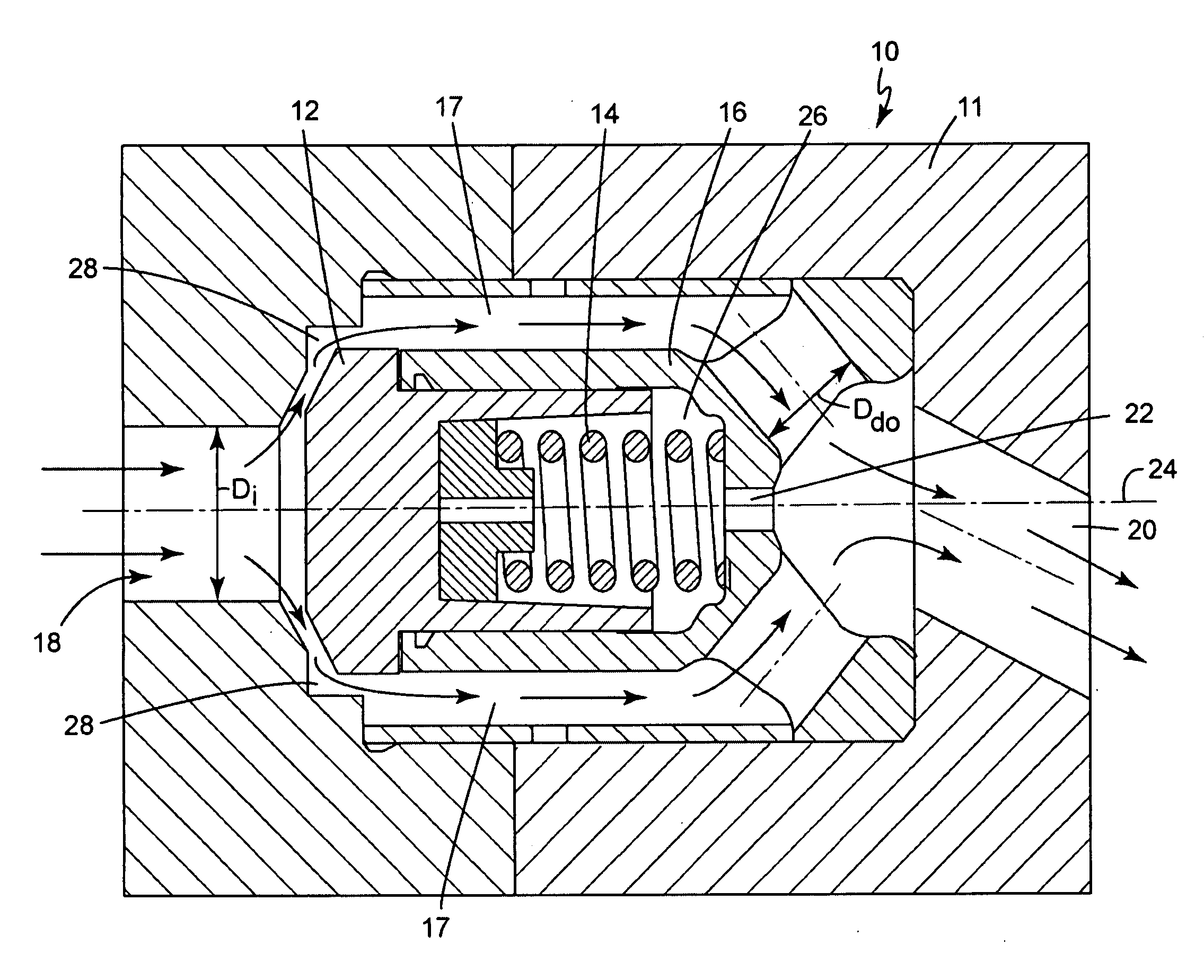
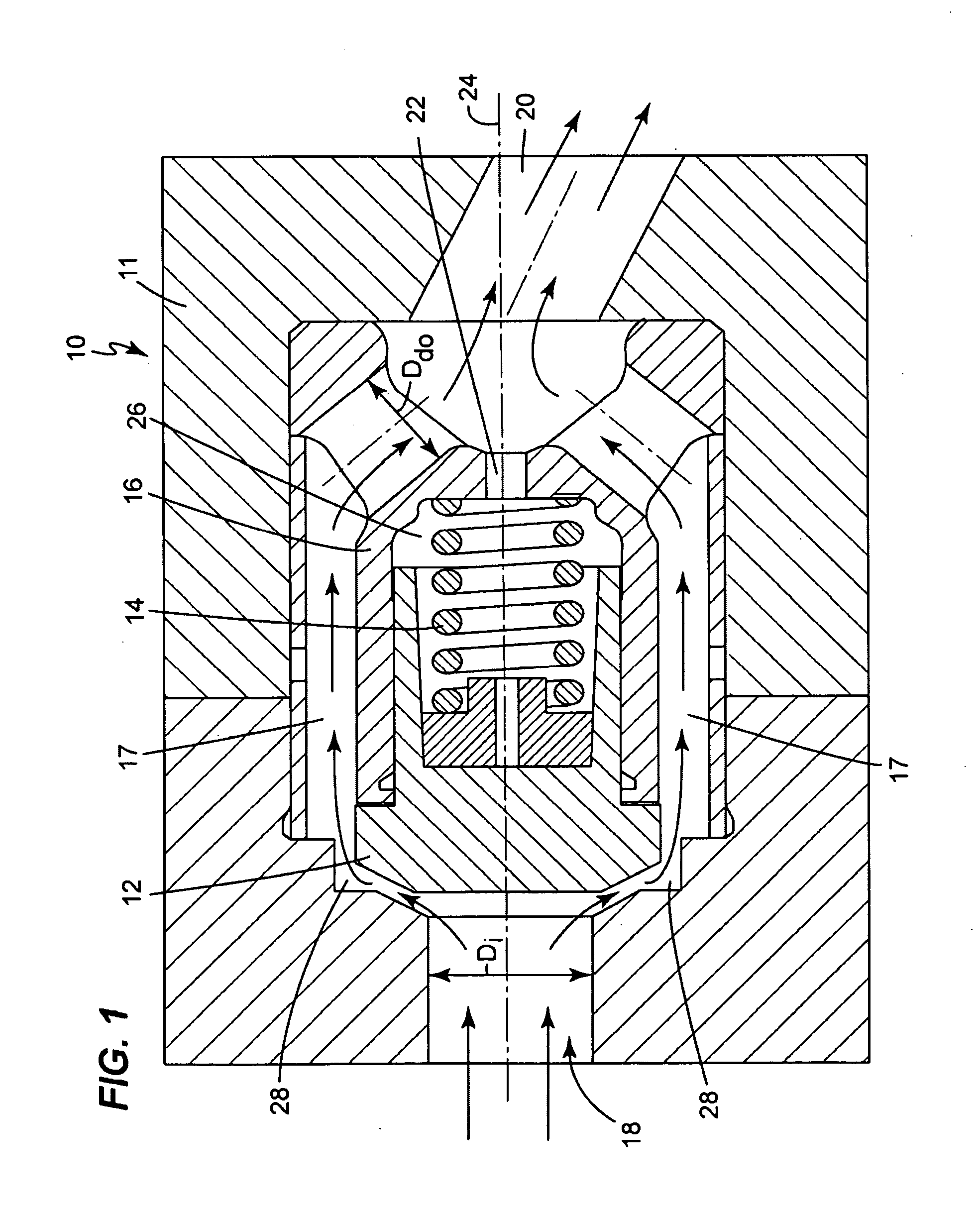
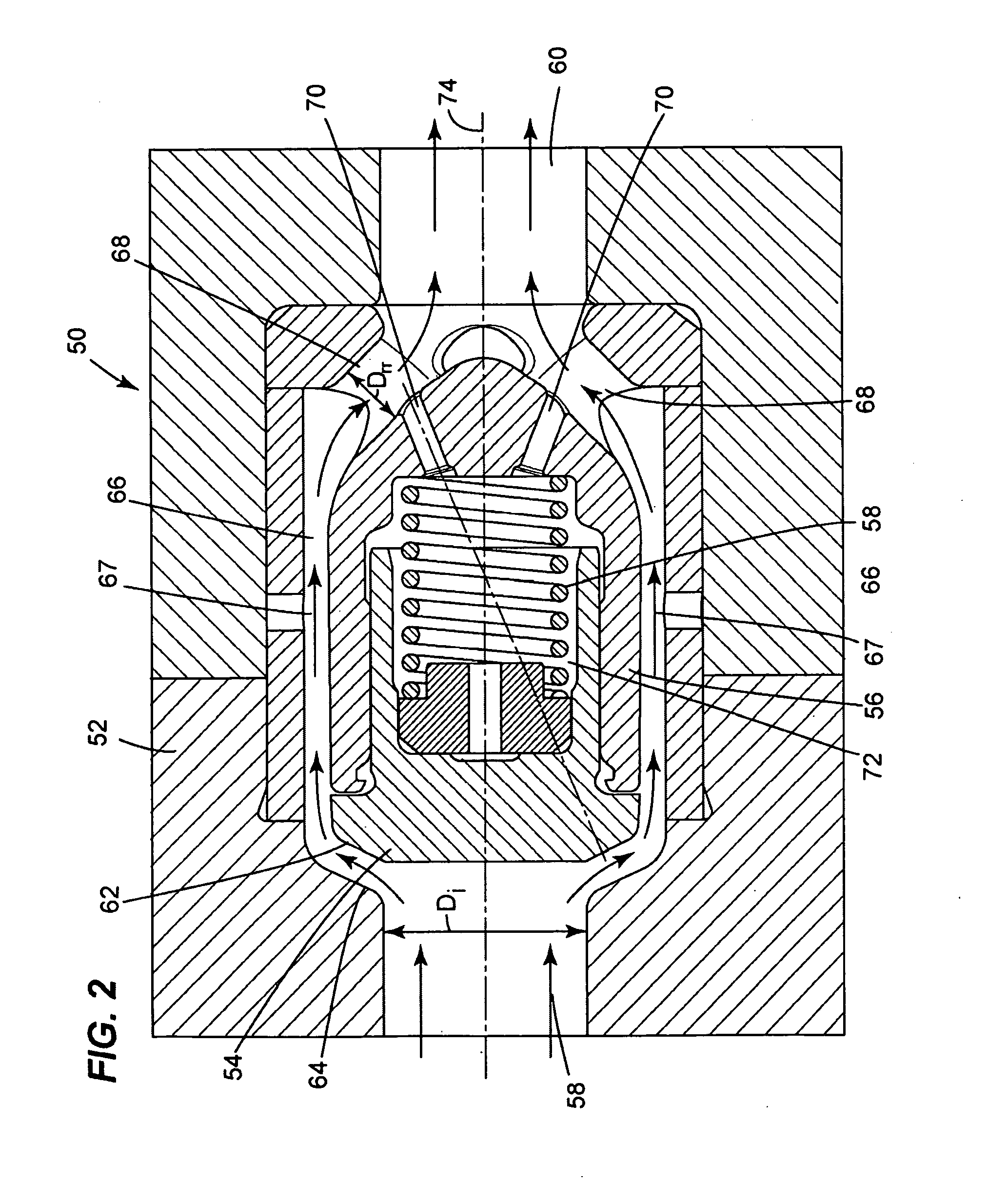
Poppet valve
PatentInactiveUS20030015240A1
Innovation
- A poppet valve design featuring a body and poppet with axial movement, biased by a spring, includes an interface element for rotation and an abutment to limit stroke, reducing torsional stress and interference, and a leg configuration with changing cross-sectional area for enhanced strength and reduced wear.


Material Science Advances for Valve Components
Material science innovations have emerged as a cornerstone for enhancing poppet valve longevity, particularly in addressing the fundamental challenges of wear, corrosion, and thermal degradation that plague traditional valve components. Advanced metallurgical developments have introduced superalloys and specialized steel compositions that demonstrate superior resistance to cyclic loading and temperature fluctuations inherent in actuation systems.
Ceramic matrix composites represent a breakthrough in valve seat and disc applications, offering exceptional hardness and thermal stability while maintaining dimensional accuracy under extreme operating conditions. Silicon carbide and alumina-based ceramics have shown remarkable performance in reducing friction coefficients and minimizing material transfer during valve operation, directly contributing to extended service life.
Surface engineering technologies have revolutionized component durability through advanced coating systems. Physical vapor deposition and chemical vapor deposition techniques enable the application of diamond-like carbon coatings, titanium nitride layers, and chromium-based films that provide exceptional wear resistance and reduced adhesive wear mechanisms. These coatings create protective barriers that maintain surface integrity throughout millions of actuation cycles.
Nanostructured materials present unprecedented opportunities for valve component optimization. Nanocrystalline metals exhibit enhanced strength-to-weight ratios and improved fatigue resistance compared to conventional grain structures. Carbon nanotube reinforced composites offer unique combinations of mechanical properties that address multiple failure modes simultaneously.
Smart materials integration introduces self-healing capabilities and adaptive properties to valve systems. Shape memory alloys enable components to recover from deformation, while self-lubricating materials reduce maintenance requirements and extend operational intervals. These innovations represent a paradigm shift toward autonomous longevity enhancement.
Additive manufacturing technologies have unlocked design possibilities for complex internal geometries and functionally graded materials, allowing for optimized stress distribution and targeted property enhancement in critical wear zones. This manufacturing approach enables the creation of components with varying material properties throughout their structure, maximizing performance where needed most.
Ceramic matrix composites represent a breakthrough in valve seat and disc applications, offering exceptional hardness and thermal stability while maintaining dimensional accuracy under extreme operating conditions. Silicon carbide and alumina-based ceramics have shown remarkable performance in reducing friction coefficients and minimizing material transfer during valve operation, directly contributing to extended service life.
Surface engineering technologies have revolutionized component durability through advanced coating systems. Physical vapor deposition and chemical vapor deposition techniques enable the application of diamond-like carbon coatings, titanium nitride layers, and chromium-based films that provide exceptional wear resistance and reduced adhesive wear mechanisms. These coatings create protective barriers that maintain surface integrity throughout millions of actuation cycles.
Nanostructured materials present unprecedented opportunities for valve component optimization. Nanocrystalline metals exhibit enhanced strength-to-weight ratios and improved fatigue resistance compared to conventional grain structures. Carbon nanotube reinforced composites offer unique combinations of mechanical properties that address multiple failure modes simultaneously.
Smart materials integration introduces self-healing capabilities and adaptive properties to valve systems. Shape memory alloys enable components to recover from deformation, while self-lubricating materials reduce maintenance requirements and extend operational intervals. These innovations represent a paradigm shift toward autonomous longevity enhancement.
Additive manufacturing technologies have unlocked design possibilities for complex internal geometries and functionally graded materials, allowing for optimized stress distribution and targeted property enhancement in critical wear zones. This manufacturing approach enables the creation of components with varying material properties throughout their structure, maximizing performance where needed most.
Predictive Maintenance Technologies for Valve Systems
Predictive maintenance technologies have emerged as critical enablers for extending poppet valve operational life through proactive intervention strategies. These systems leverage advanced sensor networks, data analytics, and machine learning algorithms to monitor valve performance parameters in real-time, enabling maintenance teams to identify potential failures before they occur. The integration of predictive maintenance approaches with optimized actuation systems represents a paradigm shift from reactive to proactive maintenance philosophies.
Modern predictive maintenance frameworks for valve systems incorporate multiple sensing modalities to capture comprehensive operational data. Vibration sensors monitor mechanical wear patterns in actuation mechanisms, while pressure transducers track performance degradation in sealing surfaces. Temperature monitoring systems detect thermal anomalies that may indicate impending component failures. Acoustic emission sensors can identify early-stage crack propagation in valve bodies and actuator components. These multi-parameter monitoring systems generate continuous data streams that feed into sophisticated analytics platforms.
Machine learning algorithms play a pivotal role in transforming raw sensor data into actionable maintenance insights. Supervised learning models trained on historical failure data can predict remaining useful life for critical valve components. Unsupervised anomaly detection algorithms identify unusual operational patterns that may precede catastrophic failures. Deep learning neural networks excel at recognizing complex failure signatures across multiple sensor channels simultaneously. These algorithms continuously refine their predictive accuracy through exposure to operational data.
Digital twin technologies represent an advanced frontier in predictive maintenance for valve systems. These virtual replicas of physical valve assemblies simulate real-world operating conditions and predict component degradation trajectories. Digital twins integrate physics-based models with real-time sensor data to provide highly accurate failure predictions. They enable maintenance teams to test various operational scenarios and optimize maintenance schedules without disrupting actual production processes.
Cloud-based predictive maintenance platforms offer scalable solutions for managing large valve populations across distributed facilities. These systems aggregate data from multiple valve installations, enabling cross-system learning and improved prediction accuracy. Edge computing capabilities ensure real-time processing of critical safety parameters while reducing bandwidth requirements for continuous monitoring applications.
The economic benefits of predictive maintenance for valve systems include reduced unplanned downtime, optimized spare parts inventory, and extended equipment lifecycles. Studies indicate that predictive maintenance strategies can reduce maintenance costs by 25-30% while improving overall equipment effectiveness by 15-20% compared to traditional time-based maintenance approaches.
Modern predictive maintenance frameworks for valve systems incorporate multiple sensing modalities to capture comprehensive operational data. Vibration sensors monitor mechanical wear patterns in actuation mechanisms, while pressure transducers track performance degradation in sealing surfaces. Temperature monitoring systems detect thermal anomalies that may indicate impending component failures. Acoustic emission sensors can identify early-stage crack propagation in valve bodies and actuator components. These multi-parameter monitoring systems generate continuous data streams that feed into sophisticated analytics platforms.
Machine learning algorithms play a pivotal role in transforming raw sensor data into actionable maintenance insights. Supervised learning models trained on historical failure data can predict remaining useful life for critical valve components. Unsupervised anomaly detection algorithms identify unusual operational patterns that may precede catastrophic failures. Deep learning neural networks excel at recognizing complex failure signatures across multiple sensor channels simultaneously. These algorithms continuously refine their predictive accuracy through exposure to operational data.
Digital twin technologies represent an advanced frontier in predictive maintenance for valve systems. These virtual replicas of physical valve assemblies simulate real-world operating conditions and predict component degradation trajectories. Digital twins integrate physics-based models with real-time sensor data to provide highly accurate failure predictions. They enable maintenance teams to test various operational scenarios and optimize maintenance schedules without disrupting actual production processes.
Cloud-based predictive maintenance platforms offer scalable solutions for managing large valve populations across distributed facilities. These systems aggregate data from multiple valve installations, enabling cross-system learning and improved prediction accuracy. Edge computing capabilities ensure real-time processing of critical safety parameters while reducing bandwidth requirements for continuous monitoring applications.
The economic benefits of predictive maintenance for valve systems include reduced unplanned downtime, optimized spare parts inventory, and extended equipment lifecycles. Studies indicate that predictive maintenance strategies can reduce maintenance costs by 25-30% while improving overall equipment effectiveness by 15-20% compared to traditional time-based maintenance approaches.
Unlock deeper insights with Patsnap Eureka Quick Research — get a full tech report to explore trends and direct your research. Try now!
Generate Your Research Report Instantly with AI Agent
Supercharge your innovation with Patsnap Eureka AI Agent Platform!