Optimize capillary heat pipe vapor core diameter to avoid choking
APR 30, 20269 MIN READ
Generate Your Research Report Instantly with AI Agent
PatSnap Eureka helps you evaluate technical feasibility & market potential.
Capillary Heat Pipe Technology Background and Optimization Goals
Capillary heat pipes represent a critical thermal management technology that has evolved significantly since their conceptual introduction in the 1960s. These passive two-phase heat transfer devices utilize the principles of evaporation, vapor transport, and condensation within a sealed container to achieve highly efficient heat transfer with minimal temperature gradients. The technology has progressed from simple gravity-assisted thermosiphons to sophisticated capillary-driven systems capable of operating against gravity and in various orientations.
The fundamental operating principle relies on a porous wick structure that provides capillary pumping force to return condensed working fluid from the condenser to the evaporator section. This capillary action eliminates the need for external pumping mechanisms, making heat pipes inherently reliable and maintenance-free. The vapor core, which occupies the central region of the heat pipe, serves as the primary pathway for vapor transport from the evaporator to the condenser.
Historical development has witnessed continuous improvements in wick structures, working fluid selection, and geometric optimization. Early designs focused primarily on maximizing heat transport capacity, while modern approaches emphasize system-level optimization considering factors such as thermal resistance, weight constraints, and manufacturing feasibility. The evolution has been driven by increasingly demanding applications in electronics cooling, aerospace systems, and renewable energy technologies.
Contemporary optimization efforts have identified vapor core diameter as a critical design parameter that significantly influences heat pipe performance limits. The vapor core diameter directly affects vapor velocity, pressure drop characteristics, and the onset of flow instabilities that can lead to performance degradation or complete operational failure.
The primary optimization goal centers on preventing choking phenomena, which occurs when vapor velocities approach sonic conditions, creating a fundamental limit on heat transport capacity. Choking represents one of the most severe operational constraints, as it can cause catastrophic performance reduction and potential system failure. This phenomenon becomes particularly critical in high-heat-flux applications where vapor generation rates are substantial.
Secondary objectives include minimizing vapor pressure drop while maintaining adequate liquid return capability through the wick structure. The optimization process must balance competing requirements between vapor flow area and liquid flow area, as increasing vapor core diameter reduces the available space for wick material, potentially compromising capillary pumping performance.
Advanced optimization strategies now incorporate multi-physics modeling approaches that simultaneously consider heat transfer, fluid dynamics, and thermodynamic constraints. These comprehensive models enable prediction of optimal vapor core dimensions that maximize heat transport capacity while ensuring stable operation across varying thermal loads and operating conditions.
The fundamental operating principle relies on a porous wick structure that provides capillary pumping force to return condensed working fluid from the condenser to the evaporator section. This capillary action eliminates the need for external pumping mechanisms, making heat pipes inherently reliable and maintenance-free. The vapor core, which occupies the central region of the heat pipe, serves as the primary pathway for vapor transport from the evaporator to the condenser.
Historical development has witnessed continuous improvements in wick structures, working fluid selection, and geometric optimization. Early designs focused primarily on maximizing heat transport capacity, while modern approaches emphasize system-level optimization considering factors such as thermal resistance, weight constraints, and manufacturing feasibility. The evolution has been driven by increasingly demanding applications in electronics cooling, aerospace systems, and renewable energy technologies.
Contemporary optimization efforts have identified vapor core diameter as a critical design parameter that significantly influences heat pipe performance limits. The vapor core diameter directly affects vapor velocity, pressure drop characteristics, and the onset of flow instabilities that can lead to performance degradation or complete operational failure.
The primary optimization goal centers on preventing choking phenomena, which occurs when vapor velocities approach sonic conditions, creating a fundamental limit on heat transport capacity. Choking represents one of the most severe operational constraints, as it can cause catastrophic performance reduction and potential system failure. This phenomenon becomes particularly critical in high-heat-flux applications where vapor generation rates are substantial.
Secondary objectives include minimizing vapor pressure drop while maintaining adequate liquid return capability through the wick structure. The optimization process must balance competing requirements between vapor flow area and liquid flow area, as increasing vapor core diameter reduces the available space for wick material, potentially compromising capillary pumping performance.
Advanced optimization strategies now incorporate multi-physics modeling approaches that simultaneously consider heat transfer, fluid dynamics, and thermodynamic constraints. These comprehensive models enable prediction of optimal vapor core dimensions that maximize heat transport capacity while ensuring stable operation across varying thermal loads and operating conditions.
Market Demand for Enhanced Heat Pipe Performance
The global heat pipe market is experiencing unprecedented growth driven by escalating thermal management challenges across multiple industries. Electronic devices continue to shrink while power densities increase exponentially, creating critical heat dissipation bottlenecks that conventional cooling solutions cannot adequately address. This trend is particularly pronounced in high-performance computing, data centers, and mobile electronics where thermal throttling directly impacts system performance and reliability.
Data center operators face mounting pressure to improve energy efficiency while managing increasingly dense server configurations. Heat pipes offer superior thermal conductivity compared to traditional heat sinks, enabling more compact cooling solutions that reduce both space requirements and energy consumption. The growing adoption of artificial intelligence and machine learning workloads has intensified computational demands, further amplifying the need for advanced thermal management technologies.
The automotive industry represents another significant growth driver, particularly with the rapid expansion of electric vehicles and autonomous driving systems. Battery thermal management systems require precise temperature control to optimize performance, safety, and longevity. Heat pipes provide efficient heat transfer solutions for battery packs, power electronics, and charging infrastructure, addressing critical thermal challenges in next-generation vehicles.
Aerospace and defense applications demand lightweight, reliable thermal management solutions capable of operating under extreme conditions. Heat pipes offer exceptional performance-to-weight ratios while maintaining operational reliability in harsh environments. The increasing complexity of avionics systems and satellite electronics creates substantial opportunities for enhanced heat pipe technologies.
Consumer electronics manufacturers continuously seek thinner, lighter devices with improved performance characteristics. Gaming laptops, smartphones, and wearable devices require sophisticated thermal management to prevent overheating while maintaining compact form factors. Enhanced heat pipe performance directly enables product differentiation and improved user experiences.
Industrial applications including renewable energy systems, LED lighting, and manufacturing equipment increasingly rely on heat pipes for thermal regulation. Solar panel efficiency, LED lifespan, and industrial process reliability all benefit from optimized thermal management solutions.
The market demand specifically emphasizes performance optimization rather than cost reduction, indicating willingness to invest in advanced technologies that deliver superior thermal characteristics. Avoiding choking phenomena through optimized vapor core diameter design addresses a fundamental limitation that restricts heat pipe performance in high-heat-flux applications, representing a critical technological advancement with substantial commercial potential across diverse market segments.
Data center operators face mounting pressure to improve energy efficiency while managing increasingly dense server configurations. Heat pipes offer superior thermal conductivity compared to traditional heat sinks, enabling more compact cooling solutions that reduce both space requirements and energy consumption. The growing adoption of artificial intelligence and machine learning workloads has intensified computational demands, further amplifying the need for advanced thermal management technologies.
The automotive industry represents another significant growth driver, particularly with the rapid expansion of electric vehicles and autonomous driving systems. Battery thermal management systems require precise temperature control to optimize performance, safety, and longevity. Heat pipes provide efficient heat transfer solutions for battery packs, power electronics, and charging infrastructure, addressing critical thermal challenges in next-generation vehicles.
Aerospace and defense applications demand lightweight, reliable thermal management solutions capable of operating under extreme conditions. Heat pipes offer exceptional performance-to-weight ratios while maintaining operational reliability in harsh environments. The increasing complexity of avionics systems and satellite electronics creates substantial opportunities for enhanced heat pipe technologies.
Consumer electronics manufacturers continuously seek thinner, lighter devices with improved performance characteristics. Gaming laptops, smartphones, and wearable devices require sophisticated thermal management to prevent overheating while maintaining compact form factors. Enhanced heat pipe performance directly enables product differentiation and improved user experiences.
Industrial applications including renewable energy systems, LED lighting, and manufacturing equipment increasingly rely on heat pipes for thermal regulation. Solar panel efficiency, LED lifespan, and industrial process reliability all benefit from optimized thermal management solutions.
The market demand specifically emphasizes performance optimization rather than cost reduction, indicating willingness to invest in advanced technologies that deliver superior thermal characteristics. Avoiding choking phenomena through optimized vapor core diameter design addresses a fundamental limitation that restricts heat pipe performance in high-heat-flux applications, representing a critical technological advancement with substantial commercial potential across diverse market segments.
Current Vapor Core Choking Issues and Technical Challenges
Vapor core choking represents one of the most critical performance limitations in capillary heat pipe systems, occurring when the vapor velocity reaches sonic conditions within the core region. This phenomenon fundamentally restricts heat transport capacity and creates a hard operational ceiling that cannot be overcome through increased heat input. The choking condition manifests when the pressure drop along the vapor flow path becomes sufficient to accelerate the vapor to its local speed of sound, typically occurring at the evaporator exit or within the adiabatic section where cross-sectional area is minimum.
The primary technical challenge stems from the complex interplay between vapor core diameter, operating temperature, working fluid properties, and heat load requirements. Current heat pipe designs often suffer from suboptimal vapor core sizing, where engineers face a fundamental trade-off between maximizing heat transport capacity and maintaining adequate capillary pumping pressure. Smaller vapor cores reduce the risk of choking by maintaining lower vapor velocities, but simultaneously limit the maximum heat transport capability and may compromise the liquid return path efficiency.
Manufacturing constraints present additional complications in achieving optimal vapor core dimensions. Traditional fabrication methods struggle to maintain precise control over internal geometry, particularly in small-diameter heat pipes where tolerances become critical. Variations in wick structure thickness, core concentricity, and surface finish directly impact the effective vapor flow area and contribute to unpredictable choking behavior. These manufacturing inconsistencies make it difficult to implement theoretical optimization strategies in practical applications.
Thermal management applications in high-power electronics and aerospace systems increasingly demand heat pipes that operate near their choking limits, creating reliability concerns. The narrow margin between optimal performance and choking failure requires sophisticated design approaches that account for transient operating conditions, temperature variations, and long-term degradation effects. Current predictive models often fail to accurately capture the onset of choking under dynamic thermal loads, leading to conservative designs that underutilize heat pipe potential.
The integration of advanced working fluids and hybrid wick structures further complicates vapor core optimization efforts. Novel fluid formulations may exhibit different choking characteristics compared to traditional working fluids, while complex wick geometries create non-uniform vapor flow patterns that challenge conventional design methodologies. These emerging technologies require new analytical frameworks and experimental validation approaches to ensure reliable choking avoidance strategies.
The primary technical challenge stems from the complex interplay between vapor core diameter, operating temperature, working fluid properties, and heat load requirements. Current heat pipe designs often suffer from suboptimal vapor core sizing, where engineers face a fundamental trade-off between maximizing heat transport capacity and maintaining adequate capillary pumping pressure. Smaller vapor cores reduce the risk of choking by maintaining lower vapor velocities, but simultaneously limit the maximum heat transport capability and may compromise the liquid return path efficiency.
Manufacturing constraints present additional complications in achieving optimal vapor core dimensions. Traditional fabrication methods struggle to maintain precise control over internal geometry, particularly in small-diameter heat pipes where tolerances become critical. Variations in wick structure thickness, core concentricity, and surface finish directly impact the effective vapor flow area and contribute to unpredictable choking behavior. These manufacturing inconsistencies make it difficult to implement theoretical optimization strategies in practical applications.
Thermal management applications in high-power electronics and aerospace systems increasingly demand heat pipes that operate near their choking limits, creating reliability concerns. The narrow margin between optimal performance and choking failure requires sophisticated design approaches that account for transient operating conditions, temperature variations, and long-term degradation effects. Current predictive models often fail to accurately capture the onset of choking under dynamic thermal loads, leading to conservative designs that underutilize heat pipe potential.
The integration of advanced working fluids and hybrid wick structures further complicates vapor core optimization efforts. Novel fluid formulations may exhibit different choking characteristics compared to traditional working fluids, while complex wick geometries create non-uniform vapor flow patterns that challenge conventional design methodologies. These emerging technologies require new analytical frameworks and experimental validation approaches to ensure reliable choking avoidance strategies.
Existing Vapor Core Diameter Optimization Solutions
01 Vapor core diameter optimization for enhanced heat transfer efficiency
The vapor core diameter is a critical parameter that directly affects the heat transfer performance of capillary heat pipes. Optimizing this dimension involves balancing the vapor flow resistance with the available cross-sectional area for vapor transport. Larger diameters reduce vapor velocity and pressure drop, while smaller diameters may limit heat carrying capacity. The optimization considers factors such as operating temperature range, heat load requirements, and overall thermal resistance minimization.- Vapor core diameter optimization for enhanced heat transfer efficiency: The vapor core diameter in capillary heat pipes is optimized to maximize heat transfer efficiency by balancing vapor flow resistance and heat carrying capacity. Larger diameters reduce vapor flow resistance but may compromise capillary action, while smaller diameters enhance capillary forces but increase flow resistance. The optimal diameter depends on the heat pipe length, working fluid properties, and operating conditions.
- Relationship between vapor core diameter and wick structure design: The vapor core diameter is directly related to the wick structure configuration, including wick thickness, porosity, and pore size distribution. The wick structure must provide sufficient capillary pumping force while maintaining an appropriate vapor space for efficient vapor transport. The design considers the trade-off between capillary pressure generation and vapor flow area to achieve optimal thermal performance.
- Manufacturing methods for controlling vapor core diameter precision: Various manufacturing techniques are employed to achieve precise control of vapor core diameter, including machining, forming, and assembly processes. These methods ensure dimensional accuracy and surface quality of the vapor space, which directly affects heat pipe performance. Manufacturing considerations include material selection, tooling design, and quality control measures to maintain consistent vapor core dimensions.
- Vapor core diameter influence on heat pipe thermal limits: The vapor core diameter significantly affects various thermal limits of heat pipes, including capillary limit, sonic limit, and entrainment limit. A properly sized vapor core ensures that the heat pipe operates within safe thermal limits while maximizing heat transport capacity. The diameter selection must consider the maximum heat load, operating temperature range, and orientation effects to prevent performance degradation.
- Multi-diameter vapor core configurations and variable geometry designs: Advanced heat pipe designs incorporate variable vapor core diameters along the pipe length or multiple parallel vapor channels with different diameters to optimize performance for specific applications. These configurations can improve heat distribution, reduce pressure drops, and enhance overall thermal performance. The design considers local heat flux variations and vapor flow patterns to determine optimal diameter distributions.
02 Relationship between vapor core diameter and wick structure design
The vapor core diameter must be coordinated with the capillary wick structure to ensure proper liquid return and vapor flow. The wick thickness and porosity directly influence the available vapor space, affecting the effective vapor core diameter. Design considerations include maintaining adequate capillary pumping capability while maximizing vapor flow area. The interaction between wick geometry and vapor core dimensions determines the overall heat pipe performance and operational limits.Expand Specific Solutions03 Manufacturing methods for controlling vapor core diameter precision
Precise control of vapor core diameter during manufacturing is essential for consistent heat pipe performance. Various fabrication techniques are employed to achieve the desired dimensions, including tube forming, machining, and assembly processes. Manufacturing tolerances and quality control measures ensure that the vapor core diameter meets design specifications. Process parameters such as tooling design, material selection, and dimensional verification methods are critical for maintaining uniformity across production batches.Expand Specific Solutions04 Vapor core diameter scaling for different heat pipe applications
The optimal vapor core diameter varies significantly depending on the specific application requirements and heat pipe size. Miniature heat pipes for electronics cooling require different diameter considerations compared to large-scale industrial applications. Scaling relationships help determine appropriate dimensions based on heat load, operating conditions, and geometric constraints. Application-specific factors include space limitations, thermal performance targets, and integration requirements with surrounding components.Expand Specific Solutions05 Computational modeling and analysis of vapor core diameter effects
Advanced computational methods are used to analyze the impact of vapor core diameter on heat pipe performance. Numerical simulations help predict vapor flow patterns, pressure distributions, and thermal characteristics for different diameter configurations. Modeling approaches include computational fluid dynamics analysis, heat transfer calculations, and performance optimization algorithms. These tools enable designers to evaluate multiple diameter options and select optimal configurations before physical prototyping.Expand Specific Solutions
Key Players in Heat Pipe and Thermal Management Industry
The capillary heat pipe vapor core diameter optimization technology is in a mature development stage, driven by increasing demand for efficient thermal management solutions across electronics, aerospace, and automotive sectors. The market demonstrates significant growth potential as miniaturization trends intensify cooling requirements. Technology maturity varies considerably among key players: established manufacturers like Fujitsu, Samsung Display, and Robert Bosch leverage advanced thermal solutions in commercial products, while research institutions including Shandong University, Xi'an Jiaotong University, and China University of Mining & Technology focus on fundamental vapor flow dynamics and choking prevention mechanisms. Specialized thermal management companies such as Delta Electronics, Cooler Master, and Forcecon Technology bridge research and application, developing optimized heat pipe designs. The competitive landscape spans from aerospace applications by Airbus Defence & Space to consumer electronics implementations by Hon Hai Precision and Wistron, indicating broad market adoption and technological convergence across industries.
Murata Manufacturing Co. Ltd.
Technical Solution: Murata Manufacturing has developed miniaturized heat pipe solutions with optimized vapor core diameters specifically designed for compact electronic devices where choking prevention is essential for reliable operation. Their approach focuses on micro-scale heat pipe design using advanced microfabrication techniques and precise dimensional control to achieve optimal vapor flow characteristics. The company utilizes specialized working fluids and surface treatments to enhance heat transfer performance while maintaining vapor velocities below sonic limits. Their heat pipe solutions incorporate innovative internal structures and variable cross-sectional designs to accommodate space constraints while preventing flow choking in high heat flux applications typical of modern electronics.
Strengths: Leading expertise in miniaturization and precision manufacturing for consumer electronics. Weaknesses: Focus on small-scale applications may limit scalability to larger industrial thermal management systems.
Delta Electronics, Inc.
Technical Solution: Delta Electronics employs systematic vapor core diameter optimization through empirical correlations and experimental validation to prevent choking in their heat pipe thermal solutions. Their methodology combines theoretical analysis of sonic velocity limits with practical design constraints for electronic cooling applications. The company has developed standardized design guidelines that correlate vapor core diameter with heat load capacity, working fluid selection, and operating conditions. Their heat pipes feature optimized internal geometries and surface modifications to enhance vapor flow characteristics while maintaining structural integrity and manufacturing feasibility for high-volume production.
Strengths: Strong focus on electronic cooling applications and cost-effective manufacturing processes. Weaknesses: Limited experience in high-temperature or aerospace applications compared to specialized thermal companies.
Core Innovations in Anti-Choking Heat Pipe Design
Heat pipe with multiple vapor-passages
PatentInactiveUS20070107877A1
Innovation
- A heat pipe design featuring a metal casing with a capillary wick that forms spaced vapor passages and a liquid channel, where vapor flows through one set of passages and liquid flows through another, separated by a tube at the adiabatic section to prevent adverse contact between vapor and liquid, allowing for improved heat transfer.


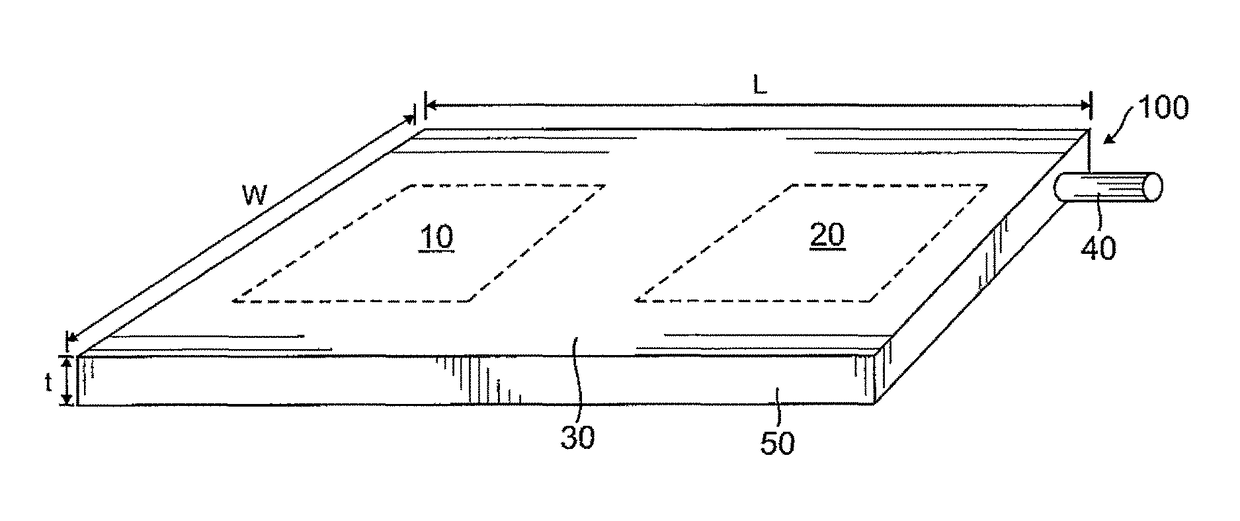
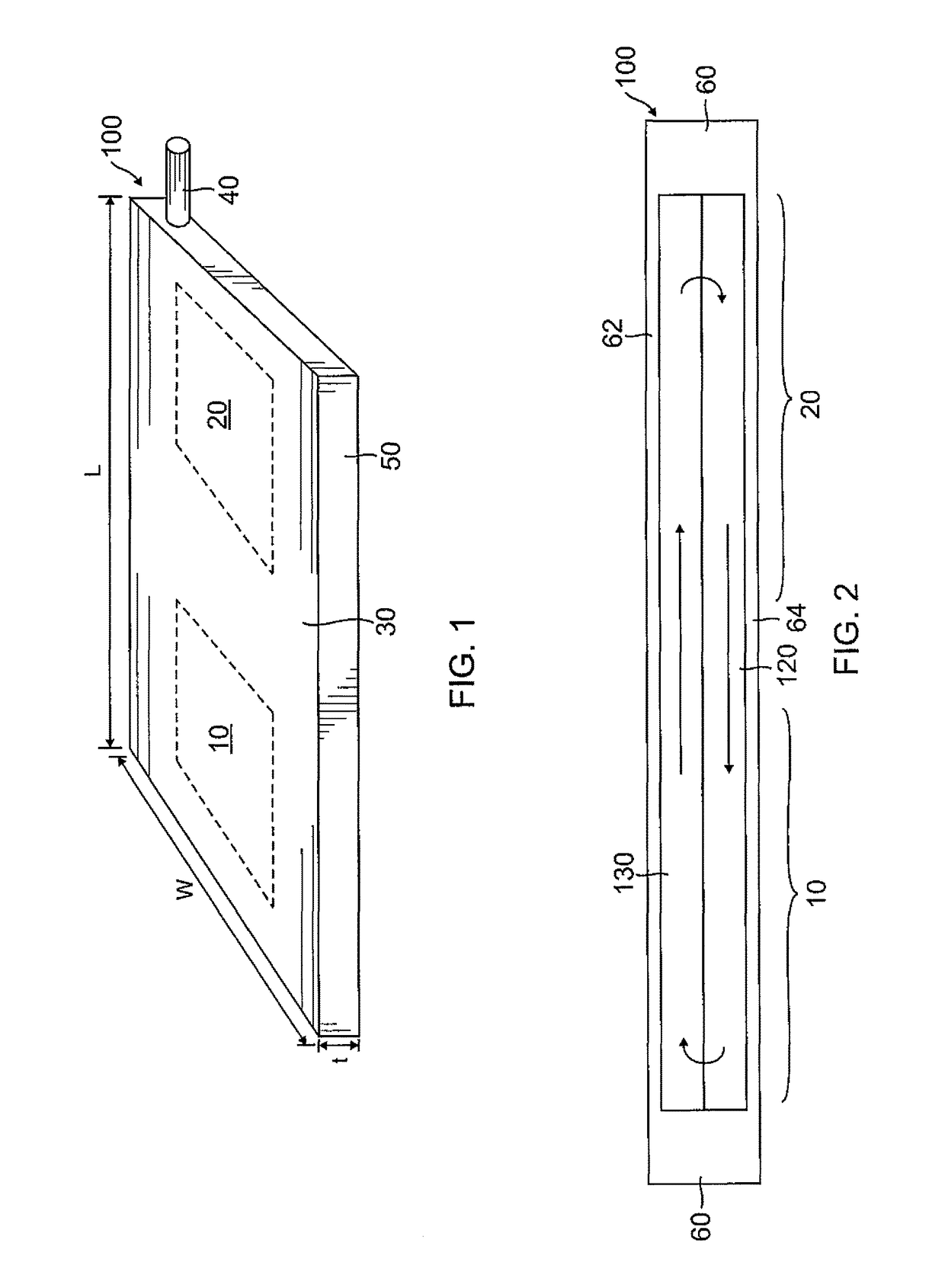
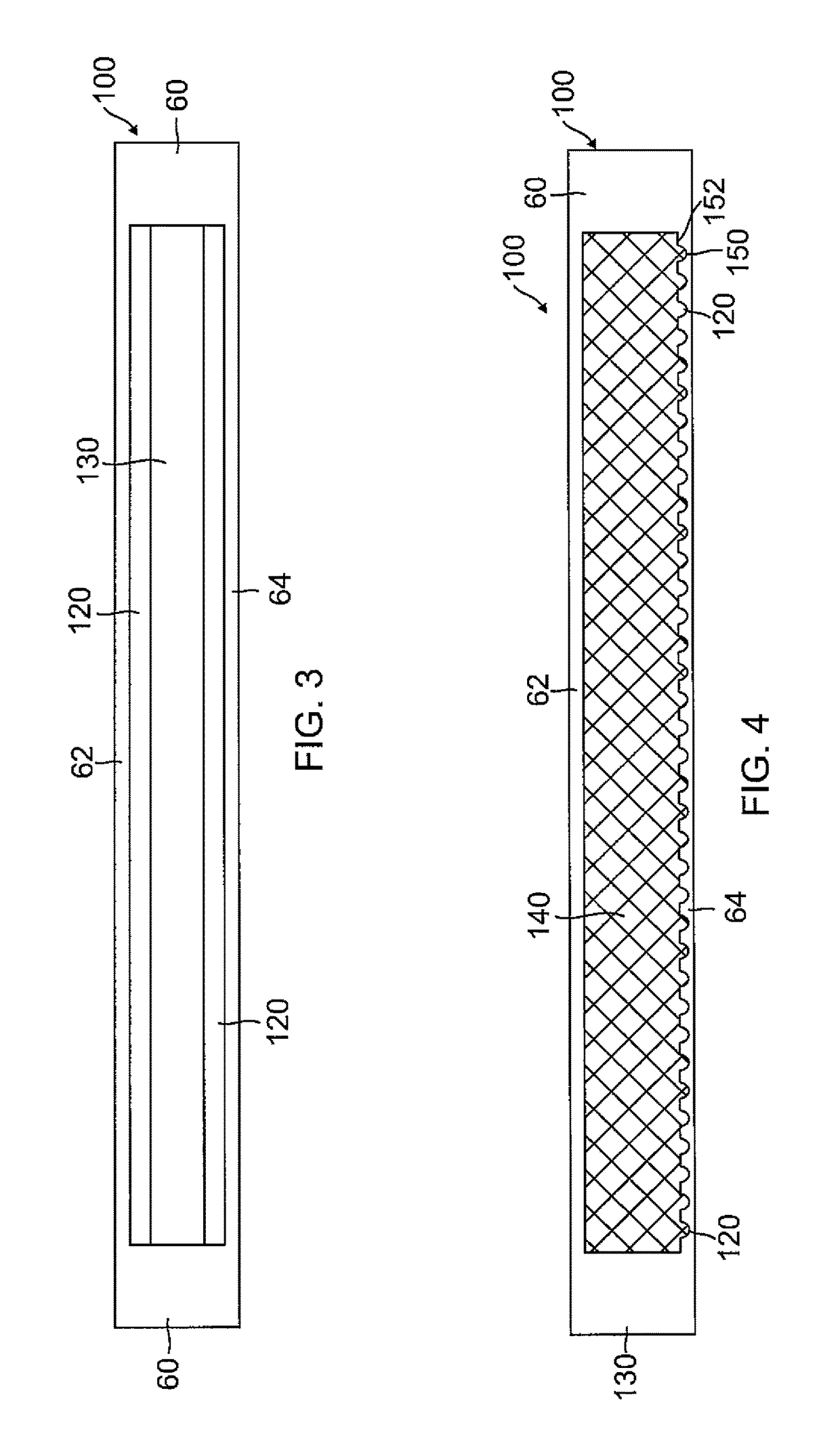
Planar heat pipe with architected core and vapor tolerant arterial wick
PatentActiveUS9835383B1
Innovation
- A planar heat pipe with a micro-lattice core and a vapor tolerant arterial wick structure, featuring a high permeability layer and a high capillary pressure layer with specific pore sizing and layer configurations to vent vapor bubbles and enhance heat transfer efficiency, while maintaining structural integrity.

Thermal Performance Standards and Testing Protocols
Establishing comprehensive thermal performance standards for capillary heat pipes requires precise measurement protocols that account for vapor core diameter optimization and choking prevention. Current industry standards primarily reference ASTM E2550 and IEEE 1565 specifications, which provide baseline testing methodologies but lack specific guidance for vapor core diameter optimization. These standards typically focus on overall thermal resistance measurements without addressing the critical relationship between vapor core geometry and choking phenomena.
Testing protocols must incorporate steady-state and transient thermal performance evaluations under controlled environmental conditions. Standard test setups require temperature-controlled chambers with precision instrumentation capable of measuring temperature variations within ±0.1°C accuracy. Heat input sources should provide uniform heating with power control precision of ±1%, while heat rejection systems must maintain consistent sink temperatures throughout testing cycles.
Critical performance metrics include effective thermal conductivity, thermal resistance, and maximum heat transport capacity before choking onset. Temperature measurement points should be strategically positioned along the heat pipe length, with particular attention to evaporator, adiabatic, and condenser sections. Data acquisition systems must capture temperature profiles at minimum 1Hz sampling rates to detect transient behaviors and choking initiation points.
Vapor core diameter optimization testing requires specialized protocols that correlate geometric parameters with thermal performance limits. Test procedures should include incremental power ramping to identify choking thresholds, followed by sustained operation at various power levels below critical limits. Pressure drop measurements across the vapor core become essential for validating theoretical models and confirming optimal diameter selections.
Standardized test conditions must specify working fluid properties, fill ratios, orientation angles, and ambient temperature ranges. Quality assurance protocols should include repeatability testing with statistical analysis of performance variations. Documentation requirements encompass detailed test setup descriptions, calibration certificates, measurement uncertainties, and comprehensive data analysis methodologies to ensure reproducible results across different testing facilities.
Testing protocols must incorporate steady-state and transient thermal performance evaluations under controlled environmental conditions. Standard test setups require temperature-controlled chambers with precision instrumentation capable of measuring temperature variations within ±0.1°C accuracy. Heat input sources should provide uniform heating with power control precision of ±1%, while heat rejection systems must maintain consistent sink temperatures throughout testing cycles.
Critical performance metrics include effective thermal conductivity, thermal resistance, and maximum heat transport capacity before choking onset. Temperature measurement points should be strategically positioned along the heat pipe length, with particular attention to evaporator, adiabatic, and condenser sections. Data acquisition systems must capture temperature profiles at minimum 1Hz sampling rates to detect transient behaviors and choking initiation points.
Vapor core diameter optimization testing requires specialized protocols that correlate geometric parameters with thermal performance limits. Test procedures should include incremental power ramping to identify choking thresholds, followed by sustained operation at various power levels below critical limits. Pressure drop measurements across the vapor core become essential for validating theoretical models and confirming optimal diameter selections.
Standardized test conditions must specify working fluid properties, fill ratios, orientation angles, and ambient temperature ranges. Quality assurance protocols should include repeatability testing with statistical analysis of performance variations. Documentation requirements encompass detailed test setup descriptions, calibration certificates, measurement uncertainties, and comprehensive data analysis methodologies to ensure reproducible results across different testing facilities.
Manufacturing Constraints and Cost Optimization Strategies
Manufacturing capillary heat pipes with optimized vapor core diameters presents significant fabrication challenges that directly impact production costs and scalability. The precision required for vapor core diameter control necessitates advanced manufacturing techniques, particularly in the formation of the wick structure and internal geometry. Traditional sintering processes for porous wick materials often struggle to maintain consistent porosity gradients and precise dimensional tolerances, leading to variations in effective vapor core dimensions that can compromise choking performance.
The selection of manufacturing methods significantly influences both product quality and economic viability. Powder metallurgy techniques, while offering excellent control over wick porosity, require substantial capital investment in specialized equipment and controlled atmosphere furnaces. Alternative approaches such as groove machining or screen mesh insertion provide more cost-effective solutions but may limit the achievable vapor core optimization due to geometric constraints and manufacturing tolerances.
Material costs represent another critical factor in optimization strategies. High-performance wick materials such as sintered copper powders or specialized alloys command premium prices, while standard materials may not deliver the required capillary performance for optimal vapor core design. The trade-off between material performance and cost necessitates careful evaluation of application requirements versus manufacturing economics.
Quality control and inspection processes add substantial overhead to production costs, particularly for applications requiring precise vapor core dimensions. Non-destructive testing methods for internal geometry verification, such as X-ray computed tomography or ultrasonic inspection, represent significant capital and operational expenses that must be factored into cost optimization strategies.
Scalability challenges emerge when transitioning from prototype to mass production. The specialized nature of optimized heat pipe manufacturing often limits economies of scale, particularly for custom vapor core configurations. Standardization of vapor core diameters across product families can reduce manufacturing complexity and costs, though this approach may compromise optimal performance for specific applications.
Supply chain considerations also impact cost optimization, as specialized materials and components for precision heat pipe manufacturing often involve limited supplier networks and longer lead times, affecting both production costs and inventory management strategies.
The selection of manufacturing methods significantly influences both product quality and economic viability. Powder metallurgy techniques, while offering excellent control over wick porosity, require substantial capital investment in specialized equipment and controlled atmosphere furnaces. Alternative approaches such as groove machining or screen mesh insertion provide more cost-effective solutions but may limit the achievable vapor core optimization due to geometric constraints and manufacturing tolerances.
Material costs represent another critical factor in optimization strategies. High-performance wick materials such as sintered copper powders or specialized alloys command premium prices, while standard materials may not deliver the required capillary performance for optimal vapor core design. The trade-off between material performance and cost necessitates careful evaluation of application requirements versus manufacturing economics.
Quality control and inspection processes add substantial overhead to production costs, particularly for applications requiring precise vapor core dimensions. Non-destructive testing methods for internal geometry verification, such as X-ray computed tomography or ultrasonic inspection, represent significant capital and operational expenses that must be factored into cost optimization strategies.
Scalability challenges emerge when transitioning from prototype to mass production. The specialized nature of optimized heat pipe manufacturing often limits economies of scale, particularly for custom vapor core configurations. Standardization of vapor core diameters across product families can reduce manufacturing complexity and costs, though this approach may compromise optimal performance for specific applications.
Supply chain considerations also impact cost optimization, as specialized materials and components for precision heat pipe manufacturing often involve limited supplier networks and longer lead times, affecting both production costs and inventory management strategies.
Unlock deeper insights with PatSnap Eureka Quick Research — get a full tech report to explore trends and direct your research. Try now!
Generate Your Research Report Instantly with AI Agent
Supercharge your innovation with PatSnap Eureka AI Agent Platform!