
Optimize Curing Parameters For Mold Compounds To Minimize Shrinkage
MAY 25, 20269 MIN READ
Generate Your Research Report Instantly with AI Agent
Patsnap Eureka helps you evaluate technical feasibility & market potential.
Mold Compound Curing Technology Background and Objectives
Mold compound curing technology has evolved significantly since the early days of semiconductor packaging in the 1960s. Initially, simple epoxy-based compounds were cured using basic thermal processes with limited parameter control, resulting in inconsistent shrinkage patterns and reliability issues. The industry's transition from through-hole to surface-mount technology in the 1980s demanded more precise curing control to accommodate smaller geometries and tighter tolerances.
The development of advanced mold compounds incorporating silica fillers, flame retardants, and stress-relief additives has fundamentally changed curing requirements. Modern compounds exhibit complex rheological behavior during cure, with shrinkage characteristics influenced by multiple interdependent parameters including temperature profiles, pressure application, and cure time optimization. The introduction of low-stress compounds in the 1990s marked a pivotal shift toward shrinkage-minimized formulations.
Current technological trends emphasize adaptive curing processes that respond to real-time feedback from embedded sensors. Machine learning algorithms now analyze historical curing data to predict optimal parameter combinations for specific compound formulations. The integration of Industry 4.0 principles has enabled predictive maintenance and process optimization capabilities previously unattainable.
The primary objective of optimizing curing parameters centers on achieving dimensional stability while maintaining mechanical integrity and thermal performance. Minimizing shrinkage requires balancing cure kinetics with thermal expansion coefficients, ensuring uniform cross-linking density throughout the molded package. This involves precise control of heating rates, peak temperatures, and cooling profiles to prevent differential shrinkage that can induce internal stresses.
Secondary objectives include reducing cycle times without compromising quality, improving yield rates through consistent processing, and extending mold tool life by minimizing thermal cycling effects. The ultimate goal encompasses developing robust parameter sets that accommodate material lot variations while maintaining shrinkage within specified tolerances across diverse package geometries and sizes.
The development of advanced mold compounds incorporating silica fillers, flame retardants, and stress-relief additives has fundamentally changed curing requirements. Modern compounds exhibit complex rheological behavior during cure, with shrinkage characteristics influenced by multiple interdependent parameters including temperature profiles, pressure application, and cure time optimization. The introduction of low-stress compounds in the 1990s marked a pivotal shift toward shrinkage-minimized formulations.
Current technological trends emphasize adaptive curing processes that respond to real-time feedback from embedded sensors. Machine learning algorithms now analyze historical curing data to predict optimal parameter combinations for specific compound formulations. The integration of Industry 4.0 principles has enabled predictive maintenance and process optimization capabilities previously unattainable.
The primary objective of optimizing curing parameters centers on achieving dimensional stability while maintaining mechanical integrity and thermal performance. Minimizing shrinkage requires balancing cure kinetics with thermal expansion coefficients, ensuring uniform cross-linking density throughout the molded package. This involves precise control of heating rates, peak temperatures, and cooling profiles to prevent differential shrinkage that can induce internal stresses.
Secondary objectives include reducing cycle times without compromising quality, improving yield rates through consistent processing, and extending mold tool life by minimizing thermal cycling effects. The ultimate goal encompasses developing robust parameter sets that accommodate material lot variations while maintaining shrinkage within specified tolerances across diverse package geometries and sizes.
Market Demand for Low-Shrinkage Molding Solutions
The semiconductor packaging industry faces mounting pressure to deliver higher performance devices in increasingly compact form factors, driving unprecedented demand for low-shrinkage molding solutions. As electronic components become smaller and more densely packed, even minimal dimensional changes during the curing process can lead to package warpage, delamination, and reliability failures. This challenge is particularly acute in advanced packaging applications such as system-in-package (SiP), wafer-level packaging, and 3D integrated circuits, where precise dimensional control is critical for maintaining electrical connectivity and thermal management.
Automotive electronics represents one of the fastest-growing market segments demanding enhanced shrinkage control. The transition toward electric vehicles and autonomous driving systems requires semiconductor packages that can withstand extreme temperature cycling while maintaining structural integrity. Traditional molding compounds often exhibit shrinkage rates that compromise the reliability of safety-critical automotive applications, creating substantial market opportunities for optimized curing solutions.
The consumer electronics sector continues to push miniaturization boundaries, with smartphones, wearables, and IoT devices requiring ultra-thin packages with minimal warpage. Manufacturers are increasingly willing to invest in advanced curing parameter optimization to achieve the dimensional stability necessary for next-generation product designs. This trend is particularly pronounced in flagship mobile devices where package thickness reductions of even micrometers can provide competitive advantages.
Industrial and aerospace applications present additional market drivers, where long-term reliability under harsh environmental conditions necessitates superior dimensional stability. These sectors typically accept higher material and processing costs in exchange for enhanced performance characteristics, making them attractive early adopters of optimized low-shrinkage molding technologies.
Market research indicates that package-related failures account for a significant portion of semiconductor reliability issues, with shrinkage-induced stress being a primary contributing factor. This reality has prompted major semiconductor manufacturers to prioritize supplier partnerships focused on advanced curing parameter optimization. The growing complexity of heterogeneous integration and chiplet architectures further amplifies the need for precise dimensional control throughout the molding process.
The emergence of artificial intelligence and machine learning applications in manufacturing has created new opportunities for real-time curing parameter optimization, enabling adaptive process control that responds to material variations and environmental conditions to minimize shrinkage consistently.
Automotive electronics represents one of the fastest-growing market segments demanding enhanced shrinkage control. The transition toward electric vehicles and autonomous driving systems requires semiconductor packages that can withstand extreme temperature cycling while maintaining structural integrity. Traditional molding compounds often exhibit shrinkage rates that compromise the reliability of safety-critical automotive applications, creating substantial market opportunities for optimized curing solutions.
The consumer electronics sector continues to push miniaturization boundaries, with smartphones, wearables, and IoT devices requiring ultra-thin packages with minimal warpage. Manufacturers are increasingly willing to invest in advanced curing parameter optimization to achieve the dimensional stability necessary for next-generation product designs. This trend is particularly pronounced in flagship mobile devices where package thickness reductions of even micrometers can provide competitive advantages.
Industrial and aerospace applications present additional market drivers, where long-term reliability under harsh environmental conditions necessitates superior dimensional stability. These sectors typically accept higher material and processing costs in exchange for enhanced performance characteristics, making them attractive early adopters of optimized low-shrinkage molding technologies.
Market research indicates that package-related failures account for a significant portion of semiconductor reliability issues, with shrinkage-induced stress being a primary contributing factor. This reality has prompted major semiconductor manufacturers to prioritize supplier partnerships focused on advanced curing parameter optimization. The growing complexity of heterogeneous integration and chiplet architectures further amplifies the need for precise dimensional control throughout the molding process.
The emergence of artificial intelligence and machine learning applications in manufacturing has created new opportunities for real-time curing parameter optimization, enabling adaptive process control that responds to material variations and environmental conditions to minimize shrinkage consistently.
Current Curing Parameter Challenges and Shrinkage Issues
The semiconductor packaging industry faces significant challenges in optimizing curing parameters for mold compounds, with shrinkage control representing one of the most critical technical hurdles. Current manufacturing processes struggle to achieve consistent dimensional stability across varying package geometries and production volumes, leading to reliability concerns and yield losses.
Temperature profile management during the curing process presents substantial difficulties. Conventional curing systems often exhibit non-uniform heat distribution, creating localized hot spots that accelerate polymer crosslinking in certain regions while leaving others inadequately cured. This thermal inconsistency directly contributes to differential shrinkage patterns, causing warpage and internal stress concentrations that compromise package integrity.
Pressure application during molding and curing stages remains poorly controlled in many existing systems. Inadequate pressure monitoring capabilities result in incomplete mold filling and inconsistent material density distribution. These variations manifest as heterogeneous shrinkage behavior, particularly problematic in complex package designs with varying wall thicknesses and geometric features.
Time-dependent curing parameters pose additional complexity, as current control systems lack sophisticated feedback mechanisms to adjust processing conditions in real-time. Static curing profiles fail to accommodate material batch variations and environmental fluctuations, leading to over-curing or under-curing scenarios that directly impact final dimensional accuracy.
Material characterization limitations further compound these challenges. Existing analytical methods provide insufficient data on shrinkage kinetics and thermal expansion coefficients under actual processing conditions. This knowledge gap prevents accurate prediction of final package dimensions and limits the effectiveness of preventive measures.
Cross-linking chemistry optimization remains constrained by limited understanding of additive interactions and their effects on volumetric changes during cure. Current formulations often prioritize mechanical properties over dimensional stability, creating trade-offs that compromise overall package performance.
Process monitoring and control infrastructure in most manufacturing facilities lacks the precision required for advanced shrinkage mitigation. Sensor accuracy, data acquisition rates, and control algorithm sophistication fall short of industry requirements for next-generation packaging applications, necessitating comprehensive technological upgrades to address these fundamental limitations.
Temperature profile management during the curing process presents substantial difficulties. Conventional curing systems often exhibit non-uniform heat distribution, creating localized hot spots that accelerate polymer crosslinking in certain regions while leaving others inadequately cured. This thermal inconsistency directly contributes to differential shrinkage patterns, causing warpage and internal stress concentrations that compromise package integrity.
Pressure application during molding and curing stages remains poorly controlled in many existing systems. Inadequate pressure monitoring capabilities result in incomplete mold filling and inconsistent material density distribution. These variations manifest as heterogeneous shrinkage behavior, particularly problematic in complex package designs with varying wall thicknesses and geometric features.
Time-dependent curing parameters pose additional complexity, as current control systems lack sophisticated feedback mechanisms to adjust processing conditions in real-time. Static curing profiles fail to accommodate material batch variations and environmental fluctuations, leading to over-curing or under-curing scenarios that directly impact final dimensional accuracy.
Material characterization limitations further compound these challenges. Existing analytical methods provide insufficient data on shrinkage kinetics and thermal expansion coefficients under actual processing conditions. This knowledge gap prevents accurate prediction of final package dimensions and limits the effectiveness of preventive measures.
Cross-linking chemistry optimization remains constrained by limited understanding of additive interactions and their effects on volumetric changes during cure. Current formulations often prioritize mechanical properties over dimensional stability, creating trade-offs that compromise overall package performance.
Process monitoring and control infrastructure in most manufacturing facilities lacks the precision required for advanced shrinkage mitigation. Sensor accuracy, data acquisition rates, and control algorithm sophistication fall short of industry requirements for next-generation packaging applications, necessitating comprehensive technological upgrades to address these fundamental limitations.
Existing Curing Parameter Optimization Methods
01 Polymer composition modification for shrinkage control
Modification of polymer compositions through the addition of specific additives, fillers, or reinforcing agents to reduce shrinkage during molding processes. These modifications can include the incorporation of low-shrinkage resins, fiber reinforcements, or specialized chemical compounds that minimize dimensional changes during curing and cooling phases.- Mold compound formulation optimization: Development of specialized compound formulations that minimize shrinkage through careful selection of base materials, fillers, and additives. These formulations focus on controlling the molecular structure and cross-linking density to reduce dimensional changes during curing and cooling processes.
- Shrinkage compensation mechanisms: Implementation of compensation techniques and mechanisms that counteract shrinkage effects in molded compounds. These approaches include pre-expansion methods, controlled cooling systems, and dimensional adjustment strategies to maintain final product accuracy.
- Processing parameter control: Optimization of molding process parameters such as temperature profiles, pressure conditions, and curing time to minimize compound shrinkage. These methods involve precise control of processing variables to achieve consistent dimensional stability in the final molded products.
- Reinforcement and filler integration: Incorporation of reinforcing materials and specialized fillers to reduce shrinkage in mold compounds. These additives help maintain structural integrity and dimensional stability by providing internal support and reducing the overall shrinkage coefficient of the compound matrix.
- Measurement and monitoring systems: Development of advanced measurement and monitoring technologies for real-time detection and control of shrinkage in mold compounds. These systems enable precise monitoring of dimensional changes and provide feedback for process optimization and quality control.
02 Mold design and structure optimization
Development of specialized mold designs and structural features that compensate for material shrinkage during the molding process. This includes the implementation of specific cavity geometries, gate designs, and cooling channel configurations that help maintain dimensional accuracy and reduce shrinkage-related defects in molded parts.Expand Specific Solutions03 Processing parameter control methods
Implementation of controlled processing parameters such as temperature profiles, pressure settings, and cooling rates to minimize shrinkage effects. These methods involve precise control of molding conditions throughout the entire process cycle to achieve optimal dimensional stability and reduce post-molding shrinkage.Expand Specific Solutions04 Shrinkage compensation techniques
Development of techniques and systems that actively compensate for expected shrinkage during the molding process. These approaches include predictive modeling, dimensional adjustment methods, and real-time monitoring systems that account for material shrinkage characteristics to maintain final product dimensions within specified tolerances.Expand Specific Solutions05 Advanced molding equipment and apparatus
Design and development of specialized molding equipment and apparatus specifically engineered to address shrinkage issues. These systems incorporate advanced features such as precision control mechanisms, enhanced cooling systems, and automated adjustment capabilities to minimize shrinkage-related problems in molded components.Expand Specific Solutions
Key Players in Molding and Compound Manufacturing
The mold compound curing optimization market represents a mature industrial segment within the broader polymer processing industry, currently valued at several billion dollars globally and experiencing steady growth driven by automotive, electronics, and aerospace applications. The competitive landscape is dominated by established chemical giants including BASF Corp., Henkel AG & Co. KGaA, Evonik Operations GmbH, and Covestro Deutschland AG, who leverage decades of materials science expertise and extensive R&D capabilities. Technology maturity varies significantly across market participants, with companies like 3M Innovative Properties Co., Samsung Electronics Co., Ltd., and Canon, Inc. demonstrating advanced process optimization capabilities through sophisticated monitoring systems and AI-driven parameter control. Specialized players such as Priamus System Technologies and CoreTech System Co. Ltd. focus on niche simulation and quality assurance solutions, while emerging contributors from academic institutions like Institute of Science Tokyo and Jiangnan University are advancing fundamental understanding of curing kinetics and shrinkage mechanisms.
Samsung Electronics Co., Ltd.
Technical Solution: Samsung has developed advanced process control systems for semiconductor packaging applications where precise curing parameter optimization is critical for minimizing mold compound shrinkage in electronic components. Their technology integrates machine learning algorithms with real-time process monitoring to automatically adjust curing temperature profiles, pressure cycles, and timing parameters based on feedback from dimensional measurement systems. The approach includes predictive modeling capabilities that account for package geometry, lead frame materials, and environmental conditions to establish optimal curing protocols. Samsung's system incorporates statistical process control methodologies and automated parameter adjustment algorithms that continuously optimize curing conditions to maintain tight dimensional tolerances required for electronic packaging applications.
Strengths: Advanced automation capabilities and proven performance in high-precision electronic applications. Weaknesses: Technology primarily focused on semiconductor packaging applications with limited applicability to other molding sectors.
Priamus System Technologies
Technical Solution: Priamus develops advanced process monitoring and control systems specifically designed for injection molding applications with focus on curing parameter optimization. Their technology employs real-time cavity pressure monitoring, temperature sensing, and automated feedback control systems to dynamically adjust curing parameters during the molding process. The system utilizes proprietary algorithms that analyze pressure-volume-temperature relationships to determine optimal curing conditions that minimize shrinkage while maintaining part quality. Their solutions include predictive analytics capabilities that can forecast shrinkage behavior based on material properties and process conditions, enabling proactive parameter adjustments to achieve consistent dimensional accuracy across production runs.
Strengths: Real-time process control and excellent integration with existing molding equipment. Weaknesses: Limited to specific equipment compatibility and requires significant initial setup investment.
Core Innovations in Shrinkage Control Technologies
Curable polyester moulding compositions having low shrinkage
PatentInactiveEP0605855A2
Innovation
- A low-shrinkage curable molding compound is developed using unsaturated polyesters made from maleic acid, propylene glycol, and neopentyl glycol, combined with thermoplastic polymers like polyvinyl acetate or polymethyl methacrylate, and reinforced with fibers and fillers, along with radical initiators and additives, to minimize shrinkage and phase separation issues.
Process and apparatus for improving and controlling the curing of natural and synthetic moldable compounds
PatentInactiveUS7167773B2
Innovation
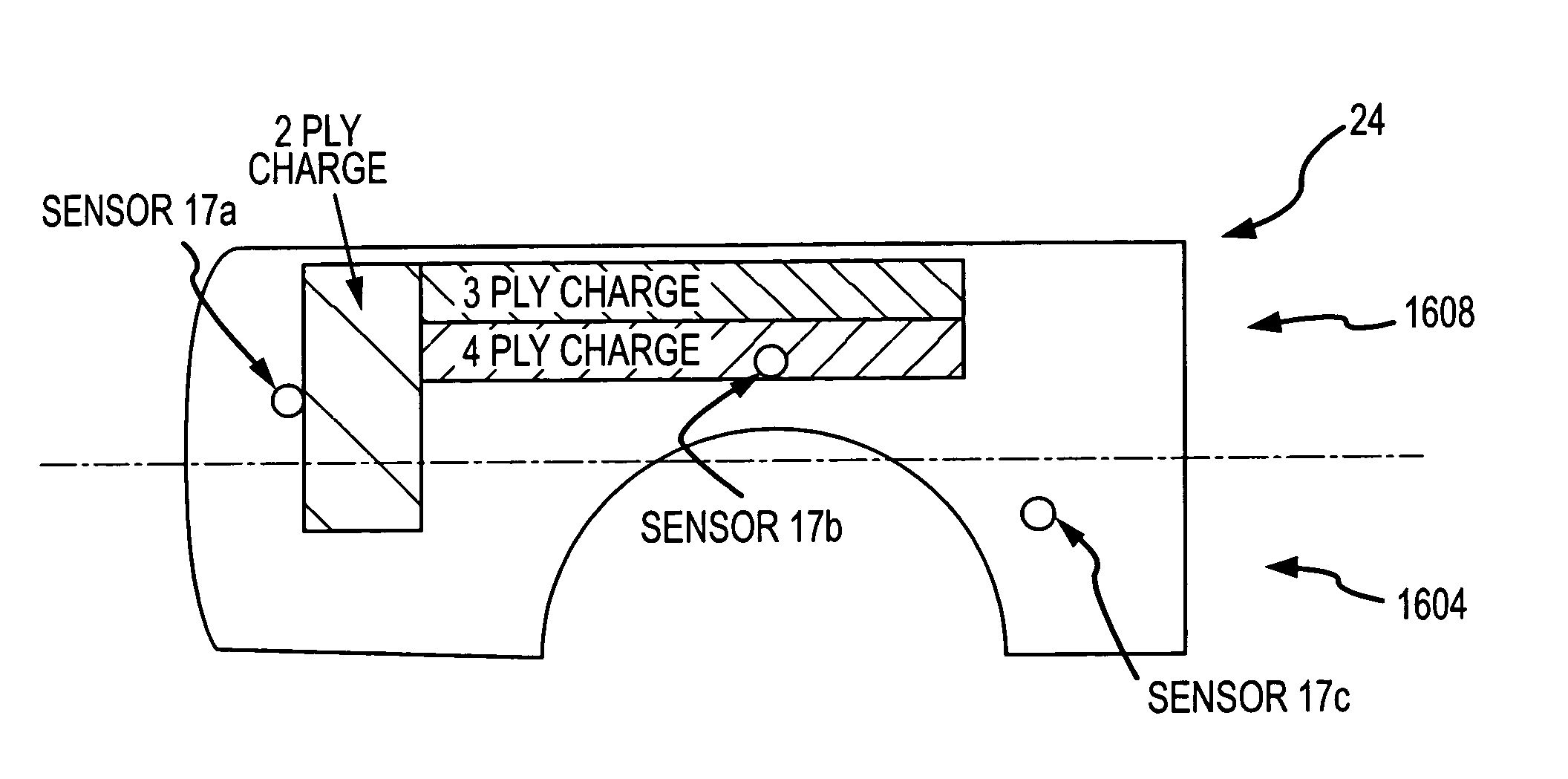
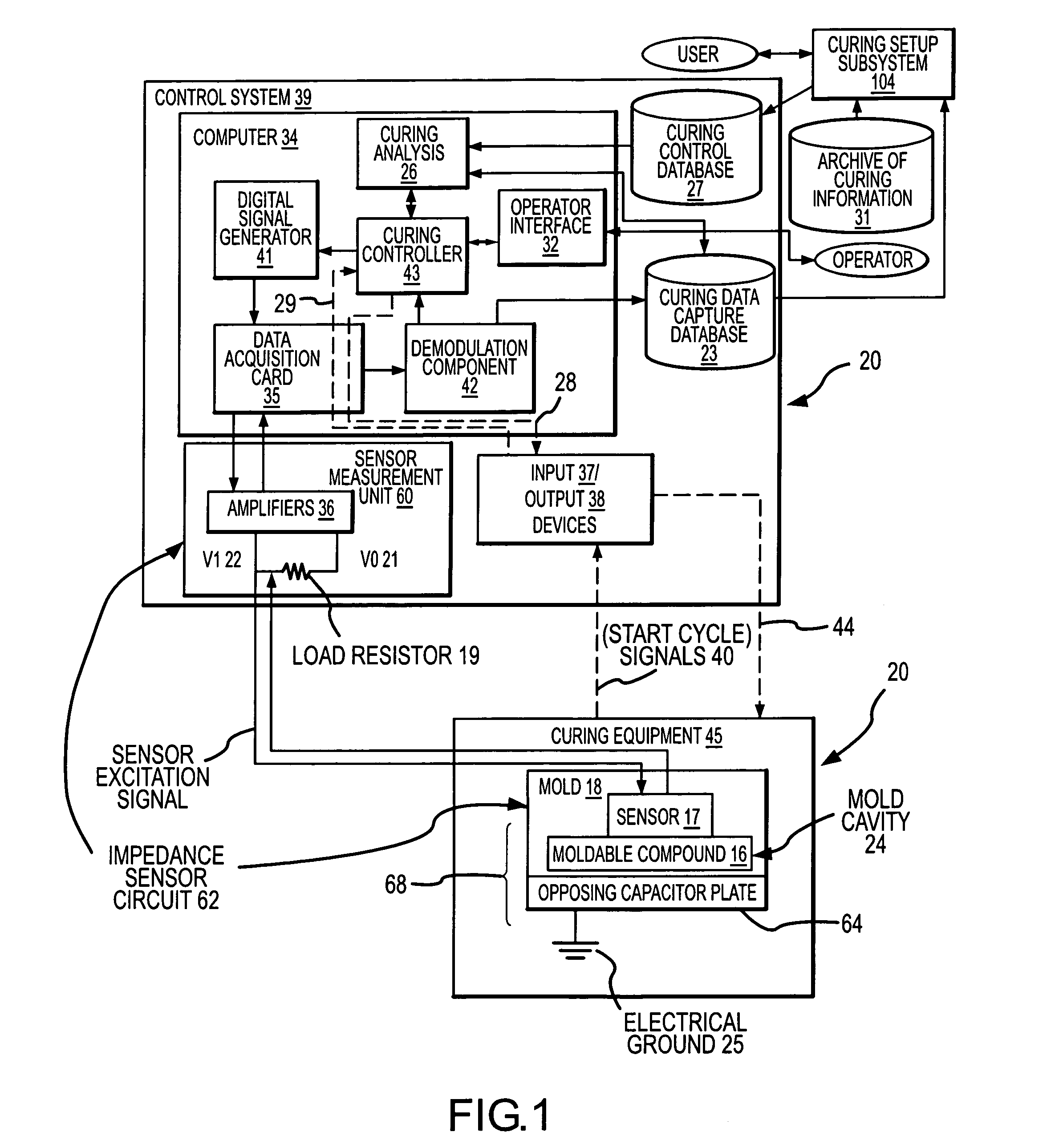
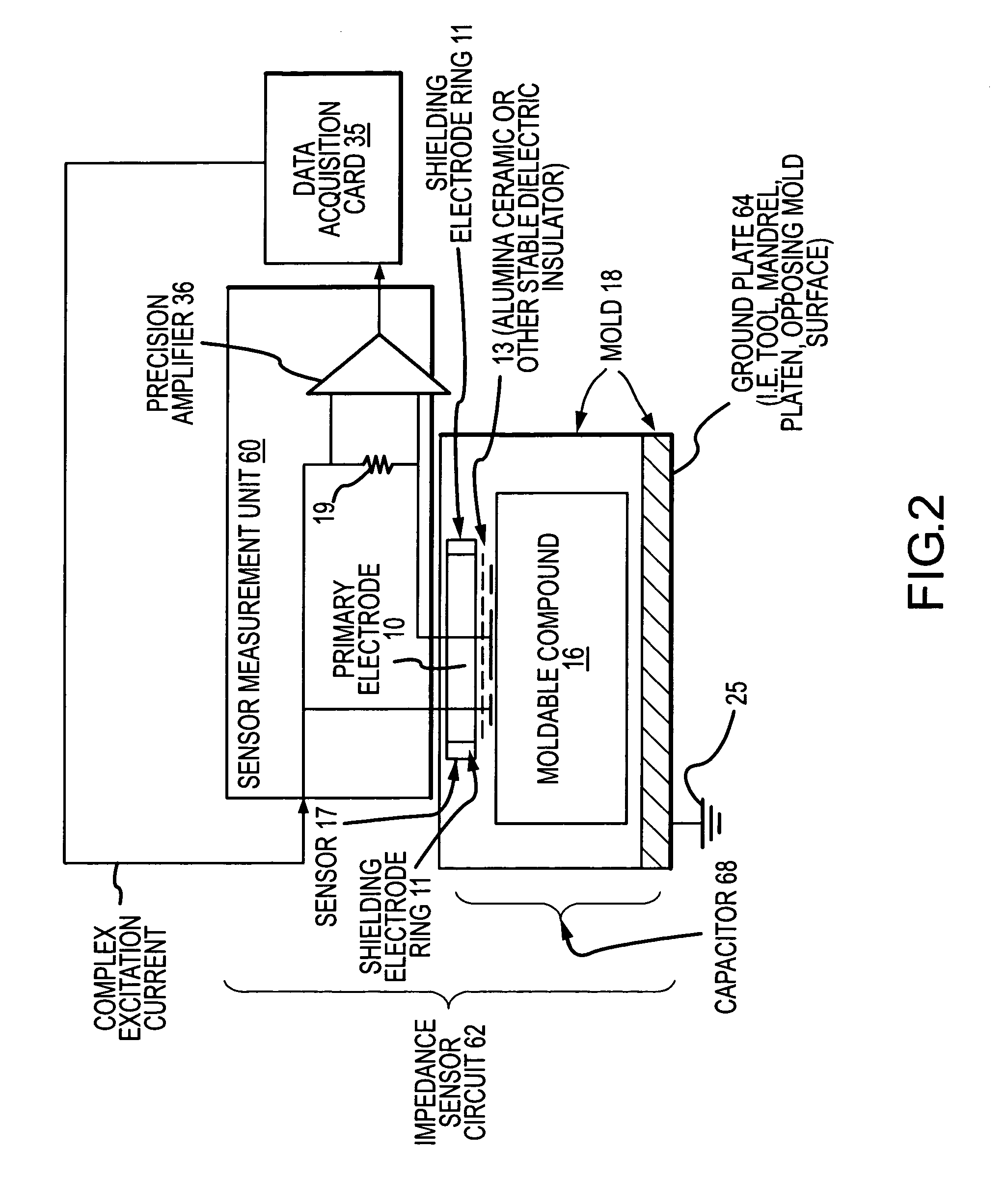
- A system utilizing multiple impedance detection sensors distributed within a mold to monitor the curing process in real-time, adjusting cure times based on impedance data to ensure consistent and repeatable part properties, and compensating for variations in material and equipment conditions.

Quality Standards for Molded Component Precision
Quality standards for molded component precision represent a critical framework that directly influences the optimization of curing parameters for mold compounds. These standards establish the acceptable tolerance ranges for dimensional accuracy, surface finish, and geometric conformity that molded components must achieve to meet functional requirements. The relationship between curing parameter optimization and quality standards is bidirectional, where precise control of temperature, pressure, and time during the curing process directly impacts the ability to meet stringent precision requirements.
International standards such as ISO 286 for dimensional tolerances and ASTM D5947 for plastic molding precision provide baseline requirements that manufacturers must consider when optimizing curing parameters. These standards typically specify tolerance classes ranging from IT6 to IT11 for critical dimensions, with tighter tolerances demanding more precise control of shrinkage behavior. The challenge lies in balancing the competing demands of minimizing shrinkage while maintaining consistent quality across production batches.
Dimensional stability requirements often dictate that molded components maintain tolerances within ±0.05mm to ±0.2mm depending on the application. Achieving such precision requires careful calibration of curing parameters, as variations in temperature profiles can lead to differential shrinkage rates across component geometry. Surface roughness standards, typically specified as Ra values between 0.8μm to 3.2μm, also influence curing parameter selection since rapid curing can create surface defects that compromise precision.
Industry-specific quality standards add additional complexity to parameter optimization. Automotive applications following IATF 16949 standards require statistical process control with Cpk values exceeding 1.33, necessitating extremely stable curing processes. Electronics packaging applications must meet IPC standards for dimensional accuracy, often requiring shrinkage control within 0.1% variation. Medical device applications under ISO 13485 demand even stricter precision control, with some components requiring tolerances below ±0.02mm.
The integration of quality standards into curing parameter optimization involves establishing measurable quality metrics that can be directly correlated with process variables. This includes defining critical-to-quality characteristics, establishing measurement protocols, and implementing feedback mechanisms that allow real-time adjustment of curing parameters based on quality outcomes.
International standards such as ISO 286 for dimensional tolerances and ASTM D5947 for plastic molding precision provide baseline requirements that manufacturers must consider when optimizing curing parameters. These standards typically specify tolerance classes ranging from IT6 to IT11 for critical dimensions, with tighter tolerances demanding more precise control of shrinkage behavior. The challenge lies in balancing the competing demands of minimizing shrinkage while maintaining consistent quality across production batches.
Dimensional stability requirements often dictate that molded components maintain tolerances within ±0.05mm to ±0.2mm depending on the application. Achieving such precision requires careful calibration of curing parameters, as variations in temperature profiles can lead to differential shrinkage rates across component geometry. Surface roughness standards, typically specified as Ra values between 0.8μm to 3.2μm, also influence curing parameter selection since rapid curing can create surface defects that compromise precision.
Industry-specific quality standards add additional complexity to parameter optimization. Automotive applications following IATF 16949 standards require statistical process control with Cpk values exceeding 1.33, necessitating extremely stable curing processes. Electronics packaging applications must meet IPC standards for dimensional accuracy, often requiring shrinkage control within 0.1% variation. Medical device applications under ISO 13485 demand even stricter precision control, with some components requiring tolerances below ±0.02mm.
The integration of quality standards into curing parameter optimization involves establishing measurable quality metrics that can be directly correlated with process variables. This includes defining critical-to-quality characteristics, establishing measurement protocols, and implementing feedback mechanisms that allow real-time adjustment of curing parameters based on quality outcomes.
Environmental Impact of Curing Process Optimization
The optimization of curing parameters for mold compounds presents significant environmental implications that extend beyond traditional manufacturing considerations. As industries increasingly prioritize sustainable practices, the environmental footprint of curing processes has become a critical evaluation criterion for process optimization strategies.
Energy consumption represents the most substantial environmental impact in curing process optimization. Traditional high-temperature curing cycles often require extensive heating periods, resulting in substantial carbon emissions and energy costs. Optimized curing parameters that achieve minimal shrinkage while reducing temperature requirements or shortening cycle times can significantly decrease overall energy consumption. Advanced curing profiles utilizing stepped temperature approaches or lower peak temperatures demonstrate potential for 20-30% energy reduction compared to conventional methods.
Chemical emissions during the curing process constitute another major environmental concern. Volatile organic compounds released during thermal curing contribute to air quality degradation and require specialized ventilation systems. Optimized curing parameters that minimize peak temperatures while maintaining effective cross-linking can substantially reduce VOC emissions. Additionally, the selection of environmentally friendly curing agents and catalysts becomes crucial in developing sustainable optimization strategies.
Waste generation patterns are directly influenced by curing parameter optimization. Inadequate curing leading to product defects results in material waste and additional environmental burden through disposal requirements. Conversely, over-curing can degrade material properties, necessitating rework or rejection. Precise parameter optimization minimizes both scenarios, reducing overall waste generation and associated environmental impacts.
The lifecycle environmental assessment of optimized curing processes reveals broader sustainability benefits. Reduced shrinkage achieved through parameter optimization enhances product dimensional stability and longevity, potentially extending service life and reducing replacement frequency. This improvement translates to decreased material consumption and waste generation throughout the product lifecycle.
Regulatory compliance considerations increasingly drive environmental optimization efforts. Emerging environmental regulations targeting manufacturing emissions and energy efficiency create additional incentives for curing process optimization. Companies implementing environmentally conscious curing parameter optimization often achieve competitive advantages through reduced compliance costs and enhanced corporate sustainability profiles.
Energy consumption represents the most substantial environmental impact in curing process optimization. Traditional high-temperature curing cycles often require extensive heating periods, resulting in substantial carbon emissions and energy costs. Optimized curing parameters that achieve minimal shrinkage while reducing temperature requirements or shortening cycle times can significantly decrease overall energy consumption. Advanced curing profiles utilizing stepped temperature approaches or lower peak temperatures demonstrate potential for 20-30% energy reduction compared to conventional methods.
Chemical emissions during the curing process constitute another major environmental concern. Volatile organic compounds released during thermal curing contribute to air quality degradation and require specialized ventilation systems. Optimized curing parameters that minimize peak temperatures while maintaining effective cross-linking can substantially reduce VOC emissions. Additionally, the selection of environmentally friendly curing agents and catalysts becomes crucial in developing sustainable optimization strategies.
Waste generation patterns are directly influenced by curing parameter optimization. Inadequate curing leading to product defects results in material waste and additional environmental burden through disposal requirements. Conversely, over-curing can degrade material properties, necessitating rework or rejection. Precise parameter optimization minimizes both scenarios, reducing overall waste generation and associated environmental impacts.
The lifecycle environmental assessment of optimized curing processes reveals broader sustainability benefits. Reduced shrinkage achieved through parameter optimization enhances product dimensional stability and longevity, potentially extending service life and reducing replacement frequency. This improvement translates to decreased material consumption and waste generation throughout the product lifecycle.
Regulatory compliance considerations increasingly drive environmental optimization efforts. Emerging environmental regulations targeting manufacturing emissions and energy efficiency create additional incentives for curing process optimization. Companies implementing environmentally conscious curing parameter optimization often achieve competitive advantages through reduced compliance costs and enhanced corporate sustainability profiles.
Unlock deeper insights with Patsnap Eureka Quick Research — get a full tech report to explore trends and direct your research. Try now!
Generate Your Research Report Instantly with AI Agent
Supercharge your innovation with Patsnap Eureka AI Agent Platform!