

Optimize Electric Tower Crossarms for Compact Corridors
OCT 10, 20269 MIN READ
Generate Your Research Report Instantly with AI Agent
Patsnap Eureka helps you evaluate technical feasibility & market potential.
Electric Tower Crossarm Optimization Background and Objectives
Electric power transmission infrastructure faces mounting pressure from urbanization and environmental constraints, driving the need for more compact transmission corridor designs. Traditional lattice tower configurations with extended crossarms occupy substantial land area, creating challenges in densely populated regions where right-of-way acquisition costs escalate and public opposition to new transmission lines intensifies. The optimization of electric tower crossarms for compact corridors has emerged as a critical technical challenge that balances electrical safety requirements, mechanical stability, and spatial efficiency.
The fundamental objective of crossarm optimization centers on reducing the horizontal footprint of transmission towers while maintaining or enhancing operational performance. This involves minimizing conductor spacing without compromising electrical clearances mandated by safety standards, which typically require specific phase-to-phase and phase-to-ground distances based on voltage levels. The challenge intensifies at higher voltage ratings where corona discharge, electromagnetic interference, and switching surge phenomena impose stricter geometric constraints.
Beyond spatial reduction, optimization efforts target multiple performance dimensions. Mechanical objectives include enhancing structural resilience against wind loading, ice accumulation, and seismic events while reducing material consumption and construction costs. Electrical objectives encompass minimizing power losses through optimized conductor arrangements, reducing electromagnetic field exposure to acceptable levels, and improving lightning protection effectiveness. Environmental considerations drive designs that minimize visual impact and facilitate integration into sensitive landscapes.
The technical approach requires sophisticated analysis methodologies combining electromagnetic field simulation, structural finite element analysis, and multi-objective optimization algorithms. Advanced materials including high-strength composites and specialized insulator designs enable configurations previously deemed impractical. Digital twin technologies and real-time monitoring systems increasingly inform optimization strategies by providing operational data that validates theoretical models.
Achieving these objectives demands reconciling competing requirements through systematic trade-off analysis. Compact designs may increase electric field intensity near conductors, necessitate enhanced insulation coordination, or impose stricter maintenance protocols. The optimization framework must therefore incorporate lifecycle considerations, balancing initial capital investment against long-term operational efficiency and reliability metrics. Success in this domain directly supports grid expansion capabilities in constrained environments while advancing sustainability goals through reduced land use and material efficiency.
Market Demand for Compact Transmission Corridors
The global demand for compact transmission corridors has intensified significantly in recent years, driven by multiple converging factors across urban, environmental, and regulatory domains. As metropolitan areas continue to expand and land availability becomes increasingly constrained, utilities face mounting pressure to maximize transmission capacity within limited right-of-way spaces. This challenge is particularly acute in densely populated regions where acquiring new corridor easements involves substantial costs, lengthy approval processes, and community resistance.
Urban densification represents a primary driver of market demand. Cities worldwide are experiencing unprecedented growth, with infrastructure development competing for the same spatial resources required for power transmission. Traditional transmission line designs with wide corridor requirements are becoming economically and logistically impractical in these environments. Utilities are actively seeking solutions that enable higher voltage transmission within narrower footprints, making optimized crossarm designs a critical enabling technology.
Environmental considerations have emerged as another significant demand catalyst. Regulatory frameworks increasingly mandate minimal ecological disruption during transmission infrastructure development. Compact corridor designs reduce habitat fragmentation, minimize tree clearing requirements, and decrease visual impact on landscapes. These environmental benefits align with corporate sustainability commitments and help utilities navigate complex permitting processes more efficiently.
The renewable energy transition further amplifies demand for compact transmission solutions. Integration of distributed generation sources requires enhanced grid connectivity, often through existing corridors that cannot be easily expanded. Upgrading transmission capacity without widening corridors has become essential for accommodating renewable energy flows from remote generation sites to consumption centers.
Economic pressures also drive market interest. Compact designs reduce material costs, simplify construction logistics, and lower ongoing maintenance expenses. The ability to upgrade existing lines to higher voltages without corridor expansion offers substantial cost advantages compared to greenfield development. Utilities operating under rate regulation find these efficiency gains particularly attractive for justifying infrastructure investments to regulatory bodies.
Emerging markets present additional demand dimensions. Rapidly developing economies require extensive transmission infrastructure but face severe land constraints and budget limitations. Compact corridor technologies offer pathways to build robust transmission networks more affordably and with reduced social displacement compared to conventional approaches.
Current Crossarm Design Limitations in Space-Constrained Areas
Traditional crossarm designs for electric transmission towers face significant constraints when deployed in space-limited corridors such as urban areas, mountainous terrain, and densely populated regions. Conventional horizontal crossarm configurations typically require substantial lateral clearance to maintain safe electrical distances between conductors and ensure adequate phase-to-phase spacing. This design approach becomes problematic in compact corridors where right-of-way acquisition costs are prohibitively expensive or where geographical features restrict tower footprint expansion.
The primary limitation stems from the fixed geometric relationship between crossarm length and conductor spacing in traditional designs. Standard crossarms extend horizontally from the tower body, with lengths often exceeding six to eight meters for high-voltage applications. This configuration necessitates wide transmission corridors, typically ranging from thirty to sixty meters depending on voltage levels. In constrained environments, such dimensional requirements create insurmountable obstacles for project implementation and significantly increase infrastructure costs.
Mechanical stress distribution presents another critical challenge in existing crossarm designs. Conventional steel or wooden crossarms experience concentrated loading at attachment points, particularly under extreme weather conditions involving ice accumulation or high wind loads. The cantilever structure of traditional crossarms amplifies bending moments, requiring robust materials and reinforcement that add weight and complexity to tower structures. This mechanical inefficiency becomes more pronounced when attempting to reduce crossarm dimensions for compact applications.
Electrical clearance requirements further complicate design optimization efforts. Current standards mandate minimum air gaps between energized conductors and grounded structures to prevent flashover events. Traditional crossarm geometries achieve these clearances through simple horizontal separation, but this approach offers limited flexibility for dimensional reduction. The rigid adherence to conventional spacing methods restricts innovation in achieving compact configurations while maintaining safety standards.
Environmental factors also expose weaknesses in existing crossarm designs. Wooden crossarms suffer from degradation due to moisture, insects, and ultraviolet exposure, requiring frequent maintenance and replacement cycles. Metal crossarms face corrosion challenges, particularly in coastal or industrial environments. These durability issues compound the difficulties of operating transmission infrastructure in space-constrained areas where maintenance access is already limited and costly.
Existing Compact Crossarm Design Solutions
01 Composite and insulating crossarm technology for power transmission towers
Composite and insulating crossarms are utilized on power transmission towers to enhance electrical clearance and structural performance. These advanced crossarm structures can address issues such as line corridor underutilization, installation inconvenience, and high repair times while offering lightweight, corrosion-resistant, and high load-carrying capabilities.- Composite crossarms for power transmission towers: Composite materials are used to construct crossarms for transmission towers to enhance structural strength, reduce weight, and improve electrical insulation performance, facilitating high-voltage power transmission within restricted corridors.
- Crossarm mounting brackets and assemblies: Specialized brackets and structural assemblies are utilized to securely attach and position crossarms on power towers, improving mechanical stability and simplifying installation procedures.
- Transmission towers optimized for multi-circuit and narrow corridors: Innovative tower structures and specialized crossarm designs, such as olecranon crossarms, optimize electrical clearance and support multiple circuits on a single tower to maximize corridor utilization and reduce structural footprints.
- Insulating and high-reliability crossarm designs: Insulating crossarms and protective coatings are implemented to prevent electrical faults, reduce clearance requirements, improve environmental resistance, and lower maintenance overhead during line operations.
- Compact power substations integrated into lattice towers: Compact switching substations are directly incorporated into transmission lattice towers, enabling efficient grid connection for active and passive users, such as vehicle charging stations, within highly constrained space footprint corridors.
02 Crossarm brackets, bands, and mounting hardware assemblies
Specialized crossarm brackets, mounting bands, and structural retrofit systems facilitate the secure attachment, alignment, and mechanical support of crossarms on utility poles and transmission towers. These components improve installation simplicity, structural safety, and long-term mechanical reliability.Expand Specific Solutions03 Transmission towers and optimized multi-circuit iron tower designs
Innovative transmission tower configurations and iron tower designs allow multiple electrical circuits to be supported on a single tower structure. These designs optimize narrow transmission corridors, reduce tower structural weight, and increase power transmission capacity within compact rights-of-way.Expand Specific Solutions04 Transmission wire supporting crossarms and specialized structural configurations
Crossarm configurations, including olecranon and trussed crossarm structures, are designed specifically to support high-voltage transmission lines. These optimized geometry crossarms solve issues regarding insufficient electrical clearance and structural wind loading while easing line installation.Expand Specific Solutions05 Crossarms and tower structures with lightning protection and enhanced environmental durability
Assembled tower and crossarm technologies integrate improved wind resistance, corrosion resistance, and lightning protection systems. These implementations prevent lightning tripping accidents, reduce maintenance hazards, and enhance overall grid operation reliability under severe weather conditions.Expand Specific Solutions
Key Players in Transmission Tower Equipment Manufacturing
The optimization of electric tower crossarms for compact corridors represents a maturing technology sector driven by increasing grid capacity demands and spatial constraints in urban and environmentally sensitive areas. The market is experiencing significant growth as utilities worldwide face pressure to upgrade transmission infrastructure without expanding right-of-way footprints. Key players demonstrate varying levels of technological maturity: BOLD Transmission LLC leads with patented compact overhead line designs specifically engineered for constrained corridors, while Arago Technology Ltd. and Jiangsu Shemar Electric Co., Ltd. advance composite insulating crossarm solutions enabling voltage increases without structural modifications. Major utilities including State Grid Corp. of China, National Grid Plc, and regional operators like Hebei Electric Power Corp. are actively deploying these innovations. The competitive landscape spans specialized technology developers, composite material manufacturers like Haydale Composite Solutions Ltd., traditional equipment suppliers such as Preformed Line Products Co., and research institutions including The University of Manchester, indicating a transition from experimental prototypes toward commercial-scale implementation across global transmission networks.
Haydale Composite Solutions Ltd.
Technical Solution: Haydale Composite Solutions has developed advanced composite material crossarm systems specifically engineered for compact transmission corridor applications. Their technical innovation centers on graphene-enhanced composite crossarms that deliver exceptional strength-to-weight ratios, enabling reduced structural dimensions while maintaining required mechanical performance for transmission voltages up to 400kV. The company's proprietary functionalization process improves fiber-matrix adhesion in composite materials, resulting in crossarms with 30-40% higher strength compared to conventional fiberglass designs, allowing for more compact geometries. Haydale's composite crossarms feature integrated insulation properties that eliminate the need for separate insulator strings in certain configurations, significantly reducing overall crossarm length and tower width requirements. Their manufacturing process enables complex geometries optimized through computational design, creating crossarm profiles that minimize wind loading and maximize space efficiency in narrow corridors. The composite solutions offer superior corrosion resistance and reduced maintenance requirements compared to traditional steel crossarms, particularly valuable in coastal and industrial environments where compact corridors are frequently required.
Strengths: Cutting-edge material technology with superior performance characteristics, lightweight designs reducing foundation requirements and installation costs, excellent corrosion resistance extending service life, innovative design flexibility. Weaknesses: Higher initial material costs compared to conventional steel solutions, limited long-term field performance data for transmission applications, smaller production capacity compared to major steel fabricators, potential concerns regarding fire performance and UV degradation requiring ongoing monitoring.
National Grid Plc
Technical Solution: National Grid has pioneered compact transmission tower solutions specifically designed for constrained corridor environments in the UK and US markets. Their technical approach focuses on T-shaped and narrow-base lattice tower designs with optimized crossarm configurations that reduce right-of-way requirements by up to 40% compared to traditional designs. The company utilizes high-strength steel alloys and advanced connection systems to minimize crossarm dimensions while maintaining required phase spacing and ground clearances. National Grid's compact designs incorporate innovative insulator arrangements, including V-string and horizontal post insulators, which allow for reduced tower widths in the 132kV to 400kV range. Their engineering methodology includes comprehensive environmental impact assessments and stakeholder engagement processes, ensuring that compact corridor solutions meet both technical performance and community acceptance criteria. The designs feature modular components enabling efficient construction and maintenance in restricted access areas.
Strengths: Proven performance in densely populated European corridors, strong regulatory compliance framework, excellent integration with existing grid infrastructure, cost-effective solutions for urban applications. Weaknesses: Design standards may require adaptation for non-UK/US markets, limited experience with extreme weather conditions compared to global competitors, conservative approach may limit adoption of newest materials.
Core Innovations in Space-Saving Crossarm Structures
High-capacity/efficiency transmission line design
PatentActiveUS8952251B2
Innovation
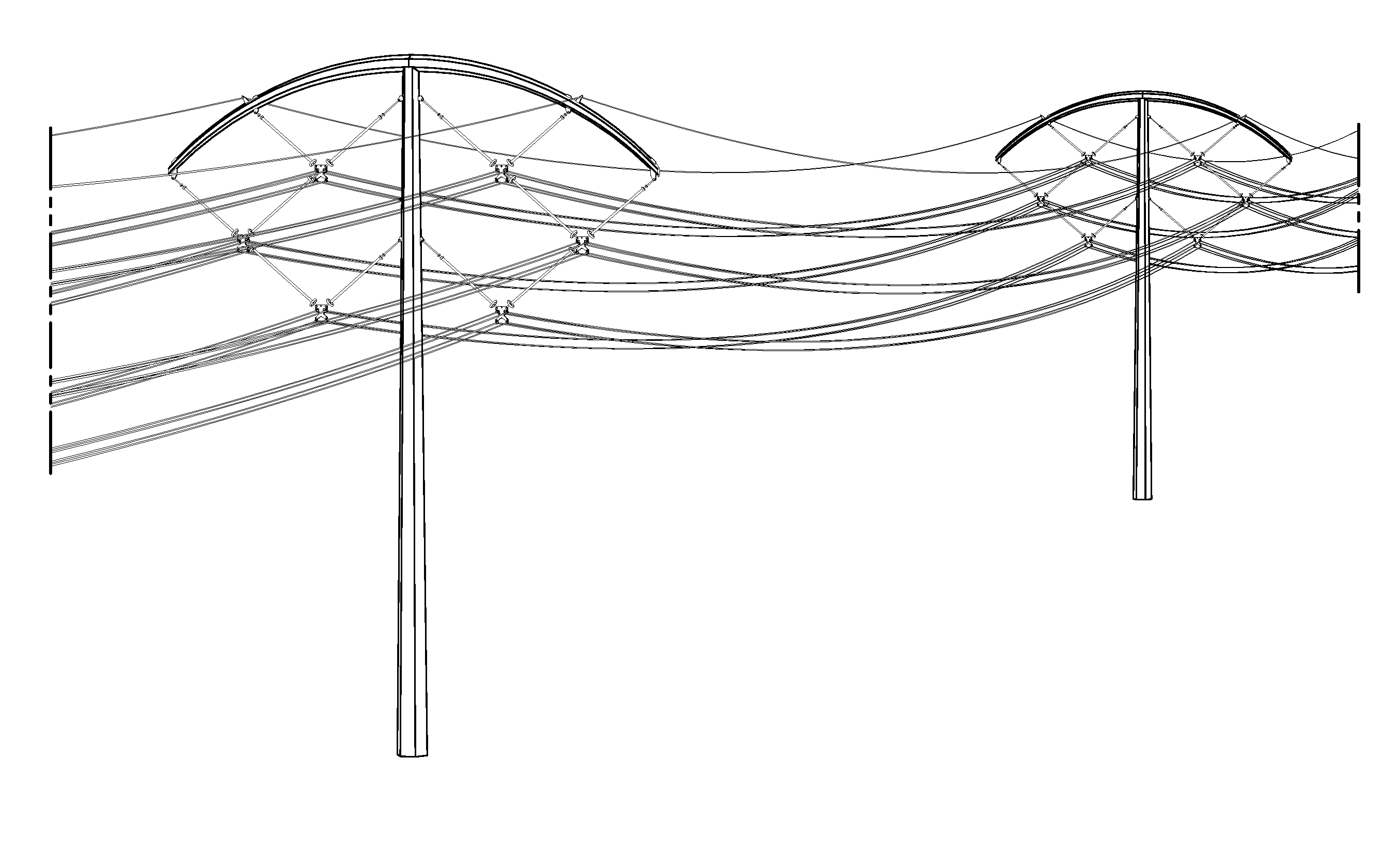
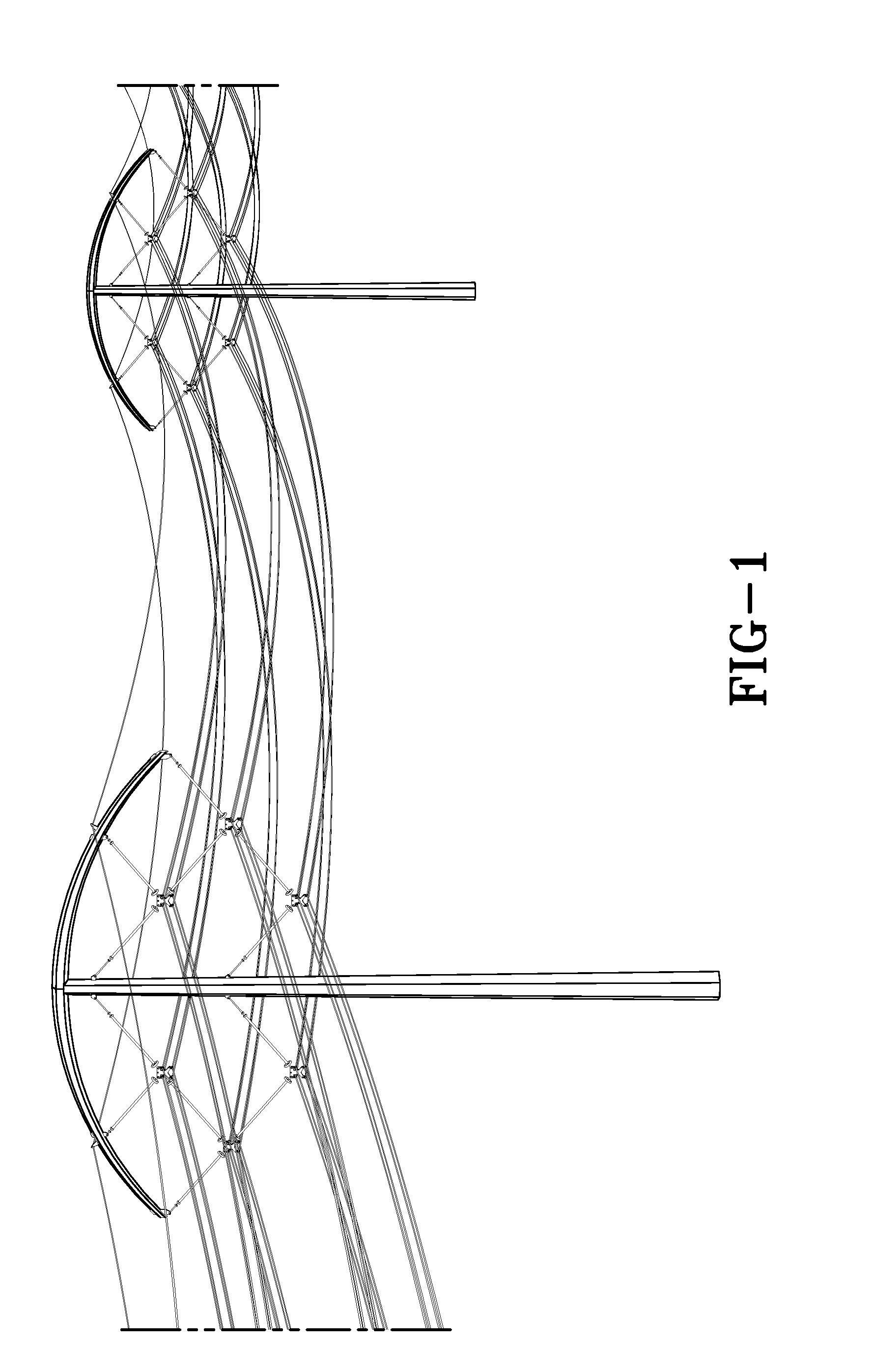
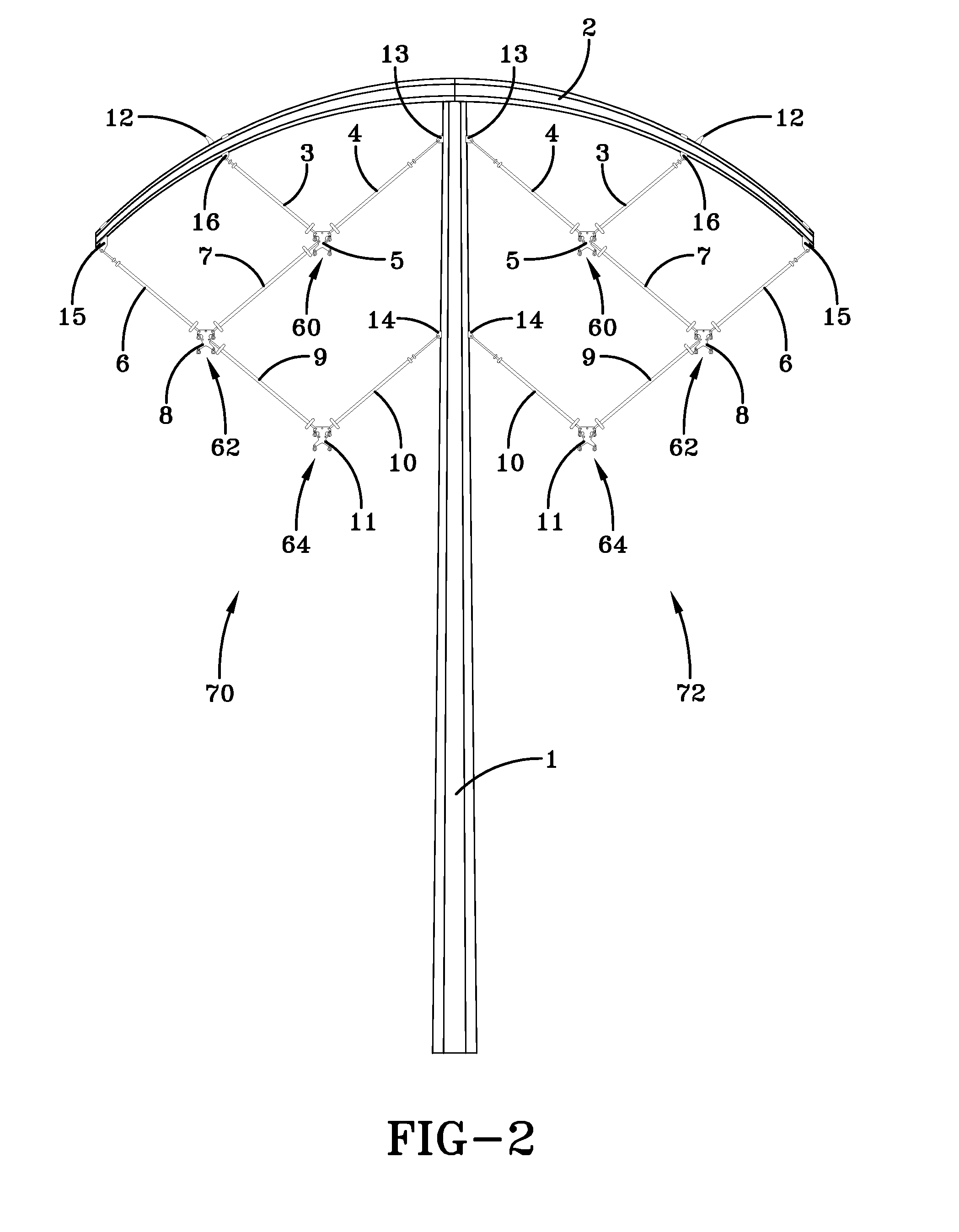
- A 345 kV overhead transmission line design featuring a compact delta configuration with bundled conductors suspended from a single arch-shaped tubular steel crossarm, reducing series impedance and electromagnetic fields, and using interphase insulators to maintain phase-to-phase clearances, thereby enhancing surge impedance loading and thermal capacity without the need for series compensation.

Patent
Innovation
- Compact crossarm design that reduces the overall width of transmission corridors while maintaining structural integrity and electrical clearance requirements.
- Integration of composite materials or hybrid material structures in crossarm construction to achieve lighter weight and smaller dimensions suitable for narrow corridor applications.
- Modular crossarm configuration allowing flexible adjustment of conductor spacing to adapt to varying corridor width constraints.
Land Use Regulations and Right-of-Way Policies
Land use regulations and right-of-way policies constitute fundamental frameworks that directly influence the design and deployment of optimized electric tower crossarms in compact corridors. These regulatory instruments establish the spatial boundaries within which utilities must operate, defining permissible structure dimensions, setback requirements, and clearance standards. In densely populated regions and urban environments where transmission corridors face severe spatial constraints, existing right-of-way widths often cannot accommodate conventional lattice tower designs with extended crossarm configurations. Regulatory authorities typically impose strict limitations on horizontal encroachment beyond designated easement boundaries, creating compelling drivers for compact crossarm solutions that minimize lateral span while maintaining required electrical clearances and mechanical strength.
The evolution of land use policies reflects growing urbanization pressures and competing demands for limited spatial resources. Historical right-of-way allocations established during periods of abundant land availability now prove inadequate for modern grid expansion requirements. Municipalities increasingly resist granting additional easement widths due to property value impacts, environmental concerns, and community opposition. This regulatory environment necessitates innovative crossarm designs that achieve higher transmission capacity within existing corridor constraints, making optimization efforts not merely technical preferences but regulatory imperatives.
Compliance frameworks vary significantly across jurisdictions, encompassing federal transmission siting authorities, state public utility commissions, and local zoning ordinances. These multi-layered regulatory structures create complex approval pathways where compact crossarm designs must satisfy diverse criteria including electromagnetic field exposure limits, visual impact assessments, and environmental protection standards. Utilities pursuing optimized designs must navigate these requirements while demonstrating that reduced crossarm dimensions maintain safety margins and reliability standards equivalent to conventional configurations.
Recent policy trends indicate growing recognition of corridor optimization benefits, with some jurisdictions developing expedited approval processes for designs demonstrating reduced land use footprints. Regulatory incentives increasingly favor technologies enabling capacity upgrades within existing rights-of-way over greenfield corridor development. This policy shift creates favorable conditions for compact crossarm adoption, aligning technical innovation with regulatory objectives of minimizing land acquisition costs and environmental disturbance while meeting growing electricity demand in spatially constrained environments.
Environmental Impact Assessment of Narrow Corridor Design
The optimization of electric tower crossarms for compact corridors necessitates a comprehensive environmental impact assessment to ensure sustainable infrastructure development. Narrow corridor designs, while offering spatial efficiency and reduced land acquisition requirements, introduce distinct environmental considerations that must be carefully evaluated throughout the project lifecycle. This assessment examines the ecological, atmospheric, and socio-environmental implications of implementing compact transmission line configurations.
Land use efficiency represents a primary environmental advantage of narrow corridor designs. By reducing the right-of-way width from conventional standards of 60-80 meters to optimized corridors of 30-45 meters, these designs minimize habitat fragmentation and preserve biodiversity corridors. The reduced footprint decreases deforestation requirements in forested regions and limits agricultural land conversion in rural areas. However, the concentrated electromagnetic field distribution within narrower spaces requires careful evaluation of flora and fauna exposure levels, particularly for sensitive species inhabiting transmission line proximities.
Electromagnetic field emissions constitute a critical environmental consideration. Compact crossarm configurations, while reducing spatial spread, may generate localized field intensity increases. Assessment protocols must evaluate compliance with international exposure guidelines for both human populations and wildlife. Studies indicate that optimized phase conductor arrangements can mitigate field strength through strategic geometric positioning, potentially achieving environmental performance comparable to or exceeding conventional designs.
Visual and aesthetic impacts differ substantially in narrow corridor implementations. The reduced visual intrusion on landscapes and decreased tower visibility from residential areas enhance community acceptance. However, taller tower structures sometimes required for compact designs may create alternative visual concerns in certain topographies. Comprehensive viewshed analysis and landscape integration strategies become essential components of environmental planning.
Construction phase impacts warrant particular attention. Narrow corridors typically require fewer access roads and reduced construction zones, thereby limiting soil disturbance and erosion potential. The decreased material requirements for foundation systems and reduced concrete usage contribute to lower carbon footprints during installation. Post-construction restoration activities benefit from smaller disturbed areas, facilitating faster ecosystem recovery and vegetation reestablishment. Long-term maintenance operations similarly benefit from reduced corridor management requirements, decreasing herbicide application needs and minimizing ongoing ecological disruption.
Unlock deeper insights with Patsnap Eureka Quick Research — get a full tech report to explore trends and direct your research. Try now!
Generate Your Research Report Instantly with AI Agent
Supercharge your innovation with Patsnap Eureka AI Agent Platform!