

Optimize Manifold Geometry to Enhance Coolant Flow Efficiency
MAY 27, 20269 MIN READ
Generate Your Research Report Instantly with AI Agent
PatSnap Eureka helps you evaluate technical feasibility & market potential.
Manifold Geometry Optimization Background and Objectives
Manifold geometry optimization has emerged as a critical engineering discipline driven by the increasing demands for thermal management efficiency across multiple industries. The evolution of this field traces back to early automotive cooling systems in the 1920s, where simple pipe configurations gradually evolved into sophisticated multi-channel designs. The aerospace industry further accelerated development during the 1960s space race, requiring compact yet highly efficient cooling solutions for rocket engines and spacecraft thermal control systems.
The semiconductor industry's exponential growth since the 1980s has fundamentally transformed manifold design requirements. As microprocessor power densities increased from watts to hundreds of watts per square centimeter, traditional cooling approaches became inadequate. This technological pressure catalyzed advanced computational fluid dynamics applications and precision manufacturing techniques, enabling complex internal geometries previously impossible to produce.
Modern manifold optimization encompasses diverse applications spanning data center cooling, electric vehicle battery thermal management, high-performance computing systems, and industrial process equipment. Each application domain presents unique constraints regarding pressure drop limitations, temperature uniformity requirements, and spatial packaging restrictions. The convergence of additive manufacturing technologies has recently unlocked unprecedented design freedom, allowing engineers to implement biomimetic flow patterns and topology-optimized internal structures.
Current technological objectives center on achieving maximum heat transfer coefficient while minimizing pumping power requirements. This dual optimization challenge involves balancing competing factors including flow velocity distribution, surface area enhancement, pressure loss minimization, and manufacturing feasibility. Advanced objectives include adaptive flow control capabilities, multi-phase flow optimization, and integration with smart thermal management systems.
The field's trajectory points toward increasingly sophisticated multi-physics optimization approaches, incorporating machine learning algorithms for design space exploration and real-time performance adaptation. Future developments anticipate seamless integration between thermal, structural, and manufacturing constraints within unified optimization frameworks, ultimately enabling autonomous thermal system design capabilities that respond dynamically to varying operational conditions and performance requirements.
The semiconductor industry's exponential growth since the 1980s has fundamentally transformed manifold design requirements. As microprocessor power densities increased from watts to hundreds of watts per square centimeter, traditional cooling approaches became inadequate. This technological pressure catalyzed advanced computational fluid dynamics applications and precision manufacturing techniques, enabling complex internal geometries previously impossible to produce.
Modern manifold optimization encompasses diverse applications spanning data center cooling, electric vehicle battery thermal management, high-performance computing systems, and industrial process equipment. Each application domain presents unique constraints regarding pressure drop limitations, temperature uniformity requirements, and spatial packaging restrictions. The convergence of additive manufacturing technologies has recently unlocked unprecedented design freedom, allowing engineers to implement biomimetic flow patterns and topology-optimized internal structures.
Current technological objectives center on achieving maximum heat transfer coefficient while minimizing pumping power requirements. This dual optimization challenge involves balancing competing factors including flow velocity distribution, surface area enhancement, pressure loss minimization, and manufacturing feasibility. Advanced objectives include adaptive flow control capabilities, multi-phase flow optimization, and integration with smart thermal management systems.
The field's trajectory points toward increasingly sophisticated multi-physics optimization approaches, incorporating machine learning algorithms for design space exploration and real-time performance adaptation. Future developments anticipate seamless integration between thermal, structural, and manufacturing constraints within unified optimization frameworks, ultimately enabling autonomous thermal system design capabilities that respond dynamically to varying operational conditions and performance requirements.
Market Demand for Enhanced Coolant Flow Systems
The global thermal management market is experiencing unprecedented growth driven by increasing demands for efficient cooling solutions across multiple industries. Automotive sector leads this demand surge as electric vehicles require sophisticated thermal management systems to maintain optimal battery performance and extend operational life. Advanced manifold geometries play a crucial role in achieving uniform temperature distribution and preventing thermal runaway scenarios that could compromise vehicle safety and performance.
Data center operations represent another significant demand driver, where enhanced coolant flow efficiency directly translates to reduced energy consumption and operational costs. Modern server architectures generate substantial heat loads requiring precise thermal control through optimized cooling manifolds. The growing adoption of high-performance computing and artificial intelligence applications intensifies these cooling requirements, creating substantial market opportunities for innovative manifold designs.
Industrial manufacturing sectors, particularly in semiconductor fabrication and precision machining, demand highly efficient coolant flow systems to maintain product quality and equipment reliability. These applications require manifold geometries capable of delivering consistent cooling performance under varying thermal loads while minimizing pressure drops and energy consumption.
The aerospace and defense industries present specialized market segments where weight optimization and thermal efficiency must be balanced. Enhanced coolant flow systems enable more compact thermal management solutions, supporting the development of advanced propulsion systems and electronic warfare equipment where space constraints are critical.
Renewable energy systems, including solar thermal collectors and geothermal heat exchangers, create additional market demand for optimized manifold geometries. These applications require long-term reliability and maximum heat transfer efficiency to ensure economic viability and performance sustainability.
Market drivers include stringent environmental regulations promoting energy efficiency, rising energy costs incentivizing thermal optimization, and technological advancement enabling more sophisticated manifold designs. The convergence of computational fluid dynamics capabilities with advanced manufacturing techniques creates new possibilities for complex geometries previously considered impractical.
Regional demand patterns show strong growth in Asia-Pacific markets driven by expanding manufacturing capabilities and electric vehicle adoption. North American and European markets focus on high-performance applications and regulatory compliance requirements, while emerging markets prioritize cost-effective solutions with proven reliability.
Data center operations represent another significant demand driver, where enhanced coolant flow efficiency directly translates to reduced energy consumption and operational costs. Modern server architectures generate substantial heat loads requiring precise thermal control through optimized cooling manifolds. The growing adoption of high-performance computing and artificial intelligence applications intensifies these cooling requirements, creating substantial market opportunities for innovative manifold designs.
Industrial manufacturing sectors, particularly in semiconductor fabrication and precision machining, demand highly efficient coolant flow systems to maintain product quality and equipment reliability. These applications require manifold geometries capable of delivering consistent cooling performance under varying thermal loads while minimizing pressure drops and energy consumption.
The aerospace and defense industries present specialized market segments where weight optimization and thermal efficiency must be balanced. Enhanced coolant flow systems enable more compact thermal management solutions, supporting the development of advanced propulsion systems and electronic warfare equipment where space constraints are critical.
Renewable energy systems, including solar thermal collectors and geothermal heat exchangers, create additional market demand for optimized manifold geometries. These applications require long-term reliability and maximum heat transfer efficiency to ensure economic viability and performance sustainability.
Market drivers include stringent environmental regulations promoting energy efficiency, rising energy costs incentivizing thermal optimization, and technological advancement enabling more sophisticated manifold designs. The convergence of computational fluid dynamics capabilities with advanced manufacturing techniques creates new possibilities for complex geometries previously considered impractical.
Regional demand patterns show strong growth in Asia-Pacific markets driven by expanding manufacturing capabilities and electric vehicle adoption. North American and European markets focus on high-performance applications and regulatory compliance requirements, while emerging markets prioritize cost-effective solutions with proven reliability.
Current Manifold Design Limitations and Flow Challenges
Traditional manifold designs in cooling systems face significant geometric constraints that fundamentally limit coolant flow efficiency. Conventional rectangular or circular cross-sectional channels create substantial pressure drops due to sharp corners and abrupt directional changes. These geometric discontinuities generate turbulent flow patterns that increase energy consumption while reducing heat transfer effectiveness. The uniform channel diameter approach, commonly employed in legacy designs, fails to account for varying thermal loads across different manifold sections.
Flow distribution uniformity represents a critical challenge in current manifold architectures. Inlet and outlet positioning often creates preferential flow paths, leading to uneven coolant distribution among parallel channels. This maldistribution results in localized hot spots and reduced overall thermal management performance. The phenomenon becomes particularly pronounced in multi-branch manifold systems where hydraulic resistance varies significantly between different flow paths.
Pressure drop optimization remains constrained by manufacturing limitations and cost considerations. Current designs typically employ constant cross-sectional areas throughout the manifold length, ignoring the potential benefits of variable geometry optimization. This approach leads to excessive pressure losses, particularly at flow junctions and directional changes, requiring higher pump power and reducing system efficiency.
Material and manufacturing constraints further limit geometric optimization possibilities. Traditional machining processes restrict the implementation of complex internal geometries that could enhance flow characteristics. Conventional manufacturing methods struggle to produce smooth transitions, optimal curvature radii, and variable cross-sectional profiles that computational fluid dynamics studies suggest would improve performance.
Thermal expansion effects create additional geometric challenges in manifold design. Temperature variations cause dimensional changes that can alter flow characteristics and create stress concentrations at geometric discontinuities. Current designs often lack adequate compensation mechanisms for these thermal effects, leading to performance degradation over operational temperature ranges.
Scale-up limitations present significant obstacles when translating laboratory-optimized geometries to industrial applications. Geometric features that demonstrate effectiveness in small-scale prototypes often lose their advantages when scaled to production-size manifolds due to Reynolds number effects and manufacturing tolerances.
Flow distribution uniformity represents a critical challenge in current manifold architectures. Inlet and outlet positioning often creates preferential flow paths, leading to uneven coolant distribution among parallel channels. This maldistribution results in localized hot spots and reduced overall thermal management performance. The phenomenon becomes particularly pronounced in multi-branch manifold systems where hydraulic resistance varies significantly between different flow paths.
Pressure drop optimization remains constrained by manufacturing limitations and cost considerations. Current designs typically employ constant cross-sectional areas throughout the manifold length, ignoring the potential benefits of variable geometry optimization. This approach leads to excessive pressure losses, particularly at flow junctions and directional changes, requiring higher pump power and reducing system efficiency.
Material and manufacturing constraints further limit geometric optimization possibilities. Traditional machining processes restrict the implementation of complex internal geometries that could enhance flow characteristics. Conventional manufacturing methods struggle to produce smooth transitions, optimal curvature radii, and variable cross-sectional profiles that computational fluid dynamics studies suggest would improve performance.
Thermal expansion effects create additional geometric challenges in manifold design. Temperature variations cause dimensional changes that can alter flow characteristics and create stress concentrations at geometric discontinuities. Current designs often lack adequate compensation mechanisms for these thermal effects, leading to performance degradation over operational temperature ranges.
Scale-up limitations present significant obstacles when translating laboratory-optimized geometries to industrial applications. Geometric features that demonstrate effectiveness in small-scale prototypes often lose their advantages when scaled to production-size manifolds due to Reynolds number effects and manufacturing tolerances.
Existing Solutions for Coolant Flow Enhancement
01 Optimized manifold channel geometry design
Advanced geometric configurations of manifold channels can significantly improve coolant flow distribution and reduce pressure losses. These designs focus on optimizing channel cross-sections, flow path arrangements, and internal surface geometries to enhance fluid dynamics. The geometric modifications help achieve more uniform flow distribution across multiple outlets while minimizing turbulence and flow resistance.- Optimized manifold channel geometry design: Advanced geometric configurations of manifold channels can significantly improve coolant flow distribution and reduce pressure losses. These designs focus on optimizing channel cross-sections, flow path arrangements, and internal surface geometries to enhance fluid dynamics. The geometric modifications help achieve uniform flow distribution across multiple outlets while minimizing turbulence and flow resistance.
- Flow distribution control mechanisms: Implementation of specialized flow control elements within manifold systems to ensure optimal coolant distribution. These mechanisms include flow restrictors, directional guides, and pressure regulation features that help maintain consistent flow rates across different branches. The control systems are designed to compensate for varying thermal loads and maintain stable cooling performance under different operating conditions.
- Heat transfer enhancement through surface modifications: Surface engineering techniques applied to manifold internal walls to improve heat transfer efficiency between the coolant and the manifold structure. These modifications include textured surfaces, micro-channels, and specialized coatings that increase the effective heat transfer area and promote better thermal exchange. The enhanced surfaces help reduce coolant temperature rise and improve overall system thermal performance.
- Multi-layer manifold construction: Advanced manufacturing approaches utilizing multiple layers or stacked configurations to create complex flow paths within compact manifold designs. These constructions allow for sophisticated flow routing, improved thermal management, and better integration with cooling systems. The multi-layer approach enables the creation of intricate internal geometries that would be difficult to achieve with traditional manufacturing methods.
- Integrated cooling system optimization: Comprehensive system-level approaches that optimize the entire cooling circuit including manifold design, pump integration, and thermal management strategies. These solutions consider the manifold as part of a larger cooling ecosystem, optimizing flow rates, pressure drops, and thermal performance across the complete system. The integrated approach ensures maximum efficiency while minimizing energy consumption and maintaining optimal operating temperatures.
02 Flow distribution control mechanisms
Implementation of specialized flow control elements within manifold systems to ensure optimal coolant distribution. These mechanisms include variable flow restrictors, directional flow guides, and pressure balancing features that maintain consistent flow rates across different branches. The control systems adapt to varying operating conditions and thermal loads to optimize cooling performance.Expand Specific Solutions03 Heat transfer enhancement through surface modifications
Surface treatment and modification techniques applied to manifold internal surfaces to improve heat transfer efficiency. These enhancements include micro-structured surfaces, specialized coatings, and textured geometries that increase the effective heat transfer area and promote better thermal exchange between the coolant and manifold walls. The modifications also help reduce thermal boundary layer thickness.Expand Specific Solutions04 Multi-layer manifold construction
Advanced manufacturing techniques for creating multi-layered manifold structures that optimize coolant flow paths and thermal management. These constructions allow for complex internal geometries with integrated cooling channels, thermal barriers, and flow separation features. The layered approach enables precise control over flow characteristics and thermal performance while maintaining structural integrity.Expand Specific Solutions05 Computational flow optimization methods
Advanced computational fluid dynamics approaches and design methodologies for optimizing manifold geometry and coolant flow efficiency. These methods involve sophisticated modeling techniques, simulation-based design optimization, and performance prediction algorithms that enable the development of highly efficient cooling systems. The computational approaches consider multiple design parameters simultaneously to achieve optimal performance.Expand Specific Solutions
Key Players in Thermal Management and Manifold Industry
The manifold geometry optimization for enhanced coolant flow efficiency represents a mature technology sector experiencing steady growth, driven by increasing demands for thermal management across automotive, aerospace, and industrial applications. The market demonstrates significant scale with established players like Honda Motor Co., Caterpillar Inc., and Robert Bosch GmbH leading automotive cooling solutions, while Aerojet Rocketdyne and United Technologies Corp. dominate aerospace applications. Technology maturity varies across segments, with automotive companies like Scania CV AB and Hanon Systems achieving high commercial readiness in traditional cooling systems, while advanced manufacturers such as Applied Materials Inc. and GLOBALFOUNDRIES Inc. push boundaries in precision cooling for electronics. Research institutions including Johns Hopkins University, Xi'an Jiaotong University, and Zhejiang University contribute fundamental innovations, particularly in computational fluid dynamics and advanced materials, indicating continued technological evolution despite the sector's overall maturity.
United Technologies Corp.
Technical Solution: United Technologies has developed sophisticated manifold geometry optimization solutions for aerospace and industrial applications, emphasizing weight reduction and thermal efficiency. Their technology employs advanced computational fluid dynamics combined with structural optimization to create manifold designs that minimize weight while maximizing coolant flow performance. The company utilizes additive manufacturing techniques to produce complex internal geometries including lattice structures, optimized flow channels, and integrated heat exchange surfaces. Their manifold optimization approach incorporates multi-physics simulation considering thermal, structural, and fluid dynamic interactions. The designs feature variable cross-sectional flow areas, optimized junction geometries, and advanced surface treatments to enhance heat transfer while reducing pressure drop across the manifold system.
Strengths: Aerospace-grade precision and reliability, advanced materials and manufacturing capabilities, multi-physics optimization approach. Weaknesses: High development costs, complex manufacturing requirements may limit scalability for cost-sensitive applications.
Hanon Systems
Technical Solution: Hanon Systems specializes in thermal management solutions with advanced manifold geometry optimization for automotive cooling systems. Their technology focuses on multi-port manifold designs that utilize flow splitting optimization algorithms to ensure uniform coolant distribution. The company develops manifolds with integrated flow control features including variable orifice sizing, optimized header tank geometries, and streamlined transition zones. Their approach combines experimental validation with numerical simulation to optimize internal flow paths, reducing pressure losses by up to 15% while improving heat transfer effectiveness. The manifold designs incorporate lightweight materials and compact packaging requirements specific to modern vehicle thermal management systems.
Strengths: Specialized thermal management expertise, proven automotive industry track record, cost-effective manufacturing solutions. Weaknesses: Limited application scope beyond automotive sector, dependency on traditional manufacturing methods may constrain complex geometries.
Core Innovations in Manifold Geometry Design
Heat exchangers with improved fluid distribution
PatentWO2020160739A1
Innovation
- The development of low-profile heat exchangers with improved fluid distribution features, including a stacked cooling block design with interlaced feed and return channels, inlet distribution manifolds with varying aperture sizes and shapes, and transition channels to balance fluid flow and pressure, ensuring more uniform coolant distribution and temperature control.


Enhanced performance torroidal coolant-collection manifold
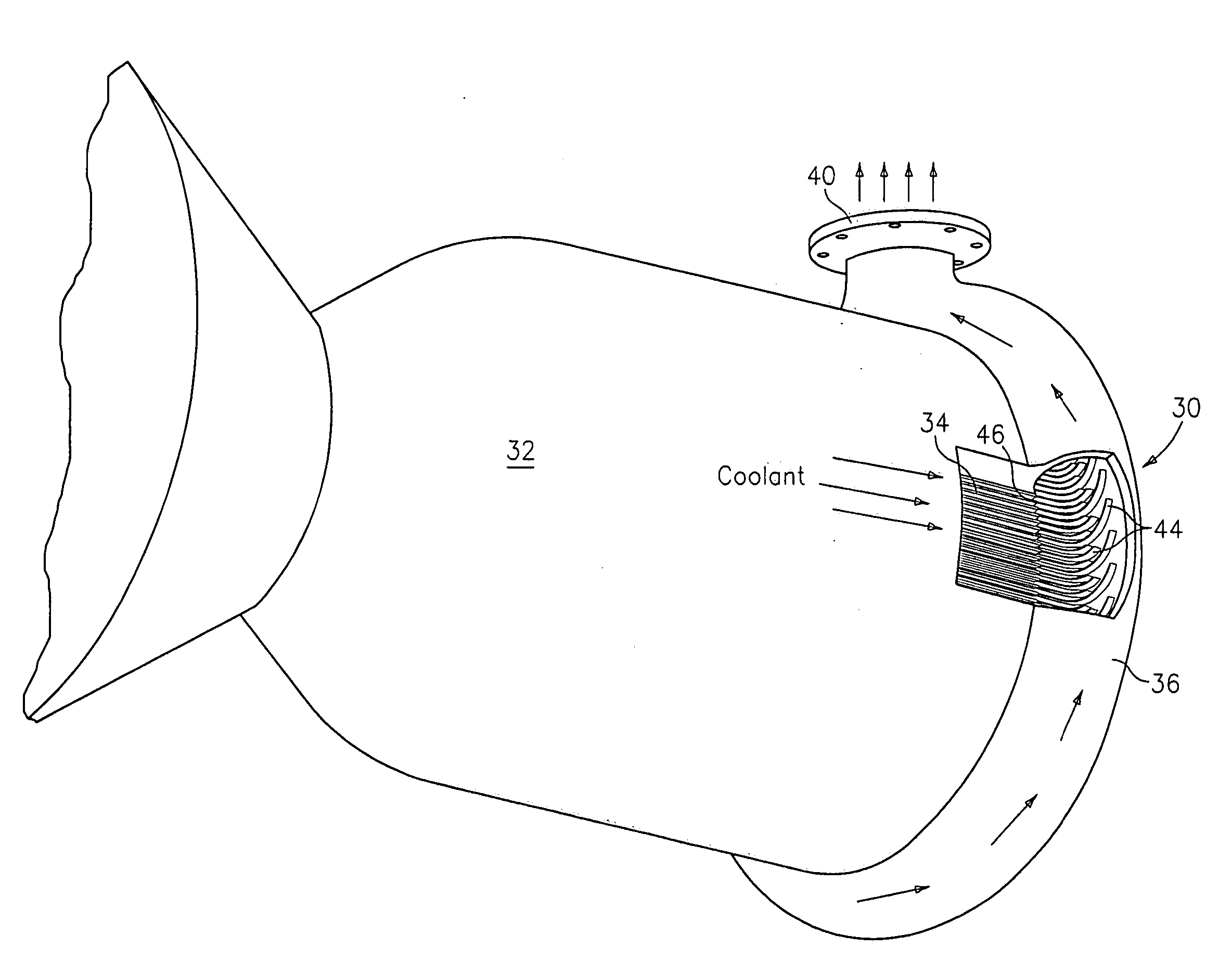
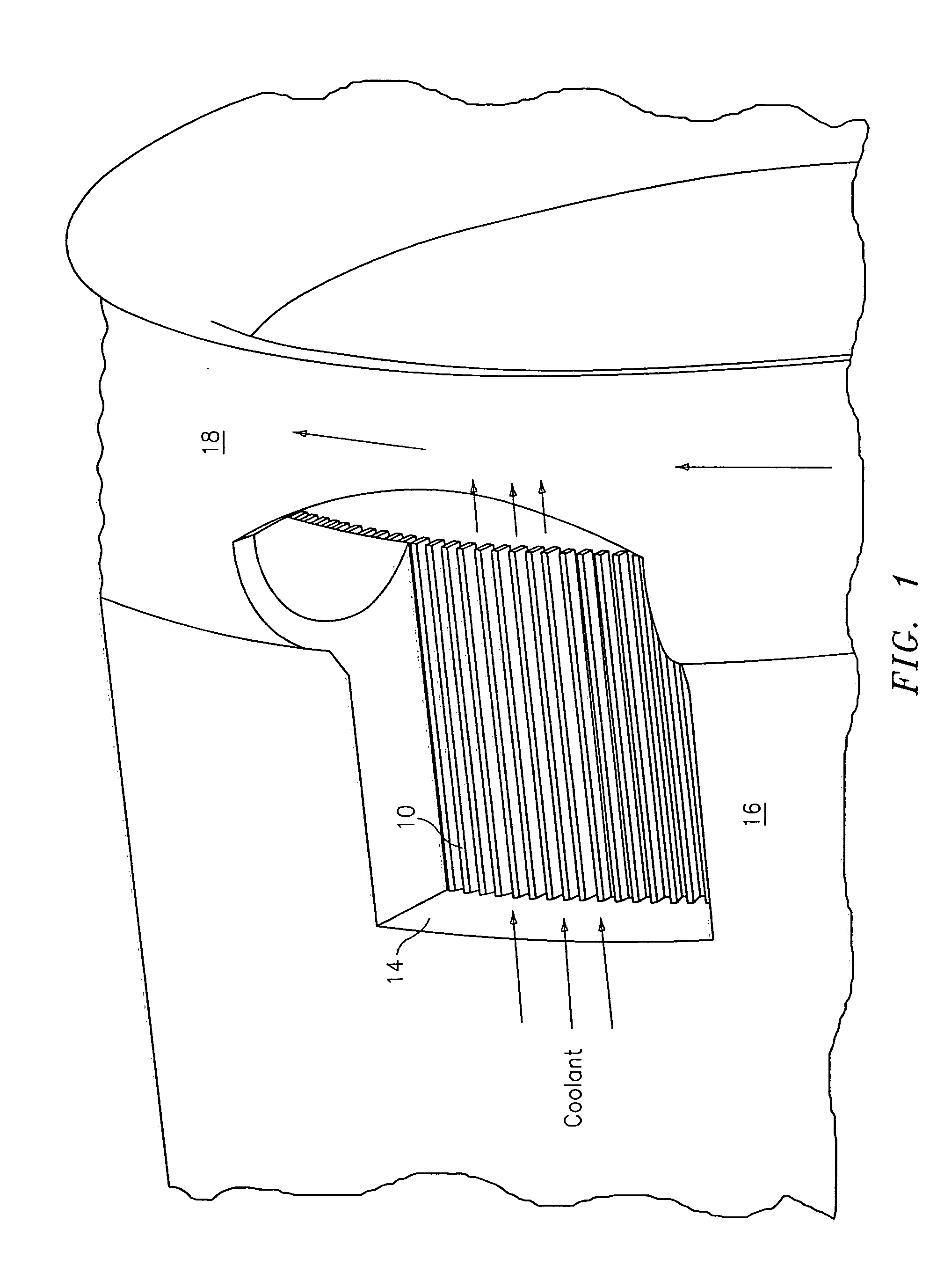
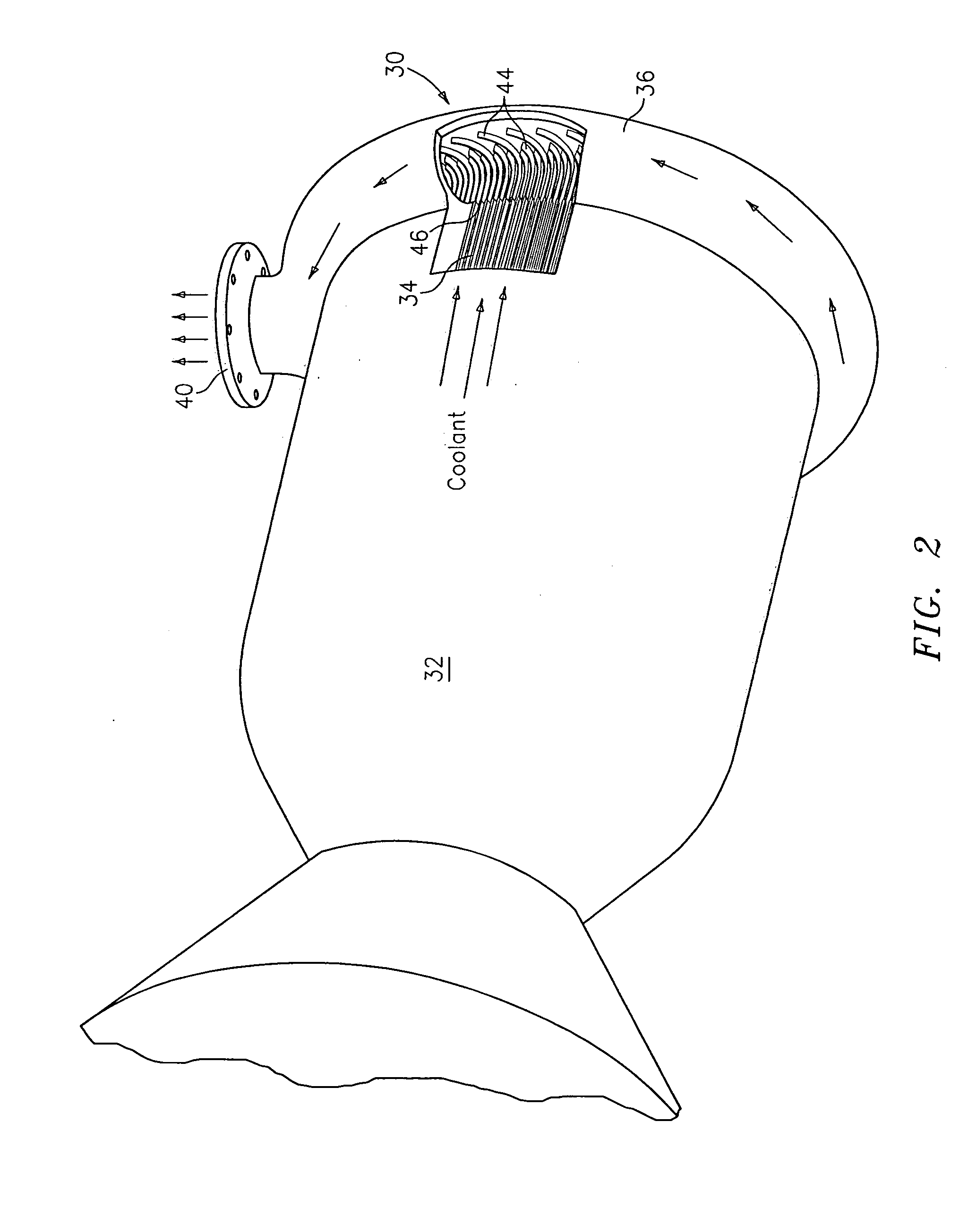
PatentActiveUS20050178106A1
Innovation
- Incorporation of turning vanes within the torroidal coolant-collection manifold to redirect coolant flow from radial or axial to tangential, minimizing sudden expansion and mixing losses and promoting uniform pressure distribution.

Environmental Regulations for Coolant Systems
Environmental regulations governing coolant systems have become increasingly stringent across global markets, directly impacting manifold geometry optimization strategies. The European Union's REACH regulation and RoHS directive establish strict limitations on hazardous substances in coolant formulations, while the U.S. EPA's Toxic Substances Control Act mandates comprehensive environmental impact assessments for industrial cooling applications. These regulatory frameworks necessitate careful consideration of material compatibility when designing optimized manifold geometries.
Recent regulatory developments emphasize lifecycle environmental impact, requiring manufacturers to demonstrate reduced energy consumption and improved thermal efficiency. The ISO 14001 environmental management standards now incorporate specific provisions for cooling system efficiency metrics, establishing minimum performance thresholds that directly influence manifold design parameters. Enhanced coolant flow efficiency through geometric optimization serves as a primary compliance pathway for meeting these evolving standards.
Coolant disposal and recycling regulations present additional constraints on manifold geometry design. The Basel Convention's hazardous waste management protocols require extended coolant service life, achievable through optimized flow patterns that minimize thermal degradation and contamination. Advanced manifold geometries must facilitate complete system drainage and cleaning procedures to comply with waste minimization mandates.
Regional variations in environmental standards create complex compliance landscapes for global manufacturers. Asian markets increasingly adopt European-style environmental regulations, while North American standards focus on energy efficiency metrics. These divergent approaches influence manifold optimization priorities, with European designs emphasizing material sustainability and American designs prioritizing thermal performance efficiency.
Emerging regulations targeting carbon footprint reduction drive innovation in manifold geometry optimization. The Paris Agreement's industrial emission targets encourage adoption of high-efficiency cooling systems, where optimized manifold designs contribute significantly to overall energy reduction goals. Future regulatory trends indicate mandatory efficiency reporting and potential carbon taxation schemes that will further incentivize advanced manifold geometry development.
Compliance verification requirements necessitate integration of monitoring capabilities within optimized manifold designs. Environmental agencies increasingly demand real-time performance data, requiring manifold geometries that accommodate sensor integration without compromising flow efficiency. This regulatory evolution shapes next-generation manifold optimization approaches toward smart, monitored cooling systems.
Recent regulatory developments emphasize lifecycle environmental impact, requiring manufacturers to demonstrate reduced energy consumption and improved thermal efficiency. The ISO 14001 environmental management standards now incorporate specific provisions for cooling system efficiency metrics, establishing minimum performance thresholds that directly influence manifold design parameters. Enhanced coolant flow efficiency through geometric optimization serves as a primary compliance pathway for meeting these evolving standards.
Coolant disposal and recycling regulations present additional constraints on manifold geometry design. The Basel Convention's hazardous waste management protocols require extended coolant service life, achievable through optimized flow patterns that minimize thermal degradation and contamination. Advanced manifold geometries must facilitate complete system drainage and cleaning procedures to comply with waste minimization mandates.
Regional variations in environmental standards create complex compliance landscapes for global manufacturers. Asian markets increasingly adopt European-style environmental regulations, while North American standards focus on energy efficiency metrics. These divergent approaches influence manifold optimization priorities, with European designs emphasizing material sustainability and American designs prioritizing thermal performance efficiency.
Emerging regulations targeting carbon footprint reduction drive innovation in manifold geometry optimization. The Paris Agreement's industrial emission targets encourage adoption of high-efficiency cooling systems, where optimized manifold designs contribute significantly to overall energy reduction goals. Future regulatory trends indicate mandatory efficiency reporting and potential carbon taxation schemes that will further incentivize advanced manifold geometry development.
Compliance verification requirements necessitate integration of monitoring capabilities within optimized manifold designs. Environmental agencies increasingly demand real-time performance data, requiring manifold geometries that accommodate sensor integration without compromising flow efficiency. This regulatory evolution shapes next-generation manifold optimization approaches toward smart, monitored cooling systems.
Manufacturing Constraints in Complex Manifold Geometries
Manufacturing complex manifold geometries for enhanced coolant flow efficiency presents significant challenges that directly impact both production feasibility and cost-effectiveness. Traditional manufacturing methods such as casting and machining face substantial limitations when dealing with intricate internal channel configurations, particularly those featuring variable cross-sections, curved pathways, and optimized surface textures that are essential for maximizing heat transfer performance.
Conventional casting processes struggle with complex internal geometries due to core removal difficulties and the inability to create undercuts or intricate branching patterns. The requirement for draft angles and minimum wall thickness constraints often forces design compromises that reduce the theoretical flow efficiency gains. Sand casting limitations become particularly pronounced when attempting to create smooth internal surfaces or precise dimensional tolerances required for optimal fluid dynamics.
Machining operations face even greater constraints when creating internal manifold channels. Traditional drilling and milling cannot access complex three-dimensional pathways, while electrical discharge machining (EDM) becomes prohibitively expensive and time-consuming for intricate geometries. The inability to machine internal features with varying cross-sections or non-linear paths severely limits design optimization potential.
Additive manufacturing technologies offer promising solutions but introduce their own constraints. Powder bed fusion processes require support structures for overhanging features, which can be difficult or impossible to remove from internal channels. Layer adhesion quality and surface roughness considerations become critical factors affecting flow characteristics. Build orientation significantly impacts achievable geometries and surface quality, often requiring design modifications that may compromise optimal flow paths.
Material selection adds another layer of complexity, as manufacturing constraints vary significantly between different alloys and processing methods. High-temperature applications demand materials with specific thermal properties, but these materials often present greater manufacturing challenges. The trade-off between material performance and manufacturability frequently drives design decisions away from theoretically optimal geometries.
Quality control and inspection of complex internal geometries present additional manufacturing constraints. Traditional measurement techniques cannot access intricate internal features, necessitating expensive computed tomography scanning or specialized inspection methods. This limitation affects both production validation and iterative design improvement processes, potentially slowing optimization efforts and increasing development costs.
Conventional casting processes struggle with complex internal geometries due to core removal difficulties and the inability to create undercuts or intricate branching patterns. The requirement for draft angles and minimum wall thickness constraints often forces design compromises that reduce the theoretical flow efficiency gains. Sand casting limitations become particularly pronounced when attempting to create smooth internal surfaces or precise dimensional tolerances required for optimal fluid dynamics.
Machining operations face even greater constraints when creating internal manifold channels. Traditional drilling and milling cannot access complex three-dimensional pathways, while electrical discharge machining (EDM) becomes prohibitively expensive and time-consuming for intricate geometries. The inability to machine internal features with varying cross-sections or non-linear paths severely limits design optimization potential.
Additive manufacturing technologies offer promising solutions but introduce their own constraints. Powder bed fusion processes require support structures for overhanging features, which can be difficult or impossible to remove from internal channels. Layer adhesion quality and surface roughness considerations become critical factors affecting flow characteristics. Build orientation significantly impacts achievable geometries and surface quality, often requiring design modifications that may compromise optimal flow paths.
Material selection adds another layer of complexity, as manufacturing constraints vary significantly between different alloys and processing methods. High-temperature applications demand materials with specific thermal properties, but these materials often present greater manufacturing challenges. The trade-off between material performance and manufacturability frequently drives design decisions away from theoretically optimal geometries.
Quality control and inspection of complex internal geometries present additional manufacturing constraints. Traditional measurement techniques cannot access intricate internal features, necessitating expensive computed tomography scanning or specialized inspection methods. This limitation affects both production validation and iterative design improvement processes, potentially slowing optimization efforts and increasing development costs.
Unlock deeper insights with PatSnap Eureka Quick Research — get a full tech report to explore trends and direct your research. Try now!
Generate Your Research Report Instantly with AI Agent
Supercharge your innovation with PatSnap Eureka AI Agent Platform!