Optimize Niobium Grain Structure For Better Charge Distribution
MAY 15, 20269 MIN READ
Generate Your Research Report Instantly with AI Agent
PatSnap Eureka helps you evaluate technical feasibility & market potential.
Niobium Grain Structure Background and Optimization Goals
Niobium has emerged as a critical material in superconducting applications, particularly in radio frequency (RF) cavities for particle accelerators and quantum computing systems. The material's unique properties, including its high critical temperature and excellent superconducting characteristics, have made it indispensable in advanced scientific and technological applications. However, the performance of niobium-based devices is significantly influenced by the material's microstructural properties, with grain structure playing a pivotal role in determining overall functionality.
The relationship between niobium grain structure and charge distribution has been recognized as a fundamental factor affecting superconducting performance. Grain boundaries, crystallographic orientations, and grain size distributions directly impact the material's ability to maintain uniform charge flow and minimize energy losses. Historical research has demonstrated that conventional niobium processing methods often result in suboptimal grain structures that create localized charge accumulation points and non-uniform current distributions.
Early investigations into niobium metallurgy focused primarily on achieving high purity levels and basic mechanical properties. However, as applications became more demanding, particularly in high-frequency superconducting cavities, researchers identified that grain structure optimization could significantly enhance performance metrics. The evolution from polycrystalline to large-grain and eventually single-crystal niobium represents a progressive understanding of how microstructural control influences electromagnetic properties.
The primary optimization goal centers on achieving uniform charge distribution across the niobium surface and bulk material. This involves minimizing grain boundary density, controlling crystallographic texture, and eliminating structural defects that can serve as charge trapping sites. Optimal grain structures should facilitate smooth charge flow while reducing surface resistance and minimizing field emission phenomena that can degrade superconducting performance.
Secondary objectives include enhancing thermal stability and mechanical integrity of the optimized grain structure. The target microstructure must maintain its beneficial properties under operational conditions, including thermal cycling and electromagnetic field exposure. Additionally, the optimization process should be scalable and economically viable for industrial implementation, ensuring that advanced grain structures can be consistently reproduced in manufacturing environments.
Current optimization efforts aim to develop processing methodologies that can produce controlled grain growth, preferential crystallographic orientations, and minimized defect densities. These goals require integration of advanced materials science techniques with practical manufacturing constraints to achieve commercially viable solutions for next-generation superconducting applications.
The relationship between niobium grain structure and charge distribution has been recognized as a fundamental factor affecting superconducting performance. Grain boundaries, crystallographic orientations, and grain size distributions directly impact the material's ability to maintain uniform charge flow and minimize energy losses. Historical research has demonstrated that conventional niobium processing methods often result in suboptimal grain structures that create localized charge accumulation points and non-uniform current distributions.
Early investigations into niobium metallurgy focused primarily on achieving high purity levels and basic mechanical properties. However, as applications became more demanding, particularly in high-frequency superconducting cavities, researchers identified that grain structure optimization could significantly enhance performance metrics. The evolution from polycrystalline to large-grain and eventually single-crystal niobium represents a progressive understanding of how microstructural control influences electromagnetic properties.
The primary optimization goal centers on achieving uniform charge distribution across the niobium surface and bulk material. This involves minimizing grain boundary density, controlling crystallographic texture, and eliminating structural defects that can serve as charge trapping sites. Optimal grain structures should facilitate smooth charge flow while reducing surface resistance and minimizing field emission phenomena that can degrade superconducting performance.
Secondary objectives include enhancing thermal stability and mechanical integrity of the optimized grain structure. The target microstructure must maintain its beneficial properties under operational conditions, including thermal cycling and electromagnetic field exposure. Additionally, the optimization process should be scalable and economically viable for industrial implementation, ensuring that advanced grain structures can be consistently reproduced in manufacturing environments.
Current optimization efforts aim to develop processing methodologies that can produce controlled grain growth, preferential crystallographic orientations, and minimized defect densities. These goals require integration of advanced materials science techniques with practical manufacturing constraints to achieve commercially viable solutions for next-generation superconducting applications.
Market Demand for Enhanced Niobium Charge Distribution
The global superconducting materials market has experienced substantial growth driven by increasing demand for high-performance electronic devices, quantum computing applications, and advanced energy storage systems. Niobium-based superconductors occupy a critical position in this landscape, particularly in applications requiring superior charge distribution characteristics such as superconducting radio frequency cavities, quantum processors, and magnetic resonance imaging systems.
The aerospace and defense sectors represent significant demand drivers for optimized niobium materials. Modern radar systems, satellite communications, and particle accelerators require superconducting components with enhanced charge distribution properties to achieve higher operational efficiency and reduced energy losses. The growing investment in space exploration programs and advanced defense technologies has created sustained demand for premium niobium materials with controlled grain structures.
Quantum computing emerges as a transformative market segment demanding exceptional niobium performance. Leading technology companies are investing heavily in quantum processor development, where uniform charge distribution across niobium surfaces directly impacts qubit coherence times and computational accuracy. The race to achieve quantum supremacy has intensified requirements for materials with precisely engineered microstructures that minimize charge trapping and surface irregularities.
The medical technology sector presents another substantial market opportunity. Magnetic resonance imaging equipment manufacturers increasingly seek niobium superconductors with optimized grain boundaries to enhance magnetic field stability and reduce operational costs. The global expansion of healthcare infrastructure, particularly in emerging markets, continues to drive demand for high-quality superconducting materials.
Energy sector applications, including superconducting magnetic energy storage systems and power transmission cables, require niobium materials with exceptional charge distribution uniformity. The global transition toward renewable energy sources and smart grid technologies has created new market opportunities for advanced superconducting materials that can handle variable power loads efficiently.
Research institutions and national laboratories constitute a specialized but influential market segment. These organizations drive innovation in superconducting technologies and often establish performance benchmarks that influence broader market requirements. Their demand for cutting-edge niobium materials with superior charge distribution properties helps validate new processing techniques and material specifications.
The market trend indicates increasing emphasis on material customization and application-specific optimization. Customers are moving beyond standard niobium products toward tailored solutions that address specific charge distribution requirements for their unique applications, creating opportunities for specialized material processing and surface engineering services.
The aerospace and defense sectors represent significant demand drivers for optimized niobium materials. Modern radar systems, satellite communications, and particle accelerators require superconducting components with enhanced charge distribution properties to achieve higher operational efficiency and reduced energy losses. The growing investment in space exploration programs and advanced defense technologies has created sustained demand for premium niobium materials with controlled grain structures.
Quantum computing emerges as a transformative market segment demanding exceptional niobium performance. Leading technology companies are investing heavily in quantum processor development, where uniform charge distribution across niobium surfaces directly impacts qubit coherence times and computational accuracy. The race to achieve quantum supremacy has intensified requirements for materials with precisely engineered microstructures that minimize charge trapping and surface irregularities.
The medical technology sector presents another substantial market opportunity. Magnetic resonance imaging equipment manufacturers increasingly seek niobium superconductors with optimized grain boundaries to enhance magnetic field stability and reduce operational costs. The global expansion of healthcare infrastructure, particularly in emerging markets, continues to drive demand for high-quality superconducting materials.
Energy sector applications, including superconducting magnetic energy storage systems and power transmission cables, require niobium materials with exceptional charge distribution uniformity. The global transition toward renewable energy sources and smart grid technologies has created new market opportunities for advanced superconducting materials that can handle variable power loads efficiently.
Research institutions and national laboratories constitute a specialized but influential market segment. These organizations drive innovation in superconducting technologies and often establish performance benchmarks that influence broader market requirements. Their demand for cutting-edge niobium materials with superior charge distribution properties helps validate new processing techniques and material specifications.
The market trend indicates increasing emphasis on material customization and application-specific optimization. Customers are moving beyond standard niobium products toward tailored solutions that address specific charge distribution requirements for their unique applications, creating opportunities for specialized material processing and surface engineering services.
Current Niobium Grain Structure Challenges and Limitations
Niobium grain structure optimization faces significant challenges that directly impact charge distribution efficiency in superconducting applications. The primary limitation stems from the inherent heterogeneity of grain boundaries, which create localized regions of varying electrical properties. These boundaries act as potential barriers for charge carriers, leading to non-uniform current distribution and reduced overall performance in superconducting radiofrequency cavities and quantum computing applications.
Current manufacturing processes struggle to achieve consistent grain size control across large niobium surfaces. Traditional fabrication methods, including electron beam melting and powder metallurgy, often result in grain size variations ranging from micrometers to millimeters within the same component. This inconsistency creates preferential current paths and charge accumulation zones, ultimately compromising the material's superconducting properties and increasing surface resistance.
The crystallographic orientation mismatch between adjacent grains presents another critical challenge. Grain boundaries with high-angle misorientation exhibit increased electrical resistance and serve as nucleation sites for magnetic flux penetration. These defects become particularly problematic under high-frequency electromagnetic fields, where charge distribution uniformity is essential for maintaining optimal performance.
Surface preparation techniques currently employed in niobium processing introduce additional complications. Chemical etching and electropolishing procedures, while necessary for removing surface contaminants, can selectively attack grain boundaries, creating microscopic topographical variations. These surface irregularities further exacerbate charge distribution non-uniformities and increase the likelihood of field emission events.
Thermal treatment processes used to optimize niobium's superconducting properties often result in uncontrolled grain growth. High-temperature annealing, while beneficial for removing lattice defects, can lead to abnormal grain coarsening and the formation of twin boundaries. These structural features create additional impedance variations that disrupt uniform charge flow patterns.
The lack of precise control over impurity distribution within the grain structure represents a fundamental limitation. Interstitial elements such as oxygen, nitrogen, and carbon tend to segregate at grain boundaries, creating localized regions with altered electronic properties. This segregation phenomenon makes it extremely difficult to achieve homogeneous charge distribution characteristics across the entire niobium surface.
Current characterization methods also present limitations in fully understanding grain structure effects on charge distribution. While electron backscatter diffraction and transmission electron microscopy provide valuable structural information, correlating these findings with actual charge distribution behavior remains challenging due to the complex interplay between microstructural features and electromagnetic field interactions.
Current manufacturing processes struggle to achieve consistent grain size control across large niobium surfaces. Traditional fabrication methods, including electron beam melting and powder metallurgy, often result in grain size variations ranging from micrometers to millimeters within the same component. This inconsistency creates preferential current paths and charge accumulation zones, ultimately compromising the material's superconducting properties and increasing surface resistance.
The crystallographic orientation mismatch between adjacent grains presents another critical challenge. Grain boundaries with high-angle misorientation exhibit increased electrical resistance and serve as nucleation sites for magnetic flux penetration. These defects become particularly problematic under high-frequency electromagnetic fields, where charge distribution uniformity is essential for maintaining optimal performance.
Surface preparation techniques currently employed in niobium processing introduce additional complications. Chemical etching and electropolishing procedures, while necessary for removing surface contaminants, can selectively attack grain boundaries, creating microscopic topographical variations. These surface irregularities further exacerbate charge distribution non-uniformities and increase the likelihood of field emission events.
Thermal treatment processes used to optimize niobium's superconducting properties often result in uncontrolled grain growth. High-temperature annealing, while beneficial for removing lattice defects, can lead to abnormal grain coarsening and the formation of twin boundaries. These structural features create additional impedance variations that disrupt uniform charge flow patterns.
The lack of precise control over impurity distribution within the grain structure represents a fundamental limitation. Interstitial elements such as oxygen, nitrogen, and carbon tend to segregate at grain boundaries, creating localized regions with altered electronic properties. This segregation phenomenon makes it extremely difficult to achieve homogeneous charge distribution characteristics across the entire niobium surface.
Current characterization methods also present limitations in fully understanding grain structure effects on charge distribution. While electron backscatter diffraction and transmission electron microscopy provide valuable structural information, correlating these findings with actual charge distribution behavior remains challenging due to the complex interplay between microstructural features and electromagnetic field interactions.
Existing Grain Structure Optimization Solutions
01 Niobium-based capacitor charge distribution mechanisms
Technologies focusing on the charge distribution properties of niobium in capacitor applications, including electrolytic capacitors and tantalum-niobium hybrid systems. These approaches examine how charge is distributed across niobium oxide layers and interfaces to optimize capacitance and electrical performance in electronic components.- Niobium-based capacitor charge distribution mechanisms: Technologies focusing on the charge distribution properties of niobium in capacitor applications, including electrolytic capacitors and tantalum-niobium hybrid systems. These methods involve optimizing the dielectric properties and charge storage capabilities through controlled niobium oxide formation and surface treatment processes.
- Niobium alloy charge transfer characteristics: Approaches for managing charge distribution in niobium alloy systems, particularly in superconducting applications and electronic devices. These techniques involve controlling the electronic structure and charge carrier mobility through alloying elements and heat treatment processes.
- Niobium oxide semiconductor charge behavior: Methods for utilizing niobium oxide materials in semiconductor applications where charge distribution control is critical. These approaches focus on the electronic properties of various niobium oxide phases and their application in memory devices and switching elements.
- Niobium thin film charge distribution control: Techniques for managing charge distribution in niobium thin films used in microelectronic applications. These methods involve deposition processes, surface modification, and interface engineering to achieve desired electrical characteristics and charge transport properties.
- Niobium compound charge storage applications: Technologies involving niobium compounds for charge storage and distribution in battery and energy storage systems. These approaches utilize the unique electrochemical properties of niobium-based materials to enhance charge capacity and cycling performance.
02 Niobium alloy charge transfer characteristics
Methods and compositions related to charge distribution in niobium alloys used in superconducting applications and electronic devices. These technologies address how different alloying elements affect the electronic structure and charge distribution patterns in niobium-based materials for enhanced conductivity and magnetic properties.Expand Specific Solutions03 Electrochemical charge distribution in niobium compounds
Techniques for controlling and analyzing charge distribution in niobium compounds during electrochemical processes, including battery applications and electroplating. These approaches focus on understanding ion transport and electron distribution mechanisms in niobium-containing electrodes and electrolytes.Expand Specific Solutions04 Niobium surface charge modification and analysis
Technologies for modifying and characterizing surface charge distribution on niobium materials through various treatment methods. These include surface oxidation, coating applications, and analytical techniques to measure and control charge distribution patterns on niobium surfaces for improved material properties.Expand Specific Solutions05 Computational modeling of niobium charge states
Theoretical and computational approaches for predicting and analyzing charge distribution in niobium systems using quantum mechanical calculations and electronic structure modeling. These methods help understand the fundamental electronic properties and charge transfer mechanisms in various niobium-containing materials and structures.Expand Specific Solutions
Key Players in Niobium Processing and Superconductor Industry
The niobium grain structure optimization technology is in an emerging growth phase, driven by increasing demand for advanced energy storage and electronic applications. The market shows significant potential as industries seek materials with superior charge distribution properties for next-generation batteries and capacitors. Technology maturity varies considerably across the competitive landscape. Established players like Toshiba Corp., Resonac Holdings, and ROHM Co. leverage decades of materials expertise, while specialized firms such as Echion Technologies and Ningxia Orient Tantalum Industry focus specifically on advanced materials development. Research institutions including MIT, Nanjing University, and Washington State University contribute fundamental breakthroughs in grain structure control. Chinese manufacturers like Ningde Amperex Technology and Jiangmen Fuxiang Electronic Materials are rapidly scaling production capabilities, while Japanese corporations maintain technological leadership through continuous R&D investments in precision manufacturing processes.
Toshiba Corp.
Technical Solution: Toshiba has developed advanced niobium-based superconducting materials with optimized grain structure through controlled thermal processing and chemical vapor deposition techniques. Their approach focuses on achieving uniform grain boundaries and minimizing defects that can trap magnetic flux, resulting in improved charge distribution across the superconducting surface. The company employs specialized annealing processes at temperatures between 1400-1500°C in controlled atmospheres to promote optimal grain growth and reduce impurities that affect electrical performance.
Strengths: Extensive experience in superconducting materials, established manufacturing processes, strong R&D capabilities. Weaknesses: High processing costs, complex manufacturing requirements, limited scalability for mass production.
Panasonic Intellectual Property Management Co. Ltd.
Technical Solution: Panasonic has developed innovative niobium processing techniques for capacitor applications, focusing on surface treatment and grain structure modification to enhance charge storage and distribution. Their technology involves electrochemical etching and controlled oxidation processes to create optimized surface morphology with uniform grain boundaries. The company's approach includes precise control of anodization parameters and thermal treatment cycles to achieve consistent dielectric properties and improved charge distribution across niobium electrodes in high-performance capacitors.
Strengths: Strong expertise in electrochemical processing, proven manufacturing scalability, comprehensive quality control systems. Weaknesses: Limited to capacitor applications, requires specialized equipment, sensitive to environmental conditions during processing.
Core Innovations in Niobium Microstructure Control
Positive electrode for secondary batteries and method for producing positive electrode active material for secondary batteries
PatentPendingUS20250105271A1
Innovation
- A positive electrode for secondary batteries is developed with a lithium-containing composite oxide having a coating film of Nb elements, where the Gini coefficient of the Nb element, calculated from time-of-flight secondary ion mass spectrometry, is less than or equal to 0.5, ensuring uniform dispersion and improved battery capacity. The method involves baking a mixture of lithium and metal compounds to form the composite oxide and then mixing it with a Nb compound solution and baking again to control the Nb distribution.


Battery cell, additive for modulating the charging speed and/or the cyclability of a battery cell, method for modulating the charging speed and/or cyclability of a battery cell, use of niobium or titanium nanoparticles or combinations thereof, and use of the battery cell
PatentWO2024059922A1
Innovation
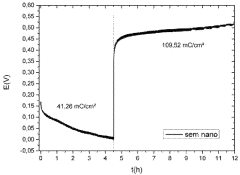
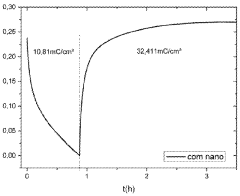
- Incorporating Niobium and Titanium nanoparticles or their combinations into the cathode, anode, or electrolyte of battery cells to increase charging speed and cyclability, with a focus on using Niobium nanoparticles that have a high degree of amortization, such as at least 19%, to revitalize and extend the life of batteries nearing the end of their useful life.
Material Safety Standards for Niobium Processing
Material safety standards for niobium processing represent a critical framework governing the handling, manipulation, and refinement of niobium materials, particularly when optimizing grain structures for enhanced charge distribution applications. These standards encompass comprehensive protocols addressing occupational health, environmental protection, and process safety requirements throughout the entire niobium processing lifecycle.
The primary safety considerations during niobium grain structure optimization involve exposure control measures for niobium dust and particulates. Processing operations such as powder metallurgy, mechanical alloying, and thermal treatments generate airborne particles that require strict containment protocols. Established exposure limits typically range from 5-10 mg/m³ for total dust concentration, with specialized ventilation systems and personal protective equipment mandatory for all personnel involved in processing activities.
Chemical safety protocols address the handling of various reagents used in niobium purification and grain structure modification processes. Hydrofluoric acid, commonly employed in niobium refining, necessitates specialized handling procedures including emergency response protocols, neutralization agents, and dedicated waste management systems. Additionally, high-temperature processing environments require comprehensive fire safety measures and thermal protection standards.
Environmental safety standards focus on waste stream management and emission control during niobium processing operations. Regulatory frameworks mandate proper disposal of contaminated materials, recycling protocols for niobium-containing waste, and monitoring systems for potential environmental releases. Water treatment systems must address fluoride-containing effluents and metal ion contamination resulting from processing activities.
Process safety standards encompass equipment design requirements, operational procedures, and emergency response protocols specific to niobium processing facilities. These include pressure vessel certifications for high-temperature furnaces, inert atmosphere handling systems for preventing oxidation during grain structure optimization, and specialized monitoring equipment for detecting process deviations that could compromise both product quality and worker safety.
Quality assurance protocols integrate safety considerations with technical requirements, ensuring that grain structure optimization processes maintain both material performance standards and safety compliance. Regular auditing procedures verify adherence to established safety protocols while maintaining the technical integrity necessary for achieving optimal charge distribution characteristics in the final niobium products.
The primary safety considerations during niobium grain structure optimization involve exposure control measures for niobium dust and particulates. Processing operations such as powder metallurgy, mechanical alloying, and thermal treatments generate airborne particles that require strict containment protocols. Established exposure limits typically range from 5-10 mg/m³ for total dust concentration, with specialized ventilation systems and personal protective equipment mandatory for all personnel involved in processing activities.
Chemical safety protocols address the handling of various reagents used in niobium purification and grain structure modification processes. Hydrofluoric acid, commonly employed in niobium refining, necessitates specialized handling procedures including emergency response protocols, neutralization agents, and dedicated waste management systems. Additionally, high-temperature processing environments require comprehensive fire safety measures and thermal protection standards.
Environmental safety standards focus on waste stream management and emission control during niobium processing operations. Regulatory frameworks mandate proper disposal of contaminated materials, recycling protocols for niobium-containing waste, and monitoring systems for potential environmental releases. Water treatment systems must address fluoride-containing effluents and metal ion contamination resulting from processing activities.
Process safety standards encompass equipment design requirements, operational procedures, and emergency response protocols specific to niobium processing facilities. These include pressure vessel certifications for high-temperature furnaces, inert atmosphere handling systems for preventing oxidation during grain structure optimization, and specialized monitoring equipment for detecting process deviations that could compromise both product quality and worker safety.
Quality assurance protocols integrate safety considerations with technical requirements, ensuring that grain structure optimization processes maintain both material performance standards and safety compliance. Regular auditing procedures verify adherence to established safety protocols while maintaining the technical integrity necessary for achieving optimal charge distribution characteristics in the final niobium products.
Quality Control Methods for Niobium Grain Characterization
Effective quality control methods for niobium grain characterization are essential for ensuring optimal charge distribution in superconducting applications. These methods encompass both destructive and non-destructive testing approaches, each providing unique insights into grain structure properties that directly impact electrical performance.
Electron backscatter diffraction (EBSD) represents the gold standard for comprehensive grain characterization. This technique provides detailed crystallographic orientation maps, enabling precise measurement of grain size distribution, boundary angles, and texture coefficients. EBSD analysis typically requires sample preparation through mechanical polishing followed by ion beam milling to achieve the necessary surface quality for accurate measurements.
X-ray diffraction (XRD) serves as a complementary technique for bulk texture analysis and residual stress evaluation. Pole figure measurements obtained through XRD provide quantitative assessment of preferred crystallographic orientations, which significantly influence charge carrier mobility. The technique's non-destructive nature makes it particularly valuable for production quality control.
Optical microscopy with polarized light offers rapid grain boundary visualization after appropriate etching procedures. Chemical etching using hydrofluoric acid solutions reveals grain boundaries and enables statistical grain size analysis through automated image processing software. This method provides cost-effective screening capabilities for large-scale production environments.
Scanning electron microscopy (SEM) combined with energy-dispersive spectroscopy (EDS) enables simultaneous morphological and compositional analysis. High-resolution SEM imaging reveals fine-scale microstructural features including twin boundaries and precipitation phases that affect local charge distribution patterns.
Advanced characterization techniques include transmission electron microscopy (TEM) for atomic-scale defect analysis and atomic force microscopy (AFM) for surface topography assessment. These methods provide critical insights into grain boundary chemistry and interface properties that govern charge transport mechanisms.
Statistical process control implementation requires establishing acceptance criteria based on grain size uniformity, texture strength parameters, and boundary misorientation distributions. Automated measurement protocols ensure consistent data collection while reducing operator variability in quality assessment procedures.
Electron backscatter diffraction (EBSD) represents the gold standard for comprehensive grain characterization. This technique provides detailed crystallographic orientation maps, enabling precise measurement of grain size distribution, boundary angles, and texture coefficients. EBSD analysis typically requires sample preparation through mechanical polishing followed by ion beam milling to achieve the necessary surface quality for accurate measurements.
X-ray diffraction (XRD) serves as a complementary technique for bulk texture analysis and residual stress evaluation. Pole figure measurements obtained through XRD provide quantitative assessment of preferred crystallographic orientations, which significantly influence charge carrier mobility. The technique's non-destructive nature makes it particularly valuable for production quality control.
Optical microscopy with polarized light offers rapid grain boundary visualization after appropriate etching procedures. Chemical etching using hydrofluoric acid solutions reveals grain boundaries and enables statistical grain size analysis through automated image processing software. This method provides cost-effective screening capabilities for large-scale production environments.
Scanning electron microscopy (SEM) combined with energy-dispersive spectroscopy (EDS) enables simultaneous morphological and compositional analysis. High-resolution SEM imaging reveals fine-scale microstructural features including twin boundaries and precipitation phases that affect local charge distribution patterns.
Advanced characterization techniques include transmission electron microscopy (TEM) for atomic-scale defect analysis and atomic force microscopy (AFM) for surface topography assessment. These methods provide critical insights into grain boundary chemistry and interface properties that govern charge transport mechanisms.
Statistical process control implementation requires establishing acceptance criteria based on grain size uniformity, texture strength parameters, and boundary misorientation distributions. Automated measurement protocols ensure consistent data collection while reducing operator variability in quality assessment procedures.
Unlock deeper insights with PatSnap Eureka Quick Research — get a full tech report to explore trends and direct your research. Try now!
Generate Your Research Report Instantly with AI Agent
Supercharge your innovation with PatSnap Eureka AI Agent Platform!