

Optimize Particle Size in LMFP Cathodes for Performance
APR 11, 20269 MIN READ
Generate Your Research Report Instantly with AI Agent
PatSnap Eureka helps you evaluate technical feasibility & market potential.
LMFP Cathode Development Background and Performance Goals
Lithium manganese iron phosphate (LMFP) cathode materials have emerged as a promising next-generation battery technology, building upon the foundation established by lithium iron phosphate (LFP) chemistry. The development trajectory of LMFP began in the early 2000s when researchers recognized the potential to enhance LFP's energy density limitations through manganese substitution while maintaining its inherent safety characteristics and thermal stability.
The evolution of LMFP technology represents a strategic response to the growing demand for high-performance, cost-effective energy storage solutions across multiple sectors. Initial research focused on understanding the fundamental electrochemical properties of the LiMn₁₋ₓFeₓPO₄ solid solution system, where manganese incorporation enables higher operating voltages compared to pure LFP materials.
Key technological milestones include the optimization of synthesis methods, development of carbon coating techniques, and advancement in particle engineering approaches. Early challenges centered around managing the inherent conductivity limitations and achieving uniform manganese-iron distribution within the olivine structure. Subsequent breakthroughs in nanostructuring and surface modification have progressively addressed these fundamental constraints.
The primary performance objectives for LMFP cathode optimization encompass achieving energy densities exceeding 160 Wh/kg while maintaining cycle life performance comparable to conventional LFP materials. Specific capacity targets range from 150-170 mAh/g, with operating voltage platforms between 3.4-4.1V depending on manganese content ratios.
Critical performance goals include minimizing capacity fade during extended cycling, particularly addressing the voltage decay phenomenon associated with manganese-rich compositions. Rate capability enhancement remains paramount, targeting C-rate performance suitable for both energy storage applications and electric vehicle requirements.
Particle size optimization has emerged as a fundamental strategy for achieving these ambitious performance targets. The relationship between particle dimensions, surface area, and electrochemical kinetics directly influences both power delivery capabilities and long-term stability. Current research directions focus on establishing optimal particle size distributions that balance ionic transport efficiency with structural integrity during repeated charge-discharge cycles.
Temperature performance across operational ranges from -20°C to 60°C represents another crucial development objective, ensuring LMFP viability across diverse application environments while maintaining safety margins inherent to phosphate-based chemistries.
The evolution of LMFP technology represents a strategic response to the growing demand for high-performance, cost-effective energy storage solutions across multiple sectors. Initial research focused on understanding the fundamental electrochemical properties of the LiMn₁₋ₓFeₓPO₄ solid solution system, where manganese incorporation enables higher operating voltages compared to pure LFP materials.
Key technological milestones include the optimization of synthesis methods, development of carbon coating techniques, and advancement in particle engineering approaches. Early challenges centered around managing the inherent conductivity limitations and achieving uniform manganese-iron distribution within the olivine structure. Subsequent breakthroughs in nanostructuring and surface modification have progressively addressed these fundamental constraints.
The primary performance objectives for LMFP cathode optimization encompass achieving energy densities exceeding 160 Wh/kg while maintaining cycle life performance comparable to conventional LFP materials. Specific capacity targets range from 150-170 mAh/g, with operating voltage platforms between 3.4-4.1V depending on manganese content ratios.
Critical performance goals include minimizing capacity fade during extended cycling, particularly addressing the voltage decay phenomenon associated with manganese-rich compositions. Rate capability enhancement remains paramount, targeting C-rate performance suitable for both energy storage applications and electric vehicle requirements.
Particle size optimization has emerged as a fundamental strategy for achieving these ambitious performance targets. The relationship between particle dimensions, surface area, and electrochemical kinetics directly influences both power delivery capabilities and long-term stability. Current research directions focus on establishing optimal particle size distributions that balance ionic transport efficiency with structural integrity during repeated charge-discharge cycles.
Temperature performance across operational ranges from -20°C to 60°C represents another crucial development objective, ensuring LMFP viability across diverse application environments while maintaining safety margins inherent to phosphate-based chemistries.
Market Demand for High-Performance LMFP Battery Applications
The global lithium-ion battery market is experiencing unprecedented growth, driven by the rapid expansion of electric vehicles, energy storage systems, and portable electronics. Within this landscape, lithium manganese iron phosphate (LMFP) cathode materials are emerging as a critical technology that addresses the growing demand for high-performance, cost-effective, and safe battery solutions. The market demand for LMFP batteries is particularly strong in applications requiring enhanced energy density while maintaining the inherent safety and thermal stability characteristics of traditional lithium iron phosphate batteries.
Electric vehicle manufacturers are increasingly seeking battery technologies that can deliver extended driving ranges without compromising safety standards. LMFP cathodes offer a compelling solution by providing higher operating voltages and energy densities compared to conventional LFP materials, while retaining excellent thermal stability and cycle life. This positioning makes LMFP particularly attractive for mid-range electric vehicles where cost-effectiveness and performance must be balanced.
The energy storage sector represents another significant market driver for high-performance LMFP applications. Grid-scale energy storage systems require batteries that can operate reliably over thousands of cycles while maintaining consistent performance. The enhanced energy density of optimized LMFP cathodes enables more compact storage solutions, reducing installation costs and space requirements for utility-scale projects.
Consumer electronics manufacturers are also driving demand for LMFP technology, particularly in applications requiring fast charging capabilities and extended operational life. The ability to optimize particle size in LMFP cathodes directly impacts charging rates and capacity retention, making this technology increasingly relevant for smartphones, laptops, and other portable devices where performance and longevity are critical factors.
Market analysis indicates that the demand for high-performance LMFP batteries is concentrated in regions with strong electric vehicle adoption policies and renewable energy integration initiatives. The technology's potential to bridge the performance gap between LFP and high-nickel cathodes while maintaining cost advantages positions it as a key enabler for mass market battery applications across multiple sectors.
Electric vehicle manufacturers are increasingly seeking battery technologies that can deliver extended driving ranges without compromising safety standards. LMFP cathodes offer a compelling solution by providing higher operating voltages and energy densities compared to conventional LFP materials, while retaining excellent thermal stability and cycle life. This positioning makes LMFP particularly attractive for mid-range electric vehicles where cost-effectiveness and performance must be balanced.
The energy storage sector represents another significant market driver for high-performance LMFP applications. Grid-scale energy storage systems require batteries that can operate reliably over thousands of cycles while maintaining consistent performance. The enhanced energy density of optimized LMFP cathodes enables more compact storage solutions, reducing installation costs and space requirements for utility-scale projects.
Consumer electronics manufacturers are also driving demand for LMFP technology, particularly in applications requiring fast charging capabilities and extended operational life. The ability to optimize particle size in LMFP cathodes directly impacts charging rates and capacity retention, making this technology increasingly relevant for smartphones, laptops, and other portable devices where performance and longevity are critical factors.
Market analysis indicates that the demand for high-performance LMFP batteries is concentrated in regions with strong electric vehicle adoption policies and renewable energy integration initiatives. The technology's potential to bridge the performance gap between LFP and high-nickel cathodes while maintaining cost advantages positions it as a key enabler for mass market battery applications across multiple sectors.
Current Particle Size Challenges in LMFP Cathode Materials
LMFP cathode materials face significant particle size-related challenges that directly impact electrochemical performance and manufacturing scalability. The primary issue stems from the inherent low electronic conductivity of LMFP, which necessitates careful optimization of particle dimensions to balance ionic transport pathways with electronic conduction networks. Current synthesis methods often produce particles with broad size distributions, ranging from submicron to several micrometers, creating heterogeneous electrochemical behavior within the electrode structure.
Large particle sizes, typically exceeding 500 nanometers, present substantial diffusion limitations for lithium ions. The extended diffusion pathways within oversized particles lead to incomplete utilization of active material, particularly at higher charge-discharge rates. This results in reduced capacity retention and poor rate capability, limiting the practical application of LMFP in high-power battery systems. Additionally, large particles are more susceptible to mechanical stress during cycling, potentially causing particle cracking and capacity fade.
Conversely, excessively small particles, while offering shorter diffusion distances, introduce their own set of challenges. Nanoparticles below 100 nanometers exhibit high surface area-to-volume ratios, leading to increased side reactions with electrolytes and accelerated capacity degradation. The elevated surface energy of small particles also promotes agglomeration during synthesis and electrode processing, creating non-uniform particle distributions that compromise electrochemical performance.
Manufacturing constraints further complicate particle size optimization. Traditional solid-state synthesis methods struggle to achieve precise size control, often requiring high-temperature treatments that promote particle growth and sintering. Wet chemical synthesis routes, while offering better size control, face challenges in maintaining particle morphology during drying and calcination processes. The scalability of these controlled synthesis methods remains questionable for industrial production volumes.
Current electrode processing techniques also impose limitations on optimal particle size selection. The need for conductive additives and binders in electrode formulations requires careful balance with particle size to maintain adequate electronic percolation networks. Smaller particles demand higher conductive additive loadings, reducing energy density, while larger particles may create poor contact interfaces, increasing internal resistance and limiting power performance in practical battery applications.
Large particle sizes, typically exceeding 500 nanometers, present substantial diffusion limitations for lithium ions. The extended diffusion pathways within oversized particles lead to incomplete utilization of active material, particularly at higher charge-discharge rates. This results in reduced capacity retention and poor rate capability, limiting the practical application of LMFP in high-power battery systems. Additionally, large particles are more susceptible to mechanical stress during cycling, potentially causing particle cracking and capacity fade.
Conversely, excessively small particles, while offering shorter diffusion distances, introduce their own set of challenges. Nanoparticles below 100 nanometers exhibit high surface area-to-volume ratios, leading to increased side reactions with electrolytes and accelerated capacity degradation. The elevated surface energy of small particles also promotes agglomeration during synthesis and electrode processing, creating non-uniform particle distributions that compromise electrochemical performance.
Manufacturing constraints further complicate particle size optimization. Traditional solid-state synthesis methods struggle to achieve precise size control, often requiring high-temperature treatments that promote particle growth and sintering. Wet chemical synthesis routes, while offering better size control, face challenges in maintaining particle morphology during drying and calcination processes. The scalability of these controlled synthesis methods remains questionable for industrial production volumes.
Current electrode processing techniques also impose limitations on optimal particle size selection. The need for conductive additives and binders in electrode formulations requires careful balance with particle size to maintain adequate electronic percolation networks. Smaller particles demand higher conductive additive loadings, reducing energy density, while larger particles may create poor contact interfaces, increasing internal resistance and limiting power performance in practical battery applications.
Existing Particle Size Optimization Solutions for LMFP
01 Optimized particle size distribution for enhanced electrochemical performance
LMFP cathode materials with controlled particle size distribution demonstrate improved electrochemical performance. The optimization of particle size ranges, typically involving bimodal or multimodal distributions, enhances both energy density and power density. Specific particle size ranges are selected to balance tap density, electronic conductivity, and lithium ion diffusion pathways, resulting in superior rate capability and cycle stability.- Optimization of particle size distribution for enhanced electrochemical performance: The particle size distribution of LMFP cathode materials can be optimized to improve electrochemical performance, including capacity, rate capability, and cycling stability. Controlling the particle size distribution through synthesis methods such as co-precipitation, sol-gel, or hydrothermal processes allows for better packing density and reduced internal resistance. A bimodal or narrow particle size distribution can enhance both energy density and power density by optimizing the balance between surface area and diffusion pathways.
- Nano-sized LMFP particles for improved rate performance: Reducing LMFP cathode particle size to the nanoscale range can significantly enhance rate performance and lithium-ion diffusion kinetics. Nano-sized particles provide shorter diffusion paths for lithium ions and larger electrode-electrolyte contact areas, leading to improved high-rate discharge capabilities. Various synthesis techniques including spray pyrolysis, mechanochemical methods, and template-assisted approaches can be employed to achieve nano-sized LMFP particles with controlled morphology.
- Micron-sized LMFP particles for enhanced tap density and volumetric energy density: Larger micron-sized LMFP particles can provide advantages in terms of tap density, volumetric energy density, and manufacturing processability. Micron-sized particles typically exhibit better packing characteristics and reduced surface area, which can minimize side reactions with electrolytes and improve cycling stability. The synthesis of micron-sized particles with controlled morphology can be achieved through solid-state reactions, spray drying, or controlled crystallization processes.
- Secondary particle structure with controlled primary particle size: LMFP cathode materials can be designed with a secondary particle structure composed of aggregated primary particles of controlled size. This hierarchical structure combines the advantages of both small primary particles for enhanced kinetics and larger secondary particles for improved tap density and handling properties. The primary particle size within secondary particles can be optimized to balance surface area, diffusion length, and mechanical stability, while the secondary particle size affects packing density and electrode processing.
- Particle size control through carbon coating and surface modification: The effective particle size and surface properties of LMFP cathodes can be controlled through carbon coating and surface modification techniques. Carbon coating not only improves electronic conductivity but also helps control particle growth during synthesis and prevents particle agglomeration. The thickness and uniformity of carbon coating can influence the apparent particle size and electrochemical behavior. Surface modification with conductive agents or protective layers can optimize the interface between particles and electrolyte while maintaining desired particle size characteristics.
02 Nano-sized LMFP particles for improved rate performance
Reducing LMFP cathode particle size to the nanoscale significantly improves rate performance by shortening lithium ion diffusion distances. Nano-sized particles provide larger specific surface areas and more active sites for electrochemical reactions. Manufacturing methods include spray drying, sol-gel processes, and hydrothermal synthesis to achieve uniform nano-sized particles with controlled morphology.Expand Specific Solutions03 Micron-sized primary particles with nano-sized secondary structure
A hierarchical structure combining micron-sized primary particles composed of nano-sized secondary particles offers advantages in both tap density and electrochemical performance. This structure maintains high packing density while providing short diffusion paths. The secondary nano-sized particles enhance reaction kinetics, while the primary micron-sized aggregates improve material handling and electrode processing.Expand Specific Solutions04 Particle size control through synthesis parameters
Precise control of LMFP particle size is achieved by adjusting synthesis parameters including temperature, reaction time, precursor concentration, and pH value. Different synthesis methods such as solid-state reaction, co-precipitation, and hydrothermal methods allow for tailored particle size control. The relationship between synthesis conditions and resulting particle morphology is optimized to achieve target particle size specifications.Expand Specific Solutions05 Surface modification and coating on size-controlled particles
Surface modification techniques applied to size-controlled LMFP particles further enhance electrochemical performance. Carbon coating, conductive polymer coating, or metal oxide coating on particles with optimized sizes improves electronic conductivity and structural stability. The coating thickness and uniformity are adjusted according to particle size to maximize the benefits of both size optimization and surface treatment.Expand Specific Solutions
Key Players in LMFP Cathode Material Industry
The LMFP cathode particle size optimization market represents a rapidly evolving segment within the broader lithium battery industry, currently in its growth phase as manufacturers seek enhanced performance solutions. The market demonstrates significant expansion potential, driven by increasing demand for electric vehicles and energy storage systems. Technology maturity varies considerably across key players, with established companies like BYD Co., Ltd., LG Chem Ltd., and Panasonic Energy Co. Ltd. leading in advanced manufacturing capabilities and R&D investments. Chinese manufacturers including CALB Group Co., Ltd., Ningbo Ronbay New Energy Technology Co., Ltd., and CNGR Advanced Material Co., Ltd. are rapidly advancing their particle engineering technologies. Specialized materials companies such as Nano One Materials Corp. and Beijing Easpring Material Technology Co., Ltd. focus specifically on cathode optimization innovations, while research institutions like The Regents of the University of California contribute fundamental breakthroughs in particle size control methodologies.
CALB Group Co., Ltd.
Technical Solution: CALB has developed advanced particle size optimization techniques for LMFP cathodes through controlled precipitation and spray drying processes. Their approach focuses on achieving uniform particle distribution in the 100-500nm range to maximize electrochemical performance. The company employs multi-stage grinding and classification systems combined with surface modification techniques to enhance particle morphology. Their LMFP cathodes demonstrate improved rate capability and cycling stability through optimized primary particle size around 200nm and secondary particle aggregation control. CALB's manufacturing process includes real-time particle size monitoring and feedback control systems to maintain consistent quality across production batches.
Strengths: Strong manufacturing scale and quality control systems, proven commercial LMFP production experience. Weaknesses: Limited advanced characterization capabilities compared to research institutions, conservative approach to novel synthesis methods.
BYD Co., Ltd.
Technical Solution: BYD has pioneered the Blade Battery technology incorporating optimized LMFP cathode materials with carefully controlled particle morphology. Their particle size optimization strategy involves a proprietary co-precipitation method followed by controlled calcination to achieve primary particles in the 50-200nm range. The company focuses on spherical particle morphology to improve packing density and reduce internal resistance. BYD's approach includes surface coating with carbon and metal oxides to enhance conductivity while maintaining optimal particle size distribution. Their integrated manufacturing process allows for precise control of particle characteristics throughout the entire battery production chain, resulting in enhanced safety and performance metrics.
Strengths: Vertically integrated production chain, extensive real-world application data, strong cost optimization capabilities. Weaknesses: Proprietary technology limits external collaboration, focus primarily on automotive applications may limit broader market insights.
Core Patents in LMFP Particle Size Control Technologies
Lithium manganese iron phosphate positive electrode material, preparation method therefor, and lithium-ion battery
PatentPendingEP4614619A1
Innovation
- A lithium manganese iron phosphate cathode material with controlled microcrystalline size and individual particle size, along with a carbon layer distributed at microcrystalline boundaries, is prepared through a crystallization-crushing-recrystallization process, enhancing electronic conductivity and lithium-ion diffusion.


Lithium Iron Phosphate Cathode Materials With Enhanced Energy Density And Power Performance
PatentInactiveUS20100327223A1
Innovation
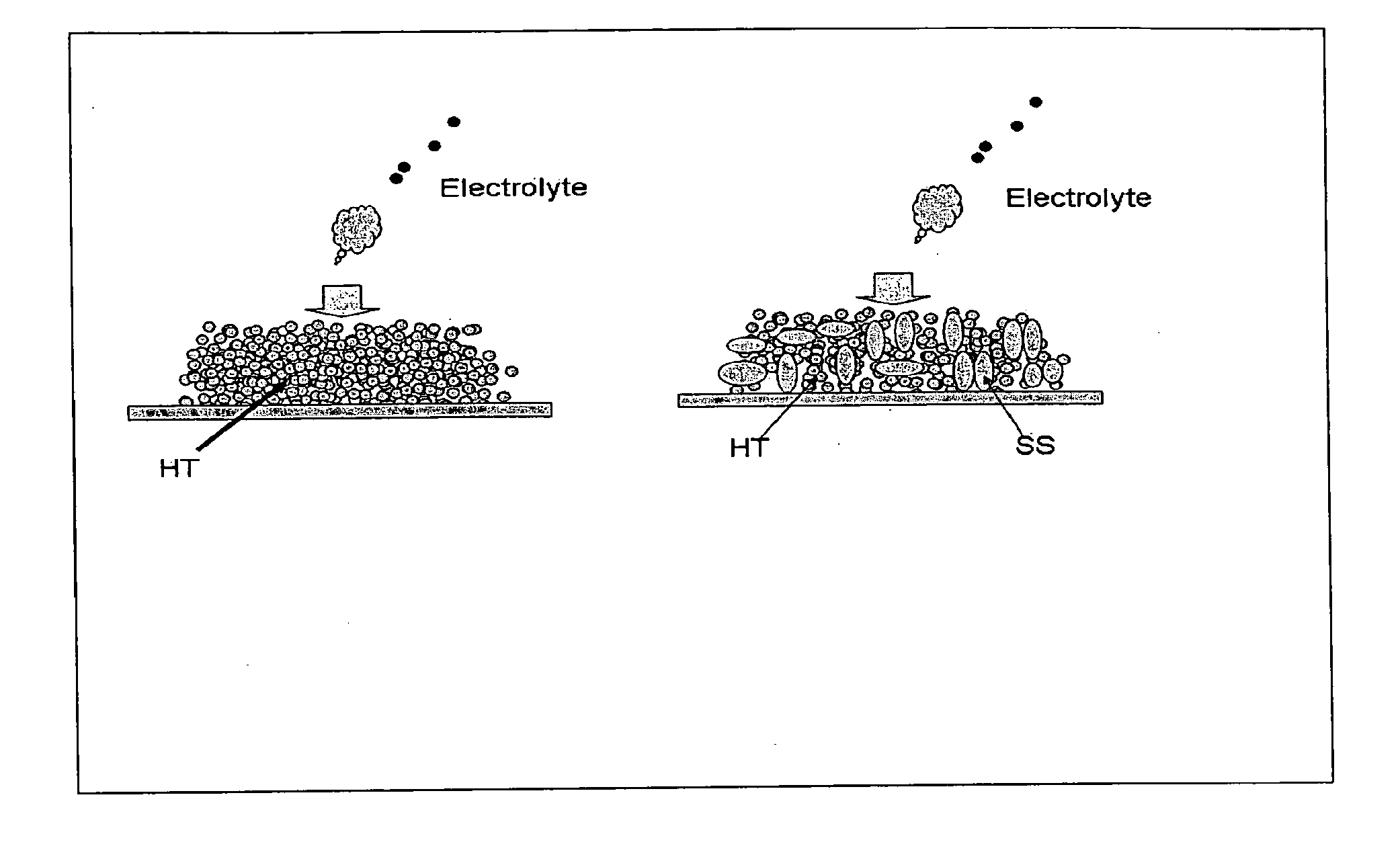
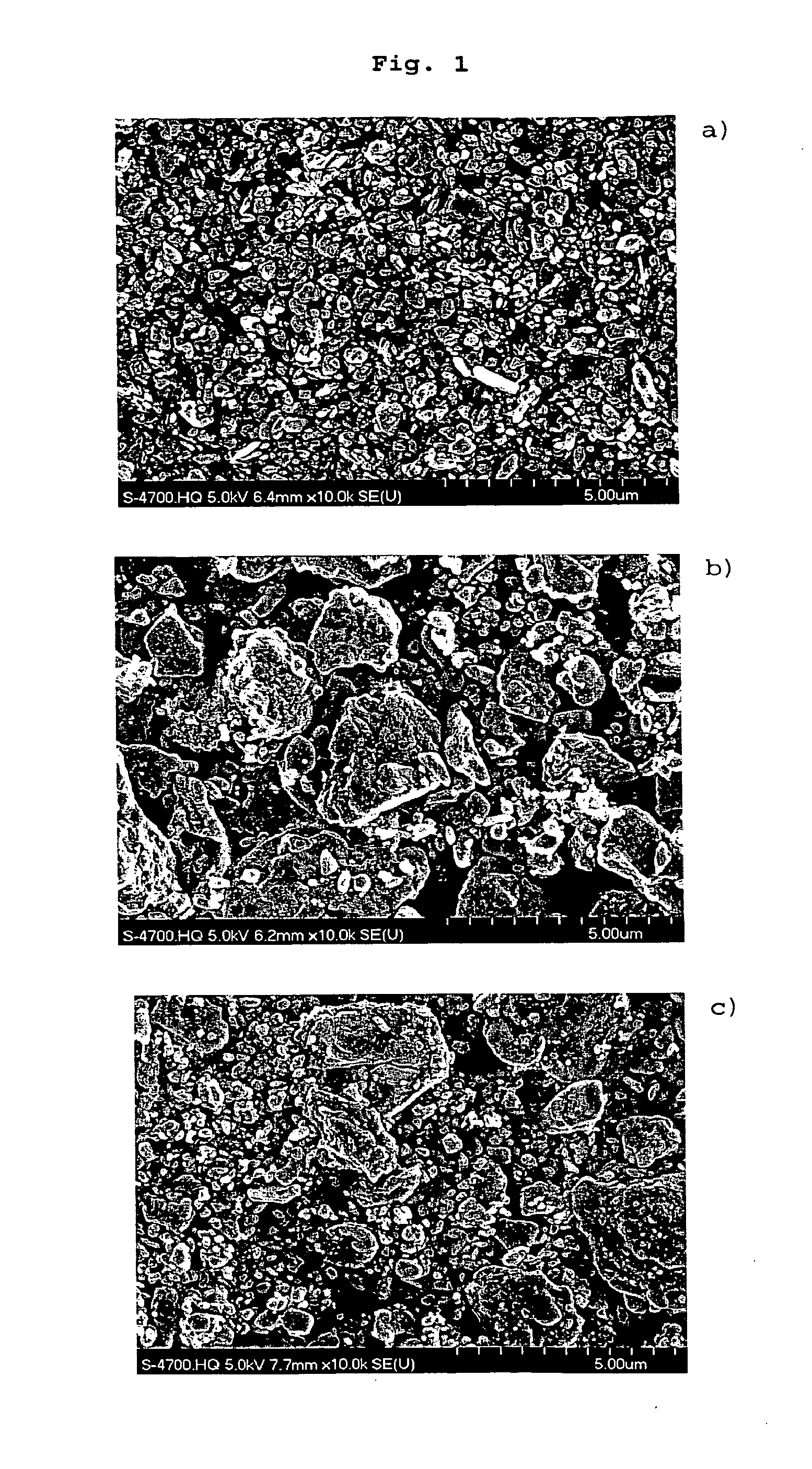
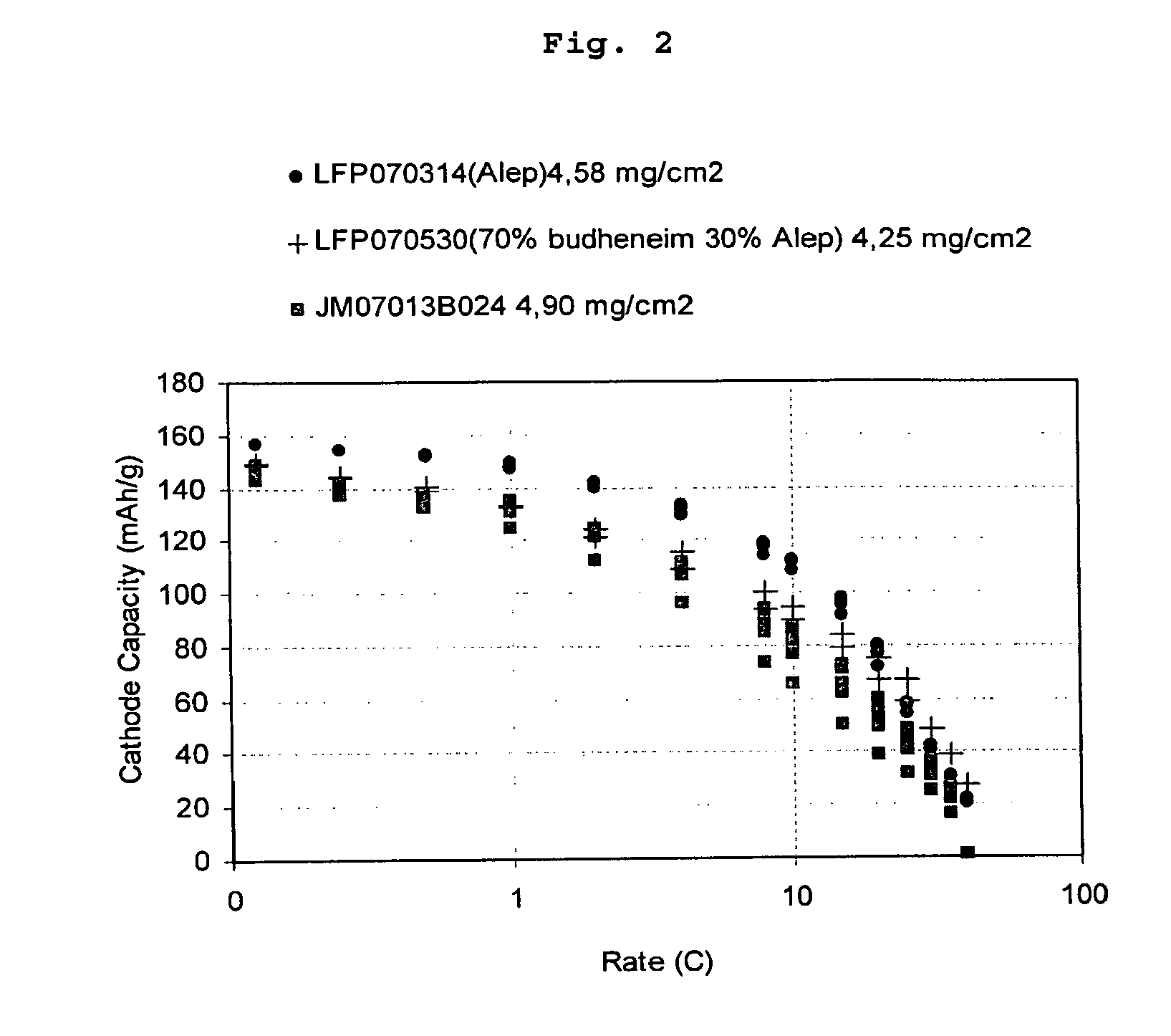
- A cathode material comprising a mixture of fine and coarse lithium metal phosphate particles with a multimodal particle size distribution and a thin pyrolytic carbon deposit, where the particles are synthesized using different processes to achieve improved packing density and porosity, enhancing energy and power performance.

Environmental Regulations for LMFP Manufacturing Processes
The manufacturing of Lithium Manganese Iron Phosphate (LMFP) cathodes, particularly with optimized particle size distributions, faces increasingly stringent environmental regulations across global markets. These regulatory frameworks directly impact manufacturing processes, equipment selection, and operational protocols for LMFP production facilities.
Air quality regulations constitute a primary concern for LMFP manufacturing operations. The synthesis processes, including high-temperature calcination and particle size reduction through mechanical milling, generate particulate emissions that must comply with strict ambient air quality standards. The European Union's Industrial Emissions Directive (IED) and the United States Clean Air Act establish maximum permissible concentrations for PM2.5 and PM10 emissions, requiring advanced filtration systems and enclosed processing environments.
Water discharge regulations significantly influence LMFP manufacturing processes, particularly during washing and purification stages essential for achieving optimal particle size distributions. The removal of impurities and control of particle agglomeration often involves aqueous processing steps that generate wastewater containing lithium, manganese, and phosphate compounds. Regulatory limits on heavy metal concentrations and total dissolved solids necessitate comprehensive water treatment systems and closed-loop recycling processes.
Chemical handling and storage regulations impact the selection of precursor materials and processing aids used in particle size optimization. The Registration, Evaluation, Authorization and Restriction of Chemicals (REACH) regulation in Europe and similar frameworks in other jurisdictions require detailed safety assessments for all chemical substances used in LMFP synthesis, including surfactants, dispersants, and grinding aids employed for particle size control.
Waste management regulations govern the disposal and recycling of manufacturing byproducts, including oversized particles from classification processes and spent processing materials. The Basel Convention and national hazardous waste regulations classify certain LMFP manufacturing residues as controlled substances, requiring specialized handling and disposal procedures that influence overall process economics and design considerations.
Emerging regulations on carbon emissions and energy efficiency are increasingly affecting LMFP manufacturing processes. The European Green Deal and similar initiatives worldwide establish carbon footprint reduction targets that influence equipment selection for particle size optimization, favoring energy-efficient milling and classification technologies over traditional high-energy processes.
Air quality regulations constitute a primary concern for LMFP manufacturing operations. The synthesis processes, including high-temperature calcination and particle size reduction through mechanical milling, generate particulate emissions that must comply with strict ambient air quality standards. The European Union's Industrial Emissions Directive (IED) and the United States Clean Air Act establish maximum permissible concentrations for PM2.5 and PM10 emissions, requiring advanced filtration systems and enclosed processing environments.
Water discharge regulations significantly influence LMFP manufacturing processes, particularly during washing and purification stages essential for achieving optimal particle size distributions. The removal of impurities and control of particle agglomeration often involves aqueous processing steps that generate wastewater containing lithium, manganese, and phosphate compounds. Regulatory limits on heavy metal concentrations and total dissolved solids necessitate comprehensive water treatment systems and closed-loop recycling processes.
Chemical handling and storage regulations impact the selection of precursor materials and processing aids used in particle size optimization. The Registration, Evaluation, Authorization and Restriction of Chemicals (REACH) regulation in Europe and similar frameworks in other jurisdictions require detailed safety assessments for all chemical substances used in LMFP synthesis, including surfactants, dispersants, and grinding aids employed for particle size control.
Waste management regulations govern the disposal and recycling of manufacturing byproducts, including oversized particles from classification processes and spent processing materials. The Basel Convention and national hazardous waste regulations classify certain LMFP manufacturing residues as controlled substances, requiring specialized handling and disposal procedures that influence overall process economics and design considerations.
Emerging regulations on carbon emissions and energy efficiency are increasingly affecting LMFP manufacturing processes. The European Green Deal and similar initiatives worldwide establish carbon footprint reduction targets that influence equipment selection for particle size optimization, favoring energy-efficient milling and classification technologies over traditional high-energy processes.
Cost-Performance Trade-offs in LMFP Particle Optimization
The optimization of particle size in LMFP cathodes presents a complex landscape of cost-performance trade-offs that significantly impact commercial viability. Manufacturing costs exhibit an inverse relationship with particle size, where larger particles require less energy-intensive processing and reduced surface area treatment, resulting in lower production expenses. However, this cost advantage comes at the expense of electrochemical performance, creating a fundamental tension in material design strategies.
Smaller LMFP particles, typically in the 50-200 nm range, demonstrate superior rate capability and capacity retention due to shortened lithium-ion diffusion pathways and increased electrode-electrolyte contact area. These performance benefits translate to enhanced battery life and faster charging capabilities, justifying premium pricing in high-performance applications. Conversely, the synthesis of nanoscale particles demands sophisticated processing techniques, specialized equipment, and stringent quality control measures, increasing manufacturing costs by 15-25% compared to micron-sized alternatives.
The economic implications extend beyond raw material costs to encompass processing complexity and yield optimization. Nanoscale LMFP production requires controlled atmosphere synthesis, precise temperature management, and advanced milling techniques, each contributing to elevated operational expenses. Additionally, smaller particles necessitate enhanced surface coating strategies to mitigate electrolyte decomposition, further increasing material and processing costs.
Market segmentation reveals distinct optimization strategies across applications. Premium electric vehicle manufacturers prioritize performance metrics, accepting higher material costs for superior energy density and cycle life. Conversely, energy storage systems emphasize cost-effectiveness, favoring larger particles that balance acceptable performance with economic viability.
The trade-off analysis indicates an optimal particle size range of 100-300 nm for most commercial applications, representing a compromise between manufacturing feasibility and electrochemical performance. This sweet spot enables cost-competitive production while maintaining adequate rate capability and cycle stability. Future optimization efforts focus on hybrid particle size distributions and advanced coating technologies to further refine this balance, potentially achieving both cost reduction and performance enhancement through innovative material engineering approaches.
Smaller LMFP particles, typically in the 50-200 nm range, demonstrate superior rate capability and capacity retention due to shortened lithium-ion diffusion pathways and increased electrode-electrolyte contact area. These performance benefits translate to enhanced battery life and faster charging capabilities, justifying premium pricing in high-performance applications. Conversely, the synthesis of nanoscale particles demands sophisticated processing techniques, specialized equipment, and stringent quality control measures, increasing manufacturing costs by 15-25% compared to micron-sized alternatives.
The economic implications extend beyond raw material costs to encompass processing complexity and yield optimization. Nanoscale LMFP production requires controlled atmosphere synthesis, precise temperature management, and advanced milling techniques, each contributing to elevated operational expenses. Additionally, smaller particles necessitate enhanced surface coating strategies to mitigate electrolyte decomposition, further increasing material and processing costs.
Market segmentation reveals distinct optimization strategies across applications. Premium electric vehicle manufacturers prioritize performance metrics, accepting higher material costs for superior energy density and cycle life. Conversely, energy storage systems emphasize cost-effectiveness, favoring larger particles that balance acceptable performance with economic viability.
The trade-off analysis indicates an optimal particle size range of 100-300 nm for most commercial applications, representing a compromise between manufacturing feasibility and electrochemical performance. This sweet spot enables cost-competitive production while maintaining adequate rate capability and cycle stability. Future optimization efforts focus on hybrid particle size distributions and advanced coating technologies to further refine this balance, potentially achieving both cost reduction and performance enhancement through innovative material engineering approaches.
Unlock deeper insights with PatSnap Eureka Quick Research — get a full tech report to explore trends and direct your research. Try now!
Generate Your Research Report Instantly with AI Agent
Supercharge your innovation with PatSnap Eureka AI Agent Platform!