

Optimize Phase Changing Material Integration in Lightweight Construction Panels
JUN 14, 20269 MIN READ
Generate Your Research Report Instantly with AI Agent
Patsnap Eureka helps you evaluate technical feasibility & market potential.
PCM Integration Background and Construction Goals
Phase Change Materials (PCMs) have emerged as a revolutionary technology in the construction industry, representing a paradigm shift from traditional thermal management approaches to intelligent, adaptive building systems. The integration of PCMs into lightweight construction panels stems from the growing demand for energy-efficient buildings that can autonomously regulate internal temperatures while maintaining structural integrity and reducing overall building weight.
The historical development of PCM technology in construction began in the 1980s with basic paraffin-based materials embedded in concrete structures. However, early implementations faced significant challenges including material leakage, limited thermal cycling durability, and incompatibility with lightweight construction requirements. The evolution toward modern PCM integration has been driven by advances in microencapsulation techniques, bio-based PCM formulations, and sophisticated containment systems that address these fundamental limitations.
Contemporary construction industry demands have intensified the focus on lightweight building solutions that deliver superior thermal performance without compromising structural efficiency. Traditional heavyweight thermal mass solutions are increasingly inadequate for modern architectural requirements, particularly in prefabricated construction, modular housing, and high-rise applications where weight reduction directly impacts foundation costs and structural complexity.
The primary technical objectives for optimizing PCM integration in lightweight construction panels encompass several critical performance parameters. Thermal regulation efficiency represents the foremost goal, targeting the achievement of consistent indoor temperature maintenance within 2-3°C variations through strategic PCM phase transition management. This requires precise selection of PCM melting points aligned with regional climate conditions and building usage patterns.
Structural compatibility constitutes another fundamental objective, ensuring that PCM integration does not compromise the mechanical properties of lightweight panels. The challenge lies in maintaining panel strength-to-weight ratios while incorporating sufficient PCM quantities to achieve meaningful thermal benefits. Advanced encapsulation methods and hybrid panel designs are being developed to address this technical balance.
Long-term durability and cycling stability represent critical performance targets, with industry standards requiring PCM systems to maintain thermal properties through minimum 10,000 thermal cycles without significant degradation. This objective drives research into advanced PCM formulations and protective containment systems that prevent material separation and maintain consistent phase change characteristics.
Economic viability remains a paramount consideration, with optimization efforts targeting cost-effective manufacturing processes that enable widespread market adoption. The integration methodology must demonstrate clear return on investment through reduced HVAC operational costs while maintaining competitive initial installation expenses compared to conventional lightweight panel systems.
The historical development of PCM technology in construction began in the 1980s with basic paraffin-based materials embedded in concrete structures. However, early implementations faced significant challenges including material leakage, limited thermal cycling durability, and incompatibility with lightweight construction requirements. The evolution toward modern PCM integration has been driven by advances in microencapsulation techniques, bio-based PCM formulations, and sophisticated containment systems that address these fundamental limitations.
Contemporary construction industry demands have intensified the focus on lightweight building solutions that deliver superior thermal performance without compromising structural efficiency. Traditional heavyweight thermal mass solutions are increasingly inadequate for modern architectural requirements, particularly in prefabricated construction, modular housing, and high-rise applications where weight reduction directly impacts foundation costs and structural complexity.
The primary technical objectives for optimizing PCM integration in lightweight construction panels encompass several critical performance parameters. Thermal regulation efficiency represents the foremost goal, targeting the achievement of consistent indoor temperature maintenance within 2-3°C variations through strategic PCM phase transition management. This requires precise selection of PCM melting points aligned with regional climate conditions and building usage patterns.
Structural compatibility constitutes another fundamental objective, ensuring that PCM integration does not compromise the mechanical properties of lightweight panels. The challenge lies in maintaining panel strength-to-weight ratios while incorporating sufficient PCM quantities to achieve meaningful thermal benefits. Advanced encapsulation methods and hybrid panel designs are being developed to address this technical balance.
Long-term durability and cycling stability represent critical performance targets, with industry standards requiring PCM systems to maintain thermal properties through minimum 10,000 thermal cycles without significant degradation. This objective drives research into advanced PCM formulations and protective containment systems that prevent material separation and maintain consistent phase change characteristics.
Economic viability remains a paramount consideration, with optimization efforts targeting cost-effective manufacturing processes that enable widespread market adoption. The integration methodology must demonstrate clear return on investment through reduced HVAC operational costs while maintaining competitive initial installation expenses compared to conventional lightweight panel systems.
Market Demand for Energy-Efficient Building Materials
The global construction industry is experiencing unprecedented demand for energy-efficient building materials, driven by stringent environmental regulations and rising energy costs. Building sectors account for nearly 40% of global energy consumption, creating substantial market pressure for innovative thermal management solutions. Phase change materials integrated into lightweight construction panels represent a rapidly emerging segment within this broader market transformation.
Regulatory frameworks across major economies are accelerating adoption of advanced building materials. The European Union's Energy Performance of Buildings Directive mandates near-zero energy buildings for new constructions, while similar initiatives in North America and Asia-Pacific regions establish comparable requirements. These policies create mandatory market demand rather than optional upgrades, fundamentally reshaping procurement priorities for construction materials.
Commercial and residential building sectors demonstrate distinct demand patterns for PCM-integrated panels. Commercial applications prioritize operational cost reduction and HVAC load management, particularly in office buildings, retail spaces, and industrial facilities where temperature stability directly impacts productivity and energy expenses. Residential markets increasingly focus on comfort enhancement and utility bill reduction, with growing consumer awareness of sustainable building practices driving purchasing decisions.
Geographic demand distribution reveals concentrated growth in temperate climate zones where thermal cycling provides maximum PCM effectiveness. Northern European markets lead adoption rates due to established green building standards and government incentives. North American markets show accelerating growth driven by utility rebate programs and LEED certification requirements. Emerging markets in Asia demonstrate significant potential as urbanization rates increase and building codes evolve toward energy efficiency standards.
Market segmentation analysis indicates strongest demand in retrofit applications where lightweight panels offer installation advantages over traditional thermal mass solutions. New construction markets show steady growth but face competition from alternative energy-efficient technologies. The prefabricated construction segment presents particularly strong opportunities as manufacturers seek differentiated products that combine structural efficiency with thermal performance.
Supply chain dynamics reveal growing interest from major building material manufacturers seeking to expand beyond traditional insulation products. Distribution channels are adapting to accommodate specialized storage and handling requirements for PCM-integrated products, while contractor training programs address installation techniques specific to phase change material applications.
Regulatory frameworks across major economies are accelerating adoption of advanced building materials. The European Union's Energy Performance of Buildings Directive mandates near-zero energy buildings for new constructions, while similar initiatives in North America and Asia-Pacific regions establish comparable requirements. These policies create mandatory market demand rather than optional upgrades, fundamentally reshaping procurement priorities for construction materials.
Commercial and residential building sectors demonstrate distinct demand patterns for PCM-integrated panels. Commercial applications prioritize operational cost reduction and HVAC load management, particularly in office buildings, retail spaces, and industrial facilities where temperature stability directly impacts productivity and energy expenses. Residential markets increasingly focus on comfort enhancement and utility bill reduction, with growing consumer awareness of sustainable building practices driving purchasing decisions.
Geographic demand distribution reveals concentrated growth in temperate climate zones where thermal cycling provides maximum PCM effectiveness. Northern European markets lead adoption rates due to established green building standards and government incentives. North American markets show accelerating growth driven by utility rebate programs and LEED certification requirements. Emerging markets in Asia demonstrate significant potential as urbanization rates increase and building codes evolve toward energy efficiency standards.
Market segmentation analysis indicates strongest demand in retrofit applications where lightweight panels offer installation advantages over traditional thermal mass solutions. New construction markets show steady growth but face competition from alternative energy-efficient technologies. The prefabricated construction segment presents particularly strong opportunities as manufacturers seek differentiated products that combine structural efficiency with thermal performance.
Supply chain dynamics reveal growing interest from major building material manufacturers seeking to expand beyond traditional insulation products. Distribution channels are adapting to accommodate specialized storage and handling requirements for PCM-integrated products, while contractor training programs address installation techniques specific to phase change material applications.
Current PCM Integration Challenges in Lightweight Panels
The integration of phase change materials into lightweight construction panels faces significant structural compatibility challenges. Traditional lightweight panels, typically composed of foam cores sandwiched between thin facings, possess limited load-bearing capacity and thermal conductivity properties that can be compromised when PCMs are introduced. The addition of PCM containers or microcapsules alters the panel's weight distribution and mechanical properties, potentially reducing structural integrity and creating weak points that affect overall performance.
Containment and leakage prevention represent critical technical hurdles in PCM integration. Liquid PCMs in their melted state can migrate through panel structures, causing material degradation and performance loss. Current encapsulation methods, including microencapsulation and macro-encapsulation techniques, often suffer from durability issues under repeated thermal cycling. The encapsulation materials themselves may degrade over time, leading to PCM leakage that compromises both thermal performance and structural stability of the lightweight panels.
Thermal cycling stability poses another major challenge, as PCMs undergo thousands of phase transitions throughout their operational lifetime. This repeated expansion and contraction can cause mechanical stress within the panel structure, leading to delamination, cracking, or separation of panel components. The differential thermal expansion between PCM materials and panel substrates creates internal stresses that current integration methods struggle to accommodate effectively.
Manufacturing scalability and cost-effectiveness remain significant barriers to widespread adoption. Current PCM integration processes often require specialized equipment and complex manufacturing procedures that increase production costs substantially. The need for precise temperature control during manufacturing, combined with quality assurance requirements for PCM distribution and containment, makes large-scale production challenging and economically unfavorable compared to conventional lightweight panels.
Performance optimization challenges arise from the inherent trade-offs between thermal storage capacity and other panel properties. Increasing PCM content to enhance thermal performance often results in reduced mechanical strength, altered fire resistance characteristics, and modified acoustic properties. Achieving optimal balance between these competing requirements while maintaining cost-effectiveness represents a fundamental challenge that current integration approaches have not fully resolved.
Containment and leakage prevention represent critical technical hurdles in PCM integration. Liquid PCMs in their melted state can migrate through panel structures, causing material degradation and performance loss. Current encapsulation methods, including microencapsulation and macro-encapsulation techniques, often suffer from durability issues under repeated thermal cycling. The encapsulation materials themselves may degrade over time, leading to PCM leakage that compromises both thermal performance and structural stability of the lightweight panels.
Thermal cycling stability poses another major challenge, as PCMs undergo thousands of phase transitions throughout their operational lifetime. This repeated expansion and contraction can cause mechanical stress within the panel structure, leading to delamination, cracking, or separation of panel components. The differential thermal expansion between PCM materials and panel substrates creates internal stresses that current integration methods struggle to accommodate effectively.
Manufacturing scalability and cost-effectiveness remain significant barriers to widespread adoption. Current PCM integration processes often require specialized equipment and complex manufacturing procedures that increase production costs substantially. The need for precise temperature control during manufacturing, combined with quality assurance requirements for PCM distribution and containment, makes large-scale production challenging and economically unfavorable compared to conventional lightweight panels.
Performance optimization challenges arise from the inherent trade-offs between thermal storage capacity and other panel properties. Increasing PCM content to enhance thermal performance often results in reduced mechanical strength, altered fire resistance characteristics, and modified acoustic properties. Achieving optimal balance between these competing requirements while maintaining cost-effectiveness represents a fundamental challenge that current integration approaches have not fully resolved.
Existing PCM Integration Solutions for Building Panels
01 Thermal energy storage system design and configuration
Phase change materials are integrated into thermal energy storage systems through optimized design configurations that maximize heat transfer efficiency. These systems utilize specific geometries, encapsulation methods, and heat exchanger designs to enhance the thermal performance of the phase change materials. The integration focuses on improving heat transfer rates during both charging and discharging cycles while maintaining structural integrity.- Thermal energy storage system design and configuration: Phase change materials are integrated into thermal energy storage systems through optimized design configurations that maximize heat transfer efficiency. These systems utilize specific geometries, heat exchanger designs, and containment structures to enhance the thermal performance of the phase change materials. The integration focuses on improving heat transfer rates during both charging and discharging cycles while maintaining structural integrity.
- Encapsulation and containment methods for phase change materials: Advanced encapsulation techniques are employed to contain phase change materials while allowing efficient heat transfer. These methods include microencapsulation, macroencapsulation, and shape-stabilized forms that prevent leakage during phase transitions. The containment systems are designed to maintain the chemical stability of the materials while providing mechanical protection and facilitating integration into various applications.
- Heat transfer enhancement techniques: Various methods are implemented to improve heat transfer characteristics in phase change material systems. These include the incorporation of heat transfer enhancement materials, surface modifications, and the use of conductive additives. The optimization focuses on reducing thermal resistance and improving the overall thermal conductivity of the system to achieve faster response times and better thermal performance.
- Composite phase change material formulations: Composite formulations combine phase change materials with supporting matrices or additives to create enhanced thermal storage systems. These composites are designed to improve thermal properties, mechanical stability, and integration capabilities. The formulations may include reinforcing materials, thermal conductivity enhancers, and stabilizing agents that optimize the overall performance of the phase change material system.
- Application-specific integration strategies: Specialized integration approaches are developed for specific applications such as building materials, electronic cooling, and industrial processes. These strategies consider the unique requirements of each application including operating temperature ranges, space constraints, and performance criteria. The optimization involves tailoring the phase change material properties and integration methods to meet specific application demands while ensuring long-term reliability and efficiency.
02 Enhanced heat transfer through composite material integration
The optimization involves incorporating high thermal conductivity materials such as metal foams, carbon nanotubes, or graphite matrices with phase change materials to improve heat transfer characteristics. These composite structures create enhanced pathways for thermal conduction while maintaining the latent heat storage capacity of the phase change materials.Expand Specific Solutions03 Microencapsulation and containment optimization
Advanced encapsulation techniques are employed to contain phase change materials within microscopic or macroscopic shells, preventing leakage while allowing efficient heat transfer. The optimization focuses on shell material selection, wall thickness, and surface treatments to maximize thermal performance while ensuring long-term stability and preventing material degradation.Expand Specific Solutions04 Multi-phase material systems and hybrid configurations
Integration optimization involves combining multiple phase change materials with different melting points or incorporating them with other thermal management materials to create hybrid systems. These configurations provide broader temperature ranges for thermal regulation and improved overall system performance through synergistic effects between different materials.Expand Specific Solutions05 Application-specific integration methods for building and industrial systems
Optimization strategies are tailored for specific applications such as building thermal management, electronic cooling, or industrial process heat recovery. These methods involve customizing the integration approach based on operating conditions, space constraints, and performance requirements, including considerations for installation methods, maintenance access, and system scalability.Expand Specific Solutions
Key Players in PCM and Construction Panel Industry
The phase changing material (PCM) integration in lightweight construction panels represents an emerging technology sector in the early growth stage, with significant market potential driven by increasing energy efficiency demands in building construction. The market demonstrates moderate fragmentation with diverse players ranging from specialized PCM manufacturers like Phase Change Solutions Inc. to traditional construction material companies such as United States Gypsum Co. and Etex Australia. Technology maturity varies considerably across the competitive landscape, with research institutions including Southeast University, Dresden University of Technology, and Chongqing University conducting fundamental research, while companies like Samsung Electronics and Sharp Corp. contribute advanced materials expertise. Industrial manufacturers such as DL Holdings and Nucor Insulated Panel Group are developing commercial applications, indicating the technology's transition from laboratory to market deployment, though widespread adoption remains limited by cost considerations and performance standardization challenges.
Southeast University
Technical Solution: Southeast University has developed advanced PCM integration techniques for lightweight construction panels through extensive research programs. Their approach focuses on novel encapsulation methods using polymer shells and inorganic matrices to contain phase change materials within panel structures. Research includes bio-based PCMs with melting points optimized for building applications, achieving thermal storage densities of 180-220 kJ/kg. Their integration methods involve creating PCM-filled honeycomb structures within lightweight panels, maintaining structural integrity while maximizing thermal storage. The university has developed shape-stabilized PCMs using high-density polyethylene matrices that eliminate leakage concerns and enable direct incorporation into various panel types including fiber cement and composite materials.
Strengths: Innovative research capabilities, bio-based PCM development, high thermal storage densities achieved. Weaknesses: Limited commercial manufacturing experience, technology transfer challenges, scalability concerns for mass production applications.
United States Gypsum Co.
Technical Solution: USG has developed innovative gypsum-based lightweight panels integrated with microencapsulated PCMs for enhanced thermal performance. Their technology incorporates phase change materials directly into gypsum board manufacturing processes, creating panels that provide both structural support and thermal regulation. The PCM integration maintains the fire-resistant properties of gypsum while adding thermal storage capabilities of approximately 120-150 kJ/kg. Their manufacturing process ensures uniform PCM distribution throughout the panel matrix, preventing thermal bridging and maintaining consistent performance. The panels achieve weight reductions of 15-20% compared to traditional gypsum boards while providing superior thermal mass properties for energy-efficient building applications.
Strengths: Established manufacturing infrastructure, fire-resistant properties maintained, cost-effective production scaling. Weaknesses: Limited PCM loading capacity due to gypsum matrix constraints, moderate thermal storage performance, restricted to gypsum-based applications only.
Core Innovations in PCM Encapsulation and Integration
Construction material containing microencapsulated phase change material, and preparation method thereof
PatentInactiveUS20150017422A1
Innovation
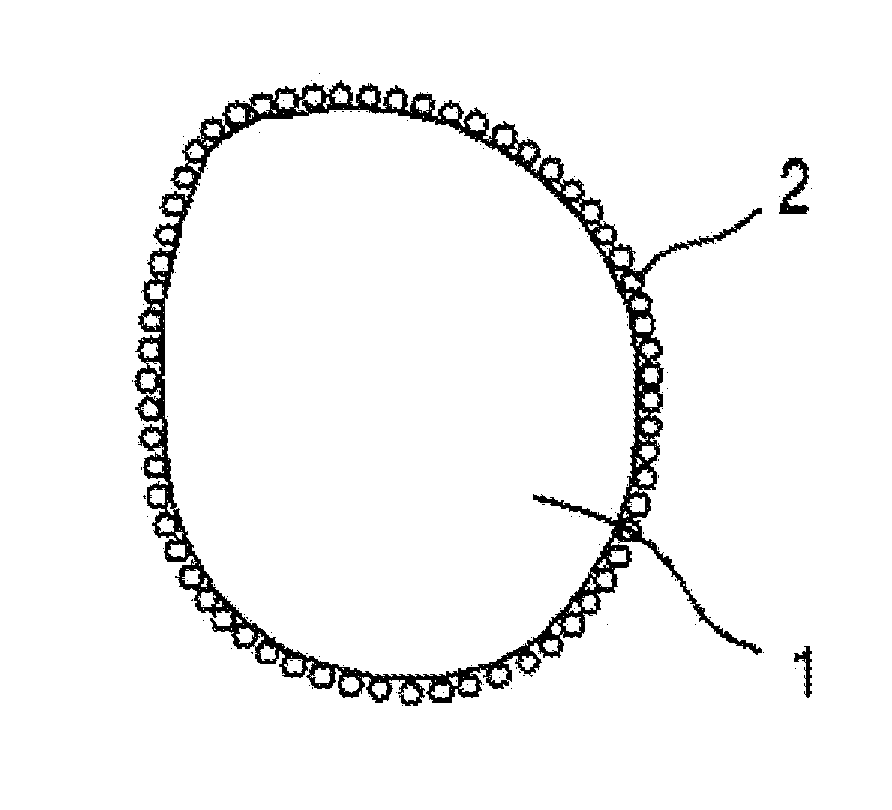
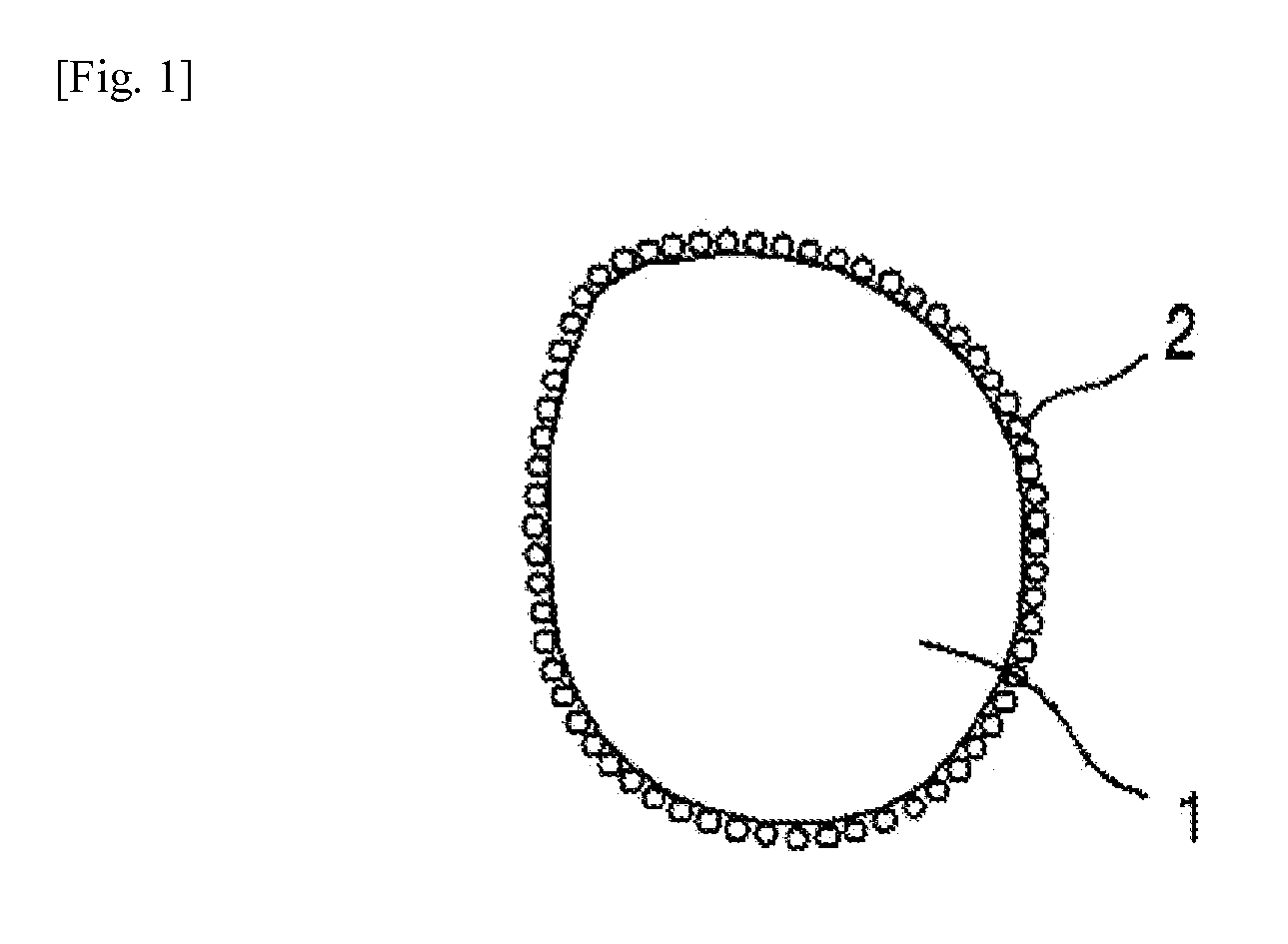
- Attaching PCM microcapsules to the outer surfaces of construction materials like sand, cement, and gypsum, and integrating them into the slurry to ensure uniform distribution and secure attachment, thereby matching the specific weight of existing materials and using polymer surfactants as binders to enhance adhesion and prevent separation.
Process for incorporation of a phase change material into gypsum wallboards and other aggregate construction panels
PatentInactiveCA1332683C
Innovation
- A method and apparatus for uniformly impregnating one side of a porous board, such as a gypsum board, with a precise amount of PCM by spraying or applying it at a rate lower than the absorption rate, ensuring the PCM is concentrated on one surface without affecting the other side, using techniques like spray application or flooding, and maintaining the board at a temperature above the PCM's melting point to enhance absorption.


Building Energy Codes and PCM Material Standards
The integration of Phase Change Materials (PCM) in lightweight construction panels operates within a complex regulatory framework that encompasses both building energy codes and material-specific standards. Current building energy codes, including ASHRAE 90.1, International Energy Conservation Code (IECC), and European Energy Performance of Buildings Directive (EPBD), are increasingly incorporating provisions for advanced thermal management systems, though specific PCM integration requirements remain limited and fragmented across jurisdictions.
Building energy codes primarily focus on overall thermal performance metrics such as U-values, thermal bridging, and air tightness, rather than prescriptive requirements for PCM integration. The IECC 2021 and ASHRAE 90.1-2019 provide pathways for alternative compliance through performance-based approaches, which can accommodate innovative PCM-integrated panels. However, the lack of standardized calculation methods for PCM thermal benefits creates challenges in demonstrating code compliance, particularly when using simplified steady-state analysis methods that fail to capture dynamic thermal storage effects.
Material standards for PCM applications in construction are governed by multiple organizations, with ASTM International leading development of PCM-specific test methods. Key standards include ASTM C1784 for measuring PCM thermal storage properties, ASTM E1269 for determining specific heat capacity, and emerging standards for long-term stability and cycling performance. European standards EN 15251 and EN ISO 13786 provide frameworks for evaluating dynamic thermal performance, though adaptation for PCM-specific applications remains ongoing.
Fire safety standards present significant constraints for PCM integration, with materials required to meet flame spread and smoke development criteria under ASTM E84 or equivalent international standards. Organic PCMs face particular challenges in meeting Class A fire ratings, driving development toward inorganic salt hydrates and microencapsulated solutions that can achieve required safety classifications while maintaining thermal performance.
The regulatory landscape is evolving toward performance-based codes that better accommodate PCM integration. California's Title 24 and recent updates to European standards are beginning to recognize thermal mass credits for PCM systems, though standardized calculation procedures and verification methods require further development to enable widespread adoption in lightweight construction applications.
Building energy codes primarily focus on overall thermal performance metrics such as U-values, thermal bridging, and air tightness, rather than prescriptive requirements for PCM integration. The IECC 2021 and ASHRAE 90.1-2019 provide pathways for alternative compliance through performance-based approaches, which can accommodate innovative PCM-integrated panels. However, the lack of standardized calculation methods for PCM thermal benefits creates challenges in demonstrating code compliance, particularly when using simplified steady-state analysis methods that fail to capture dynamic thermal storage effects.
Material standards for PCM applications in construction are governed by multiple organizations, with ASTM International leading development of PCM-specific test methods. Key standards include ASTM C1784 for measuring PCM thermal storage properties, ASTM E1269 for determining specific heat capacity, and emerging standards for long-term stability and cycling performance. European standards EN 15251 and EN ISO 13786 provide frameworks for evaluating dynamic thermal performance, though adaptation for PCM-specific applications remains ongoing.
Fire safety standards present significant constraints for PCM integration, with materials required to meet flame spread and smoke development criteria under ASTM E84 or equivalent international standards. Organic PCMs face particular challenges in meeting Class A fire ratings, driving development toward inorganic salt hydrates and microencapsulated solutions that can achieve required safety classifications while maintaining thermal performance.
The regulatory landscape is evolving toward performance-based codes that better accommodate PCM integration. California's Title 24 and recent updates to European standards are beginning to recognize thermal mass credits for PCM systems, though standardized calculation procedures and verification methods require further development to enable widespread adoption in lightweight construction applications.
Thermal Performance Testing and Validation Protocols
Thermal performance testing and validation protocols for PCM-integrated lightweight construction panels require comprehensive methodologies that address the unique characteristics of phase change materials and their interaction with panel substrates. Standard thermal testing approaches must be adapted to accommodate the dynamic thermal behavior of PCMs, which exhibit non-linear temperature-dependent properties during phase transitions.
Laboratory testing protocols should incorporate differential scanning calorimetry (DSC) to characterize PCM thermal properties including melting temperature, latent heat capacity, and thermal cycling stability. These baseline measurements establish critical parameters for subsequent panel-level testing. Thermal conductivity measurements using guarded hot plate or heat flow meter methods must account for temperature-dependent variations across the PCM phase change range.
Full-scale panel testing requires specialized thermal chambers capable of simulating realistic building envelope conditions. Testing protocols should include steady-state and dynamic thermal performance evaluation under controlled temperature cycling conditions. Heat flux measurements across panel surfaces, combined with internal temperature monitoring using embedded thermocouples, provide comprehensive thermal behavior characterization.
Validation methodologies must address long-term performance stability through accelerated aging protocols. Thermal cycling tests simulating seasonal temperature variations help identify potential PCM degradation, leakage, or segregation issues. Freeze-thaw cycling protocols are particularly critical for PCMs with phase change temperatures near ambient conditions.
Field validation studies complement laboratory testing by evaluating real-world performance under actual climatic conditions. Instrumented test buildings or building sections equipped with comprehensive monitoring systems provide validation data for thermal modeling predictions. Comparative studies between PCM-integrated panels and conventional construction assemblies quantify actual energy performance benefits.
Data analysis protocols should incorporate statistical methods to account for measurement uncertainties and environmental variability. Thermal performance metrics including thermal lag, peak temperature reduction, and energy storage efficiency require standardized calculation methodologies. Validation criteria must establish acceptable performance thresholds based on intended application requirements and energy efficiency targets.
Laboratory testing protocols should incorporate differential scanning calorimetry (DSC) to characterize PCM thermal properties including melting temperature, latent heat capacity, and thermal cycling stability. These baseline measurements establish critical parameters for subsequent panel-level testing. Thermal conductivity measurements using guarded hot plate or heat flow meter methods must account for temperature-dependent variations across the PCM phase change range.
Full-scale panel testing requires specialized thermal chambers capable of simulating realistic building envelope conditions. Testing protocols should include steady-state and dynamic thermal performance evaluation under controlled temperature cycling conditions. Heat flux measurements across panel surfaces, combined with internal temperature monitoring using embedded thermocouples, provide comprehensive thermal behavior characterization.
Validation methodologies must address long-term performance stability through accelerated aging protocols. Thermal cycling tests simulating seasonal temperature variations help identify potential PCM degradation, leakage, or segregation issues. Freeze-thaw cycling protocols are particularly critical for PCMs with phase change temperatures near ambient conditions.
Field validation studies complement laboratory testing by evaluating real-world performance under actual climatic conditions. Instrumented test buildings or building sections equipped with comprehensive monitoring systems provide validation data for thermal modeling predictions. Comparative studies between PCM-integrated panels and conventional construction assemblies quantify actual energy performance benefits.
Data analysis protocols should incorporate statistical methods to account for measurement uncertainties and environmental variability. Thermal performance metrics including thermal lag, peak temperature reduction, and energy storage efficiency require standardized calculation methodologies. Validation criteria must establish acceptable performance thresholds based on intended application requirements and energy efficiency targets.
Unlock deeper insights with Patsnap Eureka Quick Research — get a full tech report to explore trends and direct your research. Try now!
Generate Your Research Report Instantly with AI Agent
Supercharge your innovation with Patsnap Eureka AI Agent Platform!