Optimize Sodium Nitrate Reactivity for Enhanced Material Properties
MAR 3, 20269 MIN READ
Generate Your Research Report Instantly with AI Agent
Patsnap Eureka helps you evaluate technical feasibility & market potential.
Sodium Nitrate Reactivity Enhancement Background and Objectives
Sodium nitrate (NaNO3) has emerged as a critical compound in various industrial applications, ranging from thermal energy storage systems to advanced material synthesis processes. The compound's unique chemical properties, including its high solubility, thermal stability, and oxidizing characteristics, have positioned it as a versatile material in modern manufacturing and energy sectors. However, the inherent reactivity limitations of sodium nitrate in its conventional form often constrain its performance potential in demanding applications.
The historical development of sodium nitrate utilization traces back to early industrial processes, where it primarily served as a fertilizer and explosive component. Over the past several decades, technological advancement has expanded its applications into concentrated solar power systems, phase change materials, and specialized chemical synthesis processes. This evolution has revealed significant opportunities for enhancing the compound's reactivity profile to unlock superior material properties.
Current industrial demands require materials that exhibit enhanced thermal conductivity, improved phase transition characteristics, and optimized chemical reactivity under specific operational conditions. Sodium nitrate's performance in these applications is often limited by its natural crystalline structure, surface area constraints, and reaction kinetics. These limitations have created a substantial gap between theoretical material potential and practical performance outcomes.
The primary objective of sodium nitrate reactivity enhancement focuses on developing systematic approaches to modify the compound's physical and chemical characteristics without compromising its fundamental stability. This involves investigating surface modification techniques, particle size optimization, and additive integration strategies that can significantly improve reaction rates and material performance metrics.
Key technical goals include achieving enhanced heat transfer coefficients in thermal storage applications, improved dissolution rates in chemical processes, and optimized nucleation behavior during phase transitions. Additionally, the development aims to maintain cost-effectiveness while ensuring scalable manufacturing processes that can meet industrial volume requirements.
The strategic importance of this research extends beyond immediate performance improvements, as enhanced sodium nitrate reactivity could enable breakthrough applications in renewable energy storage, advanced manufacturing processes, and next-generation material systems. Success in this domain would establish new benchmarks for inorganic salt performance and create competitive advantages in multiple industrial sectors.
The historical development of sodium nitrate utilization traces back to early industrial processes, where it primarily served as a fertilizer and explosive component. Over the past several decades, technological advancement has expanded its applications into concentrated solar power systems, phase change materials, and specialized chemical synthesis processes. This evolution has revealed significant opportunities for enhancing the compound's reactivity profile to unlock superior material properties.
Current industrial demands require materials that exhibit enhanced thermal conductivity, improved phase transition characteristics, and optimized chemical reactivity under specific operational conditions. Sodium nitrate's performance in these applications is often limited by its natural crystalline structure, surface area constraints, and reaction kinetics. These limitations have created a substantial gap between theoretical material potential and practical performance outcomes.
The primary objective of sodium nitrate reactivity enhancement focuses on developing systematic approaches to modify the compound's physical and chemical characteristics without compromising its fundamental stability. This involves investigating surface modification techniques, particle size optimization, and additive integration strategies that can significantly improve reaction rates and material performance metrics.
Key technical goals include achieving enhanced heat transfer coefficients in thermal storage applications, improved dissolution rates in chemical processes, and optimized nucleation behavior during phase transitions. Additionally, the development aims to maintain cost-effectiveness while ensuring scalable manufacturing processes that can meet industrial volume requirements.
The strategic importance of this research extends beyond immediate performance improvements, as enhanced sodium nitrate reactivity could enable breakthrough applications in renewable energy storage, advanced manufacturing processes, and next-generation material systems. Success in this domain would establish new benchmarks for inorganic salt performance and create competitive advantages in multiple industrial sectors.
Market Demand for Advanced Sodium Nitrate Applications
The global sodium nitrate market is experiencing significant transformation driven by evolving industrial requirements for enhanced material properties. Traditional applications in fertilizers and explosives are being supplemented by emerging demands in advanced manufacturing sectors, where optimized reactivity characteristics enable superior performance outcomes.
Industrial glass manufacturing represents a substantial growth segment, where sodium nitrate serves as a critical flux agent. Enhanced reactivity optimization allows for lower processing temperatures and improved glass clarity, directly addressing energy efficiency mandates and quality standards in automotive and architectural glass applications. The semiconductor industry similarly demands ultra-pure sodium nitrate with precisely controlled reactivity profiles for specialized etching and cleaning processes.
The renewable energy sector presents expanding opportunities, particularly in concentrated solar power systems where sodium nitrate functions as a thermal energy storage medium. Optimized reactivity characteristics enable improved heat transfer efficiency and thermal stability, addressing critical performance requirements for grid-scale energy storage solutions. Battery technology development also drives demand for sodium nitrate variants with enhanced electrochemical properties.
Pharmaceutical and specialty chemical industries require sodium nitrate formulations with tailored reactivity profiles for specific synthesis pathways. These applications demand consistent performance characteristics and minimal impurity levels, creating premium market segments with higher value propositions compared to commodity-grade materials.
Regional demand patterns show concentrated growth in Asia-Pacific manufacturing hubs, where industrial expansion drives requirements for advanced sodium nitrate applications. North American and European markets emphasize high-purity grades for specialized applications, reflecting mature industrial bases with sophisticated technical requirements.
Market dynamics indicate increasing preference for customized sodium nitrate solutions over standardized products. End-users seek suppliers capable of delivering materials with specific reactivity parameters, particle size distributions, and purity levels tailored to their processing requirements. This trend creates opportunities for differentiated product offerings and value-added services.
Supply chain considerations increasingly influence market demand, with end-users prioritizing reliable access to consistent-quality materials. Geographic proximity to production facilities and technical support capabilities become competitive advantages in serving demanding industrial applications requiring optimized sodium nitrate reactivity characteristics.
Industrial glass manufacturing represents a substantial growth segment, where sodium nitrate serves as a critical flux agent. Enhanced reactivity optimization allows for lower processing temperatures and improved glass clarity, directly addressing energy efficiency mandates and quality standards in automotive and architectural glass applications. The semiconductor industry similarly demands ultra-pure sodium nitrate with precisely controlled reactivity profiles for specialized etching and cleaning processes.
The renewable energy sector presents expanding opportunities, particularly in concentrated solar power systems where sodium nitrate functions as a thermal energy storage medium. Optimized reactivity characteristics enable improved heat transfer efficiency and thermal stability, addressing critical performance requirements for grid-scale energy storage solutions. Battery technology development also drives demand for sodium nitrate variants with enhanced electrochemical properties.
Pharmaceutical and specialty chemical industries require sodium nitrate formulations with tailored reactivity profiles for specific synthesis pathways. These applications demand consistent performance characteristics and minimal impurity levels, creating premium market segments with higher value propositions compared to commodity-grade materials.
Regional demand patterns show concentrated growth in Asia-Pacific manufacturing hubs, where industrial expansion drives requirements for advanced sodium nitrate applications. North American and European markets emphasize high-purity grades for specialized applications, reflecting mature industrial bases with sophisticated technical requirements.
Market dynamics indicate increasing preference for customized sodium nitrate solutions over standardized products. End-users seek suppliers capable of delivering materials with specific reactivity parameters, particle size distributions, and purity levels tailored to their processing requirements. This trend creates opportunities for differentiated product offerings and value-added services.
Supply chain considerations increasingly influence market demand, with end-users prioritizing reliable access to consistent-quality materials. Geographic proximity to production facilities and technical support capabilities become competitive advantages in serving demanding industrial applications requiring optimized sodium nitrate reactivity characteristics.
Current Reactivity Limitations and Technical Challenges
Sodium nitrate faces significant reactivity limitations that constrain its effectiveness in advanced material applications. The primary challenge stems from its inherently low thermal decomposition rate at moderate temperatures, requiring elevated processing conditions that often exceed 380°C for meaningful reaction kinetics. This temperature dependency creates energy-intensive manufacturing processes and limits integration with temperature-sensitive substrates or composite materials.
The crystalline structure of sodium nitrate presents another fundamental obstacle. Its orthorhombic crystal lattice exhibits poor surface area characteristics, typically ranging from 0.5 to 2.0 m²/g, which severely restricts reactive site availability. This low surface area directly correlates with reduced reaction rates and incomplete conversion efficiency, particularly in solid-state reactions where interface contact governs performance.
Particle size distribution inconsistencies represent a persistent technical challenge across commercial sodium nitrate supplies. Standard industrial grades exhibit wide size variations from 50 to 500 micrometers, creating non-uniform reaction kinetics within material matrices. Smaller particles demonstrate enhanced reactivity but suffer from agglomeration tendencies, while larger particles maintain stability but sacrifice reaction efficiency.
Moisture sensitivity poses additional complications for sodium nitrate reactivity optimization. The hygroscopic nature of sodium nitrate leads to surface hydration that forms barrier layers, inhibiting direct contact between reactive species. This moisture absorption can reduce effective reactivity by 15-25% under ambient humidity conditions, necessitating controlled atmosphere processing or protective treatments.
Chemical compatibility limitations further constrain sodium nitrate applications in multi-component material systems. Interactions with organic binders, metallic catalysts, and ceramic matrices often produce unwanted side reactions or phase segregation. These compatibility issues become particularly pronounced at elevated temperatures where sodium nitrate decomposition products can interfere with desired material properties.
Current purification and activation methods remain inadequate for achieving optimal reactivity levels. Conventional thermal treatment approaches often result in partial decomposition or unwanted phase transitions, while chemical modification techniques frequently introduce contaminants that compromise final material performance. The lack of standardized activation protocols across different application domains creates inconsistent results and limits reproducibility in material property enhancement efforts.
The crystalline structure of sodium nitrate presents another fundamental obstacle. Its orthorhombic crystal lattice exhibits poor surface area characteristics, typically ranging from 0.5 to 2.0 m²/g, which severely restricts reactive site availability. This low surface area directly correlates with reduced reaction rates and incomplete conversion efficiency, particularly in solid-state reactions where interface contact governs performance.
Particle size distribution inconsistencies represent a persistent technical challenge across commercial sodium nitrate supplies. Standard industrial grades exhibit wide size variations from 50 to 500 micrometers, creating non-uniform reaction kinetics within material matrices. Smaller particles demonstrate enhanced reactivity but suffer from agglomeration tendencies, while larger particles maintain stability but sacrifice reaction efficiency.
Moisture sensitivity poses additional complications for sodium nitrate reactivity optimization. The hygroscopic nature of sodium nitrate leads to surface hydration that forms barrier layers, inhibiting direct contact between reactive species. This moisture absorption can reduce effective reactivity by 15-25% under ambient humidity conditions, necessitating controlled atmosphere processing or protective treatments.
Chemical compatibility limitations further constrain sodium nitrate applications in multi-component material systems. Interactions with organic binders, metallic catalysts, and ceramic matrices often produce unwanted side reactions or phase segregation. These compatibility issues become particularly pronounced at elevated temperatures where sodium nitrate decomposition products can interfere with desired material properties.
Current purification and activation methods remain inadequate for achieving optimal reactivity levels. Conventional thermal treatment approaches often result in partial decomposition or unwanted phase transitions, while chemical modification techniques frequently introduce contaminants that compromise final material performance. The lack of standardized activation protocols across different application domains creates inconsistent results and limits reproducibility in material property enhancement efforts.
Existing Methods for Sodium Nitrate Reactivity Improvement
01 Sodium nitrate in explosive compositions
Sodium nitrate is widely used as an oxidizing agent in explosive compositions and propellants. Its reactivity with various fuels and reducing agents makes it suitable for manufacturing explosives, blasting agents, and pyrotechnic materials. The compound provides oxygen for combustion reactions and can be combined with organic materials, metals, or other nitrates to achieve desired explosive properties.- Sodium nitrate in explosive compositions: Sodium nitrate is widely used as an oxidizing agent in explosive compositions and propellants. Its reactivity with various fuels and reducing agents makes it suitable for manufacturing explosives, blasting agents, and pyrotechnic materials. The compound provides oxygen for combustion reactions and can be combined with organic materials, metals, or other nitrates to achieve desired explosive properties.
- Thermal decomposition and stability of sodium nitrate: The thermal behavior and decomposition characteristics of sodium nitrate are important for understanding its reactivity under elevated temperatures. Studies focus on decomposition pathways, temperature ranges for stability, and the formation of decomposition products. This knowledge is critical for safe handling, storage, and application in various industrial processes including heat treatment and thermal energy storage systems.
- Sodium nitrate as oxidizing agent in chemical synthesis: Sodium nitrate serves as an effective oxidizing agent in various chemical synthesis processes. Its reactivity enables oxidation reactions with organic and inorganic compounds, facilitating the production of intermediates and final products in pharmaceutical, dye, and chemical manufacturing industries. The compound can participate in nitration reactions and other oxidative transformations under controlled conditions.
- Reactivity of sodium nitrate in molten salt systems: Sodium nitrate exhibits specific reactivity characteristics in molten salt environments, which is relevant for applications in thermal energy storage, heat transfer media, and electrochemical processes. The compound's behavior in molten state, including its interactions with other salts, metals, and container materials, affects system performance and longevity. Understanding corrosion mechanisms and compatibility is essential for practical applications.
- Sodium nitrate reactions with reducing agents and metals: The reactivity of sodium nitrate with various reducing agents and metals is significant for both safety considerations and practical applications. These reactions can be vigorous or even hazardous under certain conditions, producing heat, gases, or other reactive species. Understanding these interactions is important for developing safe handling procedures, designing reaction processes, and preventing unwanted reactions in storage or processing environments.
02 Thermal decomposition and oxidation reactions
Sodium nitrate undergoes thermal decomposition at elevated temperatures, releasing oxygen and forming various nitrogen oxides. This property is utilized in heat treatment processes, metal surface treatments, and chemical synthesis. The compound acts as a strong oxidizing agent in molten salt baths and can facilitate oxidation reactions with metals and organic compounds at high temperatures.Expand Specific Solutions03 Chemical synthesis and reduction processes
Sodium nitrate serves as a reactant in various chemical synthesis processes, particularly in reduction reactions where it can be converted to other nitrogen-containing compounds. It is used in the production of sodium nitrite, nitrogen-based chemicals, and as an intermediate in manufacturing processes. The compound's reactivity allows for controlled conversion through reduction with various reducing agents.Expand Specific Solutions04 Catalytic and electrochemical applications
Sodium nitrate exhibits reactivity in catalytic systems and electrochemical processes. It can participate in redox reactions, serve as an electrolyte component, or act as a precursor for catalyst preparation. The compound's ionic nature and oxidizing properties make it useful in electrochemical cells, corrosion studies, and as a component in various catalytic reaction systems.Expand Specific Solutions05 Industrial processing and material treatment
Sodium nitrate is employed in various industrial processing applications including glass manufacturing, metal treatment, and material processing. Its reactivity is utilized in flux compositions, surface treatment formulations, and as an additive in manufacturing processes. The compound can modify material properties, facilitate chemical reactions in industrial processes, and serve as a processing aid in various applications.Expand Specific Solutions
Key Players in Sodium Nitrate and Chemical Enhancement Industry
The sodium nitrate reactivity optimization field represents a mature yet evolving technological landscape characterized by moderate market growth and diverse application potential across defense, materials science, and industrial sectors. The industry demonstrates a mixed development stage, with established applications in energetics and emerging opportunities in advanced material enhancement. Key players span academic institutions including Nanjing University of Science & Technology, New Jersey Institute of Technology, and Sun Yat-Sen University, alongside industrial leaders such as Raytheon Co., Toshiba Corp., and Skyworks Solutions. Technology maturity varies significantly across applications, with traditional uses well-established while novel enhancement techniques remain in development phases. Research centers like Shanghai Nanometer Technology and specialized companies including Daicel Corp. contribute to advancing optimization methodologies, indicating a competitive environment where both fundamental research and commercial implementation drive innovation forward.
Nanjing University of Science & Technology
Technical Solution: The university has developed innovative approaches to enhance sodium nitrate reactivity through mechanical activation and chemical modification techniques. Their research involves high-energy ball milling to reduce particle size and create surface defects that increase reactivity, combined with surface coating using metal oxides and organic compounds. They have investigated the use of catalytic additives such as transition metal oxides to lower decomposition temperatures and improve reaction kinetics. Their work includes developing composite formulations where sodium nitrate is embedded in porous matrices to increase surface contact area and studying the effects of crystal structure modifications on thermal decomposition behavior for energetic material applications.
Strengths: Specialized expertise in energetic materials, strong research infrastructure, extensive publication record in the field. Weaknesses: Academic focus with limited industrial partnerships, regulatory constraints on energetic materials research, slower technology transfer processes.
Raytheon Co.
Technical Solution: Raytheon has developed advanced propellant formulations incorporating sodium nitrate as an oxidizer component in solid rocket motors and missile systems. Their approach focuses on optimizing particle size distribution and surface modification techniques to enhance reactivity while maintaining thermal stability. The company employs computational fluid dynamics modeling to predict combustion characteristics and uses specialized coating technologies to control burn rates. Their formulations typically achieve improved specific impulse through controlled grain geometry and additive packages that promote more complete combustion of the sodium nitrate oxidizer, resulting in enhanced performance for defense applications.
Strengths: Extensive defense industry experience, advanced modeling capabilities, proven track record in propellant systems. Weaknesses: Limited civilian applications, high development costs, restricted technology transfer due to defense classifications.
Core Innovations in Nitrate Reactivity Enhancement Patents
Improving the capacity of sodium nitrate for being stored and scattered
PatentInactiveGB391276A
Innovation
- Adding nitrogen-containing substances such as ammonium sulphate, potassium nitrate, magnesium nitrate, or ammonium nitrate before spraying sodium nitrate increases the mechanical strength of the granules without altering the nitrogen content, with suitable amounts between 1.5% to 12% enhancing the pressure required to destroy the granules by two to seven times.
Sorbent composition for an electrostatic precipitator
PatentActiveUS20200016527A1
Innovation
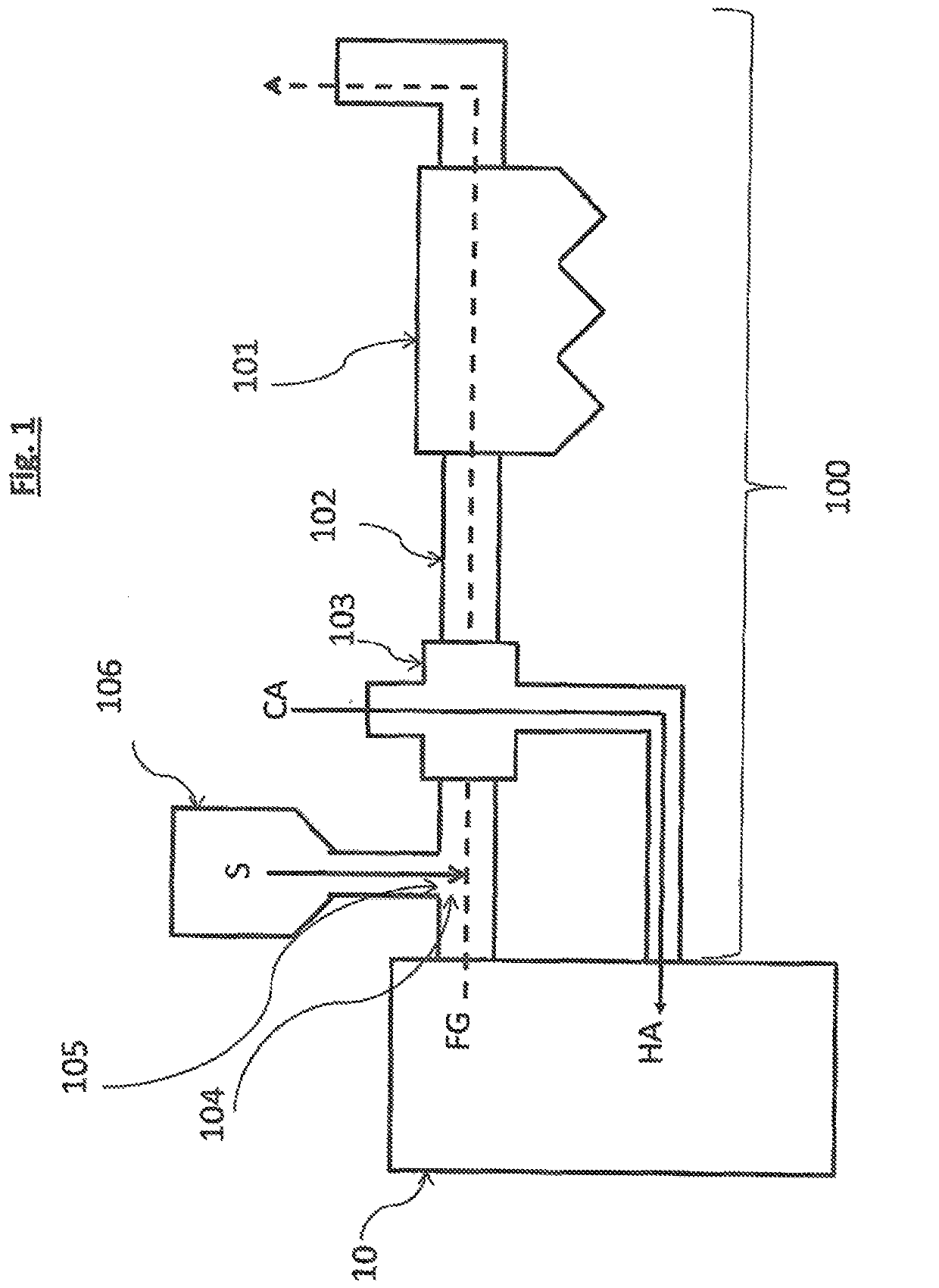
- A powdery calcium-magnesium compound with a calcium-magnesium hydroxide content of at least 80 weight percent, which maintains low resistivity at high temperatures and is compatible with electrostatic precipitators, potentially doped with calcium nitrate and a sodium-based additive, ensuring effective pollutant capture without decomposing or causing heavy metal leaching.
Safety Regulations for Enhanced Nitrate Material Handling
The handling of enhanced sodium nitrate materials requires strict adherence to comprehensive safety regulations that address the unique risks associated with optimized reactivity formulations. Current regulatory frameworks primarily stem from established guidelines for standard nitrate compounds, but enhanced materials with modified reactivity profiles necessitate additional safety considerations and specialized handling protocols.
International safety standards, including those established by the International Organization for Standardization (ISO) and the Globally Harmonized System of Classification and Labelling of Chemicals (GHS), provide foundational requirements for nitrate material classification. Enhanced sodium nitrate formulations must undergo rigorous hazard assessment procedures to determine appropriate safety classifications, particularly when reactivity modifications alter combustion characteristics or thermal stability profiles.
Storage regulations mandate specific environmental controls for enhanced nitrate materials, including temperature monitoring systems, humidity control measures, and segregation requirements from incompatible substances. Facilities handling these materials must implement enhanced ventilation systems, fire suppression technologies specifically designed for nitrate compounds, and emergency response protocols tailored to the unique characteristics of modified formulations.
Personnel safety requirements encompass specialized training programs covering the distinct properties of enhanced sodium nitrate materials, proper use of personal protective equipment designed for reactive nitrate handling, and emergency response procedures. Workers must demonstrate competency in recognizing signs of material degradation, understanding reactivity triggers, and implementing appropriate containment measures during incidents.
Transportation regulations require compliance with hazardous materials shipping standards, including proper packaging specifications, labeling requirements that accurately reflect enhanced reactivity characteristics, and documentation protocols for tracking material movement. Enhanced formulations may require upgraded packaging classifications or additional shipping restrictions based on their modified properties.
Regulatory compliance monitoring involves regular safety audits, material testing protocols to verify stability during storage, and documentation systems that track material handling from production through end-use applications. These regulations continue evolving as enhanced nitrate technologies advance, requiring ongoing assessment of safety protocols to address emerging risks associated with optimized reactivity formulations.
International safety standards, including those established by the International Organization for Standardization (ISO) and the Globally Harmonized System of Classification and Labelling of Chemicals (GHS), provide foundational requirements for nitrate material classification. Enhanced sodium nitrate formulations must undergo rigorous hazard assessment procedures to determine appropriate safety classifications, particularly when reactivity modifications alter combustion characteristics or thermal stability profiles.
Storage regulations mandate specific environmental controls for enhanced nitrate materials, including temperature monitoring systems, humidity control measures, and segregation requirements from incompatible substances. Facilities handling these materials must implement enhanced ventilation systems, fire suppression technologies specifically designed for nitrate compounds, and emergency response protocols tailored to the unique characteristics of modified formulations.
Personnel safety requirements encompass specialized training programs covering the distinct properties of enhanced sodium nitrate materials, proper use of personal protective equipment designed for reactive nitrate handling, and emergency response procedures. Workers must demonstrate competency in recognizing signs of material degradation, understanding reactivity triggers, and implementing appropriate containment measures during incidents.
Transportation regulations require compliance with hazardous materials shipping standards, including proper packaging specifications, labeling requirements that accurately reflect enhanced reactivity characteristics, and documentation protocols for tracking material movement. Enhanced formulations may require upgraded packaging classifications or additional shipping restrictions based on their modified properties.
Regulatory compliance monitoring involves regular safety audits, material testing protocols to verify stability during storage, and documentation systems that track material handling from production through end-use applications. These regulations continue evolving as enhanced nitrate technologies advance, requiring ongoing assessment of safety protocols to address emerging risks associated with optimized reactivity formulations.
Environmental Impact Assessment of Optimized Sodium Nitrate
The optimization of sodium nitrate reactivity for enhanced material properties necessitates a comprehensive environmental impact assessment to evaluate potential ecological consequences and sustainability implications. Enhanced reactivity modifications may alter the compound's environmental behavior, affecting its persistence, bioaccumulation potential, and toxicity profiles in various environmental compartments.
Optimized sodium nitrate formulations with increased reactivity could potentially accelerate dissolution rates in aquatic environments, leading to rapid nutrient loading in water bodies. This enhanced solubility may exacerbate eutrophication processes in freshwater ecosystems, promoting excessive algal growth and subsequent oxygen depletion. The modified chemical structure might also influence the compound's interaction with soil microorganisms, potentially disrupting nitrogen cycling processes and affecting soil fertility dynamics.
Air quality considerations become paramount when evaluating enhanced sodium nitrate reactivity. Increased reactivity may facilitate the formation of secondary atmospheric pollutants, including nitrous oxides and particulate matter. These compounds contribute to photochemical smog formation and can have adverse effects on respiratory health. The enhanced reactivity might also influence the compound's role in atmospheric chemistry, potentially affecting ozone depletion or formation processes.
Groundwater contamination risks require careful evaluation, as optimized sodium nitrate with enhanced reactivity may exhibit different migration patterns through soil layers. The modified properties could influence leaching rates and persistence in subsurface environments, potentially affecting drinking water quality and aquatic ecosystems dependent on groundwater sources.
Life cycle assessment considerations encompass the entire production chain of optimized sodium nitrate, from raw material extraction through manufacturing processes to end-of-life disposal. Enhanced reactivity modifications may require additional chemical processing steps, potentially increasing energy consumption and generating secondary waste streams. The assessment must evaluate carbon footprint implications, resource utilization efficiency, and waste generation patterns associated with the optimization process.
Regulatory compliance frameworks present additional challenges, as enhanced sodium nitrate formulations may require updated safety classifications and environmental risk assessments. Existing environmental regulations may not adequately address the unique properties of optimized variants, necessitating comprehensive toxicological studies and environmental fate modeling to ensure regulatory approval and safe deployment.
Optimized sodium nitrate formulations with increased reactivity could potentially accelerate dissolution rates in aquatic environments, leading to rapid nutrient loading in water bodies. This enhanced solubility may exacerbate eutrophication processes in freshwater ecosystems, promoting excessive algal growth and subsequent oxygen depletion. The modified chemical structure might also influence the compound's interaction with soil microorganisms, potentially disrupting nitrogen cycling processes and affecting soil fertility dynamics.
Air quality considerations become paramount when evaluating enhanced sodium nitrate reactivity. Increased reactivity may facilitate the formation of secondary atmospheric pollutants, including nitrous oxides and particulate matter. These compounds contribute to photochemical smog formation and can have adverse effects on respiratory health. The enhanced reactivity might also influence the compound's role in atmospheric chemistry, potentially affecting ozone depletion or formation processes.
Groundwater contamination risks require careful evaluation, as optimized sodium nitrate with enhanced reactivity may exhibit different migration patterns through soil layers. The modified properties could influence leaching rates and persistence in subsurface environments, potentially affecting drinking water quality and aquatic ecosystems dependent on groundwater sources.
Life cycle assessment considerations encompass the entire production chain of optimized sodium nitrate, from raw material extraction through manufacturing processes to end-of-life disposal. Enhanced reactivity modifications may require additional chemical processing steps, potentially increasing energy consumption and generating secondary waste streams. The assessment must evaluate carbon footprint implications, resource utilization efficiency, and waste generation patterns associated with the optimization process.
Regulatory compliance frameworks present additional challenges, as enhanced sodium nitrate formulations may require updated safety classifications and environmental risk assessments. Existing environmental regulations may not adequately address the unique properties of optimized variants, necessitating comprehensive toxicological studies and environmental fate modeling to ensure regulatory approval and safe deployment.
Unlock deeper insights with Patsnap Eureka Quick Research — get a full tech report to explore trends and direct your research. Try now!
Generate Your Research Report Instantly with AI Agent
Supercharge your innovation with Patsnap Eureka AI Agent Platform!