

Optimize Valve Design for Low-Pressure Systems
MAR 8, 20269 MIN READ
Generate Your Research Report Instantly with AI Agent
PatSnap Eureka helps you evaluate technical feasibility & market potential.
Low-Pressure Valve Design Background and Objectives
Low-pressure valve systems have emerged as critical components in modern industrial applications, driven by the increasing demand for precise fluid control in sensitive processes. The evolution of valve technology has progressed from basic mechanical designs to sophisticated systems incorporating advanced materials and smart control mechanisms. This technological progression reflects the industry's response to stringent performance requirements in applications ranging from pharmaceutical manufacturing to semiconductor processing.
The historical development of low-pressure valve technology began with simple gate and globe valves in the early 20th century. However, these conventional designs proved inadequate for applications requiring precise control at pressures below 50 psi. The introduction of diaphragm valves in the 1940s marked a significant milestone, followed by the development of specialized butterfly and ball valve configurations optimized for low-pressure environments. Recent decades have witnessed the integration of electronic actuators and feedback systems, enabling unprecedented levels of control accuracy.
Current technological trends indicate a shift toward miniaturization and enhanced sensitivity in valve design. The semiconductor industry's demand for ultra-clean processes has driven innovations in materials science, leading to the adoption of specialized polymers and surface treatments that minimize contamination risks. Additionally, the pharmaceutical sector's emphasis on sterile processing has accelerated the development of sanitary valve designs with improved cleanability and validation capabilities.
The primary objective of optimizing valve design for low-pressure systems centers on achieving superior flow control precision while maintaining system integrity. This involves addressing fundamental challenges such as seat leakage, actuator sensitivity, and response time optimization. Enhanced sealing mechanisms must prevent internal leakage at minimal pressure differentials, while actuator systems require sufficient sensitivity to respond to small control signals without overshooting target positions.
Secondary objectives include improving valve longevity and reducing maintenance requirements through advanced material selection and design optimization. The integration of predictive maintenance capabilities through embedded sensors represents another key goal, enabling real-time monitoring of valve performance parameters. Furthermore, standardization of interface protocols and modular design approaches aims to enhance system interoperability and reduce total cost of ownership across diverse industrial applications.
The historical development of low-pressure valve technology began with simple gate and globe valves in the early 20th century. However, these conventional designs proved inadequate for applications requiring precise control at pressures below 50 psi. The introduction of diaphragm valves in the 1940s marked a significant milestone, followed by the development of specialized butterfly and ball valve configurations optimized for low-pressure environments. Recent decades have witnessed the integration of electronic actuators and feedback systems, enabling unprecedented levels of control accuracy.
Current technological trends indicate a shift toward miniaturization and enhanced sensitivity in valve design. The semiconductor industry's demand for ultra-clean processes has driven innovations in materials science, leading to the adoption of specialized polymers and surface treatments that minimize contamination risks. Additionally, the pharmaceutical sector's emphasis on sterile processing has accelerated the development of sanitary valve designs with improved cleanability and validation capabilities.
The primary objective of optimizing valve design for low-pressure systems centers on achieving superior flow control precision while maintaining system integrity. This involves addressing fundamental challenges such as seat leakage, actuator sensitivity, and response time optimization. Enhanced sealing mechanisms must prevent internal leakage at minimal pressure differentials, while actuator systems require sufficient sensitivity to respond to small control signals without overshooting target positions.
Secondary objectives include improving valve longevity and reducing maintenance requirements through advanced material selection and design optimization. The integration of predictive maintenance capabilities through embedded sensors represents another key goal, enabling real-time monitoring of valve performance parameters. Furthermore, standardization of interface protocols and modular design approaches aims to enhance system interoperability and reduce total cost of ownership across diverse industrial applications.
Market Demand for Low-Pressure Valve Applications
The global low-pressure valve market demonstrates robust growth driven by expanding applications across multiple industrial sectors. HVAC systems represent the largest demand segment, where low-pressure valves control airflow, regulate temperature, and manage pressure differentials in commercial and residential buildings. The increasing emphasis on energy efficiency and smart building technologies has accelerated adoption of precision-engineered low-pressure valves that offer superior control characteristics and reduced energy consumption.
Water treatment and distribution systems constitute another significant market driver, particularly in municipal infrastructure and industrial process applications. Low-pressure valves play critical roles in filtration systems, chemical dosing, and flow regulation where maintaining precise pressure control is essential for system performance and safety. The growing global focus on water conservation and treatment efficiency has intensified demand for reliable, leak-proof valve solutions.
The pharmaceutical and biotechnology industries present high-value market opportunities for specialized low-pressure valve applications. These sectors require valves that meet stringent hygiene standards, provide precise flow control, and maintain system integrity under varying pressure conditions. Sterile processing, fluid handling, and cleanroom applications drive demand for advanced valve designs with superior sealing performance and contamination resistance.
Food and beverage processing represents an expanding market segment where low-pressure valves manage product flow, cleaning cycles, and sanitization processes. Industry requirements for food-grade materials, easy cleaning, and reliable operation under frequent pressure cycling create specific design challenges and market opportunities for optimized valve solutions.
Emerging applications in renewable energy systems, particularly in solar thermal installations and geothermal systems, are creating new market segments for low-pressure valve technologies. These applications demand valves capable of handling temperature variations while maintaining consistent performance under relatively low operating pressures.
The market trend toward automation and remote monitoring capabilities is reshaping demand patterns, with increasing preference for valves that integrate seamlessly with digital control systems and provide real-time performance feedback.
Water treatment and distribution systems constitute another significant market driver, particularly in municipal infrastructure and industrial process applications. Low-pressure valves play critical roles in filtration systems, chemical dosing, and flow regulation where maintaining precise pressure control is essential for system performance and safety. The growing global focus on water conservation and treatment efficiency has intensified demand for reliable, leak-proof valve solutions.
The pharmaceutical and biotechnology industries present high-value market opportunities for specialized low-pressure valve applications. These sectors require valves that meet stringent hygiene standards, provide precise flow control, and maintain system integrity under varying pressure conditions. Sterile processing, fluid handling, and cleanroom applications drive demand for advanced valve designs with superior sealing performance and contamination resistance.
Food and beverage processing represents an expanding market segment where low-pressure valves manage product flow, cleaning cycles, and sanitization processes. Industry requirements for food-grade materials, easy cleaning, and reliable operation under frequent pressure cycling create specific design challenges and market opportunities for optimized valve solutions.
Emerging applications in renewable energy systems, particularly in solar thermal installations and geothermal systems, are creating new market segments for low-pressure valve technologies. These applications demand valves capable of handling temperature variations while maintaining consistent performance under relatively low operating pressures.
The market trend toward automation and remote monitoring capabilities is reshaping demand patterns, with increasing preference for valves that integrate seamlessly with digital control systems and provide real-time performance feedback.
Current State and Challenges in Low-Pressure Valve Technology
Low-pressure valve technology currently faces significant developmental challenges across multiple industrial sectors, with applications ranging from HVAC systems to pharmaceutical manufacturing and semiconductor processing. The existing valve designs predominantly rely on traditional gate, globe, and ball valve configurations that were originally engineered for higher pressure applications, resulting in suboptimal performance when adapted to low-pressure environments typically operating below 150 psi.
Contemporary low-pressure valve systems exhibit several critical limitations that impede their effectiveness. Seal integrity remains a primary concern, as conventional elastomeric seals often fail to maintain adequate sealing performance under minimal differential pressures. This challenge is compounded by the tendency for traditional valve designs to experience increased leakage rates when operating pressures drop below their optimal range, leading to system inefficiencies and potential contamination issues in sensitive applications.
Flow control precision represents another significant technical hurdle in current low-pressure valve technology. Standard valve actuators and control mechanisms frequently demonstrate poor responsiveness and accuracy when managing low-pressure fluid streams, resulting in overshooting, hunting behavior, and inadequate flow modulation. The inherent design characteristics of existing valves, including their pressure drop coefficients and flow characteristics, are not optimized for the unique operating conditions encountered in low-pressure systems.
Material selection and manufacturing constraints further complicate the development of effective low-pressure valve solutions. Current valve bodies and internal components often utilize materials and surface finishes that create excessive friction and pressure losses, which become disproportionately significant in low-pressure applications. Additionally, manufacturing tolerances that are acceptable for high-pressure valves can result in performance degradation when applied to low-pressure scenarios.
The geographical distribution of low-pressure valve technology development shows concentration in North America and Europe, where advanced manufacturing capabilities and stringent industry standards drive innovation. However, emerging markets in Asia-Pacific regions are increasingly demanding improved low-pressure valve solutions for their expanding industrial infrastructure, creating additional pressure for technological advancement.
Regulatory compliance presents ongoing challenges, particularly in industries such as food processing, pharmaceuticals, and clean energy systems, where low-pressure valve performance directly impacts product quality and safety standards. Current valve designs often struggle to meet evolving regulatory requirements while maintaining cost-effectiveness and operational reliability in low-pressure environments.
Contemporary low-pressure valve systems exhibit several critical limitations that impede their effectiveness. Seal integrity remains a primary concern, as conventional elastomeric seals often fail to maintain adequate sealing performance under minimal differential pressures. This challenge is compounded by the tendency for traditional valve designs to experience increased leakage rates when operating pressures drop below their optimal range, leading to system inefficiencies and potential contamination issues in sensitive applications.
Flow control precision represents another significant technical hurdle in current low-pressure valve technology. Standard valve actuators and control mechanisms frequently demonstrate poor responsiveness and accuracy when managing low-pressure fluid streams, resulting in overshooting, hunting behavior, and inadequate flow modulation. The inherent design characteristics of existing valves, including their pressure drop coefficients and flow characteristics, are not optimized for the unique operating conditions encountered in low-pressure systems.
Material selection and manufacturing constraints further complicate the development of effective low-pressure valve solutions. Current valve bodies and internal components often utilize materials and surface finishes that create excessive friction and pressure losses, which become disproportionately significant in low-pressure applications. Additionally, manufacturing tolerances that are acceptable for high-pressure valves can result in performance degradation when applied to low-pressure scenarios.
The geographical distribution of low-pressure valve technology development shows concentration in North America and Europe, where advanced manufacturing capabilities and stringent industry standards drive innovation. However, emerging markets in Asia-Pacific regions are increasingly demanding improved low-pressure valve solutions for their expanding industrial infrastructure, creating additional pressure for technological advancement.
Regulatory compliance presents ongoing challenges, particularly in industries such as food processing, pharmaceuticals, and clean energy systems, where low-pressure valve performance directly impacts product quality and safety standards. Current valve designs often struggle to meet evolving regulatory requirements while maintaining cost-effectiveness and operational reliability in low-pressure environments.
Existing Low-Pressure Valve Design Solutions
01 Valve structure with improved sealing mechanisms
Valve designs incorporating enhanced sealing structures to prevent leakage and improve operational reliability. These designs may include specialized gasket configurations, multi-layer sealing elements, or innovative seat designs that ensure tight closure under various pressure conditions. The sealing mechanisms are optimized to maintain integrity over extended operational periods and reduce maintenance requirements.- Valve structure with improved sealing mechanisms: Valve designs incorporating enhanced sealing structures to prevent leakage and improve operational reliability. These designs may include specialized gasket configurations, multi-layer sealing elements, or innovative seat designs that ensure tight closure under various pressure conditions. The sealing mechanisms are optimized to maintain integrity over extended operational periods and reduce maintenance requirements.
- Flow control valve with adjustable regulation features: Valve systems designed with adjustable flow control capabilities allowing precise regulation of fluid passage. These designs incorporate mechanisms for variable opening degrees, throttling functions, or proportional control elements. The adjustable features enable operators to fine-tune flow rates according to specific process requirements while maintaining system stability and efficiency.
- Multi-port valve configurations for complex fluid routing: Valve designs featuring multiple ports and passages to enable complex fluid routing and distribution within a single valve body. These configurations allow for switching between different flow paths, mixing of multiple fluid streams, or diverting flow to various outlets. The multi-port design reduces the need for multiple separate valves and simplifies piping systems.
- Valve actuation systems with automated control: Valve designs incorporating automated actuation mechanisms including electric, pneumatic, or hydraulic actuators for remote or automatic operation. These systems enable precise control through electronic signals, programmable logic controllers, or sensor feedback. The automated actuation improves response time, reduces manual intervention, and allows integration with broader control systems for process optimization.
- Specialized valve materials and coatings for harsh environments: Valve designs utilizing advanced materials and surface treatments to withstand corrosive fluids, extreme temperatures, or abrasive media. These designs may incorporate corrosion-resistant alloys, ceramic components, or specialized coatings that extend valve service life in challenging operating conditions. Material selection is optimized based on specific application requirements to ensure durability and performance.
02 Flow control valve with adjustable regulation features
Valve systems designed with adjustable flow control capabilities allowing precise regulation of fluid passage. These designs incorporate mechanisms for variable opening degrees, throttling functions, or proportional control elements. The adjustable features enable operators to fine-tune flow rates according to specific process requirements, improving system efficiency and operational flexibility.Expand Specific Solutions03 Multi-port valve configurations for complex fluid routing
Valve designs featuring multiple ports and passages to enable complex fluid routing and distribution within a single valve body. These configurations allow for switching between different flow paths, mixing of multiple fluid streams, or diversion to various outlets. The multi-port design reduces the need for multiple separate valves and simplifies piping systems.Expand Specific Solutions04 Valve actuation systems with automated control
Valve designs incorporating automated actuation mechanisms including electric, pneumatic, or hydraulic actuators for remote or automatic operation. These systems enable integration with control systems for automated process management, emergency shutdown capabilities, and remote monitoring. The actuation designs focus on response time, precision positioning, and fail-safe operation modes.Expand Specific Solutions05 Specialized valve materials and coatings for harsh environments
Valve designs utilizing specialized materials, surface treatments, or protective coatings to withstand corrosive fluids, high temperatures, or abrasive media. These designs focus on material selection for valve bodies, internal components, and sealing surfaces to extend service life in challenging operating conditions. The material innovations address chemical resistance, thermal stability, and wear resistance requirements.Expand Specific Solutions
Key Players in Low-Pressure Valve Manufacturing Industry
The valve design optimization for low-pressure systems represents a mature yet evolving market segment currently in the growth-to-maturity transition phase. The global valve market, valued at approximately $70 billion, shows steady expansion driven by industrial automation and energy efficiency demands. Technology maturity varies significantly across market players, with established leaders like Robert Bosch GmbH, Parker-Hannifin Corp., and Festo SE & Co. KG demonstrating advanced pneumatic and hydraulic valve technologies with integrated smart controls. Mid-tier companies such as Hydac Fluidtechnik GmbH and Knorr-Bremse focus on specialized applications, while emerging players like Chengdu Wanjiang Gangli Technology Co. leverage AI-driven solutions. The competitive landscape features strong differentiation through digitalization, with companies like Continental Automotive GmbH and Woodward Inc. integrating IoT capabilities, while traditional manufacturers like Hans Sasserath & Co. KG maintain market presence through proven mechanical designs and reliability-focused engineering approaches.
Robert Bosch GmbH
Technical Solution: Bosch has developed sophisticated valve control systems for low-pressure applications, particularly in automotive fuel injection and brake systems, utilizing advanced electromagnetic actuators and precision-machined valve seats to achieve rapid response times and accurate flow control. Their technology incorporates piezoelectric actuators that enable precise valve opening control with microsecond timing accuracy, essential for low-pressure fuel delivery systems. The company's valve designs feature optimized spring mechanisms and reduced mass components to minimize opening pressures while maintaining reliable closure. Bosch integrates advanced materials science with computational modeling to optimize valve geometry for minimal pressure losses and maximum efficiency.
Strengths: Extensive automotive industry experience, advanced actuator technology, strong integration with electronic control systems. Weaknesses: Primarily automotive-focused solutions, high development costs for specialized applications.
Hydac Fluidtechnik GmbH
Technical Solution: Hydac has developed specialized low-pressure valve technology focusing on hydraulic and filtration applications, incorporating innovative poppet and seat designs that provide reliable sealing performance while minimizing cracking pressures for low-pressure system operation. Their valve solutions feature optimized spring rates and actuator mechanisms specifically calibrated for low-pressure environments, ensuring consistent performance across varying operating conditions. The company employs advanced materials engineering to create valve components with enhanced wear resistance and reduced friction characteristics, enabling smooth operation at minimal pressure differentials. Hydac's low-pressure valve systems integrate comprehensive filtration and conditioning capabilities to maintain system cleanliness and performance reliability.
Strengths: Specialized expertise in fluid power and filtration, strong focus on system reliability, comprehensive testing and validation capabilities. Weaknesses: Smaller market presence compared to major competitors, limited global distribution network.
Core Innovations in Low-Pressure Valve Optimization
A valve for controlling a flow
PatentActiveUS20160279376A1
Innovation
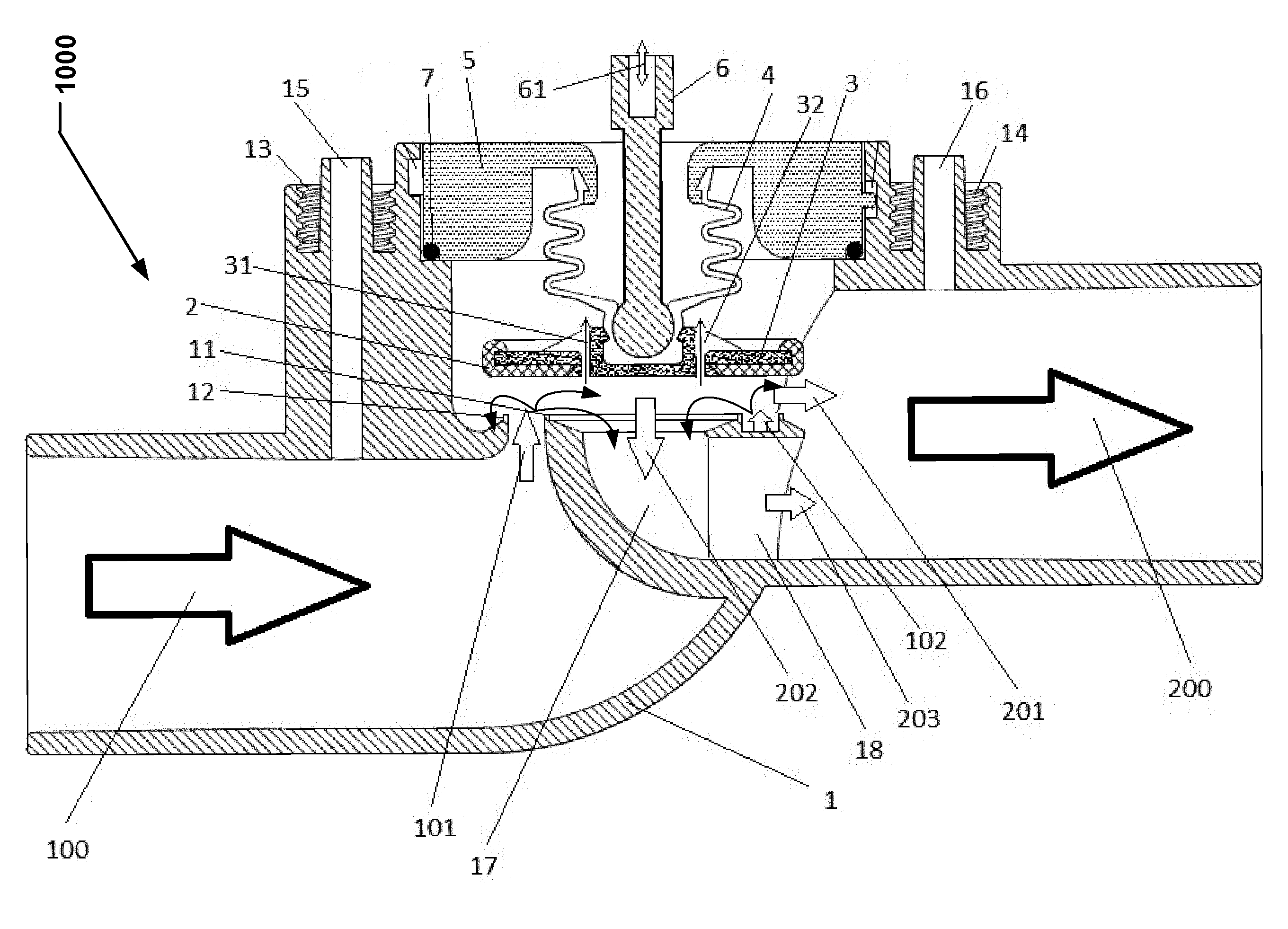
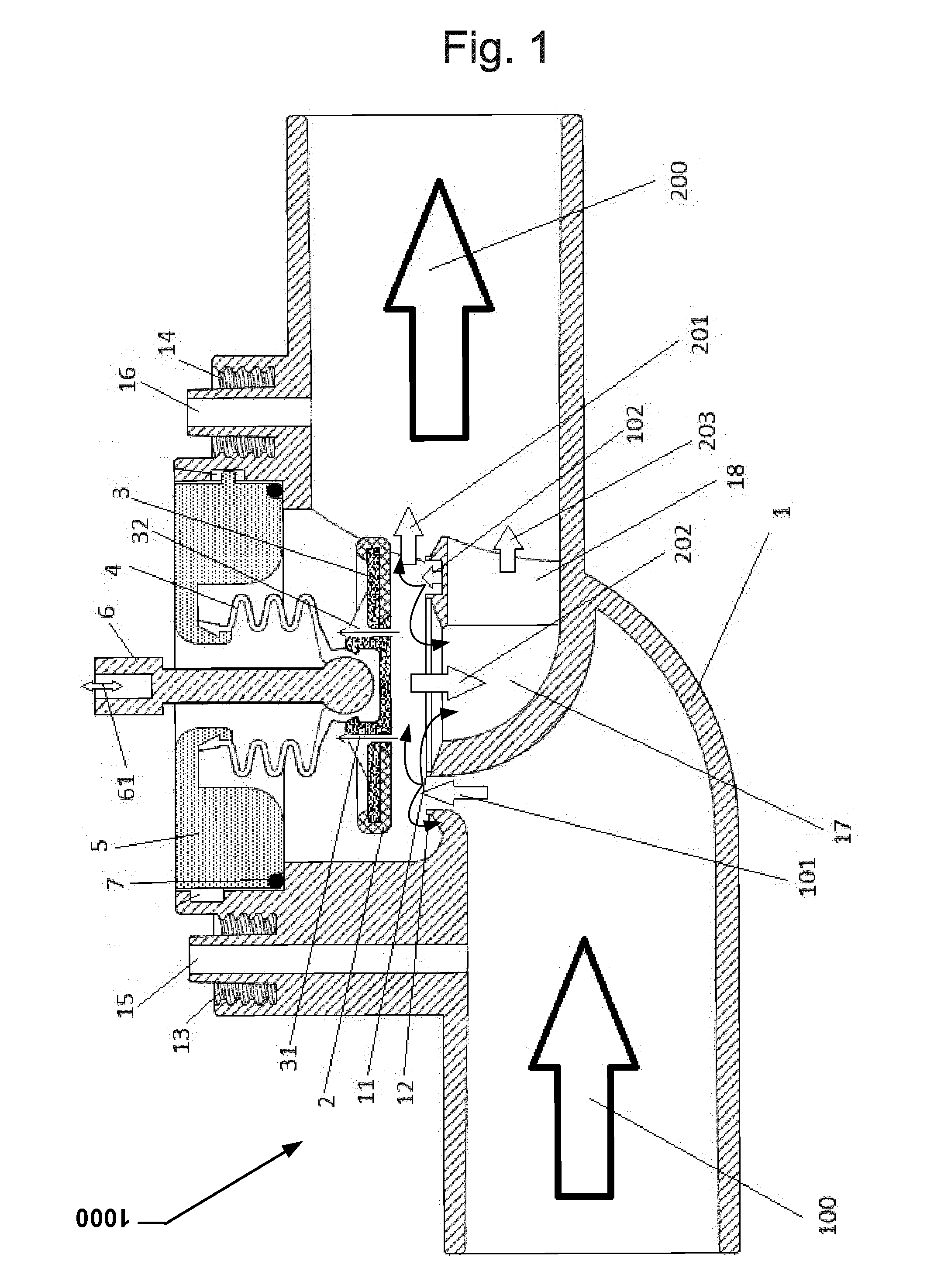
- A valve design featuring an inlet and outlet channel with part-annularly shaped apertures and a concentrically arranged flow channel, using a disc that moves between seating means to control fluid flow, reducing pressure drop and actuator force requirements by distributing flow over a longer edge and smaller area.

Device and method for a low resistance valve
PatentWO2015169881A1
Innovation
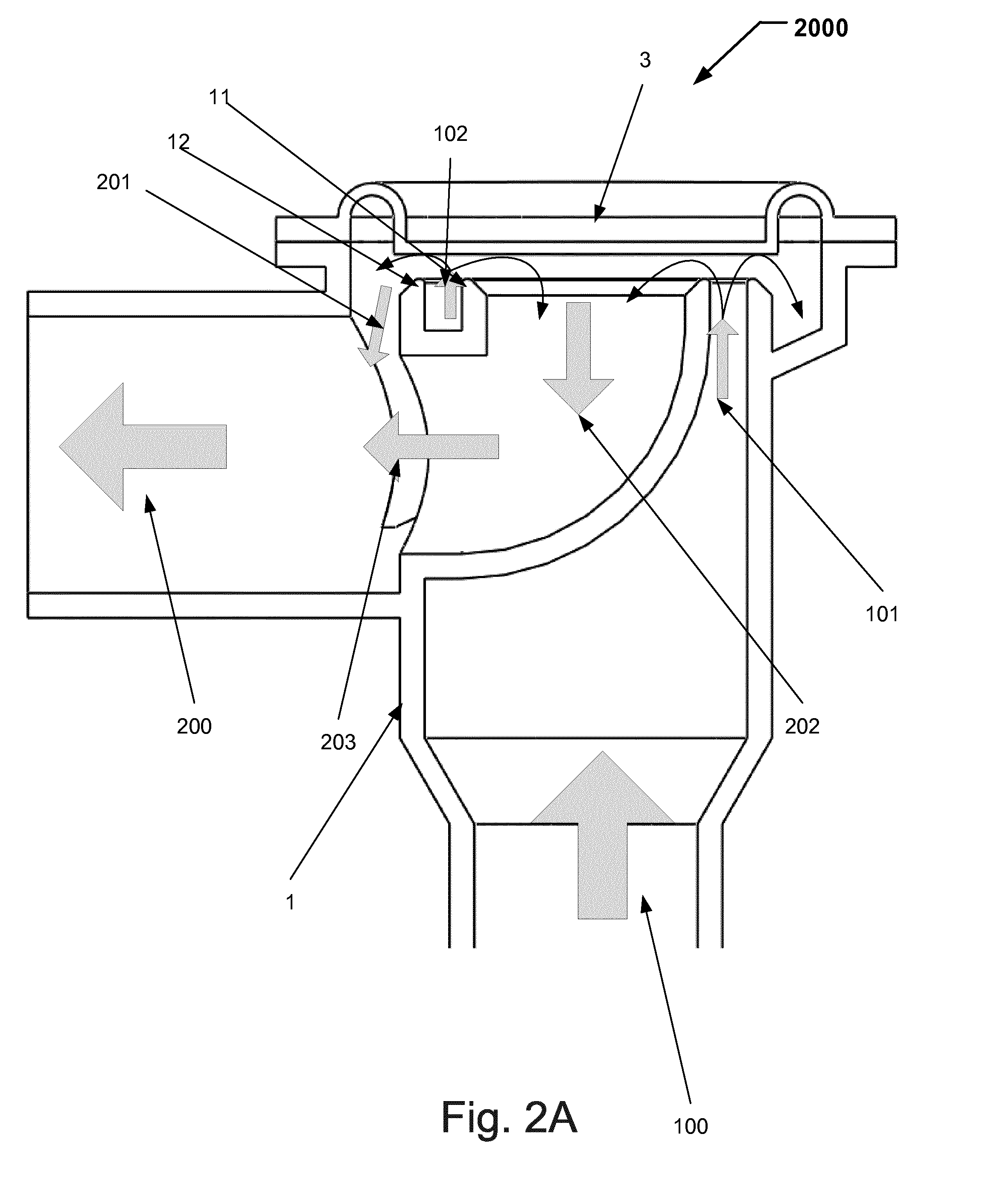
- A valve design featuring a non-circular regular shaped outlet, arranged perpendicular to the inlet, with specific transition portions connecting the outlet housing to the valve housing, creating a larger cross-sectional flow area and reducing pressure drop, while maintaining stability by minimizing oscillation risks.


Safety Standards for Low-Pressure Valve Systems
Safety standards for low-pressure valve systems represent a critical framework governing the design, manufacturing, testing, and operational requirements of valves operating in environments typically below 150 psi. These standards ensure reliable performance while minimizing risks associated with system failures, leakage, and operational hazards that could compromise personnel safety or environmental integrity.
The primary regulatory framework encompasses multiple international and national standards, including ASME B16.34 for valve pressure-temperature ratings, API 598 for valve inspection and testing, and ISO 5208 for industrial valve testing procedures. Additionally, industry-specific standards such as ANSI/FCI 70-2 for control valve seat leakage and NACE MR0175 for materials selection in corrosive environments provide specialized guidance for low-pressure applications.
Material selection standards mandate specific requirements for valve components operating under low-pressure conditions. These include minimum wall thickness calculations, material compatibility matrices, and corrosion resistance specifications. Standards typically require materials to maintain structural integrity under cyclic loading conditions while preventing galvanic corrosion in multi-metal assemblies.
Testing protocols establish mandatory performance verification procedures, including hydrostatic pressure testing at 1.5 times the maximum allowable working pressure, seat leakage testing according to specified acceptance criteria, and operational cycling tests to validate long-term reliability. Low-pressure systems often require enhanced sensitivity in leak detection methods due to reduced differential pressures across sealing surfaces.
Installation and maintenance standards define proper mounting procedures, torque specifications for bolted connections, and periodic inspection requirements. These standards emphasize the importance of proper system alignment and support structures to prevent valve body distortion that could compromise sealing performance in low-pressure applications.
Emerging safety considerations address digitalization trends, including cybersecurity requirements for smart valve systems and functional safety standards for automated low-pressure control applications. These evolving standards recognize the increasing integration of electronic components and communication protocols in modern valve designs, necessitating comprehensive risk assessment methodologies that encompass both mechanical and digital failure modes.
The primary regulatory framework encompasses multiple international and national standards, including ASME B16.34 for valve pressure-temperature ratings, API 598 for valve inspection and testing, and ISO 5208 for industrial valve testing procedures. Additionally, industry-specific standards such as ANSI/FCI 70-2 for control valve seat leakage and NACE MR0175 for materials selection in corrosive environments provide specialized guidance for low-pressure applications.
Material selection standards mandate specific requirements for valve components operating under low-pressure conditions. These include minimum wall thickness calculations, material compatibility matrices, and corrosion resistance specifications. Standards typically require materials to maintain structural integrity under cyclic loading conditions while preventing galvanic corrosion in multi-metal assemblies.
Testing protocols establish mandatory performance verification procedures, including hydrostatic pressure testing at 1.5 times the maximum allowable working pressure, seat leakage testing according to specified acceptance criteria, and operational cycling tests to validate long-term reliability. Low-pressure systems often require enhanced sensitivity in leak detection methods due to reduced differential pressures across sealing surfaces.
Installation and maintenance standards define proper mounting procedures, torque specifications for bolted connections, and periodic inspection requirements. These standards emphasize the importance of proper system alignment and support structures to prevent valve body distortion that could compromise sealing performance in low-pressure applications.
Emerging safety considerations address digitalization trends, including cybersecurity requirements for smart valve systems and functional safety standards for automated low-pressure control applications. These evolving standards recognize the increasing integration of electronic components and communication protocols in modern valve designs, necessitating comprehensive risk assessment methodologies that encompass both mechanical and digital failure modes.
Material Science Innovations for Valve Optimization
Material science innovations represent a critical frontier in advancing valve design optimization for low-pressure systems, where traditional materials often fall short of meeting evolving performance demands. The unique operating conditions of low-pressure environments require materials that can maintain structural integrity while providing enhanced sealing capabilities at minimal pressure differentials.
Advanced polymer composites have emerged as game-changing materials for low-pressure valve applications. These engineered materials combine lightweight properties with superior chemical resistance and dimensional stability. Polyetheretherketone (PEEK) and polyphenylene sulfide (PPS) composites demonstrate exceptional performance in maintaining seal integrity under fluctuating pressure conditions while resisting degradation from various process fluids.
Smart materials integration presents revolutionary opportunities for valve optimization. Shape memory alloys, particularly nickel-titanium compounds, enable self-actuating valve mechanisms that respond to temperature or pressure variations without external power sources. These materials can provide automatic flow regulation in low-pressure systems, reducing energy consumption and improving system responsiveness.
Nanostructured coatings represent another breakthrough in material science applications for valve optimization. Diamond-like carbon coatings and ceramic nanocomposites significantly reduce friction coefficients while enhancing wear resistance. These surface treatments enable smoother valve operation at lower actuation forces, crucial for maintaining precise control in low-pressure applications.
Bio-inspired materials draw from natural systems to solve valve design challenges. Researchers have developed elastomeric materials mimicking biological valve structures, such as heart valve leaflets, which demonstrate superior flexibility and durability under cyclic loading conditions typical in low-pressure systems.
Additive manufacturing has unlocked new possibilities for creating complex material structures previously impossible with conventional manufacturing. Functionally graded materials, where properties vary continuously throughout the component, allow optimization of different valve regions for specific performance requirements. This approach enables simultaneous optimization of sealing surfaces, structural support, and flow characteristics within a single component.
The integration of these material innovations promises significant improvements in valve performance, longevity, and energy efficiency for low-pressure system applications.
Advanced polymer composites have emerged as game-changing materials for low-pressure valve applications. These engineered materials combine lightweight properties with superior chemical resistance and dimensional stability. Polyetheretherketone (PEEK) and polyphenylene sulfide (PPS) composites demonstrate exceptional performance in maintaining seal integrity under fluctuating pressure conditions while resisting degradation from various process fluids.
Smart materials integration presents revolutionary opportunities for valve optimization. Shape memory alloys, particularly nickel-titanium compounds, enable self-actuating valve mechanisms that respond to temperature or pressure variations without external power sources. These materials can provide automatic flow regulation in low-pressure systems, reducing energy consumption and improving system responsiveness.
Nanostructured coatings represent another breakthrough in material science applications for valve optimization. Diamond-like carbon coatings and ceramic nanocomposites significantly reduce friction coefficients while enhancing wear resistance. These surface treatments enable smoother valve operation at lower actuation forces, crucial for maintaining precise control in low-pressure applications.
Bio-inspired materials draw from natural systems to solve valve design challenges. Researchers have developed elastomeric materials mimicking biological valve structures, such as heart valve leaflets, which demonstrate superior flexibility and durability under cyclic loading conditions typical in low-pressure systems.
Additive manufacturing has unlocked new possibilities for creating complex material structures previously impossible with conventional manufacturing. Functionally graded materials, where properties vary continuously throughout the component, allow optimization of different valve regions for specific performance requirements. This approach enables simultaneous optimization of sealing surfaces, structural support, and flow characteristics within a single component.
The integration of these material innovations promises significant improvements in valve performance, longevity, and energy efficiency for low-pressure system applications.
Unlock deeper insights with PatSnap Eureka Quick Research — get a full tech report to explore trends and direct your research. Try now!
Generate Your Research Report Instantly with AI Agent
Supercharge your innovation with PatSnap Eureka AI Agent Platform!