

Optimize Vapor Chamber for Maximum Heat Spreading
APR 21, 20269 MIN READ
Generate Your Research Report Instantly with AI Agent
Patsnap Eureka helps you evaluate technical feasibility & market potential.
Vapor Chamber Technology Background and Thermal Goals
Vapor chamber technology emerged in the 1960s as an evolution of traditional heat pipe technology, initially developed for aerospace applications where efficient thermal management was critical. The fundamental principle relies on a sealed chamber containing a working fluid that undergoes phase change cycles to transfer heat from hot spots to cooler areas with minimal temperature gradients. Unlike conventional heat pipes with unidirectional heat flow, vapor chambers enable two-dimensional heat spreading, making them particularly suitable for modern electronic devices with concentrated heat sources.
The technology gained significant momentum in the 1990s with the rapid advancement of semiconductor devices and the increasing power density of electronic components. Early vapor chambers were primarily used in high-performance computing applications and military systems where thermal management was paramount. The miniaturization of electronic devices and the emergence of mobile computing platforms in the 2000s drove further innovation in vapor chamber design, leading to thinner profiles and improved manufacturing processes.
Contemporary vapor chamber development focuses on addressing the thermal challenges posed by next-generation processors, graphics cards, and power electronics. Modern CPUs and GPUs can generate heat fluxes exceeding 100 W/cm², creating localized hot spots that traditional cooling solutions struggle to manage effectively. The heterogeneous nature of modern chip architectures, with varying power densities across different functional blocks, necessitates advanced thermal spreading solutions that can redistribute heat uniformly across larger surface areas.
The primary thermal management goals for optimized vapor chambers center on maximizing effective thermal conductivity while minimizing thermal resistance. Target specifications typically include achieving effective thermal conductivities exceeding 10,000 W/mK, which is significantly higher than solid copper conductors. Temperature uniformity across the evaporator surface represents another critical objective, with ideal designs maintaining temperature variations below 2-3°C across the heat source area.
Heat flux handling capability constitutes a fundamental performance metric, with advanced vapor chambers targeting heat flux densities of 200-500 W/cm² for high-performance applications. The thermal response time, particularly during transient loading conditions, has become increasingly important as processors implement dynamic frequency scaling and burst processing modes. Optimal designs aim for thermal time constants below 10 seconds to accommodate rapid power transitions.
Manufacturing scalability and cost-effectiveness remain essential considerations as vapor chamber technology transitions from niche applications to mainstream consumer electronics. The integration of vapor chambers into ultra-thin form factors, particularly for mobile devices and laptops with thickness constraints below 5mm, presents ongoing engineering challenges that drive continuous innovation in wick structures, working fluid selection, and manufacturing processes.
The technology gained significant momentum in the 1990s with the rapid advancement of semiconductor devices and the increasing power density of electronic components. Early vapor chambers were primarily used in high-performance computing applications and military systems where thermal management was paramount. The miniaturization of electronic devices and the emergence of mobile computing platforms in the 2000s drove further innovation in vapor chamber design, leading to thinner profiles and improved manufacturing processes.
Contemporary vapor chamber development focuses on addressing the thermal challenges posed by next-generation processors, graphics cards, and power electronics. Modern CPUs and GPUs can generate heat fluxes exceeding 100 W/cm², creating localized hot spots that traditional cooling solutions struggle to manage effectively. The heterogeneous nature of modern chip architectures, with varying power densities across different functional blocks, necessitates advanced thermal spreading solutions that can redistribute heat uniformly across larger surface areas.
The primary thermal management goals for optimized vapor chambers center on maximizing effective thermal conductivity while minimizing thermal resistance. Target specifications typically include achieving effective thermal conductivities exceeding 10,000 W/mK, which is significantly higher than solid copper conductors. Temperature uniformity across the evaporator surface represents another critical objective, with ideal designs maintaining temperature variations below 2-3°C across the heat source area.
Heat flux handling capability constitutes a fundamental performance metric, with advanced vapor chambers targeting heat flux densities of 200-500 W/cm² for high-performance applications. The thermal response time, particularly during transient loading conditions, has become increasingly important as processors implement dynamic frequency scaling and burst processing modes. Optimal designs aim for thermal time constants below 10 seconds to accommodate rapid power transitions.
Manufacturing scalability and cost-effectiveness remain essential considerations as vapor chamber technology transitions from niche applications to mainstream consumer electronics. The integration of vapor chambers into ultra-thin form factors, particularly for mobile devices and laptops with thickness constraints below 5mm, presents ongoing engineering challenges that drive continuous innovation in wick structures, working fluid selection, and manufacturing processes.
Market Demand for Advanced Thermal Management Solutions
The global thermal management market is experiencing unprecedented growth driven by the exponential increase in heat generation from modern electronic devices. Consumer electronics, data centers, automotive systems, and industrial equipment are pushing thermal limits as performance demands continue to escalate. Traditional cooling solutions are increasingly inadequate for managing the concentrated heat loads generated by high-performance processors, graphics cards, and power electronics.
Data centers represent one of the most critical market segments demanding advanced thermal management solutions. The proliferation of artificial intelligence, machine learning, and cloud computing has created server farms with dramatically higher power densities. These facilities require efficient heat spreading technologies to maintain optimal operating temperatures while minimizing energy consumption for cooling systems. Vapor chambers offer superior thermal conductivity compared to traditional heat pipes and solid metal heat spreaders.
The automotive industry is undergoing a thermal management revolution with the widespread adoption of electric vehicles and advanced driver assistance systems. Electric vehicle battery packs, power inverters, and charging systems generate substantial heat that must be effectively managed to ensure safety, performance, and longevity. Optimized vapor chambers provide lightweight, compact solutions that meet the stringent space and weight constraints of automotive applications.
Consumer electronics manufacturers face mounting pressure to deliver thinner, more powerful devices while maintaining acceptable surface temperatures. Smartphones, laptops, gaming consoles, and tablets require increasingly sophisticated thermal management as processors become more powerful and form factors become more compact. Enhanced vapor chamber designs enable better heat distribution across larger surface areas, preventing hot spots and thermal throttling.
The telecommunications infrastructure sector presents significant opportunities as network equipment becomes more powerful to support expanding data traffic and emerging technologies. Base stations, routers, and switching equipment require reliable thermal management solutions that can operate effectively in diverse environmental conditions while maintaining consistent performance levels.
Industrial applications including power electronics, LED lighting systems, and renewable energy equipment create additional market demand for optimized vapor chamber technologies. These applications often require custom thermal solutions that can handle high heat fluxes while meeting specific size, weight, and cost constraints. The growing emphasis on energy efficiency and sustainability further drives the need for advanced thermal management solutions that reduce overall system power consumption.
Data centers represent one of the most critical market segments demanding advanced thermal management solutions. The proliferation of artificial intelligence, machine learning, and cloud computing has created server farms with dramatically higher power densities. These facilities require efficient heat spreading technologies to maintain optimal operating temperatures while minimizing energy consumption for cooling systems. Vapor chambers offer superior thermal conductivity compared to traditional heat pipes and solid metal heat spreaders.
The automotive industry is undergoing a thermal management revolution with the widespread adoption of electric vehicles and advanced driver assistance systems. Electric vehicle battery packs, power inverters, and charging systems generate substantial heat that must be effectively managed to ensure safety, performance, and longevity. Optimized vapor chambers provide lightweight, compact solutions that meet the stringent space and weight constraints of automotive applications.
Consumer electronics manufacturers face mounting pressure to deliver thinner, more powerful devices while maintaining acceptable surface temperatures. Smartphones, laptops, gaming consoles, and tablets require increasingly sophisticated thermal management as processors become more powerful and form factors become more compact. Enhanced vapor chamber designs enable better heat distribution across larger surface areas, preventing hot spots and thermal throttling.
The telecommunications infrastructure sector presents significant opportunities as network equipment becomes more powerful to support expanding data traffic and emerging technologies. Base stations, routers, and switching equipment require reliable thermal management solutions that can operate effectively in diverse environmental conditions while maintaining consistent performance levels.
Industrial applications including power electronics, LED lighting systems, and renewable energy equipment create additional market demand for optimized vapor chamber technologies. These applications often require custom thermal solutions that can handle high heat fluxes while meeting specific size, weight, and cost constraints. The growing emphasis on energy efficiency and sustainability further drives the need for advanced thermal management solutions that reduce overall system power consumption.
Current State and Heat Spreading Limitations
Vapor chamber technology has reached significant maturity in thermal management applications, particularly in high-performance electronics cooling. Current vapor chambers typically achieve thermal conductivities ranging from 5,000 to 20,000 W/mK in the vapor phase, substantially outperforming solid copper conductors. However, existing designs face fundamental limitations in heat spreading efficiency, particularly when dealing with high heat flux densities exceeding 200 W/cm².
The primary constraint lies in the capillary structure design and working fluid distribution mechanisms. Traditional sintered powder wicks and grooved structures often create non-uniform liquid distribution, leading to localized dry-out phenomena at heat source interfaces. This results in thermal resistance increases of 300-500% compared to optimal operating conditions, significantly limiting the maximum heat spreading capability.
Current vapor chambers demonstrate notable performance degradation when operating beyond 70% of their capillary limit. The effective thermal spreading radius typically remains confined to 2-3 times the heat source dimension, creating substantial temperature gradients across the chamber surface. This limitation becomes particularly pronounced in ultra-thin form factors below 1.5mm thickness, where capillary pumping capacity is severely restricted.
Manufacturing inconsistencies present another significant challenge affecting heat spreading uniformity. Variations in wick porosity, surface roughness, and internal geometry can create preferential vapor flow paths, resulting in uneven temperature distribution across the spreading surface. Quality control metrics indicate that 15-20% performance variation is common in mass-produced units.
Thermal interface resistance between the vapor chamber and heat sources represents a critical bottleneck. Current attachment methods using thermal interface materials introduce additional thermal resistance of 0.1-0.3 K·cm²/W, reducing overall system efficiency. This interface resistance becomes increasingly problematic as heat source sizes decrease and power densities increase.
Working fluid limitations further constrain optimization potential. Water, the most common working fluid, faces operational temperature restrictions and compatibility issues with certain materials. Alternative fluids like methanol or acetone offer different performance characteristics but introduce safety and stability concerns in commercial applications.
Gravitational orientation sensitivity remains a persistent challenge for current vapor chamber designs. Performance degradation of 20-40% is commonly observed when operating against gravity, limiting application flexibility in various device orientations. This constraint particularly affects mobile and portable electronic devices requiring omnidirectional thermal performance.
The primary constraint lies in the capillary structure design and working fluid distribution mechanisms. Traditional sintered powder wicks and grooved structures often create non-uniform liquid distribution, leading to localized dry-out phenomena at heat source interfaces. This results in thermal resistance increases of 300-500% compared to optimal operating conditions, significantly limiting the maximum heat spreading capability.
Current vapor chambers demonstrate notable performance degradation when operating beyond 70% of their capillary limit. The effective thermal spreading radius typically remains confined to 2-3 times the heat source dimension, creating substantial temperature gradients across the chamber surface. This limitation becomes particularly pronounced in ultra-thin form factors below 1.5mm thickness, where capillary pumping capacity is severely restricted.
Manufacturing inconsistencies present another significant challenge affecting heat spreading uniformity. Variations in wick porosity, surface roughness, and internal geometry can create preferential vapor flow paths, resulting in uneven temperature distribution across the spreading surface. Quality control metrics indicate that 15-20% performance variation is common in mass-produced units.
Thermal interface resistance between the vapor chamber and heat sources represents a critical bottleneck. Current attachment methods using thermal interface materials introduce additional thermal resistance of 0.1-0.3 K·cm²/W, reducing overall system efficiency. This interface resistance becomes increasingly problematic as heat source sizes decrease and power densities increase.
Working fluid limitations further constrain optimization potential. Water, the most common working fluid, faces operational temperature restrictions and compatibility issues with certain materials. Alternative fluids like methanol or acetone offer different performance characteristics but introduce safety and stability concerns in commercial applications.
Gravitational orientation sensitivity remains a persistent challenge for current vapor chamber designs. Performance degradation of 20-40% is commonly observed when operating against gravity, limiting application flexibility in various device orientations. This constraint particularly affects mobile and portable electronic devices requiring omnidirectional thermal performance.
Existing Solutions for Vapor Chamber Heat Spreading Optimization
01 Vapor chamber structure design and manufacturing methods
Vapor chambers can be designed with specific structural configurations to optimize heat spreading performance. The manufacturing process involves creating sealed chambers with internal wick structures and working fluid. Various fabrication techniques including stamping, bonding, and sealing methods are employed to ensure proper chamber integrity and thermal performance. The structural design considerations include chamber thickness, shape, and internal support structures to prevent deformation while maintaining efficient heat transfer.- Vapor chamber structure design and manufacturing methods: Vapor chambers can be designed with specific structural configurations to optimize heat spreading performance. The manufacturing process involves creating sealed chambers with internal wick structures and working fluid. Various fabrication techniques including stamping, bonding, and sealing methods are employed to ensure proper chamber integrity and thermal performance. The structural design considerations include chamber thickness, shape, and internal support structures to prevent deformation while maintaining efficient heat transfer.
- Wick structure and capillary design for enhanced heat transfer: The internal wick structure plays a critical role in vapor chamber performance by facilitating working fluid circulation through capillary action. Different wick configurations including sintered powder, mesh, grooved, and composite structures can be implemented to optimize liquid return and vapor flow paths. The wick design affects the maximum heat flux capability and thermal resistance of the vapor chamber. Advanced wick geometries and materials are developed to improve capillary pumping while minimizing flow resistance.
- Working fluid selection and charging methods: The choice of working fluid significantly impacts vapor chamber thermal performance across different operating temperature ranges. Common working fluids include water, methanol, acetone, and refrigerants, each with specific thermophysical properties suitable for particular applications. The fluid charging process must ensure proper fill ratio and chamber evacuation to eliminate non-condensable gases. Charging techniques and sealing methods are critical to maintain long-term reliability and prevent fluid leakage or contamination.
- Integration with electronic devices and thermal management systems: Vapor chambers are integrated into electronic devices as heat spreaders to manage thermal loads from high-power components. The integration involves considerations for mechanical attachment, thermal interface materials, and system-level thermal design. Vapor chambers can be combined with heat sinks, fans, or other cooling solutions to create comprehensive thermal management systems. Design optimization focuses on minimizing thermal resistance from heat source to ambient while meeting space and weight constraints in compact electronic devices.
- Advanced materials and surface treatments for performance enhancement: Material selection for vapor chamber components affects thermal conductivity, corrosion resistance, and manufacturing feasibility. Copper and aluminum alloys are commonly used for their excellent thermal properties. Surface treatments and coatings can be applied to enhance wettability, reduce thermal contact resistance, and improve corrosion resistance. Advanced materials including composite structures and nano-engineered surfaces are developed to further improve heat spreading efficiency and reduce weight while maintaining structural integrity.
02 Wick structure and capillary design for enhanced heat transfer
The internal wick structure plays a critical role in vapor chamber performance by facilitating working fluid circulation through capillary action. Different wick configurations including sintered powder, mesh, grooved, and composite structures can be implemented to optimize liquid return and vapor flow. The wick design affects the maximum heat flux capacity and thermal resistance of the vapor chamber. Advanced wick geometries and materials are developed to improve capillary pumping while minimizing flow resistance.Expand Specific Solutions03 Working fluid selection and charging methods
The choice of working fluid significantly impacts vapor chamber thermal performance across different operating temperatures. Common working fluids include water, methanol, acetone, and refrigerants, each with specific thermophysical properties suitable for particular applications. The fluid charging process requires precise control of fluid quantity and chamber evacuation to achieve optimal performance. Proper fluid selection and charging techniques ensure efficient phase change heat transfer and long-term reliability of the vapor chamber system.Expand Specific Solutions04 Integration with electronic devices and thermal management systems
Vapor chambers are integrated into electronic devices as heat spreaders to manage thermal loads from high-power components. The integration involves considerations for mechanical attachment, thermal interface materials, and system-level thermal design. Vapor chambers can be combined with heat sinks, fans, or other cooling solutions to create comprehensive thermal management systems. Design optimization focuses on minimizing thermal resistance between heat source and vapor chamber while ensuring mechanical reliability and manufacturability for various electronic applications.Expand Specific Solutions05 Performance enhancement through surface treatments and coatings
Surface modifications and coatings can be applied to vapor chamber components to improve heat transfer characteristics and durability. Treatments may include surface roughening, hydrophilic or hydrophobic coatings, and anti-corrosion layers to enhance evaporation, condensation, and fluid transport. These surface enhancements can reduce thermal resistance and improve the overall efficiency of the vapor chamber. Advanced surface engineering techniques enable better wetting properties and long-term stability of the working fluid-surface interaction.Expand Specific Solutions
Key Players in Vapor Chamber and Thermal Solutions Industry
The vapor chamber heat spreading optimization market represents a rapidly evolving competitive landscape driven by increasing thermal management demands in electronics and automotive sectors. The industry is experiencing significant growth, with market expansion fueled by rising power densities in consumer electronics, 5G infrastructure, and electric vehicles. Technology maturity varies considerably across market participants, with established players like Samsung Electronics, Intel Corp., and LG Electronics leading in advanced manufacturing capabilities and R&D investments. Asian manufacturers including Taiwan Microloops Corp., Huawei Technologies, and specialized firms like Cooler Master demonstrate strong technical competencies in thermal solutions. Research institutions such as South China University of Technology and Purdue Research Foundation contribute fundamental innovations, while companies like Murata Manufacturing and Furukawa Electric provide critical component technologies. The competitive dynamics show a mix of mature multinational corporations and emerging specialized manufacturers, indicating a market transitioning from early adoption to mainstream deployment across multiple application domains.
Intel Corp.
Technical Solution: Intel has developed advanced vapor chamber cooling solutions specifically designed for high-performance processors and data center applications. Their technology features multi-layer wick structures with optimized capillary networks to maximize heat spreading across large surface areas. Intel's vapor chambers incorporate advanced materials including sintered copper meshes and specialized working fluids to achieve superior thermal conductivity and heat dissipation performance in demanding computing environments.
Strengths: Deep semiconductor thermal expertise, extensive research facilities, strong partnerships with OEMs. Weaknesses: Limited focus on consumer mobile applications, higher cost structures compared to specialized thermal solution providers.
Cooler Master Co. Ltd.
Technical Solution: Cooler Master specializes in high-performance vapor chamber solutions for gaming and enthusiast computing applications. Their technology features advanced wick designs with optimized pore structures to maximize heat spreading efficiency across large surface areas. The company has developed proprietary manufacturing processes including precision machining and specialized brazing techniques to ensure optimal vapor chamber performance in demanding thermal environments with superior heat dissipation capabilities.
Strengths: Specialized thermal management expertise, strong gaming market presence, flexible custom design capabilities. Weaknesses: Limited mobile device market penetration, smaller scale compared to major electronics manufacturers.
Core Innovations in Maximum Heat Spreading Design
Vapor chamber
PatentWO2021229961A1
Innovation
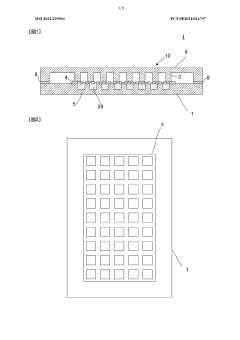
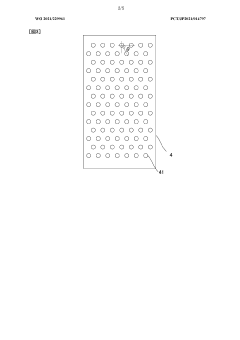
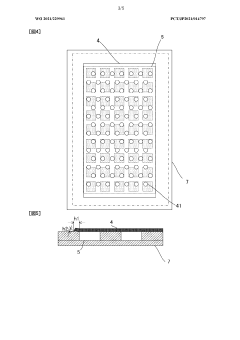
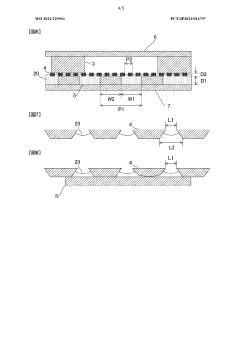
- A vapor chamber design featuring a housing with a microchannel and a wick, where the contact area between the wick and microchannel is 5% to 40% of the internal space, with specific dimensions and configurations to ensure optimal heat transfer and capillary force, including a phosphor copper solder joining member and materials with high thermal conductivity.
Vapor chamber heat spreaders and methods of manufacturng thereof
PatentInactiveUS20190014688A1
Innovation
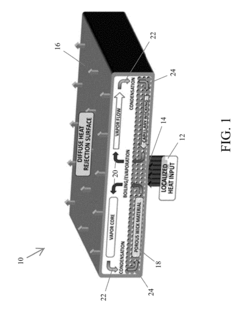
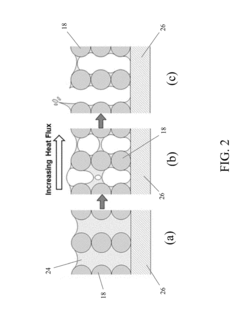
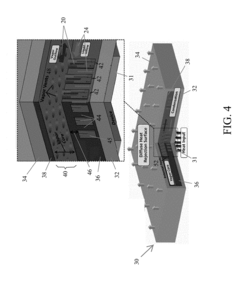
- A vapor chamber heat spreader design featuring a two-layer evaporator with a thin, ultra-thin powder wick base layer and a cap layer with through-holes for vapor vents, along with liquid-feeding posts that separate liquid feeding and vapor extraction pathways, allowing for capillary-fed boiling and efficient vapor removal, thereby reducing pressure drops and enhancing heat transfer.
Manufacturing Process Optimization for Vapor Chambers
Manufacturing process optimization for vapor chambers represents a critical pathway to achieving maximum heat spreading efficiency while maintaining cost-effectiveness and scalability. The fabrication of high-performance vapor chambers requires precise control over multiple manufacturing variables that directly impact thermal performance, structural integrity, and production yield.
The substrate preparation process forms the foundation of vapor chamber manufacturing optimization. Advanced surface treatment techniques, including chemical etching and laser texturing, enable the creation of micro-structured surfaces that enhance capillary action and nucleate boiling. Optimized etching parameters, such as etchant concentration, temperature, and exposure time, directly influence the formation of uniform microporous structures essential for efficient liquid transport and vapor generation.
Bonding technology represents another crucial manufacturing optimization area. Diffusion bonding processes require precise temperature and pressure control to achieve hermetic seals while preventing thermal distortion. Advanced vacuum brazing techniques utilizing specialized flux compositions enable lower processing temperatures, reducing substrate warpage and improving dimensional accuracy. The optimization of bonding parameters ensures minimal thermal resistance at interfaces while maintaining structural reliability under thermal cycling conditions.
Working fluid charging processes demand sophisticated optimization to achieve optimal fill ratios and fluid purity levels. Automated charging systems with real-time monitoring capabilities enable precise control over fluid quantity and distribution. Advanced degassing procedures, including multiple vacuum-purge cycles and controlled heating sequences, eliminate non-condensable gases that could impair thermal performance. The implementation of clean room environments and contamination control protocols ensures working fluid purity throughout the charging process.
Quality control integration throughout manufacturing processes enables real-time optimization and defect prevention. In-line thermal imaging systems monitor temperature uniformity during bonding operations, while leak detection systems verify hermetic seal integrity. Statistical process control methodologies identify optimal parameter windows and reduce manufacturing variability, ultimately improving thermal performance consistency across production batches.
The substrate preparation process forms the foundation of vapor chamber manufacturing optimization. Advanced surface treatment techniques, including chemical etching and laser texturing, enable the creation of micro-structured surfaces that enhance capillary action and nucleate boiling. Optimized etching parameters, such as etchant concentration, temperature, and exposure time, directly influence the formation of uniform microporous structures essential for efficient liquid transport and vapor generation.
Bonding technology represents another crucial manufacturing optimization area. Diffusion bonding processes require precise temperature and pressure control to achieve hermetic seals while preventing thermal distortion. Advanced vacuum brazing techniques utilizing specialized flux compositions enable lower processing temperatures, reducing substrate warpage and improving dimensional accuracy. The optimization of bonding parameters ensures minimal thermal resistance at interfaces while maintaining structural reliability under thermal cycling conditions.
Working fluid charging processes demand sophisticated optimization to achieve optimal fill ratios and fluid purity levels. Automated charging systems with real-time monitoring capabilities enable precise control over fluid quantity and distribution. Advanced degassing procedures, including multiple vacuum-purge cycles and controlled heating sequences, eliminate non-condensable gases that could impair thermal performance. The implementation of clean room environments and contamination control protocols ensures working fluid purity throughout the charging process.
Quality control integration throughout manufacturing processes enables real-time optimization and defect prevention. In-line thermal imaging systems monitor temperature uniformity during bonding operations, while leak detection systems verify hermetic seal integrity. Statistical process control methodologies identify optimal parameter windows and reduce manufacturing variability, ultimately improving thermal performance consistency across production batches.
Reliability and Durability Assessment of Optimized Designs
The reliability and durability assessment of optimized vapor chamber designs represents a critical evaluation phase that determines the long-term viability and commercial feasibility of enhanced heat spreading solutions. This assessment encompasses comprehensive testing protocols that simulate real-world operating conditions, including thermal cycling, mechanical stress, and environmental exposure scenarios that vapor chambers encounter throughout their operational lifecycle.
Thermal cycling tests constitute the primary reliability evaluation method, subjecting optimized designs to repeated heating and cooling cycles that replicate actual device usage patterns. These tests typically involve temperature ranges from ambient to maximum operating temperatures, with cycle frequencies designed to accelerate potential failure modes. The assessment focuses on identifying structural integrity issues, wick degradation, and working fluid stability under prolonged thermal stress conditions.
Mechanical durability evaluation examines the structural robustness of optimized vapor chamber configurations under various physical stresses. This includes vibration testing, shock resistance assessment, and pressure cycling evaluation to ensure that design modifications do not compromise the chamber's ability to withstand mechanical forces encountered during manufacturing, assembly, and end-use applications.
Long-term performance stability assessment monitors key thermal performance parameters over extended operational periods to identify gradual degradation patterns. This evaluation tracks thermal resistance changes, temperature uniformity variations, and heat transfer coefficient evolution to establish performance degradation curves and predict operational lifespan under different usage scenarios.
Environmental stress testing evaluates optimized designs under extreme conditions including humidity exposure, corrosive atmospheres, and temperature extremes beyond normal operating ranges. These tests identify potential material compatibility issues and assess the effectiveness of protective measures implemented in optimized designs.
Accelerated aging protocols compress years of operational stress into shortened testing periods, enabling rapid assessment of design modifications' impact on long-term reliability. These protocols combine multiple stress factors simultaneously to identify potential failure interactions and establish confidence intervals for design lifetime predictions under various operating conditions.
Thermal cycling tests constitute the primary reliability evaluation method, subjecting optimized designs to repeated heating and cooling cycles that replicate actual device usage patterns. These tests typically involve temperature ranges from ambient to maximum operating temperatures, with cycle frequencies designed to accelerate potential failure modes. The assessment focuses on identifying structural integrity issues, wick degradation, and working fluid stability under prolonged thermal stress conditions.
Mechanical durability evaluation examines the structural robustness of optimized vapor chamber configurations under various physical stresses. This includes vibration testing, shock resistance assessment, and pressure cycling evaluation to ensure that design modifications do not compromise the chamber's ability to withstand mechanical forces encountered during manufacturing, assembly, and end-use applications.
Long-term performance stability assessment monitors key thermal performance parameters over extended operational periods to identify gradual degradation patterns. This evaluation tracks thermal resistance changes, temperature uniformity variations, and heat transfer coefficient evolution to establish performance degradation curves and predict operational lifespan under different usage scenarios.
Environmental stress testing evaluates optimized designs under extreme conditions including humidity exposure, corrosive atmospheres, and temperature extremes beyond normal operating ranges. These tests identify potential material compatibility issues and assess the effectiveness of protective measures implemented in optimized designs.
Accelerated aging protocols compress years of operational stress into shortened testing periods, enabling rapid assessment of design modifications' impact on long-term reliability. These protocols combine multiple stress factors simultaneously to identify potential failure interactions and establish confidence intervals for design lifetime predictions under various operating conditions.
Unlock deeper insights with Patsnap Eureka Quick Research — get a full tech report to explore trends and direct your research. Try now!
Generate Your Research Report Instantly with AI Agent
Supercharge your innovation with Patsnap Eureka AI Agent Platform!