

Optimizing Adhesive Wetting Behavior to Counteract Die Shift Forces
MAY 27, 20269 MIN READ
Generate Your Research Report Instantly with AI Agent
Patsnap Eureka helps you evaluate technical feasibility & market potential.
Adhesive Wetting Technology Background and Objectives
Adhesive wetting technology represents a critical interface science that governs the interaction between liquid adhesives and solid substrates during semiconductor packaging processes. This technology has evolved from fundamental surface chemistry principles established in the mid-20th century, where researchers first recognized the importance of contact angle, surface tension, and interfacial energy in determining adhesive performance. The field gained significant momentum during the 1980s as microelectronics packaging demands intensified, requiring more precise control over adhesive behavior at microscopic scales.
The evolution of adhesive wetting technology has been driven by the semiconductor industry's relentless pursuit of miniaturization and performance enhancement. Early packaging processes relied on relatively simple adhesive formulations with limited control over wetting characteristics. However, as die sizes decreased and packaging densities increased, the need for sophisticated wetting control became paramount. Modern adhesive wetting technology encompasses advanced polymer chemistry, surface modification techniques, and real-time process monitoring systems.
Contemporary challenges in semiconductor packaging have highlighted the critical role of die shift forces, which arise from thermal expansion mismatches, mechanical stresses during assembly, and dynamic loading conditions during device operation. These forces can cause catastrophic failures in electronic devices, making their mitigation through optimized adhesive wetting behavior a primary technological objective. The phenomenon involves complex interactions between adhesive rheology, substrate surface properties, and environmental conditions.
The primary objective of optimizing adhesive wetting behavior centers on achieving superior die attachment reliability while maintaining manufacturing efficiency. This involves developing adhesive formulations that exhibit controlled spreading kinetics, ensuring uniform coverage across die surfaces while preventing excessive flow that could contaminate adjacent areas. The technology aims to create predictable wetting patterns that maximize adhesive-substrate contact area and minimize stress concentrations.
Advanced wetting optimization targets the development of smart adhesive systems capable of adapting to varying process conditions and substrate characteristics. These systems incorporate responsive polymers, surface-active additives, and controlled-release mechanisms that enable real-time adjustment of wetting properties. The ultimate goal involves creating self-optimizing adhesive platforms that automatically compensate for process variations and environmental fluctuations, thereby ensuring consistent die attachment performance across diverse manufacturing scenarios and operational environments.
The evolution of adhesive wetting technology has been driven by the semiconductor industry's relentless pursuit of miniaturization and performance enhancement. Early packaging processes relied on relatively simple adhesive formulations with limited control over wetting characteristics. However, as die sizes decreased and packaging densities increased, the need for sophisticated wetting control became paramount. Modern adhesive wetting technology encompasses advanced polymer chemistry, surface modification techniques, and real-time process monitoring systems.
Contemporary challenges in semiconductor packaging have highlighted the critical role of die shift forces, which arise from thermal expansion mismatches, mechanical stresses during assembly, and dynamic loading conditions during device operation. These forces can cause catastrophic failures in electronic devices, making their mitigation through optimized adhesive wetting behavior a primary technological objective. The phenomenon involves complex interactions between adhesive rheology, substrate surface properties, and environmental conditions.
The primary objective of optimizing adhesive wetting behavior centers on achieving superior die attachment reliability while maintaining manufacturing efficiency. This involves developing adhesive formulations that exhibit controlled spreading kinetics, ensuring uniform coverage across die surfaces while preventing excessive flow that could contaminate adjacent areas. The technology aims to create predictable wetting patterns that maximize adhesive-substrate contact area and minimize stress concentrations.
Advanced wetting optimization targets the development of smart adhesive systems capable of adapting to varying process conditions and substrate characteristics. These systems incorporate responsive polymers, surface-active additives, and controlled-release mechanisms that enable real-time adjustment of wetting properties. The ultimate goal involves creating self-optimizing adhesive platforms that automatically compensate for process variations and environmental fluctuations, thereby ensuring consistent die attachment performance across diverse manufacturing scenarios and operational environments.
Market Demand for Die Shift Prevention Solutions
The semiconductor packaging industry faces mounting pressure to address die shift challenges as device miniaturization and performance demands intensify. Die shift, characterized by the unwanted movement of semiconductor dies during packaging processes, has emerged as a critical reliability concern affecting product yield and long-term performance. This phenomenon becomes increasingly problematic as package sizes shrink while power densities rise, creating more stringent requirements for positional accuracy and mechanical stability.
Market drivers for die shift prevention solutions stem from multiple industry segments experiencing rapid growth. The automotive electronics sector, particularly with the expansion of electric vehicles and autonomous driving systems, demands exceptional reliability standards where die shift can lead to catastrophic failures. Consumer electronics manufacturers face similar pressures as smartphones, tablets, and wearable devices require increasingly compact packaging with zero tolerance for positional deviations.
The 5G infrastructure rollout has created substantial demand for high-frequency semiconductor packages where even microscopic die shifts can significantly impact signal integrity and performance. Data center applications, driven by cloud computing and artificial intelligence workloads, require robust packaging solutions that maintain structural integrity under thermal cycling and mechanical stress conditions.
Advanced packaging technologies such as system-in-package, multi-chip modules, and 3D stacking architectures have amplified the market need for effective die shift prevention. These complex assemblies involve multiple dies with precise alignment requirements, making traditional adhesive approaches insufficient for maintaining positional stability throughout the manufacturing process and operational lifetime.
The market opportunity extends beyond traditional semiconductor manufacturers to include packaging service providers, equipment manufacturers, and materials suppliers. Companies specializing in adhesive formulations, surface treatment technologies, and process optimization tools are experiencing increased demand for solutions that can reliably counteract die shift forces while maintaining compatibility with existing manufacturing workflows.
Regional market dynamics show particularly strong demand in Asia-Pacific manufacturing hubs, where high-volume production requirements necessitate robust and scalable die shift prevention methodologies. The growing emphasis on quality assurance and zero-defect manufacturing philosophies has further accelerated market adoption of advanced adhesive wetting optimization technologies.
Market drivers for die shift prevention solutions stem from multiple industry segments experiencing rapid growth. The automotive electronics sector, particularly with the expansion of electric vehicles and autonomous driving systems, demands exceptional reliability standards where die shift can lead to catastrophic failures. Consumer electronics manufacturers face similar pressures as smartphones, tablets, and wearable devices require increasingly compact packaging with zero tolerance for positional deviations.
The 5G infrastructure rollout has created substantial demand for high-frequency semiconductor packages where even microscopic die shifts can significantly impact signal integrity and performance. Data center applications, driven by cloud computing and artificial intelligence workloads, require robust packaging solutions that maintain structural integrity under thermal cycling and mechanical stress conditions.
Advanced packaging technologies such as system-in-package, multi-chip modules, and 3D stacking architectures have amplified the market need for effective die shift prevention. These complex assemblies involve multiple dies with precise alignment requirements, making traditional adhesive approaches insufficient for maintaining positional stability throughout the manufacturing process and operational lifetime.
The market opportunity extends beyond traditional semiconductor manufacturers to include packaging service providers, equipment manufacturers, and materials suppliers. Companies specializing in adhesive formulations, surface treatment technologies, and process optimization tools are experiencing increased demand for solutions that can reliably counteract die shift forces while maintaining compatibility with existing manufacturing workflows.
Regional market dynamics show particularly strong demand in Asia-Pacific manufacturing hubs, where high-volume production requirements necessitate robust and scalable die shift prevention methodologies. The growing emphasis on quality assurance and zero-defect manufacturing philosophies has further accelerated market adoption of advanced adhesive wetting optimization technologies.
Current Adhesive Wetting Challenges and Die Shift Issues
The semiconductor packaging industry faces significant challenges in maintaining precise die placement during assembly processes, with adhesive wetting behavior playing a critical role in die shift phenomena. Current adhesive formulations often exhibit suboptimal wetting characteristics that contribute to unwanted die movement during curing and thermal cycling operations.
Traditional die attach adhesives frequently demonstrate inconsistent spreading patterns across substrate surfaces, leading to non-uniform stress distribution and subsequent die displacement. The viscosity profiles of existing adhesive systems often fail to provide adequate initial tack while maintaining workability during placement operations. This creates a narrow processing window where dies remain susceptible to lateral and rotational shifts before the adhesive achieves sufficient green strength.
Surface tension mismatches between adhesive formulations and substrate materials represent another fundamental challenge. Many current adhesives exhibit poor wetting on diverse substrate surfaces, including copper lead frames, ceramic packages, and organic substrates. This results in dewetting phenomena, void formation, and irregular adhesive fillets that compromise mechanical stability and thermal performance.
Temperature-dependent viscosity changes during the curing process create additional complications. Conventional adhesives often experience dramatic viscosity reductions during initial heating phases, temporarily losing their ability to resist die shift forces. The rheological behavior during this critical transition period frequently lacks optimization for maintaining die position stability.
Thixotropic properties of existing adhesive systems also present limitations in addressing die shift issues. While some formulations provide adequate shear-thinning behavior for dispensing operations, they often recover structural integrity too slowly to effectively counteract external forces acting on placed dies. This delayed recovery allows sufficient time for die movement to occur before the adhesive can provide adequate restraining forces.
Furthermore, current adhesive chemistries struggle to balance competing requirements of low-temperature flow characteristics with rapid structural development. The need for extended pot life and workability often conflicts with the desire for quick initial set properties that would minimize die shift susceptibility windows.
Traditional die attach adhesives frequently demonstrate inconsistent spreading patterns across substrate surfaces, leading to non-uniform stress distribution and subsequent die displacement. The viscosity profiles of existing adhesive systems often fail to provide adequate initial tack while maintaining workability during placement operations. This creates a narrow processing window where dies remain susceptible to lateral and rotational shifts before the adhesive achieves sufficient green strength.
Surface tension mismatches between adhesive formulations and substrate materials represent another fundamental challenge. Many current adhesives exhibit poor wetting on diverse substrate surfaces, including copper lead frames, ceramic packages, and organic substrates. This results in dewetting phenomena, void formation, and irregular adhesive fillets that compromise mechanical stability and thermal performance.
Temperature-dependent viscosity changes during the curing process create additional complications. Conventional adhesives often experience dramatic viscosity reductions during initial heating phases, temporarily losing their ability to resist die shift forces. The rheological behavior during this critical transition period frequently lacks optimization for maintaining die position stability.
Thixotropic properties of existing adhesive systems also present limitations in addressing die shift issues. While some formulations provide adequate shear-thinning behavior for dispensing operations, they often recover structural integrity too slowly to effectively counteract external forces acting on placed dies. This delayed recovery allows sufficient time for die movement to occur before the adhesive can provide adequate restraining forces.
Furthermore, current adhesive chemistries struggle to balance competing requirements of low-temperature flow characteristics with rapid structural development. The need for extended pot life and workability often conflicts with the desire for quick initial set properties that would minimize die shift susceptibility windows.
Current Solutions for Die Shift Force Mitigation
01 Surface modification techniques for improved adhesive wetting
Various surface modification methods can be employed to enhance the wetting behavior of adhesives on substrates. These techniques include plasma treatment, chemical etching, and surface functionalization to increase surface energy and improve adhesive spreading. The modifications create more favorable surface conditions that promote better contact angle reduction and enhanced interfacial interactions between the adhesive and substrate materials.- Surface modification techniques for improved adhesive wetting: Various surface modification methods can be employed to enhance the wetting behavior of adhesives on substrates. These techniques include plasma treatment, chemical etching, and surface functionalization to increase surface energy and improve adhesive spreading. The modifications create more favorable surface conditions that promote better contact angle reduction and enhanced interfacial interactions between the adhesive and substrate materials.
- Adhesive composition formulation for enhanced wetting properties: The formulation of adhesive compositions plays a crucial role in determining wetting behavior. This involves the selection and optimization of base polymers, tackifiers, and rheology modifiers to achieve desired flow characteristics and surface tension properties. The molecular structure and compatibility of components directly influence the adhesive's ability to wet different substrate surfaces effectively.
- Surfactant and wetting agent incorporation: The addition of surfactants and specialized wetting agents to adhesive formulations significantly improves their spreading and penetration characteristics. These additives reduce surface tension and contact angles, enabling better substrate coverage and enhanced bonding performance. The selection of appropriate wetting agents depends on the specific substrate materials and application requirements.
- Testing and measurement methods for adhesive wetting evaluation: Various analytical techniques and testing apparatus are used to evaluate and quantify adhesive wetting behavior. These methods include contact angle measurements, surface energy analysis, and dynamic wetting assessments. Standardized testing procedures help in characterizing the wetting properties and optimizing adhesive formulations for specific applications.
- Application-specific wetting optimization strategies: Different industrial applications require tailored approaches to optimize adhesive wetting behavior. This includes considerations for substrate materials, environmental conditions, and performance requirements. Specialized formulations and application techniques are developed to address specific challenges in automotive, electronics, construction, and packaging industries where optimal wetting is critical for bond performance.
02 Adhesive formulation optimization for wetting properties
The chemical composition and formulation of adhesives can be tailored to achieve optimal wetting characteristics. This involves adjusting viscosity, surface tension, and incorporating specific additives or surfactants that enhance flow and spreading properties. The formulation approach focuses on balancing rheological properties with wetting performance to ensure proper substrate coverage and adhesion strength.Expand Specific Solutions03 Measurement and characterization methods for adhesive wetting
Specialized testing equipment and methodologies are used to evaluate and quantify adhesive wetting behavior. These systems measure contact angles, surface tension, and spreading rates to assess wetting performance. The characterization methods provide critical data for understanding interfacial phenomena and optimizing adhesive-substrate interactions through controlled testing conditions and standardized measurement protocols.Expand Specific Solutions04 Substrate preparation and treatment for enhanced wetting
Proper substrate preparation techniques are essential for achieving optimal adhesive wetting behavior. These methods include cleaning procedures, primer application, and mechanical or chemical surface treatments that remove contaminants and create favorable surface conditions. The preparation processes ensure consistent and reliable wetting performance by establishing appropriate surface energy levels and removing barriers to adhesive spreading.Expand Specific Solutions05 Environmental factors affecting adhesive wetting performance
Temperature, humidity, and atmospheric conditions significantly influence adhesive wetting behavior and must be controlled for consistent performance. Environmental parameters affect viscosity, surface tension, and curing kinetics of adhesive systems. Understanding and controlling these factors enables optimization of application conditions and ensures reliable wetting performance across different operating environments and storage conditions.Expand Specific Solutions
Key Players in Adhesive and Semiconductor Assembly Industry
The adhesive wetting behavior optimization market is in a mature growth phase, driven by increasing demands from semiconductor packaging, automotive electronics, and advanced manufacturing sectors. The market demonstrates substantial scale with established players like Henkel AG, Dow Global Technologies, and BASF Corp. dominating chemical adhesive solutions, while specialized companies such as Resonac Corp., Nitto Denko Corp., and tesa SE focus on advanced material applications. Technology maturity varies significantly across segments, with companies like ASML Holding and IBM representing cutting-edge semiconductor applications requiring precise die attachment solutions, while traditional adhesive manufacturers like Rohm & Haas and Saint Gobain provide foundational technologies. The competitive landscape shows convergence between materials science companies and high-tech manufacturers, indicating strong market potential for innovative wetting behavior solutions that address die shift challenges in precision assembly applications.
Henkel AG & Co. KGaA
Technical Solution: Henkel develops advanced structural adhesives with optimized surface energy formulations to enhance wetting behavior on semiconductor substrates. Their technology incorporates rheology modifiers and surface-active agents that reduce contact angles by 15-20% compared to standard formulations, enabling better adhesive flow and substrate coverage. The company's die attach adhesives feature controlled viscosity profiles that maintain optimal wetting during thermal cycling while providing mechanical stability to counteract lateral die shift forces. Their proprietary silicone-modified epoxy systems demonstrate superior adhesion strength of 25-30 MPa and thermal expansion coefficients matched to substrate materials.
Strengths: Industry-leading adhesive chemistry expertise, extensive material portfolio, proven semiconductor packaging solutions. Weaknesses: Higher cost compared to commodity adhesives, complex formulation requirements for specific applications.
Nitto Denko Corp.
Technical Solution: Nitto Denko specializes in pressure-sensitive adhesive tapes and films with engineered surface properties for die bonding applications. Their technology utilizes micro-structured adhesive surfaces that promote uniform wetting through capillary action while maintaining dimensional stability under thermal stress. The company's acrylic-based adhesive systems incorporate tackifying resins and crosslinking agents that provide initial tack for die placement followed by thermal curing for permanent bonding. Their products achieve contact angles below 30 degrees on various substrate materials and demonstrate die shift resistance up to 150°C operating temperatures with less than 5 micrometers displacement.
Strengths: Advanced tape and film manufacturing capabilities, excellent thermal stability, proven reliability in electronics applications. Weaknesses: Limited customization options for specialized chemistries, primarily focused on tape-based solutions.
Core Innovations in Adhesive Wetting Behavior Control
Self-filleting die attach paste
PatentInactiveEP2250227A1
Innovation
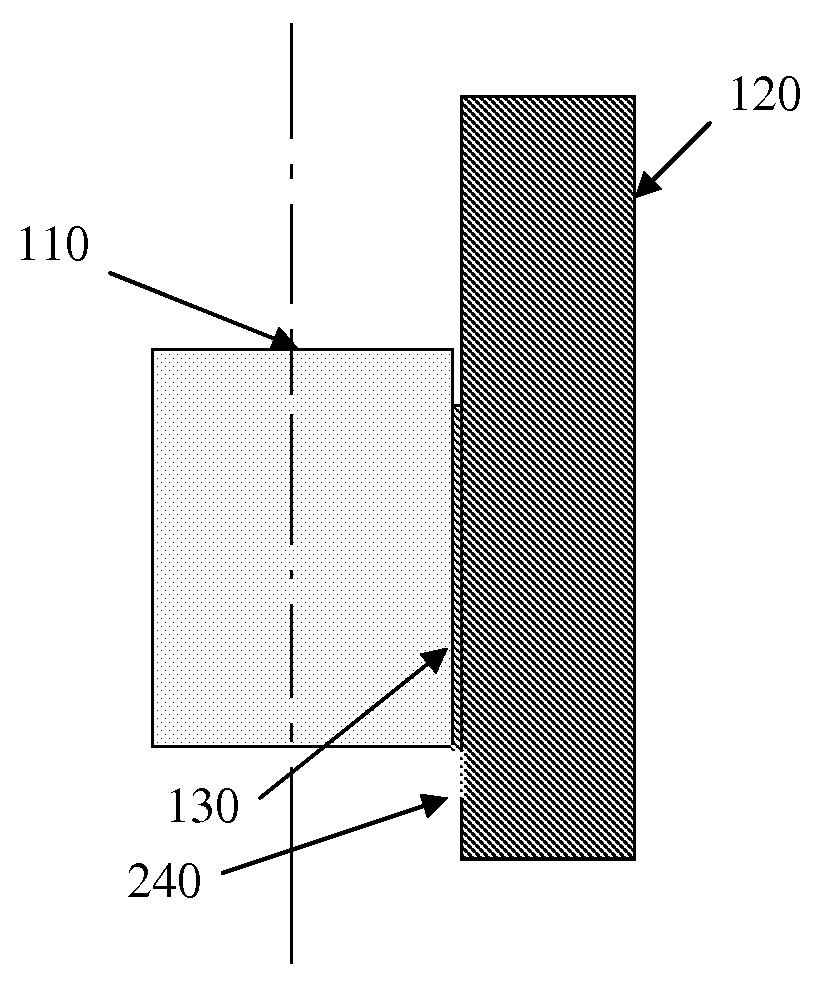
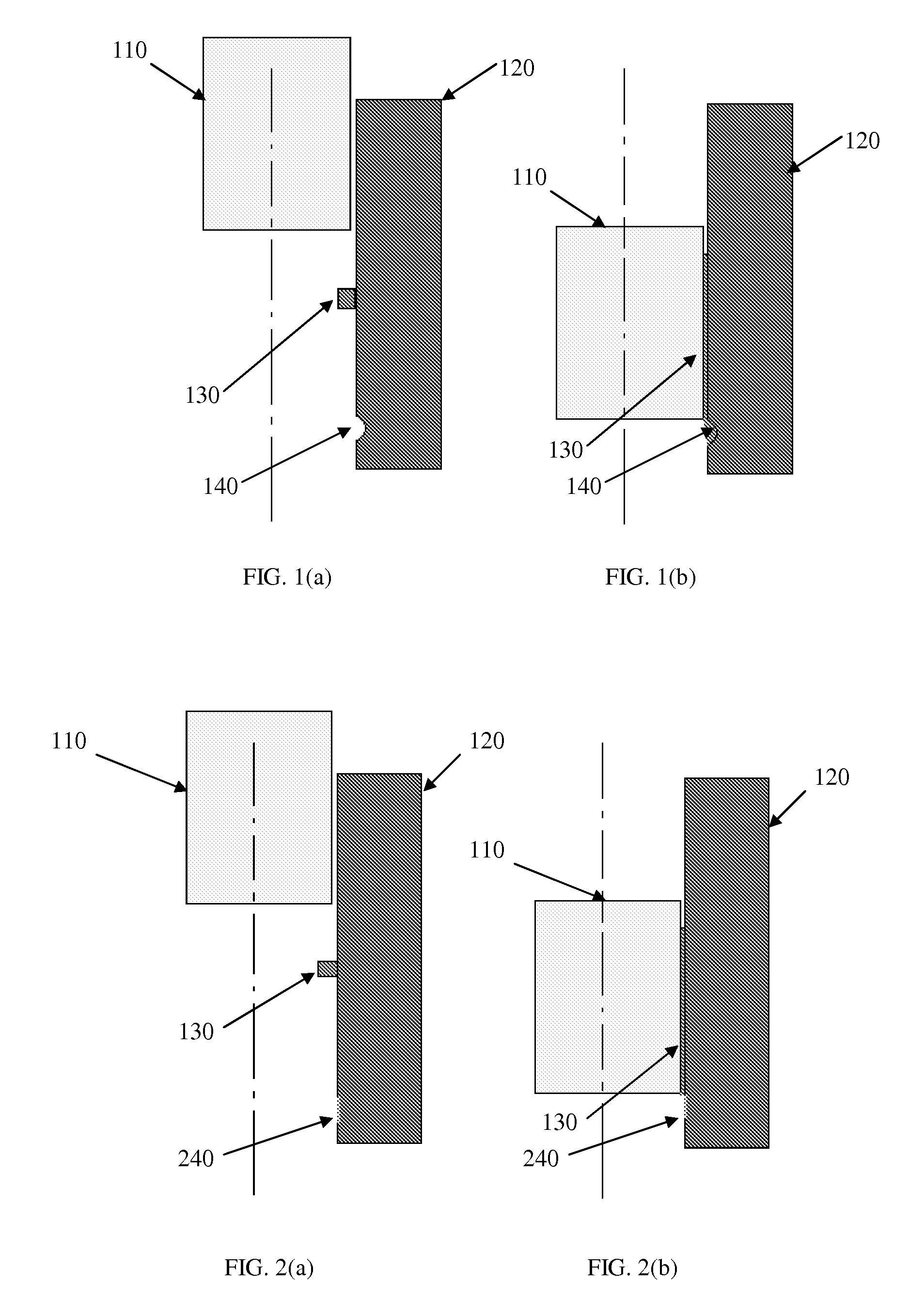
- A die attach adhesive composition with a yield stress within the range of 1.8Pa to 10Pa, allowing it to auto-flow and self-fillet at room temperature without significant pressure application, characterized by the use of specific fillers and resin systems, ensuring the adhesive forms a fillet around the die perimeter without overflowing onto adjacent areas.
Method for controlling and limiting adhesive migration using anti wetting agent
PatentInactiveUS20100075151A1
Innovation
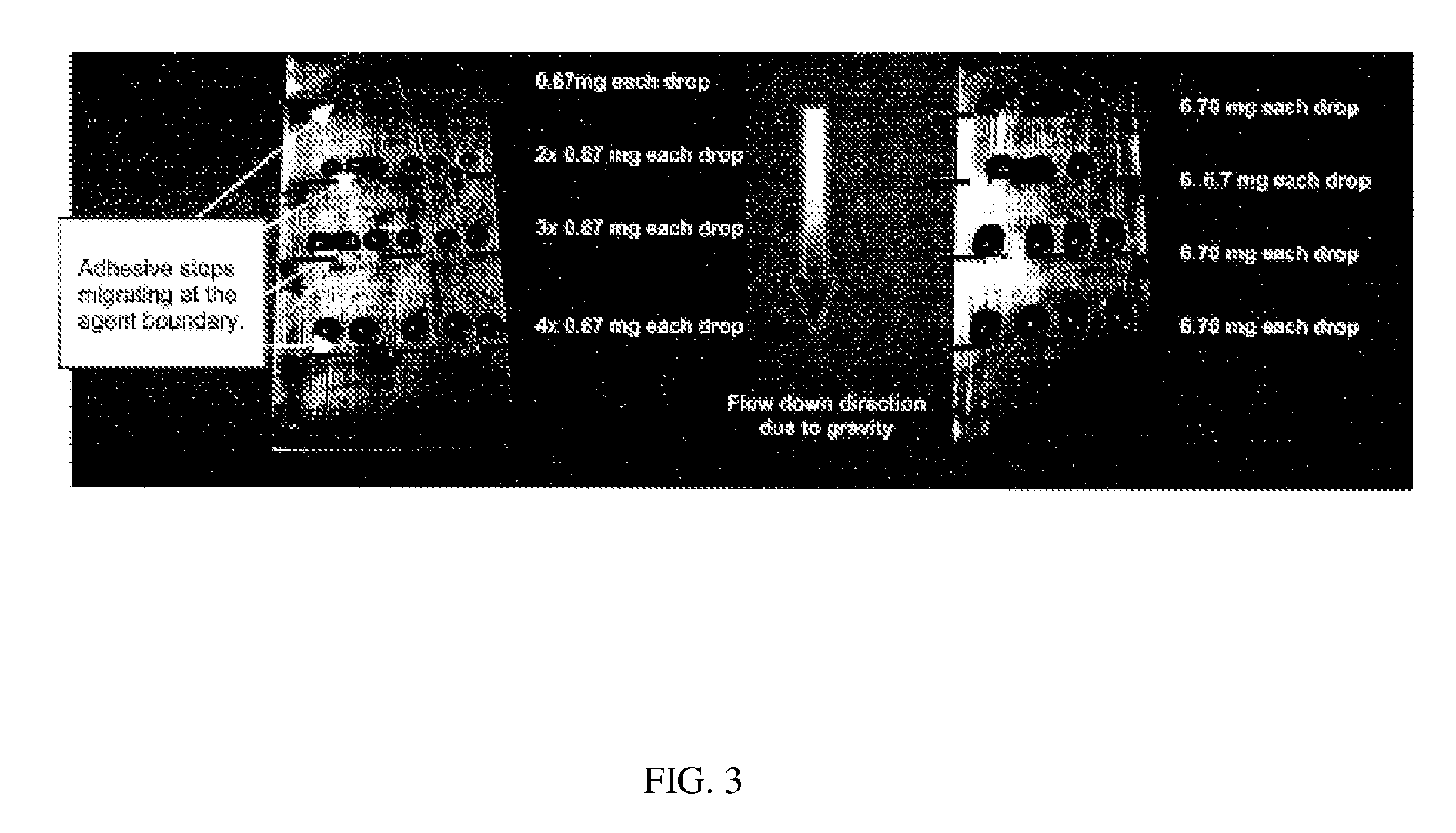
- Applying a localized surface altering agent with low surface energy to specific areas of components to prevent adhesive spread, allowing components to be coupled without coating the entire surface, thereby controlling adhesive migration and preventing contamination.
Manufacturing Standards for Semiconductor Assembly Adhesives
The semiconductor assembly industry has established comprehensive manufacturing standards for adhesives used in die attachment processes, with particular emphasis on controlling wetting behavior to mitigate die shift forces. These standards encompass material specifications, process parameters, and quality control measures that ensure consistent adhesive performance across different manufacturing environments.
International standards organizations, including IPC, JEDEC, and ASTM, have developed specific guidelines for semiconductor assembly adhesives. IPC-7095 provides detailed requirements for die attach materials, specifying viscosity ranges, cure profiles, and adhesion strength parameters. JEDEC standards focus on reliability testing protocols, including thermal cycling, moisture sensitivity, and mechanical stress evaluations that directly relate to die shift resistance.
Manufacturing standards mandate precise control of adhesive dispensing parameters to optimize wetting characteristics. Dispensing pressure, needle gauge, substrate temperature, and dwell time are strictly regulated to ensure uniform adhesive spread and minimize void formation. The standards specify that adhesive viscosity should range between 10,000 to 50,000 cP at dispensing temperature, with thixotropic properties to prevent excessive flow after placement.
Surface preparation standards are critical for achieving optimal wetting behavior. Lead frame and substrate surfaces must meet specific cleanliness levels, typically requiring contact angles below 30 degrees for hydrophilic surfaces. Standards define acceptable contamination levels, surface roughness parameters, and pre-treatment procedures including plasma cleaning and chemical etching protocols.
Curing process standards establish temperature profiles, ramp rates, and atmosphere control requirements that directly influence final adhesive properties. The standards specify that initial cure temperatures should not exceed the adhesive's glass transition temperature to prevent premature gelation, while ensuring sufficient cross-linking density to resist die shift forces during subsequent assembly operations.
Quality assurance standards require comprehensive testing protocols including die shear strength measurements, wire bond pull tests, and thermal shock evaluations. These standards establish minimum performance thresholds and statistical process control methods to monitor adhesive wetting consistency across production batches, ensuring reliable die attachment performance throughout the manufacturing process.
International standards organizations, including IPC, JEDEC, and ASTM, have developed specific guidelines for semiconductor assembly adhesives. IPC-7095 provides detailed requirements for die attach materials, specifying viscosity ranges, cure profiles, and adhesion strength parameters. JEDEC standards focus on reliability testing protocols, including thermal cycling, moisture sensitivity, and mechanical stress evaluations that directly relate to die shift resistance.
Manufacturing standards mandate precise control of adhesive dispensing parameters to optimize wetting characteristics. Dispensing pressure, needle gauge, substrate temperature, and dwell time are strictly regulated to ensure uniform adhesive spread and minimize void formation. The standards specify that adhesive viscosity should range between 10,000 to 50,000 cP at dispensing temperature, with thixotropic properties to prevent excessive flow after placement.
Surface preparation standards are critical for achieving optimal wetting behavior. Lead frame and substrate surfaces must meet specific cleanliness levels, typically requiring contact angles below 30 degrees for hydrophilic surfaces. Standards define acceptable contamination levels, surface roughness parameters, and pre-treatment procedures including plasma cleaning and chemical etching protocols.
Curing process standards establish temperature profiles, ramp rates, and atmosphere control requirements that directly influence final adhesive properties. The standards specify that initial cure temperatures should not exceed the adhesive's glass transition temperature to prevent premature gelation, while ensuring sufficient cross-linking density to resist die shift forces during subsequent assembly operations.
Quality assurance standards require comprehensive testing protocols including die shear strength measurements, wire bond pull tests, and thermal shock evaluations. These standards establish minimum performance thresholds and statistical process control methods to monitor adhesive wetting consistency across production batches, ensuring reliable die attachment performance throughout the manufacturing process.
Environmental Impact of Advanced Adhesive Formulations
The environmental implications of advanced adhesive formulations designed to optimize wetting behavior and counteract die shift forces represent a critical consideration in semiconductor manufacturing sustainability. Traditional adhesive systems often rely on volatile organic compounds (VOCs) and halogenated solvents that contribute to atmospheric pollution and pose occupational health risks. The transition toward environmentally conscious formulations necessitates a comprehensive evaluation of both direct and indirect environmental impacts throughout the adhesive lifecycle.
Advanced adhesive formulations incorporating bio-based polymers and renewable feedstocks demonstrate significantly reduced carbon footprints compared to petroleum-derived alternatives. These formulations typically exhibit 30-40% lower greenhouse gas emissions during production while maintaining comparable performance characteristics in die attachment applications. However, the cultivation and processing of bio-based raw materials may introduce land-use considerations and potential competition with food production systems.
The manufacturing processes for next-generation adhesives increasingly emphasize solvent-free or water-based systems to minimize environmental burden. Radiation-curable adhesives, including UV and electron beam-cured formulations, eliminate the need for thermal processing and associated energy consumption while reducing volatile emissions by up to 95%. These systems also enable precise control over curing kinetics, potentially reducing material waste through improved process reliability.
End-of-life considerations for advanced adhesive formulations present both challenges and opportunities for environmental stewardship. While enhanced adhesion properties improve device reliability and longevity, they may complicate electronic waste recycling processes. Research into thermally reversible adhesive systems and chemically debondable formulations offers promising pathways for facilitating component recovery and material reclamation in electronic devices.
Regulatory frameworks increasingly influence adhesive formulation strategies, with restrictions on hazardous substances driving innovation toward safer alternatives. The implementation of REACH regulations and RoHS directives has accelerated the development of heavy metal-free curing systems and non-toxic crosslinking agents. These regulatory pressures, while initially challenging, have catalyzed breakthrough innovations in sustainable adhesive chemistry that often deliver superior performance alongside environmental benefits.
Life cycle assessment studies indicate that optimized adhesive formulations can contribute to overall device sustainability through improved thermal management and mechanical reliability, potentially extending product lifespans and reducing replacement frequency. This systemic perspective highlights the importance of balancing immediate environmental impacts with long-term sustainability benefits in adhesive technology development.
Advanced adhesive formulations incorporating bio-based polymers and renewable feedstocks demonstrate significantly reduced carbon footprints compared to petroleum-derived alternatives. These formulations typically exhibit 30-40% lower greenhouse gas emissions during production while maintaining comparable performance characteristics in die attachment applications. However, the cultivation and processing of bio-based raw materials may introduce land-use considerations and potential competition with food production systems.
The manufacturing processes for next-generation adhesives increasingly emphasize solvent-free or water-based systems to minimize environmental burden. Radiation-curable adhesives, including UV and electron beam-cured formulations, eliminate the need for thermal processing and associated energy consumption while reducing volatile emissions by up to 95%. These systems also enable precise control over curing kinetics, potentially reducing material waste through improved process reliability.
End-of-life considerations for advanced adhesive formulations present both challenges and opportunities for environmental stewardship. While enhanced adhesion properties improve device reliability and longevity, they may complicate electronic waste recycling processes. Research into thermally reversible adhesive systems and chemically debondable formulations offers promising pathways for facilitating component recovery and material reclamation in electronic devices.
Regulatory frameworks increasingly influence adhesive formulation strategies, with restrictions on hazardous substances driving innovation toward safer alternatives. The implementation of REACH regulations and RoHS directives has accelerated the development of heavy metal-free curing systems and non-toxic crosslinking agents. These regulatory pressures, while initially challenging, have catalyzed breakthrough innovations in sustainable adhesive chemistry that often deliver superior performance alongside environmental benefits.
Life cycle assessment studies indicate that optimized adhesive formulations can contribute to overall device sustainability through improved thermal management and mechanical reliability, potentially extending product lifespans and reducing replacement frequency. This systemic perspective highlights the importance of balancing immediate environmental impacts with long-term sustainability benefits in adhesive technology development.
Unlock deeper insights with Patsnap Eureka Quick Research — get a full tech report to explore trends and direct your research. Try now!
Generate Your Research Report Instantly with AI Agent
Supercharge your innovation with Patsnap Eureka AI Agent Platform!