

Optimizing Boron Carbide Ceramic Matrix Composites for Aerospace
JUN 9, 20269 MIN READ
Generate Your Research Report Instantly with AI Agent
Patsnap Eureka helps you evaluate technical feasibility & market potential.
Boron Carbide Composite Development Background and Aerospace Goals
Boron carbide (B4C) ceramic matrix composites have emerged as critical materials in aerospace engineering due to their exceptional combination of ultra-high hardness, low density, and superior neutron absorption properties. The development of these advanced composites traces back to the 1960s when aerospace manufacturers first recognized the potential of ceramic materials to overcome the limitations of traditional metallic components in extreme operating environments.
The evolution of boron carbide composites has been driven by the aerospace industry's relentless pursuit of materials that can withstand increasingly demanding conditions while maintaining structural integrity. Early research focused on understanding the fundamental properties of boron carbide, which exhibits hardness values approaching those of diamond while maintaining significantly lower density compared to conventional aerospace alloys.
Throughout the 1980s and 1990s, significant breakthroughs occurred in processing techniques, including hot pressing, spark plasma sintering, and chemical vapor infiltration methods. These advances enabled the production of dense, high-performance composites with improved mechanical properties and reduced manufacturing costs. The integration of reinforcing phases such as silicon carbide fibers and carbon nanotubes further enhanced the composite's fracture toughness and thermal shock resistance.
Contemporary aerospace applications demand materials capable of operating in extreme temperature ranges, from cryogenic conditions in space environments to high-temperature zones near propulsion systems. Boron carbide composites address these challenges through their exceptional thermal stability, maintaining structural integrity at temperatures exceeding 2000°C while exhibiting minimal thermal expansion coefficients.
The primary aerospace goals for optimized boron carbide ceramic matrix composites encompass several critical performance metrics. Weight reduction remains paramount, as every kilogram saved in aerospace structures translates to significant fuel savings and increased payload capacity. These composites offer density advantages of 30-40% compared to traditional titanium alloys while providing superior specific strength and stiffness properties.
Radiation shielding capabilities represent another crucial objective, particularly for spacecraft and high-altitude aircraft operating in radiation-intensive environments. Boron carbide's exceptional neutron absorption cross-section makes it invaluable for protecting sensitive electronic systems and crew compartments from cosmic radiation and nuclear threats.
Enhanced durability and extended service life constitute additional strategic goals, as aerospace components must operate reliably for decades under cyclic loading conditions. The inherent chemical inertness and corrosion resistance of boron carbide composites contribute to reduced maintenance requirements and improved operational availability of aerospace platforms.
The evolution of boron carbide composites has been driven by the aerospace industry's relentless pursuit of materials that can withstand increasingly demanding conditions while maintaining structural integrity. Early research focused on understanding the fundamental properties of boron carbide, which exhibits hardness values approaching those of diamond while maintaining significantly lower density compared to conventional aerospace alloys.
Throughout the 1980s and 1990s, significant breakthroughs occurred in processing techniques, including hot pressing, spark plasma sintering, and chemical vapor infiltration methods. These advances enabled the production of dense, high-performance composites with improved mechanical properties and reduced manufacturing costs. The integration of reinforcing phases such as silicon carbide fibers and carbon nanotubes further enhanced the composite's fracture toughness and thermal shock resistance.
Contemporary aerospace applications demand materials capable of operating in extreme temperature ranges, from cryogenic conditions in space environments to high-temperature zones near propulsion systems. Boron carbide composites address these challenges through their exceptional thermal stability, maintaining structural integrity at temperatures exceeding 2000°C while exhibiting minimal thermal expansion coefficients.
The primary aerospace goals for optimized boron carbide ceramic matrix composites encompass several critical performance metrics. Weight reduction remains paramount, as every kilogram saved in aerospace structures translates to significant fuel savings and increased payload capacity. These composites offer density advantages of 30-40% compared to traditional titanium alloys while providing superior specific strength and stiffness properties.
Radiation shielding capabilities represent another crucial objective, particularly for spacecraft and high-altitude aircraft operating in radiation-intensive environments. Boron carbide's exceptional neutron absorption cross-section makes it invaluable for protecting sensitive electronic systems and crew compartments from cosmic radiation and nuclear threats.
Enhanced durability and extended service life constitute additional strategic goals, as aerospace components must operate reliably for decades under cyclic loading conditions. The inherent chemical inertness and corrosion resistance of boron carbide composites contribute to reduced maintenance requirements and improved operational availability of aerospace platforms.
Aerospace Market Demand for Advanced Ceramic Matrix Composites
The aerospace industry's demand for advanced ceramic matrix composites has experienced unprecedented growth driven by the sector's relentless pursuit of enhanced performance, fuel efficiency, and operational reliability. This surge in demand stems from the aerospace industry's fundamental need to reduce aircraft weight while maintaining or improving structural integrity and thermal resistance capabilities.
Commercial aviation represents the largest segment driving ceramic matrix composite adoption, with aircraft manufacturers increasingly incorporating these materials into critical engine components. The push toward more fuel-efficient aircraft has created substantial market pull for lightweight, high-temperature resistant materials that can withstand the extreme operating conditions of modern jet engines. Airlines' focus on reducing operational costs through improved fuel economy has translated into strong demand for advanced materials that enable higher operating temperatures and reduced component weight.
Military and defense applications constitute another significant demand driver, where performance requirements often supersede cost considerations. Advanced fighter jets, unmanned aerial vehicles, and missile systems require materials capable of operating under extreme thermal and mechanical stress conditions. The defense sector's emphasis on stealth capabilities and enhanced performance characteristics has created specific demand for ceramic matrix composites with tailored properties.
The space exploration sector has emerged as a high-value niche market for ceramic matrix composites, driven by missions requiring materials that can withstand the harsh environment of space while maintaining minimal weight penalties. Satellite manufacturers and space agencies increasingly specify advanced ceramic composites for thermal protection systems, propulsion components, and structural elements where traditional materials prove inadequate.
Market demand patterns reveal a strong preference for materials offering superior thermal shock resistance, oxidation resistance, and dimensional stability at elevated temperatures. End users consistently prioritize ceramic matrix composites that demonstrate proven reliability in critical applications while offering potential for cost reduction through improved manufacturing processes.
The growing emphasis on sustainable aviation fuels and next-generation propulsion systems has created additional demand for ceramic matrix composites capable of operating efficiently with alternative fuel chemistries and advanced engine architectures. This trend reflects the industry's long-term commitment to environmental sustainability while maintaining performance standards.
Regional demand variations show concentrated requirements in established aerospace manufacturing hubs, with emerging markets beginning to develop their own demand profiles as local aerospace capabilities expand. The market demonstrates strong correlation between regional aerospace industry maturity and ceramic matrix composite adoption rates.
Commercial aviation represents the largest segment driving ceramic matrix composite adoption, with aircraft manufacturers increasingly incorporating these materials into critical engine components. The push toward more fuel-efficient aircraft has created substantial market pull for lightweight, high-temperature resistant materials that can withstand the extreme operating conditions of modern jet engines. Airlines' focus on reducing operational costs through improved fuel economy has translated into strong demand for advanced materials that enable higher operating temperatures and reduced component weight.
Military and defense applications constitute another significant demand driver, where performance requirements often supersede cost considerations. Advanced fighter jets, unmanned aerial vehicles, and missile systems require materials capable of operating under extreme thermal and mechanical stress conditions. The defense sector's emphasis on stealth capabilities and enhanced performance characteristics has created specific demand for ceramic matrix composites with tailored properties.
The space exploration sector has emerged as a high-value niche market for ceramic matrix composites, driven by missions requiring materials that can withstand the harsh environment of space while maintaining minimal weight penalties. Satellite manufacturers and space agencies increasingly specify advanced ceramic composites for thermal protection systems, propulsion components, and structural elements where traditional materials prove inadequate.
Market demand patterns reveal a strong preference for materials offering superior thermal shock resistance, oxidation resistance, and dimensional stability at elevated temperatures. End users consistently prioritize ceramic matrix composites that demonstrate proven reliability in critical applications while offering potential for cost reduction through improved manufacturing processes.
The growing emphasis on sustainable aviation fuels and next-generation propulsion systems has created additional demand for ceramic matrix composites capable of operating efficiently with alternative fuel chemistries and advanced engine architectures. This trend reflects the industry's long-term commitment to environmental sustainability while maintaining performance standards.
Regional demand variations show concentrated requirements in established aerospace manufacturing hubs, with emerging markets beginning to develop their own demand profiles as local aerospace capabilities expand. The market demonstrates strong correlation between regional aerospace industry maturity and ceramic matrix composite adoption rates.
Current State and Challenges of Boron Carbide CMCs
Boron carbide ceramic matrix composites represent a critical frontier in aerospace materials engineering, yet their widespread adoption faces significant technological and manufacturing barriers. Currently, B4C-based CMCs demonstrate exceptional hardness, lightweight properties, and neutron absorption capabilities, making them theoretically ideal for aerospace applications including armor systems, structural components, and radiation shielding in space vehicles.
The manufacturing landscape reveals substantial challenges in achieving consistent material properties. Traditional processing methods such as hot pressing and spark plasma sintering often result in residual porosity levels exceeding 5-8%, significantly compromising mechanical performance. This porosity issue stems from the inherent difficulty in achieving complete densification due to boron carbide's covalent bonding structure and limited diffusion mechanisms at conventional sintering temperatures.
Fiber reinforcement integration presents another critical bottleneck. Current carbon fiber and silicon carbide fiber reinforcement systems exhibit compatibility issues with the boron carbide matrix, leading to weak interfacial bonding and premature failure under thermal cycling conditions typical in aerospace environments. The coefficient of thermal expansion mismatch between reinforcement fibers and the B4C matrix creates internal stresses that propagate microcracks during temperature fluctuations.
Geographically, research and development efforts are concentrated primarily in the United States, Japan, and select European nations, with limited industrial-scale production capabilities worldwide. This geographic concentration creates supply chain vulnerabilities and limits technology transfer opportunities for broader aerospace industry adoption.
Processing cost remains a prohibitive factor, with current manufacturing expenses exceeding conventional ceramic alternatives by 300-400%. The high-temperature processing requirements, specialized equipment needs, and lengthy production cycles contribute to economic barriers that prevent large-scale implementation in commercial aerospace applications.
Quality control and standardization represent additional hurdles. The absence of established aerospace certification standards for B4C CMCs creates regulatory uncertainty, while inconsistent material characterization methods across different manufacturers complicate performance validation and reliability assessment for critical aerospace applications.
The manufacturing landscape reveals substantial challenges in achieving consistent material properties. Traditional processing methods such as hot pressing and spark plasma sintering often result in residual porosity levels exceeding 5-8%, significantly compromising mechanical performance. This porosity issue stems from the inherent difficulty in achieving complete densification due to boron carbide's covalent bonding structure and limited diffusion mechanisms at conventional sintering temperatures.
Fiber reinforcement integration presents another critical bottleneck. Current carbon fiber and silicon carbide fiber reinforcement systems exhibit compatibility issues with the boron carbide matrix, leading to weak interfacial bonding and premature failure under thermal cycling conditions typical in aerospace environments. The coefficient of thermal expansion mismatch between reinforcement fibers and the B4C matrix creates internal stresses that propagate microcracks during temperature fluctuations.
Geographically, research and development efforts are concentrated primarily in the United States, Japan, and select European nations, with limited industrial-scale production capabilities worldwide. This geographic concentration creates supply chain vulnerabilities and limits technology transfer opportunities for broader aerospace industry adoption.
Processing cost remains a prohibitive factor, with current manufacturing expenses exceeding conventional ceramic alternatives by 300-400%. The high-temperature processing requirements, specialized equipment needs, and lengthy production cycles contribute to economic barriers that prevent large-scale implementation in commercial aerospace applications.
Quality control and standardization represent additional hurdles. The absence of established aerospace certification standards for B4C CMCs creates regulatory uncertainty, while inconsistent material characterization methods across different manufacturers complicate performance validation and reliability assessment for critical aerospace applications.
Existing Boron Carbide CMC Optimization Solutions
01 Manufacturing methods for boron carbide ceramic matrix composites
Various manufacturing techniques are employed to produce boron carbide ceramic matrix composites, including powder metallurgy, hot pressing, sintering, and infiltration processes. These methods focus on achieving optimal density, microstructure control, and mechanical properties through careful temperature and pressure management during fabrication.- Manufacturing methods for boron carbide ceramic matrix composites: Various manufacturing techniques are employed to produce boron carbide ceramic matrix composites, including powder metallurgy, hot pressing, sintering, and infiltration processes. These methods focus on achieving optimal density, microstructure control, and mechanical properties through careful temperature and pressure management during fabrication.
- Reinforcement strategies and fiber incorporation: Enhancement of boron carbide ceramic matrix composites through the incorporation of various reinforcing materials such as carbon fibers, silicon carbide fibers, and other ceramic reinforcements. These strategies aim to improve fracture toughness, thermal shock resistance, and overall mechanical performance of the composite materials.
- Surface treatment and coating technologies: Development of surface modification techniques and protective coatings for boron carbide ceramic matrix composites to enhance their performance in harsh environments. These treatments focus on improving oxidation resistance, wear properties, and interfacial bonding between matrix and reinforcement phases.
- Microstructure optimization and phase control: Advanced approaches for controlling the microstructure and phase composition of boron carbide ceramic matrix composites. This includes grain size control, porosity management, and the formation of beneficial secondary phases to achieve desired mechanical and thermal properties.
- Applications in armor and protective systems: Specialized formulations and designs of boron carbide ceramic matrix composites for ballistic protection and armor applications. These developments focus on maximizing energy absorption, impact resistance, and multi-hit capability while maintaining lightweight characteristics for defense and security applications.
02 Reinforcement strategies and fiber incorporation
Enhancement of boron carbide ceramic matrix composites through the incorporation of various reinforcing materials such as carbon fibers, silicon carbide fibers, or other ceramic fibers. These reinforcement strategies aim to improve fracture toughness, thermal shock resistance, and overall mechanical performance of the composite materials.Expand Specific Solutions03 Surface treatment and coating technologies
Development of surface modification techniques and protective coatings for boron carbide ceramic matrix composites to enhance their performance in specific applications. These treatments focus on improving oxidation resistance, wear resistance, and compatibility with other materials in composite systems.Expand Specific Solutions04 Additive manufacturing and advanced processing techniques
Implementation of modern manufacturing approaches including additive manufacturing, 3D printing, and other advanced processing methods for producing complex-shaped boron carbide ceramic matrix composites. These techniques enable the creation of intricate geometries and customized material properties for specialized applications.Expand Specific Solutions05 Applications in armor and high-temperature environments
Utilization of boron carbide ceramic matrix composites in demanding applications such as ballistic protection, armor systems, and high-temperature structural components. These applications leverage the material's exceptional hardness, lightweight properties, and thermal stability for defense and aerospace industries.Expand Specific Solutions
Key Players in Aerospace CMC and Boron Carbide Industry
The boron carbide ceramic matrix composites market for aerospace applications is in a mature development stage, driven by increasing demand for lightweight, high-temperature resistant materials in next-generation aircraft and space systems. The market demonstrates significant growth potential, valued at several hundred million dollars globally, with aerospace representing the fastest-growing segment. Technology maturity varies considerably across players, with established aerospace giants like RTX Corp., General Electric Company, and Safran Aircraft Engines leading commercial applications, while research institutions including Harbin Institute of Technology, Northwestern Polytechnical University, and Beihang University drive fundamental innovations. Specialized materials companies such as Free Form Fibers LLC and Element Six focus on advanced manufacturing processes, while emerging players like AECC Commercial Aircraft Engine Co. represent growing regional capabilities, creating a competitive landscape spanning from research-stage developments to production-ready solutions.
Harbin Institute of Technology
Technical Solution: Harbin Institute of Technology has developed comprehensive research programs for boron carbide ceramic matrix composites, focusing on fundamental material science and aerospace applications. Their approach involves studying fiber-matrix interface optimization, developing novel processing techniques including spark plasma sintering and hot pressing methods. The institute has achieved significant improvements in fracture toughness through controlled porosity and fiber orientation strategies. Their B4C-CMCs demonstrate enhanced mechanical properties with flexural strengths exceeding 400 MPa and improved thermal conductivity for aerospace thermal management applications. Research includes both experimental characterization and computational modeling of composite behavior under aerospace operating conditions.
Strengths: Strong fundamental research capabilities, advanced characterization facilities, cost-effective development approach. Weaknesses: Limited industrial manufacturing experience, challenges in technology transfer to commercial production.
General Electric Company
Technical Solution: GE has developed advanced boron carbide ceramic matrix composites (CMCs) for aerospace applications, focusing on high-temperature turbine components. Their approach involves fiber-reinforced boron carbide matrices with silicon carbide fibers, achieving operating temperatures up to 1600°C. The company utilizes chemical vapor infiltration (CVI) and polymer infiltration pyrolysis (PIP) processes to create dense, crack-resistant composites. GE's B4C-CMCs demonstrate exceptional neutron absorption properties while maintaining structural integrity, making them suitable for both commercial and military aerospace applications including jet engine hot sections and structural components.
Strengths: Extensive manufacturing capabilities, proven aerospace integration experience, high-temperature performance. Weaknesses: High production costs, complex manufacturing processes requiring specialized equipment.
Core Innovations in Boron Carbide Matrix Enhancement
A METHOD FOR PREPARING DENSE BORON CARBIDE (B4C)-SILICON CARBIDE (SiC) COMPOSITE MATERIAL AT LOW TEMPERATURE OF SINTERING
PatentInactiveIN202311023113A
Innovation
- The process involves spark plasma sintering of boron carbide and silicon carbide powders with aluminum oxide additives at a lower temperature of 1600°C, optimizing the sintering parameters and additive content to achieve near full density and higher fracture toughness, utilizing the formation of a liquid phase to enhance densification.


Boron carbide based ceramic matrix composites
PatentInactiveUS6855428B2
Innovation
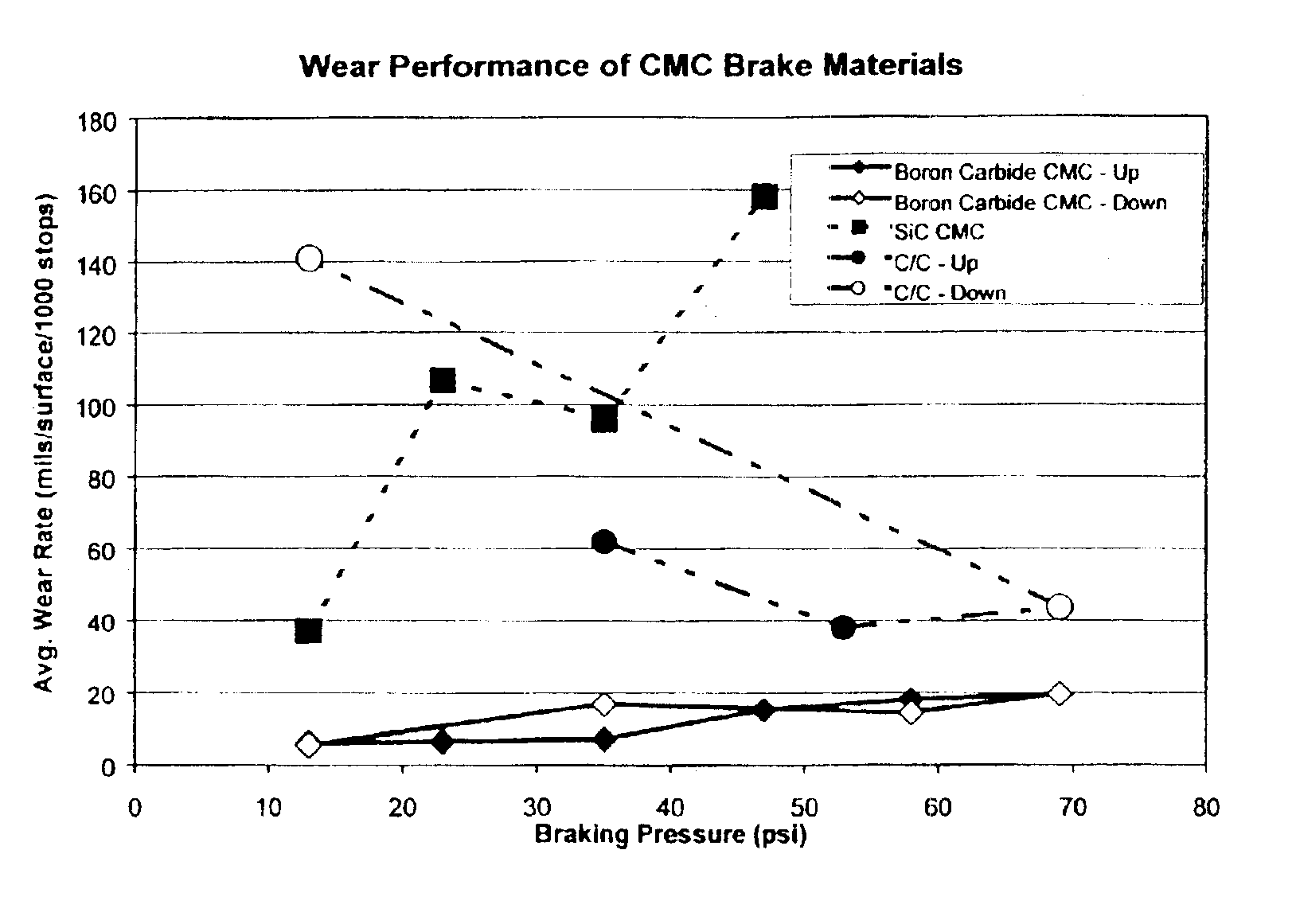
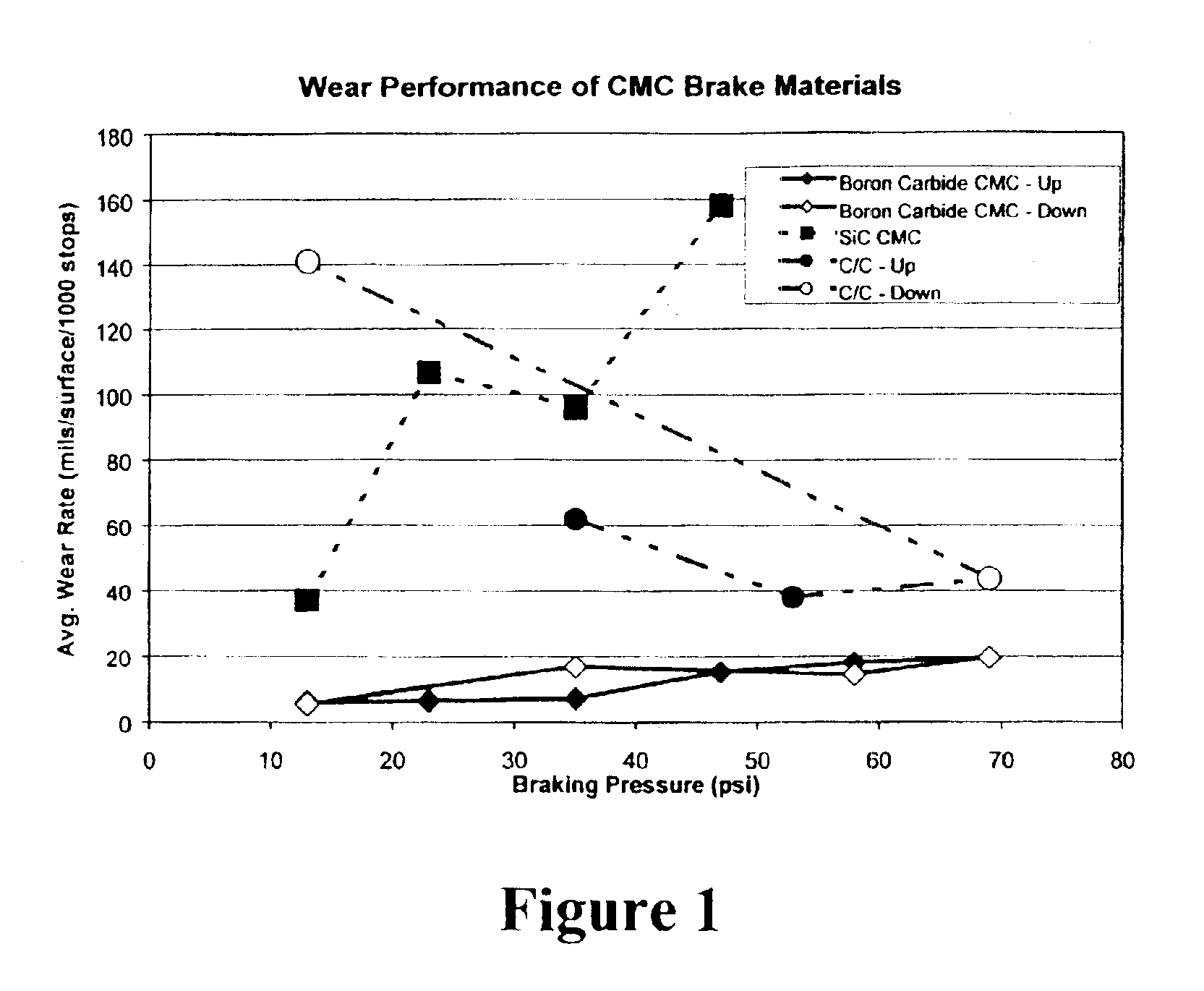
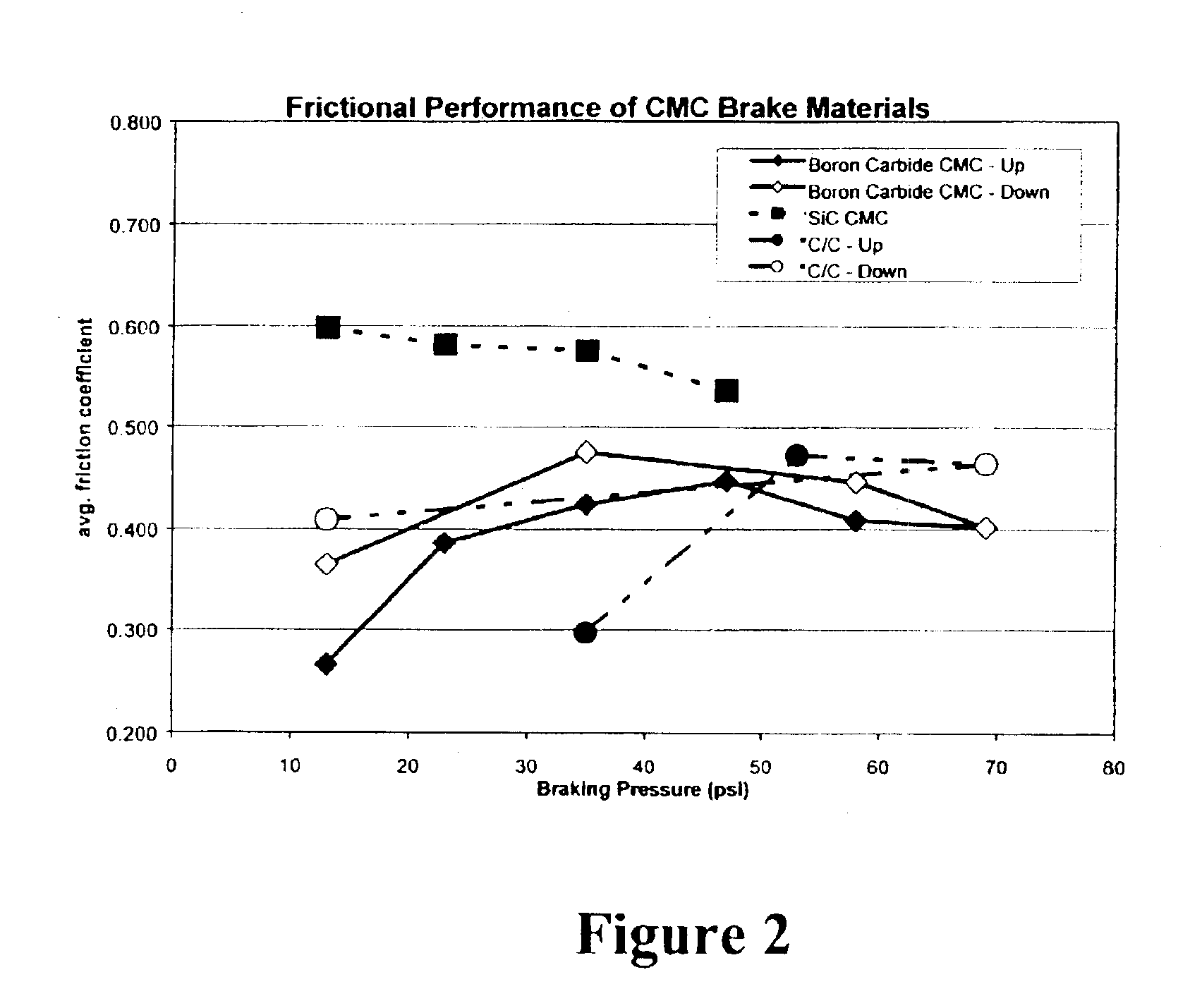
- A slurry cast, melt-infiltrated composite material is developed using submicron boron carbide particles and a silicon alloy matrix, with carbon fibers coated in elemental carbon and subsequently impregnated with boron carbide, to create a composite with a fine grain structure and reduced wear rates, avoiding the formation of large SiC crystals that cause high wear rates in SiC-based materials.

Aerospace Certification Standards for CMC Materials
Aerospace certification standards for ceramic matrix composite (CMC) materials represent a critical framework governing the qualification and deployment of boron carbide-based composites in aviation and space applications. The Federal Aviation Administration (FAA) and European Union Aviation Safety Agency (EASA) have established comprehensive certification protocols under regulations such as FAR Part 25 and CS-25, which mandate rigorous testing and validation procedures for advanced materials used in primary and secondary aircraft structures.
The certification process for boron carbide CMCs encompasses multiple testing phases, including material characterization, component-level validation, and full-scale structural testing. Key performance criteria include ultimate tensile strength exceeding 400 MPa, fracture toughness values above 15 MPa√m, and thermal stability up to 1200°C under oxidizing conditions. Additionally, materials must demonstrate consistent mechanical properties across temperature ranges from -55°C to operating maximums, with fatigue life requirements extending beyond 10^6 cycles under representative loading conditions.
Quality assurance protocols mandate statistical sampling procedures with confidence levels of 99.9% for critical applications. Non-destructive evaluation techniques, including ultrasonic inspection, computed tomography, and thermography, must detect defects larger than 1mm diameter with 95% probability of detection. Manufacturing process controls require documented procedures for fiber preform preparation, matrix infiltration, and post-processing heat treatments, with traceability maintained throughout the supply chain.
Environmental qualification standards address moisture absorption, thermal cycling, and chemical compatibility with aerospace fluids. Boron carbide CMCs must exhibit less than 0.1% weight gain after 1000-hour exposure to 85% relative humidity at 85°C. Fire resistance testing follows FAR 25.853 protocols, requiring self-extinguishing properties and minimal smoke generation. Long-term durability assessments span 20-year service life projections under combined mechanical, thermal, and environmental loading scenarios.
Certification documentation requirements include comprehensive material property databases, statistical analysis of test results, and failure mode assessments. Regulatory authorities mandate independent verification testing and ongoing surveillance programs to ensure continued airworthiness throughout operational service life.
The certification process for boron carbide CMCs encompasses multiple testing phases, including material characterization, component-level validation, and full-scale structural testing. Key performance criteria include ultimate tensile strength exceeding 400 MPa, fracture toughness values above 15 MPa√m, and thermal stability up to 1200°C under oxidizing conditions. Additionally, materials must demonstrate consistent mechanical properties across temperature ranges from -55°C to operating maximums, with fatigue life requirements extending beyond 10^6 cycles under representative loading conditions.
Quality assurance protocols mandate statistical sampling procedures with confidence levels of 99.9% for critical applications. Non-destructive evaluation techniques, including ultrasonic inspection, computed tomography, and thermography, must detect defects larger than 1mm diameter with 95% probability of detection. Manufacturing process controls require documented procedures for fiber preform preparation, matrix infiltration, and post-processing heat treatments, with traceability maintained throughout the supply chain.
Environmental qualification standards address moisture absorption, thermal cycling, and chemical compatibility with aerospace fluids. Boron carbide CMCs must exhibit less than 0.1% weight gain after 1000-hour exposure to 85% relative humidity at 85°C. Fire resistance testing follows FAR 25.853 protocols, requiring self-extinguishing properties and minimal smoke generation. Long-term durability assessments span 20-year service life projections under combined mechanical, thermal, and environmental loading scenarios.
Certification documentation requirements include comprehensive material property databases, statistical analysis of test results, and failure mode assessments. Regulatory authorities mandate independent verification testing and ongoing surveillance programs to ensure continued airworthiness throughout operational service life.
Environmental Impact of Boron Carbide CMC Manufacturing
The manufacturing of boron carbide ceramic matrix composites for aerospace applications presents significant environmental considerations that must be carefully evaluated throughout the production lifecycle. The synthesis of boron carbide powder, typically achieved through carbothermal reduction of boron oxide and carbon at temperatures exceeding 2000°C, generates substantial carbon dioxide emissions and requires intensive energy consumption. Alternative production methods, such as direct reaction between boron and carbon or chemical vapor deposition, also demand high-temperature processing that contributes to the overall carbon footprint of the manufacturing process.
Raw material extraction and processing constitute another critical environmental impact factor. Boron mining operations, primarily concentrated in Turkey and the United States, involve significant land disturbance and water consumption. The purification of boron compounds requires chemical processing that generates industrial wastewater containing boron residues, which must be carefully managed to prevent environmental contamination. Additionally, the carbon sources used in boron carbide synthesis, whether petroleum coke or other carbonaceous materials, contribute to the overall environmental burden through their extraction and processing requirements.
The composite fabrication process introduces additional environmental challenges through the use of polymer infiltration and pyrolysis techniques. Preceramic polymers, commonly employed as matrix precursors, often contain silicon-based compounds that require careful handling and disposal protocols. The pyrolysis step, necessary for converting polymer matrices to ceramic phases, releases volatile organic compounds and requires controlled atmospheric conditions, typically involving inert gases that add to processing costs and environmental considerations.
Energy intensity represents a paramount concern throughout boron carbide CMC manufacturing. The high-temperature sintering processes, often conducted under protective atmospheres or vacuum conditions, demand substantial electrical energy input. Hot pressing and spark plasma sintering techniques, while offering improved densification, require specialized equipment with high power consumption. The cumulative energy requirements for achieving the necessary microstructural properties and mechanical performance standards significantly impact the environmental sustainability of these advanced materials.
Waste generation and recycling challenges further complicate the environmental profile of boron carbide CMC production. Machining operations generate ceramic dust that requires specialized collection and disposal methods due to potential health hazards. The inherent chemical stability of boron carbide, while advantageous for aerospace applications, presents difficulties for end-of-life recycling and material recovery, potentially leading to long-term waste accumulation issues that must be addressed through innovative circular economy approaches.
Raw material extraction and processing constitute another critical environmental impact factor. Boron mining operations, primarily concentrated in Turkey and the United States, involve significant land disturbance and water consumption. The purification of boron compounds requires chemical processing that generates industrial wastewater containing boron residues, which must be carefully managed to prevent environmental contamination. Additionally, the carbon sources used in boron carbide synthesis, whether petroleum coke or other carbonaceous materials, contribute to the overall environmental burden through their extraction and processing requirements.
The composite fabrication process introduces additional environmental challenges through the use of polymer infiltration and pyrolysis techniques. Preceramic polymers, commonly employed as matrix precursors, often contain silicon-based compounds that require careful handling and disposal protocols. The pyrolysis step, necessary for converting polymer matrices to ceramic phases, releases volatile organic compounds and requires controlled atmospheric conditions, typically involving inert gases that add to processing costs and environmental considerations.
Energy intensity represents a paramount concern throughout boron carbide CMC manufacturing. The high-temperature sintering processes, often conducted under protective atmospheres or vacuum conditions, demand substantial electrical energy input. Hot pressing and spark plasma sintering techniques, while offering improved densification, require specialized equipment with high power consumption. The cumulative energy requirements for achieving the necessary microstructural properties and mechanical performance standards significantly impact the environmental sustainability of these advanced materials.
Waste generation and recycling challenges further complicate the environmental profile of boron carbide CMC production. Machining operations generate ceramic dust that requires specialized collection and disposal methods due to potential health hazards. The inherent chemical stability of boron carbide, while advantageous for aerospace applications, presents difficulties for end-of-life recycling and material recovery, potentially leading to long-term waste accumulation issues that must be addressed through innovative circular economy approaches.
Unlock deeper insights with Patsnap Eureka Quick Research — get a full tech report to explore trends and direct your research. Try now!
Generate Your Research Report Instantly with AI Agent
Supercharge your innovation with Patsnap Eureka AI Agent Platform!