
Optimizing Camshaft Weight for Fuel Efficiency
FEB 28, 20269 MIN READ
Generate Your Research Report Instantly with AI Agent
Patsnap Eureka helps you evaluate technical feasibility & market potential.
Camshaft Weight Optimization Background and Objectives
The automotive industry has undergone significant transformation over the past decades, driven by increasingly stringent environmental regulations and rising fuel costs. Engine efficiency optimization has emerged as a critical focus area, with manufacturers exploring every component's potential contribution to overall vehicle performance. The camshaft, as a fundamental component of internal combustion engines, plays a pivotal role in controlling valve timing and duration, directly impacting engine breathing characteristics and combustion efficiency.
Historically, camshaft design prioritized durability and performance over weight considerations. Traditional cast iron camshafts, while robust and cost-effective, contribute significantly to engine mass and rotational inertia. The evolution toward lightweight materials and optimized geometries represents a paradigm shift in engine design philosophy, where every gram reduction translates to measurable fuel economy improvements.
The technical evolution of camshaft weight optimization spans several decades, beginning with material substitution initiatives in the 1980s and progressing through advanced manufacturing techniques in the 2000s. Early efforts focused on hollow camshaft designs and aluminum alternatives, while contemporary approaches leverage advanced steel alloys, precision machining, and computer-aided optimization algorithms to achieve optimal weight-to-strength ratios.
Current market pressures intensify the urgency for camshaft weight reduction. Corporate Average Fuel Economy standards continue to tighten globally, with targets reaching 40.5 mpg by 2026 in the United States and similar aggressive targets in European and Asian markets. These regulatory frameworks create compelling business cases for component-level optimization initiatives, where camshaft weight reduction contributes to overall vehicle lightweighting strategies.
The primary objective of camshaft weight optimization centers on achieving maximum mass reduction while maintaining structural integrity, wear resistance, and manufacturing feasibility. Secondary objectives include minimizing rotational inertia to improve engine response characteristics, reducing bearing loads to enhance durability, and enabling downsizing opportunities for supporting components such as timing chains and tensioners.
Technical targets typically aim for 15-30% weight reduction compared to conventional designs, with specific goals varying based on engine architecture and application requirements. These objectives must be balanced against cost constraints, manufacturing complexity, and long-term reliability requirements, creating a multi-dimensional optimization challenge that demands sophisticated engineering approaches and comprehensive validation methodologies.
Historically, camshaft design prioritized durability and performance over weight considerations. Traditional cast iron camshafts, while robust and cost-effective, contribute significantly to engine mass and rotational inertia. The evolution toward lightweight materials and optimized geometries represents a paradigm shift in engine design philosophy, where every gram reduction translates to measurable fuel economy improvements.
The technical evolution of camshaft weight optimization spans several decades, beginning with material substitution initiatives in the 1980s and progressing through advanced manufacturing techniques in the 2000s. Early efforts focused on hollow camshaft designs and aluminum alternatives, while contemporary approaches leverage advanced steel alloys, precision machining, and computer-aided optimization algorithms to achieve optimal weight-to-strength ratios.
Current market pressures intensify the urgency for camshaft weight reduction. Corporate Average Fuel Economy standards continue to tighten globally, with targets reaching 40.5 mpg by 2026 in the United States and similar aggressive targets in European and Asian markets. These regulatory frameworks create compelling business cases for component-level optimization initiatives, where camshaft weight reduction contributes to overall vehicle lightweighting strategies.
The primary objective of camshaft weight optimization centers on achieving maximum mass reduction while maintaining structural integrity, wear resistance, and manufacturing feasibility. Secondary objectives include minimizing rotational inertia to improve engine response characteristics, reducing bearing loads to enhance durability, and enabling downsizing opportunities for supporting components such as timing chains and tensioners.
Technical targets typically aim for 15-30% weight reduction compared to conventional designs, with specific goals varying based on engine architecture and application requirements. These objectives must be balanced against cost constraints, manufacturing complexity, and long-term reliability requirements, creating a multi-dimensional optimization challenge that demands sophisticated engineering approaches and comprehensive validation methodologies.
Market Demand for Fuel-Efficient Engine Components
The global automotive industry is experiencing unprecedented pressure to improve fuel efficiency across all vehicle segments, driven by increasingly stringent environmental regulations and rising consumer awareness of fuel costs. This regulatory landscape has created substantial market demand for lightweight engine components, with camshafts representing a critical optimization target due to their continuous rotational operation and direct impact on engine efficiency.
Market research indicates that fuel-efficient engine components constitute one of the fastest-growing segments within the automotive parts industry. The demand is particularly pronounced in regions with strict emissions standards, including Europe, North America, and parts of Asia-Pacific. Automotive manufacturers are actively seeking suppliers who can deliver components that contribute measurably to overall vehicle fuel economy improvements.
The commercial vehicle segment demonstrates especially strong demand for optimized camshaft solutions, as fleet operators prioritize fuel cost reduction over extended operational periods. Heavy-duty truck manufacturers are increasingly specifying lightweight camshaft designs as standard equipment, recognizing the cumulative fuel savings potential across vehicle lifecycles. Similarly, the passenger vehicle market shows growing preference for engines incorporating weight-optimized components.
Supply chain analysis reveals that tier-one automotive suppliers are investing heavily in advanced materials and manufacturing processes specifically to address camshaft weight optimization requirements. The market is witnessing increased adoption of hollow camshaft designs, advanced steel alloys, and precision manufacturing techniques that maintain structural integrity while reducing component mass.
Economic factors further amplify market demand, as fuel price volatility continues to influence purchasing decisions across both commercial and consumer segments. Fleet management companies report that fuel efficiency improvements of even small percentages translate to significant operational cost savings, creating strong economic incentives for adopting optimized engine components.
The aftermarket segment also presents substantial opportunities, as vehicle owners seek retrofit solutions to improve fuel economy in existing vehicles. This secondary market demand extends the commercial viability of camshaft optimization technologies beyond original equipment applications, creating multiple revenue streams for component manufacturers and technology developers.
Market research indicates that fuel-efficient engine components constitute one of the fastest-growing segments within the automotive parts industry. The demand is particularly pronounced in regions with strict emissions standards, including Europe, North America, and parts of Asia-Pacific. Automotive manufacturers are actively seeking suppliers who can deliver components that contribute measurably to overall vehicle fuel economy improvements.
The commercial vehicle segment demonstrates especially strong demand for optimized camshaft solutions, as fleet operators prioritize fuel cost reduction over extended operational periods. Heavy-duty truck manufacturers are increasingly specifying lightweight camshaft designs as standard equipment, recognizing the cumulative fuel savings potential across vehicle lifecycles. Similarly, the passenger vehicle market shows growing preference for engines incorporating weight-optimized components.
Supply chain analysis reveals that tier-one automotive suppliers are investing heavily in advanced materials and manufacturing processes specifically to address camshaft weight optimization requirements. The market is witnessing increased adoption of hollow camshaft designs, advanced steel alloys, and precision manufacturing techniques that maintain structural integrity while reducing component mass.
Economic factors further amplify market demand, as fuel price volatility continues to influence purchasing decisions across both commercial and consumer segments. Fleet management companies report that fuel efficiency improvements of even small percentages translate to significant operational cost savings, creating strong economic incentives for adopting optimized engine components.
The aftermarket segment also presents substantial opportunities, as vehicle owners seek retrofit solutions to improve fuel economy in existing vehicles. This secondary market demand extends the commercial viability of camshaft optimization technologies beyond original equipment applications, creating multiple revenue streams for component manufacturers and technology developers.
Current Camshaft Design Challenges and Weight Issues
Modern camshaft design faces significant challenges in balancing performance requirements with weight optimization objectives. Traditional cast iron camshafts, while providing excellent durability and wear resistance, contribute substantially to overall engine weight. The inherent density of cast iron, approximately 7.2 g/cm³, creates a fundamental constraint for weight-sensitive applications where every gram impacts fuel efficiency metrics.
Manufacturing constraints present another critical challenge in camshaft weight optimization. Conventional manufacturing processes, including casting and machining, limit design flexibility in creating complex internal geometries that could reduce material usage without compromising structural integrity. The requirement for precise cam lobe profiles and bearing surfaces restricts the ability to implement aggressive weight reduction strategies through material removal or hollow construction.
Material selection represents a complex trade-off between weight reduction and functional performance. While aluminum alloys offer significant weight savings with densities around 2.7 g/cm³, they present challenges in wear resistance and thermal expansion characteristics. Steel alternatives provide better mechanical properties than aluminum but still carry weight penalties compared to advanced composite materials, which face their own limitations in high-temperature engine environments.
Thermal management issues compound weight optimization challenges. Camshafts must dissipate heat generated through friction and combustion chamber exposure while maintaining dimensional stability. Lightweight materials often exhibit different thermal expansion coefficients compared to surrounding engine components, potentially creating clearance issues and affecting valve timing precision. This thermal behavior constraint limits material choices and design modifications.
Durability requirements create additional weight optimization barriers. Camshafts endure millions of loading cycles throughout their operational life, requiring robust construction to prevent fatigue failures. The need for adequate material thickness at stress concentration points, particularly around cam lobes and bearing journals, conflicts with aggressive weight reduction goals. Surface hardening treatments, while improving wear resistance, add processing complexity and may limit material options.
Cost considerations significantly influence camshaft weight optimization strategies. Advanced lightweight materials and manufacturing processes typically carry higher costs compared to traditional approaches. The automotive industry's cost-sensitive nature requires weight reduction solutions to demonstrate clear return on investment through fuel efficiency improvements, creating economic constraints on innovative design approaches.
Integration challenges with existing engine architectures further complicate weight optimization efforts. Camshaft modifications must maintain compatibility with established valve train components, timing systems, and lubrication networks. These integration requirements often prevent radical design changes that could achieve substantial weight reductions but would necessitate comprehensive engine redesign.
Manufacturing constraints present another critical challenge in camshaft weight optimization. Conventional manufacturing processes, including casting and machining, limit design flexibility in creating complex internal geometries that could reduce material usage without compromising structural integrity. The requirement for precise cam lobe profiles and bearing surfaces restricts the ability to implement aggressive weight reduction strategies through material removal or hollow construction.
Material selection represents a complex trade-off between weight reduction and functional performance. While aluminum alloys offer significant weight savings with densities around 2.7 g/cm³, they present challenges in wear resistance and thermal expansion characteristics. Steel alternatives provide better mechanical properties than aluminum but still carry weight penalties compared to advanced composite materials, which face their own limitations in high-temperature engine environments.
Thermal management issues compound weight optimization challenges. Camshafts must dissipate heat generated through friction and combustion chamber exposure while maintaining dimensional stability. Lightweight materials often exhibit different thermal expansion coefficients compared to surrounding engine components, potentially creating clearance issues and affecting valve timing precision. This thermal behavior constraint limits material choices and design modifications.
Durability requirements create additional weight optimization barriers. Camshafts endure millions of loading cycles throughout their operational life, requiring robust construction to prevent fatigue failures. The need for adequate material thickness at stress concentration points, particularly around cam lobes and bearing journals, conflicts with aggressive weight reduction goals. Surface hardening treatments, while improving wear resistance, add processing complexity and may limit material options.
Cost considerations significantly influence camshaft weight optimization strategies. Advanced lightweight materials and manufacturing processes typically carry higher costs compared to traditional approaches. The automotive industry's cost-sensitive nature requires weight reduction solutions to demonstrate clear return on investment through fuel efficiency improvements, creating economic constraints on innovative design approaches.
Integration challenges with existing engine architectures further complicate weight optimization efforts. Camshaft modifications must maintain compatibility with established valve train components, timing systems, and lubrication networks. These integration requirements often prevent radical design changes that could achieve substantial weight reductions but would necessitate comprehensive engine redesign.
Existing Camshaft Weight Reduction Solutions
01 Lightweight camshaft construction using hollow design
Camshafts can be designed with hollow internal structures to significantly reduce weight while maintaining structural integrity and performance. This approach involves creating tubular or hollow shaft bodies that reduce material usage and overall mass. The hollow design can be achieved through various manufacturing methods including casting, machining, or assembly of tubular components. This weight reduction technique is particularly beneficial for improving engine efficiency and reducing rotational inertia.- Lightweight camshaft construction using hollow design: Camshafts can be manufactured with hollow internal structures to significantly reduce weight while maintaining structural integrity and performance. This approach involves creating tubular or hollow shaft bodies through various manufacturing processes, which reduces the overall mass of the camshaft assembly without compromising strength or durability. The hollow design allows for material savings and improved fuel efficiency in engine applications.
- Use of lightweight materials and composite structures: Advanced lightweight materials such as aluminum alloys, composite materials, or specialized steel alloys can be employed in camshaft construction to reduce weight. These materials offer favorable strength-to-weight ratios and can be engineered to meet the specific performance requirements of camshaft applications. Material selection and optimization play a crucial role in achieving weight reduction goals while ensuring adequate mechanical properties.
- Optimized cam lobe geometry and profile design: Weight reduction can be achieved through careful optimization of cam lobe geometry, including the shape, size, and distribution of cam lobes along the shaft. By using advanced design techniques and simulation tools, unnecessary material can be removed from non-critical areas while maintaining the required valve timing and lift characteristics. This approach focuses on material removal in areas that do not affect functional performance.
- Assembled camshaft construction with lightweight components: Assembled or built-up camshaft designs allow for the combination of different materials and components to optimize weight distribution. Individual cam lobes or segments can be manufactured separately and then assembled onto a central shaft, enabling the use of lightweight materials for the shaft while using appropriate materials for the cam lobes. This modular approach provides flexibility in weight optimization and manufacturing.
- Weight reduction through advanced manufacturing processes: Modern manufacturing techniques such as precision machining, casting optimization, and material removal processes can be employed to reduce camshaft weight. These processes allow for the creation of complex geometries with minimal material usage, including features such as weight-reduction pockets, optimized wall thicknesses, and strategic material removal in non-stressed areas. Advanced manufacturing enables precise control over the final weight while maintaining quality standards.
02 Use of lightweight materials and alloys
The selection of advanced lightweight materials such as aluminum alloys, composite materials, or specialized steel alloys can effectively reduce camshaft weight. These materials offer favorable strength-to-weight ratios while meeting the mechanical and thermal requirements of camshaft applications. Material optimization involves balancing density, strength, durability, and manufacturing feasibility to achieve weight reduction without compromising performance or longevity.Expand Specific Solutions03 Optimized cam lobe geometry and profile design
Weight reduction can be achieved through optimization of cam lobe geometry, including the shape, size, and distribution of cam lobes along the shaft. Advanced design techniques involve removing excess material from non-critical areas while maintaining the functional surfaces required for valve actuation. Computer-aided design and finite element analysis enable engineers to identify areas where material can be removed without affecting performance, resulting in lighter camshaft assemblies.Expand Specific Solutions04 Assembled camshaft construction with optimized components
Assembled or built-up camshaft designs allow for weight optimization by using different materials and construction methods for various components. Individual cam lobes can be manufactured separately and assembled onto a lightweight shaft, enabling the use of optimal materials for each component. This modular approach facilitates weight reduction through selective material placement and elimination of excess material in non-critical areas. Assembly methods may include press-fitting, welding, or mechanical fastening techniques.Expand Specific Solutions05 Material removal and structural optimization techniques
Strategic material removal through drilling, milling, or forming processes in non-stressed regions of the camshaft can achieve weight reduction. This includes creating lightening holes, recesses, or reduced-diameter sections in areas that do not compromise structural integrity or functional requirements. Advanced manufacturing techniques enable precise control over material distribution, allowing engineers to minimize weight while maintaining necessary strength and stiffness. Topology optimization and stress analysis guide the identification of areas suitable for material removal.Expand Specific Solutions
Key Players in Engine Component Manufacturing
The camshaft weight optimization market is in a mature development stage, driven by stringent fuel efficiency regulations and the automotive industry's transition toward electrification. The market demonstrates significant scale with established tier-1 suppliers like Schaeffler Technologies, MAHLE International, and thyssenkrupp Dynamic Components leading advanced lightweight camshaft technologies. Technology maturity varies considerably across players - German engineering companies such as Robert Bosch and MAHLE Ventiltrieb showcase high-precision manufacturing capabilities, while major OEMs including Toyota Motor Corp., Volkswagen AG, and Mercedes-Benz Group integrate these solutions into production vehicles. Chinese manufacturers like Chery Automobile and Dongfeng Motor are rapidly advancing their capabilities, though still developing compared to established European and Japanese competitors. The competitive landscape reflects a two-tier structure with specialized component manufacturers driving innovation and automotive OEMs implementing these technologies for enhanced fuel economy performance.
Schaeffler Technologies AG & Co. KG
Technical Solution: Schaeffler has pioneered hollow camshaft technology with their lightweight design solutions that reduce component weight by approximately 25-30% while maintaining mechanical properties. Their approach utilizes advanced forming techniques to create hollow camshaft structures with optimized wall thickness distribution. The company integrates their bearing and precision component expertise to develop complete camshaft systems that minimize friction losses and reduce overall engine weight. Their solutions include surface treatments and coatings that enhance wear resistance while keeping weight minimal for improved fuel efficiency.
Strengths: Strong expertise in precision components and bearing technology with comprehensive system integration capabilities. Weaknesses: Limited to specific engine configurations and requires specialized manufacturing equipment.
Robert Bosch GmbH
Technical Solution: Bosch has developed advanced lightweight camshaft technologies utilizing hollow construction methods and optimized material distribution. Their approach focuses on reducing rotational inertia through strategic weight reduction while maintaining structural integrity. The company employs finite element analysis to optimize camshaft geometry, achieving weight reductions of up to 15-20% compared to conventional solid camshafts. Their lightweight camshafts incorporate advanced steel alloys and precision manufacturing techniques to ensure durability under high-stress operating conditions while contributing to overall engine efficiency improvements.
Strengths: Global automotive supplier with extensive R&D capabilities and proven manufacturing expertise. Weaknesses: Higher production costs due to advanced materials and complex manufacturing processes.
Core Innovations in Lightweight Camshaft Design
Lightweight aluminum camshaft and manufacturing method thereof
PatentWO2006041255A1
Innovation
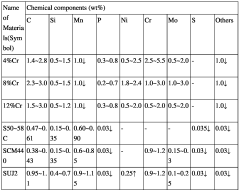
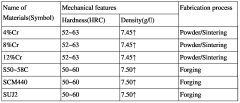
- A lightweight aluminum camshaft is developed using separately fabricated cam pieces made from sintering metal or alloy, which are inserted into a mold and integrated with an aluminum shaft portion through die casting, enhancing durability and strength while allowing for optimal oil supply and reduced weight.
Internal combustion engine comprising at least one camshaft
PatentWO2010094598A1
Innovation
- Implementing individually adapted bearings at each bearing point of the camshaft, with heavier, more resilient bearings at high-load areas and lighter, cost-effective bearings at low-load areas, and using color markings for correct installation.


Emission Standards Impact on Engine Component Design
The evolution of emission standards has fundamentally transformed the landscape of engine component design, with camshaft optimization emerging as a critical focal point for achieving both regulatory compliance and fuel efficiency targets. Stringent regulations such as Euro 6, EPA Tier 3, and China VI have established increasingly demanding limits for nitrogen oxides, particulate matter, and carbon dioxide emissions, compelling manufacturers to reconsider traditional design paradigms.
Modern emission standards directly influence camshaft design specifications through multiple pathways. Variable valve timing systems, essential for meeting emission requirements, necessitate lightweight camshaft designs to reduce actuator loads and improve response times. The integration of cylinder deactivation technologies, mandated by fuel economy standards, requires camshafts capable of selective lobe engagement while maintaining structural integrity under reduced weight constraints.
Regulatory frameworks have accelerated the adoption of advanced materials and manufacturing processes in camshaft production. Hollow camshaft designs, previously considered experimental, have become mainstream solutions driven by the dual requirements of emission compliance and weight reduction. The implementation of Real Driving Emissions testing protocols has further intensified the need for optimized camshaft inertia characteristics to ensure consistent performance across diverse operating conditions.
The regulatory emphasis on cold-start emissions has particularly influenced camshaft design strategies. Lightweight camshafts enable faster engine warm-up cycles, reducing the duration of high-emission cold-start phases. This regulatory driver has prompted innovations in camshaft bearing systems and oil circulation pathways to complement weight optimization efforts.
Future emission standards, including proposed zero-emission mandates and enhanced particulate number limits, are expected to further intensify the focus on camshaft weight optimization. The integration of electrified valve actuation systems, anticipated to become mandatory in certain markets, will require fundamental redesigns of camshaft architectures to accommodate hybrid mechanical-electrical operation modes while maintaining optimal weight characteristics for overall system efficiency.
Modern emission standards directly influence camshaft design specifications through multiple pathways. Variable valve timing systems, essential for meeting emission requirements, necessitate lightweight camshaft designs to reduce actuator loads and improve response times. The integration of cylinder deactivation technologies, mandated by fuel economy standards, requires camshafts capable of selective lobe engagement while maintaining structural integrity under reduced weight constraints.
Regulatory frameworks have accelerated the adoption of advanced materials and manufacturing processes in camshaft production. Hollow camshaft designs, previously considered experimental, have become mainstream solutions driven by the dual requirements of emission compliance and weight reduction. The implementation of Real Driving Emissions testing protocols has further intensified the need for optimized camshaft inertia characteristics to ensure consistent performance across diverse operating conditions.
The regulatory emphasis on cold-start emissions has particularly influenced camshaft design strategies. Lightweight camshafts enable faster engine warm-up cycles, reducing the duration of high-emission cold-start phases. This regulatory driver has prompted innovations in camshaft bearing systems and oil circulation pathways to complement weight optimization efforts.
Future emission standards, including proposed zero-emission mandates and enhanced particulate number limits, are expected to further intensify the focus on camshaft weight optimization. The integration of electrified valve actuation systems, anticipated to become mandatory in certain markets, will require fundamental redesigns of camshaft architectures to accommodate hybrid mechanical-electrical operation modes while maintaining optimal weight characteristics for overall system efficiency.
Manufacturing Cost Analysis for Lightweight Camshafts
The manufacturing cost analysis for lightweight camshafts reveals significant economic considerations that directly impact the viability of weight optimization initiatives for fuel efficiency improvements. Traditional cast iron camshafts, while heavier, benefit from established manufacturing processes and economies of scale, resulting in relatively low production costs ranging from $15-25 per unit in high-volume applications.
Advanced lightweight materials present substantial cost premiums that must be carefully evaluated. Hollow steel camshafts, achieved through specialized manufacturing techniques such as gun drilling or hydroforming, typically increase production costs by 40-60% compared to solid alternatives. The precision machining requirements and additional quality control measures contribute significantly to this cost escalation.
Carbon fiber composite camshafts represent the premium segment of lightweight solutions, with manufacturing costs potentially reaching 200-300% above conventional options. The complex layup processes, autoclave curing requirements, and specialized tooling create substantial barriers to cost-effective mass production. However, recent advances in automated fiber placement and resin transfer molding show promise for cost reduction in medium-volume applications.
Titanium alloy camshafts occupy a middle ground, offering excellent weight reduction with manufacturing costs approximately 150-200% higher than cast iron alternatives. The material costs alone account for 60-70% of this premium, while specialized machining requirements and extended tool life considerations contribute to the remainder.
Manufacturing scalability significantly influences cost structures across all lightweight camshaft technologies. Current production volumes for lightweight variants remain relatively low, limiting opportunities for cost optimization through economies of scale. Break-even analysis indicates that production volumes exceeding 50,000 units annually are typically required to achieve meaningful cost reductions through dedicated manufacturing lines and tooling amortization.
Process optimization opportunities exist through integrated manufacturing approaches, where weight reduction features are incorporated during primary forming operations rather than secondary machining processes. Investment casting with hollow cores, powder metallurgy with controlled porosity, and additive manufacturing techniques show potential for reducing the cost penalty associated with lightweight designs while maintaining structural integrity and performance requirements.
Advanced lightweight materials present substantial cost premiums that must be carefully evaluated. Hollow steel camshafts, achieved through specialized manufacturing techniques such as gun drilling or hydroforming, typically increase production costs by 40-60% compared to solid alternatives. The precision machining requirements and additional quality control measures contribute significantly to this cost escalation.
Carbon fiber composite camshafts represent the premium segment of lightweight solutions, with manufacturing costs potentially reaching 200-300% above conventional options. The complex layup processes, autoclave curing requirements, and specialized tooling create substantial barriers to cost-effective mass production. However, recent advances in automated fiber placement and resin transfer molding show promise for cost reduction in medium-volume applications.
Titanium alloy camshafts occupy a middle ground, offering excellent weight reduction with manufacturing costs approximately 150-200% higher than cast iron alternatives. The material costs alone account for 60-70% of this premium, while specialized machining requirements and extended tool life considerations contribute to the remainder.
Manufacturing scalability significantly influences cost structures across all lightweight camshaft technologies. Current production volumes for lightweight variants remain relatively low, limiting opportunities for cost optimization through economies of scale. Break-even analysis indicates that production volumes exceeding 50,000 units annually are typically required to achieve meaningful cost reductions through dedicated manufacturing lines and tooling amortization.
Process optimization opportunities exist through integrated manufacturing approaches, where weight reduction features are incorporated during primary forming operations rather than secondary machining processes. Investment casting with hollow cores, powder metallurgy with controlled porosity, and additive manufacturing techniques show potential for reducing the cost penalty associated with lightweight designs while maintaining structural integrity and performance requirements.
Unlock deeper insights with Patsnap Eureka Quick Research — get a full tech report to explore trends and direct your research. Try now!
Generate Your Research Report Instantly with AI Agent
Supercharge your innovation with Patsnap Eureka AI Agent Platform!