

Optimizing Circuit Designs in Linear Accelerator Systems
FEB 13, 20269 MIN READ
Generate Your Research Report Instantly with AI Agent
PatSnap Eureka helps you evaluate technical feasibility & market potential.
Linear Accelerator Circuit Design Background and Objectives
Linear accelerator systems have evolved significantly since their inception in the 1920s, transitioning from rudimentary proof-of-concept devices to sophisticated instruments essential in medical therapy, industrial applications, and fundamental physics research. The circuit design within these systems serves as the critical foundation that determines beam quality, energy efficiency, and operational stability. Early linear accelerators relied on simple resonant cavity designs with limited control mechanisms, but modern systems demand intricate circuit architectures capable of precise power modulation, phase synchronization, and real-time feedback control.
The technological evolution has been driven by increasing demands for higher beam energies, improved dose delivery precision in radiotherapy, and enhanced particle collision capabilities in research facilities. Contemporary linear accelerators require circuit designs that can handle megawatt-level radio frequency power while maintaining phase stability within fractions of a degree and amplitude control at sub-percent levels. These stringent requirements have pushed the boundaries of conventional circuit design methodologies, necessitating innovative approaches to power distribution, impedance matching, and thermal management.
The primary technical objectives center on achieving optimal performance across multiple dimensions simultaneously. Energy efficiency remains paramount, as operational costs directly correlate with power consumption in large-scale facilities. Circuit designs must minimize resistive losses in transmission lines, optimize coupling coefficients in resonant structures, and maximize power transfer efficiency from RF sources to accelerating cavities. Simultaneously, beam quality objectives demand exceptional stability in both amplitude and phase of the accelerating fields, requiring sophisticated feedback control circuits and low-noise power supply designs.
Another critical objective involves enhancing system reliability and reducing maintenance requirements. Circuit components operating under high-power RF conditions experience significant thermal and electrical stress, leading to component degradation and system downtime. Advanced circuit design strategies aim to distribute thermal loads more evenly, implement redundant protection mechanisms, and enable predictive maintenance through integrated diagnostic circuits. Additionally, miniaturization and integration objectives seek to reduce the physical footprint of control electronics while improving signal integrity and reducing electromagnetic interference, thereby enabling more compact and cost-effective accelerator installations for medical and industrial applications.
The technological evolution has been driven by increasing demands for higher beam energies, improved dose delivery precision in radiotherapy, and enhanced particle collision capabilities in research facilities. Contemporary linear accelerators require circuit designs that can handle megawatt-level radio frequency power while maintaining phase stability within fractions of a degree and amplitude control at sub-percent levels. These stringent requirements have pushed the boundaries of conventional circuit design methodologies, necessitating innovative approaches to power distribution, impedance matching, and thermal management.
The primary technical objectives center on achieving optimal performance across multiple dimensions simultaneously. Energy efficiency remains paramount, as operational costs directly correlate with power consumption in large-scale facilities. Circuit designs must minimize resistive losses in transmission lines, optimize coupling coefficients in resonant structures, and maximize power transfer efficiency from RF sources to accelerating cavities. Simultaneously, beam quality objectives demand exceptional stability in both amplitude and phase of the accelerating fields, requiring sophisticated feedback control circuits and low-noise power supply designs.
Another critical objective involves enhancing system reliability and reducing maintenance requirements. Circuit components operating under high-power RF conditions experience significant thermal and electrical stress, leading to component degradation and system downtime. Advanced circuit design strategies aim to distribute thermal loads more evenly, implement redundant protection mechanisms, and enable predictive maintenance through integrated diagnostic circuits. Additionally, miniaturization and integration objectives seek to reduce the physical footprint of control electronics while improving signal integrity and reducing electromagnetic interference, thereby enabling more compact and cost-effective accelerator installations for medical and industrial applications.
Market Demand for Advanced Accelerator Systems
The global market for advanced accelerator systems is experiencing robust expansion driven by escalating demands across scientific research, medical applications, and industrial sectors. Linear accelerators, particularly those employed in radiation therapy, particle physics research, and materials science, represent a critical segment where circuit design optimization directly impacts system performance, reliability, and cost-effectiveness. The medical sector alone demonstrates substantial growth momentum, with cancer treatment facilities worldwide seeking more precise and efficient radiotherapy equipment that depends fundamentally on optimized circuit architectures.
Industrial applications are emerging as significant demand drivers, particularly in semiconductor manufacturing, materials testing, and security screening systems. These applications require compact, energy-efficient linear accelerator designs where circuit optimization becomes essential for achieving competitive operational costs and footprint reduction. The semiconductor industry's continuous push toward advanced lithography techniques creates sustained demand for high-precision accelerator systems with superior beam control capabilities enabled through sophisticated circuit designs.
Research institutions and national laboratories constitute another major demand source, pursuing next-generation particle physics experiments and synchrotron radiation facilities. These organizations prioritize accelerator systems offering enhanced beam quality, stability, and flexibility—characteristics directly influenced by circuit design sophistication. The trend toward higher energy efficiency and reduced power consumption across all accelerator applications amplifies the market need for innovative circuit solutions that minimize energy losses while maintaining performance standards.
Emerging markets in Asia-Pacific regions show accelerated adoption rates, with expanding healthcare infrastructure and growing research investments creating new opportunities for advanced accelerator technologies. Simultaneously, regulatory pressures regarding radiation safety and environmental sustainability are reshaping procurement criteria, favoring systems with optimized circuit designs that enable better monitoring, control, and fail-safe mechanisms. The convergence of these factors establishes a compelling market environment where circuit design optimization serves as a key differentiator, influencing purchasing decisions and long-term operational viability across diverse application domains.
Industrial applications are emerging as significant demand drivers, particularly in semiconductor manufacturing, materials testing, and security screening systems. These applications require compact, energy-efficient linear accelerator designs where circuit optimization becomes essential for achieving competitive operational costs and footprint reduction. The semiconductor industry's continuous push toward advanced lithography techniques creates sustained demand for high-precision accelerator systems with superior beam control capabilities enabled through sophisticated circuit designs.
Research institutions and national laboratories constitute another major demand source, pursuing next-generation particle physics experiments and synchrotron radiation facilities. These organizations prioritize accelerator systems offering enhanced beam quality, stability, and flexibility—characteristics directly influenced by circuit design sophistication. The trend toward higher energy efficiency and reduced power consumption across all accelerator applications amplifies the market need for innovative circuit solutions that minimize energy losses while maintaining performance standards.
Emerging markets in Asia-Pacific regions show accelerated adoption rates, with expanding healthcare infrastructure and growing research investments creating new opportunities for advanced accelerator technologies. Simultaneously, regulatory pressures regarding radiation safety and environmental sustainability are reshaping procurement criteria, favoring systems with optimized circuit designs that enable better monitoring, control, and fail-safe mechanisms. The convergence of these factors establishes a compelling market environment where circuit design optimization serves as a key differentiator, influencing purchasing decisions and long-term operational viability across diverse application domains.
Current Circuit Design Challenges in Linear Accelerators
Linear accelerator systems face multifaceted circuit design challenges that directly impact their operational efficiency, beam quality, and overall performance. The complexity of these systems demands precise coordination between high-power radiofrequency components, control electronics, and beam diagnostic circuits, creating a demanding environment for circuit designers.
Power handling and thermal management represent primary concerns in linear accelerator circuit design. RF power amplifiers must deliver kilowatts to megawatts of power while maintaining signal integrity and minimizing losses. The high-power density generates substantial heat, requiring sophisticated thermal dissipation strategies that often conflict with compact design requirements. Traditional cooling approaches struggle to meet the dual demands of miniaturization and increased power throughput.
Electromagnetic interference and signal integrity issues pose significant obstacles in accelerator environments. The intense electromagnetic fields generated by RF cavities create challenging conditions for sensitive control and diagnostic circuits. Cross-talk between adjacent circuits, ground loop problems, and radiation-induced noise can compromise measurement accuracy and control precision. Shielding effectiveness must be balanced against accessibility requirements for maintenance and upgrades.
Timing synchronization across distributed systems presents another critical challenge. Modern linear accelerators require sub-picosecond timing precision across multiple subsystems spanning considerable distances. Phase stability in RF distribution networks, clock jitter in digital control systems, and propagation delay variations due to temperature fluctuations all contribute to timing uncertainties that degrade beam quality.
Component reliability under harsh operating conditions remains a persistent concern. Circuits must withstand continuous exposure to radiation, electromagnetic fields, and thermal cycling. Standard commercial components often fail prematurely in these environments, necessitating expensive radiation-hardened alternatives or custom-designed solutions. The limited availability of qualified components constrains design flexibility and increases development costs.
Integration complexity escalates as accelerator systems incorporate increasingly sophisticated diagnostic and control capabilities. Modern designs require seamless integration of analog RF circuits, high-speed digital processing, precision sensors, and actuator control systems. The heterogeneous nature of these subsystems complicates PCB layout, increases interconnection complexity, and raises the risk of system-level incompatibilities that emerge only during commissioning phases.
Power handling and thermal management represent primary concerns in linear accelerator circuit design. RF power amplifiers must deliver kilowatts to megawatts of power while maintaining signal integrity and minimizing losses. The high-power density generates substantial heat, requiring sophisticated thermal dissipation strategies that often conflict with compact design requirements. Traditional cooling approaches struggle to meet the dual demands of miniaturization and increased power throughput.
Electromagnetic interference and signal integrity issues pose significant obstacles in accelerator environments. The intense electromagnetic fields generated by RF cavities create challenging conditions for sensitive control and diagnostic circuits. Cross-talk between adjacent circuits, ground loop problems, and radiation-induced noise can compromise measurement accuracy and control precision. Shielding effectiveness must be balanced against accessibility requirements for maintenance and upgrades.
Timing synchronization across distributed systems presents another critical challenge. Modern linear accelerators require sub-picosecond timing precision across multiple subsystems spanning considerable distances. Phase stability in RF distribution networks, clock jitter in digital control systems, and propagation delay variations due to temperature fluctuations all contribute to timing uncertainties that degrade beam quality.
Component reliability under harsh operating conditions remains a persistent concern. Circuits must withstand continuous exposure to radiation, electromagnetic fields, and thermal cycling. Standard commercial components often fail prematurely in these environments, necessitating expensive radiation-hardened alternatives or custom-designed solutions. The limited availability of qualified components constrains design flexibility and increases development costs.
Integration complexity escalates as accelerator systems incorporate increasingly sophisticated diagnostic and control capabilities. Modern designs require seamless integration of analog RF circuits, high-speed digital processing, precision sensors, and actuator control systems. The heterogeneous nature of these subsystems complicates PCB layout, increases interconnection complexity, and raises the risk of system-level incompatibilities that emerge only during commissioning phases.
Mainstream Circuit Optimization Solutions
01 Integrated circuit layout and routing optimization
Circuit designs can be optimized through advanced layout and routing techniques that improve signal integrity and reduce parasitic effects. These methods focus on efficient placement of circuit components and optimization of interconnection paths to minimize delay and power consumption. Advanced algorithms and design automation tools can be employed to achieve optimal circuit layouts that meet performance specifications while reducing chip area.- Integrated circuit layout and routing optimization: Circuit designs can be optimized through advanced layout and routing techniques that improve signal integrity and reduce parasitic effects. These methods focus on minimizing interconnect delays, optimizing placement of circuit components, and implementing efficient routing algorithms to enhance overall circuit performance. Advanced placement strategies and automated routing tools can significantly improve circuit density and operational efficiency.
- Power management and distribution circuits: Effective power management circuit designs incorporate techniques for voltage regulation, power distribution networks, and energy efficiency optimization. These designs address power delivery challenges in modern integrated circuits, including voltage drop mitigation, decoupling capacitor placement, and power grid design. Advanced power management circuits can reduce power consumption while maintaining circuit performance and reliability.
- Clock distribution and timing circuits: Clock distribution networks and timing circuits are essential for synchronous circuit operation. These designs include clock tree synthesis, skew minimization techniques, and timing closure methodologies. Advanced timing circuits incorporate phase-locked loops, delay-locked loops, and clock gating techniques to ensure proper signal timing across the entire circuit while minimizing power consumption and improving performance.
- Memory circuit architecture and design: Memory circuit designs encompass various architectures for data storage and retrieval, including cache memory, register files, and embedded memory blocks. These designs focus on optimizing access time, power consumption, and area efficiency. Advanced memory circuits incorporate error correction mechanisms, redundancy schemes, and innovative cell structures to improve reliability and performance in integrated systems.
- Analog and mixed-signal circuit design: Analog and mixed-signal circuits bridge the gap between digital processing and real-world signals. These designs include analog-to-digital converters, digital-to-analog converters, amplifiers, and signal conditioning circuits. Advanced mixed-signal designs address challenges such as noise isolation, signal integrity, and process variation compensation to ensure accurate signal processing in integrated systems.
02 Power management and distribution circuits
Effective power management circuit designs incorporate voltage regulation, power gating, and distribution networks to optimize energy efficiency. These designs include techniques for reducing static and dynamic power consumption through intelligent power switching and voltage scaling. Circuit architectures can be implemented to provide stable power delivery while minimizing losses and thermal issues across different operating conditions.Expand Specific Solutions03 Clock generation and distribution networks
Clock circuit designs focus on generating stable timing signals and distributing them efficiently across integrated circuits. These designs address challenges such as clock skew, jitter, and power consumption through specialized circuit topologies and buffering strategies. Advanced techniques include phase-locked loops, delay-locked loops, and clock tree synthesis methods that ensure synchronous operation of digital systems.Expand Specific Solutions04 Memory circuit architectures and access methods
Memory circuit designs encompass various architectures for data storage and retrieval, including cache structures, memory arrays, and access control circuits. These designs optimize for parameters such as access speed, density, power efficiency, and reliability. Techniques include sense amplifier designs, bit-line architectures, and error correction circuits that enhance memory performance and data integrity.Expand Specific Solutions05 Signal processing and analog circuit blocks
Analog and mixed-signal circuit designs provide essential functions such as amplification, filtering, conversion, and signal conditioning. These circuits bridge the gap between analog inputs and digital processing systems through carefully designed amplifiers, converters, and interface circuits. Design considerations include noise reduction, linearity, bandwidth optimization, and process variation tolerance to achieve robust signal processing capabilities.Expand Specific Solutions
Major Players in Accelerator System Development
The optimization of circuit designs in linear accelerator systems represents a mature yet evolving technological domain characterized by steady innovation and specialized market dynamics. The industry has progressed beyond early developmental stages, with established players like Cadence Design Systems and Synopsys dominating the Electronic Design Automation (EDA) software segment, providing sophisticated tools essential for complex circuit optimization. Taiwan Semiconductor Manufacturing Co. and Samsung Electronics lead in manufacturing capabilities, while research institutions including Tsinghua University, Institute of Microelectronics of Chinese Academy of Sciences, and Harbin Institute of Technology drive fundamental research advancements. The technology demonstrates high maturity in conventional applications, though emerging requirements for higher energy efficiency, precision control, and integration with AI-driven design methodologies are creating new innovation frontiers. Market consolidation is evident among major EDA providers and semiconductor manufacturers, while collaborative ecosystems between industry leaders and academic institutions accelerate development cycles and maintain competitive technological advancement in this specialized field.
Cadence Design Systems, Inc.
Technical Solution: Cadence provides comprehensive EDA solutions for optimizing circuit designs in linear accelerator systems through its advanced simulation and verification platforms. Their Virtuoso platform enables precise analog and mixed-signal circuit design with integrated electromagnetic simulation capabilities essential for RF and high-frequency components in accelerator systems. The Spectre simulation engine offers industry-leading accuracy for analyzing complex circuit behaviors under extreme operating conditions typical in particle accelerators. Cadence's Clarity 3D Solver provides electromagnetic field analysis crucial for minimizing signal interference and optimizing power distribution networks in accelerator control circuits. Their digital implementation tools support timing closure and power optimization for the digital control systems that manage beam steering and synchronization circuits.
Strengths: Industry-leading simulation accuracy, comprehensive analog/mixed-signal design capabilities, strong electromagnetic analysis tools. Weaknesses: High licensing costs, steep learning curve for advanced features, requires significant computational resources for large-scale simulations.
Synopsys, Inc.
Technical Solution: Synopsys offers integrated circuit design optimization solutions specifically applicable to linear accelerator systems through their Custom Compiler and HSPICE platforms. Their tools enable precise modeling of high-voltage switching circuits, RF power amplifiers, and timing-critical synchronization circuits essential for accelerator operations. The PrimeSim solution provides fast SPICE simulation with advanced noise analysis capabilities critical for low-noise front-end electronics in beam detection systems. Synopsys' IC Compiler II supports physical design optimization with advanced power grid analysis, ensuring reliable operation under the high-current demands of accelerator magnet driver circuits. Their verification solutions include radiation-hardened library characterization tools important for circuits operating in high-radiation environments typical of accelerator facilities.
Strengths: Excellent SPICE simulation performance, robust physical verification tools, strong support for radiation-hardened designs. Weaknesses: Complex tool integration requirements, expensive licensing structure, limited specialized templates for accelerator-specific applications.
Core Patents in Accelerator Circuit Innovation
Parameter variation tolerant method for circuit design optimization
PatentInactiveUS6826733B2
Innovation
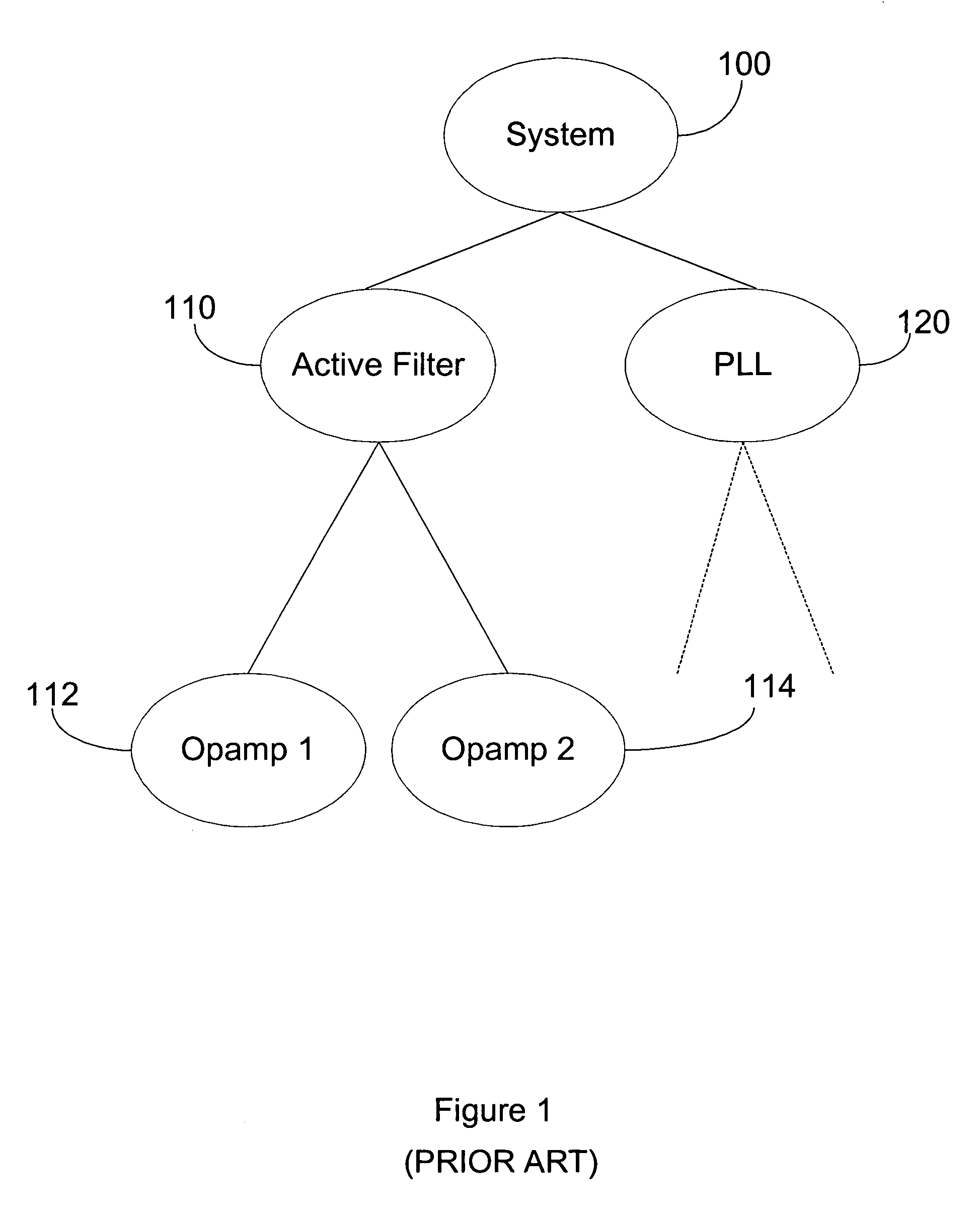
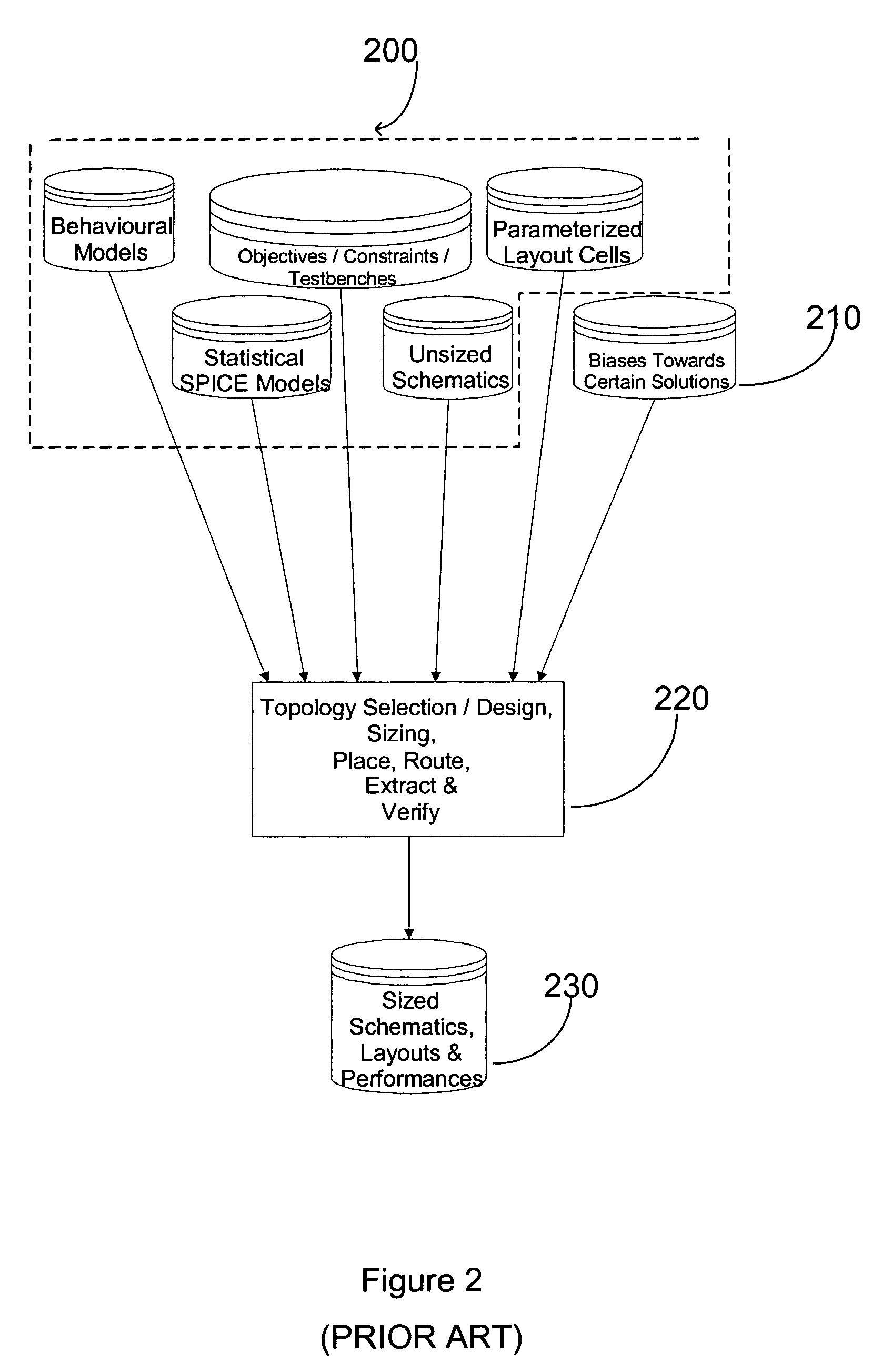
- A method is introduced that modifies the optimization process by adding separation terms to the objective function, which incentivizes the reduction of design constraints at limiting values, thereby reducing the expected cost and improving performance by making the design less sensitive to variations. This is achieved by defining an objective function and deriving a merit function that includes penalty terms for each primary output and constraint, encouraging the optimizer to minimize the number of critical paths and reduce degeneracy in the optimization problem.


Method of interactive optimization in circuit design
PatentInactiveUS6968517B2
Innovation
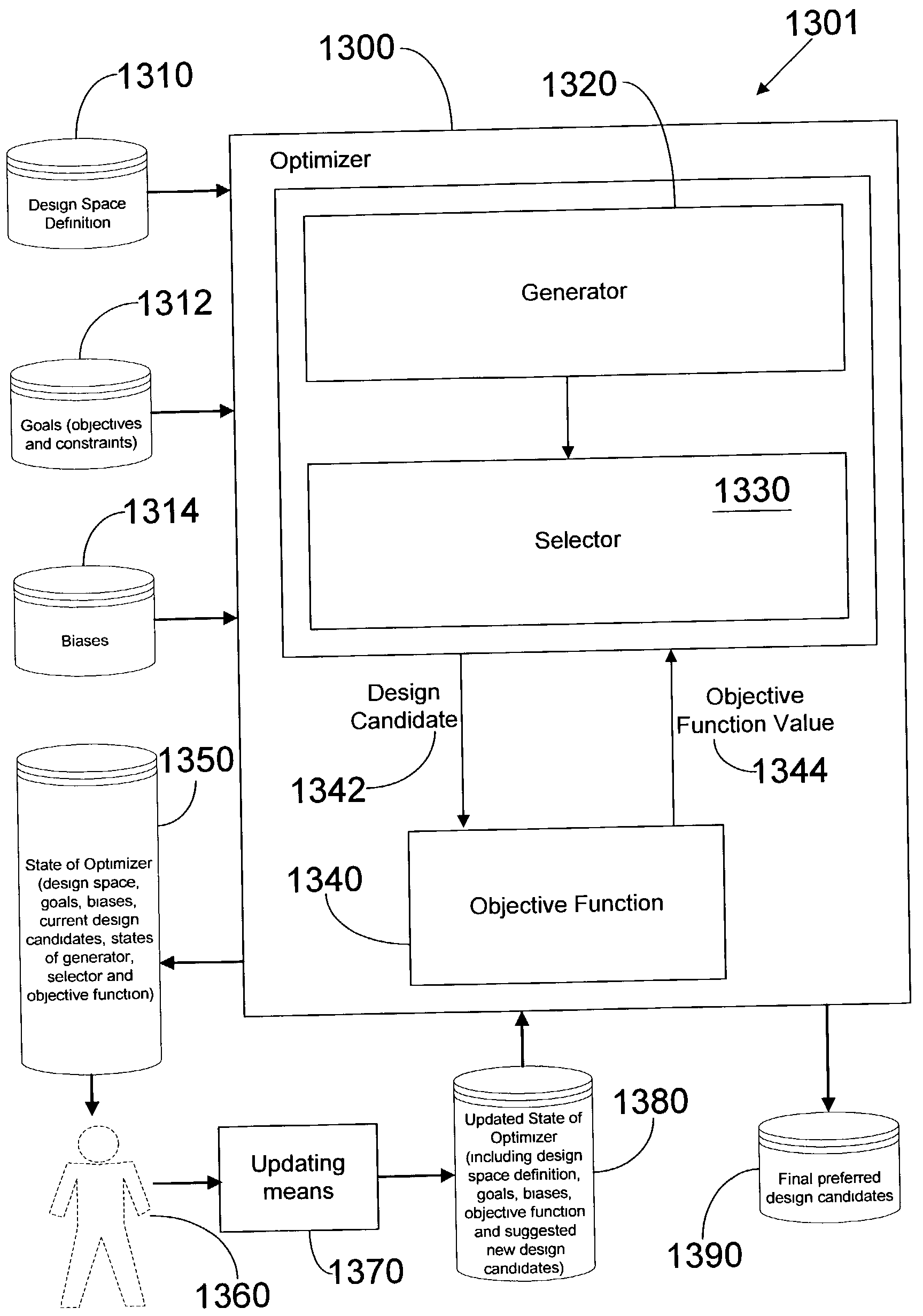
- An interactive optimization method that allows designers to dynamically change biases and problem definitions during the optimization process based on feedback, enabling them to steer the search direction and modify the optimization loop in real-time.

Radiation Safety and Regulatory Compliance
Radiation safety and regulatory compliance constitute critical considerations in the optimization of circuit designs for linear accelerator systems, as these high-energy devices inherently generate ionizing radiation during operation. The electromagnetic components, power delivery systems, and control circuits must be engineered not only for performance efficiency but also to minimize radiation leakage and ensure operator safety. Circuit designers must account for shielding requirements, grounding protocols, and fail-safe mechanisms that prevent unintended beam activation or excessive radiation exposure.
Regulatory frameworks governing linear accelerator operations vary across jurisdictions but generally align with international standards established by organizations such as the International Atomic Energy Agency and national bodies like the Nuclear Regulatory Commission in the United States or equivalent authorities in other countries. These regulations mandate specific design features including interlock systems that disable beam generation when access doors are opened, radiation monitoring circuits that provide real-time dosimetry data, and emergency shutdown mechanisms with redundant pathways. Circuit optimization must therefore balance performance parameters with compliance requirements, often necessitating additional components that may increase system complexity.
The integration of safety-critical circuits demands rigorous validation and documentation processes. Design teams must demonstrate through simulation and testing that circuit failures will default to safe states, a principle known as fail-safe design. This includes ensuring that power supply interruptions, component malfunctions, or software errors cannot result in uncontrolled beam operation. Certification processes typically require extensive documentation of circuit schematics, failure mode analyses, and quality assurance protocols.
Emerging regulatory trends emphasize cybersecurity considerations as linear accelerators increasingly incorporate networked control systems. Circuit designs must now address potential vulnerabilities to unauthorized access or malicious interference, requiring implementation of secure communication protocols and isolated control networks. Additionally, environmental regulations concerning electromagnetic interference and radiofrequency emissions impose constraints on circuit layout and shielding strategies, further complicating the optimization process while ensuring comprehensive safety and compliance across operational scenarios.
Regulatory frameworks governing linear accelerator operations vary across jurisdictions but generally align with international standards established by organizations such as the International Atomic Energy Agency and national bodies like the Nuclear Regulatory Commission in the United States or equivalent authorities in other countries. These regulations mandate specific design features including interlock systems that disable beam generation when access doors are opened, radiation monitoring circuits that provide real-time dosimetry data, and emergency shutdown mechanisms with redundant pathways. Circuit optimization must therefore balance performance parameters with compliance requirements, often necessitating additional components that may increase system complexity.
The integration of safety-critical circuits demands rigorous validation and documentation processes. Design teams must demonstrate through simulation and testing that circuit failures will default to safe states, a principle known as fail-safe design. This includes ensuring that power supply interruptions, component malfunctions, or software errors cannot result in uncontrolled beam operation. Certification processes typically require extensive documentation of circuit schematics, failure mode analyses, and quality assurance protocols.
Emerging regulatory trends emphasize cybersecurity considerations as linear accelerators increasingly incorporate networked control systems. Circuit designs must now address potential vulnerabilities to unauthorized access or malicious interference, requiring implementation of secure communication protocols and isolated control networks. Additionally, environmental regulations concerning electromagnetic interference and radiofrequency emissions impose constraints on circuit layout and shielding strategies, further complicating the optimization process while ensuring comprehensive safety and compliance across operational scenarios.
Energy Efficiency and Sustainability Considerations
Energy efficiency has emerged as a critical design parameter in linear accelerator systems, driven by escalating operational costs and growing environmental responsibilities within the scientific research community. Modern accelerator facilities consume substantial electrical power, with large-scale installations requiring tens to hundreds of megawatts for continuous operation. The circuit design optimization process must therefore integrate energy-conscious methodologies from the earliest conceptual stages, balancing performance requirements against power consumption metrics. This imperative extends beyond mere cost reduction, encompassing broader institutional commitments to carbon footprint minimization and sustainable scientific infrastructure development.
Circuit-level energy optimization in linear accelerators primarily focuses on radiofrequency power generation and distribution systems, which typically account for the majority of facility energy consumption. Advanced solid-state amplifier architectures demonstrate superior efficiency compared to traditional klystron-based systems, achieving conversion efficiencies exceeding 65% in certain operational regimes. Implementing intelligent power management strategies, including dynamic beam loading compensation and adaptive modulation schemes, enables significant reductions in wasted energy during beam injection sequences and low-intensity operational modes. Superconducting radiofrequency technology represents another transformative approach, dramatically reducing resistive losses in accelerating cavities while introducing cryogenic system energy requirements that demand careful system-level analysis.
Thermal management optimization constitutes another essential dimension of sustainable circuit design. Efficient heat extraction and recovery systems can reclaim waste thermal energy for facility heating applications or secondary power generation through cogeneration systems. Advanced cooling circuit topologies utilizing variable-flow pumping and intelligent temperature control minimize auxiliary power consumption while maintaining critical component thermal stability. Material selection in circuit components increasingly considers lifecycle environmental impact, favoring recyclable substrates and lead-free manufacturing processes where performance constraints permit.
Sustainability considerations also encompass operational longevity and component reliability, as premature failures generate electronic waste and require energy-intensive replacement manufacturing. Robust circuit design practices incorporating adequate thermal derating, radiation-hardened components in high-flux environments, and predictive maintenance capabilities extend system operational lifespans. Future accelerator projects increasingly adopt comprehensive energy accounting frameworks during design phases, establishing quantitative sustainability benchmarks alongside traditional performance specifications to guide optimization decisions throughout the development lifecycle.
Circuit-level energy optimization in linear accelerators primarily focuses on radiofrequency power generation and distribution systems, which typically account for the majority of facility energy consumption. Advanced solid-state amplifier architectures demonstrate superior efficiency compared to traditional klystron-based systems, achieving conversion efficiencies exceeding 65% in certain operational regimes. Implementing intelligent power management strategies, including dynamic beam loading compensation and adaptive modulation schemes, enables significant reductions in wasted energy during beam injection sequences and low-intensity operational modes. Superconducting radiofrequency technology represents another transformative approach, dramatically reducing resistive losses in accelerating cavities while introducing cryogenic system energy requirements that demand careful system-level analysis.
Thermal management optimization constitutes another essential dimension of sustainable circuit design. Efficient heat extraction and recovery systems can reclaim waste thermal energy for facility heating applications or secondary power generation through cogeneration systems. Advanced cooling circuit topologies utilizing variable-flow pumping and intelligent temperature control minimize auxiliary power consumption while maintaining critical component thermal stability. Material selection in circuit components increasingly considers lifecycle environmental impact, favoring recyclable substrates and lead-free manufacturing processes where performance constraints permit.
Sustainability considerations also encompass operational longevity and component reliability, as premature failures generate electronic waste and require energy-intensive replacement manufacturing. Robust circuit design practices incorporating adequate thermal derating, radiation-hardened components in high-flux environments, and predictive maintenance capabilities extend system operational lifespans. Future accelerator projects increasingly adopt comprehensive energy accounting frameworks during design phases, establishing quantitative sustainability benchmarks alongside traditional performance specifications to guide optimization decisions throughout the development lifecycle.
Unlock deeper insights with PatSnap Eureka Quick Research — get a full tech report to explore trends and direct your research. Try now!
Generate Your Research Report Instantly with AI Agent
Supercharge your innovation with PatSnap Eureka AI Agent Platform!