

Optimizing Copper Adhesion in Through-Mold Vias for Longevity
MAY 22, 20269 MIN READ
Generate Your Research Report Instantly with AI Agent
PatSnap Eureka helps you evaluate technical feasibility & market potential.
Copper TMV Technology Background and Objectives
Through-Mold Via (TMV) technology represents a critical advancement in three-dimensional electronic packaging, enabling vertical electrical connections through molded substrates and encapsulation materials. This technology emerged from the increasing demand for miniaturization and enhanced performance in electronic devices, particularly in applications requiring high-density interconnects such as system-in-package (SiP) modules, advanced sensors, and automotive electronics.
The evolution of TMV technology stems from traditional via formation methods, including mechanical drilling and laser ablation, which faced limitations in achieving the precision and reliability required for next-generation electronic packages. Unlike conventional printed circuit board vias, TMVs must maintain structural integrity and electrical continuity while being formed through heterogeneous materials including polymeric molding compounds, which present unique challenges for copper metallization and adhesion.
Copper adhesion optimization in TMVs has become increasingly critical as the industry pushes toward smaller via diameters, higher aspect ratios, and more demanding operational environments. Poor copper adhesion leads to delamination, increased electrical resistance, thermal cycling failures, and ultimately device malfunction. The challenge is compounded by the coefficient of thermal expansion mismatch between copper conductors and organic molding materials, creating mechanical stress during temperature fluctuations.
The primary technical objectives for optimizing copper adhesion in TMVs encompass several key areas. First, achieving robust interfacial bonding between copper and the molding compound substrate through advanced surface treatment and metallization processes. Second, developing copper deposition techniques that ensure uniform coverage and adequate thickness control within high-aspect-ratio vias. Third, implementing barrier layer technologies that prevent copper migration and enhance long-term reliability under thermal and electrical stress.
Long-term reliability objectives focus on maintaining electrical performance over extended operational lifespans, typically spanning 10-20 years in automotive and industrial applications. This requires copper adhesion solutions that can withstand thousands of thermal cycles, humidity exposure, and mechanical stress without degradation. The technology must also support manufacturing scalability while maintaining cost-effectiveness for high-volume production environments.
The evolution of TMV technology stems from traditional via formation methods, including mechanical drilling and laser ablation, which faced limitations in achieving the precision and reliability required for next-generation electronic packages. Unlike conventional printed circuit board vias, TMVs must maintain structural integrity and electrical continuity while being formed through heterogeneous materials including polymeric molding compounds, which present unique challenges for copper metallization and adhesion.
Copper adhesion optimization in TMVs has become increasingly critical as the industry pushes toward smaller via diameters, higher aspect ratios, and more demanding operational environments. Poor copper adhesion leads to delamination, increased electrical resistance, thermal cycling failures, and ultimately device malfunction. The challenge is compounded by the coefficient of thermal expansion mismatch between copper conductors and organic molding materials, creating mechanical stress during temperature fluctuations.
The primary technical objectives for optimizing copper adhesion in TMVs encompass several key areas. First, achieving robust interfacial bonding between copper and the molding compound substrate through advanced surface treatment and metallization processes. Second, developing copper deposition techniques that ensure uniform coverage and adequate thickness control within high-aspect-ratio vias. Third, implementing barrier layer technologies that prevent copper migration and enhance long-term reliability under thermal and electrical stress.
Long-term reliability objectives focus on maintaining electrical performance over extended operational lifespans, typically spanning 10-20 years in automotive and industrial applications. This requires copper adhesion solutions that can withstand thousands of thermal cycles, humidity exposure, and mechanical stress without degradation. The technology must also support manufacturing scalability while maintaining cost-effectiveness for high-volume production environments.
Market Demand for Reliable TMV Solutions
The semiconductor packaging industry is experiencing unprecedented growth driven by the proliferation of advanced electronic devices requiring higher performance, miniaturization, and enhanced reliability. Through-Mold Via (TMV) technology has emerged as a critical solution for achieving three-dimensional interconnections in modern packaging architectures, particularly in applications demanding superior electrical performance and space efficiency.
Consumer electronics manufacturers are increasingly adopting TMV solutions to meet the stringent requirements of smartphones, tablets, wearables, and IoT devices. The demand for thinner profiles, faster data transmission, and improved thermal management has positioned TMV technology as an essential component in next-generation packaging designs. The automotive electronics sector represents another significant growth driver, where TMV reliability becomes paramount for safety-critical applications including advanced driver assistance systems and autonomous vehicle components.
Data center infrastructure and high-performance computing applications are generating substantial demand for reliable TMV solutions. These applications require exceptional signal integrity, thermal performance, and long-term reliability under demanding operational conditions. The copper adhesion challenges in TMV structures directly impact the overall system reliability, making optimized adhesion solutions a market necessity rather than a technical preference.
The telecommunications industry's transition to advanced wireless standards is creating additional market pressure for robust TMV implementations. Base station equipment, network infrastructure, and mobile communication devices require packaging solutions that can withstand extended operational lifespans while maintaining consistent electrical performance. Poor copper adhesion in TMV structures can lead to signal degradation, increased failure rates, and costly field replacements.
Medical device manufacturers represent an emerging market segment with particularly stringent reliability requirements. Implantable devices, diagnostic equipment, and portable medical instruments demand TMV solutions with proven long-term stability and biocompatibility considerations. The regulatory environment in medical applications further emphasizes the importance of demonstrable reliability through optimized copper adhesion.
Industrial automation and aerospace applications continue to drive demand for TMV solutions capable of operating in harsh environments. Temperature cycling, mechanical stress, and chemical exposure in these applications place exceptional demands on copper adhesion performance. Market requirements increasingly specify extended operational lifetimes measured in decades rather than years.
The growing emphasis on sustainability and circular economy principles is influencing market demand toward TMV solutions with enhanced durability and reduced failure rates. Manufacturers are seeking copper adhesion optimization techniques that extend product lifecycles, reduce electronic waste, and improve overall environmental impact while maintaining competitive cost structures.
Consumer electronics manufacturers are increasingly adopting TMV solutions to meet the stringent requirements of smartphones, tablets, wearables, and IoT devices. The demand for thinner profiles, faster data transmission, and improved thermal management has positioned TMV technology as an essential component in next-generation packaging designs. The automotive electronics sector represents another significant growth driver, where TMV reliability becomes paramount for safety-critical applications including advanced driver assistance systems and autonomous vehicle components.
Data center infrastructure and high-performance computing applications are generating substantial demand for reliable TMV solutions. These applications require exceptional signal integrity, thermal performance, and long-term reliability under demanding operational conditions. The copper adhesion challenges in TMV structures directly impact the overall system reliability, making optimized adhesion solutions a market necessity rather than a technical preference.
The telecommunications industry's transition to advanced wireless standards is creating additional market pressure for robust TMV implementations. Base station equipment, network infrastructure, and mobile communication devices require packaging solutions that can withstand extended operational lifespans while maintaining consistent electrical performance. Poor copper adhesion in TMV structures can lead to signal degradation, increased failure rates, and costly field replacements.
Medical device manufacturers represent an emerging market segment with particularly stringent reliability requirements. Implantable devices, diagnostic equipment, and portable medical instruments demand TMV solutions with proven long-term stability and biocompatibility considerations. The regulatory environment in medical applications further emphasizes the importance of demonstrable reliability through optimized copper adhesion.
Industrial automation and aerospace applications continue to drive demand for TMV solutions capable of operating in harsh environments. Temperature cycling, mechanical stress, and chemical exposure in these applications place exceptional demands on copper adhesion performance. Market requirements increasingly specify extended operational lifetimes measured in decades rather than years.
The growing emphasis on sustainability and circular economy principles is influencing market demand toward TMV solutions with enhanced durability and reduced failure rates. Manufacturers are seeking copper adhesion optimization techniques that extend product lifecycles, reduce electronic waste, and improve overall environmental impact while maintaining competitive cost structures.
Current TMV Copper Adhesion Challenges
Through-Mold Via (TMV) technology faces significant copper adhesion challenges that directly impact device reliability and performance longevity. The primary issue stems from the fundamental mismatch between copper's thermal expansion coefficient and the surrounding mold compound materials, creating mechanical stress at the interface during thermal cycling operations.
Interfacial delamination represents the most critical failure mode in TMV structures. The copper-to-mold compound interface experiences continuous stress due to coefficient of thermal expansion (CTE) mismatches, typically ranging from 17-20 ppm/°C for copper versus 8-15 ppm/°C for epoxy-based mold compounds. This disparity generates shear forces that progressively weaken the adhesive bond, leading to micro-crack initiation and propagation.
Surface contamination during the manufacturing process significantly compromises copper adhesion quality. Organic residues, oxide layers, and moisture absorption on copper surfaces create barriers that prevent proper chemical bonding with the mold compound. These contaminants are particularly problematic in high-volume manufacturing environments where process control variations can introduce inconsistent surface conditions.
Electrochemical corrosion poses another substantial challenge, especially in humid operating environments. The galvanic potential difference between copper and other metallic components in the package can initiate corrosion processes that undermine the structural integrity of the copper-mold interface. This electrochemical degradation accelerates under elevated temperature and humidity conditions commonly encountered in automotive and industrial applications.
The mold compound curing process introduces additional complexity through shrinkage-induced stress concentration. As thermosetting polymers cure, volumetric shrinkage creates tensile forces that pull away from the copper surface. Inadequate surface preparation or suboptimal curing profiles can exacerbate these effects, resulting in weak interfacial bonds that fail prematurely under operational stress.
Manufacturing process variations, including inconsistent plating parameters, surface roughening techniques, and cleaning procedures, contribute to adhesion reliability issues. The lack of standardized surface treatment protocols across different fabrication facilities results in variable copper adhesion performance, making it difficult to achieve consistent long-term reliability across production volumes.
Interfacial delamination represents the most critical failure mode in TMV structures. The copper-to-mold compound interface experiences continuous stress due to coefficient of thermal expansion (CTE) mismatches, typically ranging from 17-20 ppm/°C for copper versus 8-15 ppm/°C for epoxy-based mold compounds. This disparity generates shear forces that progressively weaken the adhesive bond, leading to micro-crack initiation and propagation.
Surface contamination during the manufacturing process significantly compromises copper adhesion quality. Organic residues, oxide layers, and moisture absorption on copper surfaces create barriers that prevent proper chemical bonding with the mold compound. These contaminants are particularly problematic in high-volume manufacturing environments where process control variations can introduce inconsistent surface conditions.
Electrochemical corrosion poses another substantial challenge, especially in humid operating environments. The galvanic potential difference between copper and other metallic components in the package can initiate corrosion processes that undermine the structural integrity of the copper-mold interface. This electrochemical degradation accelerates under elevated temperature and humidity conditions commonly encountered in automotive and industrial applications.
The mold compound curing process introduces additional complexity through shrinkage-induced stress concentration. As thermosetting polymers cure, volumetric shrinkage creates tensile forces that pull away from the copper surface. Inadequate surface preparation or suboptimal curing profiles can exacerbate these effects, resulting in weak interfacial bonds that fail prematurely under operational stress.
Manufacturing process variations, including inconsistent plating parameters, surface roughening techniques, and cleaning procedures, contribute to adhesion reliability issues. The lack of standardized surface treatment protocols across different fabrication facilities results in variable copper adhesion performance, making it difficult to achieve consistent long-term reliability across production volumes.
Existing TMV Copper Adhesion Enhancement Methods
01 Surface treatment and preparation methods for copper adhesion
Various surface treatment techniques are employed to enhance copper adhesion in through-mold vias, including chemical etching, plasma treatment, and surface roughening processes. These methods create better bonding surfaces by removing contaminants and increasing surface area for improved mechanical and chemical adhesion between copper and substrate materials.- Surface treatment and preparation methods for copper adhesion: Various surface treatment techniques are employed to enhance copper adhesion in through-mold vias, including chemical etching, plasma treatment, and surface roughening processes. These methods create better bonding surfaces by removing contaminants and increasing surface area for improved mechanical and chemical adhesion between copper and substrate materials.
- Adhesion promoter layers and interfacial materials: Implementation of intermediate adhesion layers between copper and substrate materials to improve bonding strength. These layers may include titanium, chromium, or specialized polymer coatings that provide better chemical compatibility and reduce thermal stress-induced delamination in through-mold via structures.
- Electroplating and deposition process optimization: Advanced electroplating techniques and process parameter control for achieving superior copper adhesion in via structures. This includes optimization of current density, electrolyte composition, temperature control, and multi-step plating processes to ensure uniform copper distribution and strong interfacial bonding.
- Thermal management and stress reduction techniques: Methods to minimize thermal stress and coefficient of thermal expansion mismatch between copper and substrate materials. These approaches include controlled cooling processes, stress-relief annealing, and material selection strategies to prevent adhesion failure due to thermal cycling and mechanical stress.
- Novel substrate materials and via structure designs: Development of specialized substrate materials and innovative via geometries that inherently provide better copper adhesion characteristics. This includes modified polymer compositions, hybrid organic-inorganic materials, and optimized via aspect ratios and sidewall profiles for enhanced mechanical interlocking and chemical bonding.
02 Adhesion promoter layers and interface materials
Intermediate layers and adhesion promoters are utilized to improve the bonding between copper and substrate materials in through-mold via structures. These materials act as coupling agents that provide better chemical compatibility and reduce thermal stress at the interface, resulting in enhanced long-term reliability of the copper connections.Expand Specific Solutions03 Electroplating and deposition process optimization
Controlled electroplating parameters and deposition techniques are critical for achieving strong copper adhesion in through-mold vias. Process variables such as current density, electrolyte composition, temperature control, and plating sequence are optimized to ensure uniform copper distribution and minimize stress-induced delamination.Expand Specific Solutions04 Thermal management and stress reduction techniques
Methods for managing thermal expansion mismatch and reducing mechanical stress at copper-substrate interfaces are implemented to prevent adhesion failure. These approaches include controlled cooling processes, stress-relief structures, and material selection strategies that minimize coefficient of thermal expansion differences between components.Expand Specific Solutions05 Advanced via filling and metallization processes
Innovative techniques for complete via filling and metallization ensure optimal copper adhesion by eliminating voids and achieving uniform metal distribution. These processes include sequential plating methods, pulse plating techniques, and specialized seed layer applications that promote strong mechanical bonding throughout the via structure.Expand Specific Solutions
Key Players in TMV and Copper Processing Industry
The through-mold via copper adhesion optimization market represents a mature yet evolving segment within the semiconductor packaging industry, currently valued at several billion dollars globally and experiencing steady growth driven by miniaturization demands and advanced packaging technologies. The industry has reached a consolidation phase where established players dominate through extensive R&D investments and manufacturing capabilities. Technology maturity varies significantly across market participants, with leading foundries like Taiwan Semiconductor Manufacturing Co. and Intel Corp. demonstrating advanced process control and materials integration, while specialized materials companies such as Atotech Deutschland and MacDermid Enthone focus on chemical formulation innovations. Equipment manufacturers including Applied Materials and Lam Research Corp. provide critical deposition and etching technologies, while emerging players like Kunshan Boardtech and regional foundries such as Semiconductor Manufacturing International are rapidly advancing their capabilities through strategic partnerships and technology transfer initiatives.
Taiwan Semiconductor Manufacturing Co., Ltd.
Technical Solution: TSMC has developed advanced copper electroplating processes specifically for through-mold via (TMV) applications, utilizing proprietary seed layer enhancement techniques and optimized plating chemistry. Their approach involves multi-step surface preparation including plasma treatment and barrier layer deposition to improve copper nucleation and adhesion. The company employs advanced process control systems to monitor plating uniformity and via filling characteristics, ensuring reliable copper adhesion across different via aspect ratios. TSMC's TMV copper adhesion solutions incorporate stress management techniques and thermal cycling optimization to enhance long-term reliability in high-density packaging applications.
Strengths: Industry-leading process maturity and high-volume manufacturing capability. Weaknesses: Limited accessibility for smaller customers due to capacity constraints.
Intel Corp.
Technical Solution: Intel has developed comprehensive copper adhesion solutions for TMV structures focusing on advanced surface treatment methodologies and novel barrier materials. Their technology incorporates atomic layer deposition (ALD) techniques for uniform barrier layer formation, combined with optimized copper seed layer processes. Intel's approach includes proprietary surface activation treatments and controlled electroplating parameters to achieve superior copper-to-substrate adhesion. The company has implemented advanced metrology systems for real-time monitoring of adhesion quality and has developed accelerated testing protocols to predict long-term reliability under various environmental conditions including thermal cycling and mechanical stress.
Strengths: Strong R&D capabilities and integrated packaging expertise. Weaknesses: Technology primarily optimized for internal product requirements rather than broad market applications.
Core Patents in TMV Copper Bonding Technologies
Thermally stable copper-alloy adhesion layer for metal interconnect structures and methods for forming the same
PatentPendingUS20240350289A1
Innovation
- A thermally stable copper-alloy adhesion layer is formed using a metallic nitride liner and an alloy of copper with non-copper transition metals, such as Co, Ru, Ta, and Mo, which enhances adhesion and remains conformal during anneal processes, preventing void formation by intermixing copper with transition metals to create a continuous copper fill without defects.


Copper adhesion improvement device and method
PatentInactiveUS7422977B2
Innovation
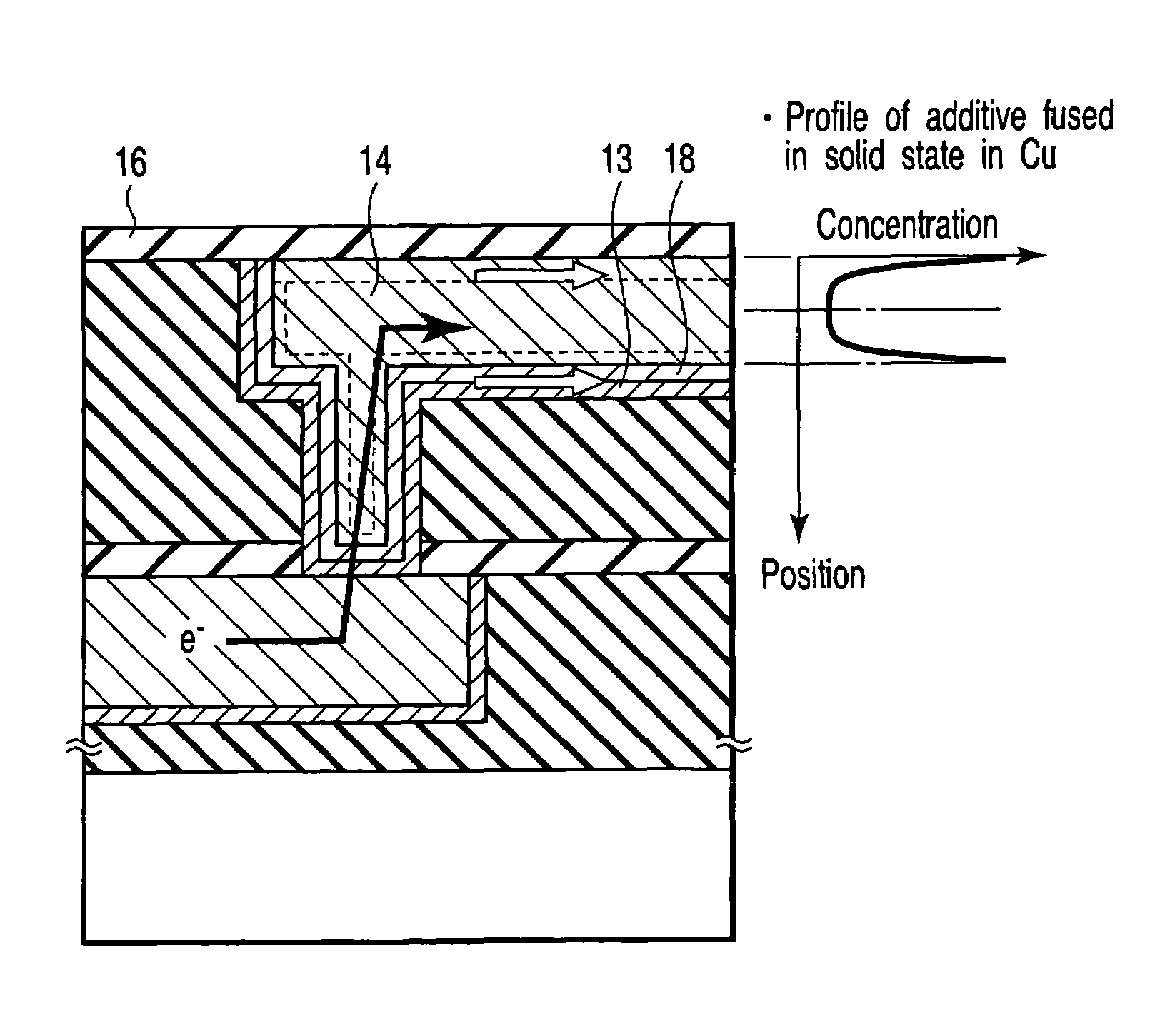
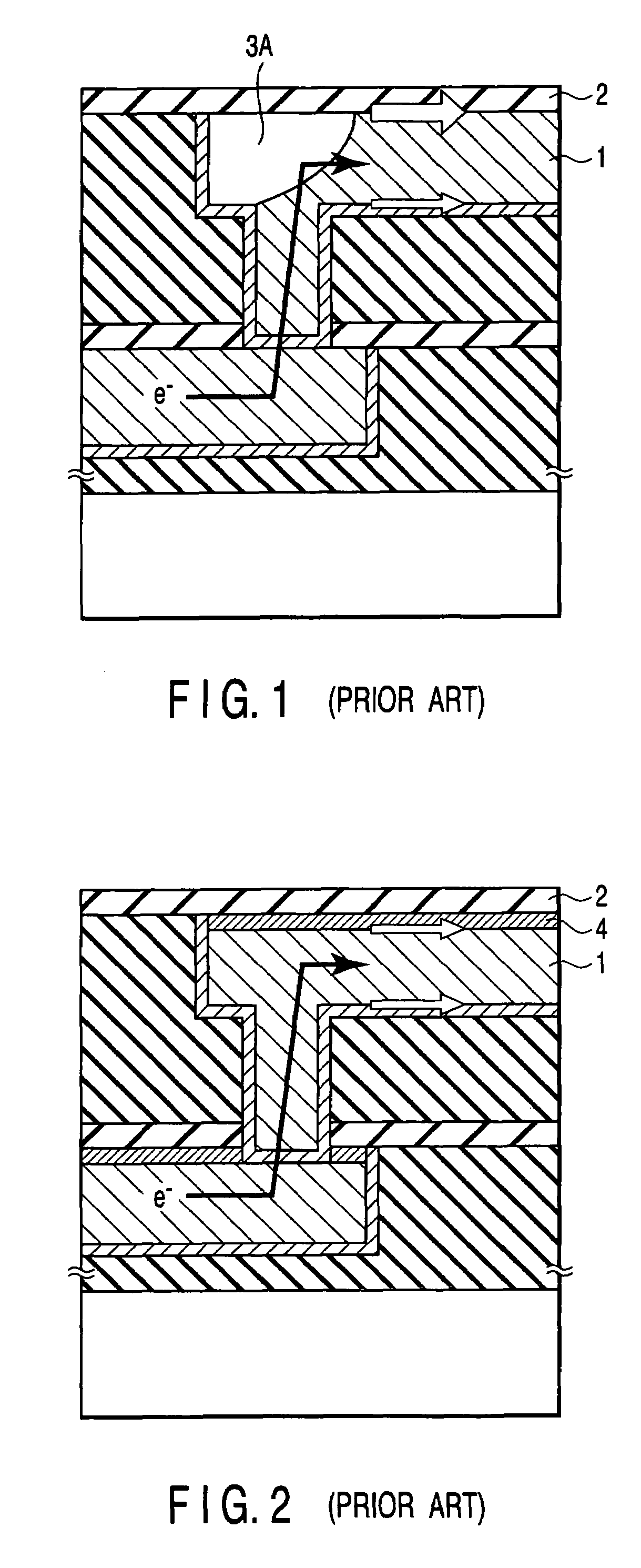
- Incorporating an additive with a gradient concentration profile in the copper wiring, where the highest concentration is at the top surface, to enhance adhesion with both stoppers and barrier metals, using materials like Ti, Al, Si, Co, or P that are solid-soluble in copper, and applying heat treatment for diffusion to ensure effective adhesion without complicating the process.

Environmental Impact of TMV Manufacturing Processes
The manufacturing of Through-Mold Vias (TMVs) with optimized copper adhesion presents significant environmental considerations that require comprehensive assessment and mitigation strategies. The production processes involve multiple chemical treatments, energy-intensive operations, and material consumption patterns that collectively impact environmental sustainability.
Chemical waste generation represents one of the most critical environmental concerns in TMV manufacturing. The copper plating processes require various chemical solutions including acids, alkaline cleaners, and metal salts that must be properly managed throughout their lifecycle. Electroplating baths containing copper sulfate, sulfuric acid, and organic additives generate substantial volumes of contaminated wastewater requiring specialized treatment before discharge. Surface preparation steps involving plasma treatment and chemical etching contribute additional chemical waste streams that demand careful handling and disposal protocols.
Energy consumption during TMV production significantly contributes to the overall environmental footprint. High-temperature curing processes for polymer substrates, plasma treatment systems, and electroplating operations require substantial electrical energy input. The thermal cycling necessary for adhesion optimization and reliability testing further increases energy demands, particularly when extended processing times are required to achieve desired copper-polymer interface properties.
Air emissions from TMV manufacturing processes include volatile organic compounds (VOCs) from polymer processing, particulate matter from mechanical operations, and potential metal vapors from high-temperature treatments. Plasma processing systems may generate ozone and other reactive species that require proper ventilation and treatment systems to prevent atmospheric release.
Resource utilization efficiency presents both challenges and opportunities for environmental impact reduction. Copper material losses during plating and etching processes contribute to raw material waste, while polymer substrate preparation may generate significant solid waste streams. The implementation of closed-loop chemical recovery systems and advanced process control can substantially reduce material consumption and waste generation.
Water consumption and contamination represent major environmental considerations, particularly in regions with water scarcity concerns. Rinse water requirements between processing steps, cooling water for equipment operation, and chemical bath preparation contribute to substantial water usage that must be balanced against environmental constraints and regulatory requirements.
Chemical waste generation represents one of the most critical environmental concerns in TMV manufacturing. The copper plating processes require various chemical solutions including acids, alkaline cleaners, and metal salts that must be properly managed throughout their lifecycle. Electroplating baths containing copper sulfate, sulfuric acid, and organic additives generate substantial volumes of contaminated wastewater requiring specialized treatment before discharge. Surface preparation steps involving plasma treatment and chemical etching contribute additional chemical waste streams that demand careful handling and disposal protocols.
Energy consumption during TMV production significantly contributes to the overall environmental footprint. High-temperature curing processes for polymer substrates, plasma treatment systems, and electroplating operations require substantial electrical energy input. The thermal cycling necessary for adhesion optimization and reliability testing further increases energy demands, particularly when extended processing times are required to achieve desired copper-polymer interface properties.
Air emissions from TMV manufacturing processes include volatile organic compounds (VOCs) from polymer processing, particulate matter from mechanical operations, and potential metal vapors from high-temperature treatments. Plasma processing systems may generate ozone and other reactive species that require proper ventilation and treatment systems to prevent atmospheric release.
Resource utilization efficiency presents both challenges and opportunities for environmental impact reduction. Copper material losses during plating and etching processes contribute to raw material waste, while polymer substrate preparation may generate significant solid waste streams. The implementation of closed-loop chemical recovery systems and advanced process control can substantially reduce material consumption and waste generation.
Water consumption and contamination represent major environmental considerations, particularly in regions with water scarcity concerns. Rinse water requirements between processing steps, cooling water for equipment operation, and chemical bath preparation contribute to substantial water usage that must be balanced against environmental constraints and regulatory requirements.
Quality Standards for TMV Longevity Testing
Establishing comprehensive quality standards for TMV longevity testing requires a multi-faceted approach that addresses both immediate performance metrics and long-term reliability indicators. The foundation of these standards lies in defining measurable parameters that directly correlate with copper adhesion strength and via structural integrity over extended operational periods.
Temperature cycling protocols form a critical component of longevity testing standards. The recommended testing regime involves subjecting TMV samples to temperature ranges from -55°C to +150°C with controlled ramp rates of 5-10°C per minute. Each cycle should maintain temperature extremes for 15-30 minutes, with a minimum of 1000 cycles required for baseline qualification. Advanced longevity assessment extends this to 3000-5000 cycles to simulate 10-15 years of operational stress.
Electrical continuity monitoring throughout testing phases provides real-time assessment of copper adhesion degradation. Resistance measurements should be conducted at 100-cycle intervals using four-point probe methodology with acceptance criteria maintaining resistance increases below 10% from initial baseline values. Any resistance spike exceeding 20% indicates potential adhesion failure requiring immediate investigation.
Mechanical stress testing standards incorporate pull-test methodologies with force application perpendicular to via surfaces. Minimum adhesion strength requirements typically range from 15-25 MPa depending on via diameter and copper thickness specifications. Cross-sectional microscopy analysis at predetermined intervals enables detection of delamination, void formation, or interfacial degradation before complete failure occurs.
Environmental exposure protocols simulate real-world operating conditions including humidity cycling between 10-95% relative humidity at elevated temperatures. Salt spray testing following ASTM B117 standards for 168-hour exposure periods evaluates corrosion resistance of copper-polymer interfaces. These environmental stressors often reveal adhesion weaknesses not apparent under purely thermal or mechanical testing conditions.
Statistical sampling requirements mandate testing minimum quantities of 30 samples per test condition to ensure statistical significance. Pass/fail criteria should incorporate both individual sample performance and population-based statistical analysis with confidence levels exceeding 95% for qualification approval.
Temperature cycling protocols form a critical component of longevity testing standards. The recommended testing regime involves subjecting TMV samples to temperature ranges from -55°C to +150°C with controlled ramp rates of 5-10°C per minute. Each cycle should maintain temperature extremes for 15-30 minutes, with a minimum of 1000 cycles required for baseline qualification. Advanced longevity assessment extends this to 3000-5000 cycles to simulate 10-15 years of operational stress.
Electrical continuity monitoring throughout testing phases provides real-time assessment of copper adhesion degradation. Resistance measurements should be conducted at 100-cycle intervals using four-point probe methodology with acceptance criteria maintaining resistance increases below 10% from initial baseline values. Any resistance spike exceeding 20% indicates potential adhesion failure requiring immediate investigation.
Mechanical stress testing standards incorporate pull-test methodologies with force application perpendicular to via surfaces. Minimum adhesion strength requirements typically range from 15-25 MPa depending on via diameter and copper thickness specifications. Cross-sectional microscopy analysis at predetermined intervals enables detection of delamination, void formation, or interfacial degradation before complete failure occurs.
Environmental exposure protocols simulate real-world operating conditions including humidity cycling between 10-95% relative humidity at elevated temperatures. Salt spray testing following ASTM B117 standards for 168-hour exposure periods evaluates corrosion resistance of copper-polymer interfaces. These environmental stressors often reveal adhesion weaknesses not apparent under purely thermal or mechanical testing conditions.
Statistical sampling requirements mandate testing minimum quantities of 30 samples per test condition to ensure statistical significance. Pass/fail criteria should incorporate both individual sample performance and population-based statistical analysis with confidence levels exceeding 95% for qualification approval.
Unlock deeper insights with PatSnap Eureka Quick Research — get a full tech report to explore trends and direct your research. Try now!
Generate Your Research Report Instantly with AI Agent
Supercharge your innovation with PatSnap Eureka AI Agent Platform!