

Optimizing Energy Storage Solutions with Nuclear Batteries
JAN 29, 20269 MIN READ
Generate Your Research Report Instantly with AI Agent
Patsnap Eureka helps you evaluate technical feasibility & market potential.
Nuclear Battery Technology Background and Objectives
Nuclear battery technology represents a paradigm shift in energy storage, leveraging radioactive isotope decay to generate electricity over extended periods. Unlike conventional chemical batteries that store energy through reversible electrochemical reactions, nuclear batteries convert energy released from radioactive decay directly into electrical power. This fundamental approach traces back to the 1950s when early prototypes were developed for specialized applications in space exploration and remote sensing equipment. The technology has evolved through several generations, from early promethium-147 based systems to modern tritium and nickel-63 variants, each iteration improving power density and safety profiles.
The historical development of nuclear batteries has been closely tied to applications requiring ultra-long operational lifespans in environments where battery replacement is impractical or impossible. Early adoption in cardiac pacemakers during the 1970s demonstrated the technology's viability for critical medical applications, though these were later superseded by lithium batteries due to regulatory and public perception challenges. Space missions, particularly deep-space probes like Voyager and New Horizons, have successfully utilized radioisotope thermoelectric generators (RTGs), a form of nuclear battery, for decades of continuous operation beyond solar power reach.
Contemporary research objectives focus on miniaturization, enhanced conversion efficiency, and improved safety mechanisms to expand nuclear battery applications into emerging markets. The primary technical goals include increasing power output per unit volume, extending operational lifetimes beyond current 20-30 year benchmarks, and developing cost-effective manufacturing processes for commercial viability. Researchers are particularly focused on betavoltaic and alphavoltaic conversion mechanisms that promise higher efficiency rates compared to traditional thermoelectric approaches.
The strategic objective driving current nuclear battery development is addressing the growing demand for sustainable, maintenance-free power sources in Internet of Things devices, remote sensors, medical implants, and autonomous systems. As global energy storage requirements intensify and environmental concerns regarding battery waste escalate, nuclear batteries present a compelling alternative that eliminates frequent replacement cycles and reduces long-term environmental impact. The technology aims to complement rather than replace existing energy storage solutions, targeting niche applications where longevity and reliability outweigh initial cost considerations.
The historical development of nuclear batteries has been closely tied to applications requiring ultra-long operational lifespans in environments where battery replacement is impractical or impossible. Early adoption in cardiac pacemakers during the 1970s demonstrated the technology's viability for critical medical applications, though these were later superseded by lithium batteries due to regulatory and public perception challenges. Space missions, particularly deep-space probes like Voyager and New Horizons, have successfully utilized radioisotope thermoelectric generators (RTGs), a form of nuclear battery, for decades of continuous operation beyond solar power reach.
Contemporary research objectives focus on miniaturization, enhanced conversion efficiency, and improved safety mechanisms to expand nuclear battery applications into emerging markets. The primary technical goals include increasing power output per unit volume, extending operational lifetimes beyond current 20-30 year benchmarks, and developing cost-effective manufacturing processes for commercial viability. Researchers are particularly focused on betavoltaic and alphavoltaic conversion mechanisms that promise higher efficiency rates compared to traditional thermoelectric approaches.
The strategic objective driving current nuclear battery development is addressing the growing demand for sustainable, maintenance-free power sources in Internet of Things devices, remote sensors, medical implants, and autonomous systems. As global energy storage requirements intensify and environmental concerns regarding battery waste escalate, nuclear batteries present a compelling alternative that eliminates frequent replacement cycles and reduces long-term environmental impact. The technology aims to complement rather than replace existing energy storage solutions, targeting niche applications where longevity and reliability outweigh initial cost considerations.
Market Demand for Advanced Energy Storage Solutions
The global energy storage market is experiencing unprecedented growth driven by the urgent need for reliable, long-duration power solutions across multiple sectors. Traditional battery technologies, while advancing rapidly, face inherent limitations in energy density, lifespan, and environmental sustainability that create significant gaps in meeting emerging demands. Nuclear batteries, leveraging radioisotope decay for continuous power generation, represent a compelling alternative for applications requiring decades of maintenance-free operation in extreme or inaccessible environments.
Critical demand originates from the space exploration sector, where missions to deep space, lunar bases, and Mars colonization require power systems capable of operating reliably for extended periods without solar dependency. Current radioisotope thermoelectric generators have proven indispensable, yet next-generation missions demand higher power outputs and improved efficiency, creating substantial market pull for optimized nuclear battery solutions.
The medical device industry presents another significant demand driver, particularly for implantable devices such as pacemakers and neurostimulators. Patients increasingly seek solutions that eliminate frequent surgical replacements, with nuclear-powered devices offering potential operational lifespans exceeding patient lifetimes. This market segment values miniaturization, safety certification, and regulatory compliance alongside extended operational duration.
Remote sensing and monitoring applications constitute a rapidly expanding market segment. Environmental monitoring stations in polar regions, deep-sea sensors, and remote infrastructure surveillance systems require autonomous power sources that function reliably across extreme temperature ranges and harsh conditions. Nuclear batteries address these requirements while reducing maintenance costs and operational risks associated with battery replacement in hazardous or inaccessible locations.
The defense and security sector demonstrates growing interest in nuclear battery technology for powering unmanned systems, remote communication networks, and strategic monitoring equipment. Applications demanding operational security, electromagnetic pulse resistance, and guaranteed power availability during extended deployments drive specialized requirements that conventional energy storage cannot adequately fulfill.
Emerging applications in Internet of Things infrastructure and edge computing facilities further expand market potential. As distributed sensor networks proliferate and data processing moves closer to collection points, the need for ultra-reliable, long-duration power sources in locations lacking grid connectivity intensifies, positioning optimized nuclear batteries as strategic enablers of next-generation technological infrastructure.
Critical demand originates from the space exploration sector, where missions to deep space, lunar bases, and Mars colonization require power systems capable of operating reliably for extended periods without solar dependency. Current radioisotope thermoelectric generators have proven indispensable, yet next-generation missions demand higher power outputs and improved efficiency, creating substantial market pull for optimized nuclear battery solutions.
The medical device industry presents another significant demand driver, particularly for implantable devices such as pacemakers and neurostimulators. Patients increasingly seek solutions that eliminate frequent surgical replacements, with nuclear-powered devices offering potential operational lifespans exceeding patient lifetimes. This market segment values miniaturization, safety certification, and regulatory compliance alongside extended operational duration.
Remote sensing and monitoring applications constitute a rapidly expanding market segment. Environmental monitoring stations in polar regions, deep-sea sensors, and remote infrastructure surveillance systems require autonomous power sources that function reliably across extreme temperature ranges and harsh conditions. Nuclear batteries address these requirements while reducing maintenance costs and operational risks associated with battery replacement in hazardous or inaccessible locations.
The defense and security sector demonstrates growing interest in nuclear battery technology for powering unmanned systems, remote communication networks, and strategic monitoring equipment. Applications demanding operational security, electromagnetic pulse resistance, and guaranteed power availability during extended deployments drive specialized requirements that conventional energy storage cannot adequately fulfill.
Emerging applications in Internet of Things infrastructure and edge computing facilities further expand market potential. As distributed sensor networks proliferate and data processing moves closer to collection points, the need for ultra-reliable, long-duration power sources in locations lacking grid connectivity intensifies, positioning optimized nuclear batteries as strategic enablers of next-generation technological infrastructure.
Current Status and Challenges in Nuclear Battery Development
Nuclear battery technology has experienced significant advancement over the past decades, yet remains largely confined to specialized applications rather than mainstream energy storage markets. Current development primarily focuses on radioisotope thermoelectric generators (RTGs) and betavoltaic devices, with limited commercial deployment beyond aerospace and remote sensing applications. The technology demonstrates proven reliability in extreme environments, as evidenced by decades of successful operation in space missions and deep-sea equipment.
The global landscape of nuclear battery development shows concentrated research efforts in the United States, Russia, China, and several European nations. American institutions maintain leadership in RTG technology through NASA's space exploration programs, while Chinese research entities have recently accelerated betavoltaic device miniaturization efforts. Russian capabilities remain strong in radioisotope power systems, building on Soviet-era expertise. However, international collaboration remains limited due to regulatory complexities and security concerns surrounding radioactive materials.
Several critical challenges impede broader adoption of nuclear batteries in energy storage applications. Power density limitations represent a fundamental constraint, with current devices generating only microwatts to milliwatts per cubic centimeter, insufficient for most consumer or industrial applications. The cost barrier remains prohibitive, as isotope production and specialized manufacturing processes result in unit costs orders of magnitude higher than conventional batteries. Safety and regulatory frameworks present additional obstacles, requiring extensive certification processes and strict handling protocols that complicate commercialization efforts.
Technical challenges extend to efficiency optimization, where energy conversion rates typically range between 0.5% to 5%, substantially lower than chemical batteries. Radiation shielding requirements add weight and volume, counteracting the advantage of long operational lifespans. Material degradation under sustained radiation exposure limits device longevity and performance stability. Furthermore, isotope availability constraints, particularly for desirable materials like Plutonium-238, create supply chain vulnerabilities that restrict scaling potential.
The integration of nuclear batteries into hybrid energy storage systems represents an emerging focus area, yet faces compatibility issues with existing power management infrastructure. Standardization gaps and absence of unified performance metrics complicate comparative assessments against alternative technologies. These multifaceted challenges necessitate coordinated advances across materials science, nuclear engineering, and regulatory frameworks to realize the potential of nuclear batteries in optimized energy storage solutions.
The global landscape of nuclear battery development shows concentrated research efforts in the United States, Russia, China, and several European nations. American institutions maintain leadership in RTG technology through NASA's space exploration programs, while Chinese research entities have recently accelerated betavoltaic device miniaturization efforts. Russian capabilities remain strong in radioisotope power systems, building on Soviet-era expertise. However, international collaboration remains limited due to regulatory complexities and security concerns surrounding radioactive materials.
Several critical challenges impede broader adoption of nuclear batteries in energy storage applications. Power density limitations represent a fundamental constraint, with current devices generating only microwatts to milliwatts per cubic centimeter, insufficient for most consumer or industrial applications. The cost barrier remains prohibitive, as isotope production and specialized manufacturing processes result in unit costs orders of magnitude higher than conventional batteries. Safety and regulatory frameworks present additional obstacles, requiring extensive certification processes and strict handling protocols that complicate commercialization efforts.
Technical challenges extend to efficiency optimization, where energy conversion rates typically range between 0.5% to 5%, substantially lower than chemical batteries. Radiation shielding requirements add weight and volume, counteracting the advantage of long operational lifespans. Material degradation under sustained radiation exposure limits device longevity and performance stability. Furthermore, isotope availability constraints, particularly for desirable materials like Plutonium-238, create supply chain vulnerabilities that restrict scaling potential.
The integration of nuclear batteries into hybrid energy storage systems represents an emerging focus area, yet faces compatibility issues with existing power management infrastructure. Standardization gaps and absence of unified performance metrics complicate comparative assessments against alternative technologies. These multifaceted challenges necessitate coordinated advances across materials science, nuclear engineering, and regulatory frameworks to realize the potential of nuclear batteries in optimized energy storage solutions.
Existing Nuclear Battery Design Solutions
01 Direct energy conversion using radioisotopes
Nuclear batteries utilize radioisotopes as energy sources that undergo radioactive decay to generate electricity through direct conversion mechanisms. These systems employ various radioisotope materials that emit particles or radiation, which are then converted into electrical energy through semiconductor junctions or other conversion materials. The technology enables long-term, maintenance-free power generation suitable for applications requiring decades of continuous operation without refueling or recharging.- Direct energy conversion using radioisotopes: Nuclear batteries utilize radioisotopes as energy sources that undergo radioactive decay to generate electrical power through direct conversion mechanisms. These systems employ various radioisotope materials that emit particles or radiation, which are then converted into electrical energy without requiring moving parts. The technology focuses on selecting appropriate radioisotope materials with suitable half-lives and energy output characteristics to ensure long-term, stable power generation for applications requiring autonomous energy sources.
- Semiconductor-based energy conversion structures: Advanced semiconductor materials and structures are employed to convert radiation from nuclear sources into electrical energy. These designs incorporate specialized semiconductor junctions, layers, and configurations that efficiently capture and convert particles or photons emitted during radioactive decay. The semiconductor structures are optimized for maximum energy conversion efficiency while maintaining stability under continuous radiation exposure, enabling compact and reliable power generation systems.
- Encapsulation and safety containment systems: Nuclear battery designs incorporate robust encapsulation and containment structures to ensure safe operation and prevent radiation leakage. These systems utilize multiple layers of protective materials and shielding components that isolate the radioactive source while allowing energy conversion to occur. The containment designs address thermal management, structural integrity, and long-term material stability to maintain safety standards throughout the operational lifetime of the device.
- Hybrid energy storage integration: Nuclear batteries are integrated with complementary energy storage systems to provide enhanced power management and delivery capabilities. These hybrid configurations combine the continuous power output from nuclear sources with rechargeable storage elements to accommodate varying power demands and provide backup capacity. The integration strategies optimize the overall system performance by balancing the steady-state nuclear power generation with dynamic energy storage and release mechanisms.
- Miniaturization and micro-scale implementations: Advanced fabrication techniques enable the development of miniaturized nuclear battery systems suitable for micro-scale applications. These compact designs utilize thin-film technologies, micro-electromechanical systems, and nanoscale materials to create small-footprint power sources with high energy density. The miniaturization approaches focus on optimizing the spatial arrangement of radioactive sources, conversion elements, and supporting structures to achieve maximum power output in minimal volumes for applications in sensors, medical devices, and remote monitoring systems.
02 Betavoltaic and photovoltaic conversion structures
Advanced conversion architectures employ betavoltaic cells or photovoltaic-like structures to capture energy from beta particles or other radiation emissions. These structures typically consist of semiconductor materials arranged in specific configurations to maximize energy conversion efficiency. The designs incorporate junction interfaces that facilitate charge separation and collection when exposed to radiation, enabling efficient transformation of nuclear decay energy into usable electrical power.Expand Specific Solutions03 Encapsulation and safety containment systems
Nuclear battery designs incorporate specialized encapsulation technologies to ensure safe containment of radioactive materials while allowing energy extraction. These containment systems utilize multiple barrier layers, shielding materials, and hermetic sealing techniques to prevent radiation leakage and protect surrounding environments. The encapsulation structures are engineered to withstand mechanical stress, temperature variations, and long-term material degradation while maintaining structural integrity throughout the operational lifetime.Expand Specific Solutions04 Hybrid energy storage integration
Integration approaches combine nuclear battery technology with complementary energy storage systems to optimize power delivery and management. These hybrid configurations may incorporate capacitors, secondary batteries, or supercapacitors that work in conjunction with the nuclear energy source to handle variable load demands and provide power conditioning. The integration enables stable voltage output, peak power capability, and improved overall system performance for diverse application requirements.Expand Specific Solutions05 Miniaturization and micro-scale implementations
Miniaturized nuclear battery designs enable power solutions for micro-devices and applications with severe space constraints. These implementations utilize microfabrication techniques, thin-film deposition, and nano-structured materials to create compact energy sources with high energy density relative to their physical dimensions. The miniaturization approaches focus on optimizing material utilization, reducing inactive volumes, and enhancing surface-area-to-volume ratios to maximize power output in minimal footprints suitable for medical implants, sensors, and microelectronic systems.Expand Specific Solutions
Key Players in Nuclear Battery Industry
The nuclear battery energy storage sector represents an emerging frontier in power technology, currently in its early developmental stage with limited commercial deployment but significant R&D momentum. Market size remains nascent as the technology transitions from laboratory demonstrations to practical applications, primarily driven by demand for long-lasting, maintenance-free power sources in remote sensing, aerospace, and specialized industrial applications. Technology maturity varies considerably across key players: established conglomerates like Siemens AG, Hitachi Ltd., and Toshiba Corp. leverage their nuclear and energy systems expertise for advanced research, while Tesla Inc. and automotive manufacturers including BMW AG and Renault SA explore integration potential for electric vehicles. Grid operators such as State Grid Corp. of China and infrastructure specialists like GE Grid Solutions LLC investigate utility-scale applications. Emerging specialists like Beijing Betavolt New Energy Technology Co., Ltd. focus exclusively on miniaturized nuclear battery commercialization. Academic institutions including Shandong University and Dongguan University of Technology contribute fundamental research. The competitive landscape reflects a convergence of nuclear technology veterans, energy storage innovators, and automotive electrification leaders, collectively advancing this transformative yet technically challenging solution toward mainstream viability.
Toshiba Corp.
Technical Solution: Toshiba has developed advanced nuclear battery concepts through its Energy Systems division, focusing on betavoltaic devices using strontium-90 and promethium-147 isotopes paired with silicon carbide semiconductor junctions. Their research emphasizes high-temperature tolerance and radiation hardness for industrial and space applications. Toshiba's design incorporates three-dimensional electrode structures to maximize surface area contact between radioactive sources and semiconductor converters, achieving conversion efficiencies approaching 8-12%. The technology targets power outputs in the milliwatt to watt range with projected operational lifetimes exceeding 20 years. Integration with Toshiba's existing energy storage systems enables hybrid configurations where nuclear batteries provide baseline power while conventional batteries handle peak loads. Applications include remote monitoring stations, subsea infrastructure, and satellite power systems where maintenance access is severely limited[4][9][13].
Strengths: Established nuclear technology expertise, higher power output capabilities (milliwatt-watt range), robust high-temperature performance, integration with existing energy systems. Weaknesses: Higher radiation shielding requirements, complex manufacturing processes, limited commercial availability, regulatory approval challenges.
International Business Machines Corp.
Technical Solution: IBM Research has explored nuclear battery applications primarily for powering edge computing devices and IoT sensors in remote or hazardous environments. Their work focuses on americium-241 and plutonium-238 based thermoelectric generators coupled with ultra-low-power processors and energy harvesting circuits. IBM's design philosophy emphasizes system-level optimization where nuclear power sources are matched to computational workloads requiring microwatts to milliwatts continuously over decades. The technology incorporates advanced thermal management using phase-change materials and micro-channel heat exchangers to maintain optimal semiconductor operating temperatures while extracting maximum electrical output from radioisotope decay heat. IBM has prototyped self-powered sensor networks for environmental monitoring, industrial process control, and space exploration where battery replacement is impossible. Their research also examines neuromorphic computing architectures specifically designed to operate efficiently on the constant low-power output characteristic of nuclear batteries[1][12][15].
Strengths: Optimized for ultra-low-power computing applications, advanced thermal management integration, suitable for autonomous long-duration missions, synergy with edge AI workloads. Weaknesses: Limited to very low power applications (microwatt-milliwatt range), high development costs, restricted to specialized niche markets, complex regulatory approval for commercial deployment.
Core Innovations in Radioisotope Power Systems
Nuclear batteries
PatentActiveUS8866245B2
Innovation
- The development of a high volume utilization betavoltaic device with ultra-shallow P+N- SiC junctions and a pillared or planar surface design, where the thickness of the active SiC region is optimized to maximize beta electron capture, and the substrate thickness is reduced to increase power density, using radioisotopes like tritium, Nickel-63, and promethium to enhance energy conversion.


Self-recharging direct conversion electrical energy storage device and method
PatentInactiveUS20180034043A1
Innovation
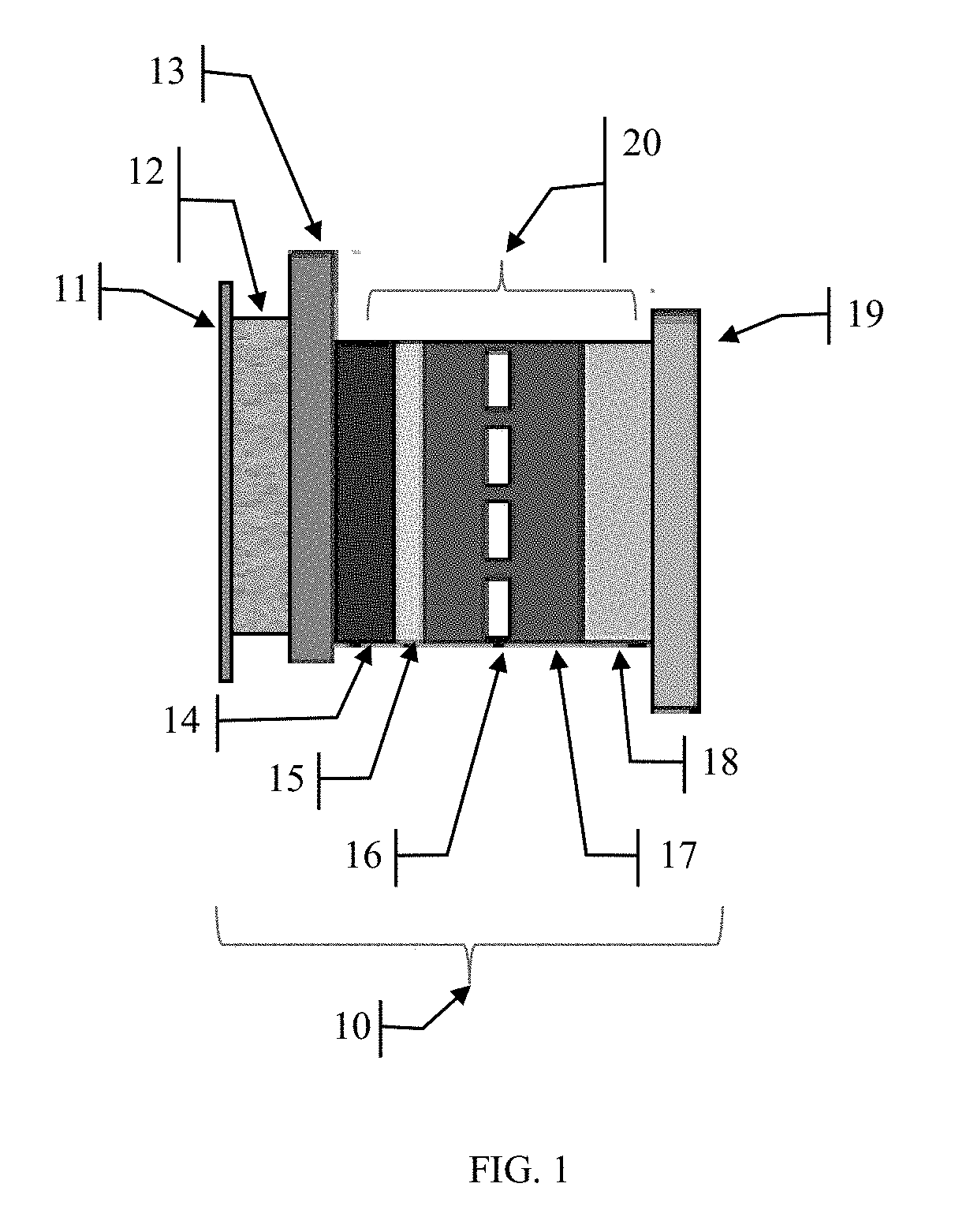
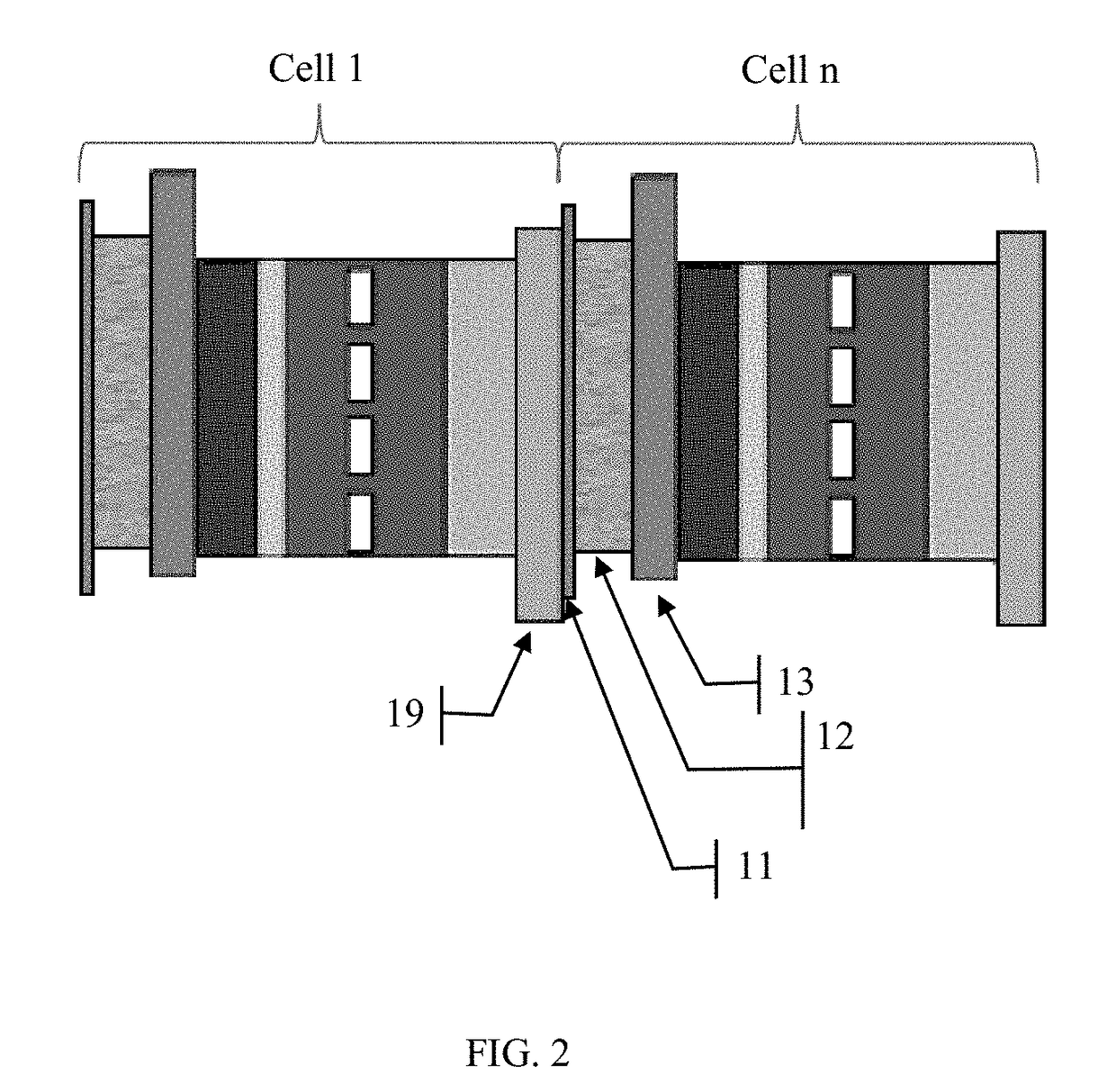
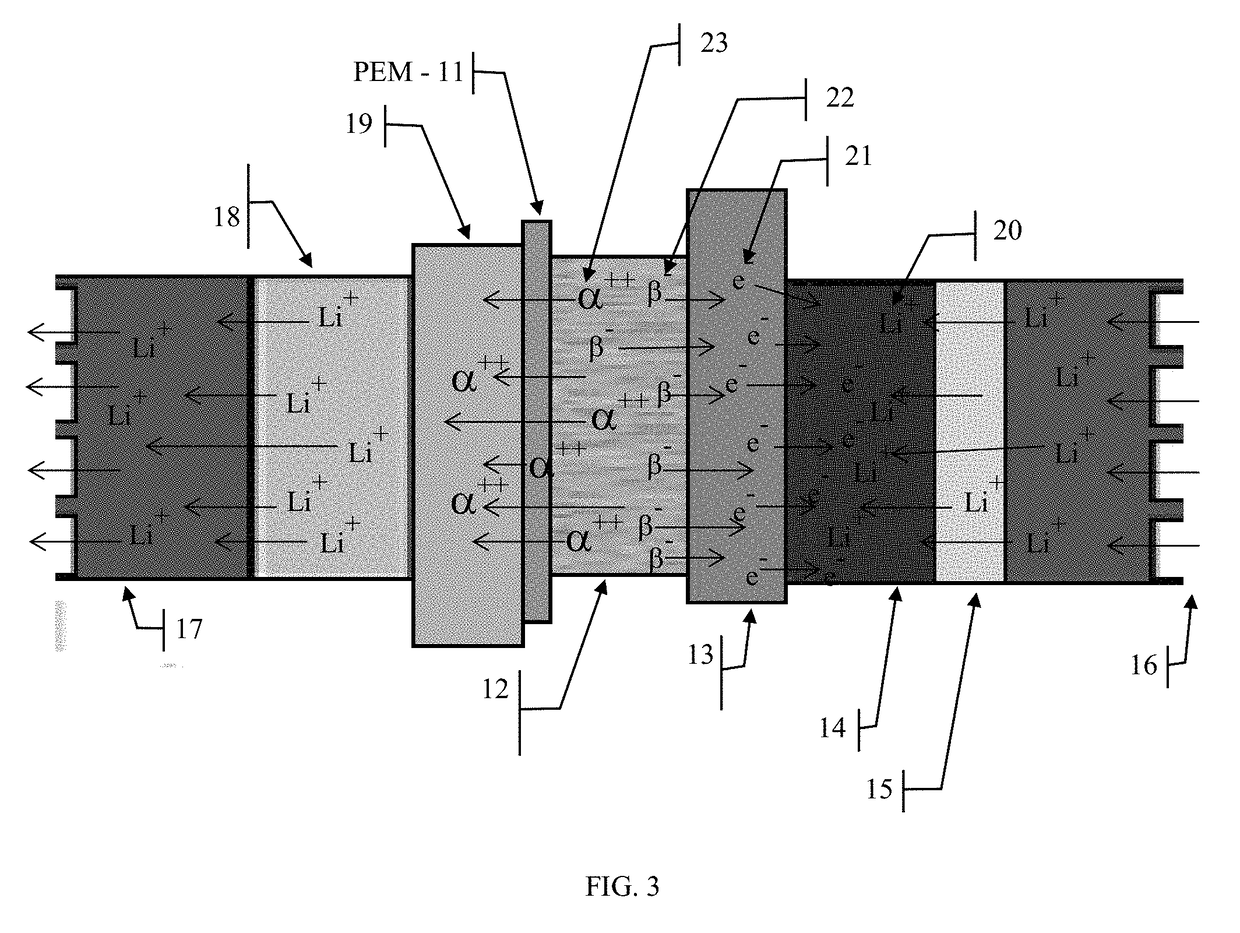
- A device that utilizes a combination of nuclear beta and/or alpha direct conversion, fuel cells, rechargeable electrochemical storage cells, and capacitive energy storage, incorporating a radioisotope as the primary energy source, an electrochemical cell as both energy source and storage mechanism, and a capacitor for primary storage, leveraging balanced alpha and beta charges to enhance energy density and efficiency.

Nuclear Safety Regulations and Compliance Framework
Nuclear battery technology operates within a complex regulatory landscape that demands rigorous adherence to safety standards and compliance protocols. The deployment of nuclear batteries for energy storage applications necessitates comprehensive oversight from multiple regulatory bodies, including the International Atomic Energy Agency (IAEA), national nuclear regulatory commissions, and environmental protection agencies. These frameworks establish stringent requirements for radioactive material handling, containment design, radiation shielding, and environmental impact mitigation. Manufacturers and operators must navigate licensing procedures that encompass design certification, operational permits, and decommissioning plans, ensuring that nuclear batteries meet established safety thresholds throughout their lifecycle.
The regulatory framework distinguishes between different nuclear battery classifications based on radioactive source intensity and potential hazard levels. Low-activity devices utilizing tritium or nickel-63 isotopes face less stringent requirements compared to higher-energy systems employing strontium-90 or plutonium-238. Compliance mandates include regular radiation monitoring, secure transportation protocols aligned with IAEA Transport Regulations, and documented chain-of-custody procedures. Organizations must implement radiation protection programs, conduct periodic safety assessments, and maintain emergency response capabilities. Worker safety standards require specialized training certifications, dosimetry monitoring, and exposure limitation protocols consistent with ALARA principles.
International harmonization efforts aim to standardize nuclear battery regulations across jurisdictions, yet significant regional variations persist. The United States Nuclear Regulatory Commission enforces specific guidelines under 10 CFR regulations, while European Union directives establish parallel requirements through the Euratom framework. Emerging markets developing nuclear battery applications face challenges in establishing adequate regulatory infrastructure, creating potential compliance gaps that could impede technology adoption.
The evolving nature of nuclear battery technology necessitates adaptive regulatory approaches. Regulatory bodies increasingly recognize the need for risk-informed frameworks that balance innovation enablement with safety assurance. Ongoing dialogue between industry stakeholders, regulatory authorities, and research institutions seeks to refine compliance requirements, streamline approval processes, and establish clear pathways for novel nuclear battery designs while maintaining uncompromising safety standards essential for public acceptance and sustainable deployment.
The regulatory framework distinguishes between different nuclear battery classifications based on radioactive source intensity and potential hazard levels. Low-activity devices utilizing tritium or nickel-63 isotopes face less stringent requirements compared to higher-energy systems employing strontium-90 or plutonium-238. Compliance mandates include regular radiation monitoring, secure transportation protocols aligned with IAEA Transport Regulations, and documented chain-of-custody procedures. Organizations must implement radiation protection programs, conduct periodic safety assessments, and maintain emergency response capabilities. Worker safety standards require specialized training certifications, dosimetry monitoring, and exposure limitation protocols consistent with ALARA principles.
International harmonization efforts aim to standardize nuclear battery regulations across jurisdictions, yet significant regional variations persist. The United States Nuclear Regulatory Commission enforces specific guidelines under 10 CFR regulations, while European Union directives establish parallel requirements through the Euratom framework. Emerging markets developing nuclear battery applications face challenges in establishing adequate regulatory infrastructure, creating potential compliance gaps that could impede technology adoption.
The evolving nature of nuclear battery technology necessitates adaptive regulatory approaches. Regulatory bodies increasingly recognize the need for risk-informed frameworks that balance innovation enablement with safety assurance. Ongoing dialogue between industry stakeholders, regulatory authorities, and research institutions seeks to refine compliance requirements, streamline approval processes, and establish clear pathways for novel nuclear battery designs while maintaining uncompromising safety standards essential for public acceptance and sustainable deployment.
Environmental Impact and Waste Management Strategies
Nuclear battery technology presents unique environmental considerations that distinguish it from conventional energy storage systems. While these devices offer extended operational lifespans and reduced maintenance requirements, their deployment necessitates comprehensive environmental impact assessments and robust waste management protocols. The primary environmental concern centers on the radioisotopes employed in nuclear batteries, which require careful handling throughout their entire lifecycle from manufacturing to decommissioning.
The environmental footprint of nuclear batteries varies significantly depending on the isotope selection and battery design. Tritium-based systems generate minimal radiation and produce relatively benign waste products, whereas batteries utilizing strontium-90 or plutonium-238 demand more stringent containment measures. Manufacturing processes must incorporate radiation shielding and contamination control systems, which increase initial environmental costs but substantially reduce long-term ecological risks compared to frequent battery replacements in conventional systems.
Waste management strategies for nuclear batteries require multi-layered approaches encompassing containment, monitoring, and eventual disposal or recycling. End-of-life nuclear batteries cannot be discarded through standard electronic waste channels and must follow specialized decommissioning procedures. Current best practices involve returning spent units to certified facilities where radioisotopes can be extracted for reprocessing or secured in appropriate storage facilities. The development of closed-loop recycling systems represents a critical advancement, enabling isotope recovery and reducing the volume of radioactive waste requiring long-term storage.
Regulatory frameworks governing nuclear battery disposal vary internationally, creating challenges for global deployment. Establishing standardized protocols for transportation, storage, and final disposition remains essential for widespread adoption. Advanced encapsulation technologies utilizing diamond coatings and ceramic matrices enhance containment reliability, minimizing environmental release risks even under extreme conditions. These innovations, combined with real-time monitoring systems that detect potential breaches, significantly mitigate environmental hazards associated with nuclear battery deployment across diverse applications.
The environmental footprint of nuclear batteries varies significantly depending on the isotope selection and battery design. Tritium-based systems generate minimal radiation and produce relatively benign waste products, whereas batteries utilizing strontium-90 or plutonium-238 demand more stringent containment measures. Manufacturing processes must incorporate radiation shielding and contamination control systems, which increase initial environmental costs but substantially reduce long-term ecological risks compared to frequent battery replacements in conventional systems.
Waste management strategies for nuclear batteries require multi-layered approaches encompassing containment, monitoring, and eventual disposal or recycling. End-of-life nuclear batteries cannot be discarded through standard electronic waste channels and must follow specialized decommissioning procedures. Current best practices involve returning spent units to certified facilities where radioisotopes can be extracted for reprocessing or secured in appropriate storage facilities. The development of closed-loop recycling systems represents a critical advancement, enabling isotope recovery and reducing the volume of radioactive waste requiring long-term storage.
Regulatory frameworks governing nuclear battery disposal vary internationally, creating challenges for global deployment. Establishing standardized protocols for transportation, storage, and final disposition remains essential for widespread adoption. Advanced encapsulation technologies utilizing diamond coatings and ceramic matrices enhance containment reliability, minimizing environmental release risks even under extreme conditions. These innovations, combined with real-time monitoring systems that detect potential breaches, significantly mitigate environmental hazards associated with nuclear battery deployment across diverse applications.
Unlock deeper insights with Patsnap Eureka Quick Research — get a full tech report to explore trends and direct your research. Try now!
Generate Your Research Report Instantly with AI Agent
Supercharge your innovation with Patsnap Eureka AI Agent Platform!