

Optimizing Flow Rate in Plate Heat Exchangers for Energy Savings
MAR 10, 20269 MIN READ
Generate Your Research Report Instantly with AI Agent
Patsnap Eureka helps you evaluate technical feasibility & market potential.
Heat Exchanger Flow Optimization Background and Energy Goals
Plate heat exchangers have emerged as critical components in industrial thermal management systems since their commercial introduction in the 1930s. Originally developed for the dairy industry, these devices have evolved to become indispensable across diverse sectors including chemical processing, power generation, HVAC systems, and renewable energy applications. The fundamental principle involves transferring heat between two fluid streams through corrugated metal plates, creating turbulent flow patterns that enhance heat transfer efficiency while maintaining compact footprints.
The evolution of plate heat exchanger technology has been driven by increasing demands for energy efficiency and environmental sustainability. Early designs focused primarily on basic heat transfer functionality, but modern applications require sophisticated optimization of flow dynamics to minimize energy consumption while maximizing thermal performance. This technological progression reflects broader industrial trends toward sustainable manufacturing and operational practices.
Contemporary energy challenges have positioned flow rate optimization as a paramount concern in plate heat exchanger design and operation. Rising energy costs, stringent environmental regulations, and corporate sustainability commitments have created unprecedented pressure to maximize system efficiency. The optimization of flow rates directly impacts pumping power requirements, heat transfer coefficients, and overall system energy consumption, making it a critical factor in achieving operational excellence.
Current technological objectives center on developing intelligent flow control mechanisms that can dynamically adjust to varying operational conditions. These goals encompass real-time monitoring systems, predictive maintenance capabilities, and adaptive control algorithms that optimize flow rates based on thermal loads, fluid properties, and energy pricing structures. Advanced computational fluid dynamics modeling and machine learning integration represent key technological frontiers in achieving these optimization targets.
The strategic importance of flow rate optimization extends beyond immediate energy savings to encompass broader operational benefits. Optimized flow patterns reduce fouling rates, extend equipment lifespan, and improve process reliability. These secondary benefits compound the primary energy savings, creating substantial long-term value propositions for industrial operators seeking competitive advantages through technological innovation.
Future technological development aims to integrate Internet of Things connectivity, artificial intelligence-driven optimization algorithms, and advanced materials science to create next-generation plate heat exchangers capable of autonomous operation and continuous performance improvement.
Market Demand for Energy-Efficient Heat Exchange Systems
The global market for energy-efficient heat exchange systems is experiencing unprecedented growth driven by stringent environmental regulations and rising energy costs. Industrial sectors including chemical processing, food and beverage, HVAC, and power generation are increasingly prioritizing equipment that delivers superior thermal performance while minimizing energy consumption. This shift represents a fundamental transformation in how industries approach thermal management, moving beyond basic functionality to embrace systems that optimize operational efficiency.
Plate heat exchangers have emerged as a preferred solution due to their compact design and exceptional heat transfer capabilities. The demand is particularly pronounced in industries where space constraints and energy efficiency are critical factors. Manufacturing facilities are actively seeking technologies that can reduce their carbon footprint while maintaining or improving production capacity, creating substantial market opportunities for optimized flow rate solutions.
Regulatory frameworks across major economies are accelerating adoption of energy-efficient technologies. Carbon pricing mechanisms and energy efficiency mandates are compelling organizations to invest in advanced heat exchange systems. The European Union's Green Deal and similar initiatives in North America and Asia are establishing performance standards that favor innovative plate heat exchanger designs with optimized flow characteristics.
The industrial automation trend is creating additional demand for intelligent heat exchange systems capable of real-time flow optimization. Smart manufacturing initiatives require thermal management solutions that can adapt dynamically to varying operational conditions while maintaining peak efficiency. This technological convergence is expanding the addressable market beyond traditional applications.
Economic factors are equally compelling, as energy costs continue to represent significant operational expenses across industries. Organizations are recognizing that initial investments in optimized plate heat exchangers generate substantial long-term savings through reduced energy consumption and improved system reliability. The payback periods for advanced systems have shortened considerably, making adoption decisions increasingly straightforward.
Emerging markets are contributing significantly to demand growth as developing economies modernize their industrial infrastructure. These regions are often implementing the latest efficiency standards from the outset, creating opportunities for advanced plate heat exchanger technologies that incorporate flow rate optimization capabilities.
Current Flow Rate Challenges in Plate Heat Exchangers
Plate heat exchangers face significant flow rate optimization challenges that directly impact their energy efficiency and operational performance. The primary challenge stems from achieving optimal flow distribution across multiple parallel channels while maintaining uniform heat transfer coefficients. Uneven flow distribution leads to reduced thermal effectiveness and increased pressure drops, resulting in higher energy consumption and decreased system efficiency.
Flow maldistribution represents one of the most critical issues in plate heat exchanger operation. This phenomenon occurs when fluid flow is not evenly distributed among the parallel flow channels, causing some channels to experience higher velocities while others remain underutilized. The consequences include reduced heat transfer performance, increased pressure losses, and potential hot spots that can compromise equipment longevity.
Pressure drop optimization presents another substantial challenge in flow rate management. Excessive pressure drops require higher pumping power, directly increasing energy consumption. The relationship between flow rate, pressure drop, and heat transfer coefficient creates a complex optimization problem where reducing pressure drop often conflicts with maintaining adequate heat transfer performance.
Fouling accumulation significantly complicates flow rate optimization by creating non-uniform flow patterns and increased pressure drops over time. As deposits build up unevenly across different channels, the optimal flow rate continuously shifts, making it difficult to maintain peak efficiency throughout the operational cycle. This dynamic challenge requires adaptive flow control strategies that can respond to changing fouling conditions.
Temperature-dependent fluid properties add another layer of complexity to flow rate optimization. Viscosity variations across the heat exchanger can create uneven flow distribution, particularly in applications with large temperature differences. These property changes affect both the optimal flow rate and the pressure drop characteristics, requiring sophisticated control algorithms to maintain efficiency.
The challenge of balancing heat transfer enhancement with pressure drop penalties becomes particularly acute in energy-saving applications. Higher flow rates generally improve heat transfer coefficients but exponentially increase pressure drops and pumping power requirements. Finding the optimal operating point requires comprehensive understanding of the trade-offs between thermal performance and hydraulic losses.
Transient operating conditions further complicate flow rate optimization, as varying load demands require dynamic adjustment of flow rates while maintaining system stability. The thermal inertia of plate heat exchangers can lead to temporary inefficiencies during flow rate transitions, making real-time optimization challenging.
Existing Flow Rate Optimization Solutions
01 Flow distribution optimization in plate heat exchangers
Techniques for optimizing flow distribution across multiple plates in heat exchangers to ensure uniform flow rates and improve heat transfer efficiency. This includes the design of inlet and outlet manifolds, flow channel configurations, and distribution systems that minimize flow maldistribution and pressure drops while maximizing thermal performance.- Flow distribution optimization in plate heat exchangers: Techniques for optimizing flow distribution across multiple plates in heat exchangers to ensure uniform flow rates and improve heat transfer efficiency. This includes the design of inlet and outlet manifolds, flow channel configurations, and distribution systems that minimize flow maldistribution and pressure drops while maximizing thermal performance.
- Flow rate control and regulation mechanisms: Systems and methods for controlling and regulating flow rates in plate heat exchangers through various mechanisms including valves, sensors, and automated control systems. These technologies enable precise adjustment of flow rates to maintain optimal operating conditions and respond to varying thermal loads and process requirements.
- Plate geometry and channel design for flow optimization: Innovations in plate geometry, corrugation patterns, and channel configurations that influence flow characteristics and rates in plate heat exchangers. These designs aim to enhance turbulence, reduce fouling, minimize pressure drops, and achieve desired flow velocities for improved heat transfer performance.
- Multi-pass and parallel flow arrangements: Configurations involving multiple flow passes and parallel flow paths in plate heat exchangers to manage flow rates and achieve specific thermal objectives. These arrangements allow for flexible flow rate distribution, increased capacity, and improved temperature control by directing fluids through different plate sections.
- Flow measurement and monitoring systems: Technologies for measuring and monitoring flow rates in plate heat exchangers using various sensing devices and instrumentation. These systems provide real-time data on flow conditions, enable performance optimization, facilitate maintenance scheduling, and ensure operational efficiency through continuous monitoring of flow parameters.
02 Flow rate control and regulation mechanisms
Systems and methods for controlling and regulating flow rates in plate heat exchangers through various mechanisms including valves, sensors, and automated control systems. These technologies enable dynamic adjustment of flow rates based on operating conditions, temperature requirements, and system demands to maintain optimal performance.Expand Specific Solutions03 Plate geometry and channel design for flow optimization
Innovations in plate geometry, corrugation patterns, and channel configurations that influence flow characteristics and rates in plate heat exchangers. These designs focus on creating turbulent flow conditions, reducing fouling, and enhancing heat transfer coefficients while managing pressure drops and flow velocities.Expand Specific Solutions04 Multi-pass and parallel flow arrangements
Configurations involving multiple flow passes and parallel flow paths in plate heat exchangers to accommodate varying flow rate requirements and improve overall system efficiency. These arrangements allow for flexible operation under different load conditions and enable better matching of flow rates between hot and cold sides.Expand Specific Solutions05 Flow measurement and monitoring systems
Technologies for measuring and monitoring flow rates in plate heat exchangers using various sensing devices and instrumentation. These systems provide real-time data on flow conditions, enable performance optimization, and facilitate predictive maintenance by detecting anomalies in flow patterns or rates.Expand Specific Solutions
Key Players in Heat Exchanger and Flow Control Industry
The plate heat exchanger optimization market is experiencing robust growth driven by increasing energy efficiency demands across industrial sectors. The industry has reached a mature technological stage, with established players like Danfoss A/S, Alfa Laval Corporate AB, and Hisaka Works Ltd. leading innovation in flow rate optimization technologies. Market dynamics show strong competition between European leaders (Danfoss, Alfa Laval), Asian manufacturers (Mitsubishi Electric, DAIKIN INDUSTRIES, Panasonic Holdings), and specialized Chinese companies (Zhejiang Sanhua Intelligent Controls, Hangzhou Sanhua Research Institute). Technology maturity varies significantly, with companies like WELCON Inc. pioneering advanced diffusion bonding techniques for microchannel heat exchangers, while traditional manufacturers focus on control system optimization. The automotive thermal management segment, represented by MAHLE International and Hanon Systems, drives significant innovation in compact, high-efficiency designs, indicating strong market segmentation and specialized technological development paths.
Danfoss A/S
Technical Solution: Danfoss implements intelligent flow optimization through their electronic expansion valves and variable speed drive systems for plate heat exchangers. Their solution combines advanced control algorithms with IoT-enabled sensors to continuously monitor and adjust flow rates, achieving optimal heat transfer while minimizing energy consumption. The system utilizes machine learning algorithms to predict thermal loads and preemptively adjust flow parameters, resulting in energy savings of 15-30% compared to conventional fixed-flow systems. Their technology also incorporates predictive maintenance capabilities to optimize long-term performance.
Strengths: Strong expertise in control systems and energy-efficient solutions with comprehensive IoT integration. Weaknesses: Limited to specific applications and requires sophisticated control infrastructure.
Alfa Laval Corporate AB
Technical Solution: Alfa Laval develops advanced plate heat exchanger technology with optimized flow distribution systems and variable flow rate control mechanisms. Their solutions incorporate computational fluid dynamics (CFD) modeling to optimize channel geometry and flow patterns, achieving heat transfer efficiency improvements of up to 15% while reducing pressure drops by 20-30%. The company's AlfaBlue technology integrates smart flow control valves and real-time monitoring systems to automatically adjust flow rates based on thermal load requirements, enabling energy savings of 10-25% in industrial applications.
Strengths: Market leader with extensive R&D capabilities and proven track record in heat exchanger optimization. Weaknesses: High initial investment costs and complex system integration requirements.
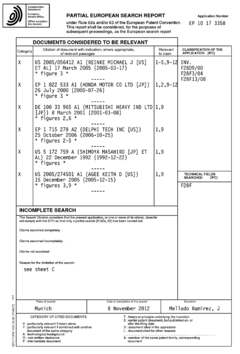
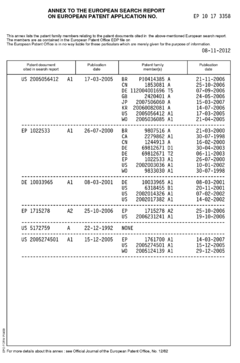
Core Flow Dynamics Patents for Plate Heat Exchangers
System and method for dynamic control of a heat exchanger
PatentWO2015078661A1
Innovation
- A dynamic control system comprising a heat exchanger with multiple fluid passages, local temperature sensors, and a controller that adjusts fluid flow to even out temperature differences and optimize the operation of each fluid passage, ensuring all passages contribute equally to the overall performance.


Apparatus and method for equalizing hot fluid exit plane plate temperatures in heat exchangers
PatentActiveEP2299228A3
Innovation
- The implementation of variable flow structures on the plates, such as protrusions and dimples, to manipulate gas velocities and heat transfer coefficients, ensuring that the metal plate temperatures are more evenly distributed by optimizing the velocity of hot and cold gas streams, thereby preventing condensation and corrosion.

Energy Efficiency Standards and Environmental Regulations
Energy efficiency standards for plate heat exchangers have evolved significantly over the past decade, driven by global climate commitments and rising energy costs. The European Union's Energy Efficiency Directive mandates minimum performance requirements for industrial heat recovery systems, with plate heat exchangers falling under specific thermal efficiency thresholds. These standards typically require heat recovery efficiency rates exceeding 85% for industrial applications, directly impacting flow rate optimization strategies.
In the United States, the Department of Energy's Better Buildings Initiative establishes voluntary but increasingly adopted benchmarks for heat exchanger performance in commercial and industrial sectors. These guidelines emphasize the correlation between optimized flow rates and overall system efficiency, encouraging manufacturers to develop advanced flow control mechanisms that can adapt to varying operational conditions while maintaining compliance with energy performance metrics.
Environmental regulations further intensify the focus on flow rate optimization in plate heat exchangers. The Montreal Protocol's phase-down of hydrofluorocarbons has accelerated the adoption of natural refrigerants and alternative heat transfer fluids, which often require precise flow rate control to achieve optimal performance. Additionally, carbon emission reduction targets established under the Paris Agreement have prompted stricter regulations on industrial energy consumption, making flow rate optimization a critical compliance factor.
Regional environmental standards vary significantly, with Nordic countries implementing the most stringent requirements for industrial heat recovery systems. These regulations often mandate real-time monitoring of heat exchanger performance, including flow rate parameters, to ensure continuous compliance with energy efficiency targets. Non-compliance can result in substantial penalties and mandatory system upgrades.
The regulatory landscape continues to evolve, with emerging standards focusing on dynamic efficiency optimization rather than static performance metrics. This shift emphasizes the importance of intelligent flow rate control systems that can respond to changing operational conditions while maintaining regulatory compliance. Future regulations are expected to incorporate artificial intelligence-driven optimization requirements, making advanced flow rate control technologies essential for market competitiveness and regulatory adherence.
Thermal Performance Modeling and Simulation Methods
Thermal performance modeling and simulation methods for plate heat exchangers have evolved significantly with advances in computational fluid dynamics and heat transfer analysis. These methods enable engineers to predict and optimize flow rate characteristics while minimizing energy consumption through detailed mathematical representations of heat and mass transfer phenomena.
Computational Fluid Dynamics (CFD) modeling represents the most comprehensive approach for analyzing thermal performance in plate heat exchangers. Advanced CFD software packages utilize finite element and finite volume methods to solve the Navier-Stokes equations coupled with energy conservation equations. These simulations can accurately predict temperature distributions, pressure drops, and heat transfer coefficients across various flow rates, providing critical insights for energy optimization strategies.
Heat transfer coefficient correlations form another essential modeling approach, particularly for preliminary design and optimization studies. Empirical correlations such as the Dittus-Boelter equation and more specialized relationships for plate geometries enable rapid assessment of thermal performance under different flow conditions. These correlations are often integrated into system-level models to evaluate energy savings potential across operating ranges.
Effectiveness-NTU modeling methods provide simplified yet accurate thermal performance predictions for plate heat exchangers. This approach relates heat exchanger effectiveness to the number of transfer units and flow arrangement, allowing engineers to optimize flow rates for maximum energy efficiency without requiring detailed geometric modeling. The method proves particularly valuable for parametric studies and real-time optimization applications.
Multi-physics simulation platforms increasingly incorporate coupled thermal-hydraulic modeling capabilities, enabling simultaneous analysis of heat transfer, fluid flow, and structural mechanics. These integrated approaches account for thermal expansion effects, flow-induced vibrations, and material property variations that influence optimal flow rate selection for energy-efficient operation.
Machine learning-enhanced modeling techniques are emerging as powerful tools for thermal performance prediction and optimization. Neural networks trained on experimental data and CFD results can rapidly predict thermal performance across wide operating ranges, enabling real-time flow rate optimization for dynamic energy management systems in industrial applications.
Unlock deeper insights with Patsnap Eureka Quick Research — get a full tech report to explore trends and direct your research. Try now!
Generate Your Research Report Instantly with AI Agent
Supercharge your innovation with Patsnap Eureka AI Agent Platform!