

Optimizing GDI Engine Emissions for Regulatory Compliance
AUG 28, 20259 MIN READ
Generate Your Research Report Instantly with AI Agent
PatSnap Eureka helps you evaluate technical feasibility & market potential.
GDI Engine Emission Technology Background and Objectives
Gasoline Direct Injection (GDI) technology has evolved significantly since its commercial introduction in the late 1990s, representing a pivotal advancement in internal combustion engine design. This technology directly injects fuel into the combustion chamber rather than the intake port, offering superior fuel atomization, precise control over fuel delivery, and enhanced combustion efficiency. The historical trajectory of GDI systems shows continuous refinement from early mechanical systems to sophisticated electronic control architectures that integrate with comprehensive engine management systems.
The evolution of GDI technology has been primarily driven by increasingly stringent global emission regulations, particularly Euro 6d, China 6, and US Tier 3 standards. These regulations have progressively lowered permissible levels of nitrogen oxides (NOx), particulate matter (PM), carbon monoxide (CO), and unburned hydrocarbons (HC), compelling manufacturers to develop more advanced emission control strategies.
Current technical objectives for GDI emission optimization focus on addressing the inherent challenges of this injection technology. Despite its efficiency advantages, GDI engines typically produce higher levels of particulate matter and can experience increased NOx emissions under certain operating conditions. The formation of these pollutants is intrinsically linked to the combustion process, where fuel stratification, wall wetting, and incomplete combustion remain persistent challenges.
The industry is pursuing multiple technical pathways to overcome these challenges. Advanced injection strategies, including multiple injections per cycle and optimized spray patterns, are being developed to minimize wall wetting and improve air-fuel mixture homogeneity. Concurrently, enhanced aftertreatment systems, particularly gasoline particulate filters (GPFs) and advanced three-way catalysts, are being refined to capture emissions that cannot be eliminated through combustion optimization alone.
Computational fluid dynamics (CFD) modeling and artificial intelligence are increasingly employed to predict and optimize combustion behavior across diverse operating conditions. These tools enable engineers to visualize complex in-cylinder phenomena and develop control strategies that adapt to varying driving conditions, ambient temperatures, and fuel qualities.
The ultimate technical objective is to develop GDI systems that maintain their performance and efficiency advantages while achieving near-zero emissions across all operating conditions. This goal necessitates a holistic approach that integrates advanced fuel injection hardware, sophisticated control algorithms, and next-generation aftertreatment technologies. Success in this domain will ensure GDI engines remain viable in an increasingly electrified automotive landscape, particularly as hybrid powertrains gain market share and regulatory pressures continue to intensify.
The evolution of GDI technology has been primarily driven by increasingly stringent global emission regulations, particularly Euro 6d, China 6, and US Tier 3 standards. These regulations have progressively lowered permissible levels of nitrogen oxides (NOx), particulate matter (PM), carbon monoxide (CO), and unburned hydrocarbons (HC), compelling manufacturers to develop more advanced emission control strategies.
Current technical objectives for GDI emission optimization focus on addressing the inherent challenges of this injection technology. Despite its efficiency advantages, GDI engines typically produce higher levels of particulate matter and can experience increased NOx emissions under certain operating conditions. The formation of these pollutants is intrinsically linked to the combustion process, where fuel stratification, wall wetting, and incomplete combustion remain persistent challenges.
The industry is pursuing multiple technical pathways to overcome these challenges. Advanced injection strategies, including multiple injections per cycle and optimized spray patterns, are being developed to minimize wall wetting and improve air-fuel mixture homogeneity. Concurrently, enhanced aftertreatment systems, particularly gasoline particulate filters (GPFs) and advanced three-way catalysts, are being refined to capture emissions that cannot be eliminated through combustion optimization alone.
Computational fluid dynamics (CFD) modeling and artificial intelligence are increasingly employed to predict and optimize combustion behavior across diverse operating conditions. These tools enable engineers to visualize complex in-cylinder phenomena and develop control strategies that adapt to varying driving conditions, ambient temperatures, and fuel qualities.
The ultimate technical objective is to develop GDI systems that maintain their performance and efficiency advantages while achieving near-zero emissions across all operating conditions. This goal necessitates a holistic approach that integrates advanced fuel injection hardware, sophisticated control algorithms, and next-generation aftertreatment technologies. Success in this domain will ensure GDI engines remain viable in an increasingly electrified automotive landscape, particularly as hybrid powertrains gain market share and regulatory pressures continue to intensify.
Market Demand Analysis for Low-Emission GDI Engines
The global market for low-emission GDI (Gasoline Direct Injection) engines has experienced significant growth driven by increasingly stringent emissions regulations across major automotive markets. The European Union's Euro 6d standards, the United States' EPA Tier 3 and CARB LEV III regulations, and China's China 6 standards have collectively created substantial demand for advanced emission control technologies in GDI engines.
Market research indicates that the automotive industry is witnessing a transition period where manufacturers must balance multiple powertrain technologies. While electric vehicles are gaining market share, internal combustion engines, particularly GDI systems, will remain dominant in the global vehicle fleet through at least 2030. This creates a sustained market for low-emission GDI technologies that can meet current and future regulatory requirements.
Consumer preferences are also shifting toward vehicles with improved fuel economy without sacrificing performance. GDI engines offer this balance, providing approximately 15% better fuel efficiency compared to port fuel injection systems while delivering enhanced power output. This consumer-driven demand complements regulatory pressures, creating a dual market pull for optimized GDI systems.
The aftermarket for emission control systems represents another significant segment, particularly in regions with aging vehicle fleets. Retrofit solutions for existing GDI engines to meet tightening emissions standards present substantial market opportunities, especially in developing economies implementing more stringent regulations.
Fleet operators and commercial vehicle manufacturers constitute a growing market segment seeking low-emission GDI solutions. With total cost of ownership being a primary concern, these customers require technologies that balance initial investment with operational efficiency and regulatory compliance.
Regional market analysis reveals varying adoption rates and priorities. European markets prioritize NOx and particulate matter reduction technologies due to strict urban air quality regulations. North American markets focus on systems that optimize the balance between performance and emissions. Asian markets, particularly China and India, show rapid growth potential as they implement more stringent emissions standards while expanding their automotive industries.
The market size for low-emission GDI technologies is projected to grow at a compound annual growth rate exceeding the overall automotive market, driven by both regulatory compliance requirements and consumer demand for efficient, powerful engines with minimal environmental impact. This growth trajectory is expected to continue despite the gradual transition toward electrification, as hybrid powertrains incorporating GDI engines gain popularity as transitional technologies.
Market research indicates that the automotive industry is witnessing a transition period where manufacturers must balance multiple powertrain technologies. While electric vehicles are gaining market share, internal combustion engines, particularly GDI systems, will remain dominant in the global vehicle fleet through at least 2030. This creates a sustained market for low-emission GDI technologies that can meet current and future regulatory requirements.
Consumer preferences are also shifting toward vehicles with improved fuel economy without sacrificing performance. GDI engines offer this balance, providing approximately 15% better fuel efficiency compared to port fuel injection systems while delivering enhanced power output. This consumer-driven demand complements regulatory pressures, creating a dual market pull for optimized GDI systems.
The aftermarket for emission control systems represents another significant segment, particularly in regions with aging vehicle fleets. Retrofit solutions for existing GDI engines to meet tightening emissions standards present substantial market opportunities, especially in developing economies implementing more stringent regulations.
Fleet operators and commercial vehicle manufacturers constitute a growing market segment seeking low-emission GDI solutions. With total cost of ownership being a primary concern, these customers require technologies that balance initial investment with operational efficiency and regulatory compliance.
Regional market analysis reveals varying adoption rates and priorities. European markets prioritize NOx and particulate matter reduction technologies due to strict urban air quality regulations. North American markets focus on systems that optimize the balance between performance and emissions. Asian markets, particularly China and India, show rapid growth potential as they implement more stringent emissions standards while expanding their automotive industries.
The market size for low-emission GDI technologies is projected to grow at a compound annual growth rate exceeding the overall automotive market, driven by both regulatory compliance requirements and consumer demand for efficient, powerful engines with minimal environmental impact. This growth trajectory is expected to continue despite the gradual transition toward electrification, as hybrid powertrains incorporating GDI engines gain popularity as transitional technologies.
Current Emission Control Challenges in GDI Technology
Gasoline Direct Injection (GDI) technology has emerged as a dominant solution in modern internal combustion engines due to its superior fuel efficiency and performance characteristics. However, this technology faces significant emission control challenges that must be addressed to meet increasingly stringent global regulatory standards. The primary challenge stems from the inherent particulate matter (PM) formation mechanism in GDI engines, where fuel is injected directly into the combustion chamber, creating fuel-rich zones that promote soot formation.
The most pressing emission control challenge for GDI engines is particulate number (PN) emissions, which have become a regulatory focus in Euro 6/7 standards and similar regulations worldwide. Unlike traditional port fuel injection systems, GDI engines produce significantly higher levels of ultrafine particles (<100 nm) that pose serious health risks due to their ability to penetrate deep into lung tissue. Current filtration technologies struggle to capture these smallest particles efficiently while maintaining acceptable back pressure levels.
Nitrogen oxide (NOx) emissions present another critical challenge, particularly under high-load operating conditions when combustion temperatures peak. The trade-off between NOx reduction and fuel efficiency optimization creates a complex engineering dilemma that conventional three-way catalysts cannot fully resolve across all operating conditions. This challenge is exacerbated in lean-burn GDI variants that promise even greater efficiency gains.
Cold-start emissions remain problematic for GDI systems, with hydrocarbon (HC) and carbon monoxide (CO) emissions spiking significantly during the first 90 seconds of operation before catalysts reach light-off temperature. The direct injection of fuel onto cold cylinder walls exacerbates this issue compared to port injection systems, creating a need for specialized warm-up strategies or advanced catalyst technologies.
Deposit formation on injector tips represents a persistent challenge unique to GDI systems. These carbon deposits alter spray patterns and atomization quality over time, leading to increased emissions and decreased performance. Current detergent additives provide only partial mitigation, necessitating more robust solutions for long-term emission compliance.
The integration of emission control technologies presents system-level challenges, as gasoline particulate filters (GPFs), advanced catalysts, and engine control strategies must work harmoniously without compromising vehicle performance, durability, or cost-effectiveness. This integration challenge is particularly acute in hybrid powertrains where the combustion engine operates under highly variable conditions.
Real-world driving emissions (RDE) testing has exposed gaps between laboratory certification and actual on-road performance, creating additional compliance challenges for GDI technology. The variability of driving conditions, ambient temperatures, and fuel quality significantly impacts emission control system effectiveness, requiring more robust and adaptive solutions than previously necessary under laboratory-only testing regimes.
The most pressing emission control challenge for GDI engines is particulate number (PN) emissions, which have become a regulatory focus in Euro 6/7 standards and similar regulations worldwide. Unlike traditional port fuel injection systems, GDI engines produce significantly higher levels of ultrafine particles (<100 nm) that pose serious health risks due to their ability to penetrate deep into lung tissue. Current filtration technologies struggle to capture these smallest particles efficiently while maintaining acceptable back pressure levels.
Nitrogen oxide (NOx) emissions present another critical challenge, particularly under high-load operating conditions when combustion temperatures peak. The trade-off between NOx reduction and fuel efficiency optimization creates a complex engineering dilemma that conventional three-way catalysts cannot fully resolve across all operating conditions. This challenge is exacerbated in lean-burn GDI variants that promise even greater efficiency gains.
Cold-start emissions remain problematic for GDI systems, with hydrocarbon (HC) and carbon monoxide (CO) emissions spiking significantly during the first 90 seconds of operation before catalysts reach light-off temperature. The direct injection of fuel onto cold cylinder walls exacerbates this issue compared to port injection systems, creating a need for specialized warm-up strategies or advanced catalyst technologies.
Deposit formation on injector tips represents a persistent challenge unique to GDI systems. These carbon deposits alter spray patterns and atomization quality over time, leading to increased emissions and decreased performance. Current detergent additives provide only partial mitigation, necessitating more robust solutions for long-term emission compliance.
The integration of emission control technologies presents system-level challenges, as gasoline particulate filters (GPFs), advanced catalysts, and engine control strategies must work harmoniously without compromising vehicle performance, durability, or cost-effectiveness. This integration challenge is particularly acute in hybrid powertrains where the combustion engine operates under highly variable conditions.
Real-world driving emissions (RDE) testing has exposed gaps between laboratory certification and actual on-road performance, creating additional compliance challenges for GDI technology. The variability of driving conditions, ambient temperatures, and fuel quality significantly impacts emission control system effectiveness, requiring more robust and adaptive solutions than previously necessary under laboratory-only testing regimes.
Current GDI Emission Reduction Solutions
01 Emission reduction technologies for GDI engines
Various technologies have been developed to reduce emissions from Gasoline Direct Injection (GDI) engines. These include advanced catalytic converters, particulate filters, and exhaust gas recirculation systems that effectively reduce harmful pollutants such as nitrogen oxides (NOx), carbon monoxide (CO), and particulate matter. These technologies help GDI engines meet increasingly stringent emission standards while maintaining fuel efficiency advantages.- Exhaust Gas Recirculation (EGR) Systems for GDI Engines: EGR systems are implemented in GDI engines to reduce nitrogen oxide (NOx) emissions by recirculating a portion of exhaust gas back into the combustion chamber. This lowers combustion temperature and reduces the formation of NOx. Advanced EGR systems may include cooling mechanisms, precise control valves, and optimization strategies to balance emission reduction with engine performance.
- Particulate Matter Filtration and Reduction Technologies: GDI engines produce higher levels of particulate matter compared to traditional port fuel injection engines. Various filtration technologies and strategies are employed to capture and reduce these emissions, including gasoline particulate filters (GPF), advanced catalyst designs, and combustion optimization techniques that minimize particulate formation during the injection and combustion process.
- Fuel Injection and Combustion Optimization: Precise control of fuel injection parameters in GDI engines significantly impacts emissions. This includes optimizing injection timing, pressure, spray pattern, and multiple injection strategies. Advanced fuel injector designs and electronic control systems enable more complete combustion, reducing unburned hydrocarbons and carbon monoxide emissions while maintaining performance and fuel efficiency.
- Catalyst and After-treatment Systems: Specialized catalyst systems are developed for GDI engines to address their unique emission characteristics. These include three-way catalytic converters optimized for GDI operation, lean NOx traps, selective catalytic reduction systems, and integrated catalyst designs that can simultaneously address multiple pollutants including hydrocarbons, carbon monoxide, nitrogen oxides, and particulate matter.
- Engine Design and Control Strategies: Fundamental engine design elements and control strategies significantly impact GDI emissions. This includes combustion chamber geometry, piston design, valve timing control, turbocharging integration, and sophisticated engine management systems. Advanced electronic control units implement real-time adjustments based on operating conditions to minimize emissions across various driving scenarios while maintaining performance targets.
02 Fuel injection and combustion optimization
Optimizing fuel injection timing, spray patterns, and combustion chamber design can significantly reduce emissions in GDI engines. Advanced injection strategies, including multiple injections per cycle and precise control of injection pressure, improve fuel atomization and mixing with air. This results in more complete combustion, reducing unburned hydrocarbons and particulate emissions while improving overall engine efficiency.Expand Specific Solutions03 Exhaust aftertreatment systems
Specialized exhaust aftertreatment systems for GDI engines include three-way catalytic converters, gasoline particulate filters (GPF), and selective catalytic reduction (SCR) systems. These components work together to treat exhaust gases after combustion, converting harmful pollutants into less harmful substances. The integration of these systems is crucial for meeting modern emission standards while maintaining the performance benefits of GDI technology.Expand Specific Solutions04 Engine control strategies for emission reduction
Advanced engine control strategies utilize sensors and electronic control units to continuously monitor and adjust engine parameters for optimal emission performance. These strategies include variable valve timing, cylinder deactivation, and adaptive fuel control algorithms that respond to changing driving conditions. By precisely controlling the combustion process through sophisticated software and hardware integration, these systems minimize emissions across various operating conditions.Expand Specific Solutions05 Innovative GDI engine design modifications
Structural modifications to GDI engine designs can inherently reduce emissions at the source. These include redesigned piston crowns that improve air-fuel mixing, optimized intake port geometries that enhance swirl and tumble motion, and advanced materials that reduce friction and improve thermal efficiency. Such design innovations address emission formation mechanisms directly within the combustion chamber, complementing downstream emission control technologies.Expand Specific Solutions
Key Industry Players in GDI Emission Optimization
The GDI engine emissions optimization market is currently in a growth phase, with increasing regulatory pressures driving innovation. Major automotive manufacturers including Ford, Hyundai, Volkswagen, and Nissan are competing alongside specialized technology providers like Bosch and Lubrizol to develop compliant solutions. The market is characterized by a mix of mature players and emerging technologies, with estimated annual growth of 5-7%. Technical maturity varies significantly, with established companies like Ford and Bosch leading in patent development while newer entrants like Ethanol Boosting System offer innovative approaches. Research institutions such as Tianjin University and the Korea Institute of Energy Research are contributing to technological advancement, creating a dynamic competitive landscape focused on meeting increasingly stringent global emissions standards.
Ford Global Technologies LLC
Technical Solution: Ford has developed a comprehensive GDI emissions control strategy centered around their EcoBoost engine platform. Their approach combines high-pressure direct injection (up to 250 bar) with advanced turbocharging and variable valve timing to optimize combustion efficiency. Ford's technology incorporates cooled exhaust gas recirculation (EGR) systems specifically calibrated for GDI applications, reducing NOx formation while maintaining power output. Their emissions strategy includes sophisticated engine calibration algorithms that continuously adjust multiple parameters including injection timing, split injections, and air-fuel ratios across all operating conditions. Ford has also implemented gasoline particulate filters (GPFs) in their latest GDI engines, achieving particulate matter reductions of approximately 75-85% to meet Euro 6d and China 6 standards.
Strengths: Extensive real-world implementation across high-volume production vehicles; balanced approach to emissions, fuel economy and performance; proven durability in diverse operating conditions. Weaknesses: Particulate control strategies add cost and complexity; cold-start emissions remain challenging; system optimization requires significant calibration resources across diverse vehicle applications.
Hyundai Motor Co., Ltd.
Technical Solution: Hyundai has developed a comprehensive GDI emissions control strategy called CVVD (Continuously Variable Valve Duration) technology that works in conjunction with their direct injection systems. This proprietary valve control system allows for continuous and precise adjustment of valve opening duration, optimizing combustion across all engine operating conditions. Their GDI emissions solution incorporates multi-hole injectors operating at pressures up to 300 bar with optimized spray patterns to reduce wall wetting and particulate formation. Hyundai's approach includes advanced thermal management systems that accelerate catalyst light-off and maintain optimal operating temperatures. Their technology integrates sophisticated engine control algorithms that continuously adjust multiple parameters including injection timing, pressure, and quantity based on real-time combustion analysis. Hyundai has also implemented integrated exhaust aftertreatment systems with close-coupled catalysts and gasoline particulate filters designed specifically for their GDI engine architecture.
Strengths: Innovative valve control technology provides additional combustion optimization parameters; integrated systems approach from engine design through aftertreatment; proven implementation across diverse global markets. Weaknesses: CVVD system adds mechanical complexity and cost; requires sophisticated control algorithms and calibration; particulate control strategies still evolving for smallest engine applications.
Core Emission Control Patents and Technical Innovations
LPG direct injection engine
PatentWO2015155359A1
Innovation
- An LPG direct injection engine with a high-pressure pump and electronic control unit for precise liquefied petroleum gas injection between 360° and 60° BTDC, optimized valve overlap, and cylinder deactivation system to reduce emissions and improve efficiency.
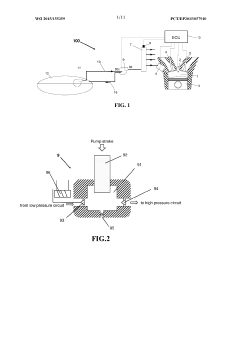
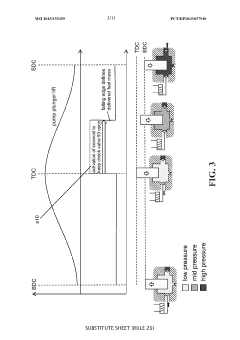
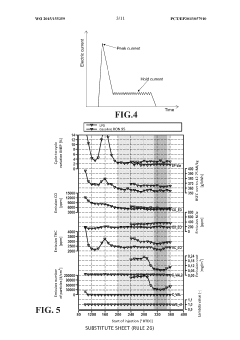
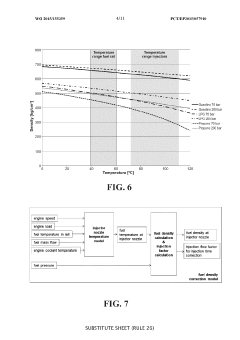
Method for maximizing the formation of deposits in injector nozzles of GDI engines
PatentWO2018002610A1
Innovation
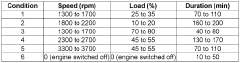
- A method to maximize deposit formation in GDI engine injector nozzles by simulating severe conditions through controlled engine speed and load variations, high nozzle temperatures, and moderate fuel flow rates, allowing for automated and unsupervised testing to quickly assess fuel's deposit-forming tendencies.
Regulatory Framework and Compliance Standards
The global regulatory landscape for vehicle emissions has evolved significantly over the past two decades, with increasingly stringent standards targeting the reduction of harmful pollutants from internal combustion engines. For GDI (Gasoline Direct Injection) engines specifically, regulatory frameworks have been established across major markets to address their unique emission characteristics, particularly particulate matter (PM) and nitrogen oxides (NOx).
The European Union's Euro standards represent one of the most comprehensive regulatory frameworks, with Euro 6d currently enforcing strict limits on both PM mass and particle number (PN) emissions. These standards have introduced Real Driving Emissions (RDE) testing protocols that require vehicles to demonstrate compliance under actual driving conditions, not just in laboratory settings. This has significantly challenged GDI engine manufacturers to optimize emission control across a wider range of operating conditions.
In North America, the US EPA Tier 3 and California's LEV III standards have similarly tightened emission requirements, with particular focus on NMOG+NOx combined emissions. These regulations have adopted a phase-in approach, gradually reducing allowable emission levels through 2025. The Corporate Average Fuel Economy (CAFE) standards further complicate compliance by simultaneously demanding improved fuel efficiency alongside reduced emissions.
China's implementation of China 6 standards represents one of the most aggressive regulatory approaches globally, combining elements from both European and American frameworks while adding China-specific requirements. These standards have accelerated the adoption of advanced emission control technologies in the world's largest automotive market.
Japan's post-new long-term regulations and India's Bharat Stage VI standards have also aligned with global trends toward more stringent emission controls, creating a nearly unified global regulatory environment that demands sophisticated technological solutions for GDI engines.
Compliance certification processes have become increasingly complex, requiring manufacturers to demonstrate durability of emission control systems for up to 160,000 miles in some jurisdictions. On-board diagnostic (OBD) requirements have also expanded, mandating sophisticated monitoring systems that can detect emission control failures and alert drivers when emissions exceed thresholds by specified margins.
The regulatory timeline presents significant challenges for GDI technology, with many markets announcing future standards (Euro 7, Tier 4) that will further reduce emission limits by 30-50% from current levels. These upcoming regulations are increasingly focusing on previously unregulated pollutants such as sub-23nm particles and emissions under extreme temperature conditions, requiring proactive technological development to ensure future compliance.
The European Union's Euro standards represent one of the most comprehensive regulatory frameworks, with Euro 6d currently enforcing strict limits on both PM mass and particle number (PN) emissions. These standards have introduced Real Driving Emissions (RDE) testing protocols that require vehicles to demonstrate compliance under actual driving conditions, not just in laboratory settings. This has significantly challenged GDI engine manufacturers to optimize emission control across a wider range of operating conditions.
In North America, the US EPA Tier 3 and California's LEV III standards have similarly tightened emission requirements, with particular focus on NMOG+NOx combined emissions. These regulations have adopted a phase-in approach, gradually reducing allowable emission levels through 2025. The Corporate Average Fuel Economy (CAFE) standards further complicate compliance by simultaneously demanding improved fuel efficiency alongside reduced emissions.
China's implementation of China 6 standards represents one of the most aggressive regulatory approaches globally, combining elements from both European and American frameworks while adding China-specific requirements. These standards have accelerated the adoption of advanced emission control technologies in the world's largest automotive market.
Japan's post-new long-term regulations and India's Bharat Stage VI standards have also aligned with global trends toward more stringent emission controls, creating a nearly unified global regulatory environment that demands sophisticated technological solutions for GDI engines.
Compliance certification processes have become increasingly complex, requiring manufacturers to demonstrate durability of emission control systems for up to 160,000 miles in some jurisdictions. On-board diagnostic (OBD) requirements have also expanded, mandating sophisticated monitoring systems that can detect emission control failures and alert drivers when emissions exceed thresholds by specified margins.
The regulatory timeline presents significant challenges for GDI technology, with many markets announcing future standards (Euro 7, Tier 4) that will further reduce emission limits by 30-50% from current levels. These upcoming regulations are increasingly focusing on previously unregulated pollutants such as sub-23nm particles and emissions under extreme temperature conditions, requiring proactive technological development to ensure future compliance.
Cost-Benefit Analysis of Emission Control Technologies
The implementation of emission control technologies for GDI engines involves significant financial considerations that must be carefully evaluated against regulatory requirements and market demands. Initial investment costs for advanced emission control systems range from $200-800 per vehicle, depending on the complexity and effectiveness of the solution. Three-way catalytic converters represent the lower end of this spectrum, while integrated systems combining particulate filters with NOx reduction technology command premium pricing.
Operational costs present another critical dimension, with fuel economy penalties ranging from 1-5% for various emission control technologies. Gasoline particulate filters (GPFs) typically impose a 1-3% fuel consumption increase due to backpressure effects, translating to approximately $50-150 in additional fuel costs over a vehicle's lifetime. Maintenance requirements add further expenses, with GPF cleaning or replacement intervals typically occurring at 80,000-120,000 miles, costing $300-600 per service event.
Against these costs, manufacturers must weigh substantial regulatory penalties for non-compliance, which can exceed $100 million for major automotive companies. The European Union's penalty structure imposes fees of €95 per gram of CO2/km exceeding targets, multiplied by annual vehicle sales. Similar stringent penalties exist in North America and Asia, creating powerful financial incentives for compliance.
Consumer-facing benefits include potential premium pricing opportunities for environmentally optimized vehicles, with market research indicating 15-25% of consumers willing to pay 3-7% more for vehicles with superior environmental credentials. Additionally, fleet operators increasingly factor total cost of ownership calculations into purchasing decisions, where fuel efficiency gains can offset higher acquisition costs.
Return on investment timelines vary significantly by technology. Simple engine calibration optimizations typically achieve ROI within 1-2 years, while complex hardware solutions like integrated GPF systems may require 3-5 years to reach financial breakeven. Manufacturers increasingly adopt portfolio approaches, implementing cost-effective solutions across high-volume models while reserving premium technologies for luxury segments where costs can be more easily absorbed.
Long-term economic analysis reveals that early investment in emission control technologies often proves more cost-effective than reactive compliance approaches, particularly as regulatory standards continue to tighten globally. Companies pioneering efficient compliance solutions gain competitive advantages through avoided penalties and strengthened brand positioning in environmentally conscious markets.
Operational costs present another critical dimension, with fuel economy penalties ranging from 1-5% for various emission control technologies. Gasoline particulate filters (GPFs) typically impose a 1-3% fuel consumption increase due to backpressure effects, translating to approximately $50-150 in additional fuel costs over a vehicle's lifetime. Maintenance requirements add further expenses, with GPF cleaning or replacement intervals typically occurring at 80,000-120,000 miles, costing $300-600 per service event.
Against these costs, manufacturers must weigh substantial regulatory penalties for non-compliance, which can exceed $100 million for major automotive companies. The European Union's penalty structure imposes fees of €95 per gram of CO2/km exceeding targets, multiplied by annual vehicle sales. Similar stringent penalties exist in North America and Asia, creating powerful financial incentives for compliance.
Consumer-facing benefits include potential premium pricing opportunities for environmentally optimized vehicles, with market research indicating 15-25% of consumers willing to pay 3-7% more for vehicles with superior environmental credentials. Additionally, fleet operators increasingly factor total cost of ownership calculations into purchasing decisions, where fuel efficiency gains can offset higher acquisition costs.
Return on investment timelines vary significantly by technology. Simple engine calibration optimizations typically achieve ROI within 1-2 years, while complex hardware solutions like integrated GPF systems may require 3-5 years to reach financial breakeven. Manufacturers increasingly adopt portfolio approaches, implementing cost-effective solutions across high-volume models while reserving premium technologies for luxury segments where costs can be more easily absorbed.
Long-term economic analysis reveals that early investment in emission control technologies often proves more cost-effective than reactive compliance approaches, particularly as regulatory standards continue to tighten globally. Companies pioneering efficient compliance solutions gain competitive advantages through avoided penalties and strengthened brand positioning in environmentally conscious markets.
Unlock deeper insights with PatSnap Eureka Quick Research — get a full tech report to explore trends and direct your research. Try now!
Generate Your Research Report Instantly with AI Agent
Supercharge your innovation with PatSnap Eureka AI Agent Platform!