

Optimizing HVIL Functionality for Grid-Scale Power Systems
MAY 29, 202610 MIN READ
Generate Your Research Report Instantly with AI Agent
PatSnap Eureka helps you evaluate technical feasibility & market potential.
HVIL Technology Background and Grid Integration Goals
High Voltage Interlock (HVIL) technology emerged as a critical safety mechanism in the early development of electric vehicle systems during the 1990s, initially designed to prevent electrical hazards in automotive applications. The fundamental principle involves creating a low-voltage monitoring circuit that continuously verifies the integrity of high-voltage connections and immediately disables power flow when disconnections or faults are detected. This technology has evolved significantly from simple continuity checking systems to sophisticated multi-layered safety architectures incorporating real-time diagnostics and predictive fault detection capabilities.
The evolution of HVIL systems has been driven by increasing voltage levels and power densities in electrical systems. Early implementations utilized basic resistor networks and relay-based switching, while modern systems employ advanced microcontroller-based monitoring with digital communication protocols. The transition from automotive applications to stationary energy storage and grid-scale systems has necessitated substantial adaptations to address different operational environments, regulatory requirements, and safety standards.
Grid integration goals for HVIL technology center on establishing comprehensive safety frameworks that can handle the unique challenges of utility-scale power systems. Unlike automotive applications where HVIL primarily protects maintenance personnel during service operations, grid-scale implementations must provide continuous protection across diverse operational scenarios including routine maintenance, emergency response, and automated switching operations. The technology must seamlessly integrate with existing grid protection schemes while maintaining compatibility with various energy storage technologies, inverter systems, and distribution equipment.
The primary objective involves developing HVIL systems capable of managing multiple high-voltage circuits simultaneously while providing granular fault localization and isolation capabilities. This requires sophisticated coordination between HVIL controllers and grid management systems to ensure that safety interventions do not compromise grid stability or create cascading failures. Advanced communication protocols and standardized interfaces are essential for enabling interoperability across different manufacturers and system architectures.
Modern grid integration strategies emphasize the development of intelligent HVIL systems that can differentiate between planned maintenance activities and actual safety hazards. This involves implementing machine learning algorithms for pattern recognition and predictive maintenance capabilities that can anticipate potential failures before they occur. The integration of HVIL technology with smart grid infrastructure enables remote monitoring and control capabilities, allowing operators to manage safety systems across distributed energy resources from centralized control centers.
The ultimate goal encompasses creating a unified safety ecosystem where HVIL technology serves as the foundational layer for comprehensive grid protection, enabling the safe deployment of increasingly complex and distributed energy systems while maintaining the highest levels of personnel and equipment protection.
The evolution of HVIL systems has been driven by increasing voltage levels and power densities in electrical systems. Early implementations utilized basic resistor networks and relay-based switching, while modern systems employ advanced microcontroller-based monitoring with digital communication protocols. The transition from automotive applications to stationary energy storage and grid-scale systems has necessitated substantial adaptations to address different operational environments, regulatory requirements, and safety standards.
Grid integration goals for HVIL technology center on establishing comprehensive safety frameworks that can handle the unique challenges of utility-scale power systems. Unlike automotive applications where HVIL primarily protects maintenance personnel during service operations, grid-scale implementations must provide continuous protection across diverse operational scenarios including routine maintenance, emergency response, and automated switching operations. The technology must seamlessly integrate with existing grid protection schemes while maintaining compatibility with various energy storage technologies, inverter systems, and distribution equipment.
The primary objective involves developing HVIL systems capable of managing multiple high-voltage circuits simultaneously while providing granular fault localization and isolation capabilities. This requires sophisticated coordination between HVIL controllers and grid management systems to ensure that safety interventions do not compromise grid stability or create cascading failures. Advanced communication protocols and standardized interfaces are essential for enabling interoperability across different manufacturers and system architectures.
Modern grid integration strategies emphasize the development of intelligent HVIL systems that can differentiate between planned maintenance activities and actual safety hazards. This involves implementing machine learning algorithms for pattern recognition and predictive maintenance capabilities that can anticipate potential failures before they occur. The integration of HVIL technology with smart grid infrastructure enables remote monitoring and control capabilities, allowing operators to manage safety systems across distributed energy resources from centralized control centers.
The ultimate goal encompasses creating a unified safety ecosystem where HVIL technology serves as the foundational layer for comprehensive grid protection, enabling the safe deployment of increasingly complex and distributed energy systems while maintaining the highest levels of personnel and equipment protection.
Market Demand for Grid-Scale HVIL Safety Systems
The global transition toward renewable energy sources and grid modernization has created substantial demand for advanced safety systems in grid-scale power infrastructure. High Voltage Interlock Loop (HVIL) safety systems have emerged as critical components for ensuring operational safety in large-scale electrical installations, particularly in battery energy storage systems, solar farms, and wind power facilities. The increasing complexity of these installations necessitates sophisticated safety mechanisms that can prevent catastrophic failures and protect both equipment and personnel.
Market drivers for grid-scale HVIL safety systems are primarily influenced by regulatory requirements and safety standards across different regions. International standards such as IEC 61508 and ISO 26262 have established stringent safety requirements for electrical systems, compelling grid operators and equipment manufacturers to implement comprehensive safety solutions. These regulatory frameworks mandate fail-safe mechanisms that can detect circuit integrity issues and initiate protective actions within milliseconds.
The rapid expansion of battery energy storage systems represents the largest growth segment for HVIL applications. Utility-scale battery installations require continuous monitoring of high-voltage connections to prevent thermal runaway events and electrical hazards. Grid operators are increasingly recognizing that traditional safety systems are insufficient for managing the complex interconnections found in modern energy storage facilities, driving demand for advanced HVIL solutions.
Industrial sectors including data centers, manufacturing facilities, and transportation infrastructure are also contributing to market growth. These applications require uninterrupted power supply with robust safety mechanisms, creating opportunities for HVIL system integration. The automotive industry's shift toward electric vehicle charging infrastructure has further expanded the addressable market, as high-power charging stations require sophisticated safety systems to manage multiple high-voltage circuits simultaneously.
Emerging markets in Asia-Pacific and Latin America are experiencing accelerated adoption of grid-scale renewable energy projects, supported by government incentives and declining technology costs. These regions present significant growth opportunities for HVIL safety system providers, as new installations can incorporate advanced safety technologies from the initial design phase rather than retrofitting existing infrastructure.
The market demand is also shaped by the increasing focus on grid resilience and cybersecurity. Modern HVIL systems are expected to integrate with digital monitoring platforms and provide real-time diagnostics capabilities, enabling predictive maintenance and reducing operational downtime. This convergence of safety and digital technologies is creating new value propositions for system integrators and technology providers.
Market drivers for grid-scale HVIL safety systems are primarily influenced by regulatory requirements and safety standards across different regions. International standards such as IEC 61508 and ISO 26262 have established stringent safety requirements for electrical systems, compelling grid operators and equipment manufacturers to implement comprehensive safety solutions. These regulatory frameworks mandate fail-safe mechanisms that can detect circuit integrity issues and initiate protective actions within milliseconds.
The rapid expansion of battery energy storage systems represents the largest growth segment for HVIL applications. Utility-scale battery installations require continuous monitoring of high-voltage connections to prevent thermal runaway events and electrical hazards. Grid operators are increasingly recognizing that traditional safety systems are insufficient for managing the complex interconnections found in modern energy storage facilities, driving demand for advanced HVIL solutions.
Industrial sectors including data centers, manufacturing facilities, and transportation infrastructure are also contributing to market growth. These applications require uninterrupted power supply with robust safety mechanisms, creating opportunities for HVIL system integration. The automotive industry's shift toward electric vehicle charging infrastructure has further expanded the addressable market, as high-power charging stations require sophisticated safety systems to manage multiple high-voltage circuits simultaneously.
Emerging markets in Asia-Pacific and Latin America are experiencing accelerated adoption of grid-scale renewable energy projects, supported by government incentives and declining technology costs. These regions present significant growth opportunities for HVIL safety system providers, as new installations can incorporate advanced safety technologies from the initial design phase rather than retrofitting existing infrastructure.
The market demand is also shaped by the increasing focus on grid resilience and cybersecurity. Modern HVIL systems are expected to integrate with digital monitoring platforms and provide real-time diagnostics capabilities, enabling predictive maintenance and reducing operational downtime. This convergence of safety and digital technologies is creating new value propositions for system integrators and technology providers.
Current HVIL Implementation Challenges in Power Grids
High Voltage Interlock Loop (HVIL) systems in grid-scale power applications face significant implementation challenges that stem from the complexity and scale of modern electrical infrastructure. Traditional HVIL designs, originally developed for automotive applications, encounter substantial limitations when adapted to utility-scale environments where voltage levels can exceed 35kV and current ratings reach thousands of amperes.
One of the primary challenges lies in signal integrity maintenance across extended transmission distances. Grid-scale installations often require HVIL monitoring across several kilometers of infrastructure, where electromagnetic interference from high-power switching equipment and transmission lines can corrupt low-voltage interlock signals. This interference becomes particularly problematic during fault conditions when HVIL functionality is most critical for personnel safety.
Scalability represents another fundamental obstacle in current implementations. Existing HVIL architectures typically employ point-to-point wiring schemes that become exponentially complex as the number of monitored components increases. Large-scale solar farms or wind installations may contain hundreds of inverters and switching devices, each requiring individual interlock monitoring, resulting in extensive cable runs and multiple potential failure points.
Environmental resilience poses additional challenges for grid-scale HVIL systems. Unlike controlled automotive environments, power grid installations must operate reliably across extreme temperature ranges, humidity variations, and exposure to UV radiation and corrosive atmospheres. Standard HVIL connectors and cables often fail prematurely under these conditions, leading to false alarms and system downtime.
Integration complexity with existing grid protection systems creates operational difficulties. Current HVIL implementations often operate as standalone safety systems with limited communication capabilities to supervisory control and data acquisition (SCADA) networks. This isolation prevents coordinated responses during emergency situations and complicates maintenance scheduling and fault diagnosis.
Response time requirements in grid applications differ significantly from automotive standards. While automotive HVIL systems can afford millisecond-level detection delays, grid-scale systems must balance rapid fault detection with immunity to transient disturbances that are common in power system operations. Achieving this balance requires sophisticated filtering and processing algorithms that current implementations lack.
Maintenance and diagnostic capabilities remain inadequate in existing HVIL solutions for grid applications. The distributed nature of power installations makes manual testing impractical, yet most current systems provide limited remote diagnostic capabilities. This limitation results in increased maintenance costs and potential safety risks from undetected interlock failures.
One of the primary challenges lies in signal integrity maintenance across extended transmission distances. Grid-scale installations often require HVIL monitoring across several kilometers of infrastructure, where electromagnetic interference from high-power switching equipment and transmission lines can corrupt low-voltage interlock signals. This interference becomes particularly problematic during fault conditions when HVIL functionality is most critical for personnel safety.
Scalability represents another fundamental obstacle in current implementations. Existing HVIL architectures typically employ point-to-point wiring schemes that become exponentially complex as the number of monitored components increases. Large-scale solar farms or wind installations may contain hundreds of inverters and switching devices, each requiring individual interlock monitoring, resulting in extensive cable runs and multiple potential failure points.
Environmental resilience poses additional challenges for grid-scale HVIL systems. Unlike controlled automotive environments, power grid installations must operate reliably across extreme temperature ranges, humidity variations, and exposure to UV radiation and corrosive atmospheres. Standard HVIL connectors and cables often fail prematurely under these conditions, leading to false alarms and system downtime.
Integration complexity with existing grid protection systems creates operational difficulties. Current HVIL implementations often operate as standalone safety systems with limited communication capabilities to supervisory control and data acquisition (SCADA) networks. This isolation prevents coordinated responses during emergency situations and complicates maintenance scheduling and fault diagnosis.
Response time requirements in grid applications differ significantly from automotive standards. While automotive HVIL systems can afford millisecond-level detection delays, grid-scale systems must balance rapid fault detection with immunity to transient disturbances that are common in power system operations. Achieving this balance requires sophisticated filtering and processing algorithms that current implementations lack.
Maintenance and diagnostic capabilities remain inadequate in existing HVIL solutions for grid applications. The distributed nature of power installations makes manual testing impractical, yet most current systems provide limited remote diagnostic capabilities. This limitation results in increased maintenance costs and potential safety risks from undetected interlock failures.
Existing HVIL Optimization Approaches for Power Systems
01 HVIL circuit design and implementation
High Voltage Interlock Loop systems utilize specialized circuit designs to monitor the integrity of high voltage connections in electric vehicles. These circuits typically employ series-connected switches and monitoring devices that create a continuous loop to detect any disconnection or fault in the high voltage system. The implementation includes various sensor configurations and control logic to ensure proper functionality and safety compliance.- HVIL circuit design and implementation: High Voltage Interlock Loop systems utilize specialized circuit designs to monitor the integrity of high voltage connections in electric vehicles and energy storage systems. These circuits typically employ series-connected switches and monitoring devices that create a continuous loop to detect any disconnection or fault in the high voltage system. The implementation includes various sensor technologies and control mechanisms to ensure safe operation of high voltage components.
- Safety monitoring and fault detection mechanisms: HVIL systems incorporate advanced safety monitoring capabilities that continuously assess the status of high voltage connections and components. These mechanisms can detect various fault conditions including connector disconnections, insulation failures, and system malfunctions. The monitoring systems provide real-time feedback to vehicle control units and can trigger appropriate safety responses when anomalies are detected.
- Integration with vehicle control systems: HVIL functionality is integrated with broader vehicle control architectures to enable coordinated safety responses across multiple systems. This integration allows for communication between the interlock system and other vehicle subsystems such as battery management, motor control, and charging systems. The integration ensures that safety actions are properly coordinated and that system status information is appropriately shared across the vehicle network.
- Connector and interface technologies: Specialized connector designs and interface technologies are employed in HVIL systems to ensure reliable detection of connection status while maintaining high voltage isolation. These technologies include various mechanical and electrical interface solutions that can reliably signal connection status while withstanding the harsh operating environments typical in automotive applications. The connector systems must balance safety requirements with operational reliability and maintenance accessibility.
- Power management and system control: HVIL systems incorporate sophisticated power management and control strategies to manage high voltage system operation safely and efficiently. These control systems coordinate the activation and deactivation of high voltage components based on interlock status and operational requirements. The power management functions include pre-charge sequences, discharge procedures, and emergency shutdown capabilities that work in conjunction with the interlock monitoring to ensure safe system operation.
02 Safety monitoring and fault detection mechanisms
HVIL systems incorporate advanced safety monitoring capabilities that continuously assess the status of high voltage components and connections. These mechanisms can detect various fault conditions including connector disconnections, insulation failures, and system malfunctions. The monitoring systems provide real-time feedback and can trigger appropriate safety responses when anomalies are detected.Expand Specific Solutions03 Integration with vehicle control systems
HVIL functionality is integrated with broader vehicle control and management systems to coordinate safety operations across multiple subsystems. This integration enables communication between the interlock system and other vehicle components such as battery management systems, motor controllers, and central processing units. The coordination ensures comprehensive safety coverage and appropriate system responses during various operational scenarios.Expand Specific Solutions04 Connector and interface technologies
Specialized connector designs and interface technologies are employed to implement HVIL functionality at connection points throughout the high voltage system. These technologies include mechanical interlocks, electrical continuity monitoring, and specialized pin configurations that ensure proper mating and detection capabilities. The connector systems are designed to withstand automotive environmental conditions while maintaining reliable interlock operation.Expand Specific Solutions05 Control algorithms and system responses
HVIL systems employ sophisticated control algorithms to process monitoring data and determine appropriate system responses based on detected conditions. These algorithms include decision logic for various fault scenarios, timing considerations for system activation and deactivation, and coordination protocols for interfacing with other safety systems. The control strategies are designed to optimize both safety performance and system availability.Expand Specific Solutions
Key Players in Grid-Scale HVIL Solutions Industry
The HVIL (High Voltage Interlock Loop) optimization for grid-scale power systems represents an emerging market segment within the broader power infrastructure industry, currently in its early development stage with significant growth potential driven by increasing grid modernization and renewable energy integration demands. The market demonstrates substantial scale opportunities, particularly in regions with aggressive clean energy transitions, as evidenced by major utility players like State Grid Corp. of China and State Grid Shanghai Municipal Electric Power Co. leading large-scale implementations. Technology maturity varies significantly across market participants, with established automotive manufacturers such as BMW, GM Global Technology Operations, and Ford Global Technologies leveraging their EV expertise to adapt HVIL systems for stationary applications, while specialized power system companies like TE Connectivity Corp., Continental Automotive, and Eaton Intelligent Power demonstrate advanced integration capabilities. Academic institutions including Shanghai Jiao Tong University and Chongqing University contribute fundamental research, while emerging players like Beijing Smartchip Microelectronics and Acrel Co. focus on intelligent monitoring solutions, indicating a competitive landscape where cross-industry collaboration between automotive, power electronics, and grid infrastructure sectors is accelerating technological advancement and commercial deployment.
TE Connectivity Corp.
Technical Solution: TE Connectivity has developed specialized connector and sensing solutions optimized for HVIL applications in grid-scale power systems. Their approach focuses on high-reliability interconnect systems that maintain signal integrity and safety monitoring capabilities under extreme environmental conditions. The company's HVIL solutions feature advanced contact monitoring technology and integrated sensing capabilities that provide real-time feedback on connection status and electrical continuity. Their systems are designed to withstand the harsh operating environments typical of grid-scale installations while maintaining precise monitoring accuracy and long-term reliability for critical safety applications.
Strengths: Specialized expertise in high-reliability connectors and proven performance in harsh environments. Weaknesses: Limited scope focusing primarily on hardware components rather than complete system solutions.
State Grid Corp. of China
Technical Solution: State Grid has developed comprehensive HVIL (High Voltage Interlock Loop) optimization solutions for grid-scale power systems, focusing on enhanced safety monitoring and fault detection capabilities. Their approach integrates advanced sensor networks with real-time monitoring systems to ensure continuous voltage isolation verification across large-scale electrical infrastructure. The company implements multi-layered HVIL architectures that provide redundant safety mechanisms, incorporating both hardware-based interlocks and software-controlled monitoring systems. Their grid-scale HVIL solutions feature adaptive threshold management, allowing for dynamic adjustment of safety parameters based on operational conditions and load variations.
Strengths: Extensive experience in large-scale grid infrastructure and comprehensive safety system integration. Weaknesses: Solutions may be complex to implement and require significant infrastructure investment.
Core Patents in Grid-Scale HVIL Technology
High-voltage interlock loop (“HVIL”) switch having a reed relay
PatentActiveUS9327601B2
Innovation
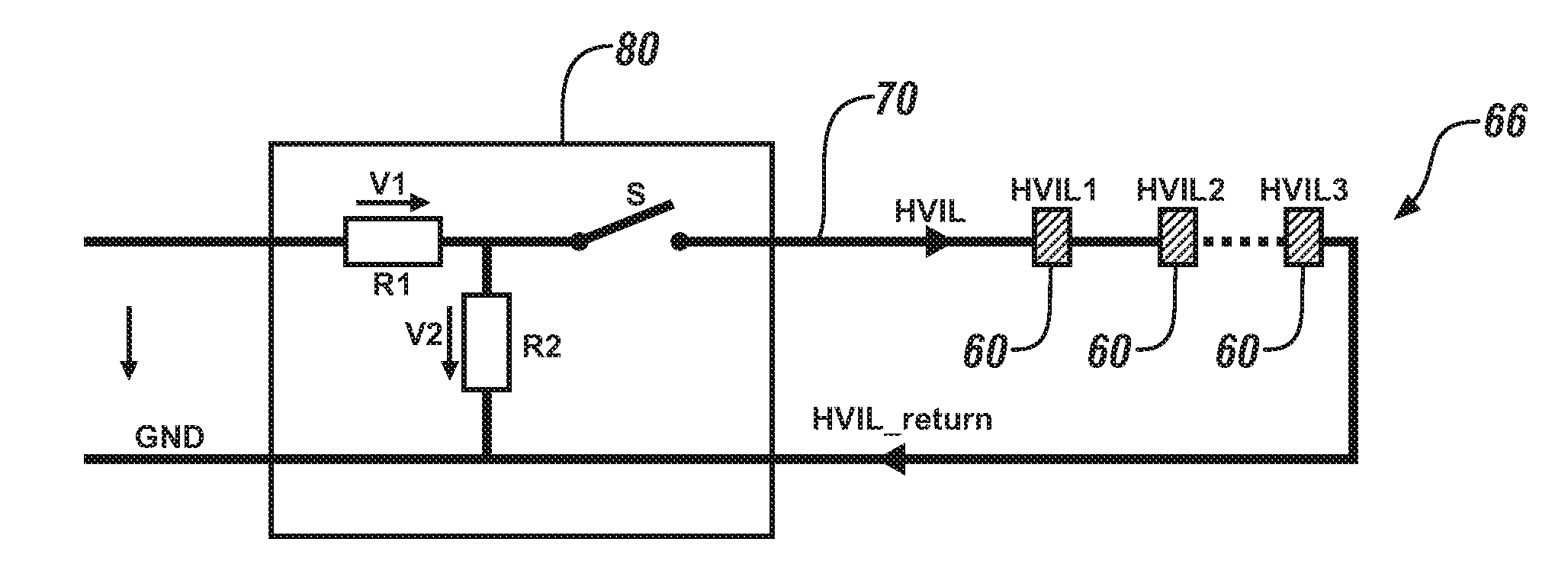
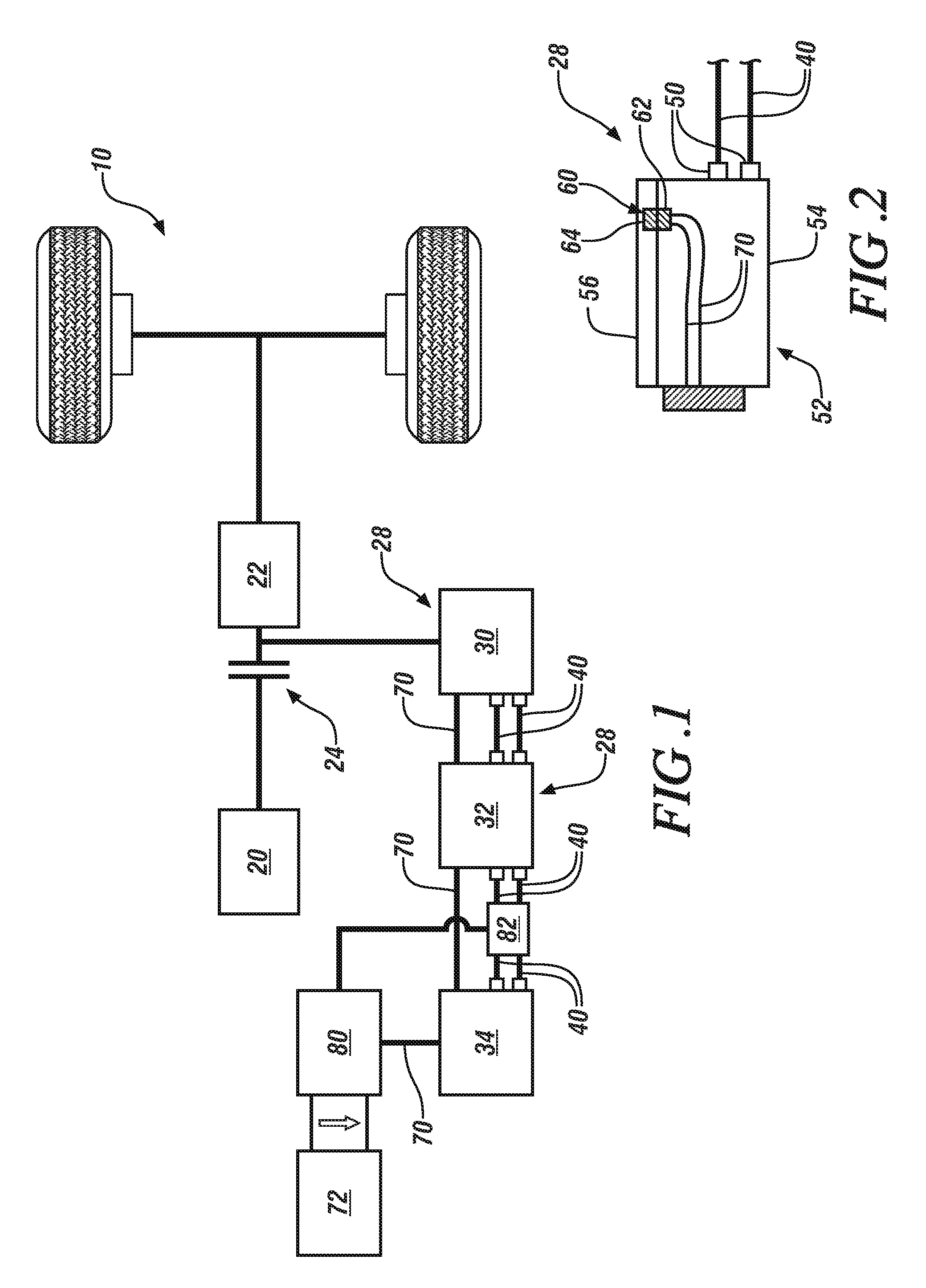
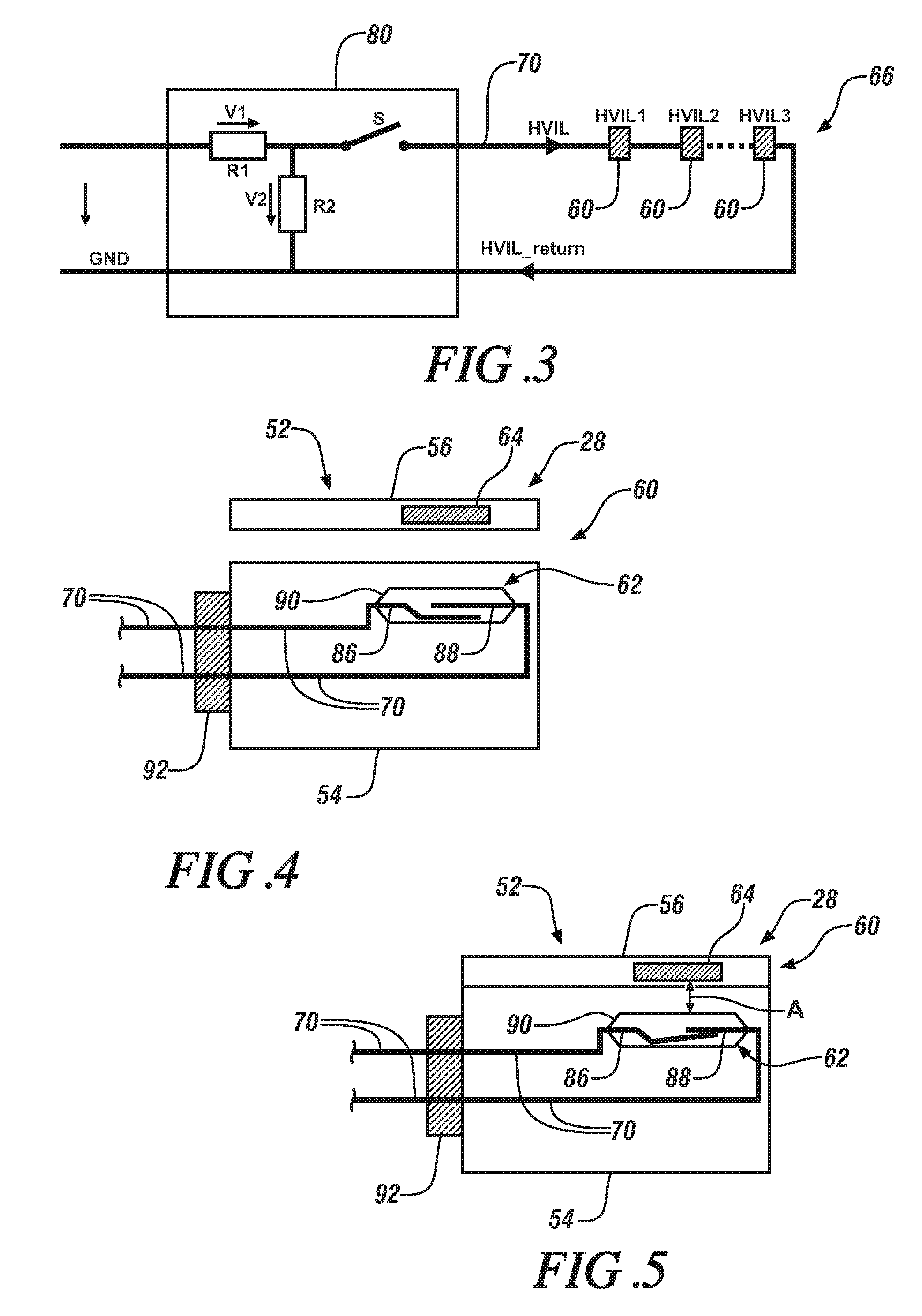
- A high-voltage system utilizing a reed relay and magnetic element within a high-voltage interlock loop switch, where the magnetic element is selectively positioned to create a closed or open circuit condition, monitored by a control module to deactivate HV power when an open circuit is detected, providing enhanced protection against contaminants and tampering.
System and method employing wireless high-voltage interlocking loop using RFID-enabled electrical connectors containing conductive material
PatentActiveUS20210383081A1
Innovation
- A wireless high-voltage interlocking loop using RFID-enabled electrical connectors with conductive materials that shield RFID tags until the connector is properly seated, allowing for wireless detection and verification of correct installation through RFID readers.


Grid Safety Standards and HVIL Compliance Requirements
Grid-scale power systems incorporating High Voltage Interlock (HVIL) functionality must adhere to stringent safety standards established by international regulatory bodies. The IEEE 1547 standard series provides fundamental requirements for distributed energy resources interconnection, while IEC 61850 defines communication protocols for electrical substations. These standards mandate specific HVIL implementation protocols to ensure personnel safety during maintenance operations and emergency scenarios.
The National Electrical Code (NEC) Article 690 establishes critical safety requirements for photovoltaic systems exceeding 600V, directly impacting HVIL design specifications. Similarly, UL 1741 certification requirements dictate inverter safety functions, including mandatory rapid shutdown capabilities that HVIL systems must support. European EN 50549 standards complement these requirements by defining grid connection parameters for power generating facilities.
HVIL compliance necessitates integration with existing grid protection schemes, including distance protection relays, differential protection systems, and synchrophasor-based wide-area monitoring systems. The Federal Energy Regulatory Commission (FERC) Order 841 requires energy storage systems to meet specific performance and safety criteria, directly influencing HVIL functionality requirements for battery energy storage systems integrated into grid infrastructure.
Modern grid codes mandate sub-second fault detection and isolation capabilities, requiring HVIL systems to interface seamlessly with supervisory control and data acquisition (SCADA) networks. The North American Electric Reliability Corporation (NERC) Critical Infrastructure Protection (CIP) standards impose cybersecurity requirements that affect HVIL communication protocols and data encryption methods.
Compliance verification involves rigorous testing procedures including high-voltage withstand tests, insulation resistance measurements, and electromagnetic compatibility assessments. Type testing according to IEC 62271 standards ensures HVIL components meet switching device requirements for high-voltage applications. Additionally, periodic maintenance protocols must align with IEEE C37.100 series standards for power system protection and control equipment, ensuring continuous compliance throughout the system lifecycle.
The National Electrical Code (NEC) Article 690 establishes critical safety requirements for photovoltaic systems exceeding 600V, directly impacting HVIL design specifications. Similarly, UL 1741 certification requirements dictate inverter safety functions, including mandatory rapid shutdown capabilities that HVIL systems must support. European EN 50549 standards complement these requirements by defining grid connection parameters for power generating facilities.
HVIL compliance necessitates integration with existing grid protection schemes, including distance protection relays, differential protection systems, and synchrophasor-based wide-area monitoring systems. The Federal Energy Regulatory Commission (FERC) Order 841 requires energy storage systems to meet specific performance and safety criteria, directly influencing HVIL functionality requirements for battery energy storage systems integrated into grid infrastructure.
Modern grid codes mandate sub-second fault detection and isolation capabilities, requiring HVIL systems to interface seamlessly with supervisory control and data acquisition (SCADA) networks. The North American Electric Reliability Corporation (NERC) Critical Infrastructure Protection (CIP) standards impose cybersecurity requirements that affect HVIL communication protocols and data encryption methods.
Compliance verification involves rigorous testing procedures including high-voltage withstand tests, insulation resistance measurements, and electromagnetic compatibility assessments. Type testing according to IEC 62271 standards ensures HVIL components meet switching device requirements for high-voltage applications. Additionally, periodic maintenance protocols must align with IEEE C37.100 series standards for power system protection and control equipment, ensuring continuous compliance throughout the system lifecycle.
Environmental Impact of Large-Scale HVIL Deployments
The deployment of High Voltage Interlock (HVIL) systems at grid scale presents significant environmental considerations that must be carefully evaluated. As power grids transition toward renewable energy integration and enhanced safety protocols, the environmental footprint of large-scale HVIL implementations becomes increasingly critical for sustainable energy infrastructure development.
Material consumption represents a primary environmental concern in large-scale HVIL deployments. These systems require substantial quantities of specialized materials including high-grade copper conductors, advanced polymer insulation materials, and rare earth elements for sensing components. The extraction and processing of these materials contribute to carbon emissions and ecosystem disruption. Additionally, the manufacturing processes for HVIL components often involve energy-intensive procedures and chemical treatments that generate industrial waste streams.
The operational phase environmental impact varies significantly based on deployment scale and grid configuration. HVIL systems consume minimal power during normal operation, typically drawing less than 50 watts per monitoring unit. However, when deployed across extensive grid networks spanning thousands of connection points, cumulative energy consumption becomes substantial. The electromagnetic fields generated by high-voltage monitoring circuits also require assessment for potential ecological effects on local wildlife and vegetation.
End-of-life considerations pose complex environmental challenges for large-scale HVIL systems. The specialized materials and electronic components used in these systems require careful disposal or recycling protocols. Many HVIL components contain materials that cannot be processed through conventional recycling streams, necessitating specialized treatment facilities. The typical 15-20 year operational lifespan of HVIL systems means that early deployments are approaching replacement cycles, creating immediate waste management requirements.
Positive environmental impacts emerge through enhanced grid safety and efficiency. HVIL systems prevent catastrophic failures that could result in environmental contamination from transformer oil spills or electrical fires. The improved monitoring capabilities enable more efficient power distribution, reducing transmission losses and associated carbon emissions. These systems also facilitate safer integration of renewable energy sources by providing enhanced protection during grid instability events.
Regional deployment patterns significantly influence environmental impact magnitude. Dense urban installations minimize land use requirements but increase material transportation emissions. Conversely, distributed rural deployments reduce transportation impacts but may affect larger geographical areas through installation activities and maintenance access requirements.
Material consumption represents a primary environmental concern in large-scale HVIL deployments. These systems require substantial quantities of specialized materials including high-grade copper conductors, advanced polymer insulation materials, and rare earth elements for sensing components. The extraction and processing of these materials contribute to carbon emissions and ecosystem disruption. Additionally, the manufacturing processes for HVIL components often involve energy-intensive procedures and chemical treatments that generate industrial waste streams.
The operational phase environmental impact varies significantly based on deployment scale and grid configuration. HVIL systems consume minimal power during normal operation, typically drawing less than 50 watts per monitoring unit. However, when deployed across extensive grid networks spanning thousands of connection points, cumulative energy consumption becomes substantial. The electromagnetic fields generated by high-voltage monitoring circuits also require assessment for potential ecological effects on local wildlife and vegetation.
End-of-life considerations pose complex environmental challenges for large-scale HVIL systems. The specialized materials and electronic components used in these systems require careful disposal or recycling protocols. Many HVIL components contain materials that cannot be processed through conventional recycling streams, necessitating specialized treatment facilities. The typical 15-20 year operational lifespan of HVIL systems means that early deployments are approaching replacement cycles, creating immediate waste management requirements.
Positive environmental impacts emerge through enhanced grid safety and efficiency. HVIL systems prevent catastrophic failures that could result in environmental contamination from transformer oil spills or electrical fires. The improved monitoring capabilities enable more efficient power distribution, reducing transmission losses and associated carbon emissions. These systems also facilitate safer integration of renewable energy sources by providing enhanced protection during grid instability events.
Regional deployment patterns significantly influence environmental impact magnitude. Dense urban installations minimize land use requirements but increase material transportation emissions. Conversely, distributed rural deployments reduce transportation impacts but may affect larger geographical areas through installation activities and maintenance access requirements.
Unlock deeper insights with PatSnap Eureka Quick Research — get a full tech report to explore trends and direct your research. Try now!
Generate Your Research Report Instantly with AI Agent
Supercharge your innovation with PatSnap Eureka AI Agent Platform!