
Optimizing Long-Duration Storage for Renewable Energy Integration
MAY 18, 20269 MIN READ
Generate Your Research Report Instantly with AI Agent
Patsnap Eureka helps you evaluate technical feasibility & market potential.
Renewable Energy Storage Background and Objectives
The global energy landscape has undergone a fundamental transformation over the past two decades, driven by the urgent need to decarbonize power systems and mitigate climate change impacts. Renewable energy sources, particularly solar photovoltaic and wind power, have experienced unprecedented growth, with their combined capacity increasing from less than 100 GW in 2000 to over 3,000 GW by 2023. This exponential expansion has been facilitated by dramatic cost reductions, with solar and wind becoming the most economical sources of electricity generation in many regions worldwide.
However, the intermittent nature of renewable energy sources presents significant challenges for grid stability and energy security. Solar power generation peaks during midday hours and ceases entirely at night, while wind power output varies unpredictably based on weather patterns. This variability creates a temporal mismatch between energy supply and demand, necessitating sophisticated storage solutions to maintain grid reliability and maximize renewable energy utilization.
Traditional energy storage technologies, primarily lithium-ion batteries, have proven effective for short-duration applications ranging from minutes to several hours. Yet as renewable energy penetration increases beyond 50% in many power systems, the need for long-duration energy storage becomes critical. Long-duration storage, typically defined as systems capable of providing power for 8 to 100+ hours, addresses seasonal variations, extended periods of low renewable generation, and enables complete grid decarbonization.
The primary objective of optimizing long-duration storage for renewable energy integration encompasses multiple technical and economic goals. First, achieving cost-effective energy storage solutions that can compete with fossil fuel peaking plants while providing grid services such as frequency regulation and voltage support. Second, developing storage technologies with high round-trip efficiency, minimal degradation over thousands of cycles, and operational lifespans exceeding 20 years to match renewable energy infrastructure investments.
Furthermore, the integration objective extends to creating flexible, scalable storage architectures that can accommodate diverse renewable energy profiles across different geographical regions and seasonal patterns. This includes optimizing storage dispatch strategies, developing advanced forecasting algorithms, and establishing standardized interconnection protocols that enable seamless integration with existing grid infrastructure while supporting the transition toward fully renewable energy systems.
However, the intermittent nature of renewable energy sources presents significant challenges for grid stability and energy security. Solar power generation peaks during midday hours and ceases entirely at night, while wind power output varies unpredictably based on weather patterns. This variability creates a temporal mismatch between energy supply and demand, necessitating sophisticated storage solutions to maintain grid reliability and maximize renewable energy utilization.
Traditional energy storage technologies, primarily lithium-ion batteries, have proven effective for short-duration applications ranging from minutes to several hours. Yet as renewable energy penetration increases beyond 50% in many power systems, the need for long-duration energy storage becomes critical. Long-duration storage, typically defined as systems capable of providing power for 8 to 100+ hours, addresses seasonal variations, extended periods of low renewable generation, and enables complete grid decarbonization.
The primary objective of optimizing long-duration storage for renewable energy integration encompasses multiple technical and economic goals. First, achieving cost-effective energy storage solutions that can compete with fossil fuel peaking plants while providing grid services such as frequency regulation and voltage support. Second, developing storage technologies with high round-trip efficiency, minimal degradation over thousands of cycles, and operational lifespans exceeding 20 years to match renewable energy infrastructure investments.
Furthermore, the integration objective extends to creating flexible, scalable storage architectures that can accommodate diverse renewable energy profiles across different geographical regions and seasonal patterns. This includes optimizing storage dispatch strategies, developing advanced forecasting algorithms, and establishing standardized interconnection protocols that enable seamless integration with existing grid infrastructure while supporting the transition toward fully renewable energy systems.
Market Demand for Long-Duration Energy Storage Systems
The global energy storage market is experiencing unprecedented growth driven by the accelerating deployment of renewable energy sources and the urgent need for grid stability solutions. Wind and solar power generation have reached cost parity with conventional fossil fuels in many regions, creating a massive deployment wave that requires complementary storage technologies to address intermittency challenges.
Current market dynamics reveal a significant gap between short-duration and long-duration storage applications. While lithium-ion batteries dominate the 1-4 hour storage segment, applications requiring 8-100+ hours of storage remain largely underserved. This gap represents a critical bottleneck for achieving high renewable energy penetration rates, as grid operators require storage solutions capable of managing multi-day weather patterns and seasonal variations.
Utility-scale applications constitute the primary demand driver for long-duration energy storage systems. Grid operators increasingly recognize that achieving renewable energy targets above 60-70% penetration requires storage technologies that can provide extended discharge durations. Peak shaving, load shifting, and renewable energy firming applications are expanding beyond traditional 4-hour requirements toward 8-12 hour durations, while emerging applications like seasonal storage demand 100+ hour capabilities.
Industrial and commercial sectors represent rapidly growing market segments, particularly for energy-intensive industries seeking to reduce electricity costs and improve energy security. Manufacturing facilities, data centers, and mining operations require reliable power supply during extended grid outages and benefit from arbitrage opportunities enabled by long-duration storage systems.
Geographic demand patterns show strong concentration in regions with aggressive renewable energy policies and high renewable penetration targets. Markets with significant renewable energy curtailment issues demonstrate particularly strong demand for long-duration storage solutions to capture and utilize otherwise wasted clean energy generation.
The economic value proposition for long-duration storage continues strengthening as renewable energy deployment accelerates and grid flexibility requirements intensify. Multiple revenue streams including energy arbitrage, capacity payments, ancillary services, and transmission deferral create compelling business cases for extended-duration storage technologies.
Emerging applications in remote and island communities, where diesel generation replacement opportunities exist, provide additional market opportunities for long-duration storage systems. These applications often require multi-day autonomy capabilities that align perfectly with long-duration storage technology characteristics.
Current market dynamics reveal a significant gap between short-duration and long-duration storage applications. While lithium-ion batteries dominate the 1-4 hour storage segment, applications requiring 8-100+ hours of storage remain largely underserved. This gap represents a critical bottleneck for achieving high renewable energy penetration rates, as grid operators require storage solutions capable of managing multi-day weather patterns and seasonal variations.
Utility-scale applications constitute the primary demand driver for long-duration energy storage systems. Grid operators increasingly recognize that achieving renewable energy targets above 60-70% penetration requires storage technologies that can provide extended discharge durations. Peak shaving, load shifting, and renewable energy firming applications are expanding beyond traditional 4-hour requirements toward 8-12 hour durations, while emerging applications like seasonal storage demand 100+ hour capabilities.
Industrial and commercial sectors represent rapidly growing market segments, particularly for energy-intensive industries seeking to reduce electricity costs and improve energy security. Manufacturing facilities, data centers, and mining operations require reliable power supply during extended grid outages and benefit from arbitrage opportunities enabled by long-duration storage systems.
Geographic demand patterns show strong concentration in regions with aggressive renewable energy policies and high renewable penetration targets. Markets with significant renewable energy curtailment issues demonstrate particularly strong demand for long-duration storage solutions to capture and utilize otherwise wasted clean energy generation.
The economic value proposition for long-duration storage continues strengthening as renewable energy deployment accelerates and grid flexibility requirements intensify. Multiple revenue streams including energy arbitrage, capacity payments, ancillary services, and transmission deferral create compelling business cases for extended-duration storage technologies.
Emerging applications in remote and island communities, where diesel generation replacement opportunities exist, provide additional market opportunities for long-duration storage systems. These applications often require multi-day autonomy capabilities that align perfectly with long-duration storage technology characteristics.
Current LDES Technology Status and Grid Integration Challenges
Long-Duration Energy Storage (LDES) technologies have reached varying levels of technological maturity, with pumped hydro storage representing the most established solution at approximately 95% of global grid-scale storage capacity. However, pumped hydro's geographical constraints limit widespread deployment. Emerging LDES technologies including compressed air energy storage, liquid air energy storage, iron-air batteries, and flow batteries are progressing through demonstration phases, with several commercial deployments beginning to emerge in 2023-2024.
Current LDES systems face significant technical challenges in achieving the 8-100 hour discharge duration requirements for effective renewable integration. Round-trip efficiency remains a critical limitation, with most non-pumped hydro technologies operating between 40-70% efficiency compared to lithium-ion batteries' 85-95%. Degradation rates over extended cycling periods present another obstacle, particularly for electrochemical systems where capacity fade affects long-term economic viability.
Grid integration challenges center on the complex coordination requirements between LDES systems and existing grid infrastructure. Current grid codes and market structures were not designed to accommodate the operational characteristics of LDES, creating regulatory and technical barriers. The slow response times of some LDES technologies, particularly mechanical systems, complicate their integration with fast-responding grid balancing requirements.
Interconnection standards for LDES systems remain inconsistent across different regions, creating deployment uncertainties. Power electronics and control systems must manage the unique charge-discharge profiles of LDES technologies while maintaining grid stability. The intermittent nature of renewable energy sources requires sophisticated forecasting and dispatch algorithms that current grid management systems struggle to optimize effectively.
Economic integration challenges include the lack of appropriate market mechanisms to value LDES services adequately. Current electricity markets primarily reward short-duration services, failing to capture the full value proposition of seasonal and multi-day storage capabilities. This market structure misalignment inhibits investment in LDES infrastructure despite growing technical feasibility.
Scalability concerns persist as most LDES technologies require substantial physical footprints and specialized infrastructure. Manufacturing capacity for key components remains limited, creating potential bottlenecks for rapid deployment. Additionally, the integration of multiple LDES technologies within single grid systems requires advanced coordination protocols that are still under development.
Current LDES systems face significant technical challenges in achieving the 8-100 hour discharge duration requirements for effective renewable integration. Round-trip efficiency remains a critical limitation, with most non-pumped hydro technologies operating between 40-70% efficiency compared to lithium-ion batteries' 85-95%. Degradation rates over extended cycling periods present another obstacle, particularly for electrochemical systems where capacity fade affects long-term economic viability.
Grid integration challenges center on the complex coordination requirements between LDES systems and existing grid infrastructure. Current grid codes and market structures were not designed to accommodate the operational characteristics of LDES, creating regulatory and technical barriers. The slow response times of some LDES technologies, particularly mechanical systems, complicate their integration with fast-responding grid balancing requirements.
Interconnection standards for LDES systems remain inconsistent across different regions, creating deployment uncertainties. Power electronics and control systems must manage the unique charge-discharge profiles of LDES technologies while maintaining grid stability. The intermittent nature of renewable energy sources requires sophisticated forecasting and dispatch algorithms that current grid management systems struggle to optimize effectively.
Economic integration challenges include the lack of appropriate market mechanisms to value LDES services adequately. Current electricity markets primarily reward short-duration services, failing to capture the full value proposition of seasonal and multi-day storage capabilities. This market structure misalignment inhibits investment in LDES infrastructure despite growing technical feasibility.
Scalability concerns persist as most LDES technologies require substantial physical footprints and specialized infrastructure. Manufacturing capacity for key components remains limited, creating potential bottlenecks for rapid deployment. Additionally, the integration of multiple LDES technologies within single grid systems requires advanced coordination protocols that are still under development.
Existing Long-Duration Storage Solutions and Approaches
01 Chemical preservation and stabilization methods
Various chemical compounds and additives are employed to maintain product integrity during extended storage periods. These methods focus on preventing degradation, oxidation, and contamination through the use of stabilizers, antioxidants, and preservative agents that maintain the chemical composition and effectiveness of stored materials over time.- Chemical preservation and stabilization methods: Various chemical preservation techniques are employed to maintain product integrity during extended storage periods. These methods include the use of antioxidants, stabilizers, and preservatives that prevent degradation, oxidation, and contamination. Chemical stabilization approaches focus on maintaining molecular structure and preventing unwanted chemical reactions that could compromise product quality over time.
- Environmental control and packaging solutions: Specialized packaging and environmental control systems are designed to protect stored materials from external factors such as moisture, temperature fluctuations, light exposure, and atmospheric contamination. These solutions include barrier materials, controlled atmosphere packaging, and hermetic sealing technologies that create optimal storage conditions for extended periods.
- Temperature and humidity management systems: Advanced climate control technologies are implemented to maintain precise temperature and humidity levels during long-term storage. These systems utilize monitoring sensors, automated control mechanisms, and thermal regulation equipment to ensure stable environmental conditions that prevent deterioration and extend storage life.
- Monitoring and quality assessment technologies: Sophisticated monitoring systems are employed to track storage conditions and assess product quality throughout extended storage periods. These technologies include sensor networks, data logging systems, and analytical methods that provide real-time information about storage environment parameters and product stability indicators.
- Container design and material selection: Specialized container designs and advanced materials are developed to optimize long-duration storage capabilities. These innovations focus on material compatibility, structural integrity, and barrier properties that prevent contamination and maintain product quality. Container technologies include multi-layer structures, specialized coatings, and engineered materials that provide superior protection during extended storage periods.
02 Environmental control systems for storage
Specialized environmental control technologies are implemented to regulate temperature, humidity, and atmospheric conditions during long-term storage. These systems create optimal storage environments that minimize environmental factors that could lead to product deterioration or loss of efficacy over extended periods.Expand Specific Solutions03 Packaging and container technologies
Advanced packaging solutions and container designs are developed to provide enhanced protection during prolonged storage. These technologies include barrier materials, sealed containers, and specialized packaging systems that prevent moisture ingress, contamination, and physical damage while maintaining product quality over time.Expand Specific Solutions04 Monitoring and quality assessment systems
Integrated monitoring technologies and quality assessment methods are employed to track storage conditions and product status throughout extended storage periods. These systems provide real-time data on storage parameters and enable early detection of potential issues that could affect product integrity or safety.Expand Specific Solutions05 Biological and pharmaceutical storage solutions
Specialized storage methodologies are developed for biological materials, pharmaceuticals, and sensitive compounds that require specific conditions for long-term viability. These solutions address unique challenges such as maintaining biological activity, preventing microbial growth, and preserving therapeutic efficacy during extended storage periods.Expand Specific Solutions
Major Players in LDES and Grid Storage Markets
The long-duration storage market for renewable energy integration is experiencing rapid growth, driven by increasing renewable penetration and grid stability requirements. The industry is in an expansion phase with significant market opportunities, as evidenced by diverse player participation ranging from established utilities like State Grid Corp. of China and Duke Energy Corp. to innovative technology companies such as Pintail Power LLC and EnerVenue Holdings Ltd. Technology maturity varies considerably across the competitive landscape, with traditional industrial giants like Siemens AG, Mitsubishi Electric Corp., and Toyota Motor Corp. leveraging established engineering capabilities, while specialized firms like Spar Systems Inc. and H2Gen Innovations Inc. focus on breakthrough storage solutions. Research institutions including Tsinghua University, Tianjin University, and University of North Carolina at Charlotte contribute fundamental advances, while chemical companies like BASF Corp. and Nissan Chemical Corp. develop advanced materials. This heterogeneous ecosystem indicates a maturing but still evolving technology landscape with multiple viable approaches competing for market dominance.
Siemens AG
Technical Solution: Siemens has developed comprehensive long-duration energy storage solutions including advanced battery management systems, grid-scale energy storage technologies, and hybrid storage systems that combine multiple technologies like lithium-ion batteries with compressed air energy storage. Their SIESTORAGE platform integrates renewable energy sources with intelligent grid management, featuring predictive analytics for optimal charging and discharging cycles. The company's solutions include modular battery systems with capacities ranging from MW to GW scale, designed specifically for renewable energy integration with efficiency rates exceeding 85% and cycle life extending beyond 6,000 cycles.
Strengths: Comprehensive portfolio covering multiple storage technologies, strong grid integration capabilities, proven track record in large-scale deployments. Weaknesses: Higher initial capital costs, complex system integration requirements.
Siemens Energy Global GmbH & Co. KG
Technical Solution: Siemens Energy focuses on utility-scale energy storage solutions with their Fluence joint venture, developing grid-scale battery energy storage systems (BESS) optimized for renewable integration. Their technology portfolio includes advanced lithium-ion battery systems, power conversion systems, and energy management software that enables seamless integration with wind and solar farms. The company's solutions feature modular designs with storage durations from 2 to 8+ hours, incorporating machine learning algorithms for predictive maintenance and optimal energy dispatch strategies to maximize renewable energy utilization and grid stability.
Strengths: Strong utility partnerships, advanced grid-scale solutions, proven reliability in harsh operating conditions. Weaknesses: Limited focus on emerging storage technologies beyond lithium-ion, dependency on battery supply chains.
Core Innovations in Advanced LDES Technologies
Integrated energy storage systems for renewable energy
PatentActiveUS11705777B2
Innovation
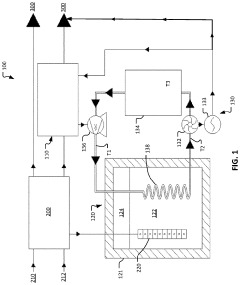
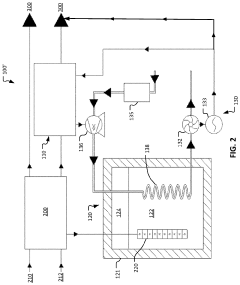
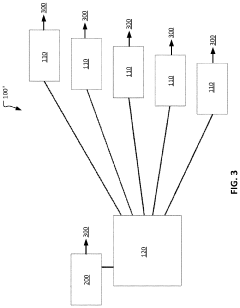
- An integrated hybrid energy storage system (YKESS) combining FESS and MSESS, where FESS delivers instant power and MSESS stores energy as heat, synergistically enhancing strengths and minimizing weaknesses of both systems. This system includes flywheels for rapid energy delivery and molten salt for long-term storage, with the MSESS powering the FESS when energy levels are low, ensuring continuous and efficient energy supply.
Policy Framework for Grid-Scale Energy Storage
The regulatory landscape for grid-scale energy storage is rapidly evolving as governments worldwide recognize the critical role of long-duration storage in achieving renewable energy integration targets. Current policy frameworks vary significantly across jurisdictions, with some regions implementing comprehensive regulatory structures while others remain in early developmental stages.
In the United States, the Federal Energy Regulatory Commission has established Order 841, which mandates that regional transmission organizations create participation models for energy storage resources in capacity, energy, and ancillary service markets. This landmark regulation removes barriers that previously prevented storage systems from competing fairly with traditional generation resources. Additionally, the Investment Tax Credit and Production Tax Credit programs have been extended to include standalone storage systems, providing crucial financial incentives for deployment.
The European Union has implemented the Clean Energy Package, which includes specific provisions for energy storage within the Electricity Regulation and Electricity Directive. These regulations establish the right for storage operators to provide multiple services simultaneously and prohibit discriminatory network charges. Member states are required to assess the need for storage in their national energy and climate plans, creating a framework for systematic storage deployment planning.
China has introduced national guidelines for energy storage development, including technical standards, safety requirements, and market participation rules. The country's 14th Five-Year Plan explicitly targets grid-scale storage capacity expansion, supported by provincial-level subsidies and preferential grid connection policies. These measures have accelerated deployment while establishing standardized technical specifications for large-scale installations.
Key policy challenges remain in areas such as revenue stacking mechanisms, which allow storage systems to capture value from multiple grid services simultaneously. Regulatory uncertainty around long-term contracts and capacity market participation continues to impact investment decisions. Additionally, interconnection standards and grid codes require updates to accommodate the unique operational characteristics of long-duration storage technologies.
Emerging policy trends focus on establishing technology-neutral competitive procurement processes, implementing performance-based incentives, and developing standardized interconnection procedures. These frameworks aim to optimize storage deployment while ensuring grid reliability and cost-effectiveness for consumers.
In the United States, the Federal Energy Regulatory Commission has established Order 841, which mandates that regional transmission organizations create participation models for energy storage resources in capacity, energy, and ancillary service markets. This landmark regulation removes barriers that previously prevented storage systems from competing fairly with traditional generation resources. Additionally, the Investment Tax Credit and Production Tax Credit programs have been extended to include standalone storage systems, providing crucial financial incentives for deployment.
The European Union has implemented the Clean Energy Package, which includes specific provisions for energy storage within the Electricity Regulation and Electricity Directive. These regulations establish the right for storage operators to provide multiple services simultaneously and prohibit discriminatory network charges. Member states are required to assess the need for storage in their national energy and climate plans, creating a framework for systematic storage deployment planning.
China has introduced national guidelines for energy storage development, including technical standards, safety requirements, and market participation rules. The country's 14th Five-Year Plan explicitly targets grid-scale storage capacity expansion, supported by provincial-level subsidies and preferential grid connection policies. These measures have accelerated deployment while establishing standardized technical specifications for large-scale installations.
Key policy challenges remain in areas such as revenue stacking mechanisms, which allow storage systems to capture value from multiple grid services simultaneously. Regulatory uncertainty around long-term contracts and capacity market participation continues to impact investment decisions. Additionally, interconnection standards and grid codes require updates to accommodate the unique operational characteristics of long-duration storage technologies.
Emerging policy trends focus on establishing technology-neutral competitive procurement processes, implementing performance-based incentives, and developing standardized interconnection procedures. These frameworks aim to optimize storage deployment while ensuring grid reliability and cost-effectiveness for consumers.
Environmental Impact of Large-Scale Storage Systems
Large-scale energy storage systems present significant environmental considerations that must be carefully evaluated alongside their benefits for renewable energy integration. The environmental footprint of these systems varies substantially depending on the storage technology employed, with each approach carrying distinct ecological implications throughout its lifecycle.
Battery-based storage systems, particularly lithium-ion technologies, raise concerns regarding raw material extraction and processing. Mining operations for lithium, cobalt, and rare earth elements often result in habitat disruption, water contamination, and soil degradation. The carbon intensity of battery manufacturing processes can be substantial, though this impact is typically offset over the system's operational lifetime when displacing fossil fuel generation.
Pumped hydro storage, while offering excellent long-duration capabilities, requires significant land use modifications and can substantially alter local ecosystems. Dam construction and reservoir creation may disrupt fish migration patterns, modify downstream water flows, and affect riparian habitats. However, these systems often provide additional benefits such as flood control and recreational opportunities that partially mitigate environmental concerns.
Compressed air energy storage systems utilizing underground caverns generally demonstrate lower environmental impact during operation, though site preparation may involve geological disruption. Salt cavern storage presents minimal surface footprint, while depleted gas reservoir utilization can repurpose existing infrastructure, reducing overall environmental burden.
Emerging technologies like liquid air energy storage and gravity-based systems show promise for reduced environmental impact. These approaches typically utilize more abundant materials and generate fewer toxic byproducts during manufacturing and operation phases.
End-of-life considerations represent a critical environmental factor often overlooked in initial assessments. Battery recycling infrastructure remains underdeveloped, potentially leading to hazardous waste accumulation. Conversely, mechanical storage systems often incorporate materials with established recycling pathways, facilitating circular economy principles.
The cumulative environmental impact must be evaluated against the alternative of continued fossil fuel dependence. Life cycle assessments consistently demonstrate that large-scale storage systems, despite their environmental footprint, contribute to overall emissions reduction when enabling higher renewable energy penetration rates.
Battery-based storage systems, particularly lithium-ion technologies, raise concerns regarding raw material extraction and processing. Mining operations for lithium, cobalt, and rare earth elements often result in habitat disruption, water contamination, and soil degradation. The carbon intensity of battery manufacturing processes can be substantial, though this impact is typically offset over the system's operational lifetime when displacing fossil fuel generation.
Pumped hydro storage, while offering excellent long-duration capabilities, requires significant land use modifications and can substantially alter local ecosystems. Dam construction and reservoir creation may disrupt fish migration patterns, modify downstream water flows, and affect riparian habitats. However, these systems often provide additional benefits such as flood control and recreational opportunities that partially mitigate environmental concerns.
Compressed air energy storage systems utilizing underground caverns generally demonstrate lower environmental impact during operation, though site preparation may involve geological disruption. Salt cavern storage presents minimal surface footprint, while depleted gas reservoir utilization can repurpose existing infrastructure, reducing overall environmental burden.
Emerging technologies like liquid air energy storage and gravity-based systems show promise for reduced environmental impact. These approaches typically utilize more abundant materials and generate fewer toxic byproducts during manufacturing and operation phases.
End-of-life considerations represent a critical environmental factor often overlooked in initial assessments. Battery recycling infrastructure remains underdeveloped, potentially leading to hazardous waste accumulation. Conversely, mechanical storage systems often incorporate materials with established recycling pathways, facilitating circular economy principles.
The cumulative environmental impact must be evaluated against the alternative of continued fossil fuel dependence. Life cycle assessments consistently demonstrate that large-scale storage systems, despite their environmental footprint, contribute to overall emissions reduction when enabling higher renewable energy penetration rates.
Unlock deeper insights with Patsnap Eureka Quick Research — get a full tech report to explore trends and direct your research. Try now!
Generate Your Research Report Instantly with AI Agent
Supercharge your innovation with Patsnap Eureka AI Agent Platform!