

Optimizing Magnetic Tunnel Junctions for Enhanced Thermal Stability
MAY 14, 20269 MIN READ
Generate Your Research Report Instantly with AI Agent
PatSnap Eureka helps you evaluate technical feasibility & market potential.
MTJ Thermal Stability Background and Objectives
Magnetic Tunnel Junctions (MTJs) have emerged as fundamental building blocks in modern spintronic devices, serving critical roles in magnetic random-access memory (MRAM), magnetic sensors, and neuromorphic computing applications. The technology leverages the quantum mechanical tunneling magnetoresistance effect, where electrical resistance varies dramatically depending on the relative magnetic orientations of ferromagnetic layers separated by an ultrathin insulating barrier. This phenomenon enables non-volatile data storage with exceptional endurance and speed characteristics that surpass conventional semiconductor memory technologies.
The evolution of MTJ technology has progressed through several distinct phases since its initial discovery in the 1970s. Early aluminum oxide-based tunnel barriers demonstrated proof-of-concept functionality but suffered from limited tunneling magnetoresistance ratios and poor thermal stability. The breakthrough introduction of crystalline magnesium oxide barriers in the early 2000s revolutionized the field, achieving tunneling magnetoresistance ratios exceeding 200% at room temperature and establishing the foundation for commercial MRAM products.
Contemporary MTJ applications demand increasingly stringent thermal stability requirements as device dimensions continue to shrink and operating temperatures expand across diverse environments. Automotive electronics require reliable operation from -40°C to 150°C, while industrial applications may encounter even more extreme thermal conditions. The fundamental challenge lies in maintaining stable magnetic states and consistent electrical properties across these temperature ranges while preserving the delicate balance of magnetic anisotropy, exchange coupling, and interfacial quality that governs MTJ performance.
The primary objective of optimizing MTJs for enhanced thermal stability centers on developing materials systems and device architectures that maintain robust magnetic switching characteristics and stable resistance states under elevated temperature conditions. This encompasses engineering magnetic anisotropy sources that resist thermal fluctuations, optimizing interfacial structures to minimize temperature-dependent degradation mechanisms, and designing electrode compositions that preserve spin polarization at elevated temperatures.
Advanced thermal stability optimization also targets the mitigation of thermally activated failure modes including barrier degradation, interdiffusion at magnetic interfaces, and the reduction of spin-dependent transport properties. These objectives require comprehensive understanding of temperature-dependent magnetic dynamics, materials science principles governing thermal stability, and innovative approaches to device architecture that can withstand demanding operational environments while maintaining the superior performance characteristics that make MTJ technology attractive for next-generation electronic applications.
The evolution of MTJ technology has progressed through several distinct phases since its initial discovery in the 1970s. Early aluminum oxide-based tunnel barriers demonstrated proof-of-concept functionality but suffered from limited tunneling magnetoresistance ratios and poor thermal stability. The breakthrough introduction of crystalline magnesium oxide barriers in the early 2000s revolutionized the field, achieving tunneling magnetoresistance ratios exceeding 200% at room temperature and establishing the foundation for commercial MRAM products.
Contemporary MTJ applications demand increasingly stringent thermal stability requirements as device dimensions continue to shrink and operating temperatures expand across diverse environments. Automotive electronics require reliable operation from -40°C to 150°C, while industrial applications may encounter even more extreme thermal conditions. The fundamental challenge lies in maintaining stable magnetic states and consistent electrical properties across these temperature ranges while preserving the delicate balance of magnetic anisotropy, exchange coupling, and interfacial quality that governs MTJ performance.
The primary objective of optimizing MTJs for enhanced thermal stability centers on developing materials systems and device architectures that maintain robust magnetic switching characteristics and stable resistance states under elevated temperature conditions. This encompasses engineering magnetic anisotropy sources that resist thermal fluctuations, optimizing interfacial structures to minimize temperature-dependent degradation mechanisms, and designing electrode compositions that preserve spin polarization at elevated temperatures.
Advanced thermal stability optimization also targets the mitigation of thermally activated failure modes including barrier degradation, interdiffusion at magnetic interfaces, and the reduction of spin-dependent transport properties. These objectives require comprehensive understanding of temperature-dependent magnetic dynamics, materials science principles governing thermal stability, and innovative approaches to device architecture that can withstand demanding operational environments while maintaining the superior performance characteristics that make MTJ technology attractive for next-generation electronic applications.
Market Demand for Thermally Stable MTJ Applications
The demand for thermally stable magnetic tunnel junctions has experienced substantial growth across multiple high-performance computing and storage applications. Data centers and enterprise storage systems represent the largest market segment, where MTJs must maintain reliable operation under continuous thermal stress from high-density server environments. These applications require MTJs that can withstand operating temperatures exceeding 85°C while preserving their magnetic properties and tunneling magnetoresistance ratios over extended periods.
Automotive electronics constitute another rapidly expanding market for thermally stable MTJs, particularly in advanced driver assistance systems and autonomous vehicle platforms. The automotive environment presents unique thermal challenges, with temperature fluctuations ranging from sub-zero conditions to extreme heat under hood applications. MTJ-based sensors and memory devices in these systems must demonstrate consistent performance across temperature cycles while maintaining data integrity for safety-critical functions.
Industrial automation and Internet of Things applications drive significant demand for robust MTJ solutions capable of operating in harsh thermal environments. Manufacturing equipment, oil and gas exploration systems, and aerospace applications require MTJ devices that can function reliably at elevated temperatures while providing non-volatile memory capabilities and magnetic sensing functionality.
The emerging market for edge computing and artificial intelligence accelerators has created new requirements for thermally stable MTJs in neuromorphic computing architectures. These applications demand MTJ devices that can serve as synaptic elements in neural networks while maintaining stable switching characteristics under thermal stress generated by intensive computational workloads.
Military and defense applications represent a specialized but important market segment requiring MTJs with exceptional thermal stability for mission-critical systems. These applications often involve extreme operating conditions where conventional magnetic storage and sensing technologies fail to maintain performance standards.
The growing adoption of spin-transfer torque magnetic random access memory in mobile devices and embedded systems has intensified the need for MTJs that can operate efficiently at elevated temperatures while consuming minimal power. Battery-powered devices generate internal heat during operation, necessitating MTJ components that maintain low switching currents and stable magnetic states across varying thermal conditions.
Market projections indicate continued expansion in demand for thermally stable MTJ technologies, driven by the proliferation of high-performance computing applications and the increasing integration of magnetic devices in temperature-sensitive environments.
Automotive electronics constitute another rapidly expanding market for thermally stable MTJs, particularly in advanced driver assistance systems and autonomous vehicle platforms. The automotive environment presents unique thermal challenges, with temperature fluctuations ranging from sub-zero conditions to extreme heat under hood applications. MTJ-based sensors and memory devices in these systems must demonstrate consistent performance across temperature cycles while maintaining data integrity for safety-critical functions.
Industrial automation and Internet of Things applications drive significant demand for robust MTJ solutions capable of operating in harsh thermal environments. Manufacturing equipment, oil and gas exploration systems, and aerospace applications require MTJ devices that can function reliably at elevated temperatures while providing non-volatile memory capabilities and magnetic sensing functionality.
The emerging market for edge computing and artificial intelligence accelerators has created new requirements for thermally stable MTJs in neuromorphic computing architectures. These applications demand MTJ devices that can serve as synaptic elements in neural networks while maintaining stable switching characteristics under thermal stress generated by intensive computational workloads.
Military and defense applications represent a specialized but important market segment requiring MTJs with exceptional thermal stability for mission-critical systems. These applications often involve extreme operating conditions where conventional magnetic storage and sensing technologies fail to maintain performance standards.
The growing adoption of spin-transfer torque magnetic random access memory in mobile devices and embedded systems has intensified the need for MTJs that can operate efficiently at elevated temperatures while consuming minimal power. Battery-powered devices generate internal heat during operation, necessitating MTJ components that maintain low switching currents and stable magnetic states across varying thermal conditions.
Market projections indicate continued expansion in demand for thermally stable MTJ technologies, driven by the proliferation of high-performance computing applications and the increasing integration of magnetic devices in temperature-sensitive environments.
Current MTJ Thermal Challenges and Limitations
Magnetic Tunnel Junctions face significant thermal stability challenges that fundamentally limit their practical deployment in advanced memory and computing applications. The primary thermal limitation stems from the temperature-dependent degradation of the tunnel magnetoresistance ratio, which typically decreases exponentially with increasing temperature due to magnon excitations and thermal fluctuations in the magnetic layers.
The thermal stability barrier, characterized by the energy barrier height Δ = KuV/kBT, represents a critical parameter where Ku denotes magnetic anisotropy, V represents the free layer volume, kB is Boltzmann's constant, and T is temperature. Current MTJ designs struggle to maintain adequate thermal stability barriers above 40-50 kBT at operating temperatures, leading to unacceptable data retention failures in commercial applications.
Interface degradation presents another major thermal challenge, particularly at the ferromagnet-oxide barrier interface. Elevated temperatures accelerate interdiffusion processes between magnetic layers and the tunnel barrier, typically MgO, resulting in interface roughening and the formation of magnetically dead layers. This degradation manifests as reduced TMR ratios and increased switching current densities, compromising device performance and reliability.
Thermal-induced magnetic property variations pose additional constraints on MTJ operation. The temperature coefficients of magnetic anisotropy and saturation magnetization in conventional CoFeB-based free layers exhibit unfavorable temperature dependencies, with anisotropy typically decreasing by 10-15% per 100K temperature increase. This degradation directly impacts the thermal stability factor and switching characteristics.
Current perpendicular magnetic anisotropy MTJ structures face particular challenges in maintaining stable magnetic states at elevated temperatures. The interfacial anisotropy contribution, crucial for perpendicular magnetization, shows high sensitivity to thermal cycling and prolonged exposure to operating temperatures above 150°C. This sensitivity limits the applicability of MTJs in automotive and industrial applications requiring extended temperature ranges.
Spin-transfer torque switching efficiency also degrades significantly with temperature due to increased thermal noise and reduced spin polarization. The critical switching current density typically increases by 20-30% for every 50K temperature rise, leading to higher power consumption and potential reliability issues in memory arrays.
Manufacturing-induced thermal stress represents an additional limitation, as the thermal expansion coefficient mismatch between different MTJ layers creates mechanical stress during temperature cycling. This stress can induce magnetic domain formation and alter the intended magnetic anisotropy directions, compromising device uniformity and yield in large-scale production environments.
The thermal stability barrier, characterized by the energy barrier height Δ = KuV/kBT, represents a critical parameter where Ku denotes magnetic anisotropy, V represents the free layer volume, kB is Boltzmann's constant, and T is temperature. Current MTJ designs struggle to maintain adequate thermal stability barriers above 40-50 kBT at operating temperatures, leading to unacceptable data retention failures in commercial applications.
Interface degradation presents another major thermal challenge, particularly at the ferromagnet-oxide barrier interface. Elevated temperatures accelerate interdiffusion processes between magnetic layers and the tunnel barrier, typically MgO, resulting in interface roughening and the formation of magnetically dead layers. This degradation manifests as reduced TMR ratios and increased switching current densities, compromising device performance and reliability.
Thermal-induced magnetic property variations pose additional constraints on MTJ operation. The temperature coefficients of magnetic anisotropy and saturation magnetization in conventional CoFeB-based free layers exhibit unfavorable temperature dependencies, with anisotropy typically decreasing by 10-15% per 100K temperature increase. This degradation directly impacts the thermal stability factor and switching characteristics.
Current perpendicular magnetic anisotropy MTJ structures face particular challenges in maintaining stable magnetic states at elevated temperatures. The interfacial anisotropy contribution, crucial for perpendicular magnetization, shows high sensitivity to thermal cycling and prolonged exposure to operating temperatures above 150°C. This sensitivity limits the applicability of MTJs in automotive and industrial applications requiring extended temperature ranges.
Spin-transfer torque switching efficiency also degrades significantly with temperature due to increased thermal noise and reduced spin polarization. The critical switching current density typically increases by 20-30% for every 50K temperature rise, leading to higher power consumption and potential reliability issues in memory arrays.
Manufacturing-induced thermal stress represents an additional limitation, as the thermal expansion coefficient mismatch between different MTJ layers creates mechanical stress during temperature cycling. This stress can induce magnetic domain formation and alter the intended magnetic anisotropy directions, compromising device uniformity and yield in large-scale production environments.
Existing MTJ Thermal Optimization Solutions
01 Material composition optimization for thermal stability
The thermal stability of magnetic tunnel junctions can be enhanced through careful selection and optimization of ferromagnetic and antiferromagnetic materials. This includes using specific alloy compositions and doping techniques to improve the temperature resistance of the magnetic layers while maintaining tunneling magnetoresistance properties.- Material composition optimization for thermal stability: The thermal stability of magnetic tunnel junctions can be enhanced through careful selection and optimization of magnetic and barrier layer materials. This includes using specific alloy compositions, doping techniques, and material combinations that maintain magnetic properties and tunneling magnetoresistance at elevated temperatures. The approach focuses on materials that resist thermal degradation and maintain structural integrity under thermal stress.
- Annealing and thermal treatment processes: Controlled thermal treatment and annealing processes are employed to improve the thermal stability characteristics of magnetic tunnel junctions. These processes help optimize the crystalline structure, reduce defects, and enhance the interface quality between different layers. The thermal treatment parameters are carefully controlled to achieve desired magnetic properties while ensuring long-term stability at operating temperatures.
- Interface engineering and barrier layer optimization: The thermal stability is significantly influenced by the quality and composition of the tunnel barrier and the interfaces between magnetic and non-magnetic layers. Engineering techniques focus on creating smooth interfaces, controlling interdiffusion, and optimizing barrier thickness to maintain tunneling properties under thermal stress. This includes surface treatments and interface modification methods.
- Structural design and layer stack architecture: The overall structural design and layer stack architecture play crucial roles in thermal stability. This involves optimizing the thickness of individual layers, implementing buffer layers, and designing multilayer structures that can withstand thermal cycling. The architectural approach includes considerations for thermal expansion coefficients and stress management within the device structure.
- Protective capping and encapsulation methods: Implementation of protective capping layers and encapsulation techniques to shield the magnetic tunnel junction from thermal degradation and environmental factors. These methods involve applying specialized protective materials that prevent oxidation, interdiffusion, and other thermally activated degradation mechanisms while maintaining the electrical and magnetic performance of the device.
02 Barrier layer engineering for high temperature operation
The tunnel barrier layer plays a crucial role in maintaining device performance at elevated temperatures. Engineering approaches include optimizing barrier thickness, material selection, and interface quality to prevent degradation of tunneling characteristics under thermal stress conditions.Expand Specific Solutions03 Annealing and thermal treatment processes
Controlled thermal treatment and annealing processes are essential for achieving optimal thermal stability in magnetic tunnel junctions. These processes help establish proper crystalline structure, reduce defects, and improve interface quality while ensuring the device can withstand operational temperature ranges.Expand Specific Solutions04 Stack structure design for thermal robustness
The overall stack architecture and layer sequence significantly impact thermal stability. Design considerations include buffer layers, capping layers, and intermediate layers that provide thermal protection and maintain magnetic properties at elevated temperatures while preventing interdiffusion between layers.Expand Specific Solutions05 Interface stabilization and diffusion prevention
Maintaining stable interfaces between different layers is critical for thermal stability. Techniques include using diffusion barriers, interface engineering, and specific deposition conditions to prevent atomic migration and maintain sharp interfaces even under thermal cycling or high temperature operation.Expand Specific Solutions
Key Players in MTJ and Spintronics Industry
The magnetic tunnel junction (MTJ) optimization market is in a mature development stage, driven by increasing demand for non-volatile memory solutions in AI, IoT, and automotive applications. The market demonstrates significant scale with established players like IBM, Samsung Electronics, Intel, and Fujitsu leading commercial development alongside specialized MRAM companies such as Everspin Technologies and Avalanche Technology. Technology maturity varies considerably across the competitive landscape - while industry giants like Samsung and Intel possess advanced fabrication capabilities and substantial R&D resources, emerging players including Shanghai Ciyu Information Technologies and Zhejiang Hikstor Technology are rapidly advancing with next-generation pSTT-MRAM solutions. Research institutions such as CEA, CNRS, and various universities continue pushing fundamental breakthroughs in thermal stability enhancement, creating a dynamic ecosystem where established semiconductor manufacturers compete with innovative startups and academic research centers to achieve optimal MTJ performance characteristics.
International Business Machines Corp.
Technical Solution: IBM has developed advanced magnetic tunnel junction (MTJ) architectures incorporating perpendicular magnetic anisotropy (PMA) materials to enhance thermal stability. Their approach utilizes CoFeB/MgO/CoFeB structures with interfacial anisotropy engineering, achieving thermal stability factors (Δ) exceeding 60 at operating temperatures up to 85°C. The company has implemented dual-interface MTJ designs with optimized barrier thickness and crystalline texture to maintain high tunneling magnetoresistance (TMR) ratios while improving retention characteristics. IBM's MTJ optimization includes advanced annealing processes and material composition tuning to achieve sub-20nm device scaling with enhanced thermal performance for enterprise storage applications.
Strengths: Strong research foundation in spintronics, proven scalability to advanced nodes. Weaknesses: Higher manufacturing complexity, limited commercial MTJ product portfolio compared to memory specialists.
Samsung Electronics Co., Ltd.
Technical Solution: Samsung has developed proprietary MTJ stack engineering for enhanced thermal stability in their STT-MRAM products. Their technology employs optimized CoFeB free layer compositions with tailored boron content and thickness control to achieve thermal stability factors above 70 while maintaining switching efficiency. The company utilizes advanced perpendicular magnetic anisotropy (PMA) enhancement through interface engineering and post-annealing optimization processes. Samsung's MTJ designs incorporate synthetic antiferromagnetic (SAF) reference layers and optimized MgO barrier crystallinity to ensure reliable operation at temperatures up to 125°C for automotive applications. Their manufacturing process includes precise control of interfacial roughness and magnetic dead layer minimization to maximize thermal retention.
Strengths: Mass production capabilities, integrated semiconductor manufacturing expertise, strong automotive market presence. Weaknesses: Technology primarily focused on specific memory applications, limited customization for specialized thermal requirements.
Core Innovations in MTJ Thermal Barrier Engineering
Magnetic tunneling junction and fabrication method thereof
PatentInactiveUS6848169B2
Innovation
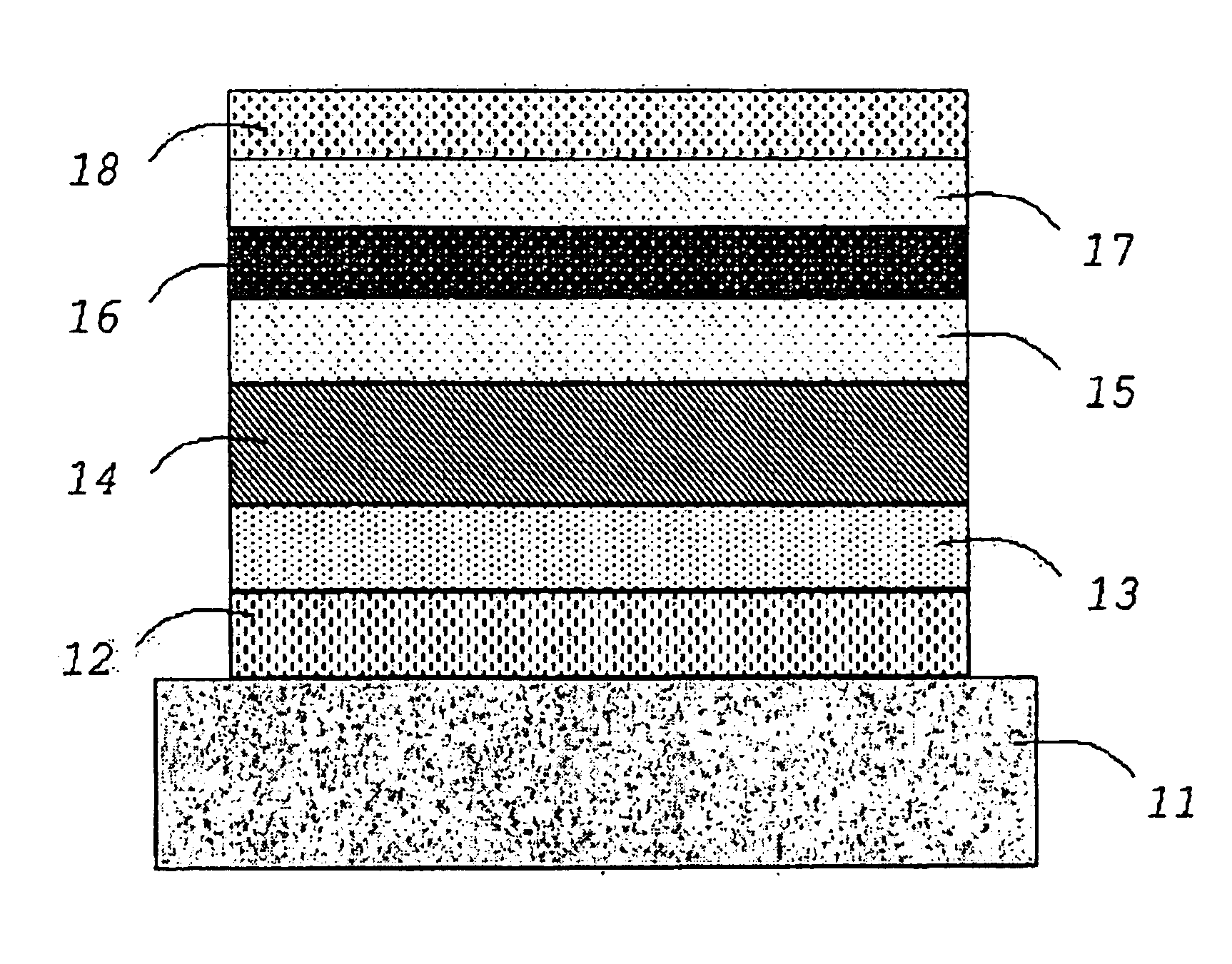
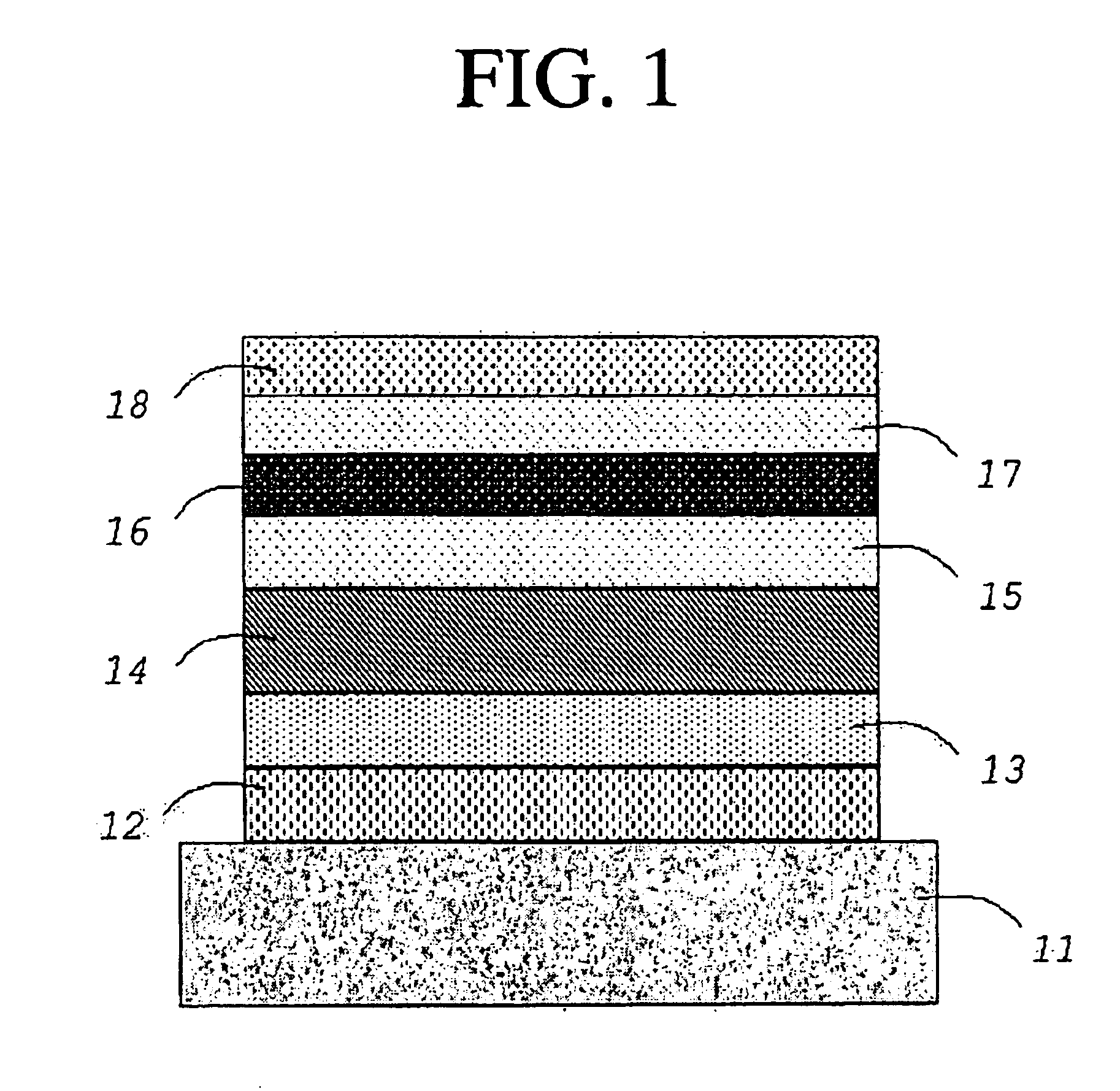
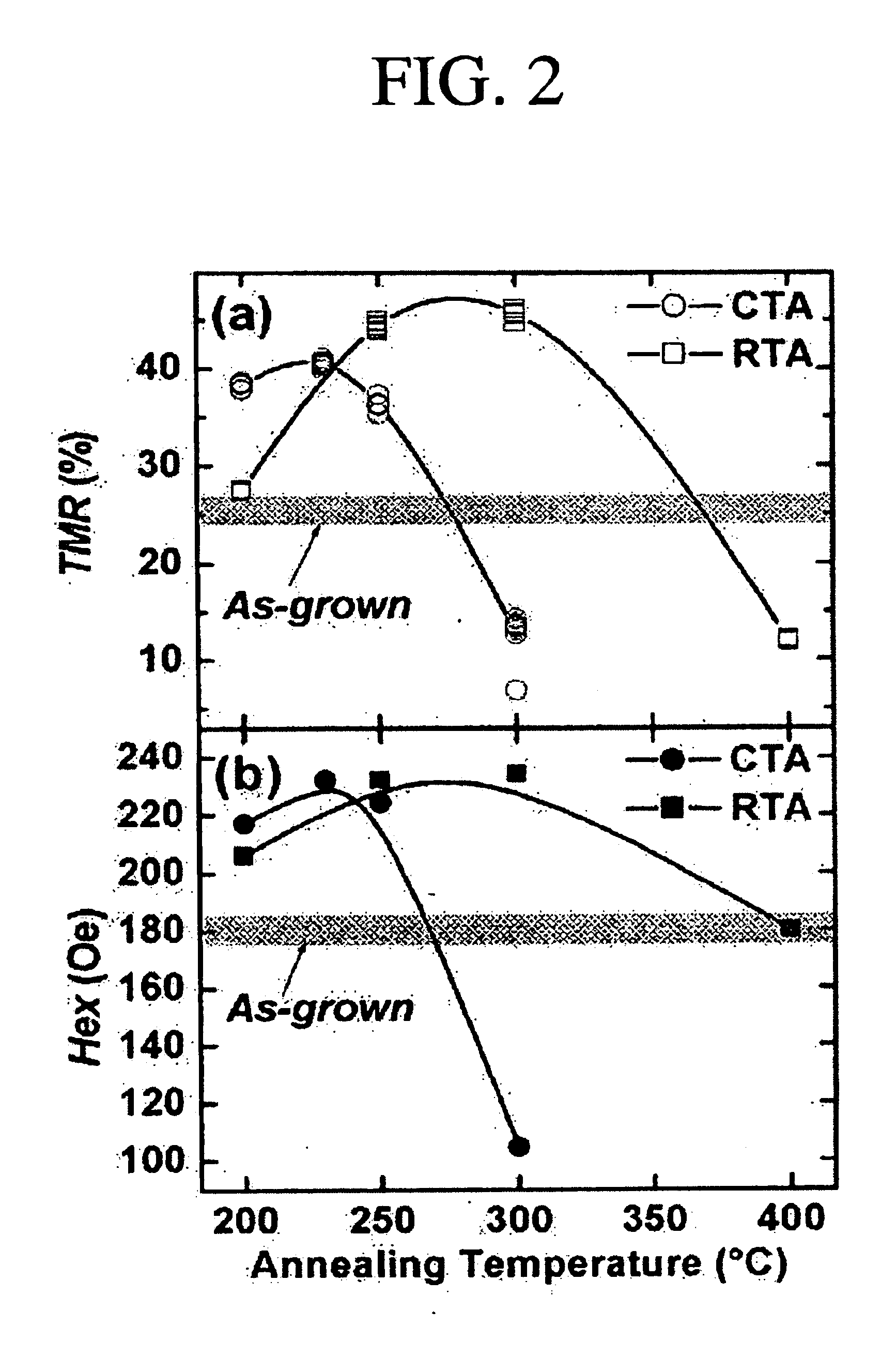
- A rapid thermal annealing method is employed for 5 seconds to 10 minutes at 200° C to 600° C, using an infrared lamp, to redistribute atoms in the tunnel barrier and improve the interface between the tunnel barrier and magnetic layers, potentially combined with conventional thermal treatment for enhanced characteristics.

Magnetic tunnel junctions for MRAM devices
PatentInactiveUS7149105B2
Innovation
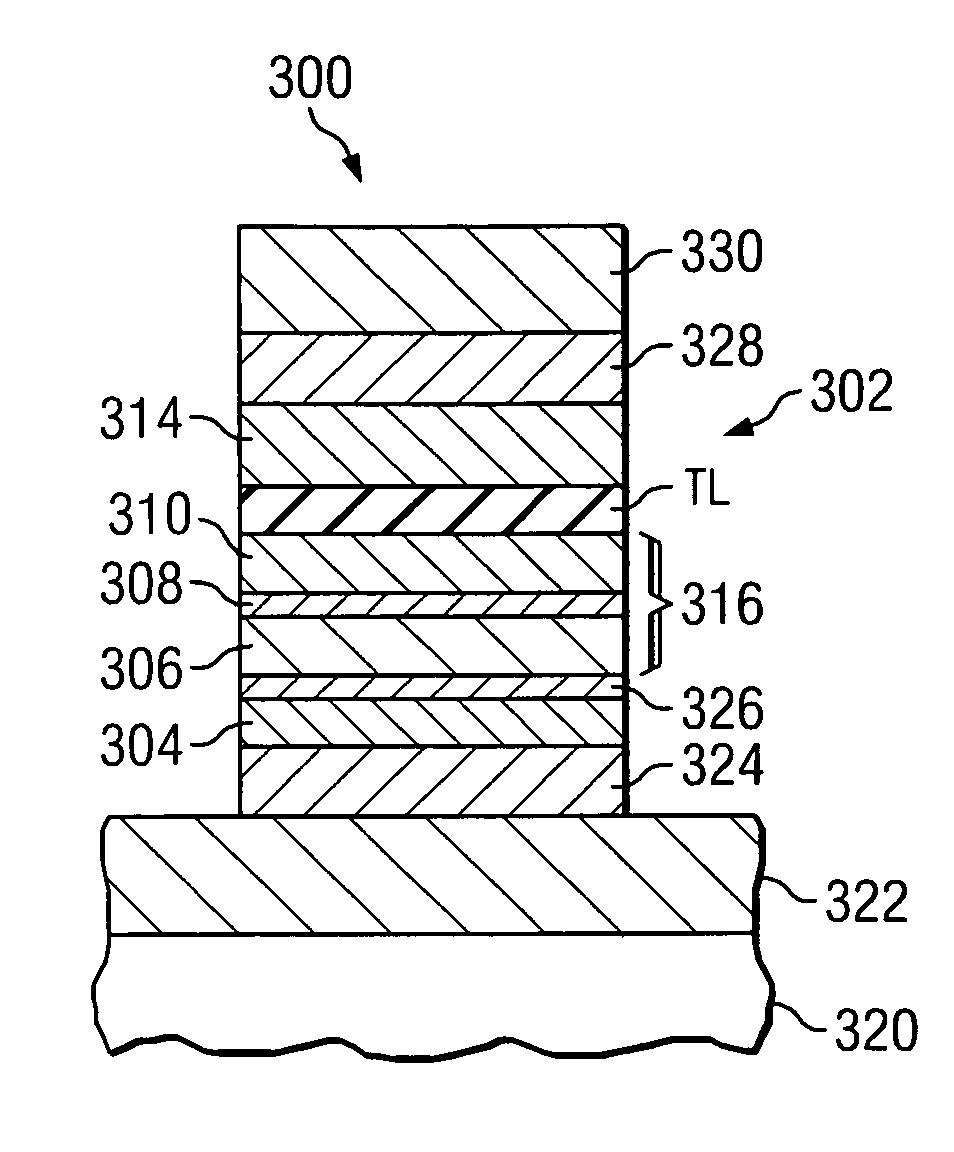
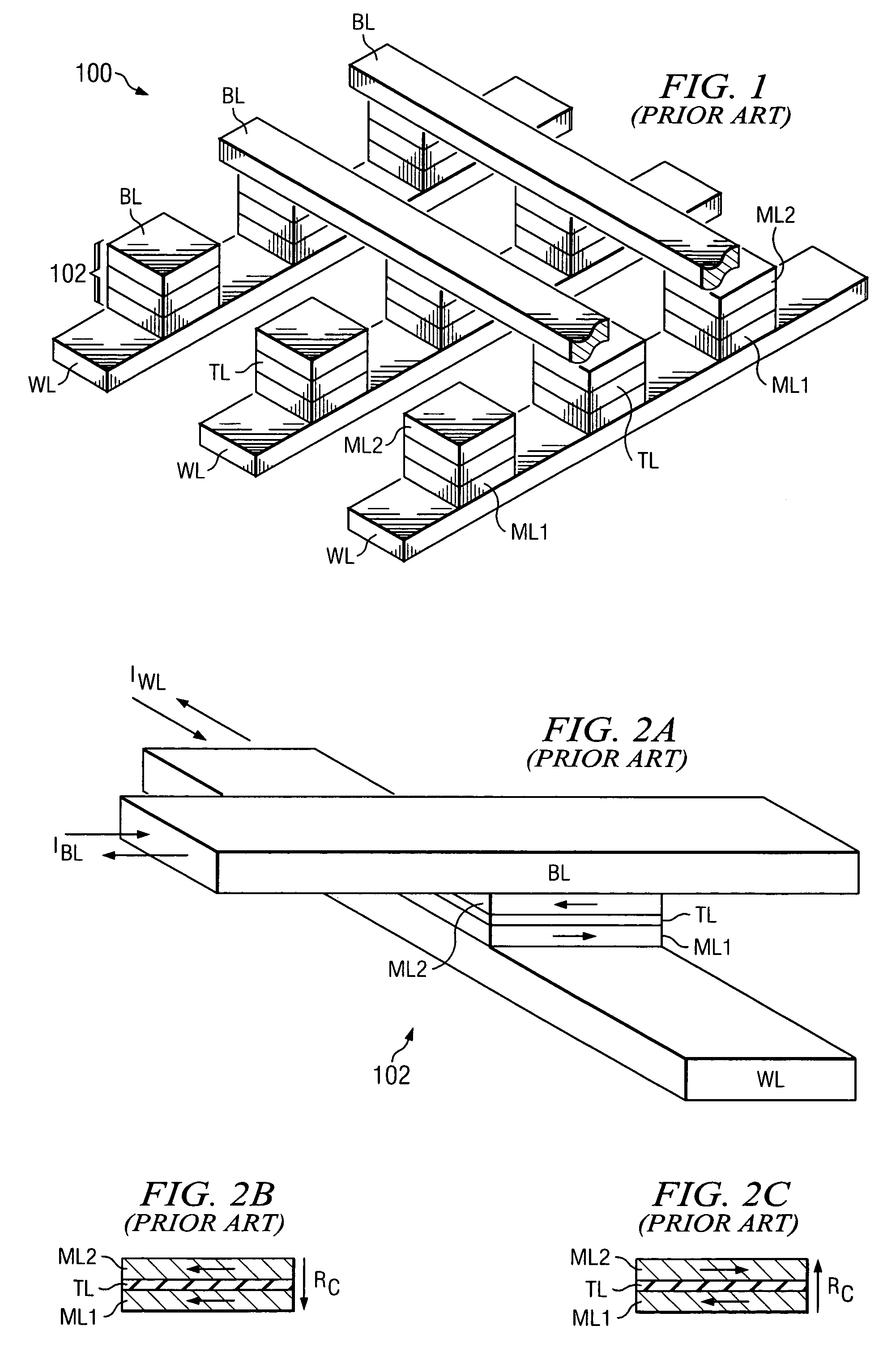
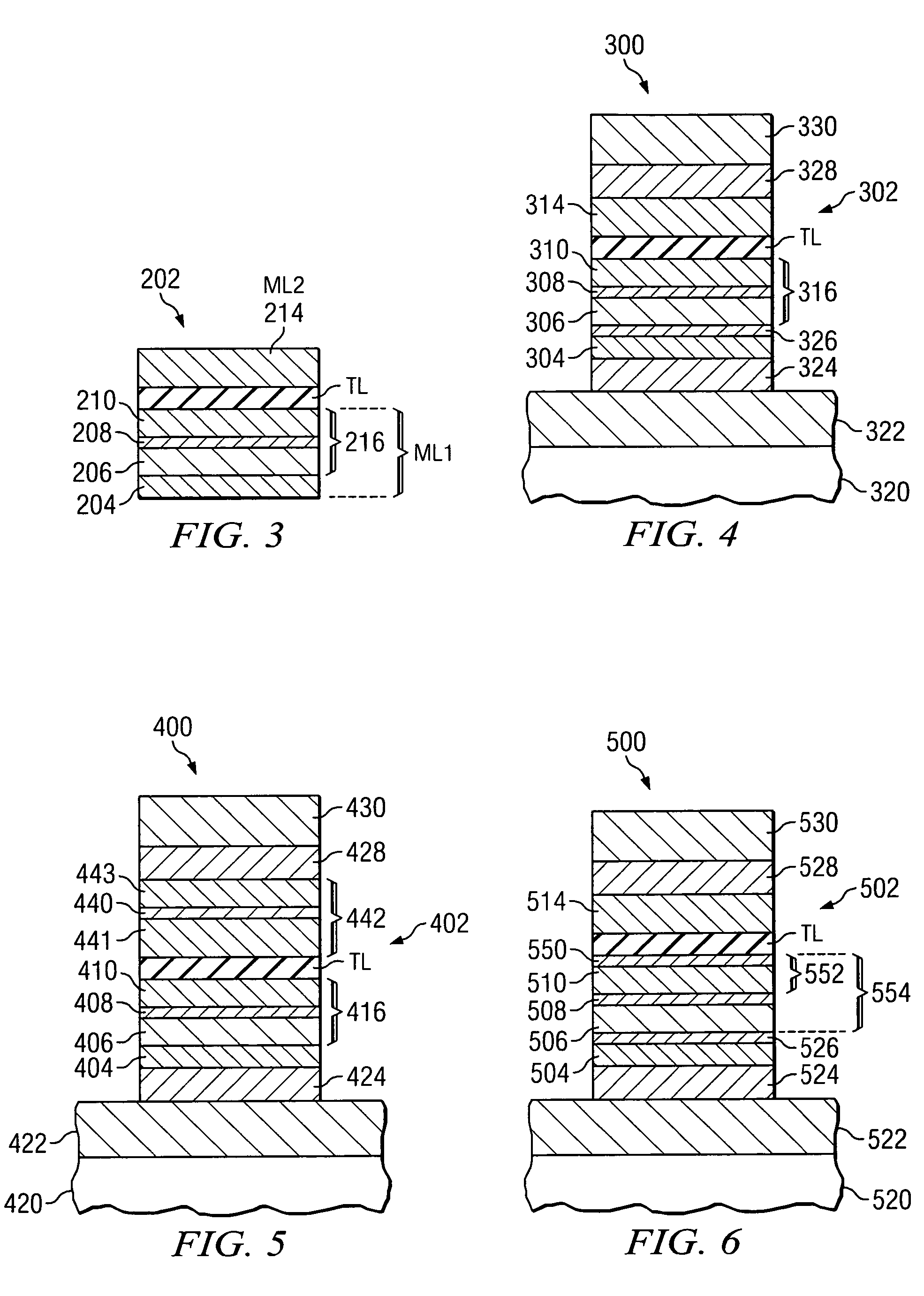
- Incorporating a diffusion barrier made of amorphous ferromagnetic materials or NiFe alloys between magnetic layers and using amorphous materials within or adjacent to tunnel barrier layers to reduce Neel coupling and enhance thermal stability, thereby preventing material diffusion and improving magnetic and electrical performance.

Material Science Advances for MTJ Applications
The advancement of magnetic tunnel junction (MTJ) technology for enhanced thermal stability has been significantly driven by breakthrough developments in material science. These innovations focus on engineering novel magnetic materials, optimizing interface properties, and developing advanced barrier materials that can withstand elevated operating temperatures while maintaining superior magnetoresistive performance.
Recent progress in perpendicular magnetic anisotropy (PMA) materials has revolutionized MTJ thermal stability. CoFeB-based free layers with engineered boron content and crystallization properties demonstrate remarkable thermal resilience up to 400°C. The incorporation of rare earth elements like Tb and Dy into CoFeB alloys has further enhanced magnetic anisotropy energy, providing stronger resistance to thermal fluctuations that typically cause magnetization switching at elevated temperatures.
Interface engineering represents another critical advancement area. The development of ultra-thin insertion layers, particularly Ta, W, and Mo-based materials, at the CoFeB/MgO interface has dramatically improved thermal stability coefficients. These insertion layers create optimized electronic band structures that enhance spin-dependent tunneling while reducing thermal-induced interface degradation. Advanced atomic layer deposition techniques enable precise control of these interfacial properties at the atomic scale.
Barrier material innovations have focused on alternative oxides beyond traditional MgO structures. Spinel-based barriers, including MgAl2O4 and CoAl2O4, exhibit superior thermal stability due to their inherent crystalline structure resilience. These materials maintain coherent tunneling characteristics at temperatures exceeding 350°C, significantly outperforming conventional MgO barriers that typically degrade above 300°C.
Synthetic antiferromagnetic (SAF) reference layer architectures have emerged as game-changing solutions for thermal stability enhancement. Advanced SAF structures utilizing Ru, Ir, and Rh spacer layers with optimized thickness control demonstrate exceptional thermal robustness. The antiferromagnetic coupling strength in these structures remains stable across wide temperature ranges, preventing unwanted magnetization fluctuations.
Compositional engineering of magnetic alloys has yielded significant breakthroughs in thermal performance. Heusler alloys, particularly Co2FeAl and Co2MnSi variants, offer exceptional thermal stability combined with high spin polarization. These materials maintain their magnetic properties and electronic structure integrity at operating temperatures up to 450°C, making them ideal candidates for high-temperature MTJ applications in automotive and industrial electronics.
Recent progress in perpendicular magnetic anisotropy (PMA) materials has revolutionized MTJ thermal stability. CoFeB-based free layers with engineered boron content and crystallization properties demonstrate remarkable thermal resilience up to 400°C. The incorporation of rare earth elements like Tb and Dy into CoFeB alloys has further enhanced magnetic anisotropy energy, providing stronger resistance to thermal fluctuations that typically cause magnetization switching at elevated temperatures.
Interface engineering represents another critical advancement area. The development of ultra-thin insertion layers, particularly Ta, W, and Mo-based materials, at the CoFeB/MgO interface has dramatically improved thermal stability coefficients. These insertion layers create optimized electronic band structures that enhance spin-dependent tunneling while reducing thermal-induced interface degradation. Advanced atomic layer deposition techniques enable precise control of these interfacial properties at the atomic scale.
Barrier material innovations have focused on alternative oxides beyond traditional MgO structures. Spinel-based barriers, including MgAl2O4 and CoAl2O4, exhibit superior thermal stability due to their inherent crystalline structure resilience. These materials maintain coherent tunneling characteristics at temperatures exceeding 350°C, significantly outperforming conventional MgO barriers that typically degrade above 300°C.
Synthetic antiferromagnetic (SAF) reference layer architectures have emerged as game-changing solutions for thermal stability enhancement. Advanced SAF structures utilizing Ru, Ir, and Rh spacer layers with optimized thickness control demonstrate exceptional thermal robustness. The antiferromagnetic coupling strength in these structures remains stable across wide temperature ranges, preventing unwanted magnetization fluctuations.
Compositional engineering of magnetic alloys has yielded significant breakthroughs in thermal performance. Heusler alloys, particularly Co2FeAl and Co2MnSi variants, offer exceptional thermal stability combined with high spin polarization. These materials maintain their magnetic properties and electronic structure integrity at operating temperatures up to 450°C, making them ideal candidates for high-temperature MTJ applications in automotive and industrial electronics.
Manufacturing Process Optimization for MTJ Devices
The manufacturing process optimization for MTJ devices represents a critical pathway to achieving enhanced thermal stability through precise control of material deposition, interface engineering, and structural parameters. Advanced fabrication techniques have evolved to address the fundamental challenges associated with maintaining magnetic properties and tunneling magnetoresistance ratios at elevated temperatures.
Atomic layer deposition (ALD) and molecular beam epitaxy (MBE) have emerged as preferred techniques for creating ultra-thin barrier layers with atomic-scale precision. These methods enable the formation of crystalline MgO barriers with minimal defect density, which is essential for thermal stability. The control of oxygen stoichiometry during barrier formation directly impacts the thermal coefficient of resistance and the retention of magnetic properties under temperature stress.
Interface engineering through controlled annealing processes has proven crucial for optimizing MTJ thermal performance. Post-deposition annealing at temperatures ranging from 300°C to 450°C promotes crystallization of the MgO barrier while simultaneously improving the magnetic coupling at ferromagnetic interfaces. The annealing atmosphere composition, particularly oxygen partial pressure, significantly influences the formation of interfacial oxides that can enhance or degrade thermal stability.
Seed layer optimization represents another critical manufacturing consideration. The use of tantalum, ruthenium, or platinum-based seed layers affects the crystallographic texture of subsequent magnetic layers, directly impacting thermal stability coefficients. Multi-step deposition processes with intermediate annealing steps have demonstrated superior results in maintaining coherent interfaces under thermal cycling.
Advanced lithography techniques, including electron beam lithography and extreme ultraviolet lithography, enable the fabrication of sub-20nm MTJ pillars with improved edge definition. Reduced edge roughness minimizes magnetic domain wall pinning sites that can compromise thermal stability. Ion beam etching parameters, including beam angle and chemistry, must be carefully optimized to prevent sidewall damage that creates thermally unstable magnetic configurations.
Quality control during manufacturing involves real-time monitoring of deposition rates, substrate temperature, and chamber pressure to ensure reproducible thermal characteristics across wafer-scale production.
Atomic layer deposition (ALD) and molecular beam epitaxy (MBE) have emerged as preferred techniques for creating ultra-thin barrier layers with atomic-scale precision. These methods enable the formation of crystalline MgO barriers with minimal defect density, which is essential for thermal stability. The control of oxygen stoichiometry during barrier formation directly impacts the thermal coefficient of resistance and the retention of magnetic properties under temperature stress.
Interface engineering through controlled annealing processes has proven crucial for optimizing MTJ thermal performance. Post-deposition annealing at temperatures ranging from 300°C to 450°C promotes crystallization of the MgO barrier while simultaneously improving the magnetic coupling at ferromagnetic interfaces. The annealing atmosphere composition, particularly oxygen partial pressure, significantly influences the formation of interfacial oxides that can enhance or degrade thermal stability.
Seed layer optimization represents another critical manufacturing consideration. The use of tantalum, ruthenium, or platinum-based seed layers affects the crystallographic texture of subsequent magnetic layers, directly impacting thermal stability coefficients. Multi-step deposition processes with intermediate annealing steps have demonstrated superior results in maintaining coherent interfaces under thermal cycling.
Advanced lithography techniques, including electron beam lithography and extreme ultraviolet lithography, enable the fabrication of sub-20nm MTJ pillars with improved edge definition. Reduced edge roughness minimizes magnetic domain wall pinning sites that can compromise thermal stability. Ion beam etching parameters, including beam angle and chemistry, must be carefully optimized to prevent sidewall damage that creates thermally unstable magnetic configurations.
Quality control during manufacturing involves real-time monitoring of deposition rates, substrate temperature, and chamber pressure to ensure reproducible thermal characteristics across wafer-scale production.
Unlock deeper insights with PatSnap Eureka Quick Research — get a full tech report to explore trends and direct your research. Try now!
Generate Your Research Report Instantly with AI Agent
Supercharge your innovation with PatSnap Eureka AI Agent Platform!