

Optimizing Motor Unit for Dynamic Load Adjustments
FEB 14, 20268 MIN READ
Generate Your Research Report Instantly with AI Agent
PatSnap Eureka helps you evaluate technical feasibility & market potential.
Motor Unit Dynamic Load Background and Objectives
Motor unit optimization for dynamic load adjustments has emerged as a critical technological frontier in modern industrial automation and robotics. The evolution of motor control systems has progressed from simple fixed-speed applications to sophisticated adaptive systems capable of real-time load response. Early motor units operated under static conditions with predetermined parameters, but contemporary industrial demands require motors that can instantaneously adapt to varying operational loads while maintaining optimal efficiency and performance.
The historical development of motor unit technology reveals a clear trajectory toward increased intelligence and adaptability. Initial developments focused on basic variable frequency drives and simple feedback mechanisms. The introduction of digital signal processors in the 1990s marked a significant milestone, enabling more sophisticated control algorithms. Subsequently, the integration of advanced sensors and machine learning capabilities has transformed motor units into intelligent systems capable of predictive load management and autonomous optimization.
Current technological objectives center on achieving seamless dynamic load adaptation while maximizing energy efficiency and system longevity. The primary goal involves developing motor units that can anticipate load changes through predictive analytics and adjust operational parameters proactively rather than reactively. This requires sophisticated algorithms capable of processing multiple input variables including torque requirements, speed variations, environmental conditions, and system feedback in real-time.
Energy efficiency optimization represents another fundamental objective, as industrial operations increasingly prioritize sustainable practices and cost reduction. Modern motor units must balance performance demands with energy consumption, requiring advanced control strategies that minimize power waste during load transitions. The integration of regenerative braking systems and energy recovery mechanisms has become essential for achieving these efficiency targets.
Reliability and maintenance optimization constitute equally important objectives in motor unit development. Dynamic load conditions impose varying stress patterns on motor components, necessitating intelligent monitoring systems that can predict maintenance requirements and prevent unexpected failures. The implementation of condition-based maintenance strategies relies on sophisticated diagnostic capabilities embedded within the motor unit architecture.
The convergence of Internet of Things technologies with motor control systems has opened new possibilities for distributed intelligence and coordinated operation across multiple motor units. This technological evolution aims to create interconnected motor networks capable of load sharing and collaborative optimization, representing the next frontier in motor unit development for dynamic applications.
The historical development of motor unit technology reveals a clear trajectory toward increased intelligence and adaptability. Initial developments focused on basic variable frequency drives and simple feedback mechanisms. The introduction of digital signal processors in the 1990s marked a significant milestone, enabling more sophisticated control algorithms. Subsequently, the integration of advanced sensors and machine learning capabilities has transformed motor units into intelligent systems capable of predictive load management and autonomous optimization.
Current technological objectives center on achieving seamless dynamic load adaptation while maximizing energy efficiency and system longevity. The primary goal involves developing motor units that can anticipate load changes through predictive analytics and adjust operational parameters proactively rather than reactively. This requires sophisticated algorithms capable of processing multiple input variables including torque requirements, speed variations, environmental conditions, and system feedback in real-time.
Energy efficiency optimization represents another fundamental objective, as industrial operations increasingly prioritize sustainable practices and cost reduction. Modern motor units must balance performance demands with energy consumption, requiring advanced control strategies that minimize power waste during load transitions. The integration of regenerative braking systems and energy recovery mechanisms has become essential for achieving these efficiency targets.
Reliability and maintenance optimization constitute equally important objectives in motor unit development. Dynamic load conditions impose varying stress patterns on motor components, necessitating intelligent monitoring systems that can predict maintenance requirements and prevent unexpected failures. The implementation of condition-based maintenance strategies relies on sophisticated diagnostic capabilities embedded within the motor unit architecture.
The convergence of Internet of Things technologies with motor control systems has opened new possibilities for distributed intelligence and coordinated operation across multiple motor units. This technological evolution aims to create interconnected motor networks capable of load sharing and collaborative optimization, representing the next frontier in motor unit development for dynamic applications.
Market Demand for Adaptive Motor Control Systems
The global market for adaptive motor control systems is experiencing unprecedented growth driven by the increasing demand for energy-efficient and intelligent automation solutions across multiple industries. Manufacturing sectors, particularly automotive, aerospace, and industrial machinery, are actively seeking motor control technologies that can dynamically adjust to varying operational conditions while maintaining optimal performance and energy consumption.
Industrial automation represents the largest market segment for adaptive motor control systems, where manufacturers require precise speed and torque control to handle fluctuating production demands. The push toward Industry 4.0 and smart manufacturing has intensified the need for motor units capable of real-time load adjustments, enabling seamless integration with IoT-enabled production systems and predictive maintenance protocols.
The renewable energy sector presents another significant market opportunity, particularly in wind turbine applications where motor control systems must continuously adapt to changing wind conditions. Solar tracking systems also require sophisticated motor control solutions that can adjust panel positioning throughout the day while optimizing energy consumption and mechanical stress.
Electric vehicle and hybrid vehicle markets are driving substantial demand for advanced motor control technologies that can optimize performance across diverse driving conditions. These applications require motor units that can instantly respond to acceleration demands, regenerative braking requirements, and varying load conditions while maximizing battery efficiency and extending vehicle range.
HVAC systems in commercial and residential buildings increasingly incorporate adaptive motor controls to achieve energy efficiency targets and comply with stringent environmental regulations. Variable air volume systems, smart ventilation controls, and heat pump applications all benefit from motor units that can dynamically adjust to changing thermal loads and occupancy patterns.
The robotics and automation sector continues to expand its adoption of adaptive motor control systems, particularly in collaborative robots and autonomous systems that must operate safely alongside humans while adapting to unpredictable environmental conditions and task requirements.
Market growth is further accelerated by regulatory pressures for energy efficiency, carbon emission reduction targets, and the economic benefits of reduced operational costs through optimized motor performance across varying load conditions.
Industrial automation represents the largest market segment for adaptive motor control systems, where manufacturers require precise speed and torque control to handle fluctuating production demands. The push toward Industry 4.0 and smart manufacturing has intensified the need for motor units capable of real-time load adjustments, enabling seamless integration with IoT-enabled production systems and predictive maintenance protocols.
The renewable energy sector presents another significant market opportunity, particularly in wind turbine applications where motor control systems must continuously adapt to changing wind conditions. Solar tracking systems also require sophisticated motor control solutions that can adjust panel positioning throughout the day while optimizing energy consumption and mechanical stress.
Electric vehicle and hybrid vehicle markets are driving substantial demand for advanced motor control technologies that can optimize performance across diverse driving conditions. These applications require motor units that can instantly respond to acceleration demands, regenerative braking requirements, and varying load conditions while maximizing battery efficiency and extending vehicle range.
HVAC systems in commercial and residential buildings increasingly incorporate adaptive motor controls to achieve energy efficiency targets and comply with stringent environmental regulations. Variable air volume systems, smart ventilation controls, and heat pump applications all benefit from motor units that can dynamically adjust to changing thermal loads and occupancy patterns.
The robotics and automation sector continues to expand its adoption of adaptive motor control systems, particularly in collaborative robots and autonomous systems that must operate safely alongside humans while adapting to unpredictable environmental conditions and task requirements.
Market growth is further accelerated by regulatory pressures for energy efficiency, carbon emission reduction targets, and the economic benefits of reduced operational costs through optimized motor performance across varying load conditions.
Current Motor Unit Limitations in Dynamic Applications
Traditional motor units face significant operational constraints when deployed in dynamic load environments, primarily due to their design optimization for steady-state conditions. Most conventional motors are engineered with fixed parameters that perform optimally within narrow operational windows, leading to substantial efficiency losses when load conditions fluctuate rapidly. This fundamental limitation becomes particularly pronounced in applications requiring frequent acceleration, deceleration, or variable torque demands.
The thermal management challenges in dynamic applications represent a critical bottleneck for current motor technologies. Rapid load variations generate inconsistent heat patterns that exceed the thermal dissipation capabilities of standard cooling systems. This thermal instability not only reduces operational efficiency but also accelerates component degradation, leading to premature failure and increased maintenance requirements. The inability to effectively manage thermal dynamics severely limits the motor's operational envelope in demanding applications.
Control system responsiveness presents another significant limitation in existing motor units. Traditional control algorithms are typically optimized for stable operating conditions and struggle to maintain precision during rapid load transitions. The inherent lag in feedback systems and the limited bandwidth of conventional controllers result in suboptimal performance during dynamic operations, causing energy waste and reduced system reliability.
Power electronics integration in current motor designs lacks the sophistication required for efficient dynamic load management. Standard inverters and drive systems are not optimized for the rapid switching and variable power demands characteristic of dynamic applications. This mismatch between power delivery systems and actual operational requirements leads to increased losses, electromagnetic interference, and reduced overall system efficiency.
Mechanical design constraints further compound these limitations. Traditional motor architectures, including bearing systems, rotor configurations, and magnetic circuit designs, are optimized for continuous operation rather than variable load scenarios. The mechanical stress patterns generated during dynamic operations often exceed design specifications, resulting in increased wear, vibration, and potential mechanical failure.
The sensor integration and feedback mechanisms in conventional motor units are inadequate for real-time dynamic optimization. Limited sensing capabilities prevent accurate load prediction and proactive adjustment, forcing motors to operate reactively rather than predictively. This reactive approach inherently introduces delays and inefficiencies that compromise overall system performance in dynamic environments.
The thermal management challenges in dynamic applications represent a critical bottleneck for current motor technologies. Rapid load variations generate inconsistent heat patterns that exceed the thermal dissipation capabilities of standard cooling systems. This thermal instability not only reduces operational efficiency but also accelerates component degradation, leading to premature failure and increased maintenance requirements. The inability to effectively manage thermal dynamics severely limits the motor's operational envelope in demanding applications.
Control system responsiveness presents another significant limitation in existing motor units. Traditional control algorithms are typically optimized for stable operating conditions and struggle to maintain precision during rapid load transitions. The inherent lag in feedback systems and the limited bandwidth of conventional controllers result in suboptimal performance during dynamic operations, causing energy waste and reduced system reliability.
Power electronics integration in current motor designs lacks the sophistication required for efficient dynamic load management. Standard inverters and drive systems are not optimized for the rapid switching and variable power demands characteristic of dynamic applications. This mismatch between power delivery systems and actual operational requirements leads to increased losses, electromagnetic interference, and reduced overall system efficiency.
Mechanical design constraints further compound these limitations. Traditional motor architectures, including bearing systems, rotor configurations, and magnetic circuit designs, are optimized for continuous operation rather than variable load scenarios. The mechanical stress patterns generated during dynamic operations often exceed design specifications, resulting in increased wear, vibration, and potential mechanical failure.
The sensor integration and feedback mechanisms in conventional motor units are inadequate for real-time dynamic optimization. Limited sensing capabilities prevent accurate load prediction and proactive adjustment, forcing motors to operate reactively rather than predictively. This reactive approach inherently introduces delays and inefficiencies that compromise overall system performance in dynamic environments.
Existing Dynamic Load Adjustment Solutions
01 Dynamic load distribution control systems
Systems and methods for dynamically distributing loads across multiple motor units based on real-time operating conditions. These systems monitor load demands and automatically adjust power distribution among motor units to optimize performance and efficiency. Control algorithms enable seamless load balancing by adjusting individual motor outputs in response to changing operational requirements.- Dynamic load distribution control systems: Systems and methods for dynamically distributing loads across multiple motor units based on real-time operational conditions. These systems monitor load demands and automatically adjust power distribution among motor units to optimize performance and prevent overload conditions. Control algorithms calculate optimal load sharing ratios and implement adjustments through electronic control units that manage motor operation parameters.
- Adaptive motor control based on load sensing: Technologies that enable motor units to sense current load conditions and adaptively adjust operational parameters such as speed, torque, and power consumption. Load sensors provide feedback to control systems that modify motor behavior in response to changing demands. These adaptive mechanisms help maintain efficiency and prevent damage during variable load conditions.
- Multi-motor coordination and synchronization: Methods for coordinating multiple motor units working together to handle dynamic loads through synchronized operation. Control systems manage the timing and power output of individual motors to ensure smooth load transitions and balanced distribution. Synchronization protocols enable motors to work cooperatively while adjusting to load variations in real-time.
- Load prediction and preemptive adjustment mechanisms: Advanced systems that predict upcoming load changes and preemptively adjust motor unit parameters before load transitions occur. Predictive algorithms analyze historical data and operational patterns to anticipate load variations. These mechanisms enable smoother transitions and reduce stress on motor components by preparing adjustments in advance of actual load changes.
- Energy-efficient load management strategies: Optimization techniques focused on minimizing energy consumption during dynamic load adjustments across motor units. These strategies include variable frequency drives, power factor correction, and intelligent scheduling of motor activation. Energy management systems monitor consumption patterns and implement adjustments that maintain performance while reducing overall power usage during varying load conditions.
02 Adaptive motor control with feedback mechanisms
Motor control systems that incorporate feedback sensors and adaptive algorithms to adjust motor unit operation based on measured parameters. These systems continuously monitor variables such as torque, speed, and temperature to dynamically modify motor control parameters. The feedback-driven approach enables real-time adjustments to maintain optimal performance under varying load conditions.Expand Specific Solutions03 Multi-motor coordination and synchronization
Technologies for coordinating multiple motor units to work together under dynamic load conditions. These systems employ synchronization protocols and communication interfaces to ensure coordinated operation of multiple motors. Load sharing algorithms distribute work among motor units while maintaining synchronized operation and preventing overload of individual units.Expand Specific Solutions04 Variable frequency drive and power adjustment
Methods for adjusting motor unit operation through variable frequency drives and power modulation techniques. These approaches enable precise control of motor speed and torque by varying the frequency and voltage supplied to motor units. Dynamic power adjustment capabilities allow motors to respond efficiently to fluctuating load demands while minimizing energy consumption.Expand Specific Solutions05 Load prediction and preemptive adjustment systems
Advanced systems that predict upcoming load changes and preemptively adjust motor unit parameters. These systems utilize machine learning algorithms and historical data analysis to forecast load variations. Predictive control strategies enable motor units to prepare for load changes before they occur, reducing response time and improving overall system stability.Expand Specific Solutions
Key Players in Smart Motor and Control System Industry
The motor unit optimization for dynamic load adjustments represents a rapidly evolving market driven by increasing demand for energy-efficient and adaptive motor systems across automotive, industrial automation, and renewable energy sectors. The industry is in a growth phase with significant market expansion, particularly in electric vehicle applications and smart manufacturing. Technology maturity varies considerably among key players, with established giants like Siemens AG, Robert Bosch GmbH, and Mitsubishi Electric Corp. leading in advanced motor control systems and power electronics. Automotive specialists including ZF Friedrichshafen AG, Toyota Industries Corp., and NIDEC Corp. are pushing boundaries in electric motor efficiency and dynamic response capabilities. Meanwhile, companies like Schaeffler Technologies AG and Vitesco Technologies GmbH focus on mechatronic integration solutions, while emerging players from Asia are accelerating innovation in cost-effective implementations for mass market applications.
Robert Bosch GmbH
Technical Solution: Bosch has developed advanced motor control systems featuring adaptive torque management and intelligent load sensing capabilities. Their motor units incorporate real-time feedback mechanisms that continuously monitor load conditions and adjust motor parameters accordingly. The system utilizes predictive algorithms to anticipate load changes and pre-adjust motor characteristics, reducing response time by up to 40%. Their technology includes variable frequency drives with dynamic power scaling, allowing motors to operate efficiently across a wide range of load conditions while maintaining optimal performance and energy consumption.
Strengths: Market-leading adaptive control algorithms, extensive automotive integration experience, robust real-time processing capabilities. Weaknesses: Higher implementation costs, complex calibration requirements for different applications.
Siemens AG
Technical Solution: Siemens offers comprehensive motor optimization solutions through their SINAMICS drive systems, which feature advanced load-adaptive control algorithms. Their technology employs machine learning-based load prediction models that analyze historical performance data to optimize motor response patterns. The system includes dynamic torque vectoring and real-time parameter adjustment capabilities, enabling motors to adapt to varying load conditions within milliseconds. Their integrated approach combines hardware optimization with sophisticated software control, achieving energy efficiency improvements of up to 30% in dynamic load scenarios.
Strengths: Comprehensive industrial automation expertise, proven scalability across applications, strong integration with existing systems. Weaknesses: Requires significant initial setup and configuration, dependency on proprietary software platforms.
Core Innovations in Motor Unit Optimization
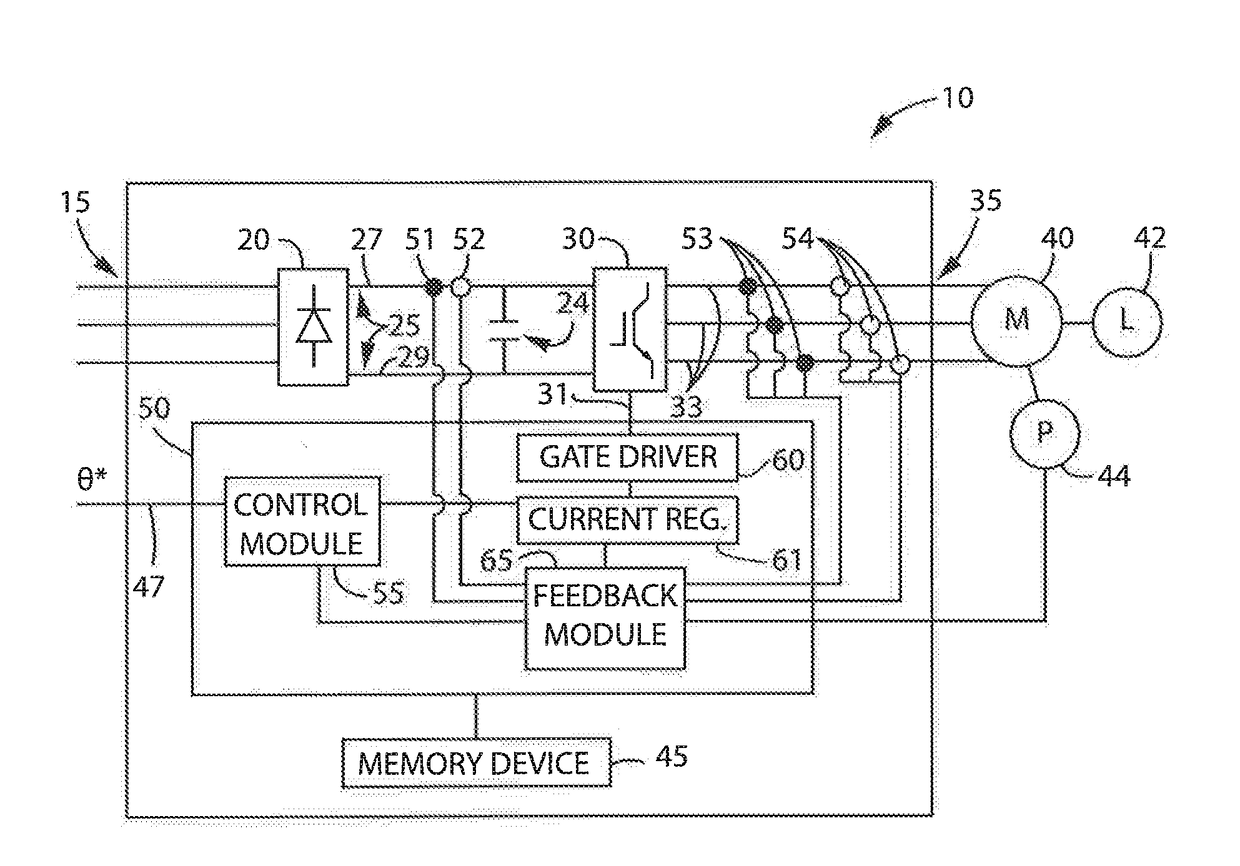
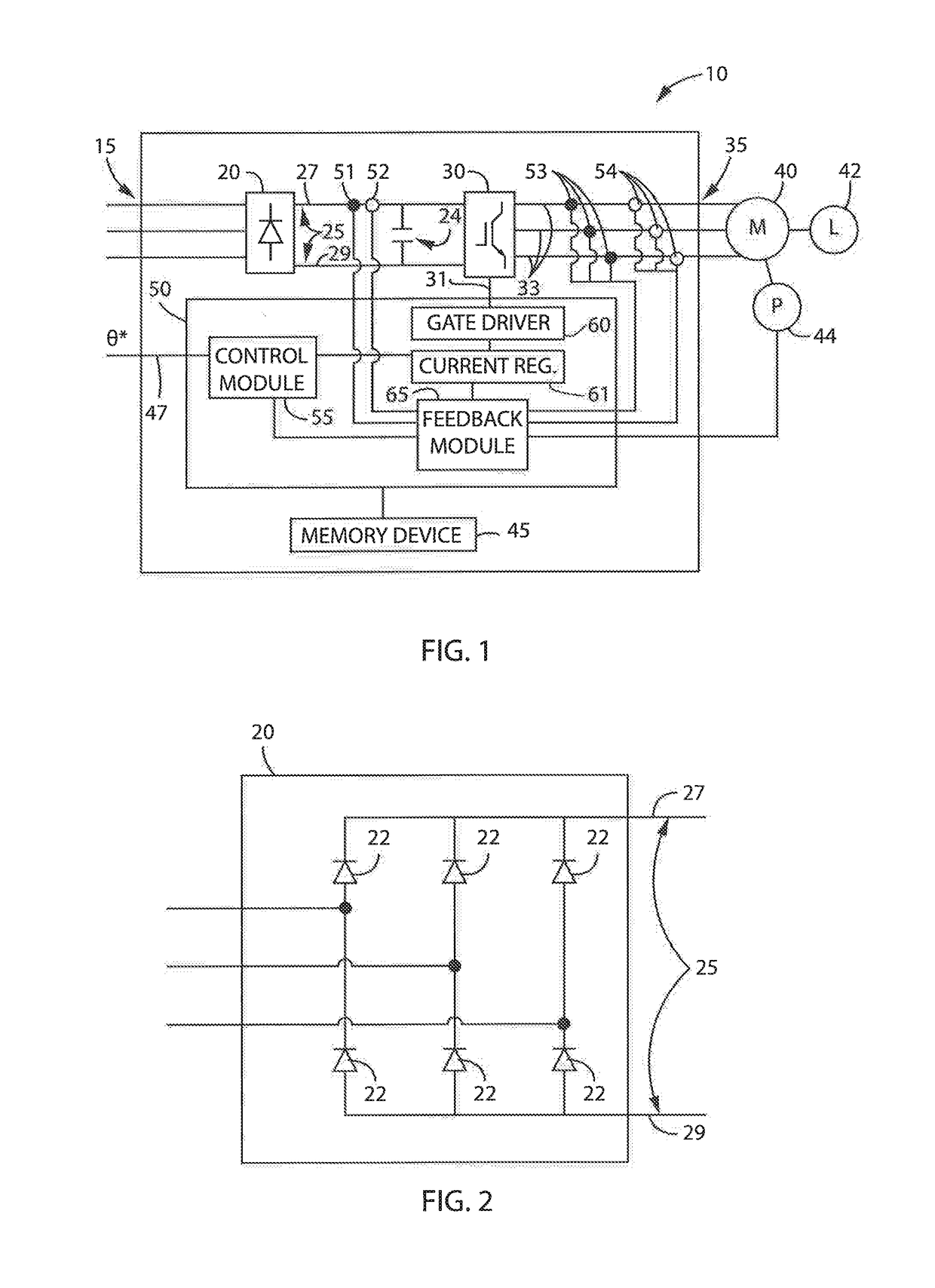
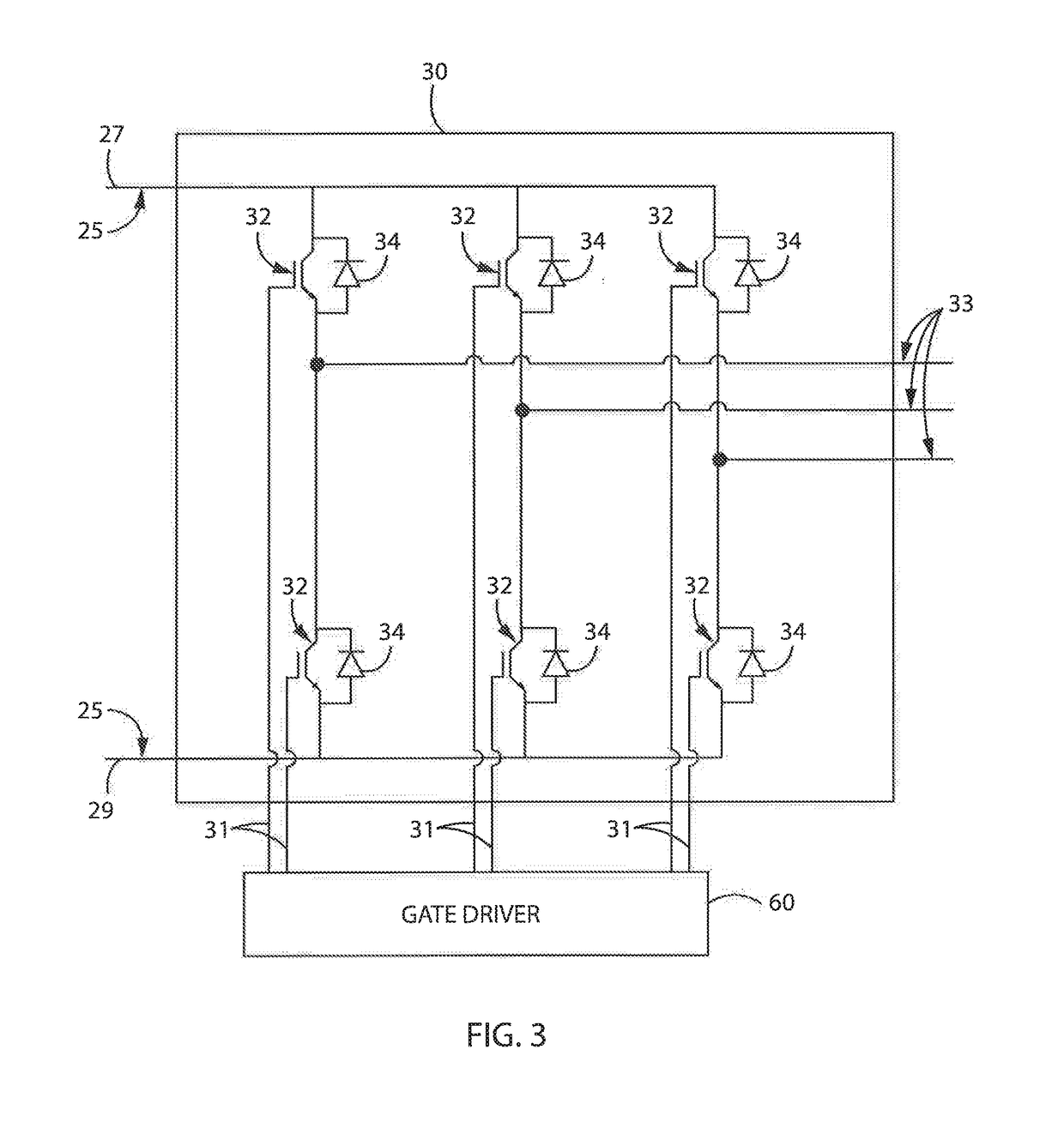
System And Method For Isolation Of Load Dynamics In Motor Drive Tuning
PatentActiveUS20180262144A1
Innovation
- A motor drive system with a load observer that generates a response estimate signal to isolate load dynamics from control loops, using a control module with filters to adjust bandwidths and mitigate resonances, allowing for initial settings that provide improved tuning-less performance across a range of mechanical systems.

Motor control apparatus
PatentWO2014112178A1
Innovation
- A motor control device that calculates and updates state variables based on speed and current feedforwards, using a change coefficient to correct speed and current commands, ensuring adaptability to changing loads and compensating for nonlinearity in current-torque characteristics, thereby generating position and speed commands that maintain high-speed and robust responses.


Energy Efficiency Standards for Motor Systems
Energy efficiency standards for motor systems have become increasingly stringent worldwide, driven by environmental concerns and the need to reduce operational costs. The International Electrotechnical Commission (IEC) 60034-30-1 standard defines efficiency classes for motors, with IE4 (Super Premium Efficiency) and IE5 (Ultra Premium Efficiency) representing the highest tiers. These standards mandate minimum efficiency levels that motors must achieve across different power ratings and operating conditions.
In the context of dynamic load adjustments, current efficiency standards present unique challenges. Traditional efficiency measurements are typically conducted under steady-state conditions at 75%, 50%, and 25% of rated load. However, motors optimized for dynamic load adjustments operate across continuously varying load profiles, making compliance verification more complex. The European Union's Motor Regulation (EU) 2019/1781 has begun addressing this gap by introducing requirements for variable speed drive systems.
The IEEE 112 standard provides testing methodologies for determining motor efficiency, but adaptations are needed for dynamic applications. Recent developments include the introduction of weighted efficiency calculations that account for typical load duty cycles. The Consortium for Energy Efficiency (CEE) has proposed new metrics such as the Integrated Part Load Value (IPLV) specifically for variable load applications.
Emerging standards are focusing on system-level efficiency rather than component-level performance. The ISO 50001 energy management standard encourages holistic approaches to motor system optimization. This shift recognizes that motors operating under dynamic conditions require different evaluation criteria, including response time efficiency, acceleration/deceleration losses, and thermal management under varying loads.
Future regulatory frameworks are expected to incorporate real-time efficiency monitoring requirements and mandate the use of smart motor technologies that can adapt to load variations while maintaining optimal efficiency levels throughout the operational spectrum.
In the context of dynamic load adjustments, current efficiency standards present unique challenges. Traditional efficiency measurements are typically conducted under steady-state conditions at 75%, 50%, and 25% of rated load. However, motors optimized for dynamic load adjustments operate across continuously varying load profiles, making compliance verification more complex. The European Union's Motor Regulation (EU) 2019/1781 has begun addressing this gap by introducing requirements for variable speed drive systems.
The IEEE 112 standard provides testing methodologies for determining motor efficiency, but adaptations are needed for dynamic applications. Recent developments include the introduction of weighted efficiency calculations that account for typical load duty cycles. The Consortium for Energy Efficiency (CEE) has proposed new metrics such as the Integrated Part Load Value (IPLV) specifically for variable load applications.
Emerging standards are focusing on system-level efficiency rather than component-level performance. The ISO 50001 energy management standard encourages holistic approaches to motor system optimization. This shift recognizes that motors operating under dynamic conditions require different evaluation criteria, including response time efficiency, acceleration/deceleration losses, and thermal management under varying loads.
Future regulatory frameworks are expected to incorporate real-time efficiency monitoring requirements and mandate the use of smart motor technologies that can adapt to load variations while maintaining optimal efficiency levels throughout the operational spectrum.
Safety Protocols for Dynamic Motor Applications
Dynamic motor applications operating under variable load conditions require comprehensive safety protocols to prevent equipment failure, personnel injury, and operational disruptions. These protocols must address the unique challenges posed by rapidly changing operational parameters, including voltage fluctuations, thermal variations, and mechanical stress concentrations that occur during load transitions.
The foundation of motor safety in dynamic environments centers on real-time monitoring systems that continuously track critical parameters such as current draw, temperature profiles, vibration patterns, and torque variations. Advanced sensor networks integrated with predictive analytics enable early detection of anomalous conditions before they escalate into safety hazards. These monitoring systems must be calibrated to distinguish between normal operational variations and potentially dangerous deviations.
Emergency shutdown procedures represent a critical component of safety protocols, requiring fail-safe mechanisms that can rapidly disconnect power and engage mechanical brakes when predetermined safety thresholds are exceeded. The shutdown sequence must be designed to minimize damage to both the motor unit and connected equipment while ensuring personnel safety. Response times for emergency systems typically must be under 100 milliseconds for high-speed applications.
Thermal management protocols are particularly crucial for motors experiencing dynamic loads, as rapid load changes can create localized heating that standard cooling systems may not adequately address. Safety measures include thermal imaging surveillance, strategically placed temperature sensors, and automated cooling system adjustments that respond to real-time thermal conditions.
Personnel safety protocols must account for the unpredictable nature of dynamic motor operations, establishing clear exclusion zones around equipment during operation and implementing lockout-tagout procedures specifically adapted for systems with variable operational states. Training programs must emphasize the unique risks associated with motors under dynamic loading conditions.
Regular safety audits and protocol updates ensure that safety measures evolve alongside technological improvements and operational changes. These audits must evaluate both the effectiveness of existing safety systems and their compatibility with new motor optimization technologies being implemented.
The foundation of motor safety in dynamic environments centers on real-time monitoring systems that continuously track critical parameters such as current draw, temperature profiles, vibration patterns, and torque variations. Advanced sensor networks integrated with predictive analytics enable early detection of anomalous conditions before they escalate into safety hazards. These monitoring systems must be calibrated to distinguish between normal operational variations and potentially dangerous deviations.
Emergency shutdown procedures represent a critical component of safety protocols, requiring fail-safe mechanisms that can rapidly disconnect power and engage mechanical brakes when predetermined safety thresholds are exceeded. The shutdown sequence must be designed to minimize damage to both the motor unit and connected equipment while ensuring personnel safety. Response times for emergency systems typically must be under 100 milliseconds for high-speed applications.
Thermal management protocols are particularly crucial for motors experiencing dynamic loads, as rapid load changes can create localized heating that standard cooling systems may not adequately address. Safety measures include thermal imaging surveillance, strategically placed temperature sensors, and automated cooling system adjustments that respond to real-time thermal conditions.
Personnel safety protocols must account for the unpredictable nature of dynamic motor operations, establishing clear exclusion zones around equipment during operation and implementing lockout-tagout procedures specifically adapted for systems with variable operational states. Training programs must emphasize the unique risks associated with motors under dynamic loading conditions.
Regular safety audits and protocol updates ensure that safety measures evolve alongside technological improvements and operational changes. These audits must evaluate both the effectiveness of existing safety systems and their compatibility with new motor optimization technologies being implemented.
Unlock deeper insights with PatSnap Eureka Quick Research — get a full tech report to explore trends and direct your research. Try now!
Generate Your Research Report Instantly with AI Agent
Supercharge your innovation with PatSnap Eureka AI Agent Platform!