
Optimizing Piezoelectric Materials for Ultrasonic Applications
MAR 8, 20269 MIN READ
Generate Your Research Report Instantly with AI Agent
Patsnap Eureka helps you evaluate technical feasibility & market potential.
Piezoelectric Ultrasonic Technology Background and Objectives
Piezoelectric materials have emerged as fundamental components in ultrasonic technology since their discovery in the late 19th century by Pierre and Jacques Curie. These materials exhibit the unique ability to convert mechanical energy into electrical energy and vice versa, making them indispensable for ultrasonic transducers, sensors, and actuators. The piezoelectric effect enables precise control over ultrasonic wave generation and detection, forming the cornerstone of modern ultrasonic applications.
The evolution of piezoelectric ultrasonic technology has progressed through several distinct phases. Early developments focused on natural crystals like quartz, which provided stable but limited performance characteristics. The breakthrough came with the development of synthetic ceramics, particularly lead zirconate titanate (PZT) compositions in the 1950s, which offered significantly enhanced piezoelectric coefficients and coupling factors compared to natural materials.
Contemporary ultrasonic applications span diverse industries including medical imaging, non-destructive testing, underwater sonar systems, precision manufacturing, and therapeutic treatments. Each application domain presents unique requirements for frequency response, power handling, temperature stability, and mechanical durability. Medical ultrasound systems demand materials with excellent biocompatibility and high-resolution imaging capabilities, while industrial applications prioritize robust performance under harsh environmental conditions.
Current technological objectives center on developing next-generation piezoelectric materials that can overcome existing limitations. Key performance targets include achieving higher electromechanical coupling coefficients, broader frequency bandwidth, improved temperature stability, and reduced power consumption. Advanced material compositions such as single crystals, textured ceramics, and composite structures are being explored to meet these demanding specifications.
The optimization challenge extends beyond material composition to encompass microstructural engineering, domain orientation control, and interface design. Modern approaches integrate computational modeling with experimental validation to predict and enhance material properties. Machine learning algorithms are increasingly employed to accelerate material discovery and optimize processing parameters for specific ultrasonic applications.
Environmental considerations have introduced additional objectives focused on developing lead-free piezoelectric alternatives without compromising performance. This sustainability drive has intensified research into bismuth-based compounds, potassium sodium niobate systems, and other environmentally friendly compositions that can match or exceed the performance of traditional lead-containing materials while meeting regulatory requirements for next-generation ultrasonic devices.
The evolution of piezoelectric ultrasonic technology has progressed through several distinct phases. Early developments focused on natural crystals like quartz, which provided stable but limited performance characteristics. The breakthrough came with the development of synthetic ceramics, particularly lead zirconate titanate (PZT) compositions in the 1950s, which offered significantly enhanced piezoelectric coefficients and coupling factors compared to natural materials.
Contemporary ultrasonic applications span diverse industries including medical imaging, non-destructive testing, underwater sonar systems, precision manufacturing, and therapeutic treatments. Each application domain presents unique requirements for frequency response, power handling, temperature stability, and mechanical durability. Medical ultrasound systems demand materials with excellent biocompatibility and high-resolution imaging capabilities, while industrial applications prioritize robust performance under harsh environmental conditions.
Current technological objectives center on developing next-generation piezoelectric materials that can overcome existing limitations. Key performance targets include achieving higher electromechanical coupling coefficients, broader frequency bandwidth, improved temperature stability, and reduced power consumption. Advanced material compositions such as single crystals, textured ceramics, and composite structures are being explored to meet these demanding specifications.
The optimization challenge extends beyond material composition to encompass microstructural engineering, domain orientation control, and interface design. Modern approaches integrate computational modeling with experimental validation to predict and enhance material properties. Machine learning algorithms are increasingly employed to accelerate material discovery and optimize processing parameters for specific ultrasonic applications.
Environmental considerations have introduced additional objectives focused on developing lead-free piezoelectric alternatives without compromising performance. This sustainability drive has intensified research into bismuth-based compounds, potassium sodium niobate systems, and other environmentally friendly compositions that can match or exceed the performance of traditional lead-containing materials while meeting regulatory requirements for next-generation ultrasonic devices.
Market Demand for Advanced Ultrasonic Piezoelectric Systems
The global ultrasonic systems market is experiencing unprecedented growth driven by expanding applications across multiple industries. Healthcare sector represents the largest demand segment, with medical imaging, therapeutic ultrasound, and surgical applications requiring increasingly sophisticated piezoelectric transducers. The aging global population and rising healthcare expenditure are fueling continuous demand for higher resolution imaging systems and minimally invasive treatment technologies.
Industrial non-destructive testing applications constitute another major market driver. Manufacturing industries, particularly aerospace, automotive, and energy sectors, require advanced ultrasonic inspection systems for quality control and safety assurance. The growing emphasis on predictive maintenance and Industry 4.0 initiatives is accelerating adoption of intelligent ultrasonic monitoring systems with enhanced sensitivity and reliability.
Emerging applications in consumer electronics are creating new market opportunities. Ultrasonic sensors for proximity detection, gesture recognition, and biometric authentication in smartphones and wearable devices demand miniaturized, high-performance piezoelectric components. The automotive industry's transition toward autonomous vehicles is generating substantial demand for ultrasonic parking sensors and collision avoidance systems.
The market exhibits strong regional variations in demand patterns. North America and Europe maintain leadership in high-end medical and aerospace applications, emphasizing performance and reliability over cost considerations. Asia-Pacific region demonstrates the fastest growth rate, driven by expanding manufacturing capabilities and increasing healthcare infrastructure investments.
Key market trends indicate growing preference for customized solutions tailored to specific application requirements. End users increasingly demand piezoelectric systems with enhanced temperature stability, broader frequency response, and improved durability. Environmental regulations are also driving demand for lead-free piezoelectric materials, creating opportunities for innovative material compositions.
Market consolidation is evident as major players acquire specialized technology companies to expand their product portfolios. The competitive landscape favors companies capable of providing integrated solutions combining advanced materials, sophisticated electronics, and application-specific software platforms.
Industrial non-destructive testing applications constitute another major market driver. Manufacturing industries, particularly aerospace, automotive, and energy sectors, require advanced ultrasonic inspection systems for quality control and safety assurance. The growing emphasis on predictive maintenance and Industry 4.0 initiatives is accelerating adoption of intelligent ultrasonic monitoring systems with enhanced sensitivity and reliability.
Emerging applications in consumer electronics are creating new market opportunities. Ultrasonic sensors for proximity detection, gesture recognition, and biometric authentication in smartphones and wearable devices demand miniaturized, high-performance piezoelectric components. The automotive industry's transition toward autonomous vehicles is generating substantial demand for ultrasonic parking sensors and collision avoidance systems.
The market exhibits strong regional variations in demand patterns. North America and Europe maintain leadership in high-end medical and aerospace applications, emphasizing performance and reliability over cost considerations. Asia-Pacific region demonstrates the fastest growth rate, driven by expanding manufacturing capabilities and increasing healthcare infrastructure investments.
Key market trends indicate growing preference for customized solutions tailored to specific application requirements. End users increasingly demand piezoelectric systems with enhanced temperature stability, broader frequency response, and improved durability. Environmental regulations are also driving demand for lead-free piezoelectric materials, creating opportunities for innovative material compositions.
Market consolidation is evident as major players acquire specialized technology companies to expand their product portfolios. The competitive landscape favors companies capable of providing integrated solutions combining advanced materials, sophisticated electronics, and application-specific software platforms.
Current State and Challenges in Piezoelectric Material Optimization
Piezoelectric materials for ultrasonic applications have reached a significant level of maturity, with lead zirconate titanate (PZT) ceramics dominating commercial markets for decades. Current state-of-the-art materials achieve electromechanical coupling coefficients exceeding 0.7 and piezoelectric charge constants above 600 pC/N. Single crystal materials like PMN-PT and PZN-PT demonstrate superior performance with coupling factors reaching 0.9, making them attractive for high-performance transducers in medical imaging and non-destructive testing applications.
However, several critical challenges persist in optimizing these materials for advanced ultrasonic systems. Temperature stability remains a primary concern, as most high-performance piezoelectric materials exhibit significant property degradation at elevated temperatures, limiting their use in harsh industrial environments. The Curie temperature of many lead-based materials restricts operational ranges, while thermal cycling can cause depolarization and permanent performance loss.
Environmental and regulatory pressures have intensified the search for lead-free alternatives, driven by RoHS compliance requirements and sustainability concerns. Despite extensive research into potassium sodium niobate (KNN), bismuth sodium titanate (BNT), and barium titanate-based systems, lead-free materials still lag significantly behind PZT in terms of piezoelectric performance and temperature stability. The best lead-free ceramics achieve only 60-70% of PZT's electromechanical properties.
Manufacturing scalability presents another substantial challenge, particularly for single crystal materials that require complex growth processes and precise orientation control. Cost considerations limit widespread adoption of high-performance crystals, while maintaining consistent properties across large production volumes remains difficult for both ceramics and crystals.
Frequency-dependent losses and mechanical quality factors require optimization for specific ultrasonic applications. High-frequency medical transducers demand materials with low dielectric losses and stable properties across broad frequency ranges, while power ultrasonic applications need materials capable of handling high electric fields and mechanical stresses without degradation.
Integration challenges arise when incorporating piezoelectric materials into miniaturized devices and MEMS systems. Thin film deposition techniques often result in reduced piezoelectric coefficients compared to bulk materials, while maintaining proper crystallographic orientation and avoiding substrate-induced stress effects requires sophisticated processing control.
However, several critical challenges persist in optimizing these materials for advanced ultrasonic systems. Temperature stability remains a primary concern, as most high-performance piezoelectric materials exhibit significant property degradation at elevated temperatures, limiting their use in harsh industrial environments. The Curie temperature of many lead-based materials restricts operational ranges, while thermal cycling can cause depolarization and permanent performance loss.
Environmental and regulatory pressures have intensified the search for lead-free alternatives, driven by RoHS compliance requirements and sustainability concerns. Despite extensive research into potassium sodium niobate (KNN), bismuth sodium titanate (BNT), and barium titanate-based systems, lead-free materials still lag significantly behind PZT in terms of piezoelectric performance and temperature stability. The best lead-free ceramics achieve only 60-70% of PZT's electromechanical properties.
Manufacturing scalability presents another substantial challenge, particularly for single crystal materials that require complex growth processes and precise orientation control. Cost considerations limit widespread adoption of high-performance crystals, while maintaining consistent properties across large production volumes remains difficult for both ceramics and crystals.
Frequency-dependent losses and mechanical quality factors require optimization for specific ultrasonic applications. High-frequency medical transducers demand materials with low dielectric losses and stable properties across broad frequency ranges, while power ultrasonic applications need materials capable of handling high electric fields and mechanical stresses without degradation.
Integration challenges arise when incorporating piezoelectric materials into miniaturized devices and MEMS systems. Thin film deposition techniques often result in reduced piezoelectric coefficients compared to bulk materials, while maintaining proper crystallographic orientation and avoiding substrate-induced stress effects requires sophisticated processing control.
Current Piezoelectric Material Solutions for Ultrasonic Systems
01 Piezoelectric composite materials and their fabrication methods
Piezoelectric composite materials combine piezoelectric ceramics with polymer matrices or other materials to achieve enhanced flexibility, processability, and performance. These composites can be fabricated through various methods including mixing, casting, and sintering processes. The composites offer improved mechanical properties while maintaining piezoelectric characteristics, making them suitable for sensors, actuators, and energy harvesting applications.- Piezoelectric composite materials and their fabrication methods: Piezoelectric composite materials combine piezoelectric ceramics with polymer matrices or other materials to achieve enhanced flexibility, processability, and performance. These composites can be fabricated through various methods including mixing, molding, and sintering processes. The composites offer improved mechanical properties while maintaining piezoelectric characteristics, making them suitable for sensors, actuators, and energy harvesting applications.
- Lead-free piezoelectric materials: Development of environmentally friendly piezoelectric materials that do not contain lead-based compounds. These materials utilize alternative compositions such as barium titanate, sodium potassium niobate, and bismuth-based compounds to achieve piezoelectric properties comparable to traditional lead-containing materials. The lead-free alternatives address environmental and health concerns while maintaining suitable performance for various applications.
- Piezoelectric thin films and multilayer structures: Thin film piezoelectric materials and multilayer structures enable miniaturization and integration into microelectronic devices. These structures are fabricated using deposition techniques and can be precisely controlled in terms of thickness and composition. The thin film configurations provide advantages in terms of response speed, integration capability, and compatibility with semiconductor processing technologies.
- Piezoelectric material doping and modification: Enhancement of piezoelectric properties through doping with specific elements or modification of crystal structures. The addition of dopants or the alteration of material composition can significantly improve piezoelectric coefficients, temperature stability, and mechanical strength. These modifications allow for tailoring material properties to specific application requirements and operating conditions.
- Piezoelectric energy harvesting devices: Applications of piezoelectric materials in energy harvesting systems that convert mechanical energy into electrical energy. These devices utilize the piezoelectric effect to capture energy from vibrations, pressure, or mechanical deformations in the environment. The harvested energy can be used to power sensors, wireless devices, or stored for later use, enabling self-powered systems.
02 Lead-free piezoelectric materials
Development of environmentally friendly piezoelectric materials that do not contain lead-based compounds. These materials utilize alternative compositions such as barium titanate, sodium potassium niobate, and bismuth-based compounds to achieve piezoelectric properties. Lead-free materials address environmental and health concerns while providing comparable or improved performance characteristics for various applications.Expand Specific Solutions03 Piezoelectric thin films and multilayer structures
Thin film piezoelectric materials and multilayer structures enable miniaturization and integration into microelectronic devices. These structures are fabricated using deposition techniques and can be precisely controlled in terms of thickness and composition. The thin film configuration allows for high-frequency operation and integration with semiconductor technologies for MEMS devices and sensors.Expand Specific Solutions04 Piezoelectric material doping and modification
Enhancement of piezoelectric properties through doping with specific elements or modification of crystal structures. Various dopants and additives can be incorporated to optimize electrical, mechanical, and thermal properties. These modifications can improve piezoelectric coefficients, temperature stability, and mechanical strength, tailoring materials for specific application requirements.Expand Specific Solutions05 Piezoelectric energy harvesting devices and applications
Design and implementation of piezoelectric materials in energy harvesting systems that convert mechanical energy into electrical energy. These devices utilize the piezoelectric effect to generate power from vibrations, pressure, or mechanical stress. Applications include self-powered sensors, wearable electronics, and structural health monitoring systems where ambient mechanical energy is converted to usable electrical power.Expand Specific Solutions
Key Players in Piezoelectric and Ultrasonic Technology Industry
The piezoelectric materials optimization for ultrasonic applications represents a mature yet rapidly evolving market characterized by intense competition across multiple sectors. The industry has reached commercial maturity with established players like Murata Manufacturing, TDK Corp., and Kyocera Corp. dominating the components market, while specialized firms such as Novosound Ltd. and Guangzhou Doppler Electronic Technologies drive innovation in high-frequency transducers. Technology maturity varies significantly, with traditional ceramic piezoelectrics being well-established, while companies like Physik Instrumente and Siemens AG push boundaries in precision applications. The market demonstrates substantial scale, spanning medical devices (Misonix, ALPINION Medical Systems), industrial NDT (Olympus Medical Systems), and consumer electronics sectors. Academic institutions including Zhejiang University and research organizations like Fraunhofer-Gesellschaft contribute to fundamental advances, indicating continued technological evolution despite market maturity.
Novosound Ltd.
Technical Solution: Novosound specializes in printed piezoelectric ultrasonic transducers using solution-processed ferroelectric materials deposited on flexible substrates. Their technology employs inkjet printing of PZT and PVDF-based inks to create conformal ultrasonic sensors with thickness control at the micrometer level. The printing process enables rapid prototyping and customization of transducer geometries, achieving operating frequencies from 100 kHz to 15 MHz with sensitivity comparable to traditional bulk ceramics. Their flexible transducers maintain piezoelectric performance under mechanical deformation, opening applications in wearable medical devices and structural health monitoring systems.
Strengths: Flexible substrate compatibility and rapid customization capabilities with cost-effective manufacturing. Weaknesses: Lower piezoelectric coefficients compared to bulk ceramics and limited high-power handling capacity.
Murata Manufacturing Co. Ltd.
Technical Solution: Murata develops advanced piezoelectric ceramic materials with optimized crystal structures for ultrasonic applications. Their technology focuses on lead-free piezoelectric compositions using potassium sodium niobate (KNN) and bismuth ferrite-based materials that achieve high piezoelectric coefficients (d33 > 400 pC/N) while maintaining excellent temperature stability up to 300°C. The company employs sophisticated poling techniques and domain engineering to enhance electromechanical coupling factors, achieving kt values exceeding 0.5 for thickness mode resonance in ultrasonic transducers.
Strengths: Industry-leading piezoelectric coefficient values and excellent temperature stability for harsh environments. Weaknesses: Higher manufacturing costs compared to traditional lead-based materials and complex processing requirements.
Core Patents in Optimized Piezoelectric Materials Technology
Piezoelectric device and method of forming
PatentWO2025056898A1
Innovation
- A piezoelectric device with a morphological columnar tilting angle greater than 7 degrees is developed, enhancing the piezoelectric response and coefficient, and a method involving oblique angle deposition and controlled porosity is used to manufacture these devices.


Directionally oriented piezoelectric materials and methods of fabrication
PatentInactiveUS20180001349A1
Innovation
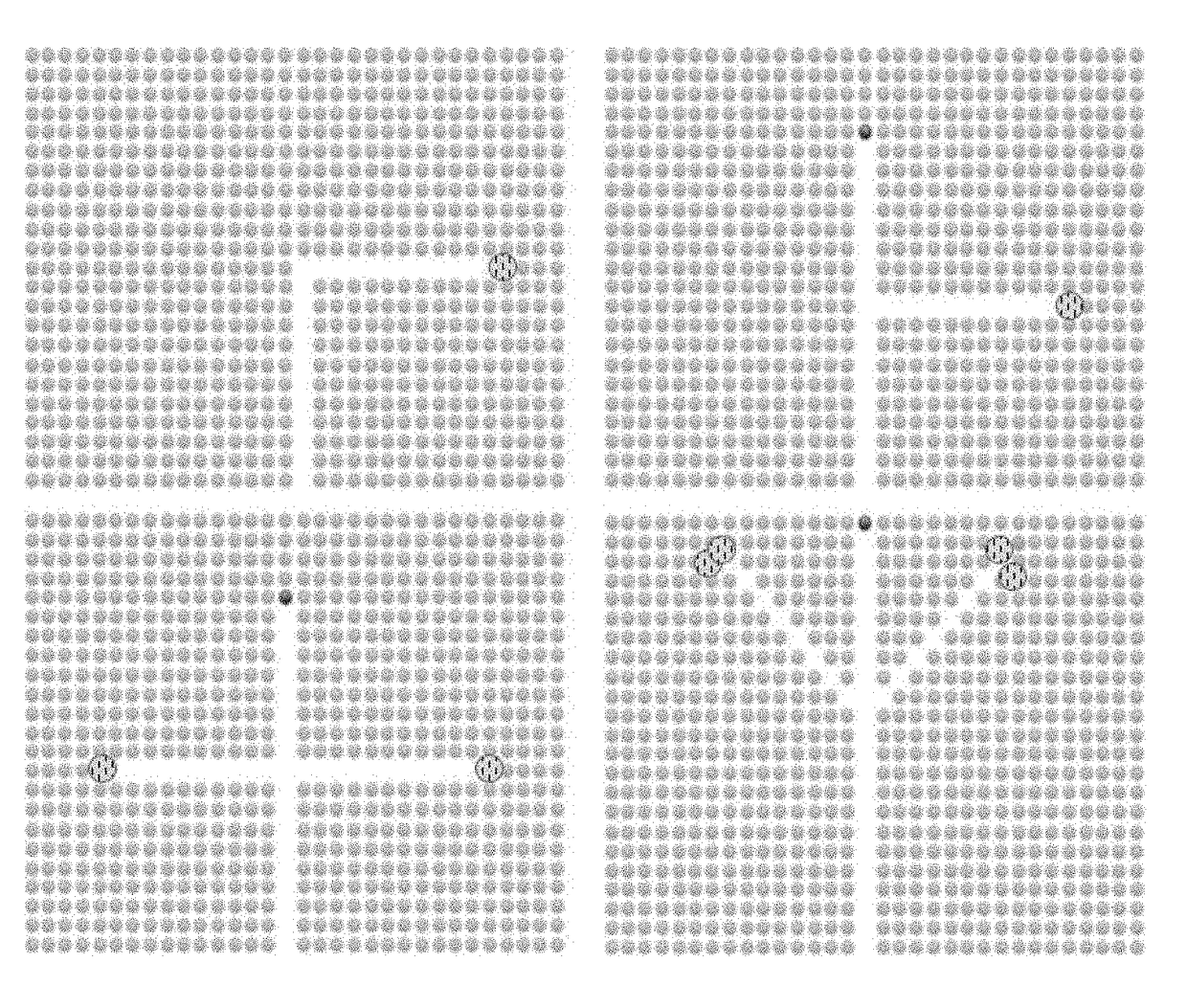
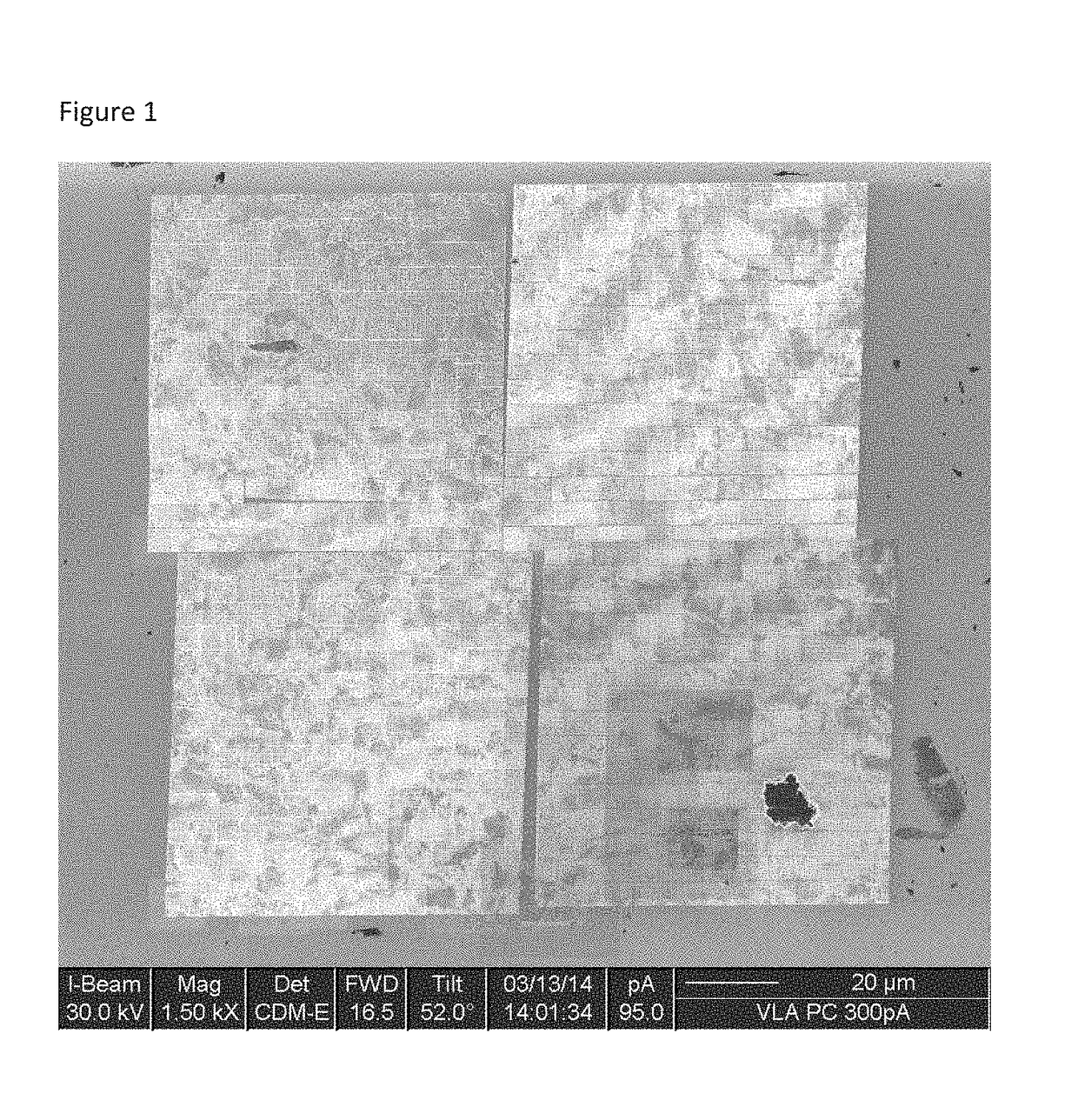
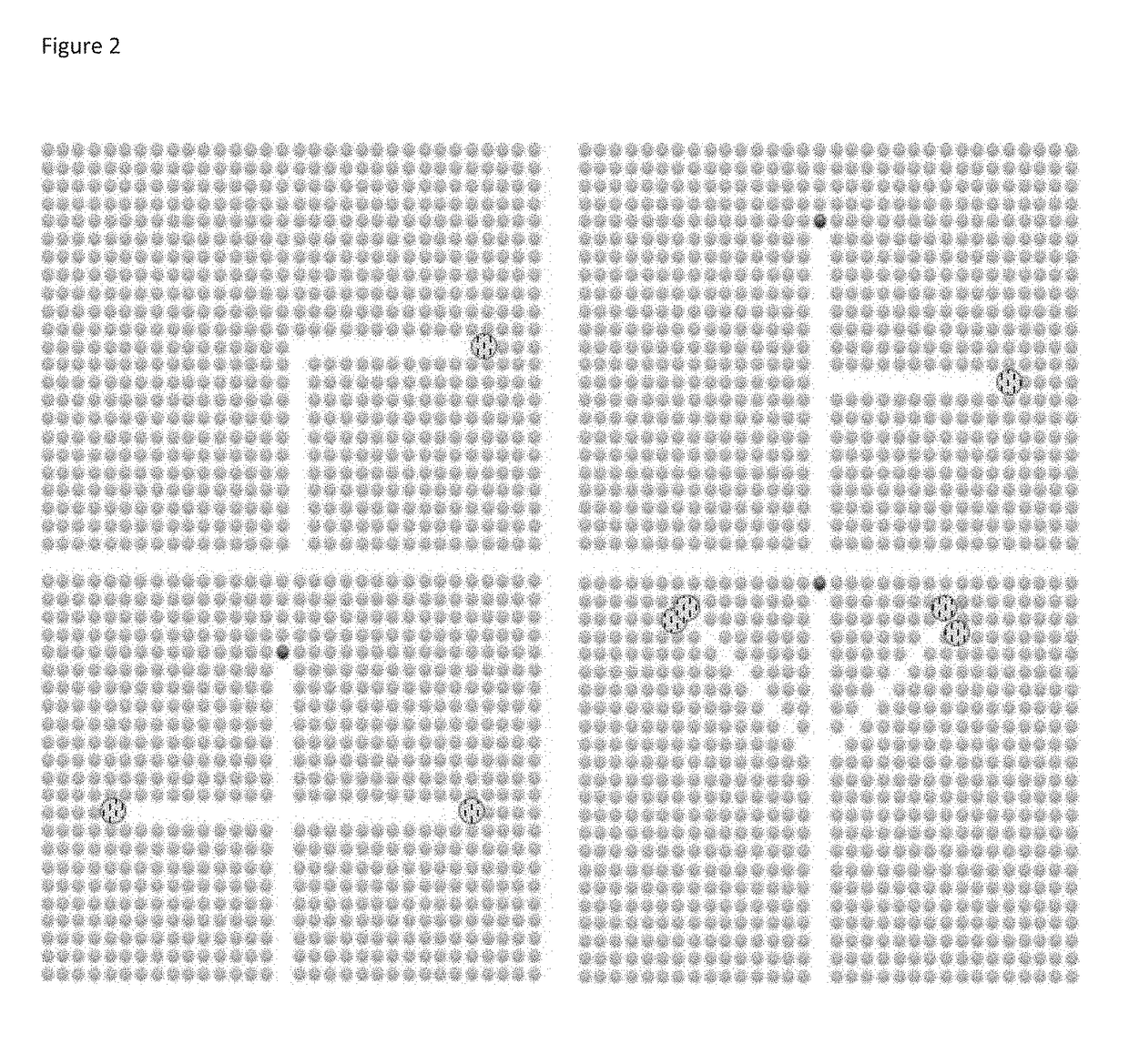
- The development of directionally-oriented single crystal ultrasonic transducers using zinc oxide (ZnO) and similar materials, fabricated through chemical vapor deposition, which allow for high-frequency operation and dynamic frequency tuning, along with the use of phononic crystals and pixilated arrays for enhanced signal-to-noise ratios and focused energy transmission.

Material Safety and Environmental Impact Assessment
The safety profile of piezoelectric materials used in ultrasonic applications varies significantly across different material compositions. Lead-based piezoelectric ceramics, particularly lead zirconate titanate (PZT), present substantial health and environmental concerns due to their high lead content, typically ranging from 60-70% by weight. Lead exposure can cause neurological damage, developmental disorders, and cardiovascular issues. Manufacturing processes involving PZT require stringent safety protocols, including proper ventilation systems, personal protective equipment, and regular health monitoring of workers.
Lead-free alternatives such as potassium sodium niobate (KNN), barium titanate (BaTiO3), and bismuth-based compounds offer improved safety profiles but introduce different considerations. KNN materials contain potassium and sodium, which are generally biocompatible, while bismuth-based ceramics require evaluation for potential bismuth toxicity in specific exposure scenarios. Single-crystal materials like lithium niobate and lithium tantalate present minimal acute toxicity risks but require careful handling due to their processing chemicals.
Environmental impact assessment reveals that lead-based piezoelectric materials pose significant ecological risks throughout their lifecycle. Lead leaching from disposed devices can contaminate soil and groundwater systems, with bioaccumulation potential in food chains. The European Union's RoHS directive and similar regulations worldwide have driven restrictions on lead-containing electronic components, accelerating the transition toward lead-free alternatives.
Manufacturing environmental impacts include energy-intensive sintering processes, typically requiring temperatures between 1000-1400°C, contributing to carbon emissions. Chemical precursors used in sol-gel and hydrothermal synthesis methods may generate hazardous waste streams requiring specialized treatment. Water consumption during processing and the generation of ceramic dust particles necessitate proper filtration and waste management systems.
End-of-life considerations are increasingly critical as ultrasonic device deployment expands. Lead-based materials require specialized recycling facilities to prevent environmental contamination, while lead-free alternatives offer more straightforward disposal pathways. However, the complex multi-layer structures typical in ultrasonic transducers complicate material separation and recovery processes.
Regulatory frameworks continue evolving to address these challenges. The REACH regulation in Europe requires comprehensive safety data for chemical substances, while emerging legislation in Asia-Pacific regions increasingly restricts hazardous materials in electronic applications. Compliance requirements drive material selection decisions and influence research priorities toward environmentally sustainable piezoelectric solutions.
Lead-free alternatives such as potassium sodium niobate (KNN), barium titanate (BaTiO3), and bismuth-based compounds offer improved safety profiles but introduce different considerations. KNN materials contain potassium and sodium, which are generally biocompatible, while bismuth-based ceramics require evaluation for potential bismuth toxicity in specific exposure scenarios. Single-crystal materials like lithium niobate and lithium tantalate present minimal acute toxicity risks but require careful handling due to their processing chemicals.
Environmental impact assessment reveals that lead-based piezoelectric materials pose significant ecological risks throughout their lifecycle. Lead leaching from disposed devices can contaminate soil and groundwater systems, with bioaccumulation potential in food chains. The European Union's RoHS directive and similar regulations worldwide have driven restrictions on lead-containing electronic components, accelerating the transition toward lead-free alternatives.
Manufacturing environmental impacts include energy-intensive sintering processes, typically requiring temperatures between 1000-1400°C, contributing to carbon emissions. Chemical precursors used in sol-gel and hydrothermal synthesis methods may generate hazardous waste streams requiring specialized treatment. Water consumption during processing and the generation of ceramic dust particles necessitate proper filtration and waste management systems.
End-of-life considerations are increasingly critical as ultrasonic device deployment expands. Lead-based materials require specialized recycling facilities to prevent environmental contamination, while lead-free alternatives offer more straightforward disposal pathways. However, the complex multi-layer structures typical in ultrasonic transducers complicate material separation and recovery processes.
Regulatory frameworks continue evolving to address these challenges. The REACH regulation in Europe requires comprehensive safety data for chemical substances, while emerging legislation in Asia-Pacific regions increasingly restricts hazardous materials in electronic applications. Compliance requirements drive material selection decisions and influence research priorities toward environmentally sustainable piezoelectric solutions.
Performance Testing Standards for Piezoelectric Ultrasonic Devices
The establishment of comprehensive performance testing standards for piezoelectric ultrasonic devices represents a critical foundation for advancing material optimization and ensuring reliable device operation across diverse applications. Current standardization efforts encompass multiple international frameworks, including IEEE standards for piezoelectric materials characterization and IEC specifications for ultrasonic transducer performance evaluation.
Fundamental testing parameters focus on electromechanical coupling coefficients, which quantify the efficiency of energy conversion between electrical and mechanical domains. The coupling coefficient k33 for thickness mode vibrations and k31 for planar mode operations serve as primary indicators of material performance. Testing protocols typically require measurements at room temperature and elevated temperatures to assess thermal stability, with frequency response characterization conducted across the operational bandwidth.
Mechanical quality factor (Qm) testing protocols evaluate energy dissipation characteristics under resonant conditions. Standard measurement procedures involve impedance analysis using precision LCR meters or network analyzers, with specific attention to environmental conditions including humidity control and temperature stabilization. The mechanical quality factor directly influences device sensitivity and bandwidth performance in ultrasonic applications.
Dielectric property assessment encompasses relative permittivity measurements at both constant stress and constant strain conditions. Testing standards mandate frequency-dependent characterization from sub-hertz to megahertz ranges, enabling comprehensive evaluation of material behavior across operational frequencies. Loss tangent measurements provide insights into energy dissipation mechanisms affecting overall device efficiency.
Acoustic performance standards address sound velocity measurements, acoustic impedance characterization, and attenuation coefficient determination. Pulse-echo techniques and through-transmission methods constitute primary testing approaches, with standardized sample geometries and surface preparation requirements ensuring measurement reproducibility.
Reliability testing protocols incorporate accelerated aging procedures, thermal cycling assessments, and mechanical stress evaluations. These standards establish baseline performance criteria and degradation thresholds, enabling prediction of long-term operational stability. Fatigue testing under cyclic loading conditions simulates real-world operational stresses, providing essential data for material selection and device design optimization.
Fundamental testing parameters focus on electromechanical coupling coefficients, which quantify the efficiency of energy conversion between electrical and mechanical domains. The coupling coefficient k33 for thickness mode vibrations and k31 for planar mode operations serve as primary indicators of material performance. Testing protocols typically require measurements at room temperature and elevated temperatures to assess thermal stability, with frequency response characterization conducted across the operational bandwidth.
Mechanical quality factor (Qm) testing protocols evaluate energy dissipation characteristics under resonant conditions. Standard measurement procedures involve impedance analysis using precision LCR meters or network analyzers, with specific attention to environmental conditions including humidity control and temperature stabilization. The mechanical quality factor directly influences device sensitivity and bandwidth performance in ultrasonic applications.
Dielectric property assessment encompasses relative permittivity measurements at both constant stress and constant strain conditions. Testing standards mandate frequency-dependent characterization from sub-hertz to megahertz ranges, enabling comprehensive evaluation of material behavior across operational frequencies. Loss tangent measurements provide insights into energy dissipation mechanisms affecting overall device efficiency.
Acoustic performance standards address sound velocity measurements, acoustic impedance characterization, and attenuation coefficient determination. Pulse-echo techniques and through-transmission methods constitute primary testing approaches, with standardized sample geometries and surface preparation requirements ensuring measurement reproducibility.
Reliability testing protocols incorporate accelerated aging procedures, thermal cycling assessments, and mechanical stress evaluations. These standards establish baseline performance criteria and degradation thresholds, enabling prediction of long-term operational stability. Fatigue testing under cyclic loading conditions simulates real-world operational stresses, providing essential data for material selection and device design optimization.
Unlock deeper insights with Patsnap Eureka Quick Research — get a full tech report to explore trends and direct your research. Try now!
Generate Your Research Report Instantly with AI Agent
Supercharge your innovation with Patsnap Eureka AI Agent Platform!