

Optimizing Plasma Treatment to Address Substrate Delamination
MAY 28, 20269 MIN READ
Generate Your Research Report Instantly with AI Agent
Patsnap Eureka helps you evaluate technical feasibility & market potential.
Plasma Treatment Background and Delamination Goals
Plasma treatment technology emerged in the mid-20th century as a revolutionary surface modification technique, initially developed for semiconductor manufacturing and later expanding into diverse industrial applications. The fundamental principle involves generating ionized gas containing reactive species that interact with material surfaces at the molecular level, enabling precise control over surface properties without altering bulk material characteristics.
The evolution of plasma treatment has progressed through several distinct phases, beginning with basic corona discharge systems in the 1960s to sophisticated atmospheric and low-pressure plasma systems currently deployed across industries. Early applications focused primarily on surface cleaning and activation, while contemporary systems achieve complex surface functionalization, coating deposition, and selective material removal with nanometer-scale precision.
Substrate delamination represents one of the most critical failure modes in multilayer material systems, particularly affecting industries such as electronics packaging, automotive composites, aerospace structures, and flexible electronics. This phenomenon occurs when adhesive forces between layers become insufficient to maintain structural integrity under operational stresses, leading to catastrophic failure, reduced product reliability, and significant economic losses.
The primary goal of optimizing plasma treatment for delamination mitigation centers on enhancing interfacial adhesion through controlled surface modification. This involves creating optimal surface energy profiles, introducing functional chemical groups that promote bonding, and establishing micro-scale surface topography that increases mechanical interlocking between layers. Advanced plasma treatment aims to achieve these modifications while maintaining precise control over treatment depth and uniformity.
Contemporary research objectives focus on developing predictive models that correlate plasma parameters with adhesion performance, enabling real-time process optimization. Key targets include achieving consistent treatment results across large substrate areas, minimizing thermal damage to sensitive materials, and establishing robust process windows that accommodate manufacturing variations while maintaining superior adhesion performance.
The ultimate technological goal involves creating intelligent plasma treatment systems capable of adaptive parameter adjustment based on real-time surface analysis feedback. This advancement would enable manufacturers to achieve optimal delamination resistance while reducing process development time and improving overall product reliability across diverse material combinations and operating environments.
Market Demand for Enhanced Substrate Adhesion Solutions
The global electronics manufacturing industry faces mounting pressure to address substrate delamination issues, driving substantial demand for enhanced substrate adhesion solutions. Delamination failures in semiconductor devices, printed circuit boards, and flexible electronics result in significant yield losses and reliability concerns, creating an urgent need for advanced plasma treatment optimization technologies.
Market drivers stem from the continuous miniaturization of electronic components and the adoption of advanced packaging technologies. As device geometries shrink and multi-layer structures become more complex, traditional adhesion methods prove insufficient. The transition to heterogeneous integration, 3D packaging, and flexible substrates amplifies the criticality of robust interfacial bonding, positioning plasma treatment optimization as a key enabling technology.
The automotive electronics sector represents a particularly demanding application area, where substrate delamination can lead to catastrophic system failures. Electric vehicle power modules, advanced driver assistance systems, and autonomous driving components require exceptional reliability under extreme thermal cycling and mechanical stress conditions. These stringent requirements drive premium pricing acceptance for superior adhesion solutions.
Consumer electronics manufacturers increasingly prioritize thin form factors and lightweight designs, creating additional challenges for substrate adhesion. Smartphones, tablets, and wearable devices demand reliable bonding between dissimilar materials while maintaining minimal thickness profiles. The rapid product refresh cycles in this sector necessitate manufacturing processes that deliver consistent adhesion performance at high throughput rates.
Industrial and aerospace applications present another significant market segment, where long-term reliability and performance under harsh environmental conditions are paramount. Power electronics, RF components, and sensor systems in these sectors require substrate adhesion solutions that maintain integrity over extended operational lifespans, often exceeding twenty years.
The growing adoption of wide bandgap semiconductors, including silicon carbide and gallium nitride devices, introduces new material compatibility challenges that conventional adhesion techniques struggle to address. These advanced materials require specialized plasma treatment approaches to achieve optimal interfacial bonding, creating opportunities for innovative solution providers.
Market demand is further amplified by increasing quality standards and regulatory requirements across multiple industries. Zero-defect manufacturing initiatives and stringent reliability testing protocols drive the need for predictable, controllable adhesion enhancement processes that plasma treatment optimization can provide.
Current Plasma Treatment Limitations and Delamination Issues
Current plasma treatment technologies face significant limitations that contribute to substrate delamination issues across various industrial applications. Traditional plasma systems often struggle with achieving uniform energy distribution across substrate surfaces, leading to inconsistent surface activation and adhesion properties. This non-uniformity creates weak points where delamination can initiate and propagate.
Power control represents a critical challenge in existing plasma treatment processes. Many conventional systems lack precise control over plasma density and energy flux, resulting in either insufficient surface modification or excessive treatment that damages substrate integrity. The inability to maintain consistent plasma parameters throughout the treatment cycle often leads to over-treatment in some areas and under-treatment in others.
Temperature management during plasma processing poses another substantial limitation. Excessive heat generation can cause thermal stress within substrate materials, particularly in multi-layer structures where different materials have varying thermal expansion coefficients. This thermal mismatch creates internal stresses that weaken interfacial bonds and promote delamination over time.
Gas chemistry optimization remains inadequately addressed in current plasma treatment approaches. Many systems rely on standard gas mixtures without considering the specific chemical requirements of different substrate materials. This one-size-fits-all approach fails to achieve optimal surface functionalization, resulting in poor adhesion characteristics and increased susceptibility to delamination.
Process monitoring and feedback control systems in existing plasma equipment are often insufficient for real-time adjustment of treatment parameters. The lack of in-situ monitoring capabilities prevents operators from detecting and correcting process variations that could lead to delamination issues. This limitation is particularly problematic in high-volume manufacturing environments where consistent quality is essential.
Substrate handling and fixturing present additional challenges that contribute to delamination problems. Inadequate substrate support during plasma treatment can cause mechanical stress and distortion, while poor electrical grounding can lead to uneven plasma exposure. These handling issues compound the inherent limitations of plasma treatment systems and increase the likelihood of adhesion failures.
Existing Plasma Parameters for Substrate Bonding
01 Plasma treatment parameters optimization to prevent delamination
Optimization of plasma treatment parameters such as power, pressure, gas flow rate, and treatment time is crucial for preventing substrate delamination. Proper parameter control ensures adequate surface modification without causing excessive stress or thermal damage that leads to layer separation. The balance between treatment intensity and substrate integrity is essential for maintaining adhesion while achieving desired surface properties.- Plasma treatment parameters optimization for adhesion enhancement: Optimization of plasma treatment conditions such as power, pressure, gas composition, and treatment time to improve substrate adhesion and prevent delamination. Proper parameter control ensures adequate surface activation while avoiding over-treatment that can lead to weakened interfaces and subsequent delamination issues.
- Surface modification techniques to prevent delamination: Various surface modification methods including chemical functionalization, roughening, and cleaning processes applied before or during plasma treatment to enhance interfacial bonding strength. These techniques create stronger mechanical and chemical bonds between layers, reducing the likelihood of delamination failure.
- Substrate material selection and compatibility: Selection of appropriate substrate materials and evaluation of their compatibility with plasma treatment processes to minimize delamination risks. Different materials respond differently to plasma exposure, and proper material selection ensures optimal adhesion properties and long-term stability of the treated interface.
- Interlayer and adhesion promoter applications: Use of intermediate layers, primers, or adhesion promoters in conjunction with plasma treatment to create stronger bonds between substrates and coatings. These materials act as bridges between different surfaces, compensating for potential weaknesses in plasma-treated interfaces and preventing delamination.
- Post-treatment processing and quality control: Implementation of post-plasma treatment processes including annealing, curing, or additional surface treatments to stabilize the modified surface and ensure long-term adhesion performance. Quality control measures and testing methods are employed to detect potential delamination issues before they become critical failures.
02 Surface modification techniques for improved adhesion
Various surface modification approaches using plasma treatment can enhance substrate adhesion and reduce delamination risks. These techniques involve creating functional groups, increasing surface roughness, or forming intermediate bonding layers that improve interfacial adhesion. The modification process must be carefully controlled to avoid weakening the substrate structure while maximizing bonding strength.Expand Specific Solutions03 Substrate material selection and preparation methods
The choice of substrate materials and their preparation methods significantly affects delamination resistance during plasma treatment. Different materials respond differently to plasma exposure, requiring specific preparation protocols to ensure compatibility. Pre-treatment cleaning, surface conditioning, and material compatibility assessment are critical factors in preventing delamination issues.Expand Specific Solutions04 Thermal management during plasma processing
Effective thermal management during plasma treatment is essential to prevent thermal stress-induced delamination. Temperature control systems, cooling mechanisms, and heat dissipation strategies help maintain substrate integrity during processing. Thermal expansion mismatch between different layers can be minimized through proper temperature regulation and processing sequence optimization.Expand Specific Solutions05 Post-treatment analysis and quality control methods
Implementation of comprehensive post-treatment analysis and quality control measures helps identify and prevent delamination issues. These methods include adhesion testing, surface characterization, stress analysis, and long-term stability evaluation. Early detection of potential delamination problems allows for process adjustments and quality assurance in plasma-treated substrates.Expand Specific Solutions
Key Players in Plasma Equipment and Surface Treatment
The plasma treatment optimization for substrate delamination represents a mature technology sector experiencing steady growth, with the global plasma treatment market valued at approximately $18-20 billion and projected to grow at 6-8% CAGR. The industry is in a consolidation phase, dominated by established semiconductor equipment manufacturers. Technology maturity varies significantly across applications, with companies like Applied Materials, Tokyo Electron, and Lam Research leading in advanced plasma etch and deposition systems for semiconductor applications, while Samsung Electronics and TSMC drive manufacturing implementation. Emerging players like Beijing E-Town Semiconductor and PSK focus on specialized plasma cleaning solutions. Research institutions including Fraunhofer-Gesellschaft and University of Washington contribute to next-generation plasma surface modification techniques, indicating continued innovation potential despite the technology's established foundation.
Tokyo Electron Ltd.
Technical Solution: Tokyo Electron develops comprehensive plasma treatment solutions focusing on atmospheric and low-pressure plasma systems for substrate adhesion enhancement. Their ACT series combines plasma cleaning with surface functionalization, utilizing oxygen, nitrogen, and argon-based chemistries to remove organic contaminants and create reactive surface sites. The systems achieve delamination strength improvements of 3-5x compared to untreated substrates, with processing speeds up to 50 substrates per hour. TEL's plasma technology incorporates real-time optical emission spectroscopy for process monitoring and control, ensuring consistent surface activation across different substrate materials including silicon, glass, and flexible polymers.
Strengths: High throughput processing and excellent process monitoring capabilities. Weaknesses: Limited effectiveness on certain high-temperature resistant materials and requires frequent plasma source maintenance.
Taiwan Semiconductor Manufacturing Co., Ltd.
Technical Solution: TSMC implements advanced plasma treatment protocols specifically designed for addressing delamination in advanced semiconductor packaging and 3D integration. Their proprietary plasma activation process combines low-energy argon bombardment with reactive oxygen species generation, achieving surface energy increases from 35 mJ/m² to over 70 mJ/m² on silicon and polymer substrates. The company's plasma treatment methodology includes multi-step processes with controlled exposure times and power densities, resulting in delamination failure rates below 0.1% in high-volume manufacturing. TSMC's approach integrates plasma treatment with subsequent surface analysis using contact angle measurement and X-ray photoelectron spectroscopy to ensure optimal adhesion properties.
Strengths: Proven high-volume manufacturing reliability and comprehensive quality control systems. Weaknesses: Process optimization primarily focused on semiconductor applications, limiting versatility for other industries.
Core Plasma Chemistry Innovations for Adhesion
Apparatus and method for surface treatment to substrate
PatentInactiveUS20070062558A1
Innovation
- A substrate surface treatment apparatus and method that includes a detecting device, such as a spectroscopic analyzer or mass analyzer, to monitor the plasma state and control the plasma treatment by reducing ion energy and terminating the process when impurities are removed, preventing excessive treatment and maintaining substrate quality.


Plasma processing system and plasma treatment process
PatentInactiveUS20060163201A1
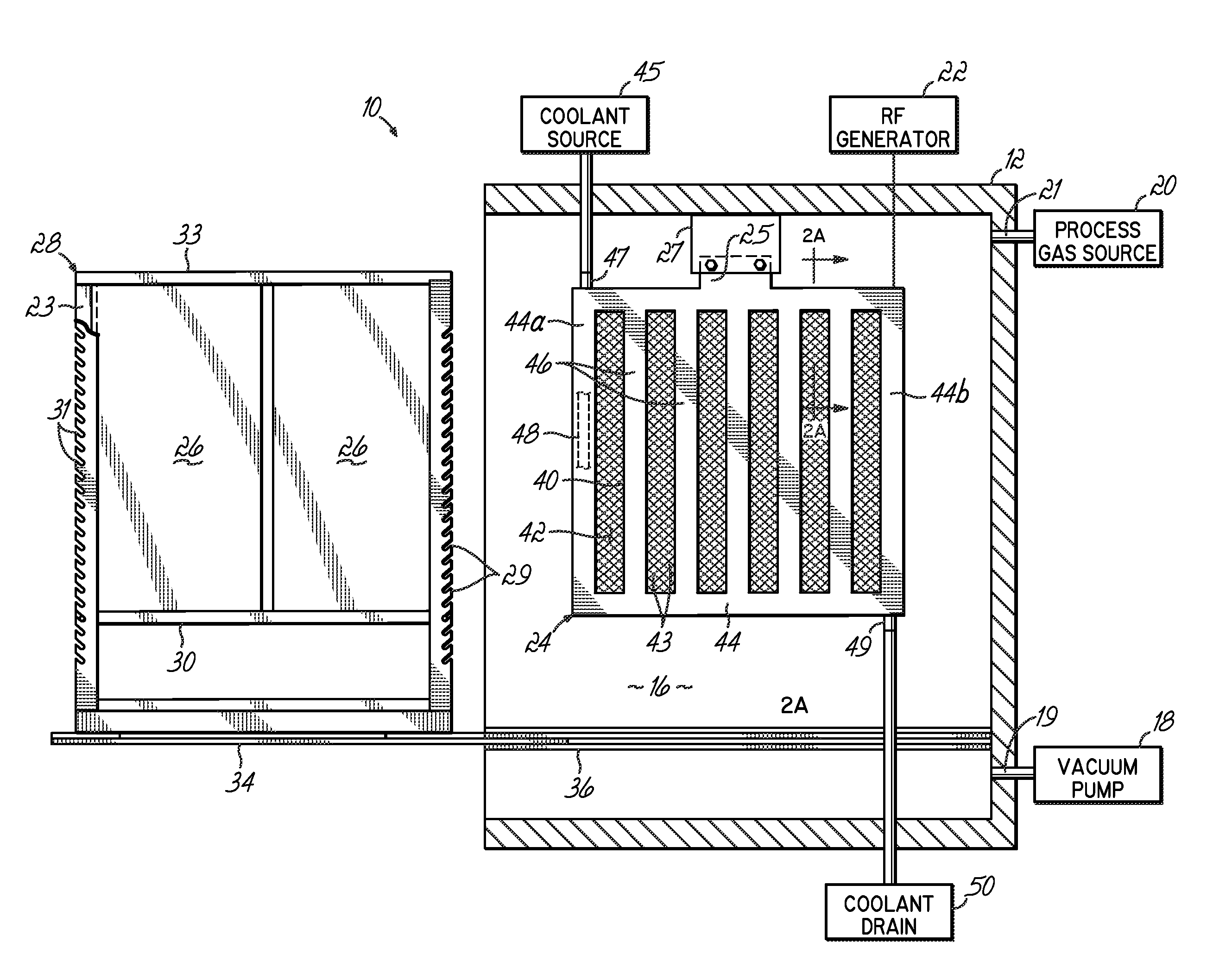
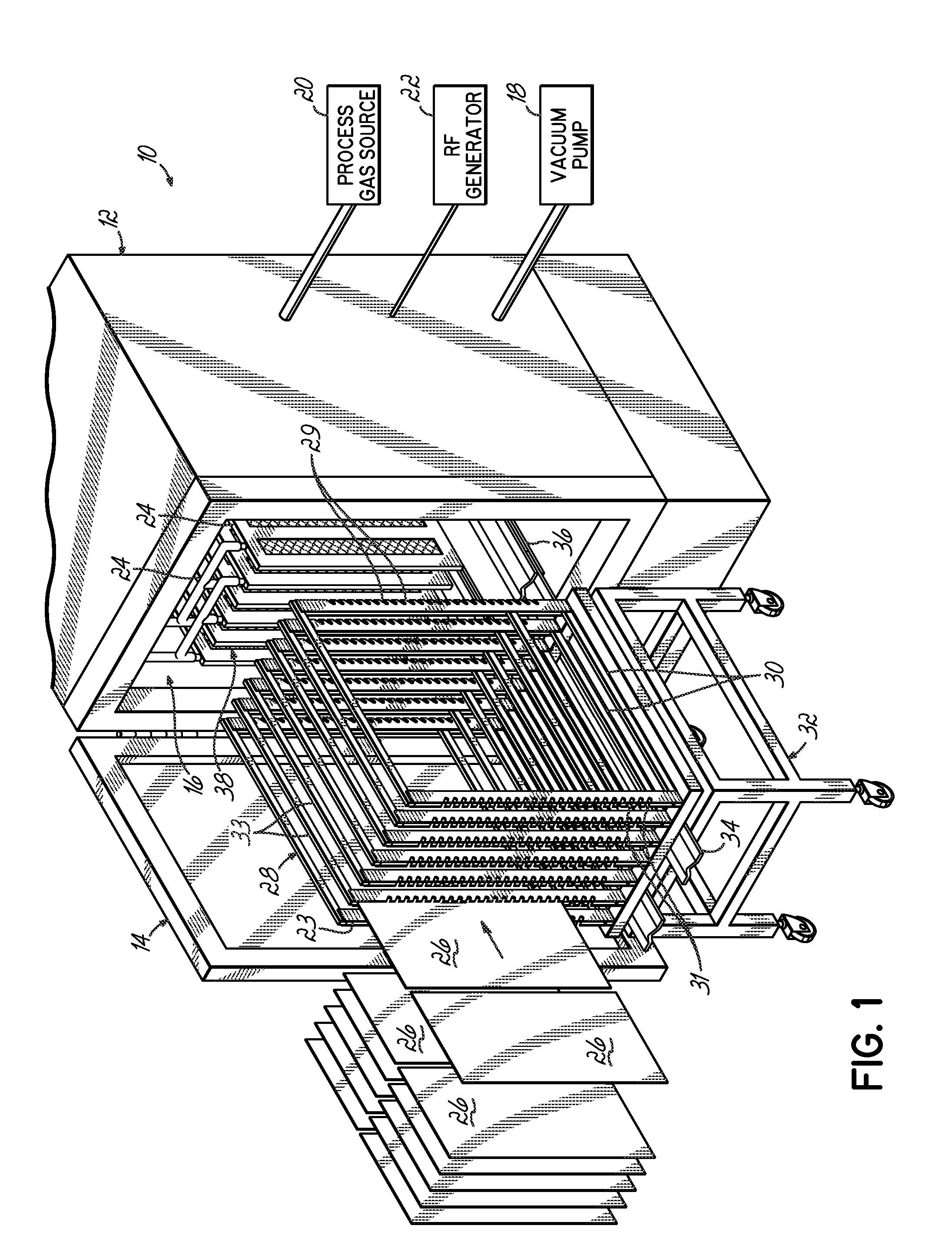
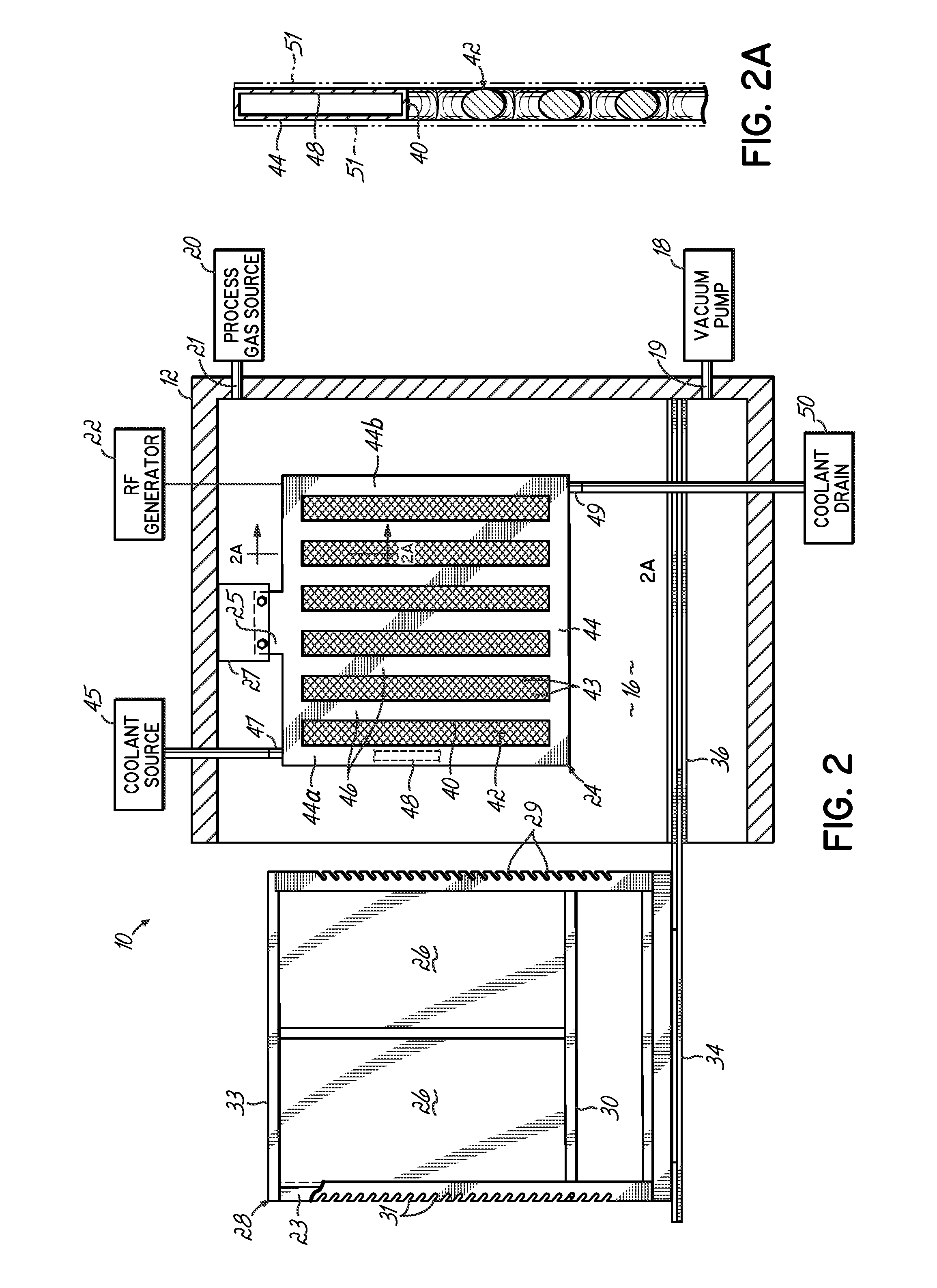
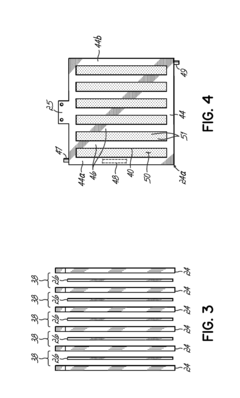
Innovation
- A plasma treatment system with a vacuum chamber and perforated electrodes that allow for precise control of plasma density, using RF power to generate plasma and direct gas flow through porous electrodes for uniform treatment of both sides of substrates, including the use of a gas mixture like oxygen and nitrogen trifluoride for specific surface modifications.
Environmental Impact of Plasma Treatment Processes
Plasma treatment processes, while effective in addressing substrate delamination issues, present several environmental considerations that require careful evaluation and management. The environmental impact of these processes primarily stems from energy consumption, chemical emissions, and waste generation during operation.
Energy consumption represents a significant environmental factor in plasma treatment operations. High-frequency power supplies and vacuum systems required for plasma generation typically consume substantial electrical energy, contributing to carbon footprint depending on the energy source. Cold atmospheric plasma systems generally demonstrate lower energy requirements compared to vacuum-based plasma systems, making them more environmentally favorable for large-scale industrial applications.
Chemical emissions during plasma treatment vary significantly based on the process gases used and substrate materials being treated. Oxygen plasma treatments typically produce minimal harmful byproducts, while processes involving fluorinated gases or other reactive species may generate compounds requiring specialized exhaust treatment systems. The interaction between plasma and organic substrates can produce volatile organic compounds that necessitate proper ventilation and filtration systems to prevent atmospheric release.
Waste generation in plasma treatment processes is generally minimal compared to wet chemical alternatives. However, spent process gases, contaminated filters, and cleaning solvents used in equipment maintenance contribute to the overall waste stream. The elimination of traditional chemical primers and adhesion promoters through plasma treatment often results in a net reduction of hazardous waste generation.
Water usage in plasma treatment systems is typically limited to cooling applications, representing a significant advantage over wet chemical surface preparation methods. This reduced water consumption eliminates concerns about wastewater treatment and discharge, particularly beneficial in water-scarce regions or facilities with strict environmental regulations.
The lifecycle environmental impact assessment reveals that plasma treatment processes generally demonstrate superior environmental performance compared to conventional chemical surface modification techniques. The absence of hazardous chemical storage, reduced transportation requirements for chemical supplies, and elimination of chemical waste disposal contribute to an overall positive environmental profile for plasma-based solutions addressing substrate delamination challenges.
Quality Control Standards for Plasma-Treated Substrates
Establishing comprehensive quality control standards for plasma-treated substrates requires a multi-layered approach that addresses both immediate post-treatment characteristics and long-term performance metrics. The foundation of effective quality control lies in developing standardized measurement protocols that can consistently evaluate substrate adhesion strength, surface energy modifications, and chemical composition changes resulting from plasma treatment processes.
Surface characterization represents the primary tier of quality assessment, encompassing contact angle measurements to evaluate wettability improvements, atomic force microscopy for surface roughness analysis, and X-ray photoelectron spectroscopy for chemical composition verification. These measurements must be conducted within specified timeframes post-treatment to ensure accuracy, as plasma-induced surface modifications can exhibit time-dependent degradation in ambient conditions.
Adhesion testing protocols constitute the core performance validation component, utilizing standardized methods such as cross-cut adhesion tests, pull-off strength measurements, and peel tests depending on substrate material and intended application. Critical parameters include minimum adhesion strength thresholds, acceptable variation ranges, and failure mode classifications that distinguish between cohesive, adhesive, and substrate failures.
Environmental stability testing forms an essential quality dimension, evaluating substrate performance under accelerated aging conditions including thermal cycling, humidity exposure, and UV radiation. These tests establish baseline degradation rates and identify potential failure mechanisms that could compromise long-term substrate integrity. Acceptance criteria must define maximum allowable performance degradation over specified exposure periods.
Process parameter correlation standards ensure reproducibility by establishing relationships between plasma treatment conditions and resulting substrate properties. This includes documentation of critical process windows, parameter tolerance limits, and statistical process control methodologies that enable real-time quality monitoring and adjustment capabilities.
Documentation and traceability requirements complete the quality framework, mandating comprehensive record-keeping of treatment parameters, test results, and batch genealogy information. This systematic approach enables rapid identification of quality deviations and facilitates continuous improvement initiatives through data-driven process optimization strategies.
Unlock deeper insights with Patsnap Eureka Quick Research — get a full tech report to explore trends and direct your research. Try now!
Generate Your Research Report Instantly with AI Agent
Supercharge your innovation with Patsnap Eureka AI Agent Platform!