

Optimizing Smart Devices with Quantum Tunneling Composites for Performance
MAR 8, 20269 MIN READ
Generate Your Research Report Instantly with AI Agent
Patsnap Eureka helps you evaluate technical feasibility & market potential.
Quantum Tunneling Composite Technology Background and Objectives
Quantum Tunneling Composites (QTCs) represent a revolutionary class of materials that exhibit unique electrical properties based on quantum mechanical phenomena. These composites consist of conductive particles dispersed within an insulating polymer matrix, creating a material whose electrical conductivity changes dramatically in response to mechanical pressure or deformation. The quantum tunneling effect occurs when electrons pass through energy barriers that would classically be insurmountable, enabling electrical conduction even when conductive particles are not in direct physical contact.
The development of QTC technology traces back to the late 20th century when researchers first observed pressure-sensitive conductivity in polymer-metal composites. Initial investigations focused on understanding the fundamental mechanisms governing electron transport through these materials. Early formulations utilized carbon black or metal particles embedded in elastomeric matrices, demonstrating reversible conductivity changes spanning several orders of magnitude under applied pressure.
The evolution of QTC technology has been driven by advances in materials science, nanotechnology, and quantum physics understanding. Modern QTC formulations incorporate engineered nanoparticles, optimized polymer matrices, and sophisticated processing techniques to achieve enhanced performance characteristics. The technology has progressed from laboratory curiosities to commercially viable materials with applications spanning multiple industries.
Contemporary smart devices face increasing demands for miniaturization, enhanced functionality, and improved user interfaces while maintaining reliability and cost-effectiveness. Traditional sensing and switching technologies often struggle to meet these competing requirements, particularly in applications requiring high sensitivity, rapid response times, and mechanical durability. The integration of QTC materials into smart device architectures presents opportunities to address these challenges through novel sensing mechanisms and interface designs.
The primary objective of optimizing smart devices with quantum tunneling composites centers on leveraging the unique pressure-sensitive conductivity properties to enhance device performance across multiple dimensions. Key technical goals include achieving improved sensor sensitivity and resolution, enabling more responsive touch interfaces, reducing power consumption through efficient switching mechanisms, and enhancing device durability through elimination of mechanical wear points.
Performance optimization targets encompass both material-level improvements and system-level integration strategies. Material objectives focus on developing QTC formulations with enhanced sensitivity, broader operating temperature ranges, improved long-term stability, and reduced hysteresis effects. System-level objectives involve creating innovative device architectures that maximize the benefits of QTC properties while addressing integration challenges such as signal processing, calibration, and manufacturing scalability.
The strategic importance of this technology lies in its potential to enable next-generation smart device capabilities including ultra-thin flexible displays, advanced haptic feedback systems, intelligent pressure-sensitive surfaces, and self-monitoring structural components. These applications represent significant market opportunities across consumer electronics, automotive, healthcare, and industrial automation sectors.
The development of QTC technology traces back to the late 20th century when researchers first observed pressure-sensitive conductivity in polymer-metal composites. Initial investigations focused on understanding the fundamental mechanisms governing electron transport through these materials. Early formulations utilized carbon black or metal particles embedded in elastomeric matrices, demonstrating reversible conductivity changes spanning several orders of magnitude under applied pressure.
The evolution of QTC technology has been driven by advances in materials science, nanotechnology, and quantum physics understanding. Modern QTC formulations incorporate engineered nanoparticles, optimized polymer matrices, and sophisticated processing techniques to achieve enhanced performance characteristics. The technology has progressed from laboratory curiosities to commercially viable materials with applications spanning multiple industries.
Contemporary smart devices face increasing demands for miniaturization, enhanced functionality, and improved user interfaces while maintaining reliability and cost-effectiveness. Traditional sensing and switching technologies often struggle to meet these competing requirements, particularly in applications requiring high sensitivity, rapid response times, and mechanical durability. The integration of QTC materials into smart device architectures presents opportunities to address these challenges through novel sensing mechanisms and interface designs.
The primary objective of optimizing smart devices with quantum tunneling composites centers on leveraging the unique pressure-sensitive conductivity properties to enhance device performance across multiple dimensions. Key technical goals include achieving improved sensor sensitivity and resolution, enabling more responsive touch interfaces, reducing power consumption through efficient switching mechanisms, and enhancing device durability through elimination of mechanical wear points.
Performance optimization targets encompass both material-level improvements and system-level integration strategies. Material objectives focus on developing QTC formulations with enhanced sensitivity, broader operating temperature ranges, improved long-term stability, and reduced hysteresis effects. System-level objectives involve creating innovative device architectures that maximize the benefits of QTC properties while addressing integration challenges such as signal processing, calibration, and manufacturing scalability.
The strategic importance of this technology lies in its potential to enable next-generation smart device capabilities including ultra-thin flexible displays, advanced haptic feedback systems, intelligent pressure-sensitive surfaces, and self-monitoring structural components. These applications represent significant market opportunities across consumer electronics, automotive, healthcare, and industrial automation sectors.
Market Demand for QTC-Enhanced Smart Devices
The global smart device market is experiencing unprecedented growth driven by increasing consumer demand for enhanced functionality, improved user experience, and superior performance characteristics. Quantum Tunneling Composite (QTC) technology presents a transformative opportunity to address critical performance limitations in current smart devices, particularly in areas of pressure sensitivity, tactile feedback, and adaptive interface design.
Consumer electronics manufacturers are actively seeking innovative materials that can enable more intuitive human-device interactions. The demand for pressure-sensitive interfaces has intensified across multiple device categories, including smartphones, tablets, wearables, and smart home appliances. Traditional capacitive and resistive touch technologies face inherent limitations in providing nuanced pressure detection and haptic feedback, creating a substantial market gap that QTC-enhanced solutions can effectively address.
The automotive industry represents another significant demand driver for QTC-enhanced smart devices. Modern vehicles increasingly integrate sophisticated touch-based control systems for infotainment, climate control, and driver assistance features. QTC materials offer superior performance in challenging automotive environments, including temperature variations, vibration resistance, and enhanced tactile feedback for safer operation while driving.
Healthcare and medical device sectors demonstrate growing interest in QTC applications for smart monitoring devices and diagnostic equipment. The material's ability to provide precise pressure mapping and force detection capabilities aligns with increasing demand for non-invasive patient monitoring solutions and advanced prosthetic devices with enhanced sensory feedback.
Industrial automation and Internet of Things applications present substantial market opportunities for QTC-enhanced smart devices. Manufacturing environments require robust, reliable interface solutions that can withstand harsh operating conditions while maintaining precise control capabilities. QTC materials offer superior durability and performance consistency compared to conventional interface technologies.
The gaming and entertainment industry shows significant demand for QTC-enhanced controllers and immersive interface devices. Consumers increasingly expect sophisticated haptic feedback and pressure-sensitive controls that enhance gaming experiences and virtual reality interactions.
Market research indicates strong growth potential across these sectors, with particular emphasis on applications requiring enhanced durability, improved sensitivity, and superior environmental resistance. The convergence of these demand factors creates a compelling market opportunity for QTC-enhanced smart device solutions.
Consumer electronics manufacturers are actively seeking innovative materials that can enable more intuitive human-device interactions. The demand for pressure-sensitive interfaces has intensified across multiple device categories, including smartphones, tablets, wearables, and smart home appliances. Traditional capacitive and resistive touch technologies face inherent limitations in providing nuanced pressure detection and haptic feedback, creating a substantial market gap that QTC-enhanced solutions can effectively address.
The automotive industry represents another significant demand driver for QTC-enhanced smart devices. Modern vehicles increasingly integrate sophisticated touch-based control systems for infotainment, climate control, and driver assistance features. QTC materials offer superior performance in challenging automotive environments, including temperature variations, vibration resistance, and enhanced tactile feedback for safer operation while driving.
Healthcare and medical device sectors demonstrate growing interest in QTC applications for smart monitoring devices and diagnostic equipment. The material's ability to provide precise pressure mapping and force detection capabilities aligns with increasing demand for non-invasive patient monitoring solutions and advanced prosthetic devices with enhanced sensory feedback.
Industrial automation and Internet of Things applications present substantial market opportunities for QTC-enhanced smart devices. Manufacturing environments require robust, reliable interface solutions that can withstand harsh operating conditions while maintaining precise control capabilities. QTC materials offer superior durability and performance consistency compared to conventional interface technologies.
The gaming and entertainment industry shows significant demand for QTC-enhanced controllers and immersive interface devices. Consumers increasingly expect sophisticated haptic feedback and pressure-sensitive controls that enhance gaming experiences and virtual reality interactions.
Market research indicates strong growth potential across these sectors, with particular emphasis on applications requiring enhanced durability, improved sensitivity, and superior environmental resistance. The convergence of these demand factors creates a compelling market opportunity for QTC-enhanced smart device solutions.
Current State and Challenges of QTC Integration
The integration of Quantum Tunneling Composites (QTC) into smart devices represents a significant technological frontier, yet the current state reveals substantial implementation challenges across multiple dimensions. QTC materials demonstrate exceptional pressure-sensitive conductivity properties, transitioning from insulating to conductive states under mechanical stress, making them highly attractive for next-generation smart device applications.
Current QTC integration efforts primarily focus on touch-sensitive interfaces, flexible electronics, and sensor applications within consumer electronics. Leading technology companies have successfully demonstrated prototype implementations in smartphone displays, wearable devices, and automotive control systems. However, these implementations remain largely experimental, with limited commercial deployment due to persistent technical barriers.
Manufacturing scalability presents the most significant challenge in QTC integration. The precise control required for QTC particle distribution and polymer matrix composition demands specialized production techniques that are not yet compatible with existing semiconductor fabrication processes. Current manufacturing yields remain below 60% for high-performance QTC components, significantly impacting cost-effectiveness and commercial viability.
Material stability under varying environmental conditions poses another critical challenge. QTC materials exhibit sensitivity to temperature fluctuations, humidity variations, and long-term mechanical stress, leading to performance degradation over extended operational periods. This instability particularly affects smart devices requiring consistent performance across diverse operating environments.
Interface compatibility between QTC materials and conventional electronic components creates additional integration complexities. The unique electrical characteristics of QTC materials necessitate specialized circuit designs and signal processing algorithms, requiring substantial modifications to existing smart device architectures. Current solutions often involve complex intermediate layers that increase system complexity and reduce overall efficiency.
Power consumption optimization remains an ongoing challenge, as QTC-based systems require continuous monitoring circuits to maintain optimal performance. While QTC materials offer potential energy savings through their variable conductivity properties, the supporting electronics often offset these benefits, particularly in battery-powered smart devices where energy efficiency is paramount.
Quality control and standardization represent emerging challenges as the technology approaches commercial readiness. The absence of industry-wide standards for QTC material specifications and testing protocols creates inconsistencies across different manufacturers and applications, hindering widespread adoption and interoperability between devices.
Current QTC integration efforts primarily focus on touch-sensitive interfaces, flexible electronics, and sensor applications within consumer electronics. Leading technology companies have successfully demonstrated prototype implementations in smartphone displays, wearable devices, and automotive control systems. However, these implementations remain largely experimental, with limited commercial deployment due to persistent technical barriers.
Manufacturing scalability presents the most significant challenge in QTC integration. The precise control required for QTC particle distribution and polymer matrix composition demands specialized production techniques that are not yet compatible with existing semiconductor fabrication processes. Current manufacturing yields remain below 60% for high-performance QTC components, significantly impacting cost-effectiveness and commercial viability.
Material stability under varying environmental conditions poses another critical challenge. QTC materials exhibit sensitivity to temperature fluctuations, humidity variations, and long-term mechanical stress, leading to performance degradation over extended operational periods. This instability particularly affects smart devices requiring consistent performance across diverse operating environments.
Interface compatibility between QTC materials and conventional electronic components creates additional integration complexities. The unique electrical characteristics of QTC materials necessitate specialized circuit designs and signal processing algorithms, requiring substantial modifications to existing smart device architectures. Current solutions often involve complex intermediate layers that increase system complexity and reduce overall efficiency.
Power consumption optimization remains an ongoing challenge, as QTC-based systems require continuous monitoring circuits to maintain optimal performance. While QTC materials offer potential energy savings through their variable conductivity properties, the supporting electronics often offset these benefits, particularly in battery-powered smart devices where energy efficiency is paramount.
Quality control and standardization represent emerging challenges as the technology approaches commercial readiness. The absence of industry-wide standards for QTC material specifications and testing protocols creates inconsistencies across different manufacturers and applications, hindering widespread adoption and interoperability between devices.
Existing QTC Integration Solutions for Smart Devices
01 Conductive filler composition and distribution in quantum tunneling composites
The performance of quantum tunneling composites is significantly influenced by the type, concentration, and distribution of conductive fillers within the polymer matrix. Optimizing the particle size, shape, and dispersion of conductive materials such as carbon black, metal particles, or conductive polymers can enhance the tunneling effect and improve the electrical conductivity response to pressure. The selection of appropriate filler materials and their uniform distribution throughout the composite matrix is critical for achieving consistent and reliable performance characteristics.- Conductive filler composition and distribution in quantum tunneling composites: The performance of quantum tunneling composites is significantly influenced by the type, concentration, and distribution of conductive fillers within the polymer matrix. Optimizing the particle size, shape, and dispersion of conductive materials such as carbon black, metal particles, or conductive polymers can enhance the tunneling effect and improve the electrical conductivity response to pressure. The selection of appropriate filler materials and their uniform distribution throughout the composite matrix is critical for achieving consistent and reliable quantum tunneling behavior.
- Polymer matrix selection and formulation for quantum tunneling composites: The choice of polymer matrix material plays a crucial role in determining the mechanical and electrical properties of quantum tunneling composites. Elastomeric polymers with specific viscoelastic properties, flexibility, and chemical compatibility with conductive fillers are essential for maintaining stable tunneling gaps under various conditions. The polymer formulation affects the composite's durability, temperature stability, and response characteristics, which are key factors in sensor and switch applications.
- Pressure sensitivity and response characteristics optimization: Enhancing the pressure sensitivity and response time of quantum tunneling composites involves controlling the tunneling gap distance and the composite's compressibility. The design of the composite structure, including layer thickness, filler concentration gradients, and surface texturing, can be optimized to achieve desired sensitivity ranges and response speeds. These parameters are critical for applications requiring precise pressure detection or rapid switching behavior.
- Manufacturing processes and fabrication techniques for quantum tunneling composites: The manufacturing methods used to produce quantum tunneling composites significantly impact their performance characteristics. Various fabrication techniques including mixing, molding, coating, and curing processes affect the microstructure and homogeneity of the final product. Process parameters such as temperature, pressure, mixing speed, and curing conditions must be carefully controlled to ensure optimal filler dispersion and consistent tunneling behavior across the composite material.
- Application-specific design and integration of quantum tunneling composites: The performance requirements of quantum tunneling composites vary depending on their intended applications, such as sensors, switches, keyboards, or wearable devices. Design considerations include electrical contact configuration, electrode placement, composite geometry, and integration with electronic circuits. Tailoring the composite properties to meet specific application requirements, including operating temperature range, durability, and electrical characteristics, is essential for successful implementation in commercial products.
02 Polymer matrix selection and formulation for quantum tunneling materials
The choice of polymer matrix material plays a crucial role in determining the mechanical and electrical properties of quantum tunneling composites. Various elastomeric and thermoplastic polymers can be used as the base matrix, with their viscoelastic properties, chemical resistance, and processing characteristics affecting the overall composite performance. The polymer matrix must provide adequate flexibility to allow particle movement under pressure while maintaining structural integrity and durability over repeated compression cycles.Expand Specific Solutions03 Pressure sensitivity and response characteristics optimization
Enhancing the pressure-sensitive response of quantum tunneling composites involves controlling the gap distances between conductive particles and the ease of quantum tunneling under applied force. The composite structure can be engineered to exhibit specific resistance-pressure relationships, dynamic range, and response time characteristics. Factors such as composite thickness, particle loading levels, and matrix compliance are adjusted to achieve desired sensitivity levels and linear or non-linear response curves suitable for various sensing and switching applications.Expand Specific Solutions04 Manufacturing processes and structural design for quantum tunneling composites
The fabrication methods and structural configurations significantly impact the performance consistency and scalability of quantum tunneling composites. Various manufacturing techniques including mixing, molding, coating, and layering processes can be employed to create composites with controlled microstructures. The design may incorporate multi-layer structures, patterned electrodes, or specific geometric configurations to optimize the tunneling pathways and enhance the overall device performance. Process parameters such as curing conditions, compression ratios, and post-processing treatments affect the final composite properties.Expand Specific Solutions05 Environmental stability and durability enhancement of quantum tunneling composites
Improving the long-term performance and environmental resistance of quantum tunneling composites requires addressing factors such as temperature stability, humidity resistance, mechanical fatigue, and chemical compatibility. Protective coatings, encapsulation methods, and the incorporation of stabilizing additives can enhance the composite's resistance to environmental degradation. The material formulation and structural design must ensure consistent electrical properties over extended operating periods and under varying environmental conditions, including temperature fluctuations, moisture exposure, and mechanical stress cycles.Expand Specific Solutions
Key Players in QTC and Smart Device Industry
The quantum tunneling composites technology for smart device optimization represents an emerging field in the early development stage, characterized by significant research activity but limited commercial deployment. The market remains nascent with substantial growth potential as quantum-enhanced materials promise revolutionary performance improvements in electronic devices. Technology maturity varies considerably across the competitive landscape, with established semiconductor leaders like Taiwan Semiconductor Manufacturing Co., Intel Corp., Samsung Electronics, and NVIDIA Corp. leveraging their manufacturing expertise to explore quantum applications. Memory specialists SK Hynix and traditional chip manufacturers Texas Instruments and Qualcomm are investigating quantum tunneling effects for next-generation devices. Research institutions including Fudan University, Peking University, and Duke University are advancing fundamental quantum composite research, while specialized quantum companies like IonQ Quantum focus on practical implementations. The convergence of academic research and industrial capability suggests accelerating development, though widespread commercial adoption remains years away as technical challenges in material stability and manufacturing scalability persist across the ecosystem.
Intel Corp.
Technical Solution: Intel has developed quantum tunneling composite technologies primarily for their semiconductor manufacturing processes and emerging quantum computing initiatives. Their approach focuses on integrating quantum tunneling effects in advanced transistor designs and memory devices, utilizing materials like silicon-germanium composites and III-V compound semiconductors. The company has invested in quantum dot technologies and tunnel field-effect transistors (TFETs) that exploit quantum tunneling for improved performance in low-power smart devices and edge computing applications.
Strengths: Strong semiconductor manufacturing capabilities and extensive R&D resources for quantum technologies. Weaknesses: Still in early development stages with limited commercial quantum tunneling composite products.
International Business Machines Corp.
Technical Solution: IBM has developed quantum tunneling composite materials integrated with their quantum computing systems, focusing on optimizing quantum bit (qubit) performance through advanced tunneling junction technologies. Their approach utilizes superconducting transmon qubits with Josephson junctions that leverage quantum tunneling effects to create stable quantum states. The company has implemented specialized composite materials in their quantum processors that enhance coherence times and reduce decoherence, enabling more reliable quantum operations for smart device applications.
Strengths: Leading quantum computing expertise and established quantum hardware infrastructure. Weaknesses: High cost and complexity limit widespread smart device integration.
Core QTC Patents and Performance Optimization Techniques
Quantum tunneling organic composites
PatentWO2022170441A1
Innovation
- A method for preparing quantum tunneling composite materials by mixing intrinsically conductive polymers like polypyrrole, polythiophene, or polyacetylene with non-conductive matrix materials such as carboxymethyl cellulose, polyacrylate, or alginate, at specific ratios to create a composite with conductive components separated by a non-conductive matrix, allowing for quantum tunneling conduction upon pressure application.


Quantum Tunneling Devices and Circuits with Lattice-Mismatched Semiconductor Structures
PatentActiveUS20150311911A1
Innovation
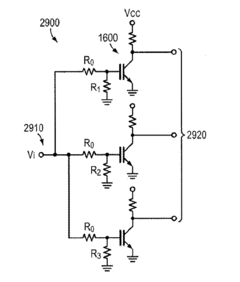
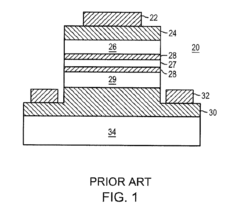
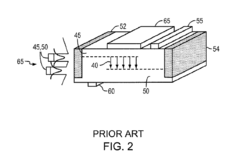
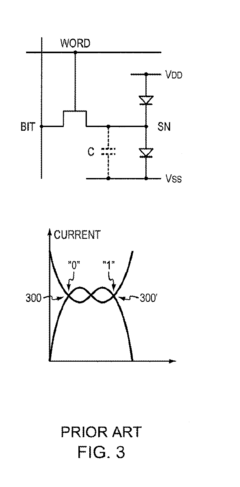
- The integration of tunneling devices on Si substrates using III-V and II-VI materials with improved material systems, employing epitaxial techniques such as Aspect Ratio Trapping (ART) and Chemical Vapor Deposition (CVD) to form lattice-mismatched semiconductor structures, allowing for the fabrication of resonant tunneling devices and circuits compatible with conventional CMOS processes.
Manufacturing Standards for QTC-Based Smart Devices
The manufacturing of QTC-based smart devices requires comprehensive standardization frameworks to ensure consistent performance, reliability, and safety across production lines. Current industry practices lack unified protocols specifically designed for quantum tunneling composite integration, creating significant challenges for mass production and quality assurance.
Material handling standards represent the foundational layer of QTC manufacturing protocols. These composites exhibit extreme sensitivity to environmental conditions, requiring controlled atmosphere processing with humidity levels below 5% and temperature variations within ±2°C. Contamination control measures must exceed semiconductor industry standards, as microscopic particles can disrupt quantum tunneling pathways and compromise device functionality.
Production process standardization encompasses multiple critical phases, from substrate preparation to final encapsulation. Surface preparation protocols demand atomic-level cleanliness, typically achieved through plasma cleaning followed by chemical vapor deposition of interface layers. The QTC deposition process itself requires precise control of particle distribution, with industry standards specifying uniformity coefficients better than 95% across device surfaces.
Quality control metrics for QTC devices extend beyond traditional electronic component testing. Resistance-pressure response curves must demonstrate repeatability within 3% deviation across 10,000 activation cycles. Temperature coefficient stability requires validation across operational ranges from -40°C to +85°C, with drift characteristics not exceeding 0.1% per degree Celsius.
Packaging and encapsulation standards address the unique vulnerability of quantum tunneling composites to mechanical stress and environmental degradation. Multi-layer barrier films with water vapor transmission rates below 10^-6 g/m²/day have become industry benchmarks. Mechanical protection protocols specify impact resistance testing at energy levels up to 50 joules without performance degradation.
Calibration procedures for QTC-based devices require specialized equipment capable of applying precise mechanical forces while simultaneously measuring electrical responses. Industry standards mandate traceability to national measurement institutes, with calibration uncertainties not exceeding 0.5% of full-scale readings. Documentation requirements include complete material genealogy tracking and environmental exposure history throughout the manufacturing process.
Material handling standards represent the foundational layer of QTC manufacturing protocols. These composites exhibit extreme sensitivity to environmental conditions, requiring controlled atmosphere processing with humidity levels below 5% and temperature variations within ±2°C. Contamination control measures must exceed semiconductor industry standards, as microscopic particles can disrupt quantum tunneling pathways and compromise device functionality.
Production process standardization encompasses multiple critical phases, from substrate preparation to final encapsulation. Surface preparation protocols demand atomic-level cleanliness, typically achieved through plasma cleaning followed by chemical vapor deposition of interface layers. The QTC deposition process itself requires precise control of particle distribution, with industry standards specifying uniformity coefficients better than 95% across device surfaces.
Quality control metrics for QTC devices extend beyond traditional electronic component testing. Resistance-pressure response curves must demonstrate repeatability within 3% deviation across 10,000 activation cycles. Temperature coefficient stability requires validation across operational ranges from -40°C to +85°C, with drift characteristics not exceeding 0.1% per degree Celsius.
Packaging and encapsulation standards address the unique vulnerability of quantum tunneling composites to mechanical stress and environmental degradation. Multi-layer barrier films with water vapor transmission rates below 10^-6 g/m²/day have become industry benchmarks. Mechanical protection protocols specify impact resistance testing at energy levels up to 50 joules without performance degradation.
Calibration procedures for QTC-based devices require specialized equipment capable of applying precise mechanical forces while simultaneously measuring electrical responses. Industry standards mandate traceability to national measurement institutes, with calibration uncertainties not exceeding 0.5% of full-scale readings. Documentation requirements include complete material genealogy tracking and environmental exposure history throughout the manufacturing process.
Quantum Material Safety and Environmental Impact Assessment
The integration of quantum tunneling composites in smart devices presents unique safety considerations that require comprehensive evaluation across multiple dimensions. These advanced materials, while offering unprecedented performance capabilities, introduce novel risk factors that differ significantly from conventional electronic materials. The quantum-scale interactions inherent in these composites necessitate specialized safety protocols and assessment methodologies.
Material toxicity represents a primary concern in quantum composite applications. Many quantum materials contain rare earth elements, heavy metals, or engineered nanostructures that may pose health risks during manufacturing, operation, or disposal phases. Exposure pathways include inhalation of nanoparticles during fabrication, dermal contact with composite surfaces, and potential leaching of toxic components under specific environmental conditions. Comprehensive toxicological studies are essential to establish safe exposure limits and handling procedures.
Electromagnetic field interactions constitute another critical safety dimension. Quantum tunneling composites can generate or interact with electromagnetic fields in unpredictable ways, potentially affecting nearby electronic systems or biological tissues. The quantum coherence effects may amplify electromagnetic emissions beyond conventional material behaviors, requiring enhanced shielding strategies and exposure monitoring protocols.
Environmental impact assessment reveals both opportunities and challenges for quantum composite deployment. The manufacturing process typically involves energy-intensive synthesis methods and specialized clean room facilities, contributing to significant carbon footprints. However, the enhanced device performance enabled by these materials can lead to reduced overall energy consumption and extended product lifecycles, potentially offsetting initial environmental costs.
Lifecycle analysis indicates that quantum composites may accumulate in ecosystems due to their engineered stability and resistance to natural degradation processes. The long-term environmental fate of these materials remains largely unknown, necessitating precautionary approaches to waste management and disposal. Recycling strategies must account for the preservation of quantum properties while ensuring safe material recovery.
Regulatory frameworks for quantum materials remain underdeveloped, creating compliance uncertainties for manufacturers and users. Existing chemical safety regulations may not adequately address the unique properties and risks associated with quantum-scale phenomena, highlighting the need for specialized regulatory guidance and standardized testing protocols.
Material toxicity represents a primary concern in quantum composite applications. Many quantum materials contain rare earth elements, heavy metals, or engineered nanostructures that may pose health risks during manufacturing, operation, or disposal phases. Exposure pathways include inhalation of nanoparticles during fabrication, dermal contact with composite surfaces, and potential leaching of toxic components under specific environmental conditions. Comprehensive toxicological studies are essential to establish safe exposure limits and handling procedures.
Electromagnetic field interactions constitute another critical safety dimension. Quantum tunneling composites can generate or interact with electromagnetic fields in unpredictable ways, potentially affecting nearby electronic systems or biological tissues. The quantum coherence effects may amplify electromagnetic emissions beyond conventional material behaviors, requiring enhanced shielding strategies and exposure monitoring protocols.
Environmental impact assessment reveals both opportunities and challenges for quantum composite deployment. The manufacturing process typically involves energy-intensive synthesis methods and specialized clean room facilities, contributing to significant carbon footprints. However, the enhanced device performance enabled by these materials can lead to reduced overall energy consumption and extended product lifecycles, potentially offsetting initial environmental costs.
Lifecycle analysis indicates that quantum composites may accumulate in ecosystems due to their engineered stability and resistance to natural degradation processes. The long-term environmental fate of these materials remains largely unknown, necessitating precautionary approaches to waste management and disposal. Recycling strategies must account for the preservation of quantum properties while ensuring safe material recovery.
Regulatory frameworks for quantum materials remain underdeveloped, creating compliance uncertainties for manufacturers and users. Existing chemical safety regulations may not adequately address the unique properties and risks associated with quantum-scale phenomena, highlighting the need for specialized regulatory guidance and standardized testing protocols.
Unlock deeper insights with Patsnap Eureka Quick Research — get a full tech report to explore trends and direct your research. Try now!
Generate Your Research Report Instantly with AI Agent
Supercharge your innovation with Patsnap Eureka AI Agent Platform!