
Optimizing Superconducting Magnetic Storage for Wind Energy Integration
MAR 7, 20269 MIN READ
Generate Your Research Report Instantly with AI Agent
Patsnap Eureka helps you evaluate technical feasibility & market potential.
Superconducting Magnetic Storage Background and Wind Integration Goals
Superconducting Magnetic Energy Storage (SMES) technology emerged in the 1970s as a revolutionary approach to energy storage, utilizing the unique properties of superconducting materials to store electrical energy in magnetic fields with virtually zero resistance. The fundamental principle relies on maintaining electrical current in a superconducting coil at cryogenic temperatures, typically below 10 Kelvin, where materials exhibit zero electrical resistance and perfect diamagnetism.
The evolution of SMES technology has been closely intertwined with advances in superconducting materials, progressing from low-temperature superconductors like niobium-titanium to high-temperature superconductors such as yttrium barium copper oxide. This progression has significantly reduced cooling requirements and operational costs, making SMES more commercially viable for large-scale applications.
Wind energy integration presents unique challenges that align perfectly with SMES capabilities. Wind power generation is inherently intermittent and unpredictable, creating substantial grid stability issues including voltage fluctuations, frequency deviations, and power quality disturbances. Traditional energy storage solutions often lack the rapid response times and cycling capabilities required to effectively smooth these variations.
The primary technical objectives for optimizing SMES in wind energy applications center on achieving millisecond-level response times for power conditioning, providing seamless load leveling during wind variability periods, and maintaining grid frequency stability. These systems must demonstrate exceptional efficiency rates exceeding 95% for charge-discharge cycles while maintaining operational reliability under varying environmental conditions.
Current development trends focus on hybrid SMES configurations that combine superconducting coils with advanced power electronics and intelligent control systems. These integrated solutions aim to provide comprehensive grid services including reactive power support, harmonic filtering, and fault ride-through capabilities essential for modern wind farm operations.
The strategic goal involves developing modular SMES architectures that can be scaled according to wind farm capacity, ranging from small distributed units for individual turbines to large centralized systems serving entire wind installations. This scalability ensures optimal cost-effectiveness while maximizing the stabilizing benefits for renewable energy integration into existing power infrastructure.
The evolution of SMES technology has been closely intertwined with advances in superconducting materials, progressing from low-temperature superconductors like niobium-titanium to high-temperature superconductors such as yttrium barium copper oxide. This progression has significantly reduced cooling requirements and operational costs, making SMES more commercially viable for large-scale applications.
Wind energy integration presents unique challenges that align perfectly with SMES capabilities. Wind power generation is inherently intermittent and unpredictable, creating substantial grid stability issues including voltage fluctuations, frequency deviations, and power quality disturbances. Traditional energy storage solutions often lack the rapid response times and cycling capabilities required to effectively smooth these variations.
The primary technical objectives for optimizing SMES in wind energy applications center on achieving millisecond-level response times for power conditioning, providing seamless load leveling during wind variability periods, and maintaining grid frequency stability. These systems must demonstrate exceptional efficiency rates exceeding 95% for charge-discharge cycles while maintaining operational reliability under varying environmental conditions.
Current development trends focus on hybrid SMES configurations that combine superconducting coils with advanced power electronics and intelligent control systems. These integrated solutions aim to provide comprehensive grid services including reactive power support, harmonic filtering, and fault ride-through capabilities essential for modern wind farm operations.
The strategic goal involves developing modular SMES architectures that can be scaled according to wind farm capacity, ranging from small distributed units for individual turbines to large centralized systems serving entire wind installations. This scalability ensures optimal cost-effectiveness while maximizing the stabilizing benefits for renewable energy integration into existing power infrastructure.
Market Demand for Grid-Scale Energy Storage Solutions
The global energy storage market is experiencing unprecedented growth driven by the urgent need to integrate renewable energy sources into existing power grids. Wind energy, characterized by its intermittent and variable nature, presents significant challenges for grid stability and reliability. Traditional grid infrastructure struggles to accommodate the fluctuating power output from wind farms, creating substantial demand for advanced energy storage solutions that can provide rapid response times and high power density capabilities.
Grid operators worldwide are increasingly recognizing the critical importance of large-scale energy storage systems to maintain grid stability while maximizing renewable energy utilization. The variability of wind power generation, which can fluctuate dramatically within minutes, requires storage technologies capable of both absorbing excess energy during peak generation periods and rapidly releasing stored energy during low wind conditions. This operational requirement has created a substantial market opportunity for high-performance storage solutions.
Superconducting magnetic energy storage systems are emerging as a compelling solution for wind energy integration due to their unique operational characteristics. Unlike conventional battery storage systems, superconducting magnetic storage offers virtually instantaneous response times, high power density, and exceptional cycle life without degradation. These attributes make them particularly suitable for addressing the rapid power fluctuations inherent in wind energy generation.
The market demand is further amplified by regulatory frameworks and grid codes that increasingly mandate renewable energy integration targets. Utility companies and independent power producers are actively seeking storage technologies that can provide multiple grid services simultaneously, including frequency regulation, voltage support, and power quality enhancement. Superconducting magnetic storage systems can deliver these services while maintaining high efficiency and reliability.
Economic drivers are also shaping market demand, as grid operators seek to optimize their infrastructure investments. The ability of superconducting magnetic storage to provide both short-term power quality services and longer-term energy management creates compelling value propositions for wind farm developers and grid operators. The technology's potential to reduce curtailment of wind energy during high generation periods while providing grid stabilization services addresses multiple market needs simultaneously.
Regional markets are showing varying levels of demand based on wind energy penetration rates and grid infrastructure maturity. Areas with high wind energy capacity and aging grid infrastructure demonstrate the strongest demand for advanced storage solutions capable of managing complex power flow scenarios and maintaining system reliability.
Grid operators worldwide are increasingly recognizing the critical importance of large-scale energy storage systems to maintain grid stability while maximizing renewable energy utilization. The variability of wind power generation, which can fluctuate dramatically within minutes, requires storage technologies capable of both absorbing excess energy during peak generation periods and rapidly releasing stored energy during low wind conditions. This operational requirement has created a substantial market opportunity for high-performance storage solutions.
Superconducting magnetic energy storage systems are emerging as a compelling solution for wind energy integration due to their unique operational characteristics. Unlike conventional battery storage systems, superconducting magnetic storage offers virtually instantaneous response times, high power density, and exceptional cycle life without degradation. These attributes make them particularly suitable for addressing the rapid power fluctuations inherent in wind energy generation.
The market demand is further amplified by regulatory frameworks and grid codes that increasingly mandate renewable energy integration targets. Utility companies and independent power producers are actively seeking storage technologies that can provide multiple grid services simultaneously, including frequency regulation, voltage support, and power quality enhancement. Superconducting magnetic storage systems can deliver these services while maintaining high efficiency and reliability.
Economic drivers are also shaping market demand, as grid operators seek to optimize their infrastructure investments. The ability of superconducting magnetic storage to provide both short-term power quality services and longer-term energy management creates compelling value propositions for wind farm developers and grid operators. The technology's potential to reduce curtailment of wind energy during high generation periods while providing grid stabilization services addresses multiple market needs simultaneously.
Regional markets are showing varying levels of demand based on wind energy penetration rates and grid infrastructure maturity. Areas with high wind energy capacity and aging grid infrastructure demonstrate the strongest demand for advanced storage solutions capable of managing complex power flow scenarios and maintaining system reliability.
Current SMES Technology Status and Wind Power Challenges
Superconducting Magnetic Energy Storage (SMES) technology has reached a mature stage of development, with commercial systems now operating at power levels ranging from 1 MW to 10 MW and energy capacities between 1 MWh to 10 MWh. Current SMES systems utilize low-temperature superconductors (LTS) such as niobium-titanium (NbTi) and niobium-tin (Nb3Sn), requiring liquid helium cooling systems that maintain temperatures around 4.2 Kelvin. High-temperature superconductors (HTS) like YBCO and BSCCO are increasingly being integrated into newer designs, operating at liquid nitrogen temperatures of 77 Kelvin, which significantly reduces cooling costs and complexity.
The efficiency of modern SMES systems has improved substantially, with round-trip efficiency rates exceeding 95% and response times in the millisecond range. Major manufacturers including American Superconductor Corporation, Sumitomo Electric Industries, and Nexans have developed commercially viable SMES units primarily for power quality applications, frequency regulation, and short-duration energy storage in industrial settings.
Wind power integration presents unique challenges that align well with SMES capabilities but also expose current technological limitations. Wind energy's inherent intermittency creates rapid power fluctuations that can destabilize grid operations, particularly when wind penetration exceeds 20% of total grid capacity. These fluctuations occur across multiple timescales, from seconds to hours, requiring energy storage solutions with exceptional response characteristics.
Current wind farms face significant curtailment issues, with studies indicating that up to 15% of potential wind energy is lost due to grid stability constraints and transmission limitations. The variability in wind speed creates power output fluctuations that can reach 50% of rated capacity within minutes, necessitating fast-responding storage systems to smooth these variations and maintain grid frequency within acceptable limits.
Grid integration challenges are compounded by the geographical distribution of wind resources, often located in remote areas with limited transmission infrastructure. This creates bottlenecks during peak wind generation periods, requiring local energy storage solutions to buffer excess energy and release it during low wind conditions or high demand periods.
Existing SMES installations in wind applications remain limited due to cost considerations and energy capacity constraints. While SMES excels in power quality and short-term stabilization applications, the current technology faces economic challenges for longer-duration energy storage requirements typical in wind energy applications. The high capital costs, estimated at $1,000-$10,000 per kWh, make large-scale deployment economically challenging compared to alternative storage technologies.
Technical challenges include scaling up energy storage capacity while maintaining the rapid response characteristics that make SMES attractive for wind integration. Current systems are optimized for high power, short duration applications, but wind energy integration often requires sustained energy storage capabilities lasting several hours to effectively manage diurnal wind patterns and grid demand cycles.
The efficiency of modern SMES systems has improved substantially, with round-trip efficiency rates exceeding 95% and response times in the millisecond range. Major manufacturers including American Superconductor Corporation, Sumitomo Electric Industries, and Nexans have developed commercially viable SMES units primarily for power quality applications, frequency regulation, and short-duration energy storage in industrial settings.
Wind power integration presents unique challenges that align well with SMES capabilities but also expose current technological limitations. Wind energy's inherent intermittency creates rapid power fluctuations that can destabilize grid operations, particularly when wind penetration exceeds 20% of total grid capacity. These fluctuations occur across multiple timescales, from seconds to hours, requiring energy storage solutions with exceptional response characteristics.
Current wind farms face significant curtailment issues, with studies indicating that up to 15% of potential wind energy is lost due to grid stability constraints and transmission limitations. The variability in wind speed creates power output fluctuations that can reach 50% of rated capacity within minutes, necessitating fast-responding storage systems to smooth these variations and maintain grid frequency within acceptable limits.
Grid integration challenges are compounded by the geographical distribution of wind resources, often located in remote areas with limited transmission infrastructure. This creates bottlenecks during peak wind generation periods, requiring local energy storage solutions to buffer excess energy and release it during low wind conditions or high demand periods.
Existing SMES installations in wind applications remain limited due to cost considerations and energy capacity constraints. While SMES excels in power quality and short-term stabilization applications, the current technology faces economic challenges for longer-duration energy storage requirements typical in wind energy applications. The high capital costs, estimated at $1,000-$10,000 per kWh, make large-scale deployment economically challenging compared to alternative storage technologies.
Technical challenges include scaling up energy storage capacity while maintaining the rapid response characteristics that make SMES attractive for wind integration. Current systems are optimized for high power, short duration applications, but wind energy integration often requires sustained energy storage capabilities lasting several hours to effectively manage diurnal wind patterns and grid demand cycles.
Existing SMES Solutions for Wind Energy Grid Integration
01 Superconducting coil design and configuration for energy storage
Superconducting magnetic energy storage systems utilize specially designed superconducting coils to store energy in magnetic fields. The coil configuration, winding methods, and structural design are critical for achieving high energy density and efficient storage. Various coil geometries including toroidal, solenoid, and race-track configurations can be employed to optimize magnetic field distribution and minimize energy losses during charge and discharge cycles.- Superconducting coil design and configuration for energy storage: Superconducting magnetic energy storage systems utilize specially designed superconducting coils to store energy in magnetic fields. The coil configuration, winding methods, and structural design are critical for achieving high energy storage capacity and efficiency. Various coil geometries including toroidal, solenoid, and race-track configurations can be employed to optimize magnetic field distribution and minimize energy losses during charge and discharge cycles.
- Cryogenic cooling systems for maintaining superconducting state: Maintaining superconducting materials at cryogenic temperatures is essential for superconducting magnetic energy storage operation. Advanced cooling systems and thermal management techniques are employed to keep the superconducting components below their critical temperature. These systems include cryogenic refrigeration units, thermal insulation structures, and heat transfer mechanisms that ensure stable operation while minimizing cooling power requirements and maintaining system efficiency.
- Power conditioning and control systems for charge-discharge management: Power conditioning systems are crucial for managing the charging and discharging processes in superconducting magnetic energy storage devices. These systems include power converters, inverters, and control circuits that regulate current flow, voltage levels, and energy transfer rates. Advanced control algorithms and protection mechanisms ensure safe operation, rapid response times, and efficient energy conversion between the superconducting coil and the electrical grid or load.
- High-temperature superconducting materials and conductors: The development and application of high-temperature superconducting materials enable more practical and cost-effective magnetic energy storage systems. These materials operate at higher critical temperatures, reducing cooling requirements and improving overall system efficiency. Various superconducting wire and tape configurations, including composite conductors and multi-filamentary designs, are utilized to achieve high current-carrying capacity and mechanical stability in energy storage applications.
- Magnetic field containment and shielding structures: Effective magnetic field containment and shielding are essential for safe and efficient operation of superconducting magnetic energy storage systems. Specialized containment structures, magnetic shields, and field management systems are designed to confine the magnetic field within designated areas, minimize external interference, and protect surrounding equipment and personnel. These structures also help reduce stray magnetic fields and improve the overall energy storage density of the system.
02 Cryogenic cooling systems for maintaining superconducting state
Maintaining superconducting materials at cryogenic temperatures is essential for superconducting magnetic storage systems. Advanced cooling systems and thermal management techniques are employed to keep the superconducting components below their critical temperature. These systems include cryocoolers, liquid helium or nitrogen cooling circuits, and thermal insulation structures that minimize heat leakage and ensure stable operation of the superconducting elements.Expand Specific Solutions03 Power conditioning and control systems for charge/discharge operations
Effective power conditioning systems are necessary to manage the charging and discharging of superconducting magnetic energy storage devices. These systems include power converters, inverters, and control circuits that regulate current flow, voltage levels, and energy transfer rates. Advanced control algorithms enable rapid response times and precise energy management, making the storage system suitable for grid stabilization and power quality applications.Expand Specific Solutions04 Superconducting materials and conductor technologies
The selection and development of superconducting materials are fundamental to the performance of magnetic energy storage systems. High-temperature and low-temperature superconductors with different critical current densities and field tolerances are utilized. Conductor technologies include wire fabrication methods, composite structures, and stabilization techniques that enhance the mechanical strength and electrical properties of superconducting elements for long-term reliable operation.Expand Specific Solutions05 Protection and safety mechanisms for superconducting storage systems
Safety and protection systems are critical components in superconducting magnetic energy storage to prevent damage from quenching events, overcurrent conditions, and system failures. These mechanisms include quench detection circuits, energy dump resistors, circuit breakers, and monitoring systems that continuously assess the operational status. Protective measures ensure safe dissipation of stored energy and prevent catastrophic failures in the superconducting components.Expand Specific Solutions
Key Players in SMES and Renewable Energy Storage Industry
The superconducting magnetic storage for wind energy integration market represents an emerging sector within the broader energy storage landscape, currently in its early commercialization phase with significant growth potential driven by increasing renewable energy adoption. The global energy storage market, valued at approximately $120 billion, is experiencing rapid expansion as grid operators seek solutions for wind power intermittency challenges. Technology maturity varies considerably across market participants, with established industrial giants like Siemens AG and General Electric Company leveraging decades of power systems expertise to develop advanced superconducting solutions, while specialized firms such as Hyper Tech Research focus on cutting-edge superconducting materials development. Chinese entities including State Grid Corp. of China and NARI Technology Co. demonstrate strong integration capabilities, combining grid infrastructure knowledge with emerging storage technologies. Research institutions like North China Electric Power University and Southeast University contribute fundamental research, while regional players such as State Grid Hebei Zhangjiakou Wind Power Storage represent targeted deployment initiatives, collectively indicating a competitive landscape characterized by diverse technological approaches and varying levels of commercial readiness.
State Grid Corp. of China
Technical Solution: State Grid has implemented large-scale superconducting magnetic storage systems across multiple wind energy projects in China. Their technology focuses on HTS-based SMES systems designed for grid-scale applications, with individual units capable of storing up to 100 MWh of energy. The system utilizes advanced cryogenic cooling technology and features distributed control architecture for managing multiple storage units simultaneously. State Grid's approach emphasizes cost optimization through domestic manufacturing of superconducting materials and standardized modular designs. Their solution includes sophisticated grid management software that coordinates SMES operation with wind forecasting systems and demand response programs.
Strengths: Large-scale deployment experience, cost-effective manufacturing, extensive grid integration knowledge. Weaknesses: Technology still developing compared to international standards, limited international market presence.
Siemens AG
Technical Solution: Siemens has developed advanced superconducting magnetic energy storage (SMES) systems specifically designed for renewable energy integration. Their technology utilizes high-temperature superconducting (HTS) coils operating at liquid nitrogen temperatures, significantly reducing cooling costs compared to conventional low-temperature systems. The SMES units feature rapid response capabilities with millisecond-level charge and discharge cycles, making them ideal for wind energy fluctuation compensation. Siemens' solution incorporates intelligent power management algorithms that can predict wind patterns and pre-adjust storage capacity accordingly. Their modular design allows for scalable deployment from MW to GW levels, with efficiency rates exceeding 95% for energy conversion.
Strengths: Proven industrial experience, high efficiency rates, rapid response time. Weaknesses: High initial capital costs, complex cooling system maintenance requirements.
Core SMES Optimization Patents for Wind Applications
Renewable energy electric power generating system
PatentInactiveUS7397142B1
Innovation
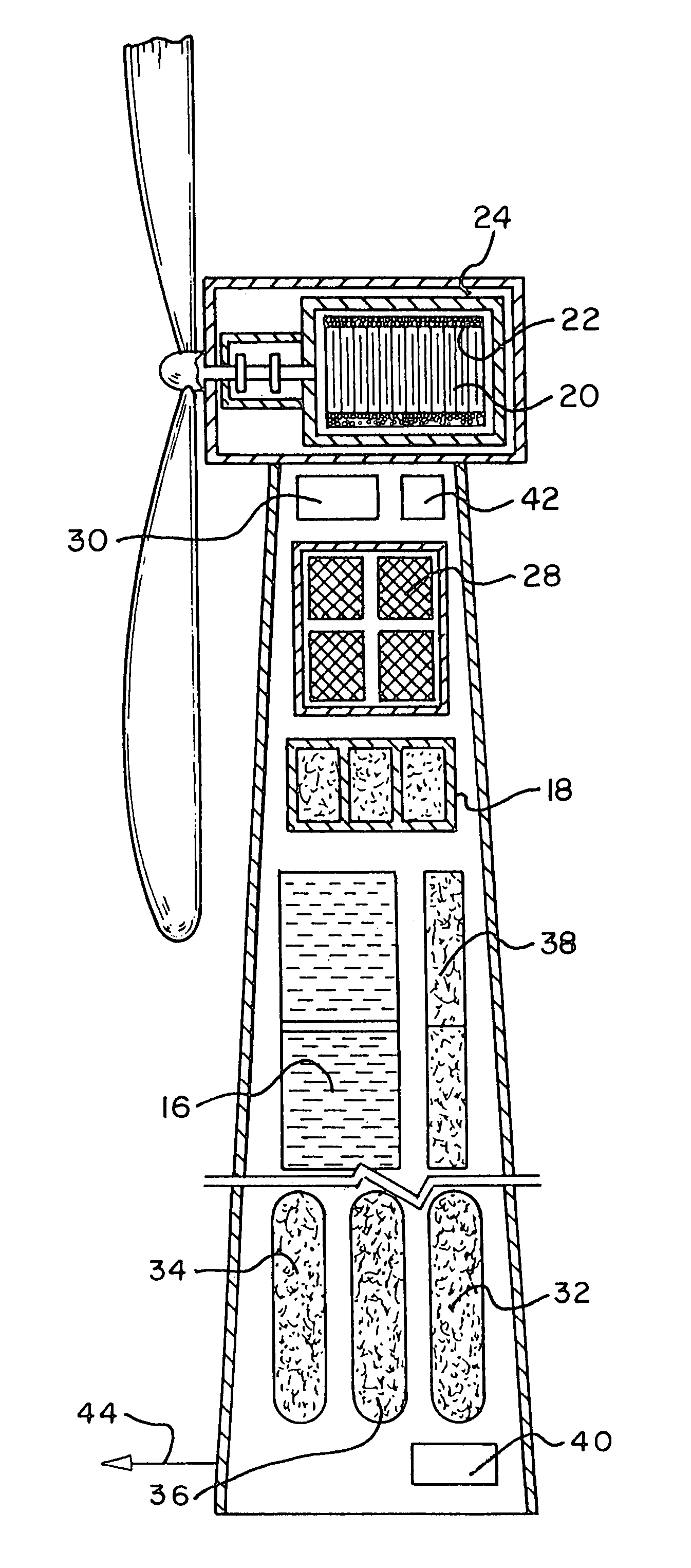
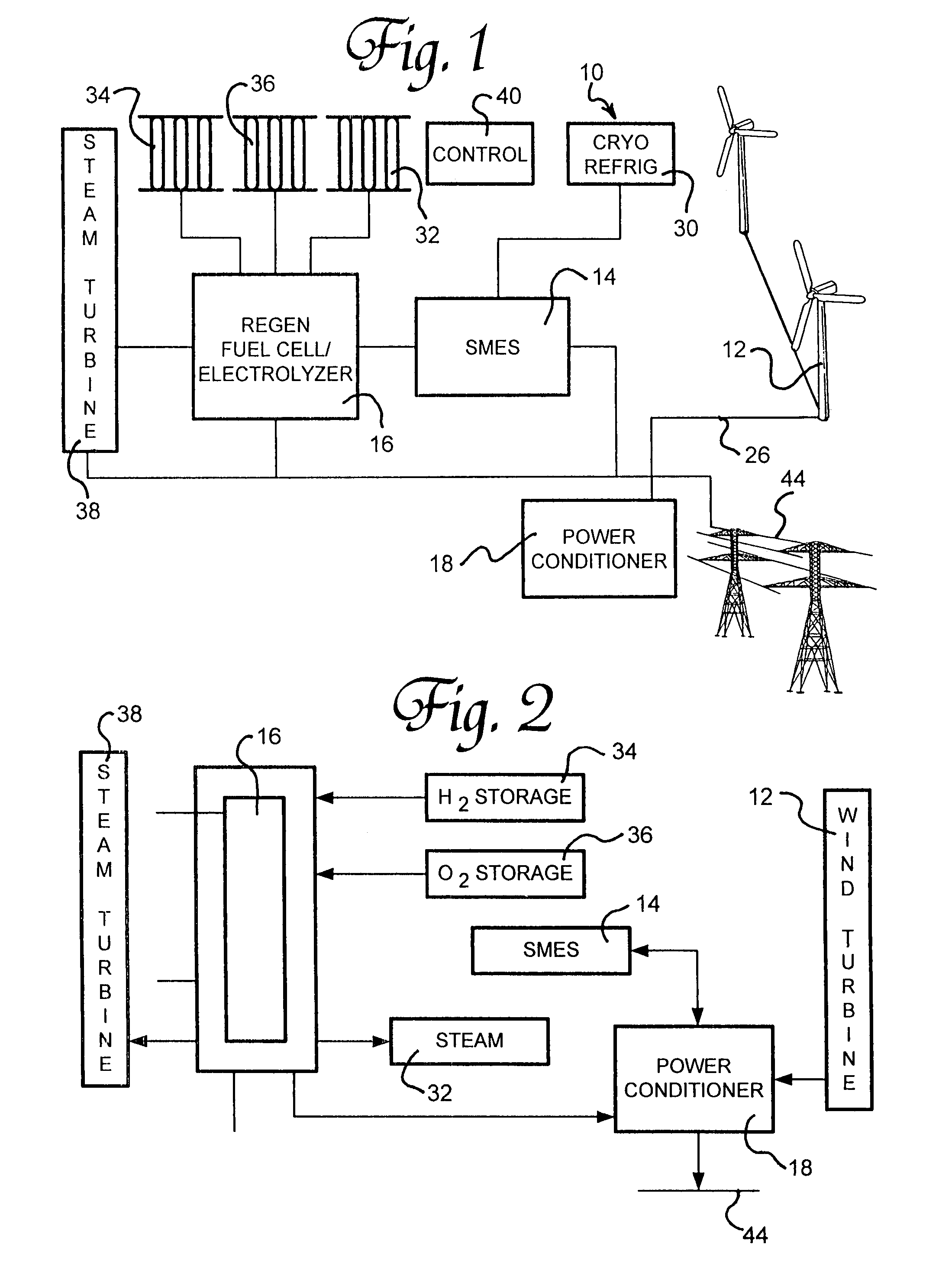
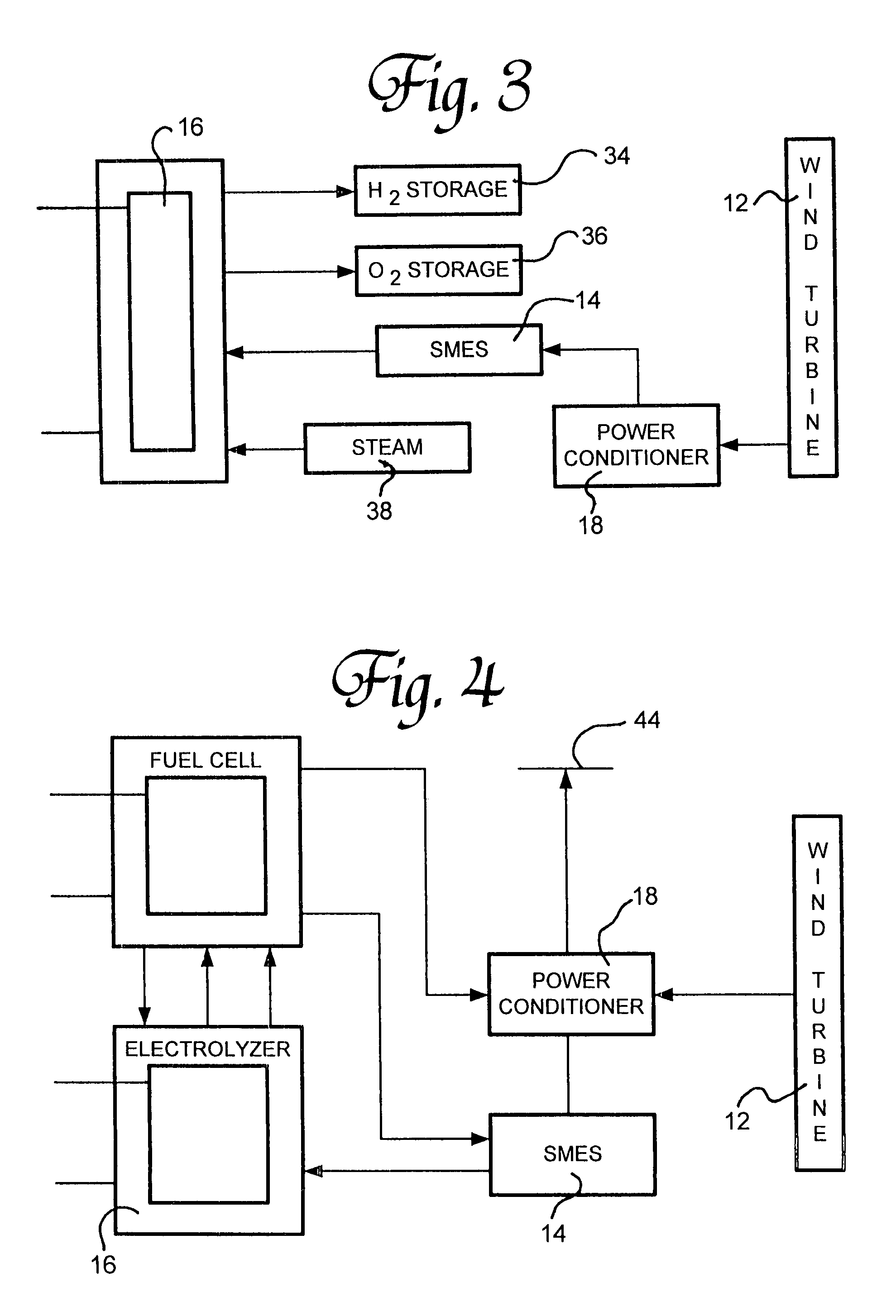
- An integrated system combining high temperature superconducting wind turbine generators, regenerative or interactive solid oxide fuel cells/electrolyzers, and superconducting magnetic energy storage, operating on a managed day/night cycle with a cryogenic system for cooling and hydrogen/oxygen storage, optimized for efficiency and flexibility.

Optimal configuration method for hybrid energy storage of grid-connected wind storage power generation system
PatentActiveUS20220077686A1
Innovation
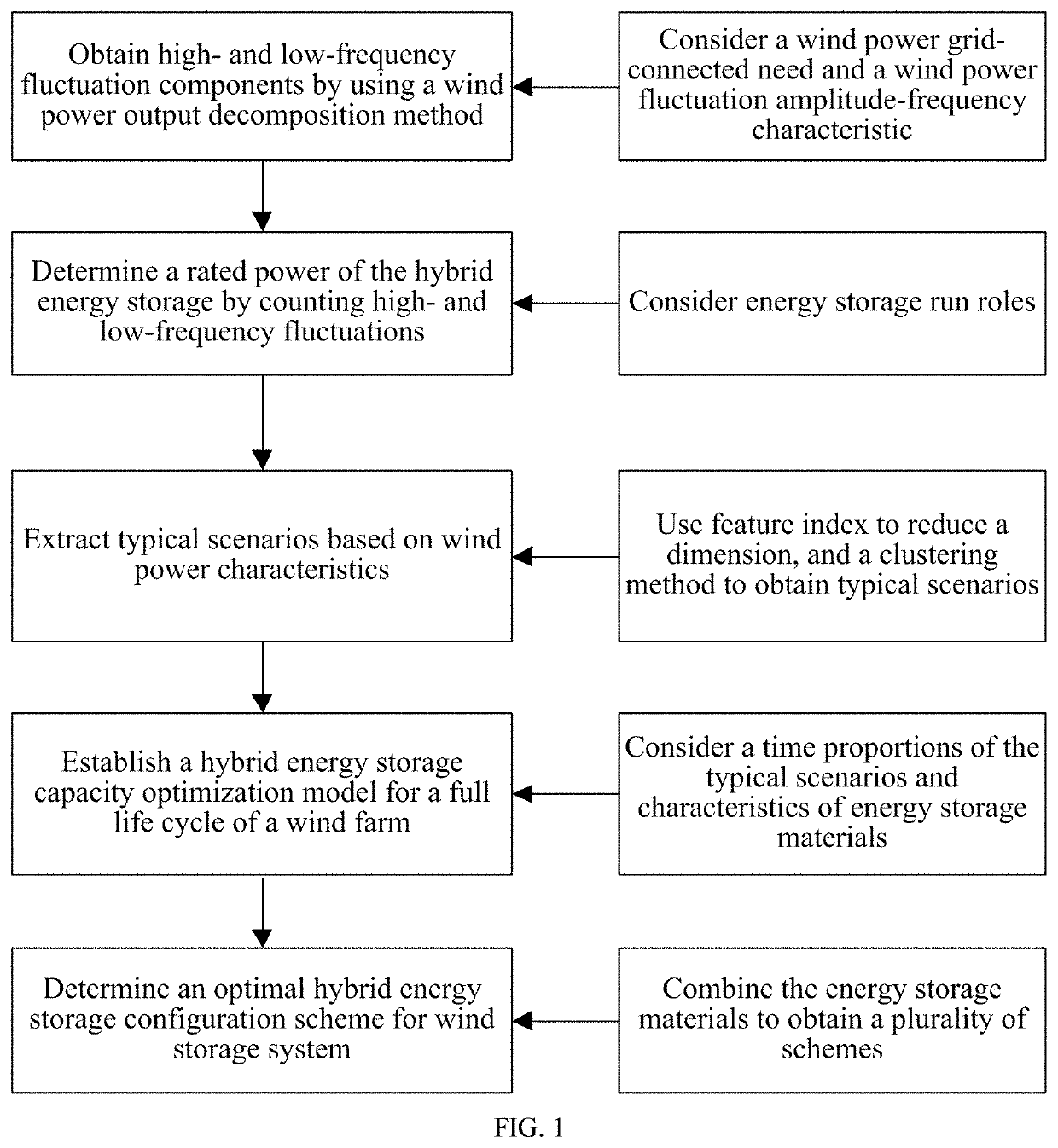
- A hybrid energy storage optimal configuration method for grid-connected wind storage power generation systems involves frequency domain decomposition of historical wind power output, establishing a capacity optimization model to minimize annual costs and maximize target satisfaction rate, using a multi-objective optimization algorithm and clustering algorithms to determine optimal energy storage capacity configurations.


Grid Code Requirements for Energy Storage Systems
Grid code requirements for energy storage systems represent a critical regulatory framework that governs the integration of superconducting magnetic energy storage (SMES) systems into electrical networks, particularly for wind energy applications. These requirements establish mandatory technical specifications that storage systems must meet to ensure grid stability, safety, and operational reliability.
Frequency response capabilities constitute a fundamental grid code requirement for SMES systems supporting wind integration. Storage systems must demonstrate rapid frequency regulation within specified deadbands, typically ±0.1 Hz, and provide primary frequency response within seconds of grid disturbances. SMES technology's millisecond response time significantly exceeds these requirements, positioning it favorably for grid code compliance.
Voltage support and reactive power management represent another essential compliance area. Grid codes mandate that energy storage systems maintain voltage levels within acceptable ranges, typically ±5% of nominal voltage, while providing dynamic reactive power support. SMES systems must demonstrate capability to inject or absorb reactive power based on grid conditions and voltage regulation requirements.
Power quality standards within grid codes address harmonic distortion limits, typically requiring total harmonic distortion below 5% for current injection. SMES systems must incorporate appropriate filtering and control systems to meet these stringent power quality requirements while maintaining high-speed response characteristics essential for wind energy smoothing applications.
Grid connection requirements specify technical parameters including fault ride-through capabilities, where storage systems must remain connected during voltage sags lasting up to several seconds. SMES systems must demonstrate resilience to grid faults while continuing to provide support services, requiring sophisticated protection and control systems.
Communication and monitoring requirements mandate real-time data exchange between storage systems and grid operators. Grid codes specify communication protocols, data refresh rates, and cybersecurity standards that SMES installations must implement. These requirements ensure proper coordination between wind generation, storage systems, and grid operations.
Certification and testing procedures outlined in grid codes require comprehensive validation of SMES system performance under various operating conditions. This includes factory acceptance testing, site acceptance testing, and ongoing performance monitoring to ensure continued compliance with evolving grid code requirements throughout the system's operational lifetime.
Frequency response capabilities constitute a fundamental grid code requirement for SMES systems supporting wind integration. Storage systems must demonstrate rapid frequency regulation within specified deadbands, typically ±0.1 Hz, and provide primary frequency response within seconds of grid disturbances. SMES technology's millisecond response time significantly exceeds these requirements, positioning it favorably for grid code compliance.
Voltage support and reactive power management represent another essential compliance area. Grid codes mandate that energy storage systems maintain voltage levels within acceptable ranges, typically ±5% of nominal voltage, while providing dynamic reactive power support. SMES systems must demonstrate capability to inject or absorb reactive power based on grid conditions and voltage regulation requirements.
Power quality standards within grid codes address harmonic distortion limits, typically requiring total harmonic distortion below 5% for current injection. SMES systems must incorporate appropriate filtering and control systems to meet these stringent power quality requirements while maintaining high-speed response characteristics essential for wind energy smoothing applications.
Grid connection requirements specify technical parameters including fault ride-through capabilities, where storage systems must remain connected during voltage sags lasting up to several seconds. SMES systems must demonstrate resilience to grid faults while continuing to provide support services, requiring sophisticated protection and control systems.
Communication and monitoring requirements mandate real-time data exchange between storage systems and grid operators. Grid codes specify communication protocols, data refresh rates, and cybersecurity standards that SMES installations must implement. These requirements ensure proper coordination between wind generation, storage systems, and grid operations.
Certification and testing procedures outlined in grid codes require comprehensive validation of SMES system performance under various operating conditions. This includes factory acceptance testing, site acceptance testing, and ongoing performance monitoring to ensure continued compliance with evolving grid code requirements throughout the system's operational lifetime.
Environmental Impact of Superconducting Storage Systems
Superconducting magnetic energy storage (SMES) systems present a complex environmental profile when integrated with wind energy infrastructure. While these systems offer significant advantages in grid stabilization and energy efficiency, their environmental implications require comprehensive evaluation across multiple dimensions including material sourcing, operational impacts, and end-of-life considerations.
The manufacturing phase of SMES systems involves extraction and processing of rare earth elements and specialized superconducting materials such as niobium-titanium or high-temperature ceramic superconductors. Mining operations for these materials can result in habitat disruption, soil contamination, and water resource depletion. However, the environmental burden is partially offset by the system's exceptional longevity, with operational lifespans exceeding 30 years and minimal degradation over time.
Operational environmental benefits of SMES systems are substantial when deployed for wind energy integration. These systems eliminate the need for chemical electrolytes found in conventional battery storage, preventing potential soil and groundwater contamination risks. The absence of toxic materials during normal operation significantly reduces environmental hazards compared to lithium-ion or lead-acid battery alternatives.
Energy efficiency characteristics of SMES technology contribute positively to overall environmental performance. With round-trip efficiency rates exceeding 95%, these systems minimize energy losses during charge-discharge cycles, reducing the overall carbon footprint of wind energy storage. This high efficiency translates to decreased demand for additional renewable generation capacity to compensate for storage losses.
Cryogenic cooling requirements represent the primary ongoing environmental consideration for SMES systems. Maintaining superconducting temperatures typically requires continuous refrigeration, consuming approximately 1-3% of stored energy. However, advances in high-temperature superconductors and improved insulation technologies are progressively reducing cooling energy demands.
The electromagnetic field generation inherent to SMES operation requires careful consideration of potential ecological impacts. While magnetic fields are contained within the system design, proper shielding protocols ensure minimal interference with local wildlife migration patterns and electronic equipment. Comprehensive environmental impact assessments demonstrate that properly designed SMES installations pose negligible risks to surrounding ecosystems when appropriate containment measures are implemented.
The manufacturing phase of SMES systems involves extraction and processing of rare earth elements and specialized superconducting materials such as niobium-titanium or high-temperature ceramic superconductors. Mining operations for these materials can result in habitat disruption, soil contamination, and water resource depletion. However, the environmental burden is partially offset by the system's exceptional longevity, with operational lifespans exceeding 30 years and minimal degradation over time.
Operational environmental benefits of SMES systems are substantial when deployed for wind energy integration. These systems eliminate the need for chemical electrolytes found in conventional battery storage, preventing potential soil and groundwater contamination risks. The absence of toxic materials during normal operation significantly reduces environmental hazards compared to lithium-ion or lead-acid battery alternatives.
Energy efficiency characteristics of SMES technology contribute positively to overall environmental performance. With round-trip efficiency rates exceeding 95%, these systems minimize energy losses during charge-discharge cycles, reducing the overall carbon footprint of wind energy storage. This high efficiency translates to decreased demand for additional renewable generation capacity to compensate for storage losses.
Cryogenic cooling requirements represent the primary ongoing environmental consideration for SMES systems. Maintaining superconducting temperatures typically requires continuous refrigeration, consuming approximately 1-3% of stored energy. However, advances in high-temperature superconductors and improved insulation technologies are progressively reducing cooling energy demands.
The electromagnetic field generation inherent to SMES operation requires careful consideration of potential ecological impacts. While magnetic fields are contained within the system design, proper shielding protocols ensure minimal interference with local wildlife migration patterns and electronic equipment. Comprehensive environmental impact assessments demonstrate that properly designed SMES installations pose negligible risks to surrounding ecosystems when appropriate containment measures are implemented.
Unlock deeper insights with Patsnap Eureka Quick Research — get a full tech report to explore trends and direct your research. Try now!
Generate Your Research Report Instantly with AI Agent
Supercharge your innovation with Patsnap Eureka AI Agent Platform!