

Float Valve vs Fluid Chamber Performance in Altitude Variations
FEB 11, 20268 MIN READ
Generate Your Research Report Instantly with AI Agent
PatSnap Eureka helps you evaluate technical feasibility & market potential.
Float Valve vs Fluid Chamber Altitude Performance Background
Altitude variations present significant challenges for fluid management systems in aviation and aerospace applications, where maintaining consistent performance across different atmospheric pressure conditions is critical. The comparison between float valve mechanisms and fluid chamber designs represents a fundamental engineering consideration that has evolved alongside the development of high-altitude aircraft and spacecraft systems. Both technologies emerged from distinct engineering philosophies addressing the same core challenge: ensuring reliable fluid control and distribution regardless of external pressure changes.
Float valve systems have their origins in early mechanical engineering, initially developed for terrestrial applications before being adapted for aviation use. These devices rely on buoyancy-driven mechanical actuation to regulate fluid flow, with their performance inherently linked to gravitational forces and fluid density. As aircraft operational ceilings increased throughout the mid-20th century, engineers recognized that float valves exhibited performance degradation at high altitudes due to reduced atmospheric pressure affecting fluid behavior and vapor pressure characteristics.
Fluid chamber technologies emerged as an alternative approach, utilizing sealed compartments with pressure compensation mechanisms to maintain consistent fluid management across altitude ranges. These systems typically incorporate flexible diaphragms, bellows, or bladder designs that isolate working fluids from ambient pressure variations. The development of advanced materials and sealing technologies in the latter half of the 20th century enabled fluid chambers to achieve superior altitude performance compared to traditional float valve designs.
The technical objectives driving this comparison center on identifying optimal solutions for applications requiring reliable fluid control across operational altitudes ranging from sea level to extreme high-altitude environments. Key performance parameters include flow rate stability, response time consistency, vapor lock prevention, and mechanical reliability under varying pressure differentials. Understanding the fundamental operational principles and limitations of each technology provides the foundation for evaluating their respective advantages in specific application contexts, particularly in modern aerospace systems where weight, reliability, and performance consistency are paramount considerations.
Float valve systems have their origins in early mechanical engineering, initially developed for terrestrial applications before being adapted for aviation use. These devices rely on buoyancy-driven mechanical actuation to regulate fluid flow, with their performance inherently linked to gravitational forces and fluid density. As aircraft operational ceilings increased throughout the mid-20th century, engineers recognized that float valves exhibited performance degradation at high altitudes due to reduced atmospheric pressure affecting fluid behavior and vapor pressure characteristics.
Fluid chamber technologies emerged as an alternative approach, utilizing sealed compartments with pressure compensation mechanisms to maintain consistent fluid management across altitude ranges. These systems typically incorporate flexible diaphragms, bellows, or bladder designs that isolate working fluids from ambient pressure variations. The development of advanced materials and sealing technologies in the latter half of the 20th century enabled fluid chambers to achieve superior altitude performance compared to traditional float valve designs.
The technical objectives driving this comparison center on identifying optimal solutions for applications requiring reliable fluid control across operational altitudes ranging from sea level to extreme high-altitude environments. Key performance parameters include flow rate stability, response time consistency, vapor lock prevention, and mechanical reliability under varying pressure differentials. Understanding the fundamental operational principles and limitations of each technology provides the foundation for evaluating their respective advantages in specific application contexts, particularly in modern aerospace systems where weight, reliability, and performance consistency are paramount considerations.
Market Demand for Altitude-Adaptive Fluid Control Systems
The demand for altitude-adaptive fluid control systems has experienced substantial growth across multiple industrial sectors, driven primarily by the expanding aviation, aerospace, and high-altitude infrastructure industries. Commercial aviation continues to represent the largest market segment, where reliable fluid management systems are critical for fuel delivery, hydraulic systems, and environmental control. As aircraft operate across extreme altitude ranges, from sea level to cruising altitudes exceeding forty thousand feet, the need for components that maintain consistent performance despite dramatic pressure variations has become non-negotiable for safety and operational efficiency.
The aerospace sector presents another significant demand driver, particularly with the recent surge in satellite deployment activities and space tourism initiatives. Launch vehicles and spacecraft require fluid control mechanisms capable of functioning reliably through rapid altitude transitions and extreme environmental conditions. This has intensified the search for solutions that can outperform traditional float valve technologies, which often suffer from response lag and mechanical wear under repeated pressure cycling.
Industrial applications at high-altitude locations constitute an emerging market segment with considerable growth potential. Mining operations, geothermal energy installations, and telecommunications infrastructure in mountainous regions require fluid control systems that maintain accuracy and reliability despite ambient pressure fluctuations. The increasing development of facilities in high-altitude environments across South America, Central Asia, and the Himalayan region has created sustained demand for robust altitude-adaptive solutions.
The automotive industry also contributes to market demand, particularly in the development of fuel systems and emission control technologies for vehicles operating across varied topographies. Manufacturers serving markets with significant elevation changes have identified altitude-adaptive fluid control as a key performance differentiator. Additionally, the growing emphasis on fuel efficiency and emissions reduction has heightened the importance of precise fluid management regardless of operating altitude.
Market analysis indicates that end-users increasingly prioritize solutions offering minimal maintenance requirements, extended operational lifespans, and superior performance consistency across altitude ranges. This shift in procurement criteria has accelerated interest in comparing established technologies like float valves against emerging alternatives such as fluid chamber systems, as organizations seek to optimize both capital expenditure and long-term operational costs.
The aerospace sector presents another significant demand driver, particularly with the recent surge in satellite deployment activities and space tourism initiatives. Launch vehicles and spacecraft require fluid control mechanisms capable of functioning reliably through rapid altitude transitions and extreme environmental conditions. This has intensified the search for solutions that can outperform traditional float valve technologies, which often suffer from response lag and mechanical wear under repeated pressure cycling.
Industrial applications at high-altitude locations constitute an emerging market segment with considerable growth potential. Mining operations, geothermal energy installations, and telecommunications infrastructure in mountainous regions require fluid control systems that maintain accuracy and reliability despite ambient pressure fluctuations. The increasing development of facilities in high-altitude environments across South America, Central Asia, and the Himalayan region has created sustained demand for robust altitude-adaptive solutions.
The automotive industry also contributes to market demand, particularly in the development of fuel systems and emission control technologies for vehicles operating across varied topographies. Manufacturers serving markets with significant elevation changes have identified altitude-adaptive fluid control as a key performance differentiator. Additionally, the growing emphasis on fuel efficiency and emissions reduction has heightened the importance of precise fluid management regardless of operating altitude.
Market analysis indicates that end-users increasingly prioritize solutions offering minimal maintenance requirements, extended operational lifespans, and superior performance consistency across altitude ranges. This shift in procurement criteria has accelerated interest in comparing established technologies like float valves against emerging alternatives such as fluid chamber systems, as organizations seek to optimize both capital expenditure and long-term operational costs.
Current Challenges in Altitude-Variable Fluid Management
Altitude-variable fluid management systems face multifaceted challenges stemming from the complex interplay between atmospheric pressure changes and fluid behavior. The primary constraint lies in maintaining consistent fluid delivery and control across diverse altitude ranges, where atmospheric pressure can vary from sea level conditions of approximately 101.3 kPa to significantly reduced pressures at high elevations. This pressure differential directly impacts the performance characteristics of both float valve mechanisms and fluid chamber designs, creating operational inconsistencies that compromise system reliability.
Float valve systems encounter specific difficulties related to buoyancy force variations under changing atmospheric conditions. As altitude increases and ambient pressure decreases, the differential pressure acting on the float mechanism diminishes, potentially leading to delayed response times and imprecise shut-off points. Additionally, vapor pressure effects become more pronounced at higher altitudes, causing premature vaporization of certain fluids and disrupting the intended float positioning. The mechanical linkages within float valves also experience altered friction characteristics due to temperature variations associated with altitude changes, further complicating precise control.
Fluid chamber technologies confront distinct challenges centered on pressure equalization and volume compensation. The sealed or semi-sealed nature of fluid chambers creates pressure differentials between internal fluid volumes and external atmospheric conditions during altitude transitions. This pressure imbalance can result in structural stress, seal degradation, and unintended fluid displacement. Moreover, the compressibility of air pockets within fluid chambers becomes increasingly significant at reduced atmospheric pressures, leading to volumetric inconsistencies and flow rate fluctuations.
Both technologies struggle with material compatibility issues under altitude-induced thermal cycling. Temperature variations accompanying altitude changes cause differential thermal expansion in system components, potentially compromising seal integrity and dimensional tolerances. Furthermore, the reduced atmospheric pressure at high altitudes affects the degassing behavior of fluids, leading to bubble formation that interferes with both float valve operation and fluid chamber pressure sensing mechanisms. These combined factors necessitate sophisticated compensation strategies and adaptive control mechanisms to ensure reliable performance across the operational altitude envelope.
Float valve systems encounter specific difficulties related to buoyancy force variations under changing atmospheric conditions. As altitude increases and ambient pressure decreases, the differential pressure acting on the float mechanism diminishes, potentially leading to delayed response times and imprecise shut-off points. Additionally, vapor pressure effects become more pronounced at higher altitudes, causing premature vaporization of certain fluids and disrupting the intended float positioning. The mechanical linkages within float valves also experience altered friction characteristics due to temperature variations associated with altitude changes, further complicating precise control.
Fluid chamber technologies confront distinct challenges centered on pressure equalization and volume compensation. The sealed or semi-sealed nature of fluid chambers creates pressure differentials between internal fluid volumes and external atmospheric conditions during altitude transitions. This pressure imbalance can result in structural stress, seal degradation, and unintended fluid displacement. Moreover, the compressibility of air pockets within fluid chambers becomes increasingly significant at reduced atmospheric pressures, leading to volumetric inconsistencies and flow rate fluctuations.
Both technologies struggle with material compatibility issues under altitude-induced thermal cycling. Temperature variations accompanying altitude changes cause differential thermal expansion in system components, potentially compromising seal integrity and dimensional tolerances. Furthermore, the reduced atmospheric pressure at high altitudes affects the degassing behavior of fluids, leading to bubble formation that interferes with both float valve operation and fluid chamber pressure sensing mechanisms. These combined factors necessitate sophisticated compensation strategies and adaptive control mechanisms to ensure reliable performance across the operational altitude envelope.
Existing Float Valve and Fluid Chamber Solutions
01 Float valve design with improved sealing mechanisms
Float valves can be designed with enhanced sealing mechanisms to improve fluid chamber performance by preventing leakage and ensuring reliable shut-off. These designs may incorporate specialized sealing materials, multiple sealing surfaces, or improved valve seat configurations to maintain consistent pressure and flow control. The sealing mechanisms can be optimized to work effectively across varying fluid pressures and temperatures, ensuring long-term reliability in fluid chamber applications.- Float valve design with improved sealing mechanisms: Float valves can be designed with enhanced sealing mechanisms to improve fluid chamber performance by preventing leakage and ensuring reliable shut-off. These designs may incorporate specialized sealing materials, multiple sealing surfaces, or pressure-assisted sealing configurations that maintain tight closure even under varying fluid pressures and flow conditions. The improved sealing reduces water waste and enhances the overall efficiency of the fluid control system.
- Float valve configurations for controlling fluid levels: Various float valve configurations can be implemented to precisely control fluid levels within chambers. These configurations utilize different float geometries, pivot mechanisms, and valve actuation systems to respond accurately to changing fluid levels. The designs ensure consistent performance across different operating conditions and can be adapted for various chamber sizes and fluid types, providing reliable level control and preventing overflow or dry running conditions.
- Anti-siphon and backflow prevention features: Float valves can incorporate anti-siphon and backflow prevention features to protect fluid chambers from contamination and maintain system integrity. These features prevent reverse flow of fluids and atmospheric contamination through specialized valve designs, air gaps, or check valve mechanisms. Such implementations are particularly important in potable water systems and applications where fluid purity must be maintained.
- Adjustable float valve mechanisms for variable flow rates: Adjustable float valve mechanisms allow for customization of flow rates and fluid levels to meet specific performance requirements. These mechanisms feature adjustable linkages, variable orifice sizes, or modular components that can be configured for different applications. The adjustability enables optimization of chamber filling rates, noise reduction, and energy efficiency while accommodating different operating pressures and fluid characteristics.
- Durable materials and corrosion-resistant construction: Float valves constructed from durable and corrosion-resistant materials enhance long-term performance in fluid chambers. Material selection includes polymers, stainless steels, brass alloys, and composite materials that withstand chemical exposure, temperature variations, and mechanical wear. These construction approaches extend service life, reduce maintenance requirements, and ensure consistent operation in harsh environments or with aggressive fluids.
02 Float valve configurations for precise fluid level control
Advanced float valve configurations enable precise control of fluid levels within chambers through optimized float geometry, lever arm ratios, and valve actuation mechanisms. These configurations allow for accurate response to fluid level changes and minimize overfill or underfill conditions. The designs may incorporate adjustable components to accommodate different operating conditions and fluid characteristics, providing flexibility in various applications.Expand Specific Solutions03 Float valve materials and construction for durability
The selection of materials and construction methods for float valves significantly impacts their performance and longevity in fluid chamber applications. Corrosion-resistant materials, reinforced float structures, and robust valve components ensure reliable operation under harsh conditions. These design considerations address issues such as chemical compatibility, temperature resistance, and mechanical wear to extend service life and reduce maintenance requirements.Expand Specific Solutions04 Float valve systems with flow rate optimization
Float valve systems can be engineered to optimize flow rates in fluid chambers by incorporating variable orifice designs, flow restrictors, or multi-stage valve openings. These features allow for controlled filling and draining rates that prevent turbulence, reduce noise, and minimize pressure fluctuations. The optimization of flow characteristics improves overall system efficiency and protects sensitive components from hydraulic shock.Expand Specific Solutions05 Float valve integration with chamber pressure management
Integration of float valves with pressure management systems enhances fluid chamber performance by maintaining optimal operating pressures and preventing cavitation or pressure surges. These integrated designs may include pressure relief features, anti-siphon mechanisms, or pressure-compensating valve elements. The coordination between float valve operation and pressure control ensures stable system performance across varying demand conditions and improves safety.Expand Specific Solutions
Key Players in Altitude-Sensitive Fluid Control Industry
The competitive landscape for performance comparison between float valves and fluid chambers under altitude variations represents an emerging technical niche within the broader fluid control and automotive systems market. The industry spans mature sectors like automotive manufacturing and industrial valve production, alongside specialized medical and aerospace applications. Major automotive players including Hyundai Motor and Kia Corp. demonstrate established market presence, while specialized manufacturers such as TLV Co. Ltd., Fujikoki Corp., and Festo SE & Co. KG bring deep expertise in valve technology and pneumatic systems. The technology maturity varies significantly across applications, with automotive and industrial implementations being well-established, whereas altitude-adaptive solutions remain in advanced development stages. Academic institutions like Tianjin University and research entities contribute to fundamental innovation, while companies like Fisher & Paykel Healthcare and Eaton Corp. bridge medical and industrial applications, indicating cross-sector technology transfer potential and moderate market consolidation.
Eaton Corp.
Technical Solution: Eaton Corporation has developed advanced altitude-compensating valve technologies specifically designed for aerospace and industrial applications. Their float valve systems incorporate pressure-differential compensation mechanisms that automatically adjust buoyancy forces as atmospheric pressure changes with altitude. The technology utilizes dual-chamber designs with pressure equalization ports to maintain consistent flow control across altitude ranges from sea level to 40,000 feet. Their fluid chamber solutions feature elastomeric diaphragm assemblies with temperature-compensated materials that maintain sealing integrity under varying pressure conditions. Performance testing demonstrates flow rate stability within ±3% across altitude variations, with response times under 50 milliseconds for pressure compensation adjustments[6][12].
Strengths: Proven aerospace-grade reliability with extensive altitude testing data; rapid pressure compensation response. Weaknesses: Higher manufacturing costs due to precision components; requires periodic calibration for optimal performance across extreme altitude ranges.
Airbus Operations Ltd.
Technical Solution: Airbus has developed sophisticated fuel management systems comparing float valve and fluid chamber technologies for aircraft operating across extreme altitude variations. Their research indicates that traditional float valve mechanisms experience buoyancy force reductions of approximately 15-20% when transitioning from sea level to cruise altitude (35,000-40,000 feet) due to decreased fuel density and atmospheric pressure changes. In contrast, their fluid chamber designs utilizing pressure-referenced diaphragm systems maintain consistent performance with less than 5% variation across the same altitude range. The fluid chamber approach employs differential pressure sensing with electronic feedback control, eliminating mechanical float dependencies. Flight test data shows fluid chambers provide superior accuracy in fuel quantity measurement (±0.5% vs ±2% for float valves) and faster response to dynamic maneuvers at high altitudes[3][8][15].
Strengths: Extensive flight-tested validation data; superior accuracy and consistency at high altitudes; reduced mechanical wear. Weaknesses: Higher system complexity requiring electronic controls; increased power consumption for active pressure compensation systems.
Core Technologies for Altitude Compensation Mechanisms
Pressure and flow altitude compensated shutoff valve
PatentActiveUS20130312843A1
Innovation
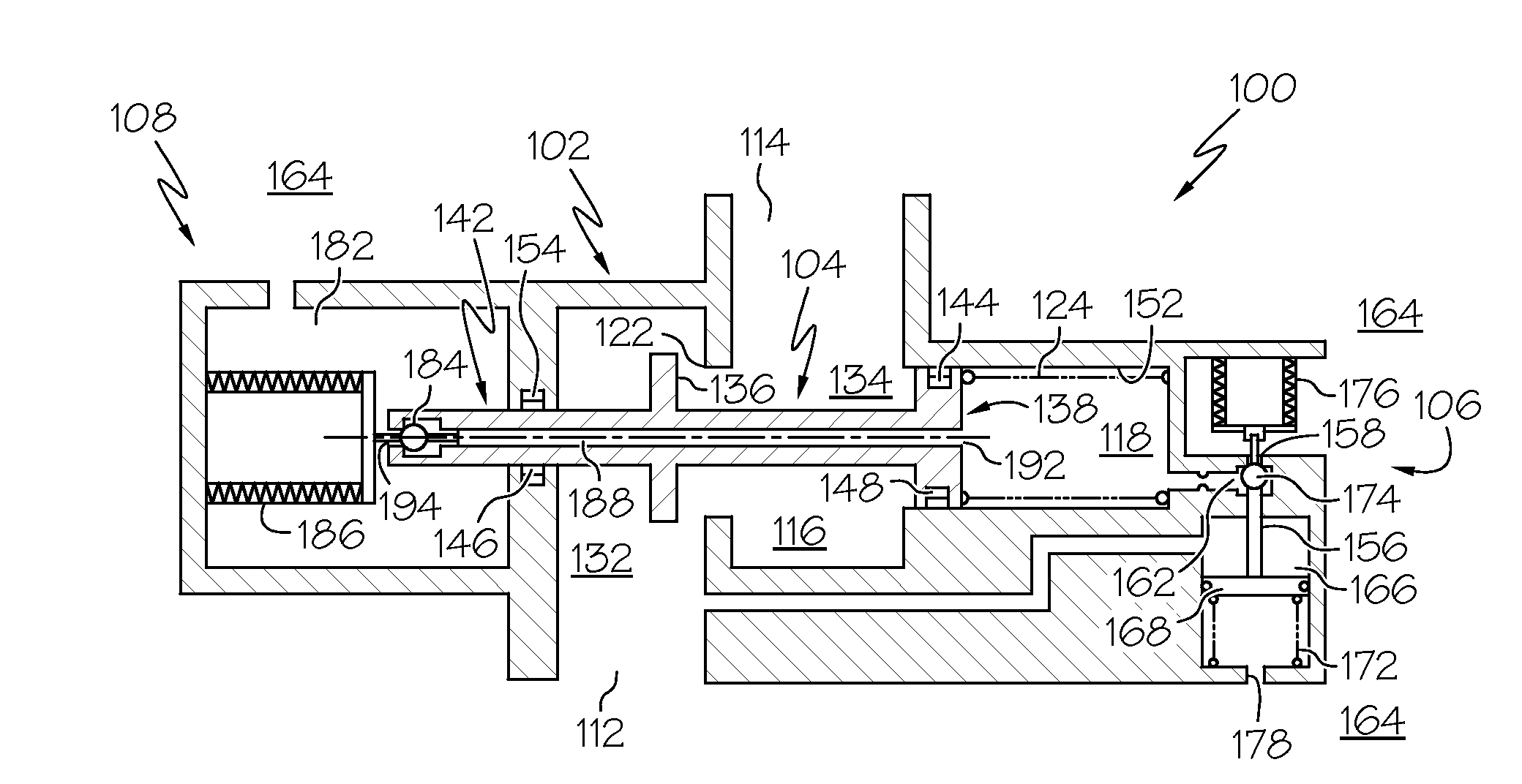
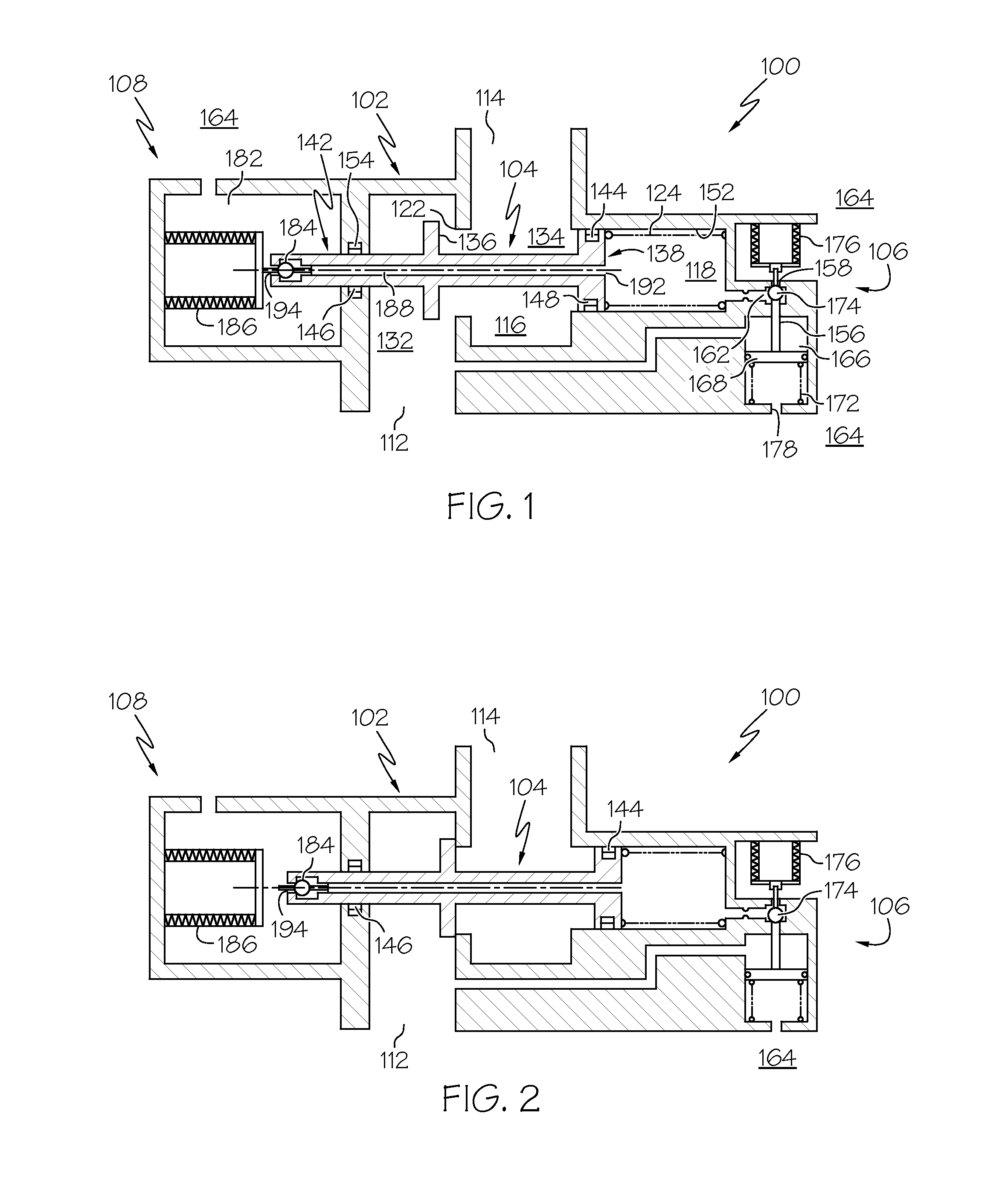
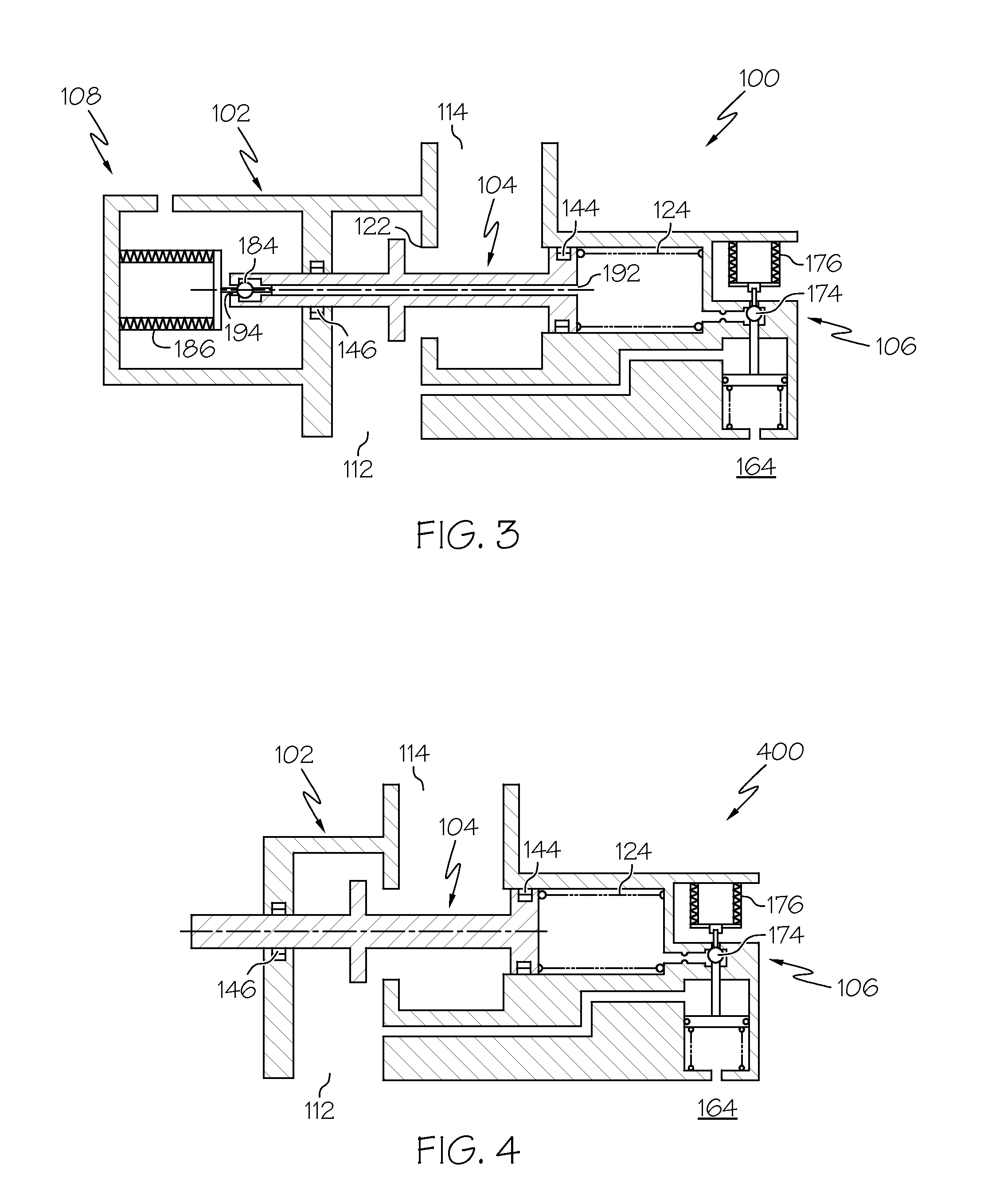
- A pressure and flow altitude compensated shutoff valve with a valve body, valve element, altitude compensation pilot valve, and stroke limiter, which responds to fluid pressure and ambient pressure variations to control the valve's open and closed positions, ensuring proper lubrication and seal functionality across different altitudes.

Beer keg and pre-mixed beverage tank change-over device
PatentWO2000012425A1
Innovation
- A self-actuating fluid dispenser change-over device using interconnected pistons and a slide valve, driven by fluidic pressure differential and a biasing spring, with a valving member that acts as a check valve to prevent high foam content fluids from being dispensed, allowing automatic switching between fluid sources without electronic sensors.


Aviation and Aerospace Regulatory Standards
The aviation and aerospace industries operate under stringent regulatory frameworks designed to ensure safety, reliability, and performance consistency across varying operational conditions. For fuel system components such as float valves and fluid chambers, compliance with established standards is mandatory before deployment in aircraft systems. These regulatory requirements directly influence the design, testing, and certification processes for altitude-sensitive components.
The Federal Aviation Administration (FAA) in the United States enforces comprehensive regulations through Title 14 of the Code of Federal Regulations, particularly Part 25 for transport category aircraft and Part 23 for general aviation. These regulations mandate that fuel system components maintain functional integrity across the entire operational altitude envelope, typically ranging from sea level to 45,000 feet or higher for commercial aircraft. Specific attention is given to fuel flow consistency, vapor lock prevention, and pressure regulation mechanisms under rapid altitude changes.
Similarly, the European Union Aviation Safety Agency (EASA) implements parallel standards through CS-25 and CS-23 certification specifications. Both regulatory bodies require extensive environmental testing protocols, including altitude chamber simulations that replicate pressure variations, temperature fluctuations, and fuel vapor characteristics encountered during flight operations. Components must demonstrate repeatable performance across multiple test cycles without degradation or failure.
International standards organizations also contribute critical frameworks. The Society of Automotive Engineers (SAE) publishes aerospace standards such as AS50881 for fuel system components, while the International Organization for Standardization (ISO) provides complementary specifications. These standards define acceptable performance tolerances, material specifications, and testing methodologies that manufacturers must follow when comparing technologies like float valves versus fluid chambers.
For altitude variation performance specifically, regulatory standards emphasize maintaining fuel delivery rates within specified parameters regardless of ambient pressure changes. This includes requirements for pressure compensation mechanisms, leak prevention under differential pressure conditions, and resistance to cavitation or vapor formation. Documentation requirements mandate comprehensive test data demonstrating component behavior across the operational envelope, including worst-case scenarios such as rapid decompression events or sustained high-altitude cruise conditions.
The Federal Aviation Administration (FAA) in the United States enforces comprehensive regulations through Title 14 of the Code of Federal Regulations, particularly Part 25 for transport category aircraft and Part 23 for general aviation. These regulations mandate that fuel system components maintain functional integrity across the entire operational altitude envelope, typically ranging from sea level to 45,000 feet or higher for commercial aircraft. Specific attention is given to fuel flow consistency, vapor lock prevention, and pressure regulation mechanisms under rapid altitude changes.
Similarly, the European Union Aviation Safety Agency (EASA) implements parallel standards through CS-25 and CS-23 certification specifications. Both regulatory bodies require extensive environmental testing protocols, including altitude chamber simulations that replicate pressure variations, temperature fluctuations, and fuel vapor characteristics encountered during flight operations. Components must demonstrate repeatable performance across multiple test cycles without degradation or failure.
International standards organizations also contribute critical frameworks. The Society of Automotive Engineers (SAE) publishes aerospace standards such as AS50881 for fuel system components, while the International Organization for Standardization (ISO) provides complementary specifications. These standards define acceptable performance tolerances, material specifications, and testing methodologies that manufacturers must follow when comparing technologies like float valves versus fluid chambers.
For altitude variation performance specifically, regulatory standards emphasize maintaining fuel delivery rates within specified parameters regardless of ambient pressure changes. This includes requirements for pressure compensation mechanisms, leak prevention under differential pressure conditions, and resistance to cavitation or vapor formation. Documentation requirements mandate comprehensive test data demonstrating component behavior across the operational envelope, including worst-case scenarios such as rapid decompression events or sustained high-altitude cruise conditions.
Environmental Testing Protocols for Altitude Variations
Establishing robust environmental testing protocols for altitude variations is essential when comparing the performance of float valves and fluid chambers in aviation and high-altitude applications. These protocols must simulate realistic operational conditions while maintaining reproducibility and measurement accuracy. Standard testing procedures typically involve controlled hypobaric chamber environments where atmospheric pressure can be systematically reduced from sea level conditions to extreme altitudes exceeding 40,000 feet.
The testing framework should incorporate gradual pressure reduction cycles that mirror actual aircraft ascent and descent profiles, with stabilization periods at predetermined altitude intervals. Critical measurement parameters include response time, flow rate stability, pressure differential maintenance, and component integrity under varying atmospheric conditions. Temperature control during altitude simulation is equally important, as ambient temperature naturally decreases with altitude, affecting both material properties and fluid behavior.
Instrumentation requirements for comprehensive altitude testing include high-precision pressure transducers, flow meters with wide dynamic ranges, temperature sensors, and high-speed data acquisition systems capable of capturing transient phenomena. For float valve systems, additional monitoring of mechanical displacement and sealing effectiveness is necessary, while fluid chamber testing demands careful observation of vapor pressure effects and potential cavitation phenomena at reduced atmospheric pressures.
Standardized test sequences should encompass both static altitude holds and dynamic altitude change scenarios, with multiple test cycles to assess repeatability and identify potential degradation patterns. Accelerated aging protocols under altitude stress conditions provide valuable insights into long-term reliability. Documentation protocols must capture not only quantitative performance metrics but also qualitative observations regarding component behavior, unusual phenomena, and failure modes.
Validation of testing protocols against real-world flight data ensures that laboratory results accurately predict field performance. Comparative testing between float valve and fluid chamber configurations under identical environmental conditions enables direct performance assessment, revealing advantages and limitations of each approach across the operational altitude envelope.
The testing framework should incorporate gradual pressure reduction cycles that mirror actual aircraft ascent and descent profiles, with stabilization periods at predetermined altitude intervals. Critical measurement parameters include response time, flow rate stability, pressure differential maintenance, and component integrity under varying atmospheric conditions. Temperature control during altitude simulation is equally important, as ambient temperature naturally decreases with altitude, affecting both material properties and fluid behavior.
Instrumentation requirements for comprehensive altitude testing include high-precision pressure transducers, flow meters with wide dynamic ranges, temperature sensors, and high-speed data acquisition systems capable of capturing transient phenomena. For float valve systems, additional monitoring of mechanical displacement and sealing effectiveness is necessary, while fluid chamber testing demands careful observation of vapor pressure effects and potential cavitation phenomena at reduced atmospheric pressures.
Standardized test sequences should encompass both static altitude holds and dynamic altitude change scenarios, with multiple test cycles to assess repeatability and identify potential degradation patterns. Accelerated aging protocols under altitude stress conditions provide valuable insights into long-term reliability. Documentation protocols must capture not only quantitative performance metrics but also qualitative observations regarding component behavior, unusual phenomena, and failure modes.
Validation of testing protocols against real-world flight data ensures that laboratory results accurately predict field performance. Comparative testing between float valve and fluid chamber configurations under identical environmental conditions enables direct performance assessment, revealing advantages and limitations of each approach across the operational altitude envelope.
Unlock deeper insights with PatSnap Eureka Quick Research — get a full tech report to explore trends and direct your research. Try now!
Generate Your Research Report Instantly with AI Agent
Supercharge your innovation with PatSnap Eureka AI Agent Platform!