

Plate Heat Exchanger vs Air Cooled Exchanger: Performance Analysis
MAR 10, 20269 MIN READ
Generate Your Research Report Instantly with AI Agent
Patsnap Eureka helps you evaluate technical feasibility & market potential.
Heat Exchanger Technology Background and Performance Goals
Heat exchanger technology has evolved significantly since the early industrial revolution, driven by the fundamental need to efficiently transfer thermal energy between fluid streams while maintaining physical separation. The development trajectory spans from simple shell-and-tube configurations in the 19th century to sophisticated compact designs incorporating advanced materials and manufacturing techniques. This evolution has been propelled by increasing energy costs, environmental regulations, and the demand for enhanced process efficiency across diverse industrial applications.
The emergence of plate heat exchangers in the 1920s marked a revolutionary shift toward compact, high-efficiency thermal transfer solutions. These devices utilize corrugated metal plates arranged in parallel configurations, creating multiple flow channels that maximize heat transfer surface area per unit volume. The technology gained substantial momentum during the mid-20th century as manufacturing capabilities advanced, enabling precise plate forming and reliable gasket sealing systems.
Air-cooled heat exchangers developed along a parallel trajectory, addressing applications where water availability or environmental concerns limited the use of liquid cooling media. These systems leverage ambient air as the cooling medium, utilizing finned tube bundles and forced or natural convection mechanisms. The technology became particularly prominent in petrochemical and power generation industries, where large-scale heat rejection requirements necessitated robust, maintenance-friendly solutions.
Contemporary heat exchanger technology aims to achieve multiple performance objectives simultaneously. Primary goals include maximizing thermal effectiveness while minimizing pressure drop penalties, reducing capital and operational costs, and enhancing system reliability. Energy efficiency targets have become increasingly stringent, with modern designs targeting thermal effectiveness values exceeding 90% in optimal operating conditions.
Environmental sustainability represents another critical performance dimension, driving the development of solutions that minimize water consumption, reduce refrigerant requirements, and enable waste heat recovery applications. Compact design objectives focus on achieving maximum heat transfer rates within constrained spatial envelopes, particularly relevant for mobile applications and urban industrial installations.
Advanced performance goals encompass operational flexibility, enabling efficient operation across varying load conditions and fluid properties. Maintenance accessibility and component longevity have emerged as key design criteria, influencing material selection, cleaning protocols, and modular construction approaches. These evolving objectives continue to shape technological development priorities and competitive positioning strategies within the heat exchanger industry.
Market Demand for Industrial Heat Exchange Solutions
The global industrial heat exchange solutions market demonstrates robust growth driven by expanding manufacturing sectors, stringent energy efficiency regulations, and increasing focus on sustainable industrial processes. Process industries including chemical processing, oil and gas refining, power generation, and food processing represent the primary demand drivers for advanced heat exchange technologies. These sectors require reliable thermal management systems to optimize energy consumption, reduce operational costs, and meet environmental compliance standards.
Chemical and petrochemical industries constitute the largest market segment for industrial heat exchangers, requiring both plate and air-cooled configurations depending on specific process requirements. The growing emphasis on process intensification and energy recovery has accelerated adoption of high-efficiency heat exchange solutions. Pharmaceutical manufacturing, with its stringent temperature control requirements and contamination prevention needs, represents another significant growth area favoring plate heat exchanger technologies.
Power generation facilities, particularly those incorporating renewable energy sources and combined heat and power systems, drive substantial demand for both plate and air-cooled heat exchangers. The transition toward cleaner energy production methods necessitates advanced thermal management solutions capable of handling diverse operating conditions and fluid types. District heating and cooling systems in urban developments further expand market opportunities for industrial-scale heat exchange equipment.
Emerging markets in Asia-Pacific and Latin America exhibit accelerated demand growth due to rapid industrialization and infrastructure development. These regions show particular interest in cost-effective air-cooled solutions for applications where water availability is limited or environmental regulations restrict water usage. Conversely, developed markets emphasize high-efficiency plate heat exchangers to maximize energy recovery and minimize environmental impact.
The food and beverage industry presents unique market dynamics, requiring heat exchangers that meet strict hygiene standards while delivering efficient thermal performance. Dairy processing, brewing, and food preservation applications drive demand for specialized plate heat exchanger designs with enhanced cleanability and corrosion resistance. HVAC applications in commercial and industrial buildings represent another substantial market segment, particularly for air-cooled heat exchanger technologies.
Market demand increasingly favors modular and scalable heat exchange solutions that can adapt to varying production requirements and facilitate maintenance operations. End users prioritize equipment longevity, energy efficiency, and total cost of ownership over initial capital investment, influencing technology selection between plate and air-cooled configurations based on specific operational parameters and environmental conditions.
Current State of Plate vs Air Cooled Heat Exchangers
Plate heat exchangers have established themselves as dominant solutions in liquid-to-liquid heat transfer applications across industrial sectors. These compact units utilize thin corrugated plates arranged in parallel configurations, creating multiple flow channels that maximize heat transfer surface area per unit volume. Current plate heat exchanger technology achieves thermal effectiveness rates exceeding 90% in optimal conditions, with heat transfer coefficients ranging from 3,000 to 7,000 W/m²K depending on fluid properties and flow rates.
Modern plate heat exchanger designs incorporate advanced materials including titanium, Hastelloy, and specialized stainless steel alloys to handle corrosive media and extreme temperatures up to 350°C. Gasket technology has evolved significantly, with EPDM, NBR, and PTFE gaskets enabling operation across diverse chemical environments. Brazed plate heat exchangers eliminate gasket limitations, supporting temperatures up to 200°C and pressures reaching 30 bar while maintaining compact footprints.
Air cooled heat exchangers represent mature technology optimized for gas-to-air heat transfer applications where water availability is limited or environmental regulations restrict water usage. Contemporary air cooled systems employ finned tube bundles with aluminum or copper fins mechanically bonded to carbon steel or stainless steel tubes. Heat transfer coefficients typically range from 25 to 100 W/m²K, significantly lower than plate exchangers but adequate for their intended applications.
Recent developments in air cooled technology focus on enhanced fin geometries, including spiral fins, longitudinal fins, and micro-fin surfaces that increase heat transfer area by 300-500% compared to bare tubes. Variable speed fan systems with advanced control algorithms optimize energy consumption while maintaining thermal performance across varying ambient conditions and process loads.
Both technologies face distinct operational challenges. Plate heat exchangers encounter fouling issues in applications with particulate-laden fluids or biological growth potential, requiring regular maintenance and cleaning protocols. Pressure drop limitations restrict their use in low-pressure applications, while gasket integrity remains critical for leak-free operation.
Air cooled exchangers confront performance degradation during high ambient temperature periods and require substantial plot space for installation. Noise generation from cooling fans creates environmental concerns in urban installations, while seasonal performance variations affect process stability. Corrosion of fin surfaces in coastal or industrial atmospheres reduces long-term efficiency and increases maintenance requirements.
Current market positioning shows plate heat exchangers dominating HVAC, food processing, and chemical industries where compact design and high thermal efficiency justify higher capital costs. Air cooled systems maintain strong positions in power generation, petrochemical processing, and remote installations where water scarcity or environmental considerations outweigh efficiency limitations.
Existing Performance Analysis Methods and Solutions
01 Plate heat exchanger design and configuration improvements
Innovations in plate heat exchanger design focus on optimizing plate geometry, corrugation patterns, and flow channel configurations to enhance heat transfer efficiency. These improvements include modifications to plate spacing, surface area enhancement, and flow distribution mechanisms that maximize thermal performance while minimizing pressure drop. Advanced plate arrangements and connection methods contribute to improved overall heat exchange effectiveness in compact designs.- Plate heat exchanger design and configuration improvements: Innovations in plate heat exchanger design focus on optimizing plate geometry, flow patterns, and channel configurations to enhance heat transfer efficiency. These improvements include corrugated plate designs, enhanced surface areas, and optimized flow distribution systems that maximize thermal performance while minimizing pressure drop. Advanced plate arrangements and spacing techniques contribute to improved overall heat exchange effectiveness.
- Air-cooled heat exchanger performance optimization: Air-cooled heat exchangers utilize ambient air as the cooling medium, with performance enhancements achieved through fin design optimization, tube arrangement improvements, and fan system configurations. These systems are designed to maximize air-side heat transfer coefficients while managing air flow resistance. Innovations include enhanced fin geometries, optimized tube spacing, and variable speed fan controls to improve cooling efficiency under different operating conditions.
- Hybrid cooling systems combining multiple heat exchange methods: Hybrid heat exchange systems integrate both plate-type and air-cooled technologies to leverage the advantages of each approach. These combined systems can switch between or simultaneously utilize different cooling methods based on operational requirements, ambient conditions, and efficiency targets. The integration allows for flexible operation and optimized performance across varying load conditions and environmental parameters.
- Heat transfer efficiency measurement and monitoring systems: Advanced monitoring and control systems are employed to measure and optimize heat exchanger performance in real-time. These systems utilize sensors, data acquisition methods, and control algorithms to track thermal efficiency, pressure drops, and flow rates. Performance monitoring enables predictive maintenance, operational optimization, and comparative analysis between different heat exchanger types under various operating conditions.
- Compact heat exchanger designs for space-constrained applications: Compact heat exchanger technologies focus on maximizing heat transfer performance within limited spatial envelopes. These designs incorporate high-density heat transfer surfaces, optimized flow paths, and integrated components to achieve superior thermal performance per unit volume. Innovations include microchannel configurations, compact plate arrangements, and modular designs that facilitate installation in space-restricted environments while maintaining high efficiency.
02 Air-cooled heat exchanger performance optimization
Air-cooled heat exchangers utilize ambient air as the cooling medium, with performance enhancements achieved through fin design optimization, tube arrangement modifications, and airflow management systems. Technologies include variable fan speed control, enhanced fin geometries, and improved air distribution patterns that increase cooling capacity while reducing energy consumption. These systems are particularly advantageous in water-scarce environments or applications requiring reduced operational costs.Expand Specific Solutions03 Hybrid cooling systems combining multiple heat exchange methods
Hybrid heat exchange systems integrate both plate-type and air-cooled technologies to leverage the advantages of each approach. These combined systems can switch between or simultaneously utilize different cooling methods based on operational conditions, ambient temperature, and load requirements. The integration allows for optimized performance across varying environmental conditions and operational demands, providing flexibility and improved overall system efficiency.Expand Specific Solutions04 Heat exchanger performance monitoring and control systems
Advanced monitoring and control technologies enable real-time performance assessment and optimization of heat exchangers. These systems incorporate sensors, data acquisition methods, and automated control algorithms that adjust operational parameters to maintain optimal heat transfer efficiency. Performance metrics including temperature differentials, flow rates, and energy consumption are continuously monitored to ensure maximum effectiveness and identify maintenance requirements.Expand Specific Solutions05 Material selection and corrosion resistance in heat exchangers
Material innovations focus on enhancing durability, corrosion resistance, and thermal conductivity in heat exchanger construction. Advanced alloys, coatings, and composite materials are employed to extend service life and maintain performance in challenging operating environments. Material selection considerations include compatibility with process fluids, thermal expansion characteristics, and resistance to fouling, all of which significantly impact long-term heat exchanger performance and reliability.Expand Specific Solutions
Key Players in Heat Exchanger Manufacturing Industry
The heat exchanger industry is experiencing a mature growth phase, driven by increasing demand for energy-efficient thermal management solutions across automotive, HVAC, and industrial sectors. The market demonstrates significant scale with established players like MAHLE International GmbH, Modine Manufacturing Co., and Valeo Klimasysteme GmbH leading technological advancement in both plate and air-cooled exchanger technologies. Technology maturity varies considerably, with companies like Hanon Systems and LG Electronics pushing innovation in automotive applications, while specialized manufacturers such as Jiangsu Baode Heat Exchange Equipment focus on industrial plate heat exchanger optimization. Asian manufacturers including Midea Group, Gree Electric, and BYD are rapidly advancing thermal management capabilities, particularly in electric vehicle applications. The competitive landscape shows convergence between traditional HVAC companies and automotive suppliers, with increasing emphasis on sustainable, electrified solutions driving next-generation heat exchanger development and performance optimization strategies.
MAHLE International GmbH
Technical Solution: MAHLE develops advanced plate heat exchangers utilizing micro-channel technology with enhanced surface area designs that achieve heat transfer coefficients up to 15,000 W/m²K. Their plate heat exchangers feature optimized flow patterns and corrugated plate geometries that maximize thermal efficiency while minimizing pressure drop. The company also produces air-cooled heat exchangers with innovative fin designs and tube configurations for automotive and industrial applications. Their comparative analysis shows plate heat exchangers achieve 3-5 times higher heat transfer rates per unit volume compared to air-cooled systems, but require liquid cooling media and are more sensitive to fouling.
Strengths: Superior heat transfer efficiency, compact design, extensive automotive expertise. Weaknesses: Higher manufacturing costs, susceptibility to fouling, requires liquid cooling medium.
Valeo Thermal Systems Japan Corp.
Technical Solution: Valeo develops comprehensive thermal management solutions comparing plate and air-cooled heat exchanger performance across multiple operating conditions. Their plate heat exchangers utilize micro-channel technology with heat transfer coefficients reaching 20,000 W/m²K under optimal conditions. Air-cooled heat exchangers feature enhanced surface geometries and variable fan control systems. Performance analysis demonstrates plate systems achieve 85-95% thermal effectiveness compared to 60-75% for air-cooled systems. However, air-cooled exchangers show superior performance stability across varying ambient conditions and require minimal auxiliary power consumption. Their comparative studies indicate plate systems offer 50-70% space savings but require more sophisticated control systems.
Strengths: Advanced micro-channel technology, comprehensive performance databases, global automotive presence. Weaknesses: Higher system complexity, increased sensitivity to operating conditions in plate systems.
Core Innovations in Heat Transfer Enhancement
Heat exchanger
PatentActiveUS20240068752A1
Innovation
- The heat exchanger design includes first and second plates with isolation portions that have welding portions and main body portions, allowing for reduced matching requirements by separating inter-plate passages into sub-pasages through welding, facilitating easier installation and processing.
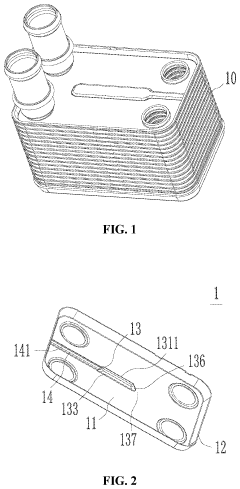
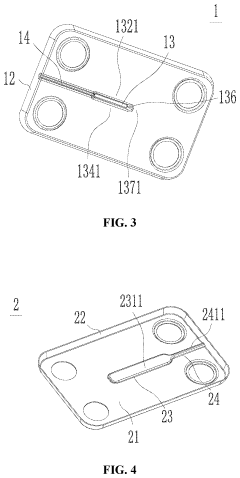
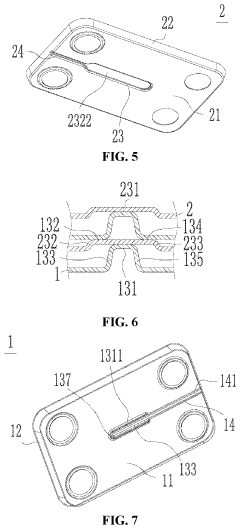
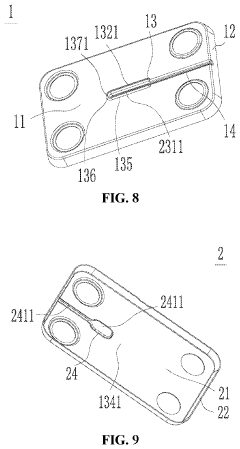
Plate heat exchanger
PatentWO2024060347A1
Innovation
- Design a plate heat exchanger that uses a distribution plate to divide the refrigerant input channel into a first chamber and a second chamber, and builds a heat exchange texture with horizontal and vertical ribs on the plate heat exchange fins. Through the distribution plate and The convex rib structure achieves uniform distribution of fluid and heat exchange, increases the heat exchange area and reduces fluid resistance.


Energy Efficiency Standards and Environmental Regulations
Energy efficiency standards and environmental regulations have become increasingly stringent worldwide, significantly impacting the selection and design of heat exchange technologies. The European Union's Ecodesign Directive and Energy Efficiency Directive mandate specific performance criteria for industrial heat exchangers, while the United States implements similar requirements through ASHRAE standards and EPA regulations. These frameworks establish minimum energy efficiency ratios and maximum environmental impact thresholds that directly influence the comparative viability of plate heat exchangers versus air-cooled exchangers.
Plate heat exchangers typically demonstrate superior compliance with energy efficiency mandates due to their enhanced heat transfer coefficients and reduced energy consumption profiles. Current EU regulations require industrial heat exchangers to achieve minimum effectiveness ratings of 85% for liquid-to-liquid applications, a threshold more readily attainable through plate heat exchanger configurations. The compact design and optimized flow patterns inherent in plate systems enable compliance with space utilization requirements while maintaining regulatory performance standards.
Air-cooled exchangers face mounting regulatory pressure regarding noise pollution and urban heat island effects. Municipal ordinances increasingly restrict sound levels to below 55 dB during daytime operations, necessitating advanced fan control systems and acoustic dampening technologies. Additionally, environmental impact assessments now consider the thermal discharge effects of air-cooled systems on local microclimates, particularly in densely populated areas.
Carbon footprint regulations under international climate agreements further differentiate these technologies. Plate heat exchangers align more effectively with carbon reduction targets through their lower operational energy requirements and reduced refrigerant usage in cooling applications. The upcoming F-gas regulations in Europe will phase down high global warming potential refrigerants, favoring systems with minimal refrigerant charges typical of plate heat exchanger designs.
Emerging regulations also address water conservation and thermal pollution in aquatic environments. Air-cooled exchangers demonstrate advantages in water-scarce regions where regulations limit industrial water consumption. Conversely, plate heat exchangers must comply with increasingly strict thermal discharge limits when utilizing water-based cooling systems, requiring sophisticated temperature control mechanisms to meet environmental protection standards.
Cost-Benefit Analysis Framework for Heat Exchanger Selection
The cost-benefit analysis framework for heat exchanger selection requires a systematic evaluation methodology that encompasses both quantitative financial metrics and qualitative operational factors. This framework serves as a decision-making tool to objectively compare plate heat exchangers and air-cooled exchangers across multiple dimensions, ensuring optimal investment decisions for industrial applications.
The initial capital expenditure analysis forms the foundation of the framework, examining equipment procurement costs, installation expenses, and auxiliary system requirements. Plate heat exchangers typically demonstrate lower initial costs due to their compact design and reduced structural requirements, while air-cooled exchangers often require substantial investments in fan systems, structural supports, and larger plot areas. The framework must account for site-specific factors such as foundation requirements, piping modifications, and electrical infrastructure needs.
Operational expenditure evaluation constitutes the most critical component of long-term cost assessment. Energy consumption patterns differ significantly between the two technologies, with plate heat exchangers requiring pumping power for fluid circulation and air-cooled exchangers demanding substantial electrical power for fan operation. The framework incorporates utility cost projections, seasonal variations in cooling efficiency, and regional climate impacts on performance. Maintenance costs, including routine servicing, cleaning procedures, and component replacement schedules, require detailed analysis based on operating environment conditions.
Performance-based cost modeling integrates thermal efficiency metrics with economic implications. The framework evaluates heat transfer coefficients, approach temperatures, and fouling resistance impacts on operational costs. Plate heat exchangers typically achieve superior heat transfer performance in compact configurations, while air-cooled exchangers offer advantages in applications where water availability or treatment costs are prohibitive.
Risk assessment and lifecycle considerations complete the framework by incorporating reliability factors, technology obsolescence risks, and end-of-life disposal costs. The methodology includes sensitivity analysis for key variables such as energy prices, maintenance cost escalation, and performance degradation over time. This comprehensive approach enables informed decision-making by quantifying the total cost of ownership while considering operational flexibility and future expansion requirements.
Unlock deeper insights with Patsnap Eureka Quick Research — get a full tech report to explore trends and direct your research. Try now!
Generate Your Research Report Instantly with AI Agent
Supercharge your innovation with Patsnap Eureka AI Agent Platform!