

Platforms Offshore vs Subsea Systems: Operational Efficiency Comparison
JUN 12, 20269 MIN READ
Generate Your Research Report Instantly with AI Agent
Patsnap Eureka helps you evaluate technical feasibility & market potential.
Offshore vs Subsea Platform Technology Background and Objectives
The offshore oil and gas industry has undergone significant technological evolution since the 1940s, transitioning from shallow water fixed platforms to sophisticated deepwater and ultra-deepwater systems. This progression has been driven by the depletion of easily accessible reserves and the need to explore increasingly challenging environments. The industry now operates in water depths exceeding 3,000 meters, necessitating advanced engineering solutions and innovative operational approaches.
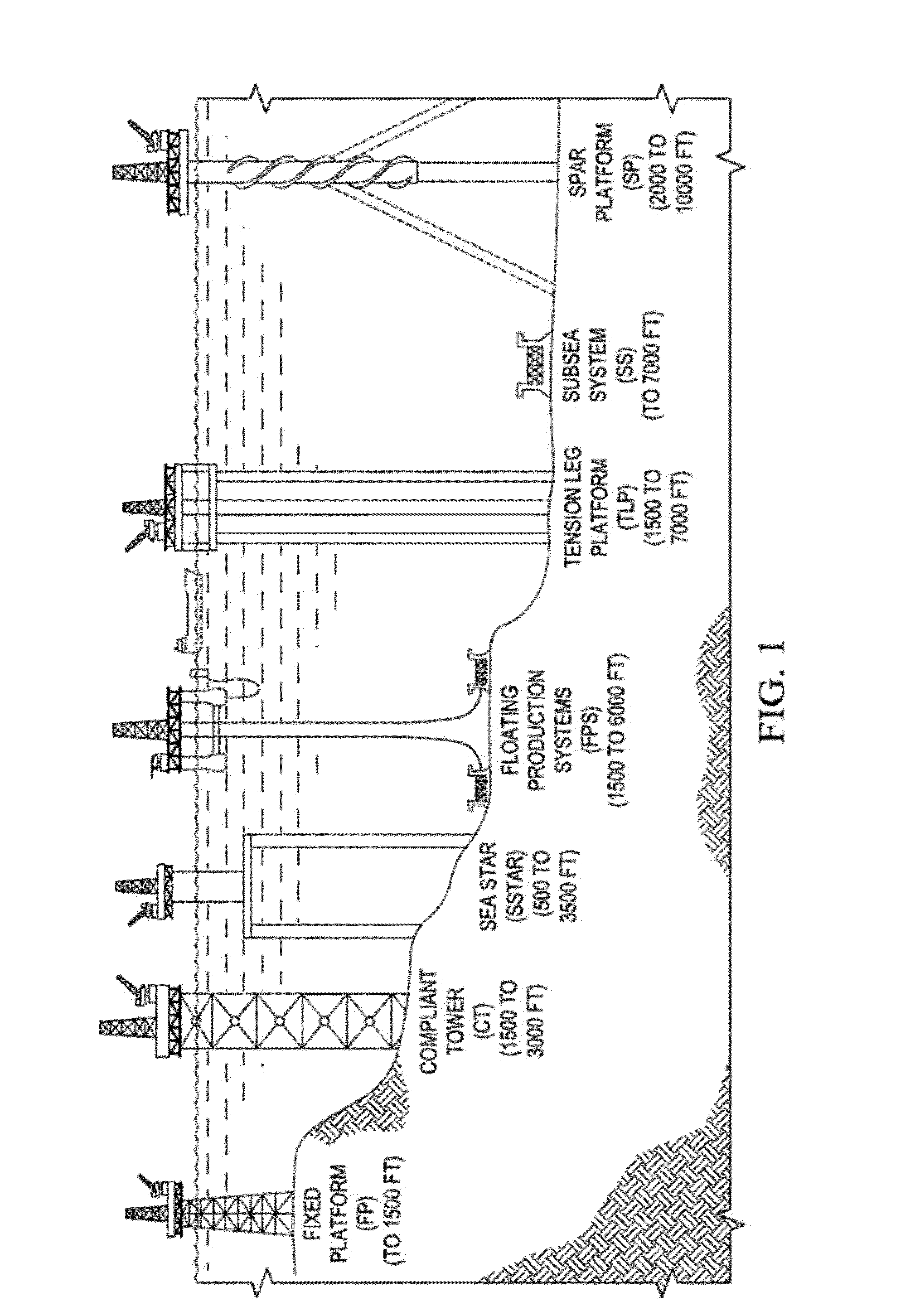
Offshore platform technology encompasses two primary architectural paradigms: surface-based platforms and subsea systems. Surface platforms, including fixed structures, floating production storage and offloading vessels, and semi-submersible rigs, maintain traditional above-water processing capabilities. These systems provide direct human access for maintenance and operations while offering substantial processing capacity and storage capabilities.
Subsea systems represent a paradigm shift toward seafloor-based production infrastructure, eliminating the need for surface platforms in many applications. These systems utilize subsea trees, manifolds, and processing equipment connected via flowlines and umbilicals to distant host facilities or shore-based terminals. The technology enables production from previously inaccessible reserves while reducing surface footprint and environmental impact.
The fundamental objective of comparing operational efficiency between these platforms centers on optimizing total cost of ownership while maximizing production uptime and safety performance. Key efficiency metrics include installation timeframes, maintenance accessibility, production capacity utilization, and lifecycle operational costs. Understanding these comparative advantages enables informed decision-making for field development strategies.
Current industry trends emphasize the integration of digital technologies, autonomous systems, and predictive maintenance capabilities across both platform types. The emergence of subsea processing, artificial lift systems, and remote monitoring technologies has fundamentally altered the operational efficiency landscape, creating new benchmarks for performance evaluation and strategic planning in offshore development projects.
Offshore platform technology encompasses two primary architectural paradigms: surface-based platforms and subsea systems. Surface platforms, including fixed structures, floating production storage and offloading vessels, and semi-submersible rigs, maintain traditional above-water processing capabilities. These systems provide direct human access for maintenance and operations while offering substantial processing capacity and storage capabilities.
Subsea systems represent a paradigm shift toward seafloor-based production infrastructure, eliminating the need for surface platforms in many applications. These systems utilize subsea trees, manifolds, and processing equipment connected via flowlines and umbilicals to distant host facilities or shore-based terminals. The technology enables production from previously inaccessible reserves while reducing surface footprint and environmental impact.
The fundamental objective of comparing operational efficiency between these platforms centers on optimizing total cost of ownership while maximizing production uptime and safety performance. Key efficiency metrics include installation timeframes, maintenance accessibility, production capacity utilization, and lifecycle operational costs. Understanding these comparative advantages enables informed decision-making for field development strategies.
Current industry trends emphasize the integration of digital technologies, autonomous systems, and predictive maintenance capabilities across both platform types. The emergence of subsea processing, artificial lift systems, and remote monitoring technologies has fundamentally altered the operational efficiency landscape, creating new benchmarks for performance evaluation and strategic planning in offshore development projects.
Market Demand Analysis for Offshore and Subsea Systems
The global offshore oil and gas industry continues to drive substantial demand for both platform-based and subsea production systems, with market dynamics increasingly favoring solutions that optimize operational efficiency and reduce lifecycle costs. Traditional offshore platforms maintain strong market presence in shallow to medium water depths, particularly in established regions such as the Gulf of Mexico, North Sea, and Southeast Asia, where existing infrastructure and proven operational models support continued investment.
Subsea systems have experienced accelerated market adoption as operators pursue development opportunities in ultra-deepwater environments where platform installations become economically prohibitive. The technology enables field development in water depths exceeding 1,500 meters, opening previously inaccessible reserves and expanding the addressable market for offshore production. Major oil companies increasingly view subsea solutions as essential for maintaining production growth while managing capital expenditure constraints.
Market demand patterns reveal distinct preferences based on field characteristics and operational requirements. Shallow water developments typically favor platform solutions due to lower installation costs and simplified maintenance access, while deepwater projects increasingly rely on subsea architectures to achieve economic viability. The growing emphasis on tie-back developments, where new discoveries connect to existing infrastructure, has created hybrid demand scenarios requiring both platform modifications and subsea equipment integration.
Regional market variations significantly influence technology selection and demand patterns. Mature offshore regions with established platform infrastructure demonstrate sustained demand for platform enhancement and life extension technologies. Emerging offshore markets, particularly in West Africa, Brazil, and the Eastern Mediterranean, show stronger preference for subsea solutions that minimize surface infrastructure requirements and reduce environmental impact.
The market increasingly demands integrated solutions that combine platform and subsea technologies to optimize field development economics. Operators seek systems that maximize recovery rates while minimizing operational complexity and maintenance requirements. This trend has created growing demand for standardized subsea equipment, modular platform designs, and digital monitoring systems that enhance operational efficiency across both technology categories.
Environmental regulations and sustainability commitments are reshaping market demand toward solutions that reduce carbon footprint and operational emissions. Subsea systems often present advantages in this context by eliminating the need for permanent surface facilities and reducing personnel transportation requirements, while advanced platform designs incorporate electrification and emission reduction technologies to meet evolving regulatory standards.
Subsea systems have experienced accelerated market adoption as operators pursue development opportunities in ultra-deepwater environments where platform installations become economically prohibitive. The technology enables field development in water depths exceeding 1,500 meters, opening previously inaccessible reserves and expanding the addressable market for offshore production. Major oil companies increasingly view subsea solutions as essential for maintaining production growth while managing capital expenditure constraints.
Market demand patterns reveal distinct preferences based on field characteristics and operational requirements. Shallow water developments typically favor platform solutions due to lower installation costs and simplified maintenance access, while deepwater projects increasingly rely on subsea architectures to achieve economic viability. The growing emphasis on tie-back developments, where new discoveries connect to existing infrastructure, has created hybrid demand scenarios requiring both platform modifications and subsea equipment integration.
Regional market variations significantly influence technology selection and demand patterns. Mature offshore regions with established platform infrastructure demonstrate sustained demand for platform enhancement and life extension technologies. Emerging offshore markets, particularly in West Africa, Brazil, and the Eastern Mediterranean, show stronger preference for subsea solutions that minimize surface infrastructure requirements and reduce environmental impact.
The market increasingly demands integrated solutions that combine platform and subsea technologies to optimize field development economics. Operators seek systems that maximize recovery rates while minimizing operational complexity and maintenance requirements. This trend has created growing demand for standardized subsea equipment, modular platform designs, and digital monitoring systems that enhance operational efficiency across both technology categories.
Environmental regulations and sustainability commitments are reshaping market demand toward solutions that reduce carbon footprint and operational emissions. Subsea systems often present advantages in this context by eliminating the need for permanent surface facilities and reducing personnel transportation requirements, while advanced platform designs incorporate electrification and emission reduction technologies to meet evolving regulatory standards.
Current Status and Challenges in Platform Operations
The current operational landscape of offshore platforms reveals a complex ecosystem characterized by mature technologies alongside persistent operational challenges. Fixed platforms, floating production storage and offloading units (FPSOs), and tension leg platforms (TLPs) dominate deepwater operations, with over 7,000 offshore installations globally as of 2024. These systems demonstrate proven reliability in harsh marine environments, yet face mounting pressure to enhance operational efficiency while reducing environmental impact.
Operational efficiency in platform systems currently averages 75-85% uptime across the industry, with significant variations based on platform age, design, and maintenance strategies. Modern platforms incorporate advanced process control systems and real-time monitoring capabilities, enabling operators to optimize production parameters dynamically. However, legacy platforms often struggle with outdated control systems and limited automation, creating operational bottlenecks that impact overall field performance.
Weather-related downtime represents one of the most significant operational challenges, accounting for 15-25% of total production losses in harsh environments. Platform operations require extensive weather windows for maintenance activities, crew transfers, and supply vessel operations. This dependency on favorable weather conditions creates operational inefficiencies, particularly in regions prone to severe weather events such as the North Sea and Gulf of Mexico.
Maintenance complexity poses another critical challenge, as platforms require specialized equipment and personnel for routine and emergency repairs. The logistics of transporting heavy equipment, spare parts, and technical specialists to offshore locations significantly increases operational costs and response times. Planned maintenance shutdowns typically require 7-14 days, during which production ceases entirely, impacting overall field economics.
Crew management and safety protocols add additional operational constraints, with platforms requiring continuous staffing of 20-150 personnel depending on facility size and complexity. Helicopter transportation limitations during adverse weather conditions can strand crews or delay critical operations, further impacting operational efficiency.
Environmental compliance requirements increasingly influence platform operations, with stricter emissions standards and waste management protocols requiring additional operational procedures and monitoring systems. These regulatory demands, while necessary for environmental protection, introduce operational complexity and potential efficiency constraints that operators must carefully balance against production objectives.
Operational efficiency in platform systems currently averages 75-85% uptime across the industry, with significant variations based on platform age, design, and maintenance strategies. Modern platforms incorporate advanced process control systems and real-time monitoring capabilities, enabling operators to optimize production parameters dynamically. However, legacy platforms often struggle with outdated control systems and limited automation, creating operational bottlenecks that impact overall field performance.
Weather-related downtime represents one of the most significant operational challenges, accounting for 15-25% of total production losses in harsh environments. Platform operations require extensive weather windows for maintenance activities, crew transfers, and supply vessel operations. This dependency on favorable weather conditions creates operational inefficiencies, particularly in regions prone to severe weather events such as the North Sea and Gulf of Mexico.
Maintenance complexity poses another critical challenge, as platforms require specialized equipment and personnel for routine and emergency repairs. The logistics of transporting heavy equipment, spare parts, and technical specialists to offshore locations significantly increases operational costs and response times. Planned maintenance shutdowns typically require 7-14 days, during which production ceases entirely, impacting overall field economics.
Crew management and safety protocols add additional operational constraints, with platforms requiring continuous staffing of 20-150 personnel depending on facility size and complexity. Helicopter transportation limitations during adverse weather conditions can strand crews or delay critical operations, further impacting operational efficiency.
Environmental compliance requirements increasingly influence platform operations, with stricter emissions standards and waste management protocols requiring additional operational procedures and monitoring systems. These regulatory demands, while necessary for environmental protection, introduce operational complexity and potential efficiency constraints that operators must carefully balance against production objectives.
Current Operational Efficiency Solutions
01 Automated monitoring and control systems for offshore operations
Implementation of advanced automated monitoring and control systems to enhance operational efficiency in offshore platforms and subsea systems. These systems utilize real-time data collection, sensor networks, and automated response mechanisms to optimize performance, reduce human intervention, and minimize operational risks. The technology enables continuous monitoring of critical parameters and automatic adjustments to maintain optimal operating conditions.- Automated monitoring and control systems for offshore operations: Implementation of advanced automated systems that continuously monitor operational parameters and provide real-time control capabilities for offshore platforms and subsea equipment. These systems utilize sensors, data analytics, and automated response mechanisms to optimize performance, reduce human intervention requirements, and enhance overall operational efficiency through predictive maintenance and autonomous decision-making processes.
- Enhanced subsea production and flow management systems: Advanced technologies for optimizing subsea production flows and managing fluid dynamics in underwater environments. These systems focus on improving flow rates, reducing pressure losses, and maximizing hydrocarbon recovery through innovative valve designs, flow control mechanisms, and production optimization algorithms that adapt to changing reservoir conditions and operational requirements.
- Structural integrity and maintenance optimization technologies: Technologies designed to enhance the structural performance and maintenance efficiency of offshore platforms and subsea infrastructure. These solutions include advanced materials, corrosion protection systems, structural health monitoring, and predictive maintenance strategies that extend equipment lifespan, reduce downtime, and optimize maintenance scheduling through data-driven approaches.
- Power generation and energy management systems: Innovative power generation and energy distribution solutions specifically designed for offshore and subsea applications. These systems focus on improving energy efficiency, reducing fuel consumption, and providing reliable power supply through renewable energy integration, advanced power management algorithms, and optimized electrical distribution networks that support continuous operations in harsh marine environments.
- Digital twin and data analytics platforms: Advanced digital modeling and analytics platforms that create virtual representations of offshore and subsea systems to optimize operational performance. These platforms integrate real-time data collection, machine learning algorithms, and simulation capabilities to enable predictive analytics, performance optimization, and decision support systems that enhance operational efficiency through data-driven insights and virtual testing scenarios.
02 Subsea equipment maintenance and inspection technologies
Advanced technologies for maintenance and inspection of subsea equipment to improve operational efficiency and extend equipment lifespan. These solutions include remotely operated inspection systems, predictive maintenance algorithms, and specialized tools for underwater operations. The technologies enable proactive maintenance scheduling, early fault detection, and reduced downtime for subsea systems.Expand Specific Solutions03 Flow assurance and production optimization systems
Systems and methods for optimizing flow assurance and production efficiency in offshore and subsea operations. These technologies focus on managing fluid flow, preventing blockages, optimizing production rates, and ensuring continuous operation of production systems. The solutions incorporate advanced modeling, real-time monitoring, and control strategies to maximize production output while maintaining system integrity.Expand Specific Solutions04 Digital twin and simulation technologies for operational planning
Implementation of digital twin technologies and advanced simulation systems for operational planning and optimization of offshore platforms and subsea systems. These technologies create virtual replicas of physical systems to enable predictive analysis, scenario planning, and optimization of operational parameters. The solutions support decision-making processes and help identify potential issues before they occur in real operations.Expand Specific Solutions05 Energy management and power distribution optimization
Advanced energy management and power distribution systems designed to optimize energy consumption and improve operational efficiency in offshore and subsea environments. These systems focus on efficient power generation, distribution, and consumption management, including integration of renewable energy sources and energy storage solutions. The technologies enable reduced operational costs and improved environmental performance.Expand Specific Solutions
Major Players in Offshore and Subsea Industry
The offshore versus subsea systems comparison represents a mature industry segment within the broader oil and gas sector, currently valued at approximately $150-200 billion globally and experiencing steady growth driven by deepwater exploration demands. The competitive landscape features established energy majors like ConocoPhillips, Saudi Arabian Oil, and TotalEnergies alongside specialized service providers such as Oceaneering International, Halliburton Energy Services, and OneSubsea IP UK, indicating high technological maturity with incremental innovations focused on operational efficiency improvements. Asian manufacturers including Yantai CIMC Raffles Offshore and China Ship Scientific Research Center are increasingly challenging Western dominance through cost-competitive solutions, while technology integrators like Siemens Energy and IHI Corp are advancing digitalization and automation capabilities, suggesting the industry is transitioning from traditional engineering approaches toward smart, data-driven operational optimization systems.
OneSubsea IP UK Ltd.
Technical Solution: OneSubsea specializes in integrated subsea production systems that maximize operational efficiency through advanced subsea processing technologies. Their subsea systems eliminate the need for topside facilities by processing oil and gas directly on the seabed, reducing operational complexity and maintenance requirements. The company's subsea boosting and compression systems enhance production rates by up to 30% compared to traditional offshore platforms. Their modular subsea architecture allows for flexible field development with reduced installation time and lower lifecycle costs. OneSubsea's digital twin technology enables real-time monitoring and predictive maintenance, significantly improving system reliability and reducing unplanned downtime by approximately 25%.
Strengths: Advanced subsea processing capabilities, reduced topside infrastructure requirements, enhanced production efficiency. Weaknesses: Higher initial capital investment, complex subsea intervention procedures, limited accessibility for maintenance operations.
Halliburton Energy Services, Inc.
Technical Solution: Halliburton provides comprehensive offshore and subsea solutions focusing on operational efficiency optimization through integrated project management and advanced drilling technologies. Their offshore platform solutions incorporate automated drilling systems that reduce operational time by 20-35% while maintaining safety standards. For subsea systems, Halliburton offers intelligent completion technologies that enable remote well control and optimization without platform intervention. Their digital oilfield solutions integrate real-time data analytics to optimize production across both platform and subsea environments. The company's modular approach allows operators to choose between platform-based and subsea configurations based on field-specific requirements, with subsea options typically offering 15-20% lower operational expenditure over the field lifecycle.
Strengths: Integrated project delivery, proven track record in both offshore and subsea operations, advanced automation technologies. Weaknesses: Dependency on third-party subsea hardware, higher service costs, limited proprietary subsea processing equipment.
Core Technologies for Platform Efficiency Optimization
Floatable subsea platform (FSP)
PatentActiveUS20150225043A1
Innovation
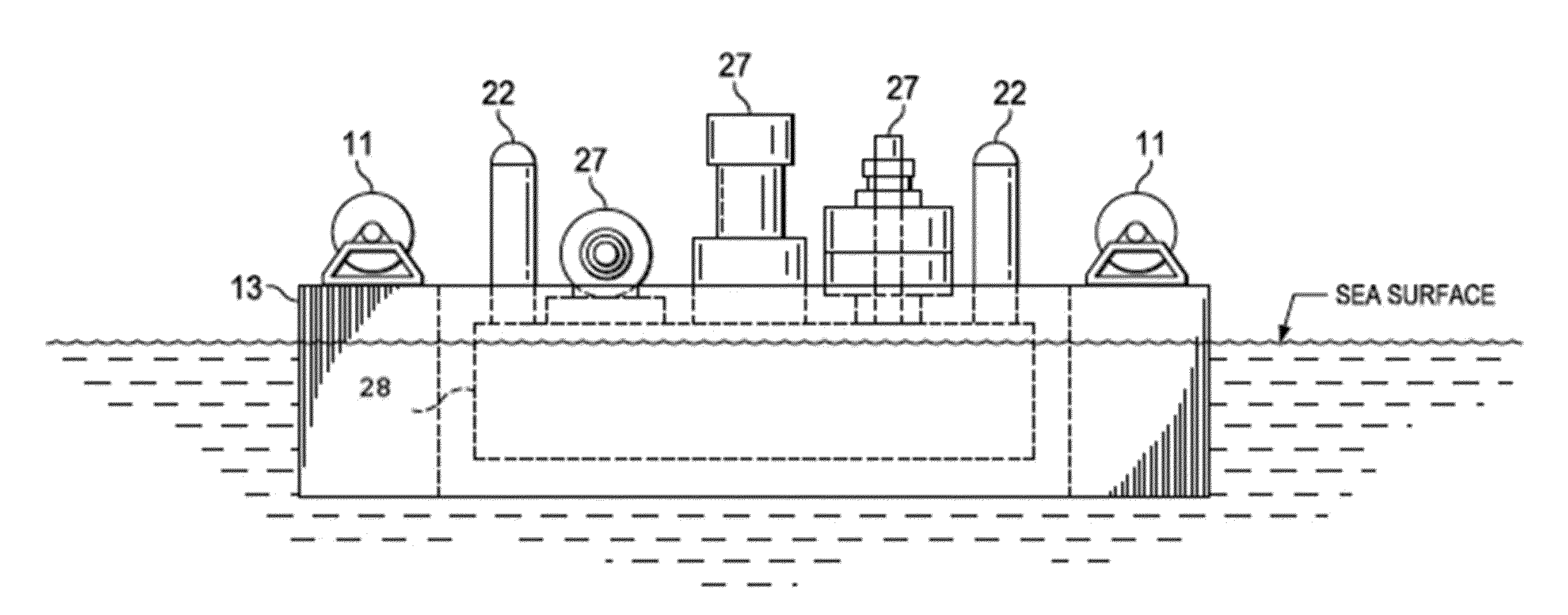
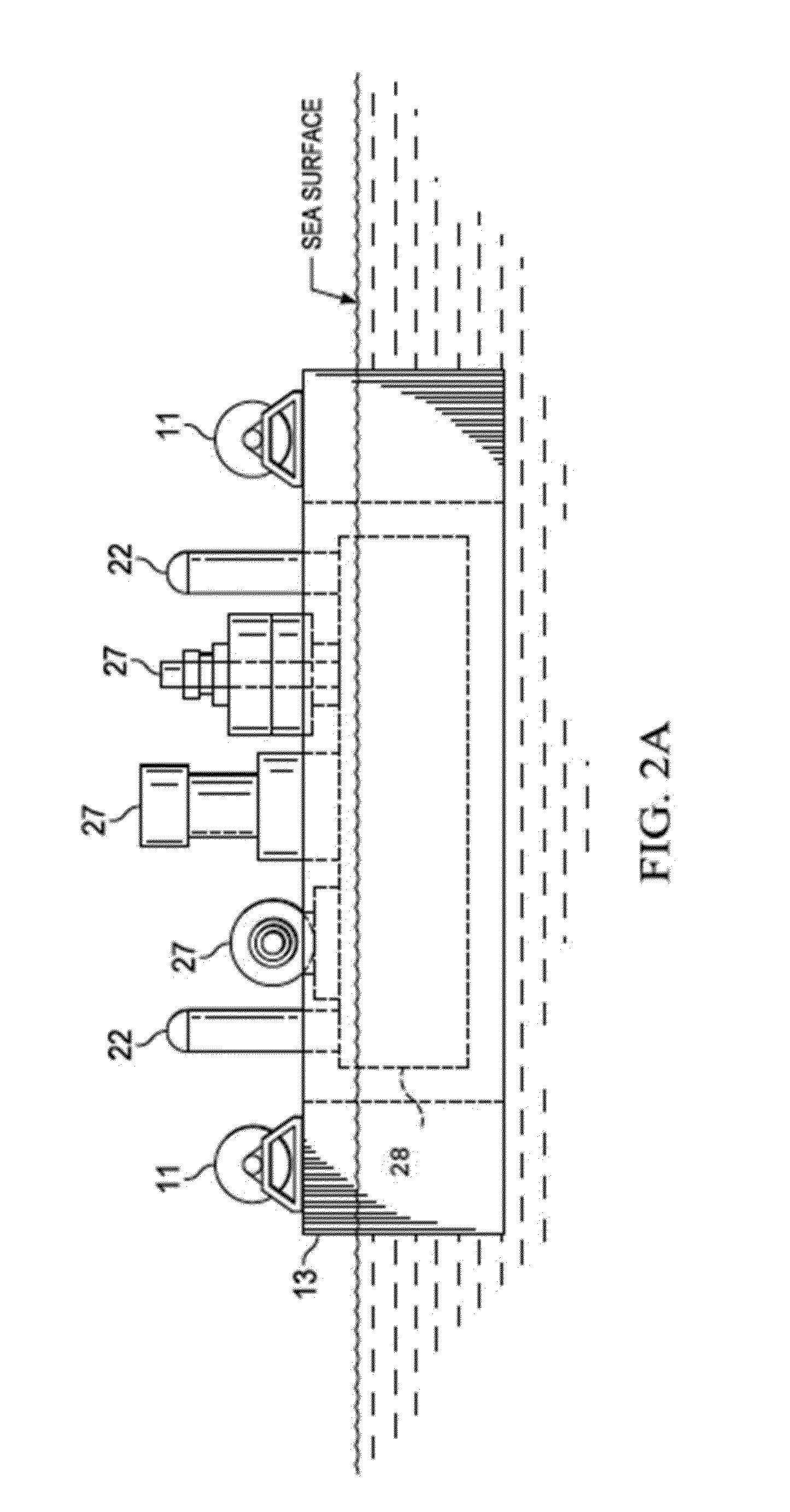
- A modular subsea facility with a buoyancy system and buoyancy control assembly allows for independent floatation and lowering of modules, enabling assembly into a floatable subsea platform that can be installed with minimal use of large cranes and ROVs, and allows for surface testing and repair, reducing installation trips and costs.

An offshore top site system
PatentWO2013189496A1
Innovation
- The system employs a catenary riser section and a top site section connected via a pivotal connection portion to a floating unit, where the catenary riser section is at least 1500m long and includes a metal or flexible section, and the connection portion is pivotally connected to alleviate loads from heave, sway, and angular motions, reducing the risk of fatigue and the need for expensive mechanical equipment.


Environmental Regulations for Offshore Operations
The offshore oil and gas industry operates under an increasingly complex web of environmental regulations that significantly impact the operational efficiency comparison between platform-based and subsea systems. These regulatory frameworks have evolved substantially over the past decades, driven by heightened environmental awareness and several high-profile incidents that underscored the need for stricter oversight.
International regulatory bodies, including the International Maritime Organization (IMO) and regional authorities such as the Bureau of Safety and Environmental Enforcement (BSEE) in the United States, the Petroleum Safety Authority Norway (PSA), and the UK's Health and Safety Executive (HSE), have established comprehensive guidelines governing offshore operations. These regulations encompass emissions control, waste management, marine ecosystem protection, and operational safety standards that directly influence system design and operational protocols.
Platform-based systems face distinct regulatory challenges compared to subsea installations. Surface platforms must comply with stringent air quality standards, including NOx and SOx emission limits, flare gas regulations, and volatile organic compound (VOC) controls. The visibility of platform operations subjects them to enhanced scrutiny regarding environmental impact, requiring comprehensive environmental impact assessments and continuous monitoring systems. Additionally, platforms must adhere to ballast water treatment regulations, marine discharge permits, and noise pollution controls that affect marine life.
Subsea systems, while less visible, encounter their own regulatory complexities. Seabed disturbance regulations require detailed environmental surveys and impact mitigation strategies. Chemical usage restrictions for subsea operations, particularly regarding corrosion inhibitors and hydraulic fluids, necessitate careful selection of environmentally compatible materials. The challenge of monitoring and maintaining subsea equipment compliance adds operational complexity and cost considerations.
Recent regulatory trends emphasize carbon footprint reduction and methane emission controls, favoring systems with lower environmental impact profiles. The European Union's Green Deal and similar initiatives worldwide are pushing for accelerated adoption of cleaner technologies, potentially altering the operational efficiency equation between platform and subsea systems. Compliance costs, regulatory approval timelines, and operational restrictions increasingly influence technology selection decisions, making environmental regulatory compliance a critical factor in determining overall system efficiency and economic viability.
International regulatory bodies, including the International Maritime Organization (IMO) and regional authorities such as the Bureau of Safety and Environmental Enforcement (BSEE) in the United States, the Petroleum Safety Authority Norway (PSA), and the UK's Health and Safety Executive (HSE), have established comprehensive guidelines governing offshore operations. These regulations encompass emissions control, waste management, marine ecosystem protection, and operational safety standards that directly influence system design and operational protocols.
Platform-based systems face distinct regulatory challenges compared to subsea installations. Surface platforms must comply with stringent air quality standards, including NOx and SOx emission limits, flare gas regulations, and volatile organic compound (VOC) controls. The visibility of platform operations subjects them to enhanced scrutiny regarding environmental impact, requiring comprehensive environmental impact assessments and continuous monitoring systems. Additionally, platforms must adhere to ballast water treatment regulations, marine discharge permits, and noise pollution controls that affect marine life.
Subsea systems, while less visible, encounter their own regulatory complexities. Seabed disturbance regulations require detailed environmental surveys and impact mitigation strategies. Chemical usage restrictions for subsea operations, particularly regarding corrosion inhibitors and hydraulic fluids, necessitate careful selection of environmentally compatible materials. The challenge of monitoring and maintaining subsea equipment compliance adds operational complexity and cost considerations.
Recent regulatory trends emphasize carbon footprint reduction and methane emission controls, favoring systems with lower environmental impact profiles. The European Union's Green Deal and similar initiatives worldwide are pushing for accelerated adoption of cleaner technologies, potentially altering the operational efficiency equation between platform and subsea systems. Compliance costs, regulatory approval timelines, and operational restrictions increasingly influence technology selection decisions, making environmental regulatory compliance a critical factor in determining overall system efficiency and economic viability.
Cost-Benefit Analysis of Platform Selection Strategies
The cost-benefit analysis of platform selection strategies in offshore oil and gas operations requires a comprehensive evaluation framework that considers both immediate capital expenditures and long-term operational implications. Traditional offshore platforms typically demand substantial upfront investments ranging from $500 million to $3 billion depending on water depth and field complexity, while subsea systems generally require lower initial capital but involve higher operational complexity costs.
Capital expenditure patterns differ significantly between the two approaches. Fixed platforms demonstrate economies of scale in large field developments, where the high initial investment can be amortized across multiple wells and extended production periods. Conversely, subsea systems offer modular deployment advantages, allowing phased development that aligns capital spending with production revenue streams and reduces financial risk exposure.
Operational expenditure analysis reveals contrasting cost structures over the asset lifecycle. Platform-based systems benefit from centralized maintenance capabilities and direct personnel access, resulting in predictable maintenance schedules and lower per-intervention costs. However, they incur continuous operational overhead including accommodation, utilities, and permanent staffing. Subsea systems eliminate platform operational costs but require specialized intervention vessels and remotely operated vehicles, leading to higher individual maintenance event costs but potentially lower overall operational expenditure in smaller field developments.
Risk-adjusted return calculations must incorporate technical reliability factors and operational availability metrics. Platform systems typically achieve 95-98% uptime due to immediate maintenance access, while subsea systems may experience 90-95% availability due to weather-dependent intervention capabilities. This availability differential directly impacts revenue generation and must be factored into net present value calculations.
Field-specific economic drivers significantly influence optimal platform selection strategies. Water depth represents a critical threshold, with subsea systems becoming increasingly cost-competitive beyond 1,000 meters where platform installation costs escalate exponentially. Reserve size and production duration also determine economic viability, as platforms require minimum production volumes to justify fixed costs while subsea systems remain economically viable for smaller reserves.
The analysis framework should incorporate sensitivity testing across oil price scenarios, as platform systems with higher fixed costs demonstrate greater leverage to commodity price fluctuations. Additionally, decommissioning cost provisions must be evaluated, as platform removal typically requires larger financial reserves compared to subsea infrastructure recovery, affecting overall project economics and investment attractiveness.
Capital expenditure patterns differ significantly between the two approaches. Fixed platforms demonstrate economies of scale in large field developments, where the high initial investment can be amortized across multiple wells and extended production periods. Conversely, subsea systems offer modular deployment advantages, allowing phased development that aligns capital spending with production revenue streams and reduces financial risk exposure.
Operational expenditure analysis reveals contrasting cost structures over the asset lifecycle. Platform-based systems benefit from centralized maintenance capabilities and direct personnel access, resulting in predictable maintenance schedules and lower per-intervention costs. However, they incur continuous operational overhead including accommodation, utilities, and permanent staffing. Subsea systems eliminate platform operational costs but require specialized intervention vessels and remotely operated vehicles, leading to higher individual maintenance event costs but potentially lower overall operational expenditure in smaller field developments.
Risk-adjusted return calculations must incorporate technical reliability factors and operational availability metrics. Platform systems typically achieve 95-98% uptime due to immediate maintenance access, while subsea systems may experience 90-95% availability due to weather-dependent intervention capabilities. This availability differential directly impacts revenue generation and must be factored into net present value calculations.
Field-specific economic drivers significantly influence optimal platform selection strategies. Water depth represents a critical threshold, with subsea systems becoming increasingly cost-competitive beyond 1,000 meters where platform installation costs escalate exponentially. Reserve size and production duration also determine economic viability, as platforms require minimum production volumes to justify fixed costs while subsea systems remain economically viable for smaller reserves.
The analysis framework should incorporate sensitivity testing across oil price scenarios, as platform systems with higher fixed costs demonstrate greater leverage to commodity price fluctuations. Additionally, decommissioning cost provisions must be evaluated, as platform removal typically requires larger financial reserves compared to subsea infrastructure recovery, affecting overall project economics and investment attractiveness.
Unlock deeper insights with Patsnap Eureka Quick Research — get a full tech report to explore trends and direct your research. Try now!
Generate Your Research Report Instantly with AI Agent
Supercharge your innovation with Patsnap Eureka AI Agent Platform!