

Polycaprolactone vs Nylon-6: Application in Wearables
MAR 12, 20269 MIN READ
Generate Your Research Report Instantly with AI Agent
PatSnap Eureka helps you evaluate technical feasibility & market potential.
PCL vs Nylon-6 Material Background and Wearable Goals
Polycaprolactone (PCL) and Nylon-6 represent two distinct polymer families that have emerged as significant materials in the evolution of wearable technology. PCL, a biodegradable aliphatic polyester, was first synthesized in the 1930s but gained prominence in biomedical applications during the 1980s due to its biocompatibility and controlled degradation properties. Its low melting point of approximately 60°C and excellent processability have made it increasingly attractive for flexible electronics and temporary medical devices.
Nylon-6, developed by Paul Schlack in 1938 as an alternative to DuPont's Nylon-66, has established itself as a cornerstone material in textile and engineering applications. Its superior mechanical strength, chemical resistance, and thermal stability have driven its adoption across diverse industries, from automotive components to high-performance sportswear.
The convergence of these materials in wearable technology reflects the industry's evolution from rigid, bulky devices to seamless, body-integrated systems. Early wearable devices primarily relied on traditional rigid substrates and conventional textiles, limiting their comfort and functionality. The integration of advanced polymers like PCL and Nylon-6 has enabled the development of flexible circuits, stretchable sensors, and comfortable form factors that can withstand daily wear conditions.
Current technological objectives in wearable applications center on achieving optimal balance between mechanical performance, user comfort, and functional integration. For PCL, the primary goals include leveraging its low-temperature processability for direct printing of electronic circuits onto flexible substrates, utilizing its biocompatibility for skin-contact applications, and exploiting its biodegradable nature for sustainable wearable solutions.
Nylon-6 applications focus on maximizing its mechanical durability for long-term wearable reliability, capitalizing on its moisture management properties for athletic and medical monitoring devices, and utilizing its chemical resistance for harsh environment applications. The material's ability to be processed into ultra-fine fibers enables the creation of smart textiles with embedded sensing capabilities.
The strategic importance of comparing these materials lies in addressing the fundamental trade-offs between temporary versus permanent wearable solutions, rigid versus flexible device architectures, and sustainable versus high-performance material choices. This comparison drives innovation toward hybrid material systems and processing techniques that can combine the advantageous properties of both polymers while mitigating their individual limitations.
Nylon-6, developed by Paul Schlack in 1938 as an alternative to DuPont's Nylon-66, has established itself as a cornerstone material in textile and engineering applications. Its superior mechanical strength, chemical resistance, and thermal stability have driven its adoption across diverse industries, from automotive components to high-performance sportswear.
The convergence of these materials in wearable technology reflects the industry's evolution from rigid, bulky devices to seamless, body-integrated systems. Early wearable devices primarily relied on traditional rigid substrates and conventional textiles, limiting their comfort and functionality. The integration of advanced polymers like PCL and Nylon-6 has enabled the development of flexible circuits, stretchable sensors, and comfortable form factors that can withstand daily wear conditions.
Current technological objectives in wearable applications center on achieving optimal balance between mechanical performance, user comfort, and functional integration. For PCL, the primary goals include leveraging its low-temperature processability for direct printing of electronic circuits onto flexible substrates, utilizing its biocompatibility for skin-contact applications, and exploiting its biodegradable nature for sustainable wearable solutions.
Nylon-6 applications focus on maximizing its mechanical durability for long-term wearable reliability, capitalizing on its moisture management properties for athletic and medical monitoring devices, and utilizing its chemical resistance for harsh environment applications. The material's ability to be processed into ultra-fine fibers enables the creation of smart textiles with embedded sensing capabilities.
The strategic importance of comparing these materials lies in addressing the fundamental trade-offs between temporary versus permanent wearable solutions, rigid versus flexible device architectures, and sustainable versus high-performance material choices. This comparison drives innovation toward hybrid material systems and processing techniques that can combine the advantageous properties of both polymers while mitigating their individual limitations.
Market Demand for Advanced Wearable Materials
The global wearable technology market continues to experience unprecedented growth, driven by increasing consumer adoption of fitness trackers, smartwatches, and health monitoring devices. This expansion has created substantial demand for advanced materials that can meet the unique requirements of wearable applications, including flexibility, durability, biocompatibility, and comfort during extended wear periods.
Consumer expectations for wearable devices have evolved significantly, with users demanding products that seamlessly integrate into their daily lives without compromising functionality or comfort. The market increasingly favors materials that offer superior tactile properties, moisture management capabilities, and resistance to environmental factors such as sweat, UV exposure, and temperature variations. These requirements have intensified the focus on high-performance polymeric materials like polycaprolactone and nylon-6.
Healthcare and medical wearables represent one of the fastest-growing segments, where material selection becomes critical for patient safety and device efficacy. The demand for biocompatible materials that can maintain structural integrity while providing skin-friendly interfaces has reached new heights. Medical-grade wearables require materials that demonstrate excellent chemical resistance, sterilization compatibility, and long-term stability under physiological conditions.
The sports and fitness sector drives significant demand for materials offering enhanced mechanical properties and durability. Athletes and fitness enthusiasts require wearable devices that can withstand intense physical activities while maintaining accurate sensor performance. This market segment particularly values materials with superior impact resistance, flexibility retention, and the ability to maintain dimensional stability under stress.
Fashion-forward consumers are increasingly influencing material selection criteria, demanding wearables that combine technical performance with aesthetic appeal. The market shows growing preference for materials that enable sleek designs, customizable appearances, and integration with various textile substrates. This trend has accelerated development of materials that can be easily processed into complex geometries while maintaining their functional properties.
Sustainability concerns are reshaping market demand patterns, with consumers and manufacturers prioritizing environmentally responsible material choices. The wearable industry faces increasing pressure to adopt materials with favorable end-of-life characteristics, reduced environmental impact during production, and potential for circular economy integration. This shift influences material selection decisions and drives innovation toward more sustainable polymer solutions.
Manufacturing scalability and cost-effectiveness remain crucial market drivers, particularly as wearable devices transition from premium products to mass-market commodities. The demand for materials that can be efficiently processed using established manufacturing techniques while maintaining consistent quality standards continues to grow, influencing the comparative evaluation of different polymeric options for wearable applications.
Consumer expectations for wearable devices have evolved significantly, with users demanding products that seamlessly integrate into their daily lives without compromising functionality or comfort. The market increasingly favors materials that offer superior tactile properties, moisture management capabilities, and resistance to environmental factors such as sweat, UV exposure, and temperature variations. These requirements have intensified the focus on high-performance polymeric materials like polycaprolactone and nylon-6.
Healthcare and medical wearables represent one of the fastest-growing segments, where material selection becomes critical for patient safety and device efficacy. The demand for biocompatible materials that can maintain structural integrity while providing skin-friendly interfaces has reached new heights. Medical-grade wearables require materials that demonstrate excellent chemical resistance, sterilization compatibility, and long-term stability under physiological conditions.
The sports and fitness sector drives significant demand for materials offering enhanced mechanical properties and durability. Athletes and fitness enthusiasts require wearable devices that can withstand intense physical activities while maintaining accurate sensor performance. This market segment particularly values materials with superior impact resistance, flexibility retention, and the ability to maintain dimensional stability under stress.
Fashion-forward consumers are increasingly influencing material selection criteria, demanding wearables that combine technical performance with aesthetic appeal. The market shows growing preference for materials that enable sleek designs, customizable appearances, and integration with various textile substrates. This trend has accelerated development of materials that can be easily processed into complex geometries while maintaining their functional properties.
Sustainability concerns are reshaping market demand patterns, with consumers and manufacturers prioritizing environmentally responsible material choices. The wearable industry faces increasing pressure to adopt materials with favorable end-of-life characteristics, reduced environmental impact during production, and potential for circular economy integration. This shift influences material selection decisions and drives innovation toward more sustainable polymer solutions.
Manufacturing scalability and cost-effectiveness remain crucial market drivers, particularly as wearable devices transition from premium products to mass-market commodities. The demand for materials that can be efficiently processed using established manufacturing techniques while maintaining consistent quality standards continues to grow, influencing the comparative evaluation of different polymeric options for wearable applications.
Current State of PCL and Nylon-6 in Wearable Applications
Polycaprolactone (PCL) has established a significant presence in the wearable technology sector, particularly in biomedical applications. Currently, PCL is extensively utilized in flexible sensors, smart bandages, and temporary implantable devices due to its biodegradable properties and excellent biocompatibility. The material's low melting point of approximately 60°C enables easy processing through 3D printing and electrospinning, making it attractive for rapid prototyping of wearable components. Major applications include drug delivery patches, wound monitoring systems, and temporary electronic tattoos for health monitoring.
Nylon-6 dominates the structural components of wearable devices, leveraging its superior mechanical strength and durability. The polymer is widely implemented in smartwatch bands, fitness tracker housings, and textile-integrated electronics. Its excellent chemical resistance and dimensional stability make it ideal for long-term wearable applications exposed to sweat, moisture, and mechanical stress. Current manufacturing processes for Nylon-6 wearables include injection molding, fiber spinning, and additive manufacturing techniques.
The integration challenges between these materials present significant technical hurdles. PCL's thermal sensitivity limits its compatibility with high-temperature processing required for Nylon-6 components. Current solutions involve multi-step manufacturing processes where components are fabricated separately and assembled using mechanical fasteners or low-temperature adhesives. This approach increases production complexity and manufacturing costs.
Recent developments show promising hybrid applications where PCL serves as a temporary substrate for electronic components while Nylon-6 provides structural integrity. Smart clothing applications utilize Nylon-6 fibers as the base textile with PCL-encapsulated sensors that can dissolve after predetermined periods, enabling disposable health monitoring systems.
Manufacturing scalability remains a critical constraint for both materials in wearable applications. PCL processing requires controlled environments to prevent premature degradation, while Nylon-6 demands high-temperature equipment that increases energy consumption. Current production volumes are limited by specialized equipment requirements and quality control challenges specific to wearable device miniaturization demands.
The regulatory landscape significantly impacts material selection, particularly for health-monitoring wearables. PCL benefits from established FDA approval pathways for biomedical applications, while Nylon-6 faces stricter scrutiny for skin-contact applications due to potential allergenic concerns from residual monomers.
Nylon-6 dominates the structural components of wearable devices, leveraging its superior mechanical strength and durability. The polymer is widely implemented in smartwatch bands, fitness tracker housings, and textile-integrated electronics. Its excellent chemical resistance and dimensional stability make it ideal for long-term wearable applications exposed to sweat, moisture, and mechanical stress. Current manufacturing processes for Nylon-6 wearables include injection molding, fiber spinning, and additive manufacturing techniques.
The integration challenges between these materials present significant technical hurdles. PCL's thermal sensitivity limits its compatibility with high-temperature processing required for Nylon-6 components. Current solutions involve multi-step manufacturing processes where components are fabricated separately and assembled using mechanical fasteners or low-temperature adhesives. This approach increases production complexity and manufacturing costs.
Recent developments show promising hybrid applications where PCL serves as a temporary substrate for electronic components while Nylon-6 provides structural integrity. Smart clothing applications utilize Nylon-6 fibers as the base textile with PCL-encapsulated sensors that can dissolve after predetermined periods, enabling disposable health monitoring systems.
Manufacturing scalability remains a critical constraint for both materials in wearable applications. PCL processing requires controlled environments to prevent premature degradation, while Nylon-6 demands high-temperature equipment that increases energy consumption. Current production volumes are limited by specialized equipment requirements and quality control challenges specific to wearable device miniaturization demands.
The regulatory landscape significantly impacts material selection, particularly for health-monitoring wearables. PCL benefits from established FDA approval pathways for biomedical applications, while Nylon-6 faces stricter scrutiny for skin-contact applications due to potential allergenic concerns from residual monomers.
Existing PCL and Nylon-6 Solutions for Wearables
01 Polymer blends and composites combining polycaprolactone and nylon-6
Polymer blends and composite materials can be formulated by combining polycaprolactone with nylon-6 to achieve synergistic properties. These blends can offer improved mechanical strength, flexibility, and processability compared to individual polymers. The compatibility and miscibility of these two polymers can be enhanced through various compatibilization techniques, resulting in materials with balanced properties suitable for diverse applications.- Polymer blends and composites combining polycaprolactone and nylon-6: Polymer blends and composite materials can be formulated by combining polycaprolactone with nylon-6 to achieve synergistic properties. These blends can offer improved mechanical strength, flexibility, and processability compared to individual polymers. The compatibility and miscibility of these two polymers can be enhanced through various compatibilization techniques, resulting in materials with tailored properties for specific applications.
- Biodegradability and environmental properties comparison: Polycaprolactone exhibits superior biodegradability compared to nylon-6, making it more suitable for environmentally friendly applications. The degradation behavior, rate, and mechanisms differ significantly between these two polymers. Polycaprolactone can be broken down by microorganisms in various environments, while nylon-6 shows limited biodegradability. This difference makes polycaprolactone preferable for applications requiring environmental sustainability and reduced ecological impact.
- Mechanical properties and structural characteristics: The mechanical properties of polycaprolactone and nylon-6 differ substantially in terms of tensile strength, elongation, crystallinity, and thermal behavior. Nylon-6 typically exhibits higher tensile strength and better thermal stability, while polycaprolactone offers greater flexibility and lower melting point. The crystalline structure, molecular weight, and processing conditions significantly influence the final mechanical performance of both polymers. These differences determine their suitability for various industrial applications.
- Biomedical and tissue engineering applications: Both polymers find applications in biomedical fields, but with different advantages. Polycaprolactone is widely used in tissue engineering scaffolds, drug delivery systems, and biodegradable sutures due to its biocompatibility and controlled degradation. Nylon-6 is utilized in medical devices and surgical applications requiring higher mechanical strength. The selection between these polymers depends on specific requirements such as degradation rate, mechanical support duration, and biocompatibility needs.
- Processing methods and manufacturing techniques: The processing and manufacturing approaches for polycaprolactone and nylon-6 vary due to their different thermal and rheological properties. Polycaprolactone can be processed at lower temperatures through methods such as melt spinning, electrospinning, and 3D printing. Nylon-6 requires higher processing temperatures and is commonly manufactured through melt polymerization and extrusion. The choice of processing method affects the final product morphology, fiber structure, and overall performance characteristics.
02 Biodegradability and environmental characteristics comparison
Polycaprolactone exhibits superior biodegradability compared to nylon-6, making it more environmentally friendly for applications requiring degradation. The biodegradation rate, mechanism, and environmental impact of these polymers differ significantly. Polycaprolactone can be broken down by microorganisms in various environments, while nylon-6 shows limited biodegradability. This distinction is crucial for selecting appropriate materials for sustainable applications and waste management considerations.Expand Specific Solutions03 Mechanical properties and performance characteristics
The mechanical properties of polycaprolactone and nylon-6 differ substantially in terms of tensile strength, elongation, modulus, and impact resistance. Nylon-6 typically exhibits higher tensile strength and stiffness, while polycaprolactone offers greater flexibility and elongation at break. These distinct mechanical characteristics make each polymer suitable for different applications. Various modification techniques can be employed to enhance specific mechanical properties of either polymer to meet particular performance requirements.Expand Specific Solutions04 Processing methods and manufacturing techniques
Different processing methods and manufacturing techniques are employed for polycaprolactone and nylon-6 due to their distinct thermal and rheological properties. Processing parameters such as temperature, pressure, and cooling rates must be optimized differently for each polymer. Various fabrication techniques including extrusion, injection molding, electrospinning, and 3D printing can be adapted for both materials with specific parameter adjustments. Understanding the processing characteristics is essential for achieving desired product quality and performance.Expand Specific Solutions05 Application fields and functional modifications
Polycaprolactone and nylon-6 serve different application fields based on their unique properties. Applications range from biomedical devices, tissue engineering, and drug delivery systems to textile fibers, engineering plastics, and packaging materials. Functional modifications through copolymerization, surface treatment, or additive incorporation can expand the application scope of both polymers. The selection between these materials depends on specific requirements such as biocompatibility, mechanical performance, chemical resistance, and environmental considerations.Expand Specific Solutions
Key Players in Wearable Polymer Material Industry
The polycaprolactone versus nylon-6 competition in wearables represents an emerging market at early development stages, with significant growth potential driven by increasing demand for flexible, biocompatible materials in smart textiles and medical wearables. The market remains relatively small but expanding rapidly as wearable technology adoption accelerates. Technology maturity varies significantly between materials - nylon-6 demonstrates high maturity with established players like Toray Industries, UBE Corp, and Aquafil SpA providing robust manufacturing capabilities and extensive supply chains. Conversely, polycaprolactone technology shows moderate maturity, with companies like Dow Global Technologies and specialized firms like Genomatica developing bio-based alternatives. Asian manufacturers including Kingfa Sci. & Tech and China Petroleum & Chemical Corp are investing heavily in both materials, while established chemical giants like ExxonMobil Chemical Patents and Ascend Performance Materials leverage existing polymer expertise to capture market share in this evolving wearables segment.
Ascend Performance Materials Operations LLC
Technical Solution: Ascend has developed specialized nylon-6 compounds optimized for wearable electronics applications, focusing on enhanced flexibility and reduced weight while maintaining structural integrity. Their technology incorporates flame-retardant additives and UV stabilizers specifically designed for outdoor wearable devices. The company's engineering plastics division has created nylon-6 formulations with improved impact resistance and chemical compatibility with electronic components, enabling seamless integration in fitness trackers and health monitoring devices.
Strengths: High chemical resistance, excellent dimensional stability, proven reliability in consumer electronics. Weaknesses: Limited flexibility compared to PCL, higher density affecting wearable comfort.
UBE Corp.
Technical Solution: UBE Corporation has developed high-performance nylon-6 resins with enhanced flexibility and impact resistance tailored for wearable device housings and flexible circuit substrates. Their technology emphasizes creating lightweight nylon-6 compounds with improved fatigue resistance to withstand repeated bending and stretching in wearable applications. The company has also focused on developing nylon-6 materials with enhanced adhesion properties to electronic components and improved dimensional stability across varying temperature and humidity conditions typical in wearable environments.
Strengths: Superior fatigue resistance, excellent adhesion to electronic components, good dimensional stability. Weaknesses: Higher processing complexity, limited transparency for display applications.
Core Material Properties Analysis for Wearable Design
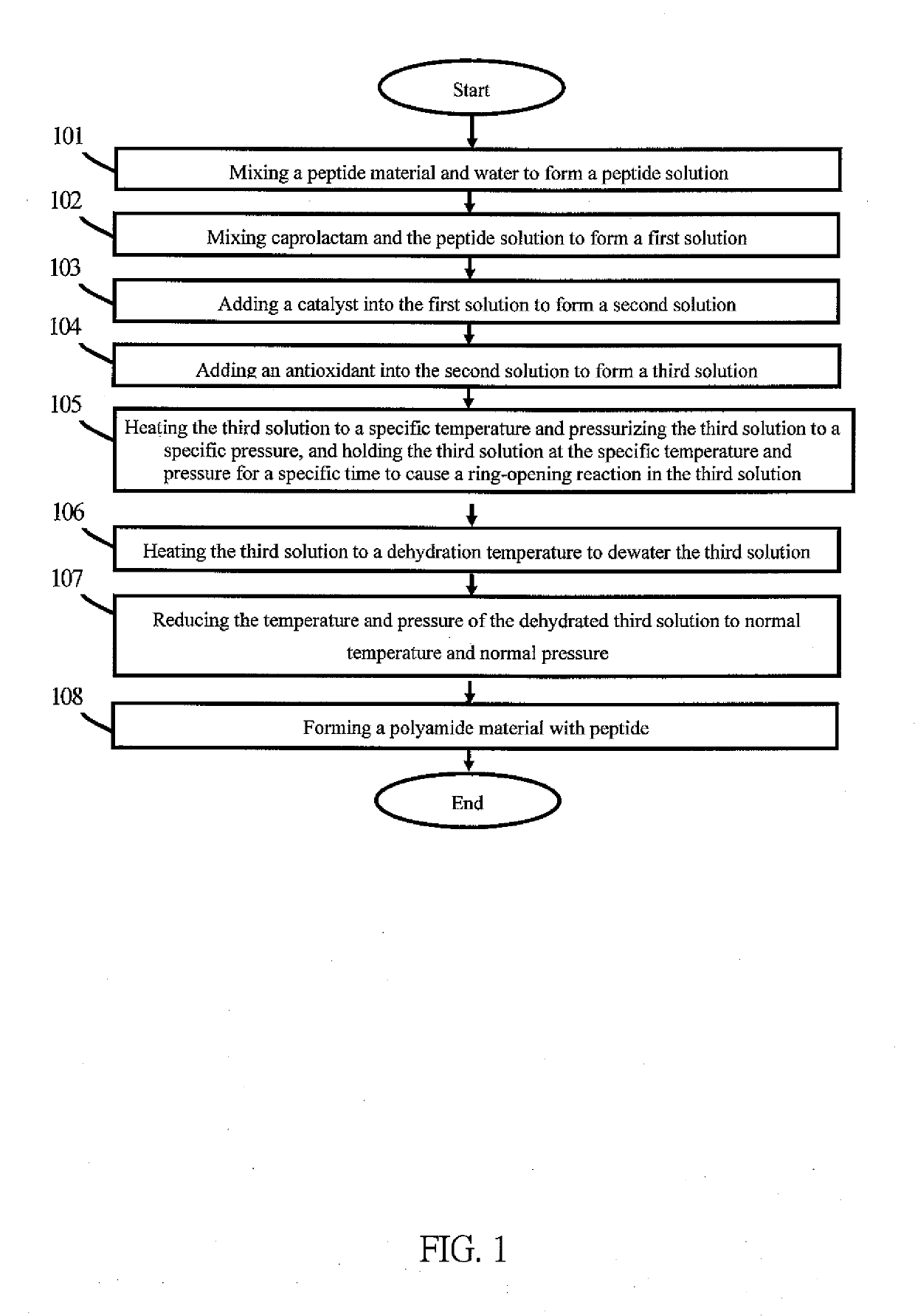
Method of Producing Polyamide Material with Peptides and Polyamide Material with Peptides
PatentInactiveUS20190177881A1
Innovation
- A method involving mixing peptides with water and caprolactam, using a catalyst and antioxidant, and controlling temperature and pressure to induce a ring-opening reaction, resulting in a polyamide material with enhanced properties suitable for textiles.
METHOD FOR OBTAINING POLYCAPROLACTONE (PCL) FROM POLYCAPROLACTAM (NYLON-6)
PatentActiveES2970910B2
Innovation
- Novel chemical conversion pathway from Nylon-6 to PCL through depolymerization and repolymerization, enabling material recycling and circular economy in wearable applications.
- Utilization of nitrosylated intermediate as a key conversion step from caprolactam to caprolactone, providing a controlled chemical transformation route.
- Direct material transformation between two important wearable polymers without complete waste disposal, maintaining molecular weight control through step-wise process.


Biocompatibility Standards for Wearable Materials
Biocompatibility standards for wearable materials represent a critical framework governing the safety and performance of materials in direct contact with human skin and biological systems. For polymeric materials like polycaprolactone (PCL) and Nylon-6 in wearable applications, these standards establish comprehensive testing protocols to evaluate potential adverse reactions, toxicity, and long-term compatibility with human physiology.
The International Organization for Standardization (ISO) 10993 series serves as the primary regulatory framework for biological evaluation of medical devices and materials. This standard encompasses cytotoxicity testing, sensitization assessment, irritation evaluation, and systemic toxicity analysis. For wearable materials, ISO 10993-5 (cytotoxicity) and ISO 10993-10 (irritation and skin sensitization) are particularly relevant, establishing baseline safety requirements for skin-contact applications.
The United States Pharmacopeia (USP) Class VI testing provides additional validation for biocompatible materials, evaluating acute systemic toxicity, intracutaneous reactivity, and implantation responses. These tests are essential for materials intended for prolonged skin contact, as commonly encountered in fitness trackers, smartwatches, and medical monitoring devices.
European regulatory frameworks, including the Medical Device Regulation (MDR) and REACH (Registration, Evaluation, Authorization, and Restriction of Chemicals), impose stringent requirements for material safety documentation. These regulations mandate comprehensive chemical characterization, migration testing, and allergen assessment for materials in consumer wearable products.
Specific biocompatibility considerations for PCL and Nylon-6 include evaluation of degradation products, leachable compounds, and potential allergenic responses. PCL's biodegradable nature requires assessment of degradation kinetics and metabolite safety, while Nylon-6's chemical stability necessitates evaluation of residual monomers and processing additives.
Contemporary testing protocols increasingly incorporate advanced methodologies such as in vitro skin models, transcutaneous absorption studies, and long-term wear simulation testing. These approaches provide more accurate predictions of real-world biocompatibility performance, addressing the unique challenges of extended skin contact in wearable applications.
The International Organization for Standardization (ISO) 10993 series serves as the primary regulatory framework for biological evaluation of medical devices and materials. This standard encompasses cytotoxicity testing, sensitization assessment, irritation evaluation, and systemic toxicity analysis. For wearable materials, ISO 10993-5 (cytotoxicity) and ISO 10993-10 (irritation and skin sensitization) are particularly relevant, establishing baseline safety requirements for skin-contact applications.
The United States Pharmacopeia (USP) Class VI testing provides additional validation for biocompatible materials, evaluating acute systemic toxicity, intracutaneous reactivity, and implantation responses. These tests are essential for materials intended for prolonged skin contact, as commonly encountered in fitness trackers, smartwatches, and medical monitoring devices.
European regulatory frameworks, including the Medical Device Regulation (MDR) and REACH (Registration, Evaluation, Authorization, and Restriction of Chemicals), impose stringent requirements for material safety documentation. These regulations mandate comprehensive chemical characterization, migration testing, and allergen assessment for materials in consumer wearable products.
Specific biocompatibility considerations for PCL and Nylon-6 include evaluation of degradation products, leachable compounds, and potential allergenic responses. PCL's biodegradable nature requires assessment of degradation kinetics and metabolite safety, while Nylon-6's chemical stability necessitates evaluation of residual monomers and processing additives.
Contemporary testing protocols increasingly incorporate advanced methodologies such as in vitro skin models, transcutaneous absorption studies, and long-term wear simulation testing. These approaches provide more accurate predictions of real-world biocompatibility performance, addressing the unique challenges of extended skin contact in wearable applications.
Sustainability Impact of Polymer Choice in Wearables
The sustainability implications of polymer selection in wearable technology represent a critical consideration that extends far beyond immediate performance metrics. As the wearables market continues its exponential growth trajectory, the environmental footprint of material choices becomes increasingly significant, with lifecycle assessments revealing substantial differences between polymer alternatives.
Polycaprolactone demonstrates superior environmental credentials through its biodegradable nature, offering complete decomposition under industrial composting conditions within 180-360 days. This characteristic addresses the growing concern of electronic waste accumulation, particularly relevant as wearable devices typically have shorter replacement cycles compared to traditional electronics. The polymer's biocompatibility also enables safer end-of-life disposal scenarios, reducing potential soil and water contamination risks.
Nylon-6 presents a more complex sustainability profile, characterized by energy-intensive production processes requiring approximately 60-70 MJ/kg of energy input. However, its mechanical recycling capabilities through depolymerization back to caprolactam monomer offer circular economy opportunities. The polymer's durability extends product lifecycles, potentially offsetting initial environmental costs through reduced replacement frequency.
Carbon footprint analysis reveals significant disparities between these materials. Polycaprolactone production generates approximately 2.1 kg CO2 equivalent per kilogram, while Nylon-6 production results in 6.4 kg CO2 equivalent per kilogram. This threefold difference becomes particularly relevant when considering the scale of global wearables manufacturing, projected to exceed 500 million units annually by 2025.
Resource utilization patterns further differentiate these polymers. Polycaprolactone can be synthesized from renewable feedstocks, including plant-based sources, supporting bio-economy initiatives. Conversely, Nylon-6 relies primarily on petroleum-derived precursors, contributing to fossil fuel dependency concerns.
The emerging regulatory landscape increasingly favors sustainable material choices, with European Union directives targeting plastic waste reduction and circular economy implementation. These policy frameworks create competitive advantages for biodegradable alternatives like polycaprolactone, while simultaneously driving innovation in Nylon-6 recycling technologies and bio-based synthesis pathways.
Polycaprolactone demonstrates superior environmental credentials through its biodegradable nature, offering complete decomposition under industrial composting conditions within 180-360 days. This characteristic addresses the growing concern of electronic waste accumulation, particularly relevant as wearable devices typically have shorter replacement cycles compared to traditional electronics. The polymer's biocompatibility also enables safer end-of-life disposal scenarios, reducing potential soil and water contamination risks.
Nylon-6 presents a more complex sustainability profile, characterized by energy-intensive production processes requiring approximately 60-70 MJ/kg of energy input. However, its mechanical recycling capabilities through depolymerization back to caprolactam monomer offer circular economy opportunities. The polymer's durability extends product lifecycles, potentially offsetting initial environmental costs through reduced replacement frequency.
Carbon footprint analysis reveals significant disparities between these materials. Polycaprolactone production generates approximately 2.1 kg CO2 equivalent per kilogram, while Nylon-6 production results in 6.4 kg CO2 equivalent per kilogram. This threefold difference becomes particularly relevant when considering the scale of global wearables manufacturing, projected to exceed 500 million units annually by 2025.
Resource utilization patterns further differentiate these polymers. Polycaprolactone can be synthesized from renewable feedstocks, including plant-based sources, supporting bio-economy initiatives. Conversely, Nylon-6 relies primarily on petroleum-derived precursors, contributing to fossil fuel dependency concerns.
The emerging regulatory landscape increasingly favors sustainable material choices, with European Union directives targeting plastic waste reduction and circular economy implementation. These policy frameworks create competitive advantages for biodegradable alternatives like polycaprolactone, while simultaneously driving innovation in Nylon-6 recycling technologies and bio-based synthesis pathways.
Unlock deeper insights with PatSnap Eureka Quick Research — get a full tech report to explore trends and direct your research. Try now!
Generate Your Research Report Instantly with AI Agent
Supercharge your innovation with PatSnap Eureka AI Agent Platform!