
Power Train Technological Advances vs Implementation Challenges
MAR 25, 20269 MIN READ
Generate Your Research Report Instantly with AI Agent
Patsnap Eureka helps you evaluate technical feasibility & market potential.
Powertrain Technology Evolution and Strategic Objectives
The powertrain industry has undergone a remarkable transformation over the past century, evolving from simple mechanical systems to sophisticated electrified architectures. This evolution began with the internal combustion engine's dominance in the early 1900s, progressed through decades of refinement in fuel injection, turbocharging, and emission control technologies, and has now entered an era of electrification and hybridization. The current technological landscape represents a convergence of traditional automotive engineering with advanced electronics, software integration, and energy storage systems.
Contemporary powertrain development is characterized by the coexistence of multiple technological pathways, each addressing specific market segments and regulatory requirements. Internal combustion engines continue to advance through technologies such as variable valve timing, direct injection, and cylinder deactivation, achieving unprecedented efficiency levels. Simultaneously, hybrid electric vehicles have matured from experimental concepts to mainstream products, incorporating sophisticated energy management systems and regenerative braking technologies.
The emergence of battery electric vehicles has introduced entirely new paradigms in powertrain design, emphasizing electric motor efficiency, thermal management, and charging infrastructure compatibility. Advanced battery chemistries, including lithium-ion variants and emerging solid-state technologies, are pushing the boundaries of energy density and charging speeds. Power electronics and inverter technologies have become critical components, enabling precise control of electric motor performance and energy flow optimization.
The strategic objectives driving current powertrain evolution center on achieving carbon neutrality while maintaining performance standards and cost competitiveness. Regulatory frameworks worldwide are establishing increasingly stringent emission targets, compelling manufacturers to accelerate electrification timelines. The European Union's commitment to phasing out internal combustion engines by 2035, coupled with similar initiatives in other regions, has created clear technological milestones for the industry.
Performance objectives extend beyond environmental compliance to encompass enhanced user experience through improved acceleration characteristics, reduced noise levels, and seamless integration with digital ecosystems. The integration of artificial intelligence and machine learning algorithms into powertrain control systems represents a frontier technology objective, enabling predictive maintenance, adaptive performance optimization, and personalized driving experiences.
Cost reduction remains a paramount objective, particularly for electric vehicle adoption. Achieving price parity between electric and conventional powertrains requires continued advancement in battery manufacturing processes, supply chain optimization, and economies of scale. The development of platform-agnostic powertrain architectures that can accommodate multiple propulsion technologies represents a strategic approach to managing development costs while maintaining technological flexibility.
Contemporary powertrain development is characterized by the coexistence of multiple technological pathways, each addressing specific market segments and regulatory requirements. Internal combustion engines continue to advance through technologies such as variable valve timing, direct injection, and cylinder deactivation, achieving unprecedented efficiency levels. Simultaneously, hybrid electric vehicles have matured from experimental concepts to mainstream products, incorporating sophisticated energy management systems and regenerative braking technologies.
The emergence of battery electric vehicles has introduced entirely new paradigms in powertrain design, emphasizing electric motor efficiency, thermal management, and charging infrastructure compatibility. Advanced battery chemistries, including lithium-ion variants and emerging solid-state technologies, are pushing the boundaries of energy density and charging speeds. Power electronics and inverter technologies have become critical components, enabling precise control of electric motor performance and energy flow optimization.
The strategic objectives driving current powertrain evolution center on achieving carbon neutrality while maintaining performance standards and cost competitiveness. Regulatory frameworks worldwide are establishing increasingly stringent emission targets, compelling manufacturers to accelerate electrification timelines. The European Union's commitment to phasing out internal combustion engines by 2035, coupled with similar initiatives in other regions, has created clear technological milestones for the industry.
Performance objectives extend beyond environmental compliance to encompass enhanced user experience through improved acceleration characteristics, reduced noise levels, and seamless integration with digital ecosystems. The integration of artificial intelligence and machine learning algorithms into powertrain control systems represents a frontier technology objective, enabling predictive maintenance, adaptive performance optimization, and personalized driving experiences.
Cost reduction remains a paramount objective, particularly for electric vehicle adoption. Achieving price parity between electric and conventional powertrains requires continued advancement in battery manufacturing processes, supply chain optimization, and economies of scale. The development of platform-agnostic powertrain architectures that can accommodate multiple propulsion technologies represents a strategic approach to managing development costs while maintaining technological flexibility.
Market Demand Analysis for Advanced Powertrain Systems
The global automotive industry is experiencing unprecedented transformation driven by environmental regulations, consumer preferences, and technological breakthroughs in powertrain systems. Traditional internal combustion engines face mounting pressure from increasingly stringent emission standards worldwide, creating substantial market demand for advanced powertrain alternatives including hybrid electric vehicles, battery electric vehicles, and fuel cell systems.
Electric vehicle adoption has accelerated significantly across major automotive markets, with Europe and China leading the transition through comprehensive policy frameworks and infrastructure investments. North American markets are following suit with substantial government incentives and automaker commitments to electrification timelines. This regulatory push has created a rapidly expanding market for advanced powertrain components including high-performance batteries, electric motors, power electronics, and integrated control systems.
Consumer demand patterns reveal growing acceptance of electrified powertrains, particularly in urban environments where range anxiety concerns are diminishing due to improved charging infrastructure. Premium vehicle segments demonstrate strongest adoption rates, with luxury automakers successfully positioning advanced powertrains as performance and technology differentiators rather than merely environmental compliance measures.
Commercial vehicle segments present substantial growth opportunities for advanced powertrain systems, driven by fleet operators seeking operational cost reductions and regulatory compliance. Heavy-duty applications increasingly demand hybrid and electric solutions for urban delivery, public transportation, and logistics operations, creating specialized market niches with distinct technical requirements.
The aftermarket and retrofit segments are emerging as significant demand drivers, particularly for commercial fleets seeking to extend vehicle lifecycles while meeting evolving emission requirements. This market segment requires modular, adaptable powertrain solutions that can integrate with existing vehicle architectures without extensive modifications.
Supply chain dynamics indicate strong demand for localized powertrain manufacturing capabilities, driven by geopolitical considerations and transportation cost optimization. Regional automotive ecosystems are developing specialized competencies in battery production, electric motor manufacturing, and power electronics integration to serve local market demands while reducing dependency on global supply chains.
Market forecasts indicate sustained growth in advanced powertrain demand across all vehicle categories, with particular strength in light commercial vehicles and passenger cars. This demand trajectory creates opportunities for innovative powertrain architectures that balance performance, cost, and manufacturing scalability requirements.
Electric vehicle adoption has accelerated significantly across major automotive markets, with Europe and China leading the transition through comprehensive policy frameworks and infrastructure investments. North American markets are following suit with substantial government incentives and automaker commitments to electrification timelines. This regulatory push has created a rapidly expanding market for advanced powertrain components including high-performance batteries, electric motors, power electronics, and integrated control systems.
Consumer demand patterns reveal growing acceptance of electrified powertrains, particularly in urban environments where range anxiety concerns are diminishing due to improved charging infrastructure. Premium vehicle segments demonstrate strongest adoption rates, with luxury automakers successfully positioning advanced powertrains as performance and technology differentiators rather than merely environmental compliance measures.
Commercial vehicle segments present substantial growth opportunities for advanced powertrain systems, driven by fleet operators seeking operational cost reductions and regulatory compliance. Heavy-duty applications increasingly demand hybrid and electric solutions for urban delivery, public transportation, and logistics operations, creating specialized market niches with distinct technical requirements.
The aftermarket and retrofit segments are emerging as significant demand drivers, particularly for commercial fleets seeking to extend vehicle lifecycles while meeting evolving emission requirements. This market segment requires modular, adaptable powertrain solutions that can integrate with existing vehicle architectures without extensive modifications.
Supply chain dynamics indicate strong demand for localized powertrain manufacturing capabilities, driven by geopolitical considerations and transportation cost optimization. Regional automotive ecosystems are developing specialized competencies in battery production, electric motor manufacturing, and power electronics integration to serve local market demands while reducing dependency on global supply chains.
Market forecasts indicate sustained growth in advanced powertrain demand across all vehicle categories, with particular strength in light commercial vehicles and passenger cars. This demand trajectory creates opportunities for innovative powertrain architectures that balance performance, cost, and manufacturing scalability requirements.
Current Powertrain Technology Status and Implementation Barriers
The global powertrain industry stands at a critical juncture where traditional internal combustion engines (ICE) continue to dominate market share while electric powertrains rapidly gain momentum. Current ICE technology has reached remarkable maturity levels, with modern engines achieving thermal efficiencies exceeding 40% in gasoline applications and up to 45% in diesel variants. Advanced technologies such as variable valve timing, direct injection, turbocharging, and cylinder deactivation have become standard features across most vehicle segments.
Electric powertrain technology has demonstrated significant progress, with battery energy densities improving from approximately 100 Wh/kg in early lithium-ion systems to over 250 Wh/kg in current premium applications. Leading manufacturers have achieved electric vehicle ranges exceeding 400 miles on single charges, while fast-charging capabilities now enable 10-80% battery charging in under 30 minutes for high-end systems.
Hybrid powertrain configurations represent a transitional technology bridging conventional and electric systems. Toyota's hybrid synergy drive has accumulated over 15 million units globally, demonstrating reliability and fuel efficiency improvements of 30-50% compared to conventional powertrains. Plug-in hybrid systems offer extended electric-only ranges while maintaining ICE backup capability, addressing range anxiety concerns.
Despite technological advances, significant implementation barriers persist across all powertrain categories. Electric vehicle adoption faces infrastructure limitations, with charging station density remaining inadequate in many regions. Battery costs, while declining, still represent 30-40% of total vehicle costs for electric vehicles. Charging time requirements and grid capacity constraints further complicate widespread deployment.
Manufacturing scalability presents challenges for emerging technologies. Battery production requires substantial capital investments and specialized supply chains for critical materials like lithium, cobalt, and rare earth elements. Geographic concentration of these resources creates supply security concerns for automotive manufacturers.
Regulatory frameworks vary significantly across global markets, creating compliance complexity for manufacturers developing multi-regional products. Emission standards, safety requirements, and incentive structures differ substantially between North America, Europe, and Asia-Pacific regions, necessitating diverse technological approaches and validation processes.
Consumer acceptance remains variable, influenced by factors including purchase price premiums, performance characteristics, and infrastructure availability. Market penetration rates for alternative powertrains show significant regional variations, with Norway achieving over 80% electric vehicle market share while other developed markets remain below 10%.
Technical integration challenges emerge when incorporating advanced powertrain technologies into existing vehicle architectures. Thermal management systems, electromagnetic compatibility, and software integration require comprehensive redesign approaches that extend development timelines and increase complexity.
Electric powertrain technology has demonstrated significant progress, with battery energy densities improving from approximately 100 Wh/kg in early lithium-ion systems to over 250 Wh/kg in current premium applications. Leading manufacturers have achieved electric vehicle ranges exceeding 400 miles on single charges, while fast-charging capabilities now enable 10-80% battery charging in under 30 minutes for high-end systems.
Hybrid powertrain configurations represent a transitional technology bridging conventional and electric systems. Toyota's hybrid synergy drive has accumulated over 15 million units globally, demonstrating reliability and fuel efficiency improvements of 30-50% compared to conventional powertrains. Plug-in hybrid systems offer extended electric-only ranges while maintaining ICE backup capability, addressing range anxiety concerns.
Despite technological advances, significant implementation barriers persist across all powertrain categories. Electric vehicle adoption faces infrastructure limitations, with charging station density remaining inadequate in many regions. Battery costs, while declining, still represent 30-40% of total vehicle costs for electric vehicles. Charging time requirements and grid capacity constraints further complicate widespread deployment.
Manufacturing scalability presents challenges for emerging technologies. Battery production requires substantial capital investments and specialized supply chains for critical materials like lithium, cobalt, and rare earth elements. Geographic concentration of these resources creates supply security concerns for automotive manufacturers.
Regulatory frameworks vary significantly across global markets, creating compliance complexity for manufacturers developing multi-regional products. Emission standards, safety requirements, and incentive structures differ substantially between North America, Europe, and Asia-Pacific regions, necessitating diverse technological approaches and validation processes.
Consumer acceptance remains variable, influenced by factors including purchase price premiums, performance characteristics, and infrastructure availability. Market penetration rates for alternative powertrains show significant regional variations, with Norway achieving over 80% electric vehicle market share while other developed markets remain below 10%.
Technical integration challenges emerge when incorporating advanced powertrain technologies into existing vehicle architectures. Thermal management systems, electromagnetic compatibility, and software integration require comprehensive redesign approaches that extend development timelines and increase complexity.
Mainstream Powertrain Technology Solutions and Approaches
01 Hybrid powertrain systems with electric and combustion components
Powertrain configurations that integrate electric motors with internal combustion engines to provide improved fuel efficiency and performance. These systems utilize power splitting devices, clutches, and control units to manage power distribution between the electric and mechanical power sources. The hybrid architecture allows for multiple operating modes including pure electric drive, engine-only drive, and combined power delivery.- Hybrid powertrain systems with electric and combustion components: Powertrain configurations that integrate electric motors with internal combustion engines to provide improved fuel efficiency and performance. These systems typically include power management strategies to optimize the distribution of power between the electric and combustion components, along with control systems for seamless transitions between different operating modes.
- Transmission and gear systems for power transfer: Mechanical transmission systems designed to transfer power from the engine to the wheels, including various gear configurations, clutch mechanisms, and shifting systems. These systems focus on optimizing torque conversion, reducing power loss, and providing smooth gear transitions for improved vehicle performance and efficiency.
- Powertrain control and management systems: Electronic control units and software systems that manage powertrain operations, including engine control, transmission shifting, torque distribution, and power optimization. These systems utilize sensors and algorithms to monitor operating conditions and adjust powertrain parameters in real-time for optimal performance, efficiency, and emissions control.
- Powertrain mounting and vibration isolation systems: Structural components and mounting systems designed to secure powertrain components to the vehicle chassis while minimizing vibration and noise transmission. These systems include engine mounts, transmission mounts, and damping elements that absorb vibrations and reduce harshness for improved ride comfort and component longevity.
- Electric powertrain architectures and drive systems: Fully electric powertrain configurations featuring electric motors, inverters, battery systems, and power electronics for vehicle propulsion. These systems focus on efficient power conversion, thermal management, and integration of energy storage systems to maximize driving range and performance in electric vehicles.
02 Transmission and gear systems for power delivery
Mechanical transmission assemblies designed to transfer and modulate power from the engine to the wheels. These systems include various gear arrangements, planetary gear sets, and shifting mechanisms that enable different speed ratios and torque multiplication. The designs focus on optimizing power transfer efficiency, reducing weight, and providing smooth gear transitions for improved vehicle performance.Expand Specific Solutions03 Powertrain control and management systems
Electronic control units and software algorithms that manage powertrain operation, including engine control, transmission shifting, and power distribution. These systems monitor various sensors and parameters to optimize performance, fuel economy, and emissions. The control strategies include torque management, mode switching logic, and predictive algorithms for enhanced drivability.Expand Specific Solutions04 Powertrain mounting and vibration isolation
Structural components and mounting systems designed to secure the powertrain to the vehicle chassis while minimizing vibration and noise transmission. These solutions include engine mounts, transmission mounts, and isolation elements that absorb vibrations and accommodate powertrain movement. The designs balance structural rigidity with vibration damping to improve vehicle refinement and component durability.Expand Specific Solutions05 Electric drive units and motor integration
Dedicated electric motor assemblies and their integration into the powertrain architecture. These units include electric motors, inverters, and reduction gears designed specifically for vehicle propulsion. The systems focus on compact packaging, high power density, and efficient power conversion to enable electric or hybrid vehicle operation with optimized performance characteristics.Expand Specific Solutions
Leading Powertrain Technology Companies and Market Players
The powertrain technology sector is experiencing a critical transition phase, characterized by the convergence of traditional internal combustion engine optimization and emerging electrification technologies. The market demonstrates substantial scale with established automotive giants like Hyundai Motor, Kia Corp., and BYD Co. competing alongside specialized component manufacturers such as Cummins, ZF Friedrichshafen, and DENSO Corp. Technology maturity varies significantly across segments, with companies like Tesla and BYD leading electric powertrain development while traditional players like General Motors and Caterpillar focus on hybrid solutions. The competitive landscape reveals implementation challenges as manufacturers balance performance requirements with regulatory compliance, cost constraints, and infrastructure limitations, creating opportunities for innovative companies like Achates Power and established suppliers like Schaeffler Technologies to bridge technological gaps.
Hyundai Motor Co., Ltd.
Technical Solution: Hyundai has developed a comprehensive electrification strategy focusing on hybrid, plug-in hybrid, battery electric, and fuel cell powertrains. Their HTWO fuel cell system delivers up to 200kW power output with enhanced durability and cold-start capabilities down to -30°C[1][3]. The company's E-GMP platform supports 800V fast charging architecture, enabling 10-80% charging in 18 minutes[2]. Their integrated thermal management system optimizes battery performance across various operating conditions while maintaining efficiency above 95% in electric drive modes[4][7].
Strengths: Advanced fuel cell technology with proven durability, comprehensive electrification portfolio, fast charging capabilities. Weaknesses: High development costs for multiple powertrain technologies, infrastructure dependency for fuel cell adoption.
Cummins, Inc.
Technical Solution: Cummins focuses on clean diesel technology, natural gas engines, and hydrogen fuel cell systems for commercial applications. Their X15 Efficiency Series engines achieve up to 50% brake thermal efficiency through advanced combustion optimization and waste heat recovery[5][8]. The company's fuel cell modules deliver 135kW continuous power with operational life exceeding 25,000 hours for heavy-duty applications[6]. Their HELM fuel cell system integrates seamlessly with existing vehicle architectures while providing zero-emission operation for long-haul trucking applications[9][11].
Strengths: High thermal efficiency in diesel engines, robust fuel cell systems for heavy-duty applications, extensive service network. Weaknesses: Regulatory pressure on diesel technology, high infrastructure requirements for hydrogen deployment.
Critical Powertrain Innovation Patents and Technical Insights
Power split hybrid powertrain
PatentWO2018084766A1
Innovation
- A hybrid powertrain comprising an internal combustion engine, a torque converter, and two electric machines electrically coupled to each other, with a planetary gear set that allows for multiple operational modes, reducing the need for powerful electric machines and complex gearing, enabling efficient torque delivery and energy storage.


Power train for motor vehicles or the like
PatentInactiveUS20080188340A1
Innovation
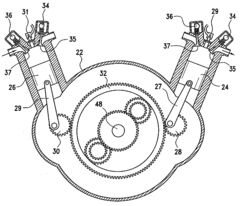
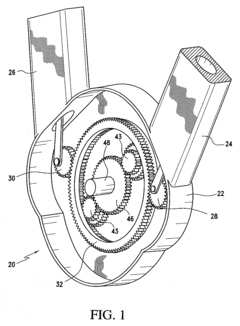
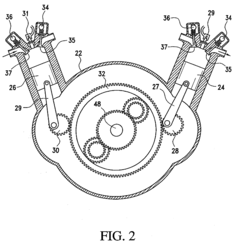
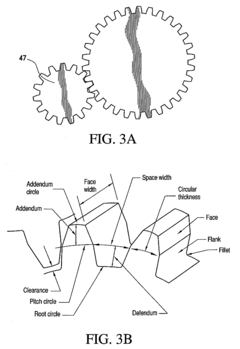
- A power train design that eliminates the crankshaft and flywheel by using a planetary gear system to convert linear piston motion into rotational motion, incorporating a single sump for lubrication, extending the engine cooling system to the gearbox, and employing roller bearings to reduce friction and heat, while allowing for removable cylinders and disengagement during braking.
Environmental Regulations Impact on Powertrain Development
Environmental regulations have emerged as the primary catalyst reshaping powertrain development strategies across the global automotive industry. The implementation of increasingly stringent emission standards, such as Euro 7 in Europe, Tier 3 in the United States, and China VI standards, has fundamentally altered the trajectory of powertrain technology evolution. These regulatory frameworks establish progressively tighter limits on nitrogen oxides, particulate matter, carbon monoxide, and greenhouse gas emissions, compelling manufacturers to accelerate innovation cycles and invest heavily in cleaner propulsion technologies.
The regulatory landscape demonstrates significant regional variations that create complex compliance challenges for global manufacturers. European regulations emphasize real driving emissions testing and lifecycle carbon assessments, while California's Advanced Clean Cars II program mandates specific zero-emission vehicle sales percentages. China's dual-credit system combines fuel economy requirements with new energy vehicle quotas, creating unique market dynamics that influence global powertrain strategies.
Compliance costs associated with meeting these evolving standards have reached unprecedented levels, with some estimates suggesting that emission control systems now account for 15-20% of total powertrain costs in conventional vehicles. Advanced aftertreatment systems, including selective catalytic reduction, gasoline particulate filters, and sophisticated engine management systems, represent substantial engineering investments that must be amortized across vehicle platforms.
The regulatory pressure has accelerated the industry's transition toward electrification, as manufacturers seek to achieve fleet-average emission targets through zero-emission vehicle integration. This shift has created a bifurcated development approach where traditional internal combustion engines require continuous refinement to meet interim standards while simultaneously investing in electric powertrain technologies for long-term compliance.
Future regulatory trends indicate even more aggressive targets, with several jurisdictions announcing internal combustion engine phase-out timelines. The European Union's proposed 2035 ban on new combustion engine vehicle sales exemplifies this regulatory evolution, creating urgency around electric powertrain development while maintaining pressure for cleaner conventional technologies during the transition period.
The regulatory landscape demonstrates significant regional variations that create complex compliance challenges for global manufacturers. European regulations emphasize real driving emissions testing and lifecycle carbon assessments, while California's Advanced Clean Cars II program mandates specific zero-emission vehicle sales percentages. China's dual-credit system combines fuel economy requirements with new energy vehicle quotas, creating unique market dynamics that influence global powertrain strategies.
Compliance costs associated with meeting these evolving standards have reached unprecedented levels, with some estimates suggesting that emission control systems now account for 15-20% of total powertrain costs in conventional vehicles. Advanced aftertreatment systems, including selective catalytic reduction, gasoline particulate filters, and sophisticated engine management systems, represent substantial engineering investments that must be amortized across vehicle platforms.
The regulatory pressure has accelerated the industry's transition toward electrification, as manufacturers seek to achieve fleet-average emission targets through zero-emission vehicle integration. This shift has created a bifurcated development approach where traditional internal combustion engines require continuous refinement to meet interim standards while simultaneously investing in electric powertrain technologies for long-term compliance.
Future regulatory trends indicate even more aggressive targets, with several jurisdictions announcing internal combustion engine phase-out timelines. The European Union's proposed 2035 ban on new combustion engine vehicle sales exemplifies this regulatory evolution, creating urgency around electric powertrain development while maintaining pressure for cleaner conventional technologies during the transition period.
Cost-Performance Trade-offs in Powertrain Implementation
The implementation of advanced powertrain technologies presents a complex landscape of cost-performance trade-offs that significantly influence adoption rates across different market segments. Traditional internal combustion engines continue to dominate due to their established manufacturing infrastructure and relatively low production costs, despite their inferior efficiency compared to emerging alternatives. The cost per unit remains competitive at approximately $3,000-5,000 for conventional powertrains, while delivering adequate performance metrics for mainstream applications.
Hybrid powertrain systems represent a middle ground in the cost-performance spectrum, typically adding $2,000-4,000 to vehicle costs while delivering 20-40% improvement in fuel efficiency. The dual-motor architecture and battery integration create manufacturing complexity that drives up initial costs, yet the performance benefits in urban driving conditions often justify the premium for environmentally conscious consumers. Toyota's hybrid technology demonstrates how economies of scale can gradually reduce the cost penalty while maintaining performance advantages.
Electric powertrains face the most pronounced cost-performance paradox in current markets. Battery pack costs, despite declining from $1,100/kWh in 2010 to approximately $130/kWh in 2023, still contribute 30-40% of total vehicle cost. However, electric motors deliver superior torque characteristics and energy efficiency exceeding 90%, compared to 35% for conventional engines. The performance advantages become evident in acceleration metrics and operational smoothness, though range limitations create practical constraints.
Advanced internal combustion technologies, including variable compression ratios and advanced turbocharging, attempt to bridge the efficiency gap while maintaining cost advantages. These solutions typically add 15-25% to engine costs while achieving 10-15% efficiency improvements. The incremental approach allows manufacturers to leverage existing supply chains and production expertise, making it attractive for markets sensitive to initial purchase price.
Manufacturing scale effects significantly influence cost-performance equations across all powertrain types. Electric vehicle production volumes below 100,000 units annually struggle to achieve cost competitiveness, while established ICE production benefits from decades of optimization. The transition period creates strategic challenges as manufacturers must balance investment in new technologies against maintaining profitability in existing product lines.
Regional market dynamics further complicate cost-performance calculations, as fuel prices, regulatory frameworks, and consumer preferences vary significantly. European markets with high fuel costs favor efficiency-focused solutions, while North American markets often prioritize performance metrics, creating different optimal points in the cost-performance trade-off spectrum for global manufacturers.
Hybrid powertrain systems represent a middle ground in the cost-performance spectrum, typically adding $2,000-4,000 to vehicle costs while delivering 20-40% improvement in fuel efficiency. The dual-motor architecture and battery integration create manufacturing complexity that drives up initial costs, yet the performance benefits in urban driving conditions often justify the premium for environmentally conscious consumers. Toyota's hybrid technology demonstrates how economies of scale can gradually reduce the cost penalty while maintaining performance advantages.
Electric powertrains face the most pronounced cost-performance paradox in current markets. Battery pack costs, despite declining from $1,100/kWh in 2010 to approximately $130/kWh in 2023, still contribute 30-40% of total vehicle cost. However, electric motors deliver superior torque characteristics and energy efficiency exceeding 90%, compared to 35% for conventional engines. The performance advantages become evident in acceleration metrics and operational smoothness, though range limitations create practical constraints.
Advanced internal combustion technologies, including variable compression ratios and advanced turbocharging, attempt to bridge the efficiency gap while maintaining cost advantages. These solutions typically add 15-25% to engine costs while achieving 10-15% efficiency improvements. The incremental approach allows manufacturers to leverage existing supply chains and production expertise, making it attractive for markets sensitive to initial purchase price.
Manufacturing scale effects significantly influence cost-performance equations across all powertrain types. Electric vehicle production volumes below 100,000 units annually struggle to achieve cost competitiveness, while established ICE production benefits from decades of optimization. The transition period creates strategic challenges as manufacturers must balance investment in new technologies against maintaining profitability in existing product lines.
Regional market dynamics further complicate cost-performance calculations, as fuel prices, regulatory frameworks, and consumer preferences vary significantly. European markets with high fuel costs favor efficiency-focused solutions, while North American markets often prioritize performance metrics, creating different optimal points in the cost-performance trade-off spectrum for global manufacturers.
Unlock deeper insights with Patsnap Eureka Quick Research — get a full tech report to explore trends and direct your research. Try now!
Generate Your Research Report Instantly with AI Agent
Supercharge your innovation with Patsnap Eureka AI Agent Platform!