

Predictive Maintenance for Linear Accelerator Longevity
FEB 25, 20269 MIN READ
Generate Your Research Report Instantly with AI Agent
Patsnap Eureka helps you evaluate technical feasibility & market potential.
Linear Accelerator Technology Background and Maintenance Goals
Linear accelerators have evolved significantly since their inception in the 1920s, transitioning from experimental physics apparatus to critical infrastructure in medical therapy, industrial processing, and scientific research. Modern linear accelerators, particularly those used in radiation therapy and materials science, represent sophisticated systems integrating high-power radiofrequency technology, precision beam control mechanisms, and complex vacuum systems. These machines accelerate charged particles to near-light speeds through electromagnetic fields, requiring exceptional stability and reliability for consistent performance.
The operational demands placed on contemporary linear accelerators have intensified considerably. Medical linear accelerators must deliver precise radiation doses with submillimeter accuracy across thousands of treatment sessions annually, while industrial accelerators operate continuously for materials processing and sterilization applications. This intensive utilization pattern subjects critical components including klystrons, magnetrons, waveguides, and beam steering systems to substantial thermal, mechanical, and electromagnetic stresses, leading to gradual performance degradation and eventual failure.
Traditional maintenance approaches have relied predominantly on scheduled preventive maintenance protocols and reactive repairs following component failures. However, these conventional strategies prove increasingly inadequate for modern accelerator operations. Scheduled maintenance often results in unnecessary component replacements and operational downtime, while reactive maintenance can lead to catastrophic failures, treatment interruptions, and significant financial losses. The complexity of accelerator systems, combined with the interdependencies among subsystems, makes failure prediction particularly challenging using conventional methods.
The primary goal of implementing predictive maintenance for linear accelerators centers on maximizing system longevity while minimizing unplanned downtime and operational costs. This objective encompasses early detection of component degradation patterns, optimization of maintenance scheduling based on actual equipment condition rather than arbitrary time intervals, and extension of component lifecycles through timely interventions. Additionally, predictive maintenance aims to enhance treatment safety in medical applications by preventing unexpected failures during critical procedures, while simultaneously reducing the total cost of ownership through more efficient resource allocation and inventory management.
The operational demands placed on contemporary linear accelerators have intensified considerably. Medical linear accelerators must deliver precise radiation doses with submillimeter accuracy across thousands of treatment sessions annually, while industrial accelerators operate continuously for materials processing and sterilization applications. This intensive utilization pattern subjects critical components including klystrons, magnetrons, waveguides, and beam steering systems to substantial thermal, mechanical, and electromagnetic stresses, leading to gradual performance degradation and eventual failure.
Traditional maintenance approaches have relied predominantly on scheduled preventive maintenance protocols and reactive repairs following component failures. However, these conventional strategies prove increasingly inadequate for modern accelerator operations. Scheduled maintenance often results in unnecessary component replacements and operational downtime, while reactive maintenance can lead to catastrophic failures, treatment interruptions, and significant financial losses. The complexity of accelerator systems, combined with the interdependencies among subsystems, makes failure prediction particularly challenging using conventional methods.
The primary goal of implementing predictive maintenance for linear accelerators centers on maximizing system longevity while minimizing unplanned downtime and operational costs. This objective encompasses early detection of component degradation patterns, optimization of maintenance scheduling based on actual equipment condition rather than arbitrary time intervals, and extension of component lifecycles through timely interventions. Additionally, predictive maintenance aims to enhance treatment safety in medical applications by preventing unexpected failures during critical procedures, while simultaneously reducing the total cost of ownership through more efficient resource allocation and inventory management.
Market Demand for Predictive Maintenance in Particle Accelerators
The global market for predictive maintenance in particle accelerators is experiencing significant growth driven by the increasing complexity and operational costs of these sophisticated scientific instruments. Linear accelerators, widely deployed in medical radiotherapy, industrial applications, and fundamental research facilities, represent a substantial segment requiring advanced maintenance strategies. The escalating demand stems from the critical need to minimize unplanned downtime, which can result in substantial financial losses and disruption to essential services, particularly in healthcare settings where patient treatment schedules depend on equipment availability.
Healthcare institutions operating medical linear accelerators face mounting pressure to optimize equipment uptime while managing constrained budgets. Radiation therapy departments cannot afford extended equipment failures, as treatment delays directly impact patient outcomes and institutional revenue streams. This urgency has created a robust market for predictive maintenance solutions that can anticipate component failures before they occur, enabling scheduled interventions during planned maintenance windows rather than emergency repairs.
Research facilities and industrial users similarly recognize the value proposition of predictive maintenance technologies. Large-scale accelerator facilities supporting particle physics research operate under tight experimental schedules with international collaborations, where unexpected shutdowns cascade into significant scientific and financial consequences. Industrial accelerator applications in materials processing, sterilization, and cargo scanning require consistent operational reliability to maintain production throughput and service delivery commitments.
The market landscape is further shaped by technological convergence, as advances in sensor technologies, machine learning algorithms, and cloud computing infrastructure make sophisticated predictive analytics increasingly accessible and cost-effective. Equipment manufacturers and third-party service providers are developing integrated monitoring systems that continuously assess accelerator subsystems, including radiofrequency systems, vacuum components, cooling circuits, and beam control mechanisms. These solutions address the growing recognition that traditional time-based maintenance schedules are inefficient and fail to capture the actual condition of critical components.
Regulatory pressures and quality assurance requirements in medical applications additionally drive market demand. Healthcare regulatory bodies increasingly emphasize equipment reliability and patient safety, creating compliance incentives for institutions to adopt proactive maintenance approaches. The convergence of operational efficiency needs, technological capability, and regulatory frameworks establishes a compelling market environment for predictive maintenance solutions tailored to linear accelerator applications across multiple sectors.
Healthcare institutions operating medical linear accelerators face mounting pressure to optimize equipment uptime while managing constrained budgets. Radiation therapy departments cannot afford extended equipment failures, as treatment delays directly impact patient outcomes and institutional revenue streams. This urgency has created a robust market for predictive maintenance solutions that can anticipate component failures before they occur, enabling scheduled interventions during planned maintenance windows rather than emergency repairs.
Research facilities and industrial users similarly recognize the value proposition of predictive maintenance technologies. Large-scale accelerator facilities supporting particle physics research operate under tight experimental schedules with international collaborations, where unexpected shutdowns cascade into significant scientific and financial consequences. Industrial accelerator applications in materials processing, sterilization, and cargo scanning require consistent operational reliability to maintain production throughput and service delivery commitments.
The market landscape is further shaped by technological convergence, as advances in sensor technologies, machine learning algorithms, and cloud computing infrastructure make sophisticated predictive analytics increasingly accessible and cost-effective. Equipment manufacturers and third-party service providers are developing integrated monitoring systems that continuously assess accelerator subsystems, including radiofrequency systems, vacuum components, cooling circuits, and beam control mechanisms. These solutions address the growing recognition that traditional time-based maintenance schedules are inefficient and fail to capture the actual condition of critical components.
Regulatory pressures and quality assurance requirements in medical applications additionally drive market demand. Healthcare regulatory bodies increasingly emphasize equipment reliability and patient safety, creating compliance incentives for institutions to adopt proactive maintenance approaches. The convergence of operational efficiency needs, technological capability, and regulatory frameworks establishes a compelling market environment for predictive maintenance solutions tailored to linear accelerator applications across multiple sectors.
Current Challenges in Linear Accelerator Reliability and Uptime
Linear accelerators face significant reliability challenges that directly impact their operational uptime and clinical availability. The complex interplay of high-power radiofrequency systems, precision mechanical components, and sophisticated control electronics creates multiple potential failure points. Component degradation occurs progressively through thermal cycling, radiation exposure, and mechanical wear, yet current maintenance practices often rely on reactive approaches or fixed-schedule interventions that may not align with actual equipment condition.
The radiofrequency generation and transmission systems represent a primary vulnerability area. Magnetrons and klystrons, which generate the high-power microwaves necessary for particle acceleration, experience performance degradation that manifests gradually through reduced output power, increased reflected power, and frequency instability. Traditional monitoring systems may not detect these subtle changes until performance falls below acceptable thresholds, resulting in unexpected downtime during critical treatment schedules.
Vacuum system integrity poses another substantial challenge. Linear accelerators require ultra-high vacuum conditions to minimize particle collisions and maintain beam quality. Microscopic leaks, outgassing from internal components, and pump degradation can compromise vacuum levels. Current detection methods often identify problems only after significant deterioration has occurred, necessitating extended maintenance windows and potential component replacement.
Cooling system failures constitute a frequent cause of unplanned shutdowns. The thermal management infrastructure must dissipate substantial heat loads from radiofrequency components, with any degradation in coolant flow, heat exchanger efficiency, or temperature control potentially triggering protective shutdowns. Existing monitoring typically focuses on threshold-based alarms rather than trend analysis that could predict impending failures.
Mechanical positioning systems, including gantry rotation mechanisms and multi-leaf collimators, demand extreme precision while enduring continuous operational stress. Bearing wear, motor degradation, and encoder drift accumulate gradually, affecting treatment accuracy before triggering fault conditions. The lack of predictive indicators for these mechanical subsystems forces reliance on time-based maintenance that may be either premature or delayed relative to actual component condition.
The absence of integrated predictive analytics across these interdependent systems represents a fundamental limitation. Current approaches treat subsystems in isolation, missing opportunities to identify cascading failure patterns or correlations between seemingly unrelated parameters that could signal developing problems.
The radiofrequency generation and transmission systems represent a primary vulnerability area. Magnetrons and klystrons, which generate the high-power microwaves necessary for particle acceleration, experience performance degradation that manifests gradually through reduced output power, increased reflected power, and frequency instability. Traditional monitoring systems may not detect these subtle changes until performance falls below acceptable thresholds, resulting in unexpected downtime during critical treatment schedules.
Vacuum system integrity poses another substantial challenge. Linear accelerators require ultra-high vacuum conditions to minimize particle collisions and maintain beam quality. Microscopic leaks, outgassing from internal components, and pump degradation can compromise vacuum levels. Current detection methods often identify problems only after significant deterioration has occurred, necessitating extended maintenance windows and potential component replacement.
Cooling system failures constitute a frequent cause of unplanned shutdowns. The thermal management infrastructure must dissipate substantial heat loads from radiofrequency components, with any degradation in coolant flow, heat exchanger efficiency, or temperature control potentially triggering protective shutdowns. Existing monitoring typically focuses on threshold-based alarms rather than trend analysis that could predict impending failures.
Mechanical positioning systems, including gantry rotation mechanisms and multi-leaf collimators, demand extreme precision while enduring continuous operational stress. Bearing wear, motor degradation, and encoder drift accumulate gradually, affecting treatment accuracy before triggering fault conditions. The lack of predictive indicators for these mechanical subsystems forces reliance on time-based maintenance that may be either premature or delayed relative to actual component condition.
The absence of integrated predictive analytics across these interdependent systems represents a fundamental limitation. Current approaches treat subsystems in isolation, missing opportunities to identify cascading failure patterns or correlations between seemingly unrelated parameters that could signal developing problems.
Existing Predictive Maintenance Solutions for Accelerators
01 Advanced cooling systems and thermal management
Linear accelerators require sophisticated cooling systems to manage heat generated during operation, which is critical for extending component lifespan. Improved thermal management techniques include enhanced coolant circulation systems, heat exchangers, and temperature monitoring systems that prevent overheating of critical components such as klystrons, waveguides, and RF components. These cooling solutions help maintain optimal operating temperatures and reduce thermal stress on components.- Advanced cooling systems for linear accelerator components: Implementing enhanced cooling mechanisms to manage heat dissipation in critical accelerator components can significantly extend operational lifespan. Advanced thermal management systems help maintain optimal operating temperatures, reducing thermal stress and preventing premature component degradation. These systems may include liquid cooling circuits, heat exchangers, and temperature monitoring systems that ensure consistent performance over extended periods.
- Radiation-hardened materials and shielding technologies: Utilizing radiation-resistant materials and improved shielding designs helps protect sensitive components from radiation damage during long-term operation. These materials and designs minimize degradation caused by continuous exposure to high-energy particles and electromagnetic radiation. The implementation of advanced shielding configurations and material selection strategies can substantially increase the durability and reliability of linear accelerator systems.
- Predictive maintenance and monitoring systems: Integration of real-time monitoring systems and predictive maintenance algorithms enables early detection of component wear and potential failures. These systems utilize sensors, data analytics, and machine learning to assess component health and predict maintenance needs before critical failures occur. By implementing proactive maintenance schedules based on actual component condition rather than fixed intervals, overall system longevity can be significantly improved.
- Modular design and component replaceability: Designing linear accelerators with modular architectures allows for easier replacement and upgrading of individual components without requiring complete system shutdown or replacement. This approach facilitates maintenance procedures, reduces downtime, and enables incremental improvements to extend overall system life. Modular designs also allow for the replacement of worn components with improved versions, progressively enhancing system performance and longevity.
- Vacuum system optimization and contamination control: Maintaining high-quality vacuum conditions and implementing contamination control measures are critical for extending linear accelerator longevity. Advanced vacuum pumping systems, leak detection methods, and contamination prevention protocols help preserve the integrity of the beam path and protect sensitive components. Proper vacuum system design and maintenance reduce component degradation caused by particle interactions with residual gases and contaminants.
02 Component degradation monitoring and predictive maintenance
Implementing monitoring systems that track component performance and degradation patterns enables predictive maintenance strategies. These systems use sensors and diagnostic tools to measure parameters such as beam quality, RF power output, vacuum levels, and component wear. By analyzing this data, operators can identify components approaching end-of-life and schedule replacements before failures occur, thereby maximizing accelerator uptime and extending overall system longevity.Expand Specific Solutions03 Enhanced vacuum systems and contamination control
Maintaining ultra-high vacuum conditions is essential for linear accelerator longevity, as contamination and poor vacuum can lead to electrical breakdown and component damage. Advanced vacuum pumping systems, improved sealing technologies, and contamination prevention methods help preserve vacuum integrity over extended periods. Regular vacuum maintenance protocols and the use of getter materials can significantly extend the operational life of accelerator components.Expand Specific Solutions04 RF system optimization and power management
Radio frequency systems are critical components that significantly impact accelerator longevity. Optimizing RF power delivery, reducing reflected power, and implementing advanced modulation techniques can minimize stress on RF components. Power management strategies include adaptive power control, efficient klystron operation, and waveguide conditioning procedures that reduce electrical breakdown events and extend component lifetime.Expand Specific Solutions05 Material selection and component design improvements
Using advanced materials and improved component designs enhances durability and resistance to radiation damage, thermal cycling, and mechanical stress. This includes the selection of radiation-hard materials for high-dose environments, improved structural designs that reduce mechanical fatigue, and surface treatments that minimize erosion and corrosion. Enhanced component manufacturing processes and quality control measures also contribute to longer component lifespans and reduced maintenance requirements.Expand Specific Solutions
Key Players in Linear Accelerator Manufacturing and Services
The predictive maintenance landscape for linear accelerator longevity is experiencing rapid evolution, driven by the convergence of IoT sensors, artificial intelligence, and digital twin technologies. The market is transitioning from reactive to predictive maintenance paradigms, with significant growth potential across industrial manufacturing, automotive, and energy sectors. Technology maturity varies considerably among key players: established industrial giants like Siemens AG, Robert Bosch GmbH, and Caterpillar SARL demonstrate advanced implementation capabilities, while automotive manufacturers including Renault SA and Guangzhou Automobile Group are integrating predictive systems into production lines. Research institutions such as Beihang University, Zhejiang University, and Beijing Institute of Technology are advancing algorithmic foundations. Energy sector players like EVE Energy and Samsung SDI are applying predictive maintenance to battery systems and power equipment. The competitive landscape reflects a maturing technology with established leaders possessing comprehensive solutions, while emerging players focus on specialized applications and regional markets.
Siemens AG
Technical Solution: Siemens has developed a comprehensive predictive maintenance solution for linear accelerators utilizing their MindSphere IoT platform integrated with advanced AI algorithms. The system continuously monitors critical parameters including RF power output, beam current stability, vacuum pressure levels, and cooling system performance through distributed sensor networks. Machine learning models analyze historical failure patterns and real-time operational data to predict component degradation, particularly for klystrons, magnetrons, and waveguide systems. The solution employs digital twin technology to simulate accelerator behavior under various operating conditions, enabling proactive maintenance scheduling. Their condition-based monitoring system can detect anomalies up to 2-3 weeks before actual failure occurs, significantly reducing unplanned downtime. The platform integrates seamlessly with existing SCADA systems and provides actionable insights through intuitive dashboards, allowing maintenance teams to optimize spare parts inventory and schedule interventions during planned shutdown windows.
Strengths: Mature IoT infrastructure with proven industrial applications, comprehensive digital twin capabilities, excellent system integration with existing industrial control systems. Weaknesses: High initial implementation costs, requires significant data collection period for model training, may need customization for specific accelerator configurations.
Honeywell International Technologies Ltd.
Technical Solution: Honeywell offers predictive maintenance solutions for linear accelerators through their Forge platform, which combines edge computing capabilities with cloud-based analytics. The system focuses on monitoring critical subsystems including high-voltage power supplies, RF generation equipment, beam transport components, and thermal management systems. Their approach utilizes physics-based models combined with data-driven machine learning algorithms to establish baseline performance metrics and identify deviations indicative of impending failures. The solution incorporates vibration analysis, thermal imaging data, and electrical parameter monitoring to assess component health. Honeywell's predictive algorithms can forecast maintenance needs with 85-90% accuracy, enabling transition from time-based to condition-based maintenance strategies. The platform supports remote monitoring capabilities and provides mobile access for maintenance personnel, facilitating rapid response to critical alerts. Integration with enterprise asset management systems enables optimized maintenance workflow and resource allocation.
Strengths: Strong edge computing capabilities for real-time processing, proven track record in aerospace and defense applications, robust cybersecurity features. Weaknesses: Limited specific experience with particle accelerator applications compared to general industrial equipment, potential vendor lock-in concerns.
Core Technologies in Accelerator Health Monitoring Systems
Robust predictive maintenance method for machinery using measured vibration data and estimated sound data
PatentPendingUS20240264045A1
Innovation
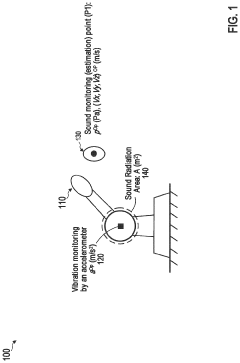
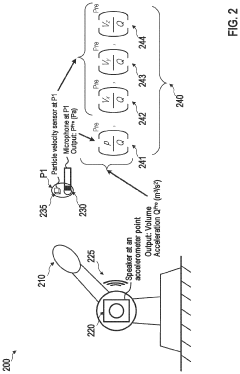
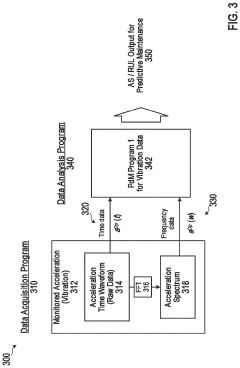
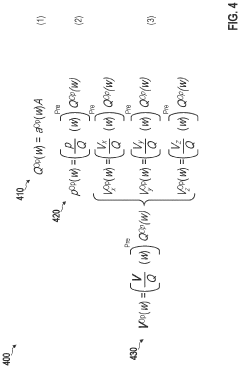
- The method involves estimating sound data from measured vibration data using a pre-measured acoustic transfer function, which is calculated during quiet times, allowing for reduced microphone usage and improved noise reduction by leveraging the lower noise levels in vibration data.
Method for predicting failure of industrial system
PatentPendingCN120153329A
Innovation
- The logarithmic periodic power law (LPPL) model is used to fit the data points in the input time series, identify local extreme values and trends, and determine whether a given data point is a critical point, thereby predicting the time period when the fault occurs.


Safety and Radiation Regulatory Compliance Requirements
Linear accelerators used in medical and industrial applications operate under stringent safety and radiation regulatory frameworks that directly impact predictive maintenance strategies. Compliance with international standards such as those established by the International Atomic Energy Agency (IAEA), the International Electrotechnical Commission (IEC), and national regulatory bodies like the U.S. Nuclear Regulatory Commission (NRC) or European national authorities is mandatory throughout the equipment lifecycle. These regulations govern radiation shielding integrity, beam quality assurance, personnel exposure limits, and environmental safety protocols, all of which must be continuously monitored and documented.
Predictive maintenance programs for linear accelerators must integrate regulatory compliance checkpoints as fundamental components rather than separate activities. Regular calibration and verification of radiation monitoring systems, interlocks, and safety mechanisms are legally mandated at specified intervals, typically ranging from daily functional checks to annual comprehensive assessments. Maintenance scheduling algorithms must account for these regulatory timelines while optimizing for equipment longevity, creating a dual-objective framework that balances operational efficiency with legal obligations.
Documentation requirements present significant operational considerations for predictive maintenance implementations. Regulatory authorities require comprehensive records of all maintenance activities, component replacements, performance deviations, and corrective actions. Modern predictive maintenance systems must therefore incorporate automated logging capabilities that generate audit-ready documentation, traceability matrices linking maintenance actions to regulatory requirements, and alert mechanisms for approaching compliance deadlines. This documentation burden necessitates robust data management infrastructure capable of maintaining records for periods often exceeding twenty years.
The regulatory landscape also influences technology selection for predictive maintenance tools. Diagnostic equipment and monitoring sensors introduced into radiation environments must themselves meet safety certifications and demonstrate electromagnetic compatibility with accelerator systems. Any modifications to accelerator components or control systems triggered by predictive maintenance insights require regulatory review and approval processes, potentially extending implementation timelines. Furthermore, personnel conducting predictive maintenance activities must possess appropriate radiation safety training and certifications, adding workforce development requirements to the overall compliance framework.
Emerging regulatory trends toward risk-based approaches and performance-based standards are creating opportunities for more sophisticated predictive maintenance integration. Demonstrating proactive equipment monitoring and data-driven maintenance decision-making can support regulatory arguments for extended component lifespans or modified inspection intervals, provided that safety margins are maintained and documented through validated predictive models.
Predictive maintenance programs for linear accelerators must integrate regulatory compliance checkpoints as fundamental components rather than separate activities. Regular calibration and verification of radiation monitoring systems, interlocks, and safety mechanisms are legally mandated at specified intervals, typically ranging from daily functional checks to annual comprehensive assessments. Maintenance scheduling algorithms must account for these regulatory timelines while optimizing for equipment longevity, creating a dual-objective framework that balances operational efficiency with legal obligations.
Documentation requirements present significant operational considerations for predictive maintenance implementations. Regulatory authorities require comprehensive records of all maintenance activities, component replacements, performance deviations, and corrective actions. Modern predictive maintenance systems must therefore incorporate automated logging capabilities that generate audit-ready documentation, traceability matrices linking maintenance actions to regulatory requirements, and alert mechanisms for approaching compliance deadlines. This documentation burden necessitates robust data management infrastructure capable of maintaining records for periods often exceeding twenty years.
The regulatory landscape also influences technology selection for predictive maintenance tools. Diagnostic equipment and monitoring sensors introduced into radiation environments must themselves meet safety certifications and demonstrate electromagnetic compatibility with accelerator systems. Any modifications to accelerator components or control systems triggered by predictive maintenance insights require regulatory review and approval processes, potentially extending implementation timelines. Furthermore, personnel conducting predictive maintenance activities must possess appropriate radiation safety training and certifications, adding workforce development requirements to the overall compliance framework.
Emerging regulatory trends toward risk-based approaches and performance-based standards are creating opportunities for more sophisticated predictive maintenance integration. Demonstrating proactive equipment monitoring and data-driven maintenance decision-making can support regulatory arguments for extended component lifespans or modified inspection intervals, provided that safety margins are maintained and documented through validated predictive models.
Total Cost of Ownership and Lifecycle Management Strategies
Total Cost of Ownership (TCO) for linear accelerators extends far beyond initial capital expenditure, encompassing installation, operational costs, maintenance expenses, downtime losses, and eventual decommissioning. A comprehensive lifecycle management strategy integrating predictive maintenance fundamentally transforms this economic equation by shifting from reactive to proactive resource allocation. Organizations must evaluate TCO across the typical 15-25 year operational lifespan of linear accelerators, where maintenance and operational costs can exceed initial purchase prices by factors of three to five.
Predictive maintenance directly impacts TCO reduction through multiple mechanisms. By anticipating component failures before they occur, facilities minimize unplanned downtime costs, which in medical applications can reach $10,000-$50,000 per day in lost revenue and patient care disruptions. The strategy enables optimized spare parts inventory management, reducing capital tied up in precautionary stockpiling while ensuring critical components are available when genuinely needed. Scheduled interventions based on actual equipment condition rather than fixed intervals extend component lifespans by 20-40%, deferring costly replacements and reducing waste disposal expenses.
Lifecycle management strategies incorporating predictive maintenance require upfront investments in sensor infrastructure, data analytics platforms, and personnel training. However, return on investment typically materializes within 18-36 months through reduced emergency repairs, extended equipment availability, and improved operational efficiency. Organizations should implement phased deployment approaches, beginning with critical subsystems like RF power sources and vacuum systems where failure impacts are most severe.
Effective lifecycle management also encompasses performance optimization throughout the accelerator's operational life. Predictive analytics identify gradual performance degradation, enabling targeted interventions that maintain beam quality and treatment precision without complete system overhauls. This approach supports regulatory compliance while maximizing asset utilization rates, often achieving 95%+ uptime compared to 85-90% with conventional maintenance approaches.
Strategic decommissioning planning represents the final TCO component, where predictive maintenance records provide valuable data for end-of-life decisions. Comprehensive equipment health histories enable informed choices between refurbishment, component harvesting for spare parts, or complete replacement, optimizing capital allocation across multi-unit facilities and supporting sustainable equipment lifecycle management practices.
Predictive maintenance directly impacts TCO reduction through multiple mechanisms. By anticipating component failures before they occur, facilities minimize unplanned downtime costs, which in medical applications can reach $10,000-$50,000 per day in lost revenue and patient care disruptions. The strategy enables optimized spare parts inventory management, reducing capital tied up in precautionary stockpiling while ensuring critical components are available when genuinely needed. Scheduled interventions based on actual equipment condition rather than fixed intervals extend component lifespans by 20-40%, deferring costly replacements and reducing waste disposal expenses.
Lifecycle management strategies incorporating predictive maintenance require upfront investments in sensor infrastructure, data analytics platforms, and personnel training. However, return on investment typically materializes within 18-36 months through reduced emergency repairs, extended equipment availability, and improved operational efficiency. Organizations should implement phased deployment approaches, beginning with critical subsystems like RF power sources and vacuum systems where failure impacts are most severe.
Effective lifecycle management also encompasses performance optimization throughout the accelerator's operational life. Predictive analytics identify gradual performance degradation, enabling targeted interventions that maintain beam quality and treatment precision without complete system overhauls. This approach supports regulatory compliance while maximizing asset utilization rates, often achieving 95%+ uptime compared to 85-90% with conventional maintenance approaches.
Strategic decommissioning planning represents the final TCO component, where predictive maintenance records provide valuable data for end-of-life decisions. Comprehensive equipment health histories enable informed choices between refurbishment, component harvesting for spare parts, or complete replacement, optimizing capital allocation across multi-unit facilities and supporting sustainable equipment lifecycle management practices.
Unlock deeper insights with Patsnap Eureka Quick Research — get a full tech report to explore trends and direct your research. Try now!
Generate Your Research Report Instantly with AI Agent
Supercharge your innovation with Patsnap Eureka AI Agent Platform!