Progressive Cavity Pump vs Centrifugal Pump: Fluid Dynamics
MAR 19, 20269 MIN READ
Generate Your Research Report Instantly with AI Agent
PatSnap Eureka helps you evaluate technical feasibility & market potential.
Progressive Cavity vs Centrifugal Pump Technology Background
Progressive cavity pumps and centrifugal pumps represent two fundamentally different approaches to fluid handling, each with distinct evolutionary paths that have shaped modern industrial applications. The development of these technologies stems from different engineering philosophies addressing varied operational requirements across industries.
The centrifugal pump concept emerged in the late 17th century, with significant developments occurring during the Industrial Revolution. Early designs by Denis Papin and subsequent improvements by engineers like John Appold established the foundation for modern centrifugal pumping technology. The principle relies on converting rotational kinetic energy from an impeller to increase fluid velocity and pressure through centrifugal force.
Progressive cavity pump technology followed a different trajectory, originating from René Moineau's patent in 1930. This positive displacement approach utilizes a helical rotor rotating within a double-helix stator to create sealed cavities that progress along the pump length. The technology gained prominence in applications requiring gentle handling of viscous or shear-sensitive fluids.
The fundamental fluid dynamics principles governing these technologies differ significantly. Centrifugal pumps operate on dynamic principles, where fluid enters axially and exits radially after energy transfer from the rotating impeller. Flow characteristics depend heavily on system head and exhibit variable flow rates at different operating points along the pump curve.
Progressive cavity pumps function through positive displacement mechanics, where fluid is trapped in cavities formed between the rotor and stator. This creates a nearly linear relationship between rotational speed and flow rate, independent of discharge pressure within design limits. The helical geometry ensures continuous, pulsation-free flow with minimal shear stress on the pumped medium.
Historical development has been driven by specific industry needs. Centrifugal pumps evolved to handle large volumes of low-viscosity fluids efficiently, becoming dominant in water treatment, chemical processing, and HVAC applications. Progressive cavity pumps developed to address challenges in oil production, food processing, and wastewater treatment where gentle handling and consistent flow are paramount.
Modern technological objectives focus on optimizing efficiency, reducing maintenance requirements, and expanding operational envelopes. For centrifugal pumps, emphasis lies on improving hydraulic efficiency, cavitation resistance, and materials engineering. Progressive cavity pump development concentrates on stator elastomer technology, rotor-stator fit optimization, and enhanced wear resistance to extend service life while maintaining volumetric efficiency across diverse fluid properties.
The centrifugal pump concept emerged in the late 17th century, with significant developments occurring during the Industrial Revolution. Early designs by Denis Papin and subsequent improvements by engineers like John Appold established the foundation for modern centrifugal pumping technology. The principle relies on converting rotational kinetic energy from an impeller to increase fluid velocity and pressure through centrifugal force.
Progressive cavity pump technology followed a different trajectory, originating from René Moineau's patent in 1930. This positive displacement approach utilizes a helical rotor rotating within a double-helix stator to create sealed cavities that progress along the pump length. The technology gained prominence in applications requiring gentle handling of viscous or shear-sensitive fluids.
The fundamental fluid dynamics principles governing these technologies differ significantly. Centrifugal pumps operate on dynamic principles, where fluid enters axially and exits radially after energy transfer from the rotating impeller. Flow characteristics depend heavily on system head and exhibit variable flow rates at different operating points along the pump curve.
Progressive cavity pumps function through positive displacement mechanics, where fluid is trapped in cavities formed between the rotor and stator. This creates a nearly linear relationship between rotational speed and flow rate, independent of discharge pressure within design limits. The helical geometry ensures continuous, pulsation-free flow with minimal shear stress on the pumped medium.
Historical development has been driven by specific industry needs. Centrifugal pumps evolved to handle large volumes of low-viscosity fluids efficiently, becoming dominant in water treatment, chemical processing, and HVAC applications. Progressive cavity pumps developed to address challenges in oil production, food processing, and wastewater treatment where gentle handling and consistent flow are paramount.
Modern technological objectives focus on optimizing efficiency, reducing maintenance requirements, and expanding operational envelopes. For centrifugal pumps, emphasis lies on improving hydraulic efficiency, cavitation resistance, and materials engineering. Progressive cavity pump development concentrates on stator elastomer technology, rotor-stator fit optimization, and enhanced wear resistance to extend service life while maintaining volumetric efficiency across diverse fluid properties.
Market Demand Analysis for Industrial Pump Solutions
The global industrial pump market demonstrates robust demand driven by diverse sector requirements, with progressive cavity pumps and centrifugal pumps serving distinct application niches based on their fluid dynamic characteristics. Oil and gas operations represent a primary demand driver, where progressive cavity pumps excel in handling viscous crude oil, drilling mud, and produced water containing sand and debris. The upstream exploration and production activities particularly favor progressive cavity technology for artificial lift applications in wells producing heavy oil or fluids with high solid content.
Chemical processing industries generate substantial demand for both pump technologies, with selection criteria heavily influenced by fluid properties and process requirements. Progressive cavity pumps dominate applications involving shear-sensitive fluids, abrasive slurries, and high-viscosity chemicals where maintaining fluid integrity is critical. Conversely, centrifugal pumps capture significant market share in chemical transfer applications requiring high flow rates of low to medium viscosity fluids.
Water and wastewater treatment sectors present expanding market opportunities, particularly for progressive cavity pumps in sludge handling and biosolids processing applications. Municipal treatment facilities increasingly adopt progressive cavity technology for transferring thickened sludge and dewatered cake materials, where the gentle pumping action prevents particle breakdown and maintains process efficiency.
Food and beverage industries drive specialized demand for sanitary pump designs, with progressive cavity pumps preferred for handling viscous products like sauces, dairy products, and fruit purees. The ability to maintain product quality while achieving precise flow control makes these pumps essential for food processing operations requiring gentle handling of temperature-sensitive or particulate-laden fluids.
Mining and mineral processing operations create demand for robust pumping solutions capable of handling abrasive slurries and tailings. Progressive cavity pumps gain preference in applications involving high solid concentrations and varying particle sizes, where centrifugal pumps may experience rapid wear or performance degradation.
Pharmaceutical and biotechnology sectors represent emerging high-value market segments, where progressive cavity pumps address critical requirements for sterile fluid transfer, precise dosing, and contamination prevention. The growing biopharmaceutical manufacturing sector particularly values the gentle pumping action that preserves cell viability and protein integrity.
Regional demand patterns reflect industrial development levels and sector concentrations, with North American shale oil operations driving progressive cavity pump adoption, while Asian manufacturing growth supports centrifugal pump demand. European environmental regulations increasingly favor progressive cavity solutions in waste treatment applications due to their efficiency in handling challenging fluid compositions.
Chemical processing industries generate substantial demand for both pump technologies, with selection criteria heavily influenced by fluid properties and process requirements. Progressive cavity pumps dominate applications involving shear-sensitive fluids, abrasive slurries, and high-viscosity chemicals where maintaining fluid integrity is critical. Conversely, centrifugal pumps capture significant market share in chemical transfer applications requiring high flow rates of low to medium viscosity fluids.
Water and wastewater treatment sectors present expanding market opportunities, particularly for progressive cavity pumps in sludge handling and biosolids processing applications. Municipal treatment facilities increasingly adopt progressive cavity technology for transferring thickened sludge and dewatered cake materials, where the gentle pumping action prevents particle breakdown and maintains process efficiency.
Food and beverage industries drive specialized demand for sanitary pump designs, with progressive cavity pumps preferred for handling viscous products like sauces, dairy products, and fruit purees. The ability to maintain product quality while achieving precise flow control makes these pumps essential for food processing operations requiring gentle handling of temperature-sensitive or particulate-laden fluids.
Mining and mineral processing operations create demand for robust pumping solutions capable of handling abrasive slurries and tailings. Progressive cavity pumps gain preference in applications involving high solid concentrations and varying particle sizes, where centrifugal pumps may experience rapid wear or performance degradation.
Pharmaceutical and biotechnology sectors represent emerging high-value market segments, where progressive cavity pumps address critical requirements for sterile fluid transfer, precise dosing, and contamination prevention. The growing biopharmaceutical manufacturing sector particularly values the gentle pumping action that preserves cell viability and protein integrity.
Regional demand patterns reflect industrial development levels and sector concentrations, with North American shale oil operations driving progressive cavity pump adoption, while Asian manufacturing growth supports centrifugal pump demand. European environmental regulations increasingly favor progressive cavity solutions in waste treatment applications due to their efficiency in handling challenging fluid compositions.
Current Fluid Dynamics Challenges in Pump Technologies
Progressive cavity pumps and centrifugal pumps face distinct fluid dynamics challenges that significantly impact their operational efficiency and application suitability. These challenges stem from fundamental differences in their operating principles and mechanical configurations, creating unique sets of technical obstacles that require targeted solutions.
Centrifugal pumps encounter substantial difficulties when handling high-viscosity fluids, as their performance deteriorates rapidly with increasing fluid viscosity. The radial flow design creates significant shear stress on viscous fluids, leading to energy losses and reduced volumetric efficiency. Additionally, centrifugal pumps struggle with cavitation phenomena, particularly when operating with volatile fluids or under low net positive suction head conditions. The formation and collapse of vapor bubbles cause mechanical damage, noise, and performance degradation.
Progressive cavity pumps face different but equally challenging fluid dynamics issues. The helical rotor-stator configuration creates complex flow patterns that can lead to pulsation problems, especially at higher rotational speeds. These pulsations generate pressure fluctuations throughout the system, affecting downstream equipment and overall system stability. The tight clearances between rotor and stator also make these pumps susceptible to abrasive wear when handling fluids containing solid particles.
Both pump technologies struggle with multiphase flow applications, where gas-liquid mixtures create unpredictable flow behaviors. Centrifugal pumps experience gas locking and reduced head generation, while progressive cavity pumps face challenges in maintaining consistent volumetric displacement due to gas compression effects within the cavities.
Temperature-related fluid property variations present another significant challenge. Thermal expansion and contraction affect clearances in progressive cavity pumps, potentially leading to interference or excessive leakage. Centrifugal pumps must contend with changing fluid viscosity and vapor pressure characteristics that directly impact their hydraulic performance curves.
Erosion and corrosion resistance remain critical concerns for both technologies, particularly when handling chemically aggressive or abrasive fluids. The fluid dynamics within each pump type create specific wear patterns that require material selection optimization and design modifications to ensure acceptable service life and reliability in demanding applications.
Centrifugal pumps encounter substantial difficulties when handling high-viscosity fluids, as their performance deteriorates rapidly with increasing fluid viscosity. The radial flow design creates significant shear stress on viscous fluids, leading to energy losses and reduced volumetric efficiency. Additionally, centrifugal pumps struggle with cavitation phenomena, particularly when operating with volatile fluids or under low net positive suction head conditions. The formation and collapse of vapor bubbles cause mechanical damage, noise, and performance degradation.
Progressive cavity pumps face different but equally challenging fluid dynamics issues. The helical rotor-stator configuration creates complex flow patterns that can lead to pulsation problems, especially at higher rotational speeds. These pulsations generate pressure fluctuations throughout the system, affecting downstream equipment and overall system stability. The tight clearances between rotor and stator also make these pumps susceptible to abrasive wear when handling fluids containing solid particles.
Both pump technologies struggle with multiphase flow applications, where gas-liquid mixtures create unpredictable flow behaviors. Centrifugal pumps experience gas locking and reduced head generation, while progressive cavity pumps face challenges in maintaining consistent volumetric displacement due to gas compression effects within the cavities.
Temperature-related fluid property variations present another significant challenge. Thermal expansion and contraction affect clearances in progressive cavity pumps, potentially leading to interference or excessive leakage. Centrifugal pumps must contend with changing fluid viscosity and vapor pressure characteristics that directly impact their hydraulic performance curves.
Erosion and corrosion resistance remain critical concerns for both technologies, particularly when handling chemically aggressive or abrasive fluids. The fluid dynamics within each pump type create specific wear patterns that require material selection optimization and design modifications to ensure acceptable service life and reliability in demanding applications.
Existing Fluid Dynamics Solutions in Pump Design
01 Progressive cavity pump design and rotor-stator configuration
Progressive cavity pumps utilize a helical rotor rotating within a stator to create cavities that progress along the pump axis, providing positive displacement pumping action. The geometry of the rotor and stator, including the pitch, eccentricity, and interference fit, determines the pump's volumetric efficiency and pressure capabilities. This design enables handling of viscous fluids and maintains consistent flow rates regardless of discharge pressure variations.- Progressive cavity pump design and rotor-stator configuration: Progressive cavity pumps utilize a helical rotor that rotates within a stator to create cavities that progress along the pump axis. This positive displacement mechanism provides consistent flow rates regardless of pressure variations. The rotor-stator geometry and interference fit are critical design parameters that affect pumping efficiency, seal integrity, and wear characteristics. The helical configuration enables gentle handling of fluids while maintaining volumetric efficiency.
- Centrifugal pump impeller dynamics and flow characteristics: Centrifugal pumps operate by converting rotational kinetic energy from an impeller into hydrodynamic energy in the fluid. The impeller design, including blade geometry, diameter, and rotational speed, directly influences the pump's head-capacity curve and efficiency. Flow patterns within the volute casing and diffuser sections affect pressure recovery and overall performance. These pumps are characterized by their ability to handle high flow rates with relatively smooth, pulsation-free discharge.
- Fluid viscosity effects on pump performance: Fluid viscosity significantly impacts the operational characteristics and efficiency of both pump types differently. Progressive cavity pumps maintain relatively stable performance across a wide viscosity range due to their positive displacement nature, making them suitable for high-viscosity applications. Centrifugal pumps experience substantial performance degradation with increasing viscosity, including reduced head, capacity, and efficiency. Viscosity corrections and derating factors must be applied when selecting centrifugal pumps for non-Newtonian or viscous fluids.
- Multiphase flow handling and gas entrainment: The ability to handle multiphase flows containing gas, liquid, and solids varies significantly between pump types. Progressive cavity pumps can effectively handle gas-liquid mixtures and maintain pumping action even with substantial gas content due to their sealed cavity progression. Centrifugal pumps are susceptible to gas locking and cavitation when gas content exceeds certain thresholds, leading to flow disruption and potential damage. Special designs and operational considerations are required for each pump type when dealing with entrained gas or vapor.
- Shear sensitivity and particle handling capabilities: Different pump mechanisms produce varying levels of shear stress on pumped fluids, affecting their suitability for shear-sensitive materials. Progressive cavity pumps generate low shear forces due to the gentle rolling action of the rotor, making them ideal for delicate fluids, emulsions, and suspensions. Centrifugal pumps create higher shear environments, particularly at the impeller tips and in clearance gaps, which can damage sensitive fluids or cause particle degradation. The ability to handle abrasive particles and solids also differs, with progressive cavity pumps offering better tolerance through sacrificial wear components.
02 Centrifugal pump impeller dynamics and flow characteristics
Centrifugal pumps operate by converting rotational kinetic energy from an impeller into hydrodynamic energy, creating pressure through centrifugal force. The impeller design, including blade angle, number of vanes, and diameter, significantly affects the pump's head-capacity curve and efficiency. Flow patterns within the volute casing and diffuser sections influence the conversion of velocity energy to pressure energy, with performance varying significantly with changes in flow rate and system resistance.Expand Specific Solutions03 Fluid handling capabilities and viscosity effects
The two pump types exhibit distinct behaviors when handling fluids of varying viscosities. Progressive cavity pumps maintain relatively constant volumetric flow regardless of fluid viscosity, making them suitable for high-viscosity applications. Centrifugal pumps experience significant performance degradation with increased viscosity, as the fluid's resistance to acceleration reduces the impeller's ability to impart kinetic energy. Shear-sensitive fluids may also be affected differently by each pump type due to variations in internal flow velocities and mechanical action.Expand Specific Solutions04 Pressure pulsation and flow stability characteristics
Progressive cavity pumps produce relatively smooth, non-pulsating flow due to the continuous progression of sealed cavities along the pump length, though some pulsation may occur depending on the number of stages and rotor geometry. Centrifugal pumps generally provide smooth flow at design conditions but may experience flow instabilities, recirculation, and pressure fluctuations when operating away from best efficiency point. The different pulsation characteristics affect downstream process equipment, piping vibration, and system control requirements.Expand Specific Solutions05 Efficiency optimization and operational range
The efficiency characteristics of these pump types differ significantly across their operational ranges. Progressive cavity pumps maintain relatively flat efficiency curves across a wide range of pressures and flow rates, with efficiency primarily dependent on mechanical losses and slip between rotor and stator. Centrifugal pumps exhibit peak efficiency at a specific best efficiency point, with performance declining at both higher and lower flow rates due to increased hydraulic losses, recirculation, and turbulence. System design considerations must account for these efficiency profiles to optimize energy consumption.Expand Specific Solutions
Major Players in Industrial Pump Manufacturing Industry
The progressive cavity pump versus centrifugal pump fluid dynamics sector represents a mature industrial market experiencing steady technological evolution. The industry spans multiple applications from oil and gas to water management, with established players like Grundfos, Schlumberger, Baker Hughes, and Halliburton dominating market segments. Technology maturity varies significantly across applications, with companies like Siemens AG and ABB Ltd. advancing digitalization and automation capabilities, while specialized manufacturers such as Leistritz Pumpen and Dab Pumps focus on niche applications. The competitive landscape shows consolidation among major industrial conglomerates alongside specialized pump manufacturers, with research institutions like MIT and Jiangsu University contributing to fundamental fluid dynamics understanding and next-generation pump technologies.
Grundfos Holding A/S
Technical Solution: Grundfos has developed advanced centrifugal pump technology with intelligent motor control systems and variable frequency drives that optimize fluid dynamics performance. Their pumps feature hydraulically optimized impeller designs that achieve efficiency rates up to 85% while maintaining stable flow characteristics across varying operating conditions. The company's CR series centrifugal pumps utilize computational fluid dynamics (CFD) modeling to minimize turbulence and pressure losses, resulting in reduced energy consumption by up to 30% compared to conventional designs. Their smart pump solutions integrate IoT sensors for real-time monitoring of flow rates, pressure differentials, and cavitation detection.
Strengths: Industry-leading energy efficiency, advanced digital integration, extensive global service network. Weaknesses: Higher initial investment costs, complex maintenance requirements for smart features.
Schlumberger Technologies, Inc.
Technical Solution: Schlumberger specializes in progressive cavity pump (PCP) systems for oil and gas applications, featuring advanced elastomer stator technology and precision-machined rotors that handle viscous fluids and abrasive particles effectively. Their PCP systems achieve volumetric efficiency rates exceeding 90% while maintaining consistent flow rates regardless of discharge pressure variations. The company's ESPCP (Electric Submersible Progressive Cavity Pump) technology combines the benefits of both pump types, utilizing helical rotor-stator geometry to create sealed cavities that progress axially, enabling efficient handling of high-viscosity crude oil and multiphase fluids with gas content up to 50%.
Strengths: Excellent handling of viscous and abrasive fluids, high volumetric efficiency, proven reliability in harsh downhole conditions. Weaknesses: Limited to lower flow rates, higher maintenance costs due to elastomer wear.
Core Fluid Dynamics Innovations in Pump Technologies
Progressive cavity pump
PatentInactiveUS4773834A
Innovation
- A progressive cavity pump design featuring a rotor with a constant circular cross-section and a stator with a two-start helical thread, utilizing an interference fit between resilient and rigid members with inwardly curved sides to enhance pressure differential capabilities, allowing for higher output pressures without lengthening the pump.


Progressive cavity pump/motor
PatentInactiveUS20050118040A1
Innovation
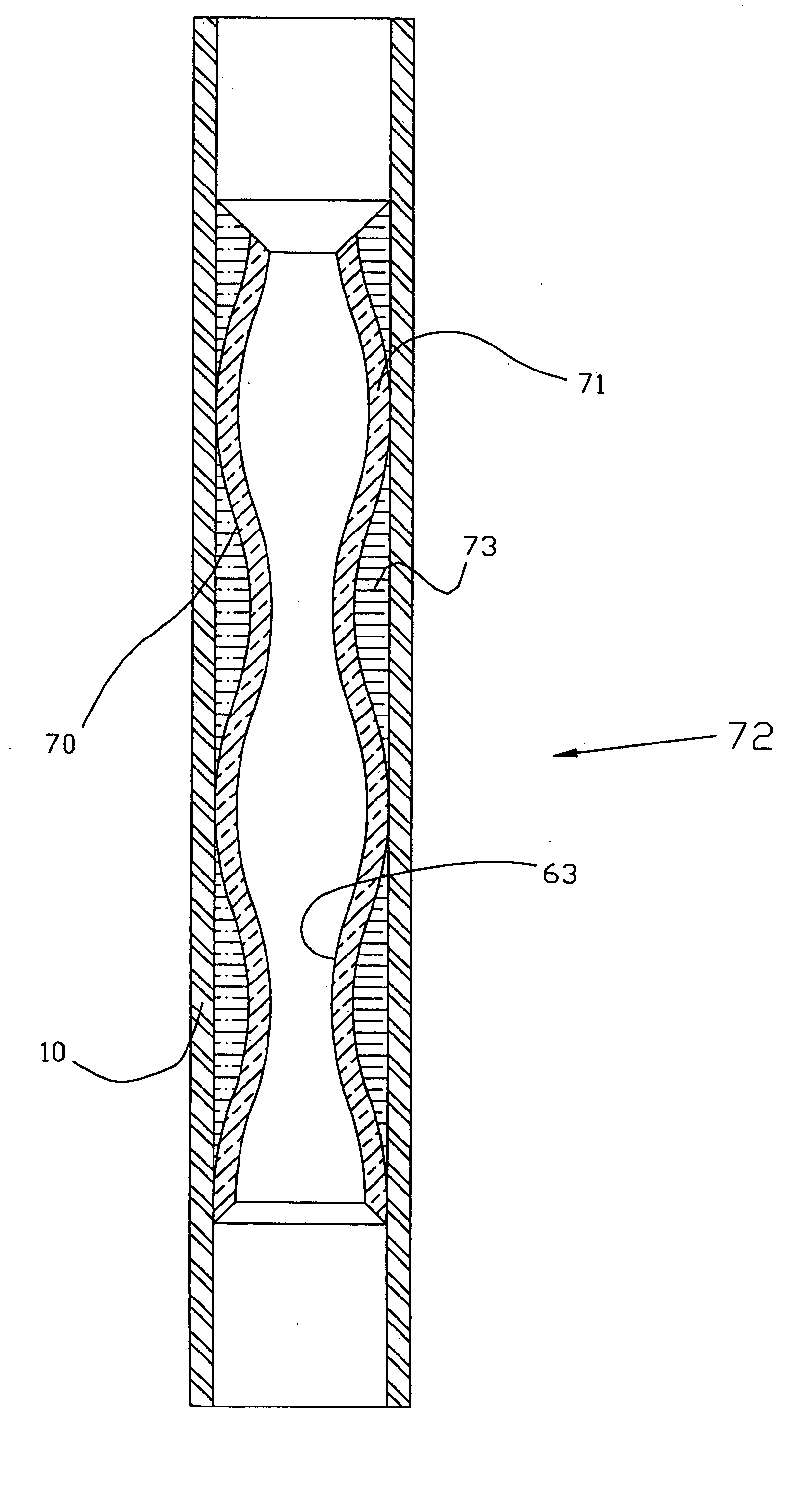
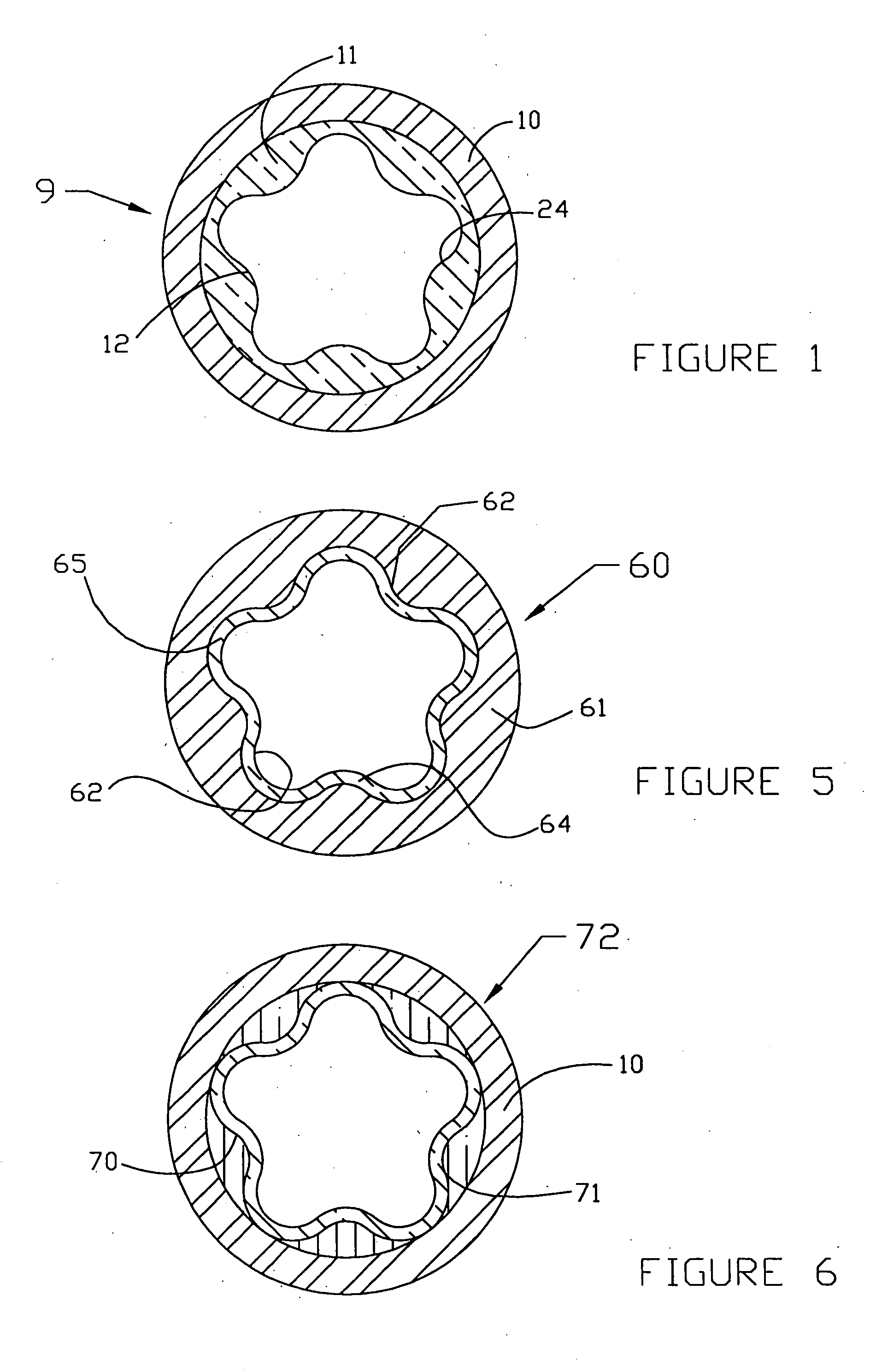
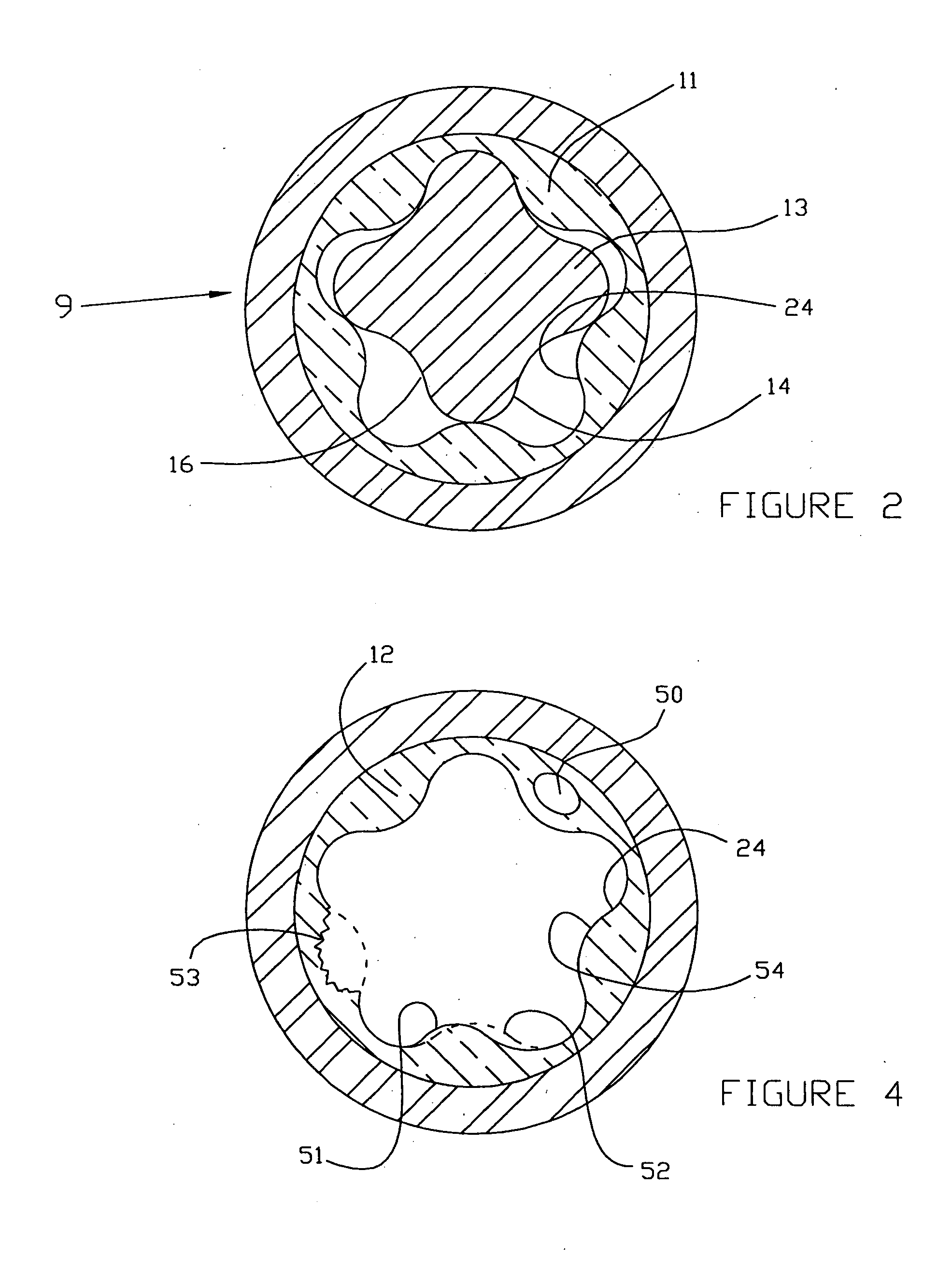
- A stator design featuring a substantially uniform elastomer layer on the interior profile, with optional variations in thickness and reinforcement, to enhance mechanical strength and heat conduction, and an integral elastomeric layer formed on the interior profile of a cylindrical housing or tube, which can include a profiled reinforcement member or a cast-in inner stator member.

Energy Efficiency Standards for Industrial Pump Systems
Energy efficiency standards for industrial pump systems have become increasingly critical as industries seek to reduce operational costs and meet environmental regulations. The comparison between progressive cavity pumps and centrifugal pumps reveals significant differences in energy consumption patterns, directly impacting compliance with established efficiency benchmarks.
Current international standards, including ISO 14414 and the European Union's ErP Directive, establish minimum energy efficiency requirements for pump systems. These regulations typically focus on wire-to-water efficiency, considering the entire pump system including motors, drives, and control systems. Progressive cavity pumps generally demonstrate superior efficiency in low-flow, high-viscosity applications, often achieving 70-85% efficiency in their optimal operating range.
Centrifugal pumps, while less efficient with viscous fluids, excel in high-flow applications with thin liquids, reaching efficiencies of 80-90% at their best efficiency point. However, their performance degrades significantly when operating outside design parameters, a critical consideration for variable-demand applications where energy standards must be maintained across operating ranges.
The implementation of variable frequency drives has revolutionized energy efficiency compliance for both pump types. For centrifugal pumps, VFDs enable significant energy savings through speed modulation, particularly in systems with varying flow requirements. Progressive cavity pumps benefit from VFDs by maintaining optimal torque characteristics while reducing energy consumption during low-demand periods.
Regulatory frameworks increasingly emphasize system-level efficiency rather than component-level performance. This shift requires consideration of piping losses, control system energy consumption, and operational flexibility. Progressive cavity pumps often demonstrate better part-load efficiency, maintaining relatively stable performance across varying conditions, which aligns with modern energy standards that evaluate real-world operating scenarios rather than peak performance alone.
Future energy efficiency standards are expected to incorporate lifecycle energy assessments and smart monitoring requirements, favoring pump technologies that can adapt to changing operational demands while maintaining compliance with stringent efficiency thresholds.
Current international standards, including ISO 14414 and the European Union's ErP Directive, establish minimum energy efficiency requirements for pump systems. These regulations typically focus on wire-to-water efficiency, considering the entire pump system including motors, drives, and control systems. Progressive cavity pumps generally demonstrate superior efficiency in low-flow, high-viscosity applications, often achieving 70-85% efficiency in their optimal operating range.
Centrifugal pumps, while less efficient with viscous fluids, excel in high-flow applications with thin liquids, reaching efficiencies of 80-90% at their best efficiency point. However, their performance degrades significantly when operating outside design parameters, a critical consideration for variable-demand applications where energy standards must be maintained across operating ranges.
The implementation of variable frequency drives has revolutionized energy efficiency compliance for both pump types. For centrifugal pumps, VFDs enable significant energy savings through speed modulation, particularly in systems with varying flow requirements. Progressive cavity pumps benefit from VFDs by maintaining optimal torque characteristics while reducing energy consumption during low-demand periods.
Regulatory frameworks increasingly emphasize system-level efficiency rather than component-level performance. This shift requires consideration of piping losses, control system energy consumption, and operational flexibility. Progressive cavity pumps often demonstrate better part-load efficiency, maintaining relatively stable performance across varying conditions, which aligns with modern energy standards that evaluate real-world operating scenarios rather than peak performance alone.
Future energy efficiency standards are expected to incorporate lifecycle energy assessments and smart monitoring requirements, favoring pump technologies that can adapt to changing operational demands while maintaining compliance with stringent efficiency thresholds.
Environmental Impact Assessment of Pump Technologies
The environmental implications of pump technologies have become increasingly critical in industrial decision-making processes, particularly when comparing progressive cavity pumps and centrifugal pumps from a fluid dynamics perspective. Both technologies present distinct environmental footprints that extend beyond their operational efficiency to encompass energy consumption patterns, material usage, and lifecycle environmental costs.
Energy consumption represents the most significant environmental factor differentiating these pump technologies. Centrifugal pumps typically demonstrate superior energy efficiency when handling low-viscosity fluids at high flow rates, resulting in reduced carbon emissions during operation. However, their efficiency drops dramatically when dealing with viscous fluids or variable flow conditions, leading to increased energy waste and corresponding environmental impact.
Progressive cavity pumps exhibit more consistent energy consumption profiles across varying fluid viscosities and flow rates. While their absolute energy efficiency may be lower for thin fluids, they maintain stable performance with thick, abrasive, or multiphase fluids, potentially reducing overall energy consumption in specific applications. This consistency translates to more predictable environmental impact assessments and carbon footprint calculations.
Material consumption and waste generation differ significantly between these technologies. Progressive cavity pumps require regular replacement of elastomeric stators, generating polymer waste that requires proper disposal or recycling protocols. The frequency of replacement depends on fluid compatibility and operating conditions, directly impacting the pump's lifecycle environmental footprint.
Centrifugal pumps generally require less frequent component replacement but may necessitate more substantial infrastructure modifications when handling challenging fluids. The environmental cost of auxiliary systems, such as heating equipment for viscous fluids or filtration systems for abrasive materials, must be factored into comprehensive environmental assessments.
Fluid handling characteristics also influence environmental impact through spillage and containment considerations. Progressive cavity pumps' positive displacement nature provides better containment of hazardous or environmentally sensitive fluids, reducing the risk of environmental contamination. Centrifugal pumps may experience seal leakage or cavitation-related issues that could compromise fluid containment, particularly in demanding applications.
The manufacturing environmental footprint varies between technologies, with progressive cavity pumps requiring specialized elastomer production and centrifugal pumps demanding precision metal casting and machining processes, each carrying distinct environmental implications.
Energy consumption represents the most significant environmental factor differentiating these pump technologies. Centrifugal pumps typically demonstrate superior energy efficiency when handling low-viscosity fluids at high flow rates, resulting in reduced carbon emissions during operation. However, their efficiency drops dramatically when dealing with viscous fluids or variable flow conditions, leading to increased energy waste and corresponding environmental impact.
Progressive cavity pumps exhibit more consistent energy consumption profiles across varying fluid viscosities and flow rates. While their absolute energy efficiency may be lower for thin fluids, they maintain stable performance with thick, abrasive, or multiphase fluids, potentially reducing overall energy consumption in specific applications. This consistency translates to more predictable environmental impact assessments and carbon footprint calculations.
Material consumption and waste generation differ significantly between these technologies. Progressive cavity pumps require regular replacement of elastomeric stators, generating polymer waste that requires proper disposal or recycling protocols. The frequency of replacement depends on fluid compatibility and operating conditions, directly impacting the pump's lifecycle environmental footprint.
Centrifugal pumps generally require less frequent component replacement but may necessitate more substantial infrastructure modifications when handling challenging fluids. The environmental cost of auxiliary systems, such as heating equipment for viscous fluids or filtration systems for abrasive materials, must be factored into comprehensive environmental assessments.
Fluid handling characteristics also influence environmental impact through spillage and containment considerations. Progressive cavity pumps' positive displacement nature provides better containment of hazardous or environmentally sensitive fluids, reducing the risk of environmental contamination. Centrifugal pumps may experience seal leakage or cavitation-related issues that could compromise fluid containment, particularly in demanding applications.
The manufacturing environmental footprint varies between technologies, with progressive cavity pumps requiring specialized elastomer production and centrifugal pumps demanding precision metal casting and machining processes, each carrying distinct environmental implications.
Unlock deeper insights with PatSnap Eureka Quick Research — get a full tech report to explore trends and direct your research. Try now!
Generate Your Research Report Instantly with AI Agent
Supercharge your innovation with PatSnap Eureka AI Agent Platform!