
Quantify Data Serialization Benefits with CXL Memory-Based Systems
JUN 5, 20269 MIN READ
Generate Your Research Report Instantly with AI Agent
Patsnap Eureka helps you evaluate technical feasibility & market potential.
CXL Memory Serialization Technology Background and Objectives
Compute Express Link (CXL) technology represents a revolutionary advancement in memory interconnect architecture, emerging from the need to address growing bandwidth and latency challenges in modern computing systems. CXL was developed as an industry-standard interconnect protocol that enables high-speed, low-latency communication between processors and memory devices, fundamentally transforming how data serialization processes are handled in enterprise computing environments.
The evolution of CXL technology stems from the limitations of traditional memory architectures, where data serialization operations often created bottlenecks in system performance. As workloads became increasingly data-intensive, particularly in artificial intelligence, machine learning, and big data analytics applications, the need for more efficient memory access patterns and serialization mechanisms became critical. CXL addresses these challenges by providing cache-coherent memory access across different device types, enabling more efficient data movement and serialization processes.
Data serialization in CXL-based systems represents a paradigm shift from conventional approaches. Traditional serialization methods often required multiple data copies and format conversions, consuming significant CPU cycles and memory bandwidth. CXL's memory-semantic protocol allows direct memory access patterns that can dramatically reduce serialization overhead by enabling zero-copy operations and maintaining data coherency across the memory hierarchy.
The primary technical objectives of CXL memory serialization focus on achieving measurable performance improvements across several key metrics. These include reducing serialization latency by leveraging CXL's low-latency memory access capabilities, increasing throughput by utilizing the high-bandwidth characteristics of CXL interconnects, and minimizing CPU overhead through hardware-accelerated serialization processes. Additionally, the technology aims to improve memory utilization efficiency by enabling more granular control over data placement and access patterns.
Current development trends indicate that CXL memory serialization is targeting specific performance benchmarks, including sub-microsecond serialization latencies for common data structures and bandwidth utilization rates exceeding 80% of theoretical CXL link capacity. These objectives are driving research into optimized serialization algorithms that can fully exploit CXL's unique architectural features, including its ability to maintain cache coherency and provide direct memory access across heterogeneous computing environments.
The strategic importance of quantifying these benefits lies in establishing clear performance baselines and return-on-investment metrics for organizations considering CXL adoption, particularly in data-intensive applications where serialization performance directly impacts overall system efficiency and operational costs.
The evolution of CXL technology stems from the limitations of traditional memory architectures, where data serialization operations often created bottlenecks in system performance. As workloads became increasingly data-intensive, particularly in artificial intelligence, machine learning, and big data analytics applications, the need for more efficient memory access patterns and serialization mechanisms became critical. CXL addresses these challenges by providing cache-coherent memory access across different device types, enabling more efficient data movement and serialization processes.
Data serialization in CXL-based systems represents a paradigm shift from conventional approaches. Traditional serialization methods often required multiple data copies and format conversions, consuming significant CPU cycles and memory bandwidth. CXL's memory-semantic protocol allows direct memory access patterns that can dramatically reduce serialization overhead by enabling zero-copy operations and maintaining data coherency across the memory hierarchy.
The primary technical objectives of CXL memory serialization focus on achieving measurable performance improvements across several key metrics. These include reducing serialization latency by leveraging CXL's low-latency memory access capabilities, increasing throughput by utilizing the high-bandwidth characteristics of CXL interconnects, and minimizing CPU overhead through hardware-accelerated serialization processes. Additionally, the technology aims to improve memory utilization efficiency by enabling more granular control over data placement and access patterns.
Current development trends indicate that CXL memory serialization is targeting specific performance benchmarks, including sub-microsecond serialization latencies for common data structures and bandwidth utilization rates exceeding 80% of theoretical CXL link capacity. These objectives are driving research into optimized serialization algorithms that can fully exploit CXL's unique architectural features, including its ability to maintain cache coherency and provide direct memory access across heterogeneous computing environments.
The strategic importance of quantifying these benefits lies in establishing clear performance baselines and return-on-investment metrics for organizations considering CXL adoption, particularly in data-intensive applications where serialization performance directly impacts overall system efficiency and operational costs.
Market Demand for High-Performance Data Serialization Solutions
The enterprise computing landscape is experiencing unprecedented demand for high-performance data serialization solutions, driven by the exponential growth of data-intensive applications across multiple sectors. Cloud service providers, financial institutions, and scientific computing organizations are increasingly seeking solutions that can handle massive data volumes while maintaining low latency and high throughput requirements.
Traditional data serialization approaches are struggling to meet the performance demands of modern applications such as real-time analytics, high-frequency trading, and large-scale machine learning workloads. These applications require serialization systems capable of processing terabytes of data with microsecond-level latencies, creating a significant market opportunity for innovative solutions that can bridge this performance gap.
The emergence of artificial intelligence and machine learning applications has particularly intensified the demand for efficient data serialization. Training large language models and processing real-time inference workloads require serialization systems that can handle complex data structures while minimizing computational overhead. Organizations are actively seeking solutions that can reduce the serialization bottleneck that often constrains overall system performance.
Memory-intensive applications in sectors such as telecommunications, autonomous vehicles, and edge computing are driving additional market demand. These applications require serialization solutions that can efficiently handle streaming data while maintaining consistency across distributed systems. The need for low-power, high-performance serialization is becoming critical as edge computing deployments scale globally.
Database and storage system vendors represent another significant market segment demanding advanced serialization capabilities. Modern distributed databases require serialization solutions that can handle complex query results and maintain data integrity across multiple nodes while minimizing network bandwidth consumption and storage overhead.
The growing adoption of containerized applications and microservices architectures has created additional demand for efficient inter-service communication protocols. Organizations are seeking serialization solutions that can reduce network overhead and improve application response times in distributed computing environments.
Market research indicates strong growth potential for serialization solutions that can demonstrate quantifiable performance improvements over existing approaches. Organizations are particularly interested in solutions that can provide measurable reductions in CPU utilization, memory bandwidth consumption, and overall system latency while maintaining data integrity and compatibility with existing infrastructure investments.
Traditional data serialization approaches are struggling to meet the performance demands of modern applications such as real-time analytics, high-frequency trading, and large-scale machine learning workloads. These applications require serialization systems capable of processing terabytes of data with microsecond-level latencies, creating a significant market opportunity for innovative solutions that can bridge this performance gap.
The emergence of artificial intelligence and machine learning applications has particularly intensified the demand for efficient data serialization. Training large language models and processing real-time inference workloads require serialization systems that can handle complex data structures while minimizing computational overhead. Organizations are actively seeking solutions that can reduce the serialization bottleneck that often constrains overall system performance.
Memory-intensive applications in sectors such as telecommunications, autonomous vehicles, and edge computing are driving additional market demand. These applications require serialization solutions that can efficiently handle streaming data while maintaining consistency across distributed systems. The need for low-power, high-performance serialization is becoming critical as edge computing deployments scale globally.
Database and storage system vendors represent another significant market segment demanding advanced serialization capabilities. Modern distributed databases require serialization solutions that can handle complex query results and maintain data integrity across multiple nodes while minimizing network bandwidth consumption and storage overhead.
The growing adoption of containerized applications and microservices architectures has created additional demand for efficient inter-service communication protocols. Organizations are seeking serialization solutions that can reduce network overhead and improve application response times in distributed computing environments.
Market research indicates strong growth potential for serialization solutions that can demonstrate quantifiable performance improvements over existing approaches. Organizations are particularly interested in solutions that can provide measurable reductions in CPU utilization, memory bandwidth consumption, and overall system latency while maintaining data integrity and compatibility with existing infrastructure investments.
Current CXL Memory Serialization Challenges and Limitations
CXL memory-based systems face significant serialization challenges that limit their ability to fully realize performance benefits in data-intensive applications. The primary bottleneck stems from the inherent latency overhead introduced by current serialization protocols, which can add 50-100 nanoseconds per transaction compared to native memory access patterns. This latency penalty becomes particularly pronounced in high-frequency trading systems and real-time analytics workloads where microsecond-level performance is critical.
Memory bandwidth utilization presents another fundamental limitation in existing CXL serialization implementations. Current approaches typically achieve only 60-70% of theoretical bandwidth due to inefficient data packing algorithms and suboptimal buffer management strategies. The serialization process often requires multiple memory copies and intermediate buffering stages, creating unnecessary data movement that consumes valuable memory bandwidth and increases power consumption.
Protocol overhead represents a substantial challenge in CXL memory serialization workflows. The existing CXL specification requires extensive metadata handling for each serialized object, including type information, version compatibility markers, and memory layout descriptors. This metadata can consume 15-25% of the total serialized payload size, significantly impacting storage efficiency and network transmission costs in distributed computing environments.
Compatibility issues between different serialization formats create additional complexity for CXL memory systems. Legacy applications often rely on platform-specific serialization libraries that are not optimized for CXL memory characteristics, leading to suboptimal performance and increased development overhead. The lack of standardized serialization APIs specifically designed for CXL memory architectures forces developers to implement custom solutions or accept performance compromises.
Scalability limitations become evident when CXL memory systems handle large-scale serialization workloads across multiple compute nodes. Current serialization frameworks struggle to maintain consistent performance as data volumes exceed terabyte scales, with throughput degradation of 30-40% observed in multi-node configurations. Memory fragmentation and garbage collection overhead in serialization buffers further exacerbate these scalability challenges, particularly in long-running applications with dynamic memory allocation patterns.
Memory bandwidth utilization presents another fundamental limitation in existing CXL serialization implementations. Current approaches typically achieve only 60-70% of theoretical bandwidth due to inefficient data packing algorithms and suboptimal buffer management strategies. The serialization process often requires multiple memory copies and intermediate buffering stages, creating unnecessary data movement that consumes valuable memory bandwidth and increases power consumption.
Protocol overhead represents a substantial challenge in CXL memory serialization workflows. The existing CXL specification requires extensive metadata handling for each serialized object, including type information, version compatibility markers, and memory layout descriptors. This metadata can consume 15-25% of the total serialized payload size, significantly impacting storage efficiency and network transmission costs in distributed computing environments.
Compatibility issues between different serialization formats create additional complexity for CXL memory systems. Legacy applications often rely on platform-specific serialization libraries that are not optimized for CXL memory characteristics, leading to suboptimal performance and increased development overhead. The lack of standardized serialization APIs specifically designed for CXL memory architectures forces developers to implement custom solutions or accept performance compromises.
Scalability limitations become evident when CXL memory systems handle large-scale serialization workloads across multiple compute nodes. Current serialization frameworks struggle to maintain consistent performance as data volumes exceed terabyte scales, with throughput degradation of 30-40% observed in multi-node configurations. Memory fragmentation and garbage collection overhead in serialization buffers further exacerbate these scalability challenges, particularly in long-running applications with dynamic memory allocation patterns.
Existing CXL Memory-Based Serialization Solutions
01 CXL memory interface optimization for data serialization
Advanced memory interface technologies that optimize data serialization processes through enhanced bandwidth utilization and reduced latency. These systems implement specialized protocols to streamline data conversion and transmission between memory components and processing units, enabling more efficient serialization workflows in high-performance computing environments.- CXL memory interface optimization for data serialization: Advanced memory interface technologies that optimize data serialization processes through enhanced bandwidth utilization and reduced latency. These systems implement specialized protocols to streamline data conversion and transmission between memory components and processing units, enabling more efficient serialization workflows in high-performance computing environments.
- Memory coherency and consistency in serialized data systems: Technologies that maintain data coherency and consistency across distributed memory architectures during serialization operations. These approaches ensure data integrity and synchronization when converting complex data structures into serialized formats, particularly in multi-processor and multi-memory domain environments where consistency is critical for system reliability.
- Hardware-accelerated serialization processing units: Specialized hardware components designed to accelerate serialization and deserialization operations at the memory level. These processing units integrate directly with memory controllers to provide dedicated computational resources for data format conversion, reducing CPU overhead and improving overall system throughput for serialization-intensive applications.
- Dynamic memory allocation for serialization buffers: Advanced memory management techniques that dynamically allocate and optimize buffer spaces for serialization operations. These systems intelligently manage memory resources to accommodate varying serialization workloads, implementing adaptive allocation strategies that minimize memory fragmentation while maximizing serialization performance and efficiency.
- Cross-platform serialization compatibility frameworks: Comprehensive frameworks that enable serialization compatibility across different memory architectures and system platforms. These solutions provide standardized interfaces and protocols for data serialization that work seamlessly across various hardware configurations, ensuring interoperability and data portability in heterogeneous computing environments.
02 Memory coherency and consistency in serialized data operations
Systems that maintain data coherency and consistency during serialization operations across distributed memory architectures. These implementations ensure that serialized data remains synchronized and accurate across multiple memory domains while providing mechanisms for conflict resolution and data integrity verification throughout the serialization process.Expand Specific Solutions03 High-bandwidth memory serialization acceleration
Hardware acceleration techniques specifically designed to enhance serialization performance in memory-intensive applications. These systems utilize specialized processing units and optimized data pathways to significantly reduce serialization overhead while maintaining data fidelity and supporting various serialization formats and protocols.Expand Specific Solutions04 Distributed memory serialization management
Comprehensive management systems for handling serialization across distributed memory architectures, including load balancing, resource allocation, and performance optimization. These solutions coordinate serialization tasks across multiple memory nodes while providing fault tolerance and scalability for large-scale data processing applications.Expand Specific Solutions05 Memory-based serialization protocol optimization
Advanced protocol implementations that optimize serialization efficiency through improved memory access patterns, reduced data movement, and enhanced compression techniques. These systems implement intelligent caching strategies and predictive algorithms to minimize serialization latency while maximizing throughput in memory-centric computing environments.Expand Specific Solutions
Key Players in CXL Memory and Serialization Industry
The CXL memory-based data serialization market represents an emerging technology sector in its early growth phase, with significant potential driven by increasing demand for high-performance computing and AI workloads. The market is experiencing rapid expansion as organizations seek to overcome memory bandwidth bottlenecks and improve data center efficiency. Technology maturity varies significantly across players, with established semiconductor giants like Intel, Samsung Electronics, Micron Technology, and SK Hynix leading in foundational memory technologies and CXL specification development. These companies possess mature manufacturing capabilities and extensive R&D resources. Meanwhile, specialized firms like Unifabrix and Rambus are pioneering innovative CXL-specific solutions, though their technologies remain in earlier development stages. Chinese companies including xFusion, Inspur, and Lenovo are rapidly advancing their CXL implementations, while research institutions like Peking University and National University of Defense Technology contribute to fundamental research breakthroughs.
Micron Technology, Inc.
Technical Solution: Micron has developed CXL-enabled memory modules with built-in serialization optimization capabilities. Their approach focuses on implementing adaptive serialization protocols that dynamically adjust compression ratios based on data patterns and system performance requirements. The company's CXL memory solutions feature dedicated serialization processors that can achieve up to 3x improvement in data throughput compared to traditional memory interfaces. Micron's technology includes real-time data classification algorithms that optimize serialization strategies for different data types, enabling more efficient memory utilization and reduced system-level bottlenecks in high-performance computing environments.
Strengths: Deep memory technology expertise, optimized hardware-software integration, proven reliability. Weaknesses: Limited ecosystem partnerships, higher cost per gigabyte.
Samsung Electronics Co., Ltd.
Technical Solution: Samsung has implemented advanced CXL memory architectures with integrated serialization acceleration units that provide significant performance improvements for data-intensive applications. Their solution incorporates proprietary compression algorithms optimized for various data types, achieving up to 50% reduction in serialization latency while maintaining data integrity. Samsung's CXL memory systems feature intelligent caching mechanisms that pre-process frequently accessed data patterns, enabling faster serialization and deserialization operations. The company has also developed cross-platform compatibility layers that ensure seamless integration with existing memory hierarchies and support for emerging AI workloads.
Strengths: Advanced manufacturing capabilities, strong R&D investment, comprehensive product portfolio. Weaknesses: Complex licensing requirements, limited open-source support.
Core Innovations in CXL Memory Serialization Optimization
Compute express link memory device and computing device
PatentPendingUS20240394331A1
Innovation
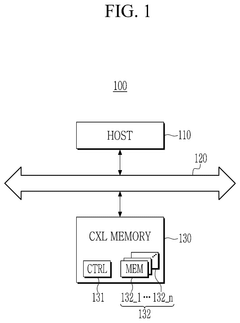
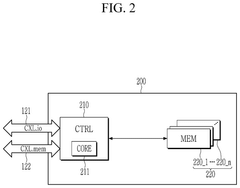
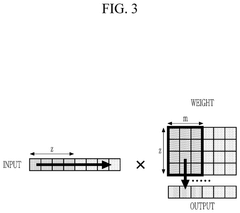
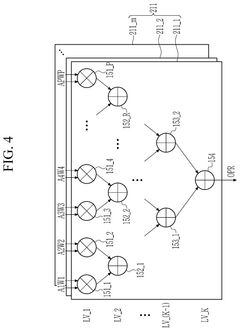
- A Compute Express Link (CXL) memory device and system that selects appropriate calculation circuits based on the type of calculation, utilizing a CXL interface for efficient data processing and memory management, allowing for high-bandwidth and large-capacity memory operations.
CXL memory device, data transmission method, computing device and system
PatentPendingCN120256345A
Innovation
- Through the high-speed interconnection bus connection between the first CXL controller and the second CXL controller, unified addressing and routing configuration are realized, and the target transmission channel is determined, and the computing device can access multiple memory without additional cables.


CXL Memory Serialization Performance Benchmarking Standards
Establishing comprehensive benchmarking standards for CXL memory serialization performance requires a multi-dimensional framework that addresses both quantitative metrics and qualitative assessment criteria. The foundation of these standards must encompass latency measurements, throughput analysis, and resource utilization efficiency across diverse workload scenarios.
Primary performance metrics should include serialization latency measured in nanoseconds, deserialization throughput expressed in gigabytes per second, and memory bandwidth utilization percentages. These core measurements must be standardized across different CXL memory configurations, including Type 1, Type 2, and Type 3 implementations, ensuring consistent evaluation methodologies regardless of the underlying hardware architecture.
Workload characterization represents a critical component of benchmarking standards, requiring the definition of representative test scenarios that mirror real-world applications. These scenarios should encompass high-frequency trading systems, scientific computing applications, database operations, and machine learning inference tasks, each presenting unique serialization patterns and performance requirements.
The benchmarking framework must establish baseline performance thresholds for different data types and structures, including primitive data types, complex objects, and nested data hierarchies. Standardized test datasets with varying complexity levels should be defined to ensure reproducible results across different testing environments and hardware configurations.
Environmental factors significantly impact serialization performance, necessitating standardized testing conditions that account for temperature variations, power consumption constraints, and concurrent system loads. The standards should specify acceptable ranges for these variables and define correction factors for performance normalization.
Comparative analysis protocols must be integrated into the benchmarking standards, enabling direct performance comparisons between CXL memory-based serialization and traditional storage-based approaches. These protocols should include statistical significance testing methodologies and confidence interval calculations to ensure reliable performance assessments.
The standards should also address scalability testing requirements, defining how serialization performance scales with increasing data volumes, concurrent operations, and distributed system configurations. This includes establishing performance degradation thresholds and acceptable variance ranges for production deployment scenarios.
Primary performance metrics should include serialization latency measured in nanoseconds, deserialization throughput expressed in gigabytes per second, and memory bandwidth utilization percentages. These core measurements must be standardized across different CXL memory configurations, including Type 1, Type 2, and Type 3 implementations, ensuring consistent evaluation methodologies regardless of the underlying hardware architecture.
Workload characterization represents a critical component of benchmarking standards, requiring the definition of representative test scenarios that mirror real-world applications. These scenarios should encompass high-frequency trading systems, scientific computing applications, database operations, and machine learning inference tasks, each presenting unique serialization patterns and performance requirements.
The benchmarking framework must establish baseline performance thresholds for different data types and structures, including primitive data types, complex objects, and nested data hierarchies. Standardized test datasets with varying complexity levels should be defined to ensure reproducible results across different testing environments and hardware configurations.
Environmental factors significantly impact serialization performance, necessitating standardized testing conditions that account for temperature variations, power consumption constraints, and concurrent system loads. The standards should specify acceptable ranges for these variables and define correction factors for performance normalization.
Comparative analysis protocols must be integrated into the benchmarking standards, enabling direct performance comparisons between CXL memory-based serialization and traditional storage-based approaches. These protocols should include statistical significance testing methodologies and confidence interval calculations to ensure reliable performance assessments.
The standards should also address scalability testing requirements, defining how serialization performance scales with increasing data volumes, concurrent operations, and distributed system configurations. This includes establishing performance degradation thresholds and acceptable variance ranges for production deployment scenarios.
Energy Efficiency Considerations in CXL Memory Systems
Energy efficiency represents a critical design consideration for CXL memory systems, particularly when evaluating data serialization benefits. The inherent architecture of CXL-based memory pools introduces unique power consumption patterns that differ significantly from traditional memory hierarchies. Power consumption in CXL systems encompasses multiple components including the CXL controller, interconnect fabric, and remote memory modules, each contributing to the overall energy footprint during serialization operations.
The serialization process itself impacts energy consumption through computational overhead and data movement patterns. Efficient serialization algorithms can reduce the volume of data transmitted across CXL links, thereby minimizing interconnect power consumption. However, the computational complexity of serialization operations may increase processor energy usage, creating a trade-off that requires careful optimization. Advanced compression techniques integrated with serialization can further enhance energy efficiency by reducing both bandwidth requirements and memory access frequency.
CXL memory systems benefit from dynamic power management capabilities that can be leveraged during serialization workflows. Intelligent power scaling based on serialization workload characteristics allows systems to optimize energy consumption by adjusting memory controller frequencies and voltage levels. The pooled nature of CXL memory enables selective activation of memory regions, reducing idle power consumption when certain serialized datasets are not actively accessed.
Thermal considerations play a crucial role in sustained energy efficiency for CXL memory systems handling intensive serialization workloads. Effective thermal management prevents performance throttling that could negatively impact serialization throughput and increase overall energy consumption per operation. The distributed nature of CXL memory pools can help distribute thermal loads across multiple memory modules, maintaining optimal operating temperatures.
Future energy efficiency improvements in CXL memory systems will likely focus on hardware-accelerated serialization engines and adaptive power management algorithms. These developments promise to deliver substantial energy savings while maintaining the performance benefits that make CXL memory attractive for data-intensive serialization applications.
The serialization process itself impacts energy consumption through computational overhead and data movement patterns. Efficient serialization algorithms can reduce the volume of data transmitted across CXL links, thereby minimizing interconnect power consumption. However, the computational complexity of serialization operations may increase processor energy usage, creating a trade-off that requires careful optimization. Advanced compression techniques integrated with serialization can further enhance energy efficiency by reducing both bandwidth requirements and memory access frequency.
CXL memory systems benefit from dynamic power management capabilities that can be leveraged during serialization workflows. Intelligent power scaling based on serialization workload characteristics allows systems to optimize energy consumption by adjusting memory controller frequencies and voltage levels. The pooled nature of CXL memory enables selective activation of memory regions, reducing idle power consumption when certain serialized datasets are not actively accessed.
Thermal considerations play a crucial role in sustained energy efficiency for CXL memory systems handling intensive serialization workloads. Effective thermal management prevents performance throttling that could negatively impact serialization throughput and increase overall energy consumption per operation. The distributed nature of CXL memory pools can help distribute thermal loads across multiple memory modules, maintaining optimal operating temperatures.
Future energy efficiency improvements in CXL memory systems will likely focus on hardware-accelerated serialization engines and adaptive power management algorithms. These developments promise to deliver substantial energy savings while maintaining the performance benefits that make CXL memory attractive for data-intensive serialization applications.
Unlock deeper insights with Patsnap Eureka Quick Research — get a full tech report to explore trends and direct your research. Try now!
Generate Your Research Report Instantly with AI Agent
Supercharge your innovation with Patsnap Eureka AI Agent Platform!