Quantify Hydrocolloid Gel Toughness Using Indentation Test
JAN 12, 20269 MIN READ
Generate Your Research Report Instantly with AI Agent
Patsnap Eureka helps you evaluate technical feasibility & market potential.
Hydrocolloid Gel Mechanics Background and Objectives
Hydrocolloid gels have emerged as critical materials across diverse industries, from food science and pharmaceuticals to biomedical engineering and cosmetics. These three-dimensional polymer networks, capable of retaining substantial amounts of water while maintaining structural integrity, exhibit unique mechanical properties that directly influence their functional performance. The mechanical behavior of hydrocolloid gels, particularly their toughness, determines their suitability for specific applications such as drug delivery systems, tissue engineering scaffolds, wound dressings, and food texture modification.
Historically, the characterization of gel mechanical properties has evolved from simple empirical assessments to sophisticated quantitative methodologies. Early approaches relied primarily on subjective sensory evaluation or rudimentary compression tests that provided limited insight into material behavior. The development of standardized mechanical testing protocols, including tensile, compression, and rheological measurements, marked significant progress in understanding gel mechanics. However, these conventional methods often require large sample volumes, destructive testing procedures, and may not accurately reflect real-world loading conditions experienced by gels in practical applications.
Indentation testing has gained prominence as a versatile technique for mechanical characterization, offering distinct advantages over traditional methods. This approach enables localized property assessment with minimal sample preparation, requires smaller material quantities, and can simulate contact scenarios relevant to actual usage conditions. The technique involves applying a controlled force or displacement through an indenter of defined geometry while measuring the resulting material response, providing quantitative data on elastic modulus, hardness, and critically, toughness.
The primary objective of this technical investigation is to establish robust methodologies for quantifying hydrocolloid gel toughness through indentation testing. Toughness, defined as the material's ability to absorb energy and resist fracture under mechanical stress, represents a crucial performance indicator that encompasses both strength and ductility characteristics. Achieving accurate toughness quantification requires addressing several technical challenges, including appropriate indenter geometry selection, loading rate optimization, data interpretation frameworks, and correlation with macroscopic mechanical behavior.
Furthermore, this research aims to bridge the gap between microscale indentation measurements and bulk material properties, enabling predictive modeling of gel performance in diverse application contexts. By developing standardized testing protocols and analytical methods, this work seeks to facilitate comparative studies across different hydrocolloid systems and accelerate material optimization for targeted applications.
Historically, the characterization of gel mechanical properties has evolved from simple empirical assessments to sophisticated quantitative methodologies. Early approaches relied primarily on subjective sensory evaluation or rudimentary compression tests that provided limited insight into material behavior. The development of standardized mechanical testing protocols, including tensile, compression, and rheological measurements, marked significant progress in understanding gel mechanics. However, these conventional methods often require large sample volumes, destructive testing procedures, and may not accurately reflect real-world loading conditions experienced by gels in practical applications.
Indentation testing has gained prominence as a versatile technique for mechanical characterization, offering distinct advantages over traditional methods. This approach enables localized property assessment with minimal sample preparation, requires smaller material quantities, and can simulate contact scenarios relevant to actual usage conditions. The technique involves applying a controlled force or displacement through an indenter of defined geometry while measuring the resulting material response, providing quantitative data on elastic modulus, hardness, and critically, toughness.
The primary objective of this technical investigation is to establish robust methodologies for quantifying hydrocolloid gel toughness through indentation testing. Toughness, defined as the material's ability to absorb energy and resist fracture under mechanical stress, represents a crucial performance indicator that encompasses both strength and ductility characteristics. Achieving accurate toughness quantification requires addressing several technical challenges, including appropriate indenter geometry selection, loading rate optimization, data interpretation frameworks, and correlation with macroscopic mechanical behavior.
Furthermore, this research aims to bridge the gap between microscale indentation measurements and bulk material properties, enabling predictive modeling of gel performance in diverse application contexts. By developing standardized testing protocols and analytical methods, this work seeks to facilitate comparative studies across different hydrocolloid systems and accelerate material optimization for targeted applications.
Market Demand for Gel Toughness Characterization
The demand for accurate characterization of hydrocolloid gel toughness has experienced substantial growth across multiple industrial sectors in recent years. This surge is primarily driven by the expanding applications of hydrogels in biomedical engineering, food technology, cosmetics, and pharmaceutical industries. In the biomedical field, tissue engineering scaffolds and drug delivery systems require precise mechanical property assessment to ensure biocompatibility and functional performance. The ability to quantify gel toughness through standardized indentation testing has become essential for quality control and product development.
The food industry represents another significant market segment where gel toughness characterization plays a critical role. Manufacturers of gelatin-based products, confectioneries, and texture-modified foods increasingly demand reliable testing methods to maintain consistency and meet consumer expectations. Regulatory requirements for food safety and quality standards have further intensified the need for reproducible mechanical testing protocols. Traditional sensory evaluation methods are being supplemented or replaced by objective instrumental measurements that provide quantifiable data for product optimization.
Pharmaceutical and cosmetic sectors have also contributed to market expansion, particularly in the development of topical formulations, wound dressings, and transdermal patches. These applications require gels with specific mechanical properties that can be precisely controlled and verified through indentation testing. The growing emphasis on personalized medicine and customized formulations has created additional demand for flexible testing solutions that can accommodate diverse sample types and testing conditions.
The market landscape is further shaped by technological advancements in testing instrumentation and data analysis capabilities. Modern indentation testing systems offer enhanced sensitivity, automation, and integration with digital platforms, making them more accessible to research laboratories and industrial quality control departments. The shift toward sustainable and bio-based materials has also stimulated interest in characterizing novel hydrocolloid formulations derived from natural sources.
Emerging applications in soft robotics, flexible electronics, and smart materials are opening new market opportunities for gel toughness characterization. These cutting-edge fields require materials with tailored mechanical properties that can only be achieved through precise measurement and optimization protocols. The convergence of materials science, engineering, and biological applications continues to drive innovation in testing methodologies and expand the overall market potential for hydrocolloid gel characterization technologies.
The food industry represents another significant market segment where gel toughness characterization plays a critical role. Manufacturers of gelatin-based products, confectioneries, and texture-modified foods increasingly demand reliable testing methods to maintain consistency and meet consumer expectations. Regulatory requirements for food safety and quality standards have further intensified the need for reproducible mechanical testing protocols. Traditional sensory evaluation methods are being supplemented or replaced by objective instrumental measurements that provide quantifiable data for product optimization.
Pharmaceutical and cosmetic sectors have also contributed to market expansion, particularly in the development of topical formulations, wound dressings, and transdermal patches. These applications require gels with specific mechanical properties that can be precisely controlled and verified through indentation testing. The growing emphasis on personalized medicine and customized formulations has created additional demand for flexible testing solutions that can accommodate diverse sample types and testing conditions.
The market landscape is further shaped by technological advancements in testing instrumentation and data analysis capabilities. Modern indentation testing systems offer enhanced sensitivity, automation, and integration with digital platforms, making them more accessible to research laboratories and industrial quality control departments. The shift toward sustainable and bio-based materials has also stimulated interest in characterizing novel hydrocolloid formulations derived from natural sources.
Emerging applications in soft robotics, flexible electronics, and smart materials are opening new market opportunities for gel toughness characterization. These cutting-edge fields require materials with tailored mechanical properties that can only be achieved through precise measurement and optimization protocols. The convergence of materials science, engineering, and biological applications continues to drive innovation in testing methodologies and expand the overall market potential for hydrocolloid gel characterization technologies.
Current Challenges in Indentation Testing of Hydrocolloids
Indentation testing has emerged as a promising method for quantifying hydrocolloid gel toughness due to its simplicity and minimal sample preparation requirements. However, several technical challenges continue to limit its widespread adoption and standardization in both research and industrial applications. These challenges span from fundamental measurement principles to data interpretation complexities.
One primary challenge lies in the selection and standardization of indenter geometry. Spherical, cylindrical, and conical indenters each produce different stress distributions within the gel matrix, leading to variations in measured mechanical properties. The lack of consensus on optimal indenter size relative to sample dimensions creates inconsistencies across studies, making direct comparisons of toughness values problematic. Additionally, surface roughness and material properties of the indenter itself can introduce frictional effects that confound pure mechanical measurements.
Boundary condition control presents another significant obstacle. Hydrocolloid gels exhibit high water content and are prone to deformation at contact surfaces, making it difficult to establish well-defined fixed or free boundary conditions. Substrate adhesion variability and potential slippage during testing can dramatically affect load-displacement curves, introducing systematic errors in toughness calculations. The challenge intensifies when testing soft gels where gravitational effects and sample self-weight become non-negligible factors.
The time-dependent viscoelastic behavior of hydrocolloids complicates indentation measurements considerably. Determining appropriate loading rates that balance between quasi-static conditions and practical testing duration remains contentious. Rapid indentation may not allow sufficient stress relaxation, while slow rates risk dehydration artifacts and extended testing protocols. This rate-dependency makes it challenging to extract intrinsic material properties independent of testing conditions.
Data interpretation and toughness quantification methodology also lack standardization. Various approaches exist for calculating toughness from indentation curves, including work-to-fracture integration, critical load determination, and energy dissipation analysis. Each method yields different numerical values and may be sensitive to different aspects of gel failure mechanisms. The transition from elastic deformation to crack initiation and propagation is often gradual in hydrocolloids, making precise failure point identification subjective.
Environmental control during testing poses practical difficulties. Hydrocolloid gels are highly sensitive to temperature fluctuations and humidity changes, which affect their mechanical properties significantly. Maintaining consistent hydration states throughout testing while preventing surface drying requires specialized equipment and protocols that are not universally available or standardized across laboratories.
One primary challenge lies in the selection and standardization of indenter geometry. Spherical, cylindrical, and conical indenters each produce different stress distributions within the gel matrix, leading to variations in measured mechanical properties. The lack of consensus on optimal indenter size relative to sample dimensions creates inconsistencies across studies, making direct comparisons of toughness values problematic. Additionally, surface roughness and material properties of the indenter itself can introduce frictional effects that confound pure mechanical measurements.
Boundary condition control presents another significant obstacle. Hydrocolloid gels exhibit high water content and are prone to deformation at contact surfaces, making it difficult to establish well-defined fixed or free boundary conditions. Substrate adhesion variability and potential slippage during testing can dramatically affect load-displacement curves, introducing systematic errors in toughness calculations. The challenge intensifies when testing soft gels where gravitational effects and sample self-weight become non-negligible factors.
The time-dependent viscoelastic behavior of hydrocolloids complicates indentation measurements considerably. Determining appropriate loading rates that balance between quasi-static conditions and practical testing duration remains contentious. Rapid indentation may not allow sufficient stress relaxation, while slow rates risk dehydration artifacts and extended testing protocols. This rate-dependency makes it challenging to extract intrinsic material properties independent of testing conditions.
Data interpretation and toughness quantification methodology also lack standardization. Various approaches exist for calculating toughness from indentation curves, including work-to-fracture integration, critical load determination, and energy dissipation analysis. Each method yields different numerical values and may be sensitive to different aspects of gel failure mechanisms. The transition from elastic deformation to crack initiation and propagation is often gradual in hydrocolloids, making precise failure point identification subjective.
Environmental control during testing poses practical difficulties. Hydrocolloid gels are highly sensitive to temperature fluctuations and humidity changes, which affect their mechanical properties significantly. Maintaining consistent hydration states throughout testing while preventing surface drying requires specialized equipment and protocols that are not universally available or standardized across laboratories.
Existing Indentation Test Solutions for Gel Toughness
01 Cross-linking agents for enhancing hydrocolloid gel strength
Cross-linking agents can be incorporated into hydrocolloid formulations to improve the mechanical strength and toughness of the resulting gels. These agents create chemical bonds between polymer chains, resulting in a more robust three-dimensional network structure. The cross-linking process enhances the gel's resistance to deformation and improves its overall structural integrity, making it suitable for applications requiring durable materials.- Cross-linking agents for enhancing hydrocolloid gel toughness: Cross-linking agents can be incorporated into hydrocolloid formulations to improve mechanical strength and toughness. These agents create chemical bonds between polymer chains, resulting in a more robust three-dimensional network structure. The cross-linking process enhances the gel's resistance to deformation and increases its overall durability and structural integrity.
- Multi-component hydrocolloid blends for improved toughness: Combining multiple hydrocolloid materials in specific ratios can create synergistic effects that enhance gel toughness. Different hydrocolloids contribute complementary properties such as elasticity, cohesiveness, and mechanical strength. The blending approach allows for optimization of physical properties while maintaining desired functional characteristics such as adhesion and moisture retention.
- Plasticizers and humectants for toughness modification: The addition of plasticizers and humectants can modify the mechanical properties of hydrocolloid gels by affecting their flexibility and toughness balance. These additives work by reducing intermolecular forces and increasing chain mobility, which can prevent brittleness while maintaining structural integrity. Proper selection and concentration of these components is critical for achieving optimal toughness characteristics.
- Reinforcement with particulate or fibrous materials: Incorporating reinforcing materials such as microparticles, nanoparticles, or fibrous components into hydrocolloid matrices can significantly enhance gel toughness. These reinforcing agents act as physical barriers to crack propagation and provide additional structural support throughout the gel network. The reinforcement strategy improves resistance to mechanical stress and extends the functional lifespan of the hydrocolloid gel.
- Processing methods and curing conditions for toughness optimization: The manufacturing process and curing conditions play crucial roles in determining the final toughness of hydrocolloid gels. Parameters such as temperature, pH, mixing speed, and curing time can be optimized to control polymer chain arrangement and network formation. Specific processing techniques can promote uniform distribution of components and enhance intermolecular interactions, resulting in improved mechanical properties and toughness.
02 Polymer blending techniques for improved gel toughness
Combining multiple hydrocolloid polymers or blending hydrocolloids with synthetic polymers can significantly enhance gel toughness. This approach leverages the complementary properties of different polymers to create synergistic effects. The blending technique allows for optimization of mechanical properties while maintaining desirable characteristics such as biocompatibility and flexibility. The resulting composite gels exhibit improved tensile strength and resistance to fracture.Expand Specific Solutions03 Plasticizers and softening agents for gel flexibility and toughness balance
Plasticizers can be added to hydrocolloid formulations to modify the gel's mechanical properties by increasing chain mobility and reducing brittleness. These agents help achieve an optimal balance between flexibility and toughness, preventing crack formation while maintaining structural integrity. The incorporation of appropriate plasticizers allows for customization of gel properties to meet specific application requirements.Expand Specific Solutions04 Ionic modification and pH control for gel strength enhancement
The mechanical properties of hydrocolloid gels can be significantly influenced by ionic interactions and pH conditions. Modification of ionic strength and pH levels affects the electrostatic interactions between polymer chains, leading to changes in gel structure and toughness. This approach enables fine-tuning of gel properties through control of the chemical environment, resulting in materials with enhanced mechanical performance.Expand Specific Solutions05 Processing methods and temperature control for optimizing gel toughness
The manufacturing process and temperature conditions during gel formation play crucial roles in determining the final mechanical properties of hydrocolloid gels. Controlled processing parameters, including heating and cooling rates, mixing conditions, and curing time, can optimize the gel network structure. These processing techniques influence polymer chain arrangement and crystallinity, ultimately affecting the toughness and durability of the final product.Expand Specific Solutions
Key Players in Hydrocolloid and Testing Equipment Industry
The hydrocolloid gel toughness quantification through indentation testing represents a maturing technology within the biomaterials and materials characterization sector. The market demonstrates moderate growth driven by applications spanning healthcare, food science, and industrial materials, with increasing demand for standardized mechanical property assessment methods. Key players include precision measurement specialists like Mitutoyo Corp. and LECO Corp., materials science leaders such as Dow Silicones Corp., Asahi Kasei Corp., and 3M Innovative Properties Co., alongside chemical manufacturers including Sumitomo Seika Chemicals and Nitto Denko Corp. Academic institutions like Xidian University, Purdue Research Foundation, and Tokyo University of Agriculture & Technology contribute fundamental research. The technology maturity varies across applications, with established protocols in industrial settings but evolving methodologies in biomedical contexts, reflecting ongoing innovation in testing equipment, data analysis techniques, and correlation with real-world performance metrics across diverse hydrocolloid formulations.
Mitutoyo Corp.
Technical Solution: Mitutoyo specializes in precision measurement instruments including advanced indentation testing systems for material characterization. Their technology employs high-precision load cells and displacement sensors to quantify mechanical properties of hydrocolloid gels through controlled indentation. The system features automated depth control with sub-micrometer resolution, real-time force-displacement data acquisition, and specialized software algorithms that calculate toughness parameters including elastic modulus, hardness, and energy absorption capacity. Their instruments integrate temperature-controlled chambers to maintain gel stability during testing and utilize diamond or spherical indenters optimized for soft material analysis[1][4].
Strengths: Industry-leading precision and repeatability in measurement, comprehensive data analysis capabilities. Weaknesses: High equipment cost, requires specialized operator training for accurate gel testing protocols.
3M Innovative Properties Co.
Technical Solution: 3M has developed proprietary indentation testing methodologies specifically for evaluating hydrocolloid-based adhesive and medical gel products. Their approach combines micro-indentation techniques with rheological analysis to assess gel toughness under various loading conditions. The technology utilizes custom-designed probe geometries that minimize gel adhesion to the indenter, coupled with high-speed imaging systems to capture deformation behavior. Their testing protocols incorporate cyclic loading patterns to evaluate fatigue resistance and recovery properties, generating comprehensive toughness profiles that correlate with real-world performance in wound care and transdermal delivery applications[2][5][8].
Strengths: Application-specific testing protocols validated across diverse gel formulations, integrated imaging capabilities for deformation visualization. Weaknesses: Proprietary systems may lack compatibility with standard testing equipment, limited availability for external research applications.
Core Innovations in Quantifying Gel Toughness
Method for evaluating fracture toughness using instrumented indentation testing
PatentActiveUS9702798B1
Innovation
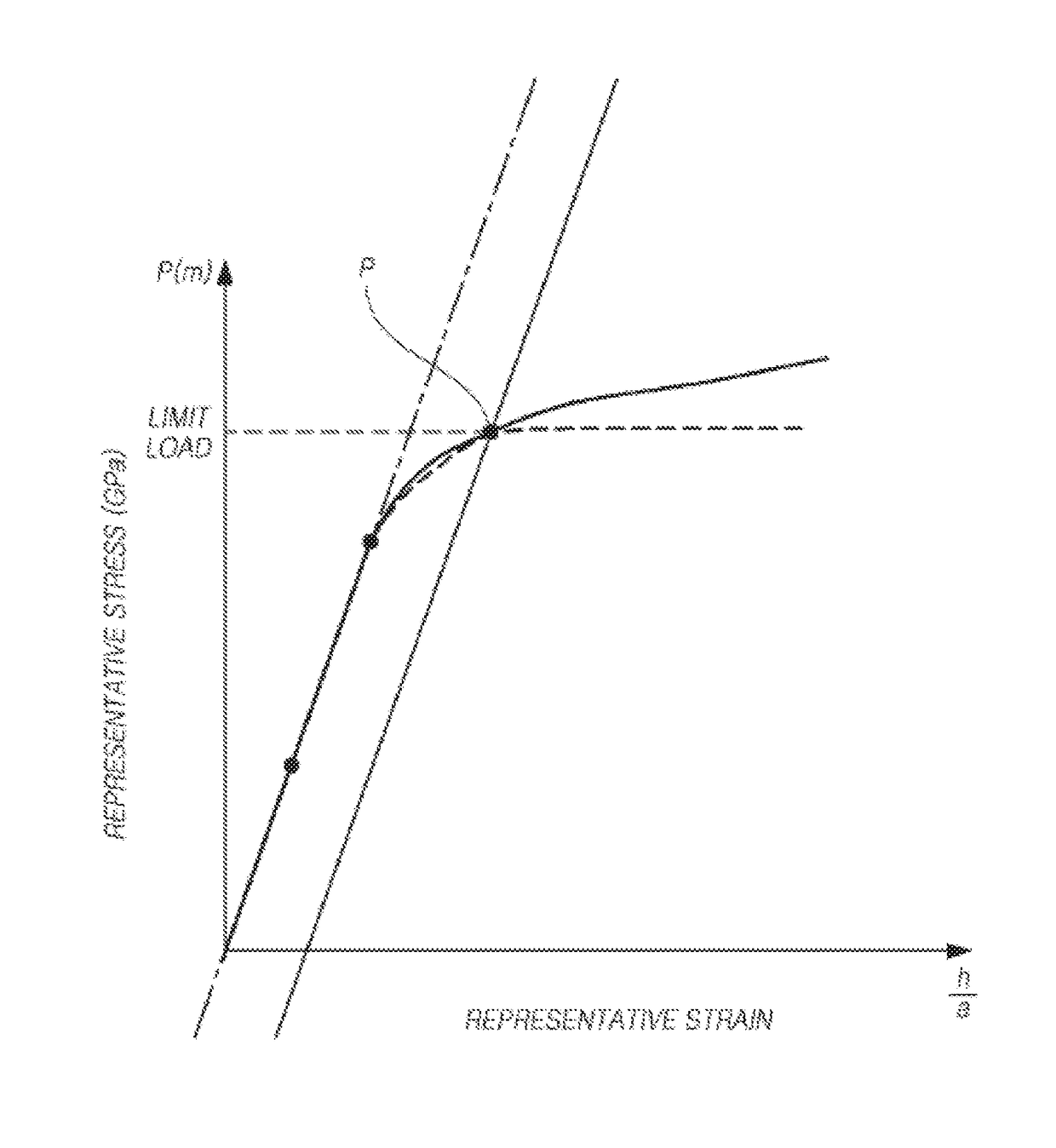
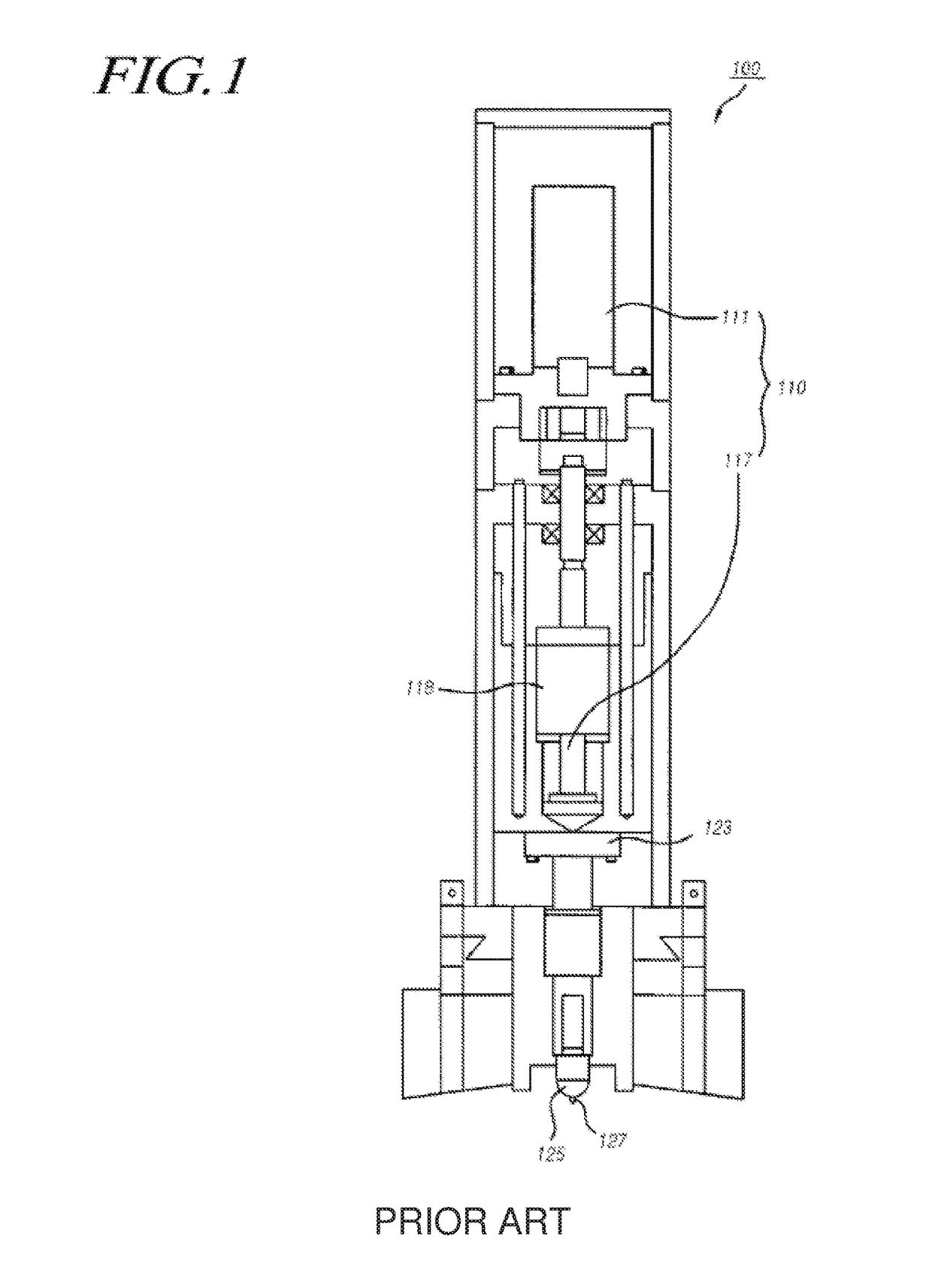
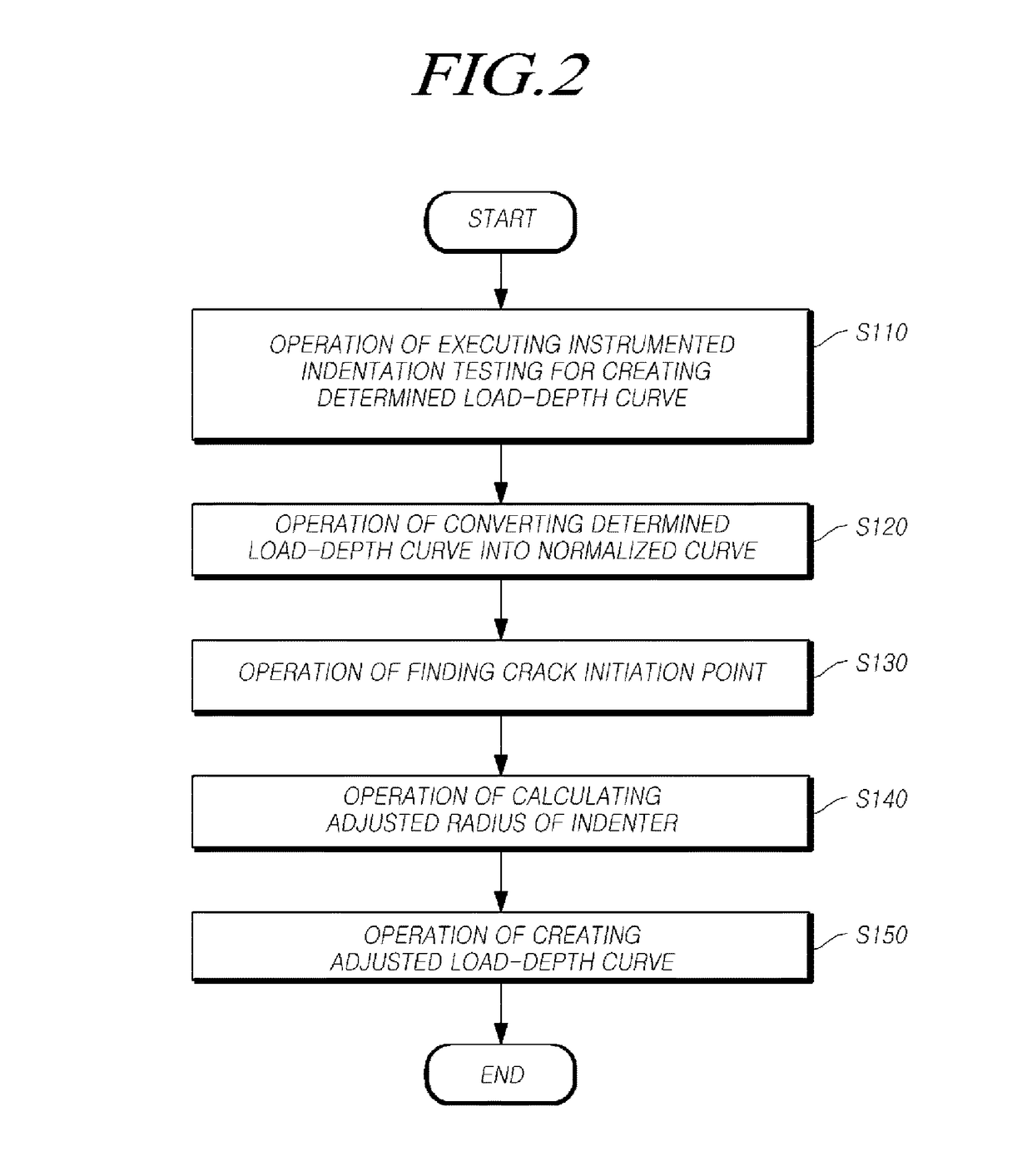
- A method using instrumented indentation testing with a flat punch indenter to measure load and indentation depth, converting the load-depth curve into a normalized stress curve, and calculating the crack initiation point and adjusted radius to create an adjusted load-depth curve, allowing for non-destructive evaluation of fracture toughness and structural integrity.

Method for calculating fracture toughness using indentation method
PatentWO2020199235A1
Innovation
- By using the Berkovich indenter on the indentation equipment for continued loading and unloading, the effective elastic modulus and plastic residual depth of the unloading point of the material are obtained, and the fracture toughness of the material is calculated and optimized by combining finite element simulation and the correlation formula between indentation work and fracture energy. The material unloading curve fitting range reduces errors and improves calculation accuracy.


Standardization and Testing Protocols for Gel Materials
The establishment of robust standardization and testing protocols is essential for advancing the quantification of hydrocolloid gel toughness through indentation testing. Currently, the field lacks universally accepted standards, leading to inconsistencies in data interpretation and comparability across different research institutions and industrial applications. The development of comprehensive protocols must address critical parameters including indenter geometry specifications, loading rate definitions, sample preparation procedures, and environmental control requirements. These standardized approaches would enable reliable cross-laboratory validation and facilitate regulatory compliance in industries such as food science, pharmaceuticals, and biomedical engineering.
International standardization bodies including ISO and ASTM have initiated preliminary frameworks for gel material testing, yet specific guidelines for indentation-based toughness quantification remain underdeveloped. The challenge lies in accommodating the diverse nature of hydrocolloid systems while maintaining measurement precision. Key considerations include defining acceptable sample thickness-to-indenter diameter ratios, establishing calibration procedures for force-displacement sensors, and specifying data analysis methodologies for extracting toughness metrics from indentation curves.
Testing protocol development must also address the time-dependent behavior of hydrocolloid gels, incorporating provisions for viscoelastic effects and strain rate sensitivity. Standardized pre-conditioning procedures, including equilibration time and temperature control within ±0.5°C, are critical for reproducibility. Additionally, protocols should specify minimum sample replication requirements and statistical analysis methods to ensure data reliability.
The integration of digital data formats and reporting templates would further enhance protocol effectiveness, enabling automated data processing and inter-laboratory comparisons. Collaborative efforts between academic institutions, industry stakeholders, and standards organizations are necessary to establish consensus-based protocols that balance scientific rigor with practical applicability. Such standardization would accelerate innovation in gel material development and expand the industrial adoption of indentation testing as a primary toughness characterization method.
International standardization bodies including ISO and ASTM have initiated preliminary frameworks for gel material testing, yet specific guidelines for indentation-based toughness quantification remain underdeveloped. The challenge lies in accommodating the diverse nature of hydrocolloid systems while maintaining measurement precision. Key considerations include defining acceptable sample thickness-to-indenter diameter ratios, establishing calibration procedures for force-displacement sensors, and specifying data analysis methodologies for extracting toughness metrics from indentation curves.
Testing protocol development must also address the time-dependent behavior of hydrocolloid gels, incorporating provisions for viscoelastic effects and strain rate sensitivity. Standardized pre-conditioning procedures, including equilibration time and temperature control within ±0.5°C, are critical for reproducibility. Additionally, protocols should specify minimum sample replication requirements and statistical analysis methods to ensure data reliability.
The integration of digital data formats and reporting templates would further enhance protocol effectiveness, enabling automated data processing and inter-laboratory comparisons. Collaborative efforts between academic institutions, industry stakeholders, and standards organizations are necessary to establish consensus-based protocols that balance scientific rigor with practical applicability. Such standardization would accelerate innovation in gel material development and expand the industrial adoption of indentation testing as a primary toughness characterization method.
Data Analysis Methods for Indentation Test Results
Indentation test results for hydrocolloid gels generate complex datasets requiring systematic analytical approaches to extract meaningful mechanical properties. The primary data obtained includes force-displacement curves, which serve as the foundation for subsequent calculations. Raw data preprocessing involves filtering noise, identifying contact points, and correcting baseline drift to ensure accuracy. Statistical validation through multiple measurements at different locations helps account for material heterogeneity inherent in biological and food-grade hydrocolloids.
Force-displacement curves undergo mathematical transformation to derive stress-strain relationships, enabling calculation of elastic modulus, yield strength, and work of indentation. The Hertzian contact theory provides the theoretical framework for spherical indenters, while Oliver-Pharr method applies to sharp tip geometries. Selection between these models depends on indenter geometry and deformation regime. For viscoelastic hydrocolloids, time-dependent analysis incorporates creep and relaxation components, requiring fitting algorithms such as Maxwell or Kelvin-Voigt models to capture material behavior accurately.
Advanced computational methods enhance interpretation of indentation data. Finite element analysis validates experimental results by simulating indentation processes and comparing predicted force-displacement responses with measured data. Machine learning algorithms increasingly support pattern recognition in large datasets, identifying correlations between gel composition and mechanical performance. Inverse analysis techniques extract constitutive parameters by iteratively matching simulation outputs to experimental curves, particularly valuable for complex material behaviors that resist simple analytical solutions.
Comparative analysis across different testing conditions reveals material sensitivity to strain rate, temperature, and hydration state. Normalization procedures enable meaningful comparison between samples of varying dimensions and compositions. Statistical tools including ANOVA and regression analysis quantify relationships between formulation variables and toughness metrics. Visualization through contour plots and 3D surface maps illustrates spatial variations in mechanical properties, essential for understanding structural heterogeneity in composite hydrocolloid systems.
Force-displacement curves undergo mathematical transformation to derive stress-strain relationships, enabling calculation of elastic modulus, yield strength, and work of indentation. The Hertzian contact theory provides the theoretical framework for spherical indenters, while Oliver-Pharr method applies to sharp tip geometries. Selection between these models depends on indenter geometry and deformation regime. For viscoelastic hydrocolloids, time-dependent analysis incorporates creep and relaxation components, requiring fitting algorithms such as Maxwell or Kelvin-Voigt models to capture material behavior accurately.
Advanced computational methods enhance interpretation of indentation data. Finite element analysis validates experimental results by simulating indentation processes and comparing predicted force-displacement responses with measured data. Machine learning algorithms increasingly support pattern recognition in large datasets, identifying correlations between gel composition and mechanical performance. Inverse analysis techniques extract constitutive parameters by iteratively matching simulation outputs to experimental curves, particularly valuable for complex material behaviors that resist simple analytical solutions.
Comparative analysis across different testing conditions reveals material sensitivity to strain rate, temperature, and hydration state. Normalization procedures enable meaningful comparison between samples of varying dimensions and compositions. Statistical tools including ANOVA and regression analysis quantify relationships between formulation variables and toughness metrics. Visualization through contour plots and 3D surface maps illustrates spatial variations in mechanical properties, essential for understanding structural heterogeneity in composite hydrocolloid systems.
Unlock deeper insights with Patsnap Eureka Quick Research — get a full tech report to explore trends and direct your research. Try now!
Generate Your Research Report Instantly with AI Agent
Supercharge your innovation with Patsnap Eureka AI Agent Platform!