
Quantify K-Type Thermocouple Error During Rapid Temperature Ramps
AUG 27, 20269 MIN READ
Generate Your Research Report Instantly with AI Agent
Patsnap Eureka helps you evaluate technical feasibility & market potential.
K-Type Thermocouple Rapid Ramp Error Background and Objectives
K-type thermocouples have been widely adopted across industrial and research applications due to their broad temperature range, cost-effectiveness, and robust performance characteristics. These sensors operate on the Seebeck effect, generating voltage proportional to temperature differences between measurement and reference junctions. However, their accuracy becomes significantly compromised during rapid temperature transients, a phenomenon that has gained increasing attention as modern manufacturing processes and experimental protocols demand faster thermal cycling and more precise temperature control.
The fundamental challenge stems from the inherent thermal inertia and response characteristics of thermocouple assemblies. During rapid temperature ramps, multiple error sources emerge simultaneously, including junction thermal lag, sheath conduction effects, and dynamic calibration drift. These errors can reach magnitudes of several degrees Celsius or more, depending on ramp rates and system configurations. Such deviations pose critical risks in applications requiring tight temperature control, including heat treatment processes, combustion analysis, and materials testing where temperature accuracy directly impacts product quality and experimental validity.
Historical development of thermocouple technology has primarily focused on steady-state accuracy, with standardized calibration procedures assuming quasi-equilibrium conditions. The ASTM and IEC standards provide comprehensive guidelines for static performance but offer limited guidance for dynamic scenarios. As industrial processes have evolved toward faster cycle times and research demands have intensified for transient thermal measurements, the gap between static calibration accuracy and dynamic measurement reality has widened substantially.
The primary objective of this technical investigation is to systematically quantify the measurement errors exhibited by K-type thermocouples during rapid temperature ramps across various rates and configurations. This involves establishing mathematical models that correlate error magnitude with ramp rate, thermocouple construction parameters, and environmental conditions. A secondary objective focuses on developing practical correction methodologies and compensation algorithms that can be implemented in real-time control systems. Additionally, this research aims to establish standardized testing protocols for evaluating dynamic thermocouple performance, filling the current gap in industry standards. The ultimate goal is to enable more accurate temperature measurement and control in dynamic thermal environments, thereby improving process reliability and measurement confidence across critical applications.
Market Demand for High-Speed Temperature Measurement Applications
The demand for high-speed temperature measurement applications has experienced substantial growth across multiple industrial sectors, driven by the increasing complexity of thermal processes and the need for enhanced process control. Industries requiring rapid thermal cycling, such as semiconductor manufacturing, additive manufacturing, heat treatment operations, and aerospace testing, represent the primary market segments where accurate temperature measurement during transient conditions is critical for product quality and process optimization.
In semiconductor fabrication, rapid thermal processing equipment operates with heating and cooling rates that can exceed several hundred degrees Celsius per second. The ability to accurately quantify thermocouple errors during these extreme ramps directly impacts yield rates and device performance. Similarly, the additive manufacturing sector, particularly metal 3D printing technologies, requires precise thermal monitoring to control microstructure formation and prevent defects. The market expansion in these areas has intensified the need for reliable temperature measurement solutions that can maintain accuracy under dynamic conditions.
The automotive and aerospace industries present significant demand drivers as well. Engine testing facilities, thermal barrier coating development, and turbine component validation all involve rapid temperature transitions where measurement uncertainty must be minimized. Regulatory requirements for emissions control and safety certification further amplify the need for traceable and accurate temperature data during transient thermal events. The shift toward electric vehicle battery testing has introduced additional applications where thermal runaway detection and prevention depend on fast-response temperature sensing with quantified error margins.
Energy sector applications, including concentrated solar power systems, nuclear reactor monitoring, and advanced combustion research, also contribute to market demand. These applications often involve extreme temperature ranges combined with rapid thermal transients, making error quantification essential for both operational safety and efficiency optimization. The growing emphasis on energy efficiency and carbon reduction has accelerated investment in thermal process optimization, further expanding the market for advanced temperature measurement capabilities.
Research institutions and calibration laboratories represent an emerging market segment focused on developing standardized methods for characterizing thermocouple performance during dynamic conditions. This academic and metrological interest reflects the broader industrial recognition that traditional steady-state calibration approaches are insufficient for modern high-speed thermal processes, creating demand for both measurement solutions and supporting analytical frameworks.
Current Error Sources in K-Type Thermocouples During Transients
K-Type thermocouples face multiple error sources during rapid temperature transients that significantly compromise measurement accuracy. The primary challenge stems from the fundamental physics of thermoelectric sensing, where measurement errors become amplified under dynamic thermal conditions compared to steady-state operations.
Thermal inertia represents a critical error source during rapid temperature ramps. The thermocouple junction requires finite time to equilibrate with the surrounding environment, creating a thermal lag between actual and measured temperatures. This lag becomes particularly pronounced when temperature change rates exceed 10°C per second, where the junction's thermal mass prevents instantaneous response. The magnitude of this error correlates directly with junction size, wire diameter, and protective sheath thickness.
Inhomogeneity effects constitute another significant error mechanism during transients. K-Type thermocouples consist of Chromel and Alumel alloys that may exhibit compositional variations along their length due to manufacturing processes or operational degradation. During rapid temperature changes, steep thermal gradients develop across these inhomogeneous regions, generating spurious EMF signals that superimpose on the legitimate Seebeck voltage. These parasitic voltages can introduce errors ranging from 2°C to 15°C depending on the severity of material degradation.
Decalibration drift accelerates under thermal cycling conditions. Repeated exposure to rapid temperature ramps induces microstructural changes in the thermocouple alloys, particularly in the Alumel element which is susceptible to preferential oxidation and phase transformations above 500°C. This metallurgical instability progressively shifts the temperature-EMF relationship away from standard reference functions, introducing systematic errors that accumulate over operational lifetime.
Shunt impedance effects emerge when insulation resistance decreases at elevated temperatures or in contaminated environments. During rapid heating, moisture or conductive deposits on insulation materials create parallel current paths that divert portions of the thermoelectric signal, resulting in reduced output voltage and corresponding temperature underestimation. This error mechanism becomes particularly problematic in industrial environments with aggressive atmospheres.
Electromagnetic interference susceptibility increases during transient operations when high dV/dt conditions exist in surrounding electrical systems. The thermocouple circuit acts as an antenna, picking up noise signals that corrupt the millivolt-level thermoelectric output, especially when proper grounding and shielding practices are inadequate.
Existing Error Quantification and Compensation Solutions
01 Compensation methods for thermocouple measurement errors
Various compensation techniques can be applied to reduce measurement errors in K-type thermocouples. These methods include software-based compensation algorithms that account for non-linearity in the thermocouple response curve, temperature-dependent correction factors, and digital signal processing techniques. Compensation can be implemented through lookup tables, polynomial equations, or real-time calibration adjustments to improve measurement accuracy across different temperature ranges.- Compensation methods for thermocouple measurement errors: Various compensation techniques can be applied to reduce measurement errors in K-type thermocouples. These methods include software-based compensation algorithms, reference junction compensation, and mathematical correction models that account for non-linearity and drift in thermocouple readings. Digital signal processing and calibration routines can be implemented to improve accuracy across different temperature ranges.
- Cold junction compensation techniques: Cold junction compensation is essential for accurate temperature measurement with thermocouples. This involves measuring the reference junction temperature and applying appropriate corrections to the thermocouple output. Various circuit designs and sensor configurations can be used to monitor and compensate for ambient temperature variations at the cold junction, including integrated temperature sensors and compensation circuits.
- Error detection and diagnostic systems: Diagnostic systems can be implemented to detect and identify various error conditions in thermocouple measurements, including wire breakage, short circuits, and degradation. These systems may employ monitoring circuits that check for abnormal resistance values, signal integrity, and continuity. Advanced diagnostic methods can distinguish between different types of faults and provide alerts or automatic correction.
- Structural improvements for error reduction: Physical design modifications to thermocouple assemblies can minimize measurement errors. These improvements include optimized junction construction, protective sheathing materials, improved wire insulation, and mounting configurations that reduce thermal shunting and electromagnetic interference. Proper material selection and assembly techniques can enhance durability and maintain calibration stability over extended use.
- Signal processing and filtering methods: Advanced signal processing techniques can be applied to thermocouple outputs to reduce noise and improve measurement accuracy. These methods include digital filtering, averaging algorithms, noise rejection circuits, and analog-to-digital conversion with high resolution. Signal conditioning circuits can eliminate common-mode interference and amplify weak thermocouple signals while maintaining accuracy.
02 Cold junction compensation techniques
Cold junction compensation is essential for accurate temperature measurement with thermocouples. This involves measuring the reference junction temperature and applying appropriate corrections to the thermocouple output. Methods include using temperature sensors at the reference junction, electronic cold junction compensation circuits, and isothermal terminal blocks. Advanced systems may employ microprocessor-based compensation with automatic calibration features to minimize errors caused by ambient temperature variations.Expand Specific Solutions03 Error detection and diagnostic systems
Diagnostic systems can identify various error conditions in thermocouple circuits including open circuits, short circuits, and degradation of thermocouple elements. These systems employ monitoring techniques such as impedance measurement, signal validation, and comparison with redundant sensors. Fault detection algorithms can alert operators to potential measurement errors before they affect process control or safety systems.Expand Specific Solutions04 Structural improvements to reduce measurement errors
Physical design modifications can minimize thermocouple errors through improved construction and installation methods. These include optimized junction designs, protective sheaths that reduce thermal lag and contamination, proper grounding techniques, and shielding against electromagnetic interference. Structural enhancements may also involve specialized mounting configurations that ensure better thermal contact and reduce heat conduction errors along the thermocouple wires.Expand Specific Solutions05 Calibration and accuracy verification methods
Regular calibration procedures and accuracy verification techniques are critical for maintaining thermocouple measurement reliability. These methods include comparison against reference standards, multi-point calibration across the operating temperature range, and in-situ verification techniques. Advanced calibration systems may incorporate automated calibration routines, traceability to national standards, and documentation of calibration history to ensure long-term measurement accuracy and compliance with quality requirements.Expand Specific Solutions
Key Players in Thermocouple and Temperature Sensing Industry
The K-type thermocouple error quantification during rapid temperature ramps represents a mature yet evolving technical challenge within industrial temperature measurement. The market spans multiple sectors including automotive, aerospace, semiconductor manufacturing, and industrial automation, with established players like General Electric, Texas Instruments, and Hitachi driving innovation alongside specialized sensor manufacturers such as ifm electronic and Watlow Electric. The competitive landscape reflects a mature industry stage with significant market consolidation, where traditional industrial giants compete with specialized measurement technology providers. Technology maturity varies across applications, with companies like Samsung Electronics and Advanced Micro Devices pushing boundaries in semiconductor process control requiring extreme precision, while automotive manufacturers including Volkswagen, Mitsubishi Motors, and GM Global Technology Operations focus on robust, cost-effective solutions. Steel producers like JFE Steel and heavy machinery manufacturers such as Weichai Power represent traditional industrial applications where thermocouple technology continues incremental refinement rather than revolutionary advancement.
General Electric Company
Technical Solution: GE has developed comprehensive thermocouple error analysis methodologies for gas turbine and power generation applications where rapid temperature transients are common. Their approach combines finite element thermal modeling with experimental validation to characterize K-type thermocouple dynamic response during temperature ramps. The system quantifies errors arising from thermal inertia, conduction losses, and radiation effects during transient conditions. GE's solution incorporates correction factors derived from computational fluid dynamics simulations that predict the temperature gradient between the measurement junction and the actual process temperature. Their technology includes sensor design optimization with reduced thermal mass and improved response times, along with software algorithms that apply dynamic compensation based on measured ramp rates. The methodology has been validated across temperature ranges from ambient to 1200°C with ramp rates exceeding 50°C/second, achieving error quantification accuracy within ±1.0°C.
Strengths: Extensive experience in high-temperature industrial applications; robust validation through real-world turbine testing; comprehensive modeling capabilities. Weaknesses: Solutions primarily optimized for large-scale industrial systems; may be over-engineered for simpler applications.
Watlow Electric Manufacturing Co.
Technical Solution: Watlow has developed advanced thermocouple calibration and error compensation systems specifically designed for rapid thermal cycling applications. Their solution incorporates dynamic error correction algorithms that account for thermal lag and junction response time during temperature ramps. The technology utilizes real-time signal processing to compensate for the inherent time constant of K-type thermocouples, which typically ranges from 0.15 to 1.5 seconds depending on probe construction. Their systems employ predictive modeling based on ramp rate, thermal mass, and heat transfer characteristics to quantify and minimize measurement errors. The solution includes specialized signal conditioning electronics that can differentiate between actual temperature changes and sensor lag artifacts, achieving error quantification within ±0.5% during ramp rates up to 100°C/second.
Strengths: Industry-leading expertise in thermal sensing with proven solutions for high-speed temperature measurement; advanced signal processing capabilities. Weaknesses: Solutions may require significant integration effort and higher cost compared to standard thermocouple systems.
Core Technologies for Dynamic Thermocouple Error Modeling
K-type armored thermocouple response time measuring method based on heat pipe method
PatentInactiveCN111006793A
Innovation
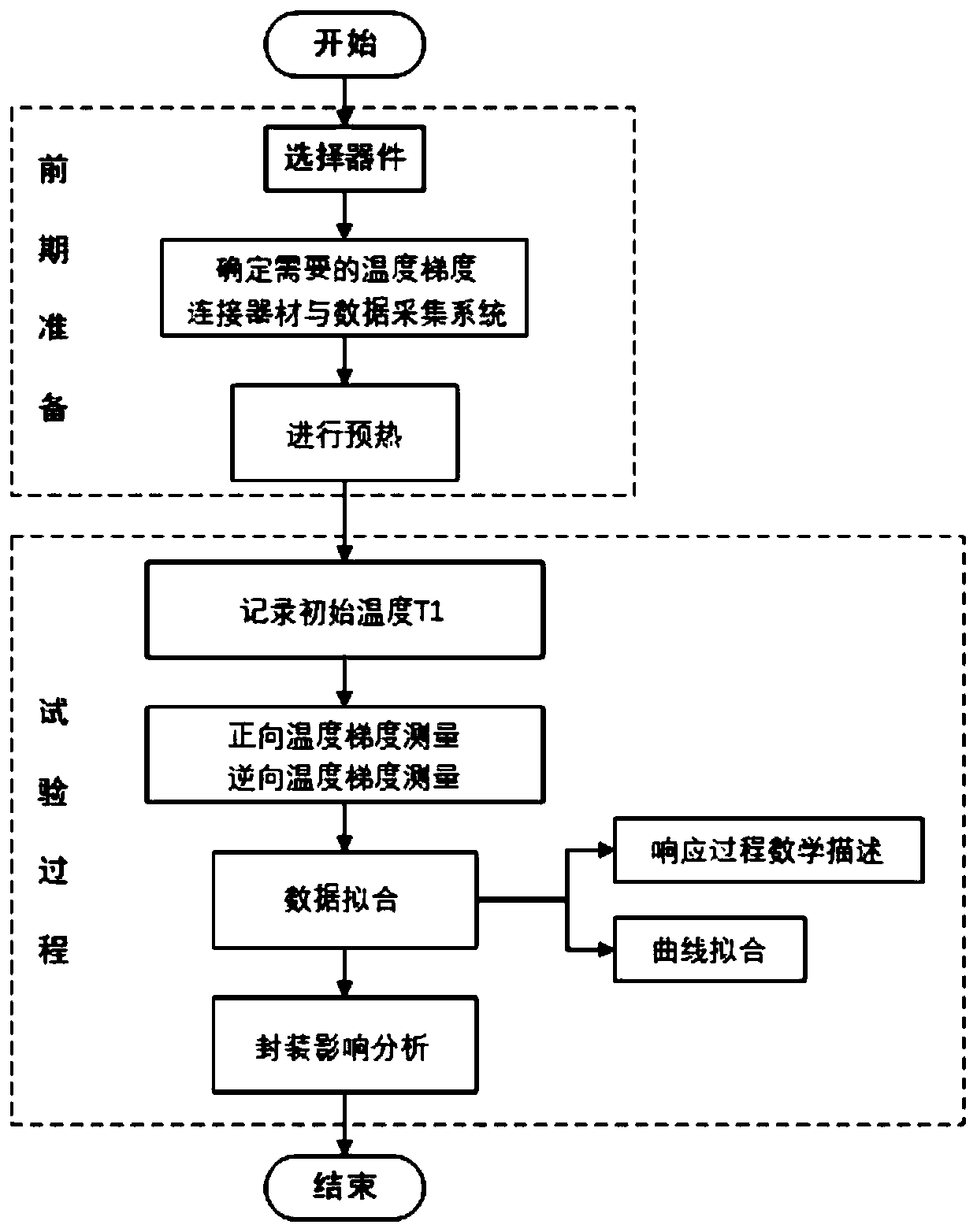
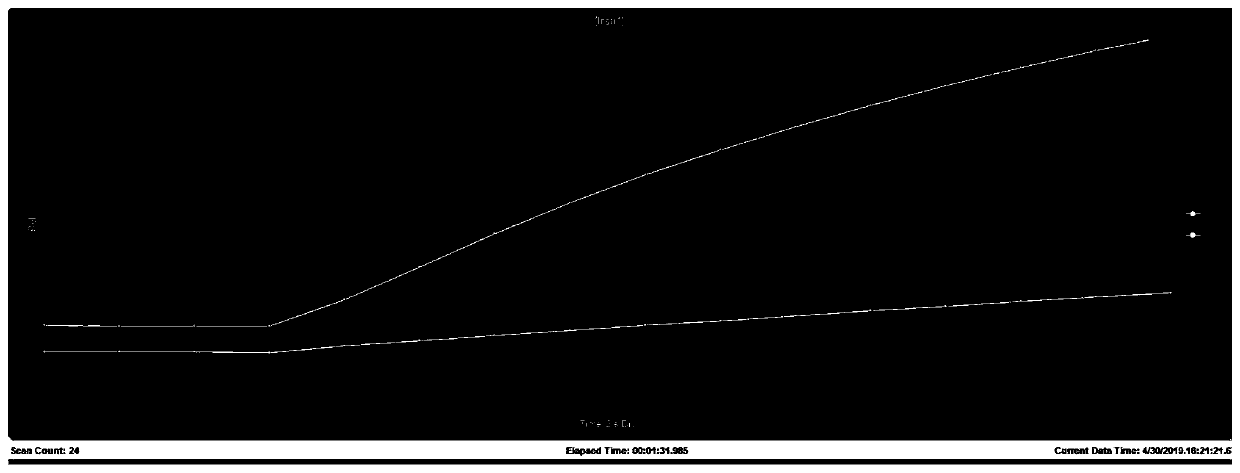
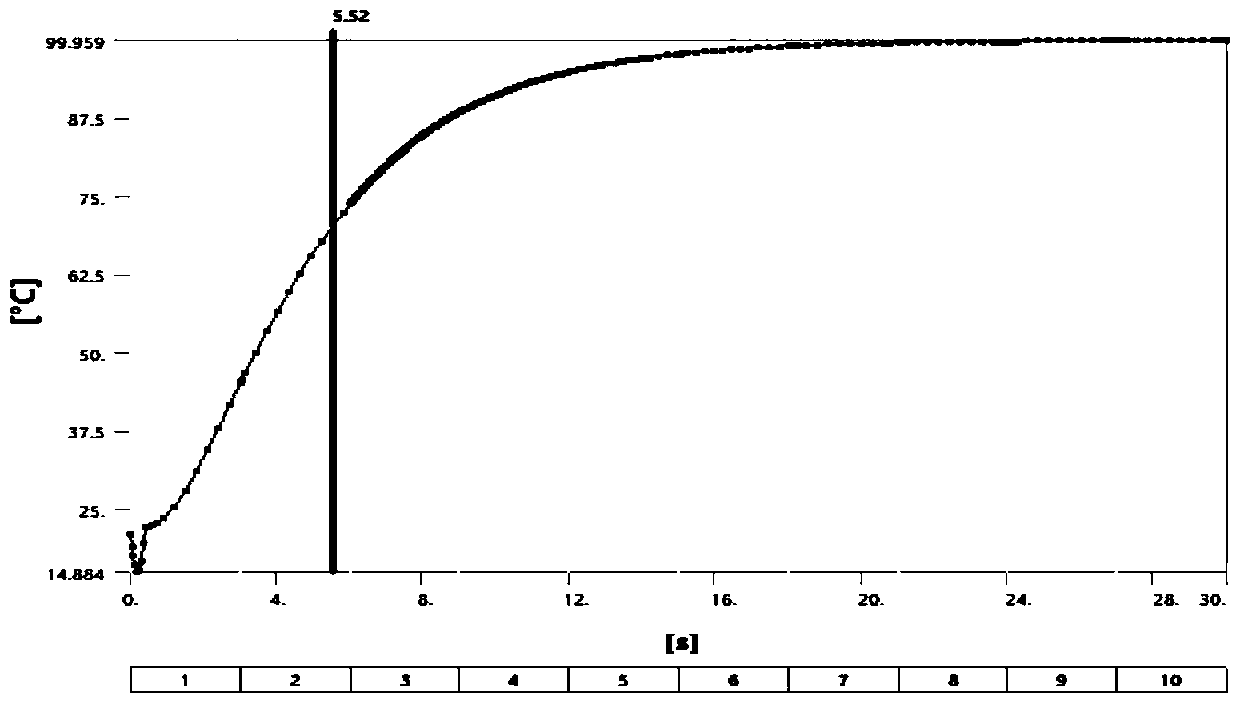
- The heat pipe method is used to measure the response time through a heat pipe constant temperature bath, a data acquisition device and a computer system. MATLAB is used to fit the data to provide more accurate response time results and analyze the impact of packaging on the response time.

K-type thermocouple temperature conversion measuring circuit for used in injection machine controller
PatentInactiveCN204143199U
Innovation
- It adopts precision K-type thermocouple amplification circuit, voltage frequency converter, reference source and signal interface circuit, realizes signal isolation and counting through high-speed optocoupler and active crystal oscillator, and provides K with simple circuit, convenient debugging, high precision and good stability. Type thermocouple temperature measurement.

Calibration Standards and Metrology Requirements
Accurate quantification of K-Type thermocouple errors during rapid temperature ramps necessitates adherence to rigorous calibration standards and metrology requirements. The International Temperature Scale of 1990 (ITS-90) serves as the fundamental reference framework, defining fixed points and interpolation methods that ensure traceability to primary standards. For K-Type thermocouples operating across wide temperature ranges, calibration must conform to ASTM E220 and IEC 60584 standards, which specify tolerance classes and reference functions essential for establishing baseline accuracy under static conditions.
Dynamic calibration presents unique challenges that conventional steady-state methods cannot address. Standard calibration protocols typically assume thermal equilibrium, yet rapid temperature transients introduce time-dependent errors stemming from thermal inertia, junction response lag, and inhomogeneous temperature distributions along the thermocouple wire. Metrology requirements for dynamic characterization therefore demand specialized facilities capable of generating controlled, reproducible temperature ramps with rates exceeding 100°C per second while maintaining traceable temperature references.
Primary calibration laboratories employ laser-based heating systems or fluidized bed furnaces equipped with high-speed reference sensors, such as radiation thermometers or thin-film resistance temperature detectors with sub-millisecond response times. These reference instruments must demonstrate uncertainty budgets accounting for temporal synchronization errors, spatial temperature gradients, and radiative heat transfer effects that become significant during transient conditions. Traceability chains must extend from national metrology institutes through accredited secondary laboratories to end-user calibration facilities.
Uncertainty quantification requires comprehensive analysis of Type A and Type B components following the Guide to the Expression of Uncertainty in Measurement (GUM). Critical factors include reference sensor uncertainty, temperature uniformity within the calibration zone, data acquisition timing precision, and statistical variations across multiple ramp cycles. For applications demanding error quantification below ±2°C during ramps, expanded uncertainties (k=2) of reference systems should not exceed ±0.5°C, necessitating investment in advanced metrology infrastructure and rigorous validation protocols that verify performance across the entire operational envelope of temperature rates and ranges.
Thermal Lag Compensation Algorithm Development
Thermal lag compensation algorithms represent a critical advancement in addressing measurement inaccuracies inherent to K-type thermocouples during rapid temperature transitions. These algorithms function by mathematically modeling the dynamic thermal response characteristics of the thermocouple assembly, enabling real-time correction of temperature readings that would otherwise lag behind actual process temperatures. The fundamental approach involves establishing a transfer function that characterizes the sensor's thermal mass, heat transfer coefficients, and response time constants under varying conditions.
The development process typically begins with system identification techniques, where controlled temperature ramp experiments generate datasets correlating measured versus actual temperatures across different heating and cooling rates. Advanced algorithms employ first-order or second-order differential equations to model the thermocouple's thermal behavior, with parameters adjusted through iterative optimization methods such as least squares fitting or Kalman filtering. More sophisticated implementations incorporate adaptive algorithms that dynamically adjust compensation parameters based on detected ramp rates, recognizing that thermal lag characteristics vary nonlinearly with temperature change velocity.
Machine learning approaches have emerged as promising alternatives, utilizing neural networks or support vector machines trained on extensive experimental datasets to predict true temperatures from lagged measurements. These data-driven methods can capture complex nonlinear relationships that analytical models may oversimplify, particularly when dealing with asymmetric heating-cooling behaviors or junction-specific thermal properties.
Implementation considerations include computational efficiency for real-time applications, algorithm stability across the operational temperature range, and robustness against measurement noise. Validation protocols typically involve comparison against reference sensors with faster response times or controlled environment testing where true temperatures are independently verified. The effectiveness of compensation algorithms is quantified through metrics such as root mean square error reduction, peak error minimization, and time constant improvement factors, with successful implementations achieving error reductions exceeding seventy percent during aggressive thermal transients.
Unlock deeper insights with Patsnap Eureka Quick Research — get a full tech report to explore trends and direct your research. Try now!
Generate Your Research Report Instantly with AI Agent
Supercharge your innovation with Patsnap Eureka AI Agent Platform!