

Quantify Mechanochemistry Polymorph ratio by Raman peak deconvolution
MAY 8, 20269 MIN READ
Generate Your Research Report Instantly with AI Agent
PatSnap Eureka helps you evaluate technical feasibility & market potential.
Mechanochemistry Polymorph Analysis Background and Objectives
Mechanochemistry has emerged as a transformative approach in materials science, offering solvent-free synthetic pathways that enable unique control over polymorphic outcomes. This field represents a paradigm shift from traditional solution-based chemistry, where mechanical energy drives chemical transformations through grinding, milling, or compression. The ability to generate and control polymorphs through mechanochemical processes has gained significant attention due to its environmental benefits and potential for producing metastable forms that are difficult to obtain through conventional crystallization methods.
Polymorphism, the ability of a compound to exist in multiple crystalline forms, plays a crucial role in determining material properties such as solubility, stability, bioavailability, and mechanical characteristics. In pharmaceutical development, different polymorphs of the same active ingredient can exhibit vastly different therapeutic efficacies and shelf-life stability. Similarly, in materials engineering, polymorphic control directly impacts performance characteristics of functional materials including pigments, explosives, and electronic components.
The quantitative analysis of polymorph ratios presents significant analytical challenges, particularly in mechanochemically synthesized materials where multiple phases often coexist. Traditional analytical methods such as X-ray powder diffraction, while powerful, may lack the sensitivity required for accurate quantification of minor phases or may be complicated by preferred orientation effects common in mechanically processed samples. Thermal analysis techniques provide complementary information but may not distinguish between closely related polymorphic forms.
Raman spectroscopy offers unique advantages for polymorph quantification due to its sensitivity to molecular vibrations and crystal packing arrangements. The technique provides fingerprint-like spectra that can differentiate between polymorphic forms based on subtle differences in intermolecular interactions and conformational changes. Peak deconvolution methods enable the separation of overlapping spectral features, allowing for precise quantitative analysis of complex polymorphic mixtures.
The primary objective of developing robust Raman-based quantification methods is to establish reliable protocols for real-time monitoring and quality control of mechanochemical processes. This capability would enable optimization of grinding conditions, reaction times, and environmental parameters to achieve desired polymorphic outcomes. Furthermore, accurate quantification supports regulatory compliance in pharmaceutical applications and ensures consistent material properties in industrial applications.
Advanced chemometric approaches combined with peak deconvolution algorithms aim to enhance the precision and accuracy of polymorph ratio determination while minimizing sample preparation requirements and analysis time.
Polymorphism, the ability of a compound to exist in multiple crystalline forms, plays a crucial role in determining material properties such as solubility, stability, bioavailability, and mechanical characteristics. In pharmaceutical development, different polymorphs of the same active ingredient can exhibit vastly different therapeutic efficacies and shelf-life stability. Similarly, in materials engineering, polymorphic control directly impacts performance characteristics of functional materials including pigments, explosives, and electronic components.
The quantitative analysis of polymorph ratios presents significant analytical challenges, particularly in mechanochemically synthesized materials where multiple phases often coexist. Traditional analytical methods such as X-ray powder diffraction, while powerful, may lack the sensitivity required for accurate quantification of minor phases or may be complicated by preferred orientation effects common in mechanically processed samples. Thermal analysis techniques provide complementary information but may not distinguish between closely related polymorphic forms.
Raman spectroscopy offers unique advantages for polymorph quantification due to its sensitivity to molecular vibrations and crystal packing arrangements. The technique provides fingerprint-like spectra that can differentiate between polymorphic forms based on subtle differences in intermolecular interactions and conformational changes. Peak deconvolution methods enable the separation of overlapping spectral features, allowing for precise quantitative analysis of complex polymorphic mixtures.
The primary objective of developing robust Raman-based quantification methods is to establish reliable protocols for real-time monitoring and quality control of mechanochemical processes. This capability would enable optimization of grinding conditions, reaction times, and environmental parameters to achieve desired polymorphic outcomes. Furthermore, accurate quantification supports regulatory compliance in pharmaceutical applications and ensures consistent material properties in industrial applications.
Advanced chemometric approaches combined with peak deconvolution algorithms aim to enhance the precision and accuracy of polymorph ratio determination while minimizing sample preparation requirements and analysis time.
Market Demand for Quantitative Polymorph Analysis Solutions
The pharmaceutical industry faces mounting pressure to ensure drug quality and efficacy through precise polymorph characterization, driving substantial demand for quantitative analysis solutions. Regulatory agencies worldwide have intensified scrutiny of polymorphic forms in drug substances, as different crystal structures can significantly impact bioavailability, stability, and therapeutic outcomes. This regulatory landscape creates a compelling need for robust analytical methods that can accurately quantify polymorph ratios in pharmaceutical formulations.
Manufacturing sectors beyond pharmaceuticals are recognizing the critical importance of polymorph control in their processes. Chemical manufacturers producing pigments, dyes, and specialty chemicals require precise monitoring of crystal forms to maintain product consistency and performance characteristics. The mechanochemistry field, in particular, demands real-time or near-real-time analysis capabilities to optimize synthesis conditions and ensure reproducible outcomes in solid-state reactions.
Current market gaps exist in accessible, cost-effective solutions for routine polymorph quantification. Traditional analytical methods often require extensive sample preparation, lengthy analysis times, or specialized expertise that limits their adoption in production environments. The demand for streamlined workflows that integrate seamlessly with existing quality control processes continues to grow across multiple industries.
Research institutions and academic laboratories represent another significant market segment seeking advanced polymorph analysis capabilities. The increasing focus on mechanochemical synthesis methods in green chemistry initiatives has created demand for analytical tools that can provide detailed insights into reaction mechanisms and product formation pathways.
The market opportunity extends to contract research organizations and analytical service providers who require versatile, high-throughput solutions to serve diverse client needs. These organizations seek technologies that can handle various sample types while delivering reliable, defensible results for regulatory submissions and intellectual property protection.
Emerging applications in materials science, including pharmaceutical cocrystals, metal-organic frameworks, and advanced ceramics, are expanding the addressable market beyond traditional pharmaceutical applications. The growing emphasis on continuous manufacturing processes further amplifies demand for inline or at-line analytical solutions that can provide immediate feedback for process control and optimization.
Manufacturing sectors beyond pharmaceuticals are recognizing the critical importance of polymorph control in their processes. Chemical manufacturers producing pigments, dyes, and specialty chemicals require precise monitoring of crystal forms to maintain product consistency and performance characteristics. The mechanochemistry field, in particular, demands real-time or near-real-time analysis capabilities to optimize synthesis conditions and ensure reproducible outcomes in solid-state reactions.
Current market gaps exist in accessible, cost-effective solutions for routine polymorph quantification. Traditional analytical methods often require extensive sample preparation, lengthy analysis times, or specialized expertise that limits their adoption in production environments. The demand for streamlined workflows that integrate seamlessly with existing quality control processes continues to grow across multiple industries.
Research institutions and academic laboratories represent another significant market segment seeking advanced polymorph analysis capabilities. The increasing focus on mechanochemical synthesis methods in green chemistry initiatives has created demand for analytical tools that can provide detailed insights into reaction mechanisms and product formation pathways.
The market opportunity extends to contract research organizations and analytical service providers who require versatile, high-throughput solutions to serve diverse client needs. These organizations seek technologies that can handle various sample types while delivering reliable, defensible results for regulatory submissions and intellectual property protection.
Emerging applications in materials science, including pharmaceutical cocrystals, metal-organic frameworks, and advanced ceramics, are expanding the addressable market beyond traditional pharmaceutical applications. The growing emphasis on continuous manufacturing processes further amplifies demand for inline or at-line analytical solutions that can provide immediate feedback for process control and optimization.
Current State of Raman-Based Polymorph Quantification Methods
Raman spectroscopy has emerged as a powerful analytical technique for polymorph quantification due to its ability to provide molecular-level structural information without sample preparation requirements. Current methodologies primarily rely on characteristic vibrational fingerprints that distinguish different polymorphic forms through unique peak positions, intensities, and bandwidths. The technique's non-destructive nature and high sensitivity to crystalline arrangements make it particularly suitable for pharmaceutical and materials science applications.
Traditional approaches for Raman-based polymorph quantification utilize univariate methods that focus on single characteristic peaks specific to each polymorphic form. These methods establish calibration curves by correlating peak intensity ratios with known polymorph concentrations. However, this approach often suffers from spectral overlap and interference from excipients or impurities, limiting accuracy in complex formulations.
Multivariate analysis techniques have gained prominence as more sophisticated alternatives to univariate methods. Principal Component Analysis (PCA) and Partial Least Squares (PLS) regression models utilize entire spectral regions rather than individual peaks, improving robustness against spectral variations and matrix effects. These methods demonstrate enhanced precision in quantifying polymorphic ratios, particularly when dealing with overlapping spectral features or low-concentration polymorphs.
Peak deconvolution represents an advanced analytical approach that mathematically separates overlapping spectral contributions using curve-fitting algorithms. Current implementations employ Gaussian, Lorentzian, or Voigt functions to model individual peak components within complex spectral regions. This methodology enables quantification of polymorphs even when their characteristic peaks exhibit significant overlap, addressing limitations of conventional peak ratio methods.
Recent developments incorporate chemometric preprocessing techniques including baseline correction, smoothing, and normalization to enhance spectral quality before quantitative analysis. Advanced algorithms such as Multivariate Curve Resolution (MCR) and Independent Component Analysis (ICA) have shown promise in resolving pure component spectra from mixture data, facilitating more accurate polymorph ratio determination.
Contemporary challenges include standardization of measurement conditions, validation of quantitative models across different instruments, and development of robust algorithms for real-time analysis. Integration with machine learning approaches and artificial intelligence algorithms represents an emerging frontier for improving accuracy and automation in Raman-based polymorph quantification workflows.
Traditional approaches for Raman-based polymorph quantification utilize univariate methods that focus on single characteristic peaks specific to each polymorphic form. These methods establish calibration curves by correlating peak intensity ratios with known polymorph concentrations. However, this approach often suffers from spectral overlap and interference from excipients or impurities, limiting accuracy in complex formulations.
Multivariate analysis techniques have gained prominence as more sophisticated alternatives to univariate methods. Principal Component Analysis (PCA) and Partial Least Squares (PLS) regression models utilize entire spectral regions rather than individual peaks, improving robustness against spectral variations and matrix effects. These methods demonstrate enhanced precision in quantifying polymorphic ratios, particularly when dealing with overlapping spectral features or low-concentration polymorphs.
Peak deconvolution represents an advanced analytical approach that mathematically separates overlapping spectral contributions using curve-fitting algorithms. Current implementations employ Gaussian, Lorentzian, or Voigt functions to model individual peak components within complex spectral regions. This methodology enables quantification of polymorphs even when their characteristic peaks exhibit significant overlap, addressing limitations of conventional peak ratio methods.
Recent developments incorporate chemometric preprocessing techniques including baseline correction, smoothing, and normalization to enhance spectral quality before quantitative analysis. Advanced algorithms such as Multivariate Curve Resolution (MCR) and Independent Component Analysis (ICA) have shown promise in resolving pure component spectra from mixture data, facilitating more accurate polymorph ratio determination.
Contemporary challenges include standardization of measurement conditions, validation of quantitative models across different instruments, and development of robust algorithms for real-time analysis. Integration with machine learning approaches and artificial intelligence algorithms represents an emerging frontier for improving accuracy and automation in Raman-based polymorph quantification workflows.
Existing Raman Peak Deconvolution Solutions for Polymorphs
01 Mechanochemical synthesis methods for polymorph control
Mechanochemical techniques such as ball milling, grinding, and mechanical activation can be employed to control the formation of specific polymorphs. These methods involve applying mechanical energy to induce solid-state transformations and can selectively produce desired crystalline forms while controlling the polymorph ratio through process parameters like milling time, frequency, and temperature.- Mechanochemical synthesis methods for polymorph control: Mechanochemical processes involving grinding, milling, or mechanical activation can be used to control the formation of specific polymorphs. These methods apply mechanical energy to induce solid-state transformations and can selectively produce desired crystalline forms through controlled mechanical stress and energy input.
- Polymorph ratio optimization through processing parameters: The ratio of different polymorphic forms can be controlled by adjusting various processing parameters such as temperature, pressure, grinding time, and mechanical force intensity. These parameters influence the thermodynamic and kinetic factors that determine which polymorph predominates in the final product.
- Characterization and analysis of polymorph ratios: Various analytical techniques are employed to determine and quantify the ratios of different polymorphic forms in mechanochemically processed materials. These methods enable precise measurement and monitoring of polymorph composition to ensure desired ratios are achieved.
- Co-grinding and additive effects on polymorph formation: The addition of specific compounds or excipients during mechanochemical processing can influence polymorph formation and ratios. Co-grinding with selected materials can act as nucleation sites or stabilizing agents to favor the formation of particular polymorphic forms.
- Industrial applications and scale-up of mechanochemical polymorph control: Large-scale implementation of mechanochemical methods for controlling polymorph ratios in industrial settings, including pharmaceutical manufacturing and materials processing. These applications focus on reproducible production methods that maintain consistent polymorph ratios across different batch sizes.
02 Polymorph ratio optimization through mechanochemical processing
The ratio between different polymorphic forms can be precisely controlled and optimized using mechanochemical approaches. By adjusting processing conditions such as mechanical stress, duration, and environmental factors, specific polymorph ratios can be achieved to enhance desired properties like solubility, stability, or bioavailability.Expand Specific Solutions03 Characterization and analysis of mechanochemically produced polymorphs
Advanced analytical techniques are employed to characterize and quantify different polymorphic forms produced through mechanochemical processes. These methods include spectroscopic analysis, thermal analysis, and crystallographic techniques to determine polymorph identity, purity, and relative ratios in the final product.Expand Specific Solutions04 Pharmaceutical applications of mechanochemically controlled polymorphs
Mechanochemical methods are specifically applied in pharmaceutical manufacturing to produce drug polymorphs with controlled ratios for improved therapeutic efficacy. These techniques enable the production of pharmaceutical compounds with enhanced dissolution rates, bioavailability, and stability through precise polymorph control.Expand Specific Solutions05 Process parameters and equipment for mechanochemical polymorph formation
Specific equipment designs and process parameters are critical for achieving desired polymorph ratios through mechanochemical synthesis. This includes optimization of mill types, grinding media, atmospheric conditions, and co-grinding additives that influence the mechanochemical transformation and final polymorph distribution.Expand Specific Solutions
Key Players in Raman Spectroscopy and Polymorph Analysis
The mechanochemistry polymorph quantification field through Raman peak deconvolution represents an emerging analytical technology at the intersection of materials science and pharmaceutical development. The industry is in its early-to-growth stage, with a relatively small but expanding market driven by increasing demand for precise polymorph characterization in drug development and materials research. The competitive landscape features a diverse mix of established pharmaceutical giants like Amgen, F. Hoffmann-La Roche, and Sumitomo Pharmaceuticals, alongside specialized analytical instrumentation companies such as ChemImage Corp., Waters Technologies Ireland, and Thermo Finnigan Corp. Technology maturity varies significantly across players, with research institutions like Max Planck Gesellschaft and Zhejiang University advancing fundamental mechanochemistry understanding, while companies like Cerno Bioscience and Metir focus on developing specialized mass spectrometry and analytical solutions. The field benefits from cross-industry collaboration between chemical manufacturers, pharmaceutical companies, and analytical technology providers, indicating strong potential for continued innovation and market expansion.
ChemImage Corp.
Technical Solution: ChemImage specializes in advanced Raman spectroscopy solutions for chemical analysis and imaging. Their technology platform integrates sophisticated spectral deconvolution algorithms specifically designed for polymorph identification and quantification. The company's Raman systems utilize proprietary peak fitting algorithms that can accurately separate overlapping spectral features characteristic of different polymorphic forms. Their approach combines multivariate analysis with chemometric modeling to enhance the precision of polymorph ratio determination through mechanochemical processes. The technology incorporates real-time spectral processing capabilities that enable continuous monitoring of polymorphic transformations during mechanical stress applications.
Strengths: Specialized expertise in Raman spectroscopy with proven algorithms for complex spectral deconvolution. Weaknesses: Limited to optical-based analysis methods, may struggle with samples having poor Raman scattering properties.
Zhejiang University
Technical Solution: Zhejiang University conducts extensive research in materials characterization including Raman spectroscopy applications for polymorph analysis. Their research group develops novel computational approaches for spectral deconvolution specifically targeting mechanochemically induced polymorphic transformations. The university's methodology combines experimental Raman analysis with theoretical modeling to understand the relationship between mechanical stress and polymorphic changes. Their approach utilizes advanced curve fitting algorithms and statistical analysis methods to quantify polymorph ratios with high precision. The research includes development of automated analysis protocols that can process large datasets of Raman spectra for systematic polymorph quantification studies.
Strengths: Strong academic research foundation with innovative computational approaches and extensive materials science expertise. Weaknesses: Academic setting may limit commercial development and technology transfer capabilities compared to industry players.
Core Innovations in Mechanochemical Polymorph Raman Analysis
Concentrated protein lyophilates, methods, and uses
PatentWO2007014073A2
Innovation
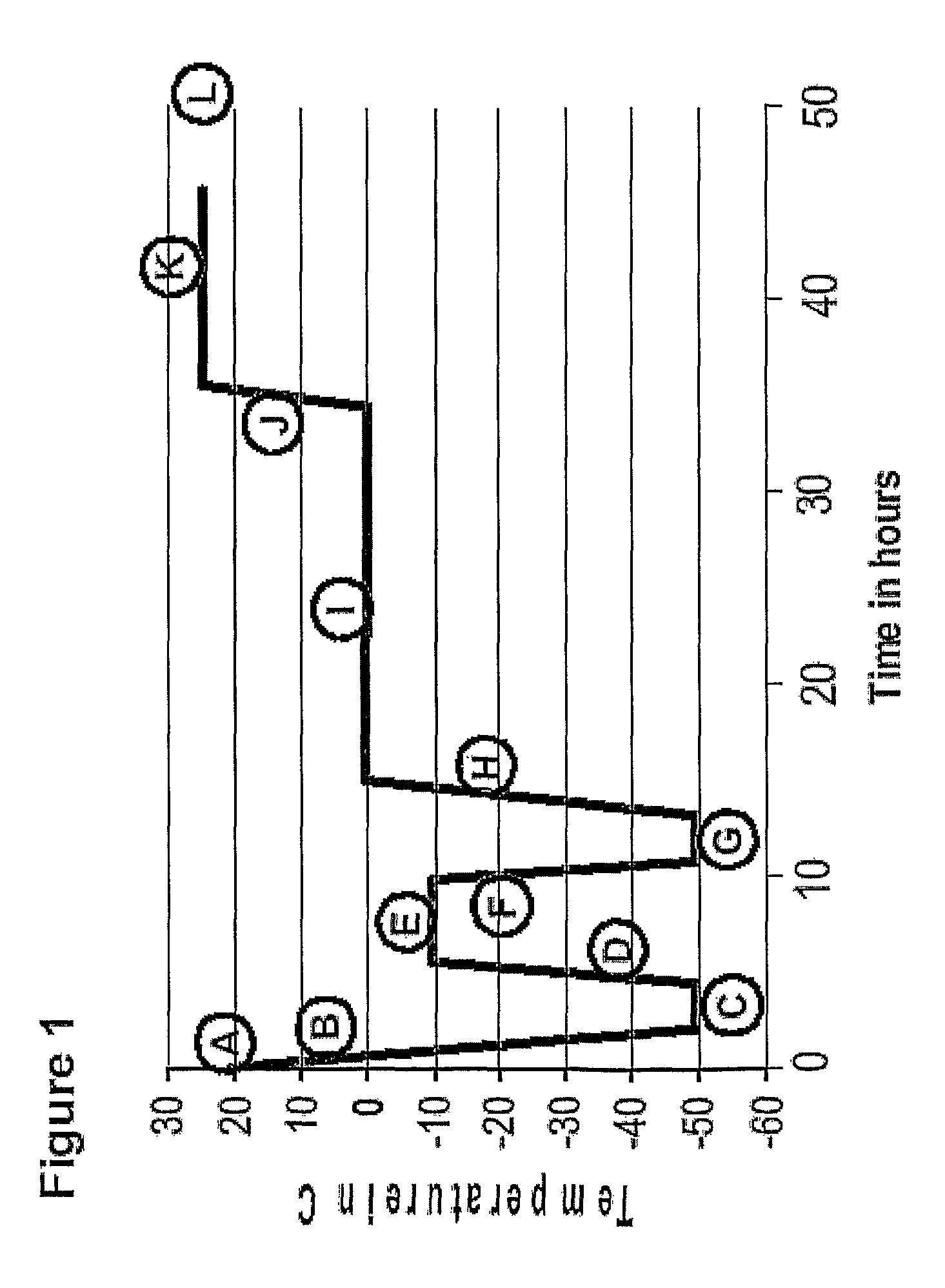
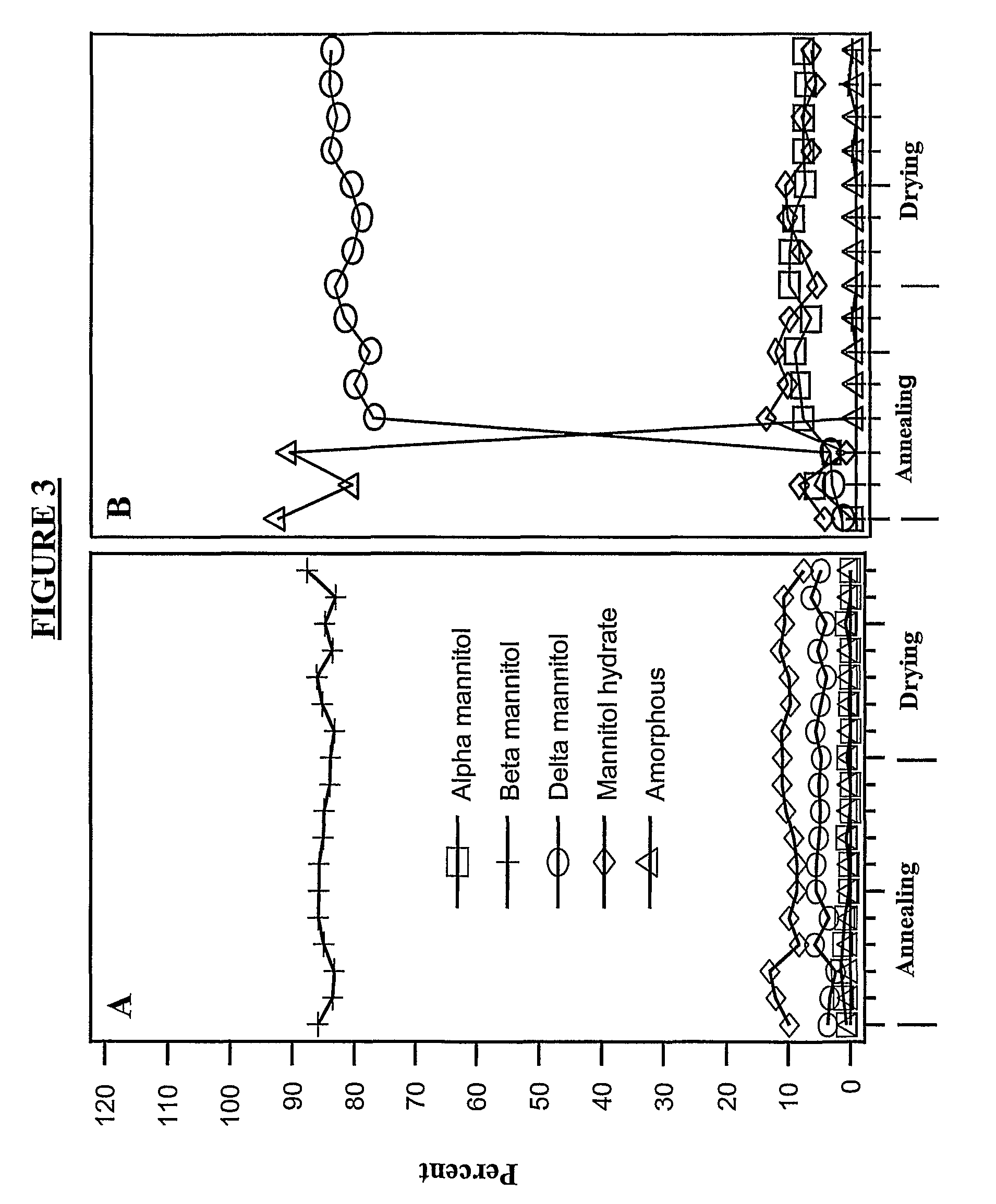
- The development of a lyophilization method involving annealing and controlled drying processes to produce lyophilates that rapidly reconstitute to high protein concentrations with minimal foam, effervescence, and particulates, using bulking agents like mannitol and surfactants to ensure stability and low viscosity for efficient subcutaneous delivery.


Concentrated protein lyophilates, methods, and uses
PatentInactiveUS7956160B2
Innovation
- Development of a lyophilization method involving annealing and controlled drying to produce lyophilates that rapidly reconstitute to high protein concentrations with minimal foam, effervescence, and particulates, using bulking agents like mannitol and surfactants to ensure stability and low viscosity for subcutaneous injection.

Pharmaceutical Regulatory Standards for Polymorph Analysis
The pharmaceutical industry operates under stringent regulatory frameworks that mandate comprehensive polymorph characterization and quantification throughout drug development and manufacturing processes. Regulatory agencies including the FDA, EMA, and ICH have established specific guidelines requiring pharmaceutical companies to identify, characterize, and control polymorphic forms of active pharmaceutical ingredients to ensure product quality, safety, and efficacy.
Current regulatory standards emphasize the critical importance of polymorph analysis in drug development, particularly under ICH Q6A guidelines which specify requirements for polymorphic form identification and quantitative analysis. These regulations mandate that pharmaceutical manufacturers demonstrate adequate control over polymorphic transformations that may occur during processing, storage, or formulation. The FDA's guidance on ANDAs specifically requires detailed polymorphic characterization data, including quantitative analysis methods with validated analytical procedures.
Raman spectroscopy has gained significant regulatory acceptance as a reliable analytical technique for polymorph identification and quantification, with several pharmacopeial methods now incorporating Raman-based approaches. The technique's non-destructive nature and ability to provide molecular-level structural information make it particularly valuable for regulatory compliance. However, current regulatory frameworks primarily focus on qualitative identification rather than precise quantitative analysis of polymorphic ratios.
The integration of mechanochemical processing in pharmaceutical manufacturing has introduced new regulatory considerations, as these processes can induce polymorphic transformations that require careful monitoring and control. Regulatory agencies are increasingly recognizing the need for real-time or near-real-time analytical methods capable of quantifying polymorphic ratios during mechanochemical processes, driving demand for advanced analytical approaches like Raman peak deconvolution.
Emerging regulatory trends indicate a shift toward more sophisticated analytical requirements, with agencies beginning to request detailed polymorphic ratio data rather than simple presence/absence determinations. This evolution reflects growing understanding of how minor polymorphic impurities can significantly impact drug performance, bioavailability, and stability. Consequently, pharmaceutical companies are under increasing pressure to develop and validate robust quantitative methods that can meet these evolving regulatory expectations while ensuring reproducible and accurate polymorphic ratio determination.
Current regulatory standards emphasize the critical importance of polymorph analysis in drug development, particularly under ICH Q6A guidelines which specify requirements for polymorphic form identification and quantitative analysis. These regulations mandate that pharmaceutical manufacturers demonstrate adequate control over polymorphic transformations that may occur during processing, storage, or formulation. The FDA's guidance on ANDAs specifically requires detailed polymorphic characterization data, including quantitative analysis methods with validated analytical procedures.
Raman spectroscopy has gained significant regulatory acceptance as a reliable analytical technique for polymorph identification and quantification, with several pharmacopeial methods now incorporating Raman-based approaches. The technique's non-destructive nature and ability to provide molecular-level structural information make it particularly valuable for regulatory compliance. However, current regulatory frameworks primarily focus on qualitative identification rather than precise quantitative analysis of polymorphic ratios.
The integration of mechanochemical processing in pharmaceutical manufacturing has introduced new regulatory considerations, as these processes can induce polymorphic transformations that require careful monitoring and control. Regulatory agencies are increasingly recognizing the need for real-time or near-real-time analytical methods capable of quantifying polymorphic ratios during mechanochemical processes, driving demand for advanced analytical approaches like Raman peak deconvolution.
Emerging regulatory trends indicate a shift toward more sophisticated analytical requirements, with agencies beginning to request detailed polymorphic ratio data rather than simple presence/absence determinations. This evolution reflects growing understanding of how minor polymorphic impurities can significantly impact drug performance, bioavailability, and stability. Consequently, pharmaceutical companies are under increasing pressure to develop and validate robust quantitative methods that can meet these evolving regulatory expectations while ensuring reproducible and accurate polymorphic ratio determination.
Quality Control Integration in Mechanochemical Processing
The integration of quality control systems in mechanochemical processing represents a critical advancement in pharmaceutical manufacturing, particularly when dealing with polymorph quantification through Raman spectroscopy. Traditional quality control approaches often rely on offline sampling and analysis, creating significant time delays between production and quality assessment. Modern mechanochemical processes demand real-time monitoring capabilities to ensure consistent polymorph ratios throughout the manufacturing cycle.
Process analytical technology (PAT) frameworks have emerged as the foundation for integrating Raman-based polymorph quantification into mechanochemical workflows. These systems enable continuous monitoring of crystal form transformations during milling operations, providing immediate feedback on polymorph distribution changes. The integration requires sophisticated data acquisition systems capable of handling high-frequency spectral measurements while maintaining spectral quality under the harsh conditions typical of mechanochemical processing environments.
Automated peak deconvolution algorithms form the backbone of real-time quality control implementation. These systems must process complex Raman spectra within seconds, identifying characteristic peaks associated with different polymorphic forms and calculating their relative ratios. Machine learning approaches have shown particular promise in handling spectral variations caused by particle size effects, temperature fluctuations, and mechanical stress during processing.
Statistical process control methodologies specifically adapted for mechanochemical operations provide the framework for establishing acceptable polymorph ratio ranges and triggering corrective actions when deviations occur. Control charts designed for spectroscopic data must account for the inherent variability in Raman measurements while maintaining sensitivity to meaningful changes in crystal form distribution.
The implementation of closed-loop control systems represents the most advanced form of quality control integration, where Raman-derived polymorph ratios directly influence processing parameters such as milling speed, temperature, and duration. These systems require robust feedback mechanisms and fail-safe protocols to prevent over-correction and ensure product quality consistency across batch operations.
Process analytical technology (PAT) frameworks have emerged as the foundation for integrating Raman-based polymorph quantification into mechanochemical workflows. These systems enable continuous monitoring of crystal form transformations during milling operations, providing immediate feedback on polymorph distribution changes. The integration requires sophisticated data acquisition systems capable of handling high-frequency spectral measurements while maintaining spectral quality under the harsh conditions typical of mechanochemical processing environments.
Automated peak deconvolution algorithms form the backbone of real-time quality control implementation. These systems must process complex Raman spectra within seconds, identifying characteristic peaks associated with different polymorphic forms and calculating their relative ratios. Machine learning approaches have shown particular promise in handling spectral variations caused by particle size effects, temperature fluctuations, and mechanical stress during processing.
Statistical process control methodologies specifically adapted for mechanochemical operations provide the framework for establishing acceptable polymorph ratio ranges and triggering corrective actions when deviations occur. Control charts designed for spectroscopic data must account for the inherent variability in Raman measurements while maintaining sensitivity to meaningful changes in crystal form distribution.
The implementation of closed-loop control systems represents the most advanced form of quality control integration, where Raman-derived polymorph ratios directly influence processing parameters such as milling speed, temperature, and duration. These systems require robust feedback mechanisms and fail-safe protocols to prevent over-correction and ensure product quality consistency across batch operations.
Unlock deeper insights with PatSnap Eureka Quick Research — get a full tech report to explore trends and direct your research. Try now!
Generate Your Research Report Instantly with AI Agent
Supercharge your innovation with PatSnap Eureka AI Agent Platform!