
Quantify Thermal Conductor Supply Risks for Design Choices
OCT 9, 20268 MIN READ
Generate Your Research Report Instantly with AI Agent
Patsnap Eureka helps you evaluate technical feasibility & market potential.
Thermal Management Background and Design Objectives
Thermal management has emerged as a critical engineering discipline in modern electronics and power systems, driven by the relentless pursuit of higher performance densities and miniaturization. As semiconductor devices continue to shrink while power consumption increases, effective heat dissipation has become a fundamental constraint in product design. The challenge extends beyond traditional cooling solutions, as designers must now navigate complex supply chain dynamics affecting the availability and cost of thermal interface materials and heat conductors.
The evolution of thermal management technologies reflects the broader trajectory of electronics development. Early systems relied primarily on passive cooling through aluminum heat sinks and natural convection. However, contemporary applications demand sophisticated thermal solutions incorporating advanced materials such as copper alloys, graphite composites, vapor chambers, and emerging materials like graphene-enhanced compounds. This technological progression has created dependencies on specialized materials with concentrated supply sources, introducing vulnerability into design processes.
Recent global events have exposed significant fragility in thermal conductor supply chains. Geopolitical tensions, trade restrictions, and pandemic-related disruptions have demonstrated how quickly material availability can shift. Critical thermal management materials often depend on limited geographic sources or specialized manufacturing capabilities, creating bottlenecks that can delay product launches or force costly design revisions. The semiconductor industry's experience with substrate shortages provides a cautionary example of how material constraints can cascade through entire product ecosystems.
Against this backdrop, the primary objective of this research is to develop quantitative frameworks for assessing supply chain risks associated with thermal conductor materials during the design phase. This involves establishing metrics that correlate material selection with supply vulnerability indicators, including supplier concentration, geopolitical risk factors, material substitutability, and price volatility. The goal is to enable design teams to make informed trade-offs between thermal performance requirements and supply chain resilience, ultimately creating more robust and manufacturable products that can withstand market disruptions while meeting thermal specifications.
The evolution of thermal management technologies reflects the broader trajectory of electronics development. Early systems relied primarily on passive cooling through aluminum heat sinks and natural convection. However, contemporary applications demand sophisticated thermal solutions incorporating advanced materials such as copper alloys, graphite composites, vapor chambers, and emerging materials like graphene-enhanced compounds. This technological progression has created dependencies on specialized materials with concentrated supply sources, introducing vulnerability into design processes.
Recent global events have exposed significant fragility in thermal conductor supply chains. Geopolitical tensions, trade restrictions, and pandemic-related disruptions have demonstrated how quickly material availability can shift. Critical thermal management materials often depend on limited geographic sources or specialized manufacturing capabilities, creating bottlenecks that can delay product launches or force costly design revisions. The semiconductor industry's experience with substrate shortages provides a cautionary example of how material constraints can cascade through entire product ecosystems.
Against this backdrop, the primary objective of this research is to develop quantitative frameworks for assessing supply chain risks associated with thermal conductor materials during the design phase. This involves establishing metrics that correlate material selection with supply vulnerability indicators, including supplier concentration, geopolitical risk factors, material substitutability, and price volatility. The goal is to enable design teams to make informed trade-offs between thermal performance requirements and supply chain resilience, ultimately creating more robust and manufacturable products that can withstand market disruptions while meeting thermal specifications.
Market Demand for Thermal Conductors
The global market for thermal conductors has experienced substantial growth driven by the accelerating demand for efficient thermal management solutions across multiple industries. Electronics manufacturing remains the largest consumer segment, where miniaturization and increased power density in devices such as smartphones, laptops, and data center servers necessitate advanced thermal interface materials and heat dissipation components. The proliferation of electric vehicles has emerged as a critical growth driver, as battery thermal management systems require reliable thermal conductors to maintain optimal operating temperatures and ensure safety.
Industrial applications including power electronics, renewable energy systems, and telecommunications infrastructure represent significant demand sources. The expansion of 5G networks has intensified requirements for thermal management in base stations and network equipment, where sustained high-frequency operations generate considerable heat loads. Similarly, the renewable energy sector's growth, particularly in solar inverters and wind turbine power converters, has created sustained demand for thermal interface materials and heat sinks.
The semiconductor industry's evolution toward higher performance chips and advanced packaging technologies has fundamentally reshaped thermal conductor requirements. High-performance computing, artificial intelligence accelerators, and graphics processing units demand materials with superior thermal conductivity and reliability under extreme operating conditions. This trend has stimulated innovation in materials such as graphene-based composites, carbon nanotubes, and advanced metal matrix composites.
Geographically, demand concentration aligns with electronics manufacturing hubs and emerging technology centers. Asia-Pacific dominates consumption due to concentrated electronics production and rapid electric vehicle adoption. North America and Europe maintain strong demand driven by data center expansion, automotive electrification initiatives, and stringent thermal management standards in aerospace and defense applications.
Market dynamics indicate sustained growth trajectories, with thermal management becoming increasingly critical as power densities continue rising across applications. However, this expanding demand introduces supply chain vulnerabilities, particularly for specialized materials and high-performance thermal conductors, making supply risk quantification essential for informed design decisions and strategic sourcing planning.
Industrial applications including power electronics, renewable energy systems, and telecommunications infrastructure represent significant demand sources. The expansion of 5G networks has intensified requirements for thermal management in base stations and network equipment, where sustained high-frequency operations generate considerable heat loads. Similarly, the renewable energy sector's growth, particularly in solar inverters and wind turbine power converters, has created sustained demand for thermal interface materials and heat sinks.
The semiconductor industry's evolution toward higher performance chips and advanced packaging technologies has fundamentally reshaped thermal conductor requirements. High-performance computing, artificial intelligence accelerators, and graphics processing units demand materials with superior thermal conductivity and reliability under extreme operating conditions. This trend has stimulated innovation in materials such as graphene-based composites, carbon nanotubes, and advanced metal matrix composites.
Geographically, demand concentration aligns with electronics manufacturing hubs and emerging technology centers. Asia-Pacific dominates consumption due to concentrated electronics production and rapid electric vehicle adoption. North America and Europe maintain strong demand driven by data center expansion, automotive electrification initiatives, and stringent thermal management standards in aerospace and defense applications.
Market dynamics indicate sustained growth trajectories, with thermal management becoming increasingly critical as power densities continue rising across applications. However, this expanding demand introduces supply chain vulnerabilities, particularly for specialized materials and high-performance thermal conductors, making supply risk quantification essential for informed design decisions and strategic sourcing planning.
Supply Chain Status and Risk Factors
The global supply chain for thermal conductors faces significant structural challenges that directly impact design reliability and cost predictability. Primary thermal interface materials including copper, aluminum, graphite, and specialized compounds like thermal greases and phase-change materials depend on geographically concentrated extraction and processing facilities. Copper production remains dominated by Chile, Peru, and China, which collectively account for over 60% of global output. Similarly, high-purity graphite essential for advanced thermal management solutions relies heavily on Chinese processing capabilities, representing approximately 70% of worldwide refined graphite supply.
Supply chain vulnerabilities manifest through multiple risk vectors that designers must quantify when selecting thermal conductors. Geopolitical tensions create unpredictable export restrictions and tariff fluctuations, as evidenced by recent rare earth material controls and technology export limitations. Natural disasters and climate events pose increasing threats to mining operations and transportation infrastructure, with flooding in major copper-producing regions causing supply disruptions averaging 15-20 days annually. The COVID-19 pandemic exposed critical weaknesses in just-in-time manufacturing models, resulting in lead time extensions from typical 8-12 weeks to over 26 weeks for specialized thermal materials.
Material substitution constraints further complicate risk mitigation strategies. High-performance applications requiring specific thermal conductivity coefficients above 200 W/mK have limited alternatives to copper or diamond-based composites, creating single-source dependencies. The semiconductor industry's growing demand for advanced packaging solutions intensifies competition for premium thermal interface materials, with projected annual growth rates exceeding 12% through 2028.
Price volatility represents a quantifiable risk factor requiring systematic monitoring. Copper prices have demonstrated 40-60% fluctuations over three-year cycles, directly impacting product cost structures. Emerging materials like carbon nanotubes and graphene-enhanced composites face supply scalability challenges, with current production volumes insufficient for mass-market applications. Strategic inventory management, supplier diversification across multiple geographic regions, and early engagement with material science innovations constitute essential risk mitigation approaches for thermal conductor selection in contemporary design processes.
Supply chain vulnerabilities manifest through multiple risk vectors that designers must quantify when selecting thermal conductors. Geopolitical tensions create unpredictable export restrictions and tariff fluctuations, as evidenced by recent rare earth material controls and technology export limitations. Natural disasters and climate events pose increasing threats to mining operations and transportation infrastructure, with flooding in major copper-producing regions causing supply disruptions averaging 15-20 days annually. The COVID-19 pandemic exposed critical weaknesses in just-in-time manufacturing models, resulting in lead time extensions from typical 8-12 weeks to over 26 weeks for specialized thermal materials.
Material substitution constraints further complicate risk mitigation strategies. High-performance applications requiring specific thermal conductivity coefficients above 200 W/mK have limited alternatives to copper or diamond-based composites, creating single-source dependencies. The semiconductor industry's growing demand for advanced packaging solutions intensifies competition for premium thermal interface materials, with projected annual growth rates exceeding 12% through 2028.
Price volatility represents a quantifiable risk factor requiring systematic monitoring. Copper prices have demonstrated 40-60% fluctuations over three-year cycles, directly impacting product cost structures. Emerging materials like carbon nanotubes and graphene-enhanced composites face supply scalability challenges, with current production volumes insufficient for mass-market applications. Strategic inventory management, supplier diversification across multiple geographic regions, and early engagement with material science innovations constitute essential risk mitigation approaches for thermal conductor selection in contemporary design processes.
Current Thermal Conductor Solutions
01 Supply chain risk assessment and management methods
Advanced frameworks, predictive models, and big data analytical methods are implemented to identify, quantify, and mitigate supply chain risks. These technologies address challenges such as supply disruptions, quality discrepancies, re-entry of used products, and economic losses to optimize overall supply chain reliability.- Supply chain risk assessment and management systems: Advanced technologies and data-driven methods, such as big data analysis, WO-AHP methods, and risk matrices, are utilized to evaluate, predict, and manage risks across supply chains. These methods help identify supply chain disruptions, optimize operations, and mitigate financial and operational losses.
- Thermal runaway risk prediction and early warning for batteries: Methods and diagnostic apparatuses are developed to monitor working conditions, embedded data, and thermal states of battery cells and packs (such as lithium-ion batteries). These systems predict and provide early warnings for thermal runaway risks, thereby enhancing energy storage safety.
- Power supply thermal management and protection: Technologies focus on managing heat dissipation, thermal environments, and temperature profiles in power supply units and 5G lines. By applying controllers, thermal bridges, and liquid-based cooling systems, these methods prevent thermal damage, reduce supply noise, and optimize power reliability.
- Power grid balance and power supply planning under thermal risks: Decision-making models and collaborative systems integrate thermal power units with renewable energy sources to balance power supply and demand. These approaches minimize power grid oscillation risks, address carbon emission concerns, and ensure continuous and stable power delivery.
- Thermal infrastructure risk assessment and leakage detection: Analytical models, AI risk matrices, and thermal imaging techniques are used to evaluate safety, fire risks, and physical integrity in thermal power plants and pipelines. These solutions identify structural defects, moisture damage, and pipe leakages to safeguard thermal supply infrastructure.
02 Thermal runaway diagnosis and risk prediction for battery systems
Methods and apparatuses are developed for diagnosing, early-warning, and predicting thermal runaway risks in energy storage devices and vehicle lithium-ion battery packs. Embedded risk analytics, cell-level diagnostics, and operational condition modeling are utilized to enhance safety and mitigate thermal hazards.Expand Specific Solutions03 Thermal management and damage risk control for power supply units
Integrated thermal management systems, auxiliary cooling architectures, and smart thermal profile selectors are employed in power supply units. By continuously measuring current and monitoring component thermal states, these devices prevent thermal overload, reduce power supply noise, and lower the risk of thermal damage.Expand Specific Solutions04 Risk evaluation and power balance modeling in thermal power plants
Decision-making frameworks and risk matrices are applied to thermal power generation facilities to assess fire safety risks, operational hazards, and power imbalance risks. These models integrate carbon emission constraints and power grid stability factors to optimize plant transformation and operational security.Expand Specific Solutions05 Thermal energy network efficiency and pipeline leakage monitoring
Diagnostic devices and thermal-humidity simulation techniques are designed to analyze pipeline leakage risk sections and prevent insulation structure damage. These systems improve heat transfer safety and resolve energy inefficiencies associated with multi-temperature thermal energy supply networks.Expand Specific Solutions
Key Suppliers and Material Providers
The thermal conductor supply risk landscape is evolving within a maturing semiconductor and electronics manufacturing ecosystem, where supply chain resilience has become critical amid geopolitical tensions and material scarcity concerns. The market spans multiple sectors including semiconductor fabrication, automotive electrification, and power electronics, with significant growth driven by AI infrastructure and electric vehicle adoption. Technology maturity varies considerably across players: established semiconductor manufacturers like GLOBALFOUNDRIES and KLA Corp. demonstrate advanced thermal management integration, while emerging specialists such as Yeh-Chiang Technology Corp. focus on heat pipe innovations. Traditional industrial giants including General Electric Company, Toshiba Corp., and Fujitsu Ltd. leverage decades of thermal engineering expertise, whereas automotive leaders like Volkswagen AG and Bayerische Motoren Werke AG increasingly address thermal challenges in electrified powertrains. Research institutions including Tokyo University of Science and Xi'an Jiaotong University contribute fundamental materials science breakthroughs, while Contemporary Amperex Technology Co., Ltd. tackles battery thermal management at scale, collectively shaping a competitive landscape where supply diversification and advanced materials development remain paramount for mitigating design-stage risks.
GLOBALFOUNDRIES, Inc.
Technical Solution: GLOBALFOUNDRIES addresses thermal conductor supply risks through integrated semiconductor manufacturing design kits (PDKs) that embed supply chain resilience parameters. Their approach focuses on copper interconnect and thermal via design optimization, incorporating dual-source qualification for critical thermal management materials used in advanced packaging. The company maintains strategic inventory buffers for high-risk thermal conductors and collaborates with material suppliers to establish long-term supply agreements with contractual risk-sharing mechanisms. Their design rule checking (DRC) tools include supply risk flags that alert engineers when designs heavily rely on constrained thermal materials, prompting alternative layout configurations or material selections that utilize more readily available conductors while maintaining thermal performance specifications.
Strengths: Deep integration with semiconductor manufacturing processes, established supplier relationships in materials ecosystem, real-time supply visibility through manufacturing execution systems. Weaknesses: Limited flexibility for non-semiconductor applications, focus primarily on on-chip thermal management rather than system-level solutions, geographical concentration of supplier base in specific regions.
KLA Corp.
Technical Solution: KLA Corporation provides metrology and inspection solutions that enable thermal conductor supply risk quantification through advanced materials characterization and process monitoring. Their systems measure thermal conductivity variations in incoming materials, detecting quality inconsistencies that may indicate supplier instability or material substitution issues. KLA's process control platforms integrate supply chain data with thermal performance metrics, creating predictive models that correlate supplier risk indicators with material property deviations. The technology enables manufacturers to qualify alternative thermal conductor sources rapidly by establishing statistical equivalence through comprehensive thermal and electrical characterization, reducing dependency on single suppliers and accelerating design adaptation when supply disruptions occur.
Strengths: Industry-leading metrology accuracy for thermal property measurement, extensive database of material characteristics enabling rapid supplier qualification, strong integration with semiconductor manufacturing workflows. Weaknesses: High capital equipment costs, primarily focused on semiconductor industry applications, requires significant technical expertise for data interpretation and risk model development.
Critical Materials and Supply Dependencies
Heat dissipation design method and PCB assembly
PatentPendingCN119907179A
Innovation
- By determining the risk component with a risk of heating on the PCB board, obtaining its first thermal resistance parameter and the second thermal resistance parameter, comparing the two and determining the installation position of the heat dissipation member according to the ratio: if the second thermal resistance parameter is greater than the first thermal resistance parameter, it is installed on the upper surface of the package; if it is less than or equal to, and less than the preset thermal resistance value, it is installed on the side of the PCB board facing the risk component.


Measuring system and screening method for thermal conductive efficiencies of thermal conductive devices
PatentInactiveUS7581878B2
Innovation
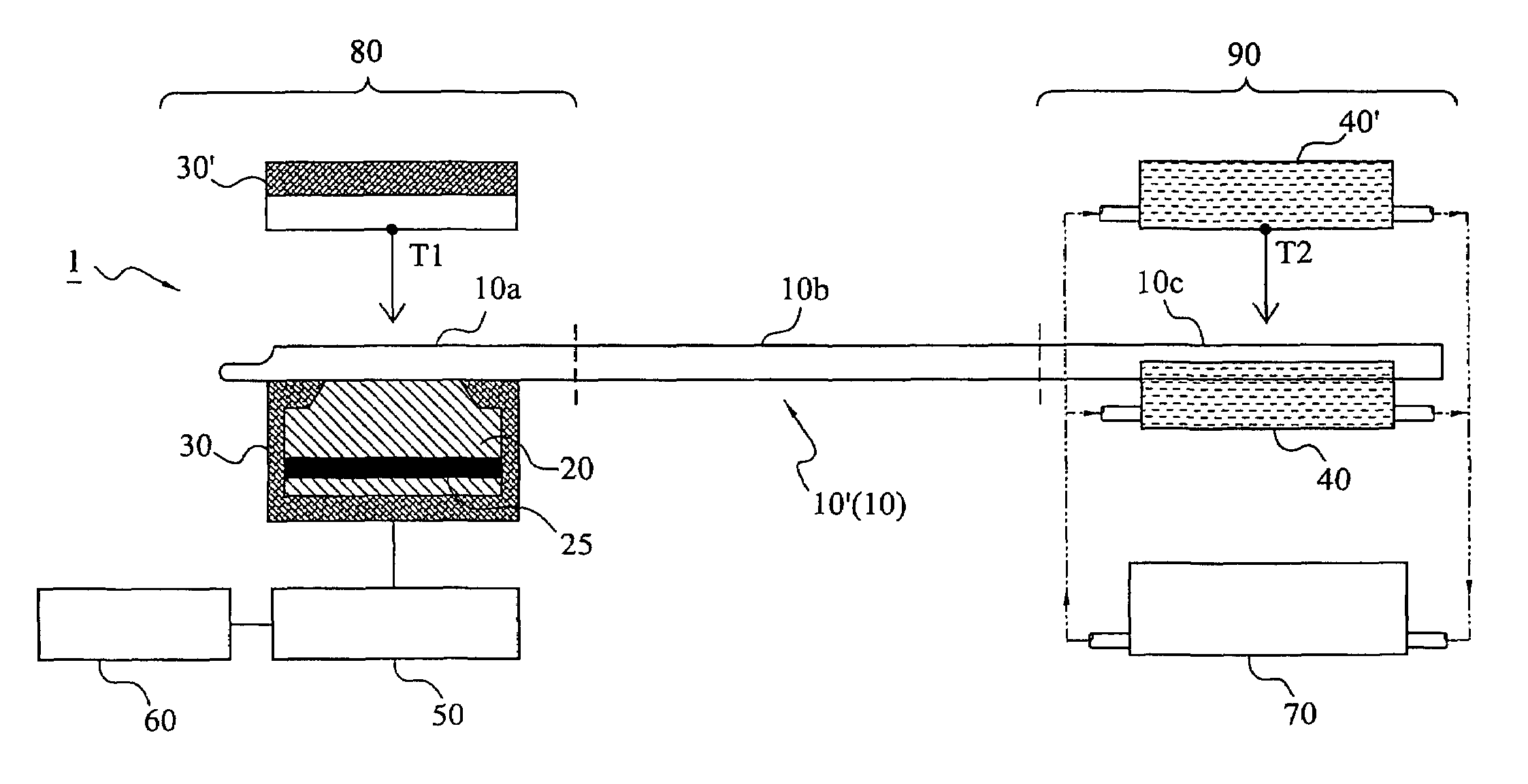
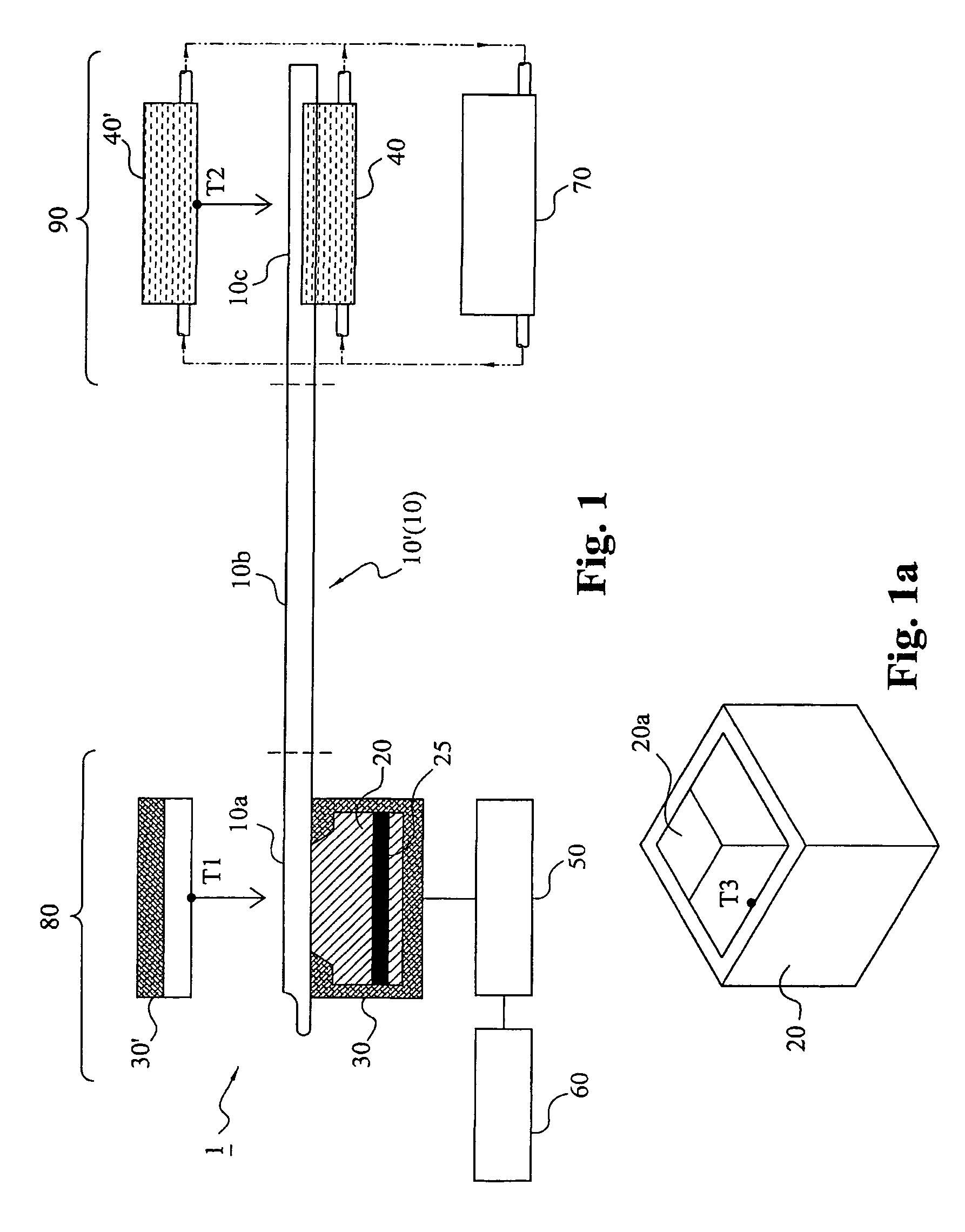
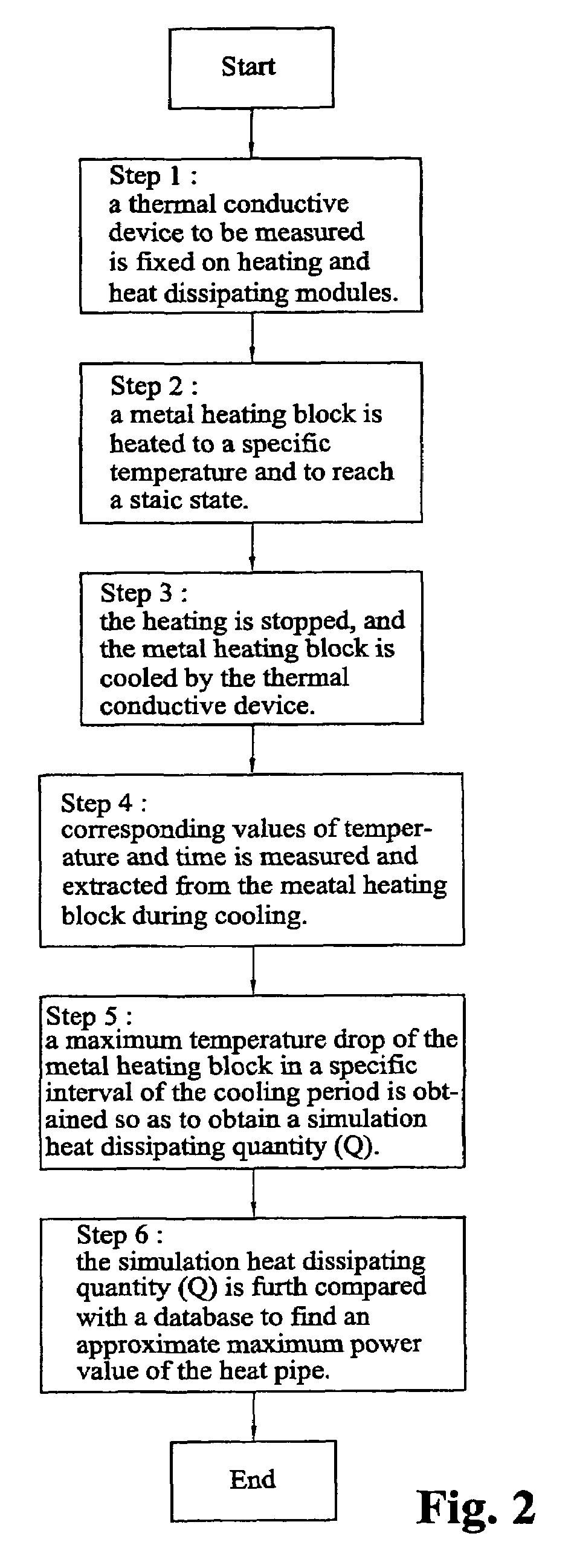
- A measuring system comprising a heating module with a metal heated block, a heat dissipating module using a water jacket for cooling, and a calculation module to rapidly determine the maximum thermal conductive quantity by analyzing temperature differences and cooling curves, significantly reducing measurement time and improving reproducibility.

Geopolitical and Trade Policy Impacts
The supply chain for thermal conductor materials faces significant vulnerabilities stemming from geopolitical tensions and evolving trade policies. Critical materials such as copper, aluminum, graphite, and specialized alloys are concentrated in specific geographic regions, creating dependencies that expose manufacturers to political instability and diplomatic conflicts. For instance, copper production is heavily concentrated in Chile and Peru, while China dominates the processing and refining of many thermal management materials. Any disruption in these regions due to political unrest, territorial disputes, or diplomatic breakdowns can severely constrain material availability and inflate costs.
Trade policy shifts represent another substantial risk factor for thermal conductor supply chains. Tariff impositions, export restrictions, and sanctions can rapidly alter the economic landscape for material procurement. Recent years have witnessed escalating trade tensions between major economies, resulting in tariffs on metals and strategic materials that directly impact thermal conductor manufacturing costs. Export controls on advanced materials and technologies, particularly those with dual-use applications, further complicate sourcing strategies and limit design flexibility.
Regional trade agreements and economic blocs increasingly influence material flow patterns and pricing structures. The formation of exclusive trading partnerships can create preferential access for certain nations while disadvantaging others. Manufacturers must navigate complex regulatory frameworks that vary significantly across jurisdictions, including compliance requirements for material sourcing, environmental standards, and technology transfer restrictions. These regulatory divergences add layers of complexity to supply chain management and increase operational risks.
Strategic resource nationalism has emerged as a growing concern, with resource-rich nations implementing policies to retain greater value from their natural endowments. Export quotas, beneficiation requirements, and preferential domestic allocation policies can restrict international availability of critical thermal conductor materials. Design engineers must therefore incorporate geopolitical risk assessments into material selection processes, considering not only technical performance and cost but also supply security and regulatory compliance across multiple jurisdictions.
Trade policy shifts represent another substantial risk factor for thermal conductor supply chains. Tariff impositions, export restrictions, and sanctions can rapidly alter the economic landscape for material procurement. Recent years have witnessed escalating trade tensions between major economies, resulting in tariffs on metals and strategic materials that directly impact thermal conductor manufacturing costs. Export controls on advanced materials and technologies, particularly those with dual-use applications, further complicate sourcing strategies and limit design flexibility.
Regional trade agreements and economic blocs increasingly influence material flow patterns and pricing structures. The formation of exclusive trading partnerships can create preferential access for certain nations while disadvantaging others. Manufacturers must navigate complex regulatory frameworks that vary significantly across jurisdictions, including compliance requirements for material sourcing, environmental standards, and technology transfer restrictions. These regulatory divergences add layers of complexity to supply chain management and increase operational risks.
Strategic resource nationalism has emerged as a growing concern, with resource-rich nations implementing policies to retain greater value from their natural endowments. Export quotas, beneficiation requirements, and preferential domestic allocation policies can restrict international availability of critical thermal conductor materials. Design engineers must therefore incorporate geopolitical risk assessments into material selection processes, considering not only technical performance and cost but also supply security and regulatory compliance across multiple jurisdictions.
Supply Risk Quantification Methodologies
Quantifying supply risks for thermal conductor materials requires systematic methodologies that integrate multiple analytical dimensions. These approaches must account for geological availability, geopolitical factors, market dynamics, and technological dependencies to provide actionable insights for design decision-making. The quantification process typically combines qualitative assessments with quantitative metrics to generate comprehensive risk profiles.
The criticality matrix approach represents a foundational methodology, plotting materials along two axes: supply risk and economic importance. Supply risk encompasses factors such as geographic concentration of production, political stability of supplier nations, substitutability potential, and recycling rates. Economic importance reflects the material's value contribution to the final product and its impact on performance specifications. This dual-axis framework enables designers to prioritize materials requiring risk mitigation strategies.
Probabilistic risk assessment models offer more sophisticated quantification by assigning numerical probabilities to supply disruption scenarios. These models incorporate historical supply interruption data, current geopolitical tensions, trade policy changes, and production capacity trends. Monte Carlo simulations can generate probability distributions for supply availability across different time horizons, allowing designers to evaluate risk exposure under various scenarios and establish contingency thresholds.
The Herfindahl-Hirschman Index (HHI) provides a standardized metric for measuring supply concentration risk. By calculating the sum of squared market shares of producing countries or companies, HHI values quantify monopolistic tendencies in the supply chain. Values above certain thresholds indicate high concentration risk, signaling potential vulnerability to single-point failures in the supply network.
Multi-criteria decision analysis (MCDA) frameworks integrate diverse risk indicators into composite scores. These methodologies weight factors such as price volatility, lead time variability, supplier financial stability, environmental compliance risks, and technological lock-in effects. Weighted scoring systems enable comparative evaluation of alternative thermal conductor materials, facilitating trade-off analysis between performance requirements and supply security.
Dynamic risk modeling incorporates temporal dimensions by tracking leading indicators of supply disruption. Real-time monitoring of mining output, export restrictions, inventory levels, and futures market signals provides early warning capabilities. These predictive models support adaptive design strategies that can respond to evolving risk landscapes throughout product lifecycles.
The criticality matrix approach represents a foundational methodology, plotting materials along two axes: supply risk and economic importance. Supply risk encompasses factors such as geographic concentration of production, political stability of supplier nations, substitutability potential, and recycling rates. Economic importance reflects the material's value contribution to the final product and its impact on performance specifications. This dual-axis framework enables designers to prioritize materials requiring risk mitigation strategies.
Probabilistic risk assessment models offer more sophisticated quantification by assigning numerical probabilities to supply disruption scenarios. These models incorporate historical supply interruption data, current geopolitical tensions, trade policy changes, and production capacity trends. Monte Carlo simulations can generate probability distributions for supply availability across different time horizons, allowing designers to evaluate risk exposure under various scenarios and establish contingency thresholds.
The Herfindahl-Hirschman Index (HHI) provides a standardized metric for measuring supply concentration risk. By calculating the sum of squared market shares of producing countries or companies, HHI values quantify monopolistic tendencies in the supply chain. Values above certain thresholds indicate high concentration risk, signaling potential vulnerability to single-point failures in the supply network.
Multi-criteria decision analysis (MCDA) frameworks integrate diverse risk indicators into composite scores. These methodologies weight factors such as price volatility, lead time variability, supplier financial stability, environmental compliance risks, and technological lock-in effects. Weighted scoring systems enable comparative evaluation of alternative thermal conductor materials, facilitating trade-off analysis between performance requirements and supply security.
Dynamic risk modeling incorporates temporal dimensions by tracking leading indicators of supply disruption. Real-time monitoring of mining output, export restrictions, inventory levels, and futures market signals provides early warning capabilities. These predictive models support adaptive design strategies that can respond to evolving risk landscapes throughout product lifecycles.
Unlock deeper insights with Patsnap Eureka Quick Research — get a full tech report to explore trends and direct your research. Try now!
Generate Your Research Report Instantly with AI Agent
Supercharge your innovation with Patsnap Eureka AI Agent Platform!