

Quantum Computing and its Applications in Global Trade Optimization
JUL 17, 20259 MIN READ
Generate Your Research Report Instantly with AI Agent
PatSnap Eureka helps you evaluate technical feasibility & market potential.
Quantum Computing Evolution and Objectives
Quantum computing has emerged as a revolutionary technology with the potential to transform various industries, including global trade optimization. The evolution of quantum computing can be traced back to the early 1980s when Richard Feynman proposed the idea of using quantum mechanical systems to simulate other quantum systems. Since then, the field has progressed rapidly, with significant milestones achieved in both theoretical and practical aspects.
The development of quantum computing has been driven by the limitations of classical computing in solving complex problems. As global trade becomes increasingly intricate, traditional computing methods struggle to optimize large-scale logistics, supply chain management, and financial transactions. Quantum computing offers a promising solution to these challenges by leveraging the principles of quantum mechanics, such as superposition and entanglement, to perform calculations exponentially faster than classical computers.
The objectives of quantum computing in the context of global trade optimization are multifaceted. Primarily, researchers and industry leaders aim to develop quantum algorithms that can efficiently solve optimization problems inherent in international trade. These include route optimization for shipping and logistics, portfolio optimization for financial markets, and supply chain optimization for multinational corporations. Additionally, there is a focus on creating quantum-resistant cryptographic systems to ensure secure communications and transactions in a post-quantum world.
Another key objective is to scale up quantum hardware to achieve quantum supremacy in practical applications. This involves increasing the number of qubits while maintaining coherence and reducing error rates. The ultimate goal is to develop fault-tolerant quantum computers capable of running complex optimization algorithms for real-world trade scenarios.
The evolution of quantum computing has seen significant progress in recent years. Major tech companies and startups have made substantial investments in quantum research and development. Cloud-based quantum computing services have emerged, allowing businesses to experiment with quantum algorithms without the need for in-house quantum hardware. This democratization of quantum computing is crucial for its integration into global trade optimization processes.
As the field progresses, researchers are also exploring hybrid approaches that combine classical and quantum computing techniques. These hybrid systems aim to leverage the strengths of both paradigms, potentially offering more immediate benefits to global trade optimization while full-scale quantum computers are still under development.
Looking ahead, the objectives for quantum computing in global trade optimization include developing industry-specific quantum algorithms, improving quantum error correction techniques, and creating user-friendly interfaces for quantum systems. The ultimate aim is to revolutionize global trade by enabling real-time optimization of complex international supply chains, financial transactions, and logistics networks, leading to increased efficiency and reduced costs in worldwide commerce.
The development of quantum computing has been driven by the limitations of classical computing in solving complex problems. As global trade becomes increasingly intricate, traditional computing methods struggle to optimize large-scale logistics, supply chain management, and financial transactions. Quantum computing offers a promising solution to these challenges by leveraging the principles of quantum mechanics, such as superposition and entanglement, to perform calculations exponentially faster than classical computers.
The objectives of quantum computing in the context of global trade optimization are multifaceted. Primarily, researchers and industry leaders aim to develop quantum algorithms that can efficiently solve optimization problems inherent in international trade. These include route optimization for shipping and logistics, portfolio optimization for financial markets, and supply chain optimization for multinational corporations. Additionally, there is a focus on creating quantum-resistant cryptographic systems to ensure secure communications and transactions in a post-quantum world.
Another key objective is to scale up quantum hardware to achieve quantum supremacy in practical applications. This involves increasing the number of qubits while maintaining coherence and reducing error rates. The ultimate goal is to develop fault-tolerant quantum computers capable of running complex optimization algorithms for real-world trade scenarios.
The evolution of quantum computing has seen significant progress in recent years. Major tech companies and startups have made substantial investments in quantum research and development. Cloud-based quantum computing services have emerged, allowing businesses to experiment with quantum algorithms without the need for in-house quantum hardware. This democratization of quantum computing is crucial for its integration into global trade optimization processes.
As the field progresses, researchers are also exploring hybrid approaches that combine classical and quantum computing techniques. These hybrid systems aim to leverage the strengths of both paradigms, potentially offering more immediate benefits to global trade optimization while full-scale quantum computers are still under development.
Looking ahead, the objectives for quantum computing in global trade optimization include developing industry-specific quantum algorithms, improving quantum error correction techniques, and creating user-friendly interfaces for quantum systems. The ultimate aim is to revolutionize global trade by enabling real-time optimization of complex international supply chains, financial transactions, and logistics networks, leading to increased efficiency and reduced costs in worldwide commerce.
Global Trade Optimization Market Analysis
The global trade optimization market has been experiencing significant growth in recent years, driven by the increasing complexity of international trade networks and the need for more efficient supply chain management. As businesses seek to streamline their operations and reduce costs, the demand for advanced optimization solutions has surged. The market size for global trade optimization software and services is projected to reach substantial figures in the coming years, with a compound annual growth rate (CAGR) that outpaces many other sectors in the technology industry.
Key factors contributing to this market growth include the rise of e-commerce, which has dramatically increased the volume and frequency of cross-border transactions, and the ongoing digitalization of supply chains. Additionally, geopolitical tensions and trade disputes have heightened the need for agile and responsive trade optimization tools that can quickly adapt to changing regulations and tariff structures.
The market is segmented by various factors, including deployment type (cloud-based and on-premises), organization size (large enterprises and small to medium-sized enterprises), and industry verticals (retail, manufacturing, automotive, healthcare, and others). Cloud-based solutions are gaining traction due to their scalability and lower upfront costs, particularly among smaller businesses looking to compete in the global marketplace.
Geographically, North America currently holds the largest market share, owing to the presence of major technology companies and early adoption of advanced optimization techniques. However, the Asia-Pacific region is expected to witness the highest growth rate in the coming years, fueled by rapid industrialization, expanding e-commerce markets, and increasing cross-border trade within the region.
The competitive landscape of the global trade optimization market is characterized by a mix of established players and innovative startups. Major technology companies are investing heavily in research and development to incorporate cutting-edge technologies like artificial intelligence, machine learning, and blockchain into their optimization solutions. These advancements promise to deliver more accurate predictions, real-time decision-making capabilities, and enhanced security for global trade transactions.
Despite the positive outlook, the market faces challenges such as the high initial investment required for implementing sophisticated optimization systems and concerns over data security and privacy in cross-border data flows. Additionally, the complexity of integrating optimization solutions with existing legacy systems poses a significant hurdle for many organizations.
Looking ahead, the integration of quantum computing into global trade optimization solutions represents a potential game-changer for the market. While still in its early stages, quantum computing could revolutionize the way complex trade calculations are performed, offering unprecedented speed and accuracy in solving multivariable optimization problems that are currently intractable for classical computers.
Key factors contributing to this market growth include the rise of e-commerce, which has dramatically increased the volume and frequency of cross-border transactions, and the ongoing digitalization of supply chains. Additionally, geopolitical tensions and trade disputes have heightened the need for agile and responsive trade optimization tools that can quickly adapt to changing regulations and tariff structures.
The market is segmented by various factors, including deployment type (cloud-based and on-premises), organization size (large enterprises and small to medium-sized enterprises), and industry verticals (retail, manufacturing, automotive, healthcare, and others). Cloud-based solutions are gaining traction due to their scalability and lower upfront costs, particularly among smaller businesses looking to compete in the global marketplace.
Geographically, North America currently holds the largest market share, owing to the presence of major technology companies and early adoption of advanced optimization techniques. However, the Asia-Pacific region is expected to witness the highest growth rate in the coming years, fueled by rapid industrialization, expanding e-commerce markets, and increasing cross-border trade within the region.
The competitive landscape of the global trade optimization market is characterized by a mix of established players and innovative startups. Major technology companies are investing heavily in research and development to incorporate cutting-edge technologies like artificial intelligence, machine learning, and blockchain into their optimization solutions. These advancements promise to deliver more accurate predictions, real-time decision-making capabilities, and enhanced security for global trade transactions.
Despite the positive outlook, the market faces challenges such as the high initial investment required for implementing sophisticated optimization systems and concerns over data security and privacy in cross-border data flows. Additionally, the complexity of integrating optimization solutions with existing legacy systems poses a significant hurdle for many organizations.
Looking ahead, the integration of quantum computing into global trade optimization solutions represents a potential game-changer for the market. While still in its early stages, quantum computing could revolutionize the way complex trade calculations are performed, offering unprecedented speed and accuracy in solving multivariable optimization problems that are currently intractable for classical computers.
Quantum Computing Challenges in Trade
Quantum computing presents several significant challenges when applied to global trade optimization. One of the primary obstacles is the current limitation in qubit coherence time. While quantum computers have shown promise in solving complex optimization problems, maintaining quantum states for extended periods remains difficult. This constraint restricts the scale and complexity of trade optimization problems that can be effectively addressed using quantum algorithms.
Another challenge lies in the error rates of quantum gates. Despite advancements in quantum error correction techniques, the high error rates in quantum computations can lead to unreliable results when dealing with large-scale trade optimization scenarios. This issue becomes particularly pronounced when considering the vast number of variables and constraints involved in global trade networks.
The scalability of quantum systems also poses a significant hurdle. While small-scale quantum computers have demonstrated potential in optimizing limited trade scenarios, scaling these systems to handle the complexities of global trade networks remains a formidable task. The number of qubits required for such large-scale optimizations far exceeds the capabilities of current quantum hardware.
Furthermore, the development of quantum algorithms specifically tailored for trade optimization is still in its infancy. While quantum algorithms like Grover's search and Shor's factorization have shown promise in certain domains, their direct application to trade optimization problems is not straightforward. Researchers face the challenge of designing quantum algorithms that can effectively leverage the unique properties of quantum systems to outperform classical algorithms in trade-related computations.
The integration of quantum computing with existing classical infrastructure in the trade sector presents another significant challenge. Global trade relies heavily on established classical systems and databases. Developing hybrid quantum-classical approaches that can seamlessly interface with these existing systems while leveraging the power of quantum computing is a complex undertaking that requires substantial research and development efforts.
Lastly, the cost and accessibility of quantum computing resources remain significant barriers to widespread adoption in the trade sector. The high costs associated with developing and maintaining quantum systems, coupled with the specialized expertise required to operate them, limit their accessibility to many trade organizations. Overcoming these economic and technical barriers is crucial for realizing the potential of quantum computing in global trade optimization.
Another challenge lies in the error rates of quantum gates. Despite advancements in quantum error correction techniques, the high error rates in quantum computations can lead to unreliable results when dealing with large-scale trade optimization scenarios. This issue becomes particularly pronounced when considering the vast number of variables and constraints involved in global trade networks.
The scalability of quantum systems also poses a significant hurdle. While small-scale quantum computers have demonstrated potential in optimizing limited trade scenarios, scaling these systems to handle the complexities of global trade networks remains a formidable task. The number of qubits required for such large-scale optimizations far exceeds the capabilities of current quantum hardware.
Furthermore, the development of quantum algorithms specifically tailored for trade optimization is still in its infancy. While quantum algorithms like Grover's search and Shor's factorization have shown promise in certain domains, their direct application to trade optimization problems is not straightforward. Researchers face the challenge of designing quantum algorithms that can effectively leverage the unique properties of quantum systems to outperform classical algorithms in trade-related computations.
The integration of quantum computing with existing classical infrastructure in the trade sector presents another significant challenge. Global trade relies heavily on established classical systems and databases. Developing hybrid quantum-classical approaches that can seamlessly interface with these existing systems while leveraging the power of quantum computing is a complex undertaking that requires substantial research and development efforts.
Lastly, the cost and accessibility of quantum computing resources remain significant barriers to widespread adoption in the trade sector. The high costs associated with developing and maintaining quantum systems, coupled with the specialized expertise required to operate them, limit their accessibility to many trade organizations. Overcoming these economic and technical barriers is crucial for realizing the potential of quantum computing in global trade optimization.
Current Quantum Solutions for Trade
01 Quantum Circuit Design and Optimization
This area focuses on developing and optimizing quantum circuits for various applications. It involves creating efficient quantum gate sequences, reducing circuit depth, and improving qubit connectivity to enhance overall quantum algorithm performance.- Quantum computing architectures: This category focuses on the design and implementation of quantum computing systems. It includes innovations in qubit arrangements, circuit layouts, and overall system architectures to improve quantum computation efficiency and scalability.
- Error correction and fault tolerance: This area addresses the challenges of maintaining quantum coherence and mitigating errors in quantum systems. It involves techniques for error detection, correction, and fault-tolerant quantum computation to enhance the reliability of quantum operations.
- Quantum algorithms and applications: This category encompasses the development of quantum algorithms for various computational problems and their practical applications. It includes innovations in quantum simulation, optimization, machine learning, and cryptography using quantum systems.
- Quantum-classical hybrid systems: This area focuses on integrating quantum and classical computing technologies. It includes methods for interfacing quantum processors with classical systems, hybrid algorithms, and techniques for leveraging the strengths of both quantum and classical computation.
- Quantum hardware and control: This category covers advancements in quantum hardware components and control systems. It includes innovations in qubit technologies, quantum gates, readout mechanisms, and precise control of quantum states for improved quantum computation performance.
02 Error Correction and Fault Tolerance
Error correction and fault tolerance are crucial for building reliable quantum computers. This includes developing quantum error correction codes, implementing fault-tolerant quantum gates, and designing architectures that can withstand noise and decoherence.Expand Specific Solutions03 Quantum-Classical Hybrid Algorithms
Hybrid algorithms combine classical and quantum computing to solve complex problems. This approach leverages the strengths of both paradigms, allowing for near-term applications of quantum computing while mitigating the limitations of current quantum hardware.Expand Specific Solutions04 Quantum Machine Learning
Quantum machine learning explores the intersection of quantum computing and machine learning. It involves developing quantum algorithms for data classification, clustering, and pattern recognition, potentially offering speedups over classical machine learning techniques.Expand Specific Solutions05 Quantum Communication and Cryptography
This field focuses on leveraging quantum principles for secure communication and cryptography. It includes quantum key distribution, quantum random number generation, and developing quantum-resistant cryptographic protocols to protect against future quantum attacks.Expand Specific Solutions
Key Quantum Computing Industry Players
The quantum computing landscape for global trade optimization is in its early stages, with significant potential for growth. The market is characterized by a mix of established tech giants and specialized quantum startups, indicating a dynamic and competitive environment. Companies like Google, IBM, and Intel are leveraging their extensive resources to advance quantum technologies, while startups such as Zapata Computing and Origin Quantum are focusing on niche applications. The technology's maturity varies, with some players demonstrating promising results in optimization algorithms, but widespread commercial applications are still emerging. As the field progresses, collaborations between academia, like Cornell University and University of Melbourne, and industry players are accelerating development, suggesting a rapidly evolving ecosystem poised for significant advancements in global trade optimization applications.
Zapata Computing, Inc.
Technical Solution: Zapata Computing specializes in quantum-enabled software solutions for optimization problems, including those in global trade. Their Orquestra platform integrates quantum and classical computational resources to tackle complex optimization tasks. For trade optimization, Zapata employs variational quantum algorithms and quantum machine learning techniques to address challenges in supply chain management, route optimization, and demand forecasting[11]. They have developed custom quantum circuits and algorithms that can be run on various quantum hardware platforms, allowing for flexible deployment of quantum solutions in trade optimization scenarios. Zapata's approach includes quantum-classical hybrid algorithms that can leverage current NISQ (Noisy Intermediate-Scale Quantum) devices while also being scalable to future, more powerful quantum systems[12].
Strengths: Specialized in quantum software and algorithms, hardware-agnostic solutions, and focus on near-term quantum applications. Weaknesses: Dependent on third-party quantum hardware, which may limit performance in some scenarios.
Google LLC
Technical Solution: Google's approach to quantum computing for global trade optimization centers around their Sycamore quantum processor and the development of quantum algorithms for combinatorial optimization problems. They have demonstrated quantum supremacy with their 53-qubit processor, solving a specific problem in 200 seconds that would take a classical supercomputer 10,000 years[5]. For trade optimization, Google focuses on quantum approximate optimization algorithms (QAOA) and variational quantum eigensolver (VQE) methods[6]. These algorithms are applied to solve complex routing and scheduling problems in global supply chains. Google's Cirq framework allows researchers to design and implement quantum circuits for trade optimization tasks, while their quantum hardware provides the necessary computational power[7].
Strengths: Cutting-edge quantum hardware, proven quantum supremacy, and strong focus on practical quantum algorithms. Weaknesses: Limited qubit count compared to some competitors, and challenges in scaling up to solve real-world trade optimization problems.
Breakthrough Quantum Trade Algorithms
Quantum optimization system
PatentActiveAU2018201944A1
Innovation
- A hybrid classical-quantum optimization engine that uses a classical processor to obtain local solutions and a quantum computing device to perform a genetic algorithm, including quantum selection, mutation, and crossover operations, to generate global solutions by mapping data between classical and quantum domains.


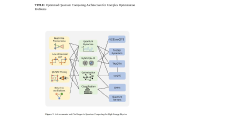
Optimized quantum computing architecture for complex optimization problems
PatentPendingIN202441044532A
Innovation
- The development of optimized quantum computing architectures that leverage quantum mechanical principles such as superposition and entanglement to design efficient quantum circuits and algorithms, incorporating advanced error correction techniques and hardware advancements like superconducting qubits, to explore multiple solutions in parallel and minimize errors, thereby achieving exponential speedup over classical algorithms.

Quantum Computing Infrastructure Requirements
Quantum computing infrastructure requirements for global trade optimization are complex and multifaceted. The foundation of this infrastructure lies in the development and deployment of stable, scalable quantum computers. These systems require advanced cooling mechanisms to maintain superconducting qubits at near-absolute zero temperatures, typically achieved through dilution refrigerators. Alongside the quantum processors, classical computing resources are essential for control, readout, and error correction processes.
Quantum memory and quantum communication channels are crucial components for distributed quantum computing networks. These networks will enable the integration of quantum resources across different geographical locations, enhancing the computational power available for global trade optimization tasks. Quantum repeaters and quantum satellites are being developed to facilitate long-distance quantum communication, addressing the challenges of quantum state degradation over large distances.
Software infrastructure is equally important, encompassing quantum algorithms, compilers, and middleware that can translate global trade optimization problems into quantum circuits. This software stack must be capable of interfacing with classical systems and handling hybrid quantum-classical computations. Quantum error correction codes and fault-tolerant quantum computing architectures are essential for mitigating the effects of decoherence and gate errors, which are particularly critical for the complex calculations involved in trade optimization.
Data centers equipped to house quantum computers require specialized facilities with stringent environmental controls. These facilities must manage electromagnetic interference, vibration isolation, and precise temperature regulation. Additionally, the integration of quantum systems with existing high-performance computing infrastructure is necessary to leverage the strengths of both quantum and classical computing paradigms.
Cybersecurity measures tailored for quantum systems are paramount, as quantum computers pose both opportunities and threats to current encryption methods. Post-quantum cryptography protocols must be implemented to secure data transmission and storage in the quantum era. Furthermore, the development of quantum-safe algorithms for trade optimization is crucial to ensure the longevity and security of global trade systems.
Human resources and training programs are vital components of quantum computing infrastructure. A workforce skilled in quantum technologies, including quantum algorithm designers, hardware engineers, and quantum software developers, is essential for the successful implementation and maintenance of quantum systems in global trade optimization. Collaborative platforms and cloud-based quantum computing services will play a significant role in democratizing access to quantum resources and fostering innovation in trade optimization applications.
Quantum memory and quantum communication channels are crucial components for distributed quantum computing networks. These networks will enable the integration of quantum resources across different geographical locations, enhancing the computational power available for global trade optimization tasks. Quantum repeaters and quantum satellites are being developed to facilitate long-distance quantum communication, addressing the challenges of quantum state degradation over large distances.
Software infrastructure is equally important, encompassing quantum algorithms, compilers, and middleware that can translate global trade optimization problems into quantum circuits. This software stack must be capable of interfacing with classical systems and handling hybrid quantum-classical computations. Quantum error correction codes and fault-tolerant quantum computing architectures are essential for mitigating the effects of decoherence and gate errors, which are particularly critical for the complex calculations involved in trade optimization.
Data centers equipped to house quantum computers require specialized facilities with stringent environmental controls. These facilities must manage electromagnetic interference, vibration isolation, and precise temperature regulation. Additionally, the integration of quantum systems with existing high-performance computing infrastructure is necessary to leverage the strengths of both quantum and classical computing paradigms.
Cybersecurity measures tailored for quantum systems are paramount, as quantum computers pose both opportunities and threats to current encryption methods. Post-quantum cryptography protocols must be implemented to secure data transmission and storage in the quantum era. Furthermore, the development of quantum-safe algorithms for trade optimization is crucial to ensure the longevity and security of global trade systems.
Human resources and training programs are vital components of quantum computing infrastructure. A workforce skilled in quantum technologies, including quantum algorithm designers, hardware engineers, and quantum software developers, is essential for the successful implementation and maintenance of quantum systems in global trade optimization. Collaborative platforms and cloud-based quantum computing services will play a significant role in democratizing access to quantum resources and fostering innovation in trade optimization applications.
Geopolitical Implications of Quantum Trade
The geopolitical implications of quantum trade are far-reaching and multifaceted, with the potential to reshape global economic and power dynamics. As quantum computing advances and its applications in global trade optimization become more prevalent, nations and economic blocs will vie for technological supremacy in this domain. The country or alliance that achieves quantum advantage in trade optimization first may gain significant economic and strategic benefits, potentially altering the balance of global trade.
Quantum-enhanced trade optimization could lead to more efficient supply chains, reduced transaction costs, and improved resource allocation on a global scale. However, this efficiency gain may not be distributed equally among nations. Countries with advanced quantum capabilities could leverage this technology to negotiate more favorable trade terms, potentially exacerbating existing economic disparities. This could lead to a new form of digital divide, where quantum-enabled nations have a distinct advantage in international commerce.
The development of quantum trade technologies may also impact national security and sovereignty. Quantum algorithms could potentially break current encryption standards, raising concerns about the security of sensitive trade data and negotiations. Nations may need to invest heavily in quantum-resistant cryptography to protect their economic interests. Additionally, the ability to optimize complex trade networks could provide strategic insights into global supply chains, potentially allowing some countries to exploit vulnerabilities or exert economic pressure on others.
Regulatory frameworks and international agreements will need to evolve to address the challenges posed by quantum trade. Issues such as data sovereignty, fair competition, and the ethical use of quantum-enhanced trade optimization will likely become key topics in international diplomacy. The development of global standards for quantum trade technologies could become a new arena for geopolitical competition, with different nations and blocs vying to shape the rules of the emerging quantum economy.
The race for quantum supremacy in trade could also lead to increased collaboration or tension between nations. Strategic partnerships and alliances may form around quantum trade technologies, potentially reshaping existing geopolitical alignments. Conversely, concerns about technological espionage and the protection of quantum trade secrets could strain international relations and lead to new forms of trade barriers or sanctions.
Quantum-enhanced trade optimization could lead to more efficient supply chains, reduced transaction costs, and improved resource allocation on a global scale. However, this efficiency gain may not be distributed equally among nations. Countries with advanced quantum capabilities could leverage this technology to negotiate more favorable trade terms, potentially exacerbating existing economic disparities. This could lead to a new form of digital divide, where quantum-enabled nations have a distinct advantage in international commerce.
The development of quantum trade technologies may also impact national security and sovereignty. Quantum algorithms could potentially break current encryption standards, raising concerns about the security of sensitive trade data and negotiations. Nations may need to invest heavily in quantum-resistant cryptography to protect their economic interests. Additionally, the ability to optimize complex trade networks could provide strategic insights into global supply chains, potentially allowing some countries to exploit vulnerabilities or exert economic pressure on others.
Regulatory frameworks and international agreements will need to evolve to address the challenges posed by quantum trade. Issues such as data sovereignty, fair competition, and the ethical use of quantum-enhanced trade optimization will likely become key topics in international diplomacy. The development of global standards for quantum trade technologies could become a new arena for geopolitical competition, with different nations and blocs vying to shape the rules of the emerging quantum economy.
The race for quantum supremacy in trade could also lead to increased collaboration or tension between nations. Strategic partnerships and alliances may form around quantum trade technologies, potentially reshaping existing geopolitical alignments. Conversely, concerns about technological espionage and the protection of quantum trade secrets could strain international relations and lead to new forms of trade barriers or sanctions.
Unlock deeper insights with PatSnap Eureka Quick Research — get a full tech report to explore trends and direct your research. Try now!
Generate Your Research Report Instantly with AI Agent
Supercharge your innovation with PatSnap Eureka AI Agent Platform!