

Quantum Sensors for Predictive Maintenance: Real-time Response
APR 20, 202610 MIN READ
Generate Your Research Report Instantly with AI Agent
Patsnap Eureka helps you evaluate technical feasibility & market potential.
Quantum Sensing Technology Background and Predictive Goals
Quantum sensing technology represents a revolutionary advancement in measurement science, leveraging quantum mechanical phenomena to achieve unprecedented sensitivity and precision in detecting physical parameters. This field has emerged from decades of fundamental quantum physics research, transitioning from laboratory curiosities to practical applications across multiple industries. The technology exploits quantum properties such as superposition, entanglement, and quantum interference to create sensors capable of measuring magnetic fields, electric fields, temperature, pressure, and acceleration with extraordinary accuracy.
The evolution of quantum sensors traces back to the development of atomic clocks in the 1950s, followed by breakthroughs in laser cooling and trapping techniques in the 1980s and 1990s. Recent advances in quantum control, materials science, and miniaturization have enabled the development of portable quantum sensing devices suitable for industrial applications. Key technological milestones include the demonstration of nitrogen-vacancy centers in diamond for magnetometry, cold atom interferometry for gravimetry, and superconducting quantum interference devices for ultra-sensitive magnetic field detection.
In the context of predictive maintenance, quantum sensors offer transformative capabilities for real-time monitoring of critical infrastructure and machinery. Traditional maintenance approaches rely on scheduled inspections or reactive responses to failures, resulting in significant downtime and operational costs. Quantum sensors can detect minute changes in magnetic signatures, vibrations, and thermal patterns that precede equipment failures by weeks or months, enabling proactive maintenance strategies.
The primary technical objectives for quantum sensors in predictive maintenance applications center on achieving real-time response capabilities while maintaining quantum-enhanced sensitivity. Current quantum sensing systems often require extensive signal processing and environmental isolation, creating latency that limits real-time applications. The goal is to develop quantum sensors that can provide instantaneous feedback on equipment health status while preserving their quantum advantage over classical sensors.
Specific predictive goals include developing quantum magnetometers capable of detecting bearing wear through magnetic field anomalies with sub-nanotesla sensitivity, implementing quantum accelerometers for vibration analysis with femto-g resolution, and creating quantum thermometers for thermal monitoring with millikelvin precision. These sensors must operate reliably in industrial environments while providing continuous, real-time data streams for predictive analytics algorithms.
The integration of quantum sensors with artificial intelligence and machine learning platforms represents a critical objective for maximizing predictive maintenance effectiveness. This convergence aims to create autonomous monitoring systems that can identify failure patterns, predict maintenance windows, and optimize operational parameters based on quantum-enhanced sensor data, ultimately revolutionizing industrial maintenance paradigms.
The evolution of quantum sensors traces back to the development of atomic clocks in the 1950s, followed by breakthroughs in laser cooling and trapping techniques in the 1980s and 1990s. Recent advances in quantum control, materials science, and miniaturization have enabled the development of portable quantum sensing devices suitable for industrial applications. Key technological milestones include the demonstration of nitrogen-vacancy centers in diamond for magnetometry, cold atom interferometry for gravimetry, and superconducting quantum interference devices for ultra-sensitive magnetic field detection.
In the context of predictive maintenance, quantum sensors offer transformative capabilities for real-time monitoring of critical infrastructure and machinery. Traditional maintenance approaches rely on scheduled inspections or reactive responses to failures, resulting in significant downtime and operational costs. Quantum sensors can detect minute changes in magnetic signatures, vibrations, and thermal patterns that precede equipment failures by weeks or months, enabling proactive maintenance strategies.
The primary technical objectives for quantum sensors in predictive maintenance applications center on achieving real-time response capabilities while maintaining quantum-enhanced sensitivity. Current quantum sensing systems often require extensive signal processing and environmental isolation, creating latency that limits real-time applications. The goal is to develop quantum sensors that can provide instantaneous feedback on equipment health status while preserving their quantum advantage over classical sensors.
Specific predictive goals include developing quantum magnetometers capable of detecting bearing wear through magnetic field anomalies with sub-nanotesla sensitivity, implementing quantum accelerometers for vibration analysis with femto-g resolution, and creating quantum thermometers for thermal monitoring with millikelvin precision. These sensors must operate reliably in industrial environments while providing continuous, real-time data streams for predictive analytics algorithms.
The integration of quantum sensors with artificial intelligence and machine learning platforms represents a critical objective for maximizing predictive maintenance effectiveness. This convergence aims to create autonomous monitoring systems that can identify failure patterns, predict maintenance windows, and optimize operational parameters based on quantum-enhanced sensor data, ultimately revolutionizing industrial maintenance paradigms.
Market Demand for Real-time Quantum Predictive Maintenance
The global industrial maintenance market is experiencing unprecedented transformation driven by the convergence of quantum sensing technologies and predictive maintenance strategies. Traditional maintenance approaches, characterized by reactive repairs and scheduled interventions, are increasingly inadequate for modern industrial operations that demand maximum uptime and operational efficiency. The emergence of quantum sensors capable of real-time monitoring represents a paradigm shift toward precision-driven maintenance protocols.
Manufacturing sectors, particularly aerospace, automotive, energy, and heavy machinery industries, are demonstrating substantial appetite for quantum-enhanced predictive maintenance solutions. These industries face mounting pressure to minimize unplanned downtime, which can result in significant financial losses and safety risks. The ability of quantum sensors to detect minute changes in magnetic fields, temperature variations, and mechanical vibrations at unprecedented sensitivity levels addresses critical gaps in current monitoring capabilities.
The demand for real-time response capabilities is particularly acute in mission-critical applications where equipment failure can have cascading effects. Power generation facilities, chemical processing plants, and transportation infrastructure require continuous monitoring systems that can provide instantaneous alerts about potential equipment degradation. Quantum sensors offer the sensitivity and speed necessary to detect anomalies in their earliest stages, enabling proactive intervention before failures occur.
Market drivers include stringent regulatory requirements for safety and environmental compliance, increasing complexity of industrial equipment, and growing adoption of Industry 4.0 principles. Organizations are seeking integrated solutions that combine quantum sensing capabilities with advanced analytics and machine learning algorithms to create comprehensive predictive maintenance ecosystems.
The convergence of quantum sensing with edge computing and cloud-based analytics platforms is creating new market opportunities. End users are particularly interested in solutions that can seamlessly integrate with existing enterprise resource planning systems and maintenance management software, providing actionable insights without disrupting established workflows.
Emerging applications in renewable energy infrastructure, smart manufacturing, and autonomous systems are expanding the addressable market beyond traditional industrial sectors. The growing emphasis on sustainability and operational efficiency is driving investment in advanced monitoring technologies that can optimize equipment performance while reducing energy consumption and waste generation.
Manufacturing sectors, particularly aerospace, automotive, energy, and heavy machinery industries, are demonstrating substantial appetite for quantum-enhanced predictive maintenance solutions. These industries face mounting pressure to minimize unplanned downtime, which can result in significant financial losses and safety risks. The ability of quantum sensors to detect minute changes in magnetic fields, temperature variations, and mechanical vibrations at unprecedented sensitivity levels addresses critical gaps in current monitoring capabilities.
The demand for real-time response capabilities is particularly acute in mission-critical applications where equipment failure can have cascading effects. Power generation facilities, chemical processing plants, and transportation infrastructure require continuous monitoring systems that can provide instantaneous alerts about potential equipment degradation. Quantum sensors offer the sensitivity and speed necessary to detect anomalies in their earliest stages, enabling proactive intervention before failures occur.
Market drivers include stringent regulatory requirements for safety and environmental compliance, increasing complexity of industrial equipment, and growing adoption of Industry 4.0 principles. Organizations are seeking integrated solutions that combine quantum sensing capabilities with advanced analytics and machine learning algorithms to create comprehensive predictive maintenance ecosystems.
The convergence of quantum sensing with edge computing and cloud-based analytics platforms is creating new market opportunities. End users are particularly interested in solutions that can seamlessly integrate with existing enterprise resource planning systems and maintenance management software, providing actionable insights without disrupting established workflows.
Emerging applications in renewable energy infrastructure, smart manufacturing, and autonomous systems are expanding the addressable market beyond traditional industrial sectors. The growing emphasis on sustainability and operational efficiency is driving investment in advanced monitoring technologies that can optimize equipment performance while reducing energy consumption and waste generation.
Current Quantum Sensor Limitations and Real-time Challenges
Current quantum sensor technologies face significant operational constraints that limit their effectiveness in predictive maintenance applications. The most prominent limitation is the requirement for extremely controlled environmental conditions. Quantum sensors typically operate optimally at cryogenic temperatures, often requiring liquid helium cooling systems that are both expensive and impractical for industrial deployment. Additionally, these sensors exhibit extreme sensitivity to electromagnetic interference, vibrations, and temperature fluctuations, making them unsuitable for harsh industrial environments where predictive maintenance is most needed.
Decoherence represents another fundamental challenge, as quantum states are inherently fragile and easily disrupted by environmental noise. This phenomenon severely limits the coherence time of quantum sensors, typically restricting measurement windows to microseconds or milliseconds. Such brief operational windows are insufficient for continuous monitoring applications required in predictive maintenance scenarios, where sensors must operate reliably over extended periods.
Real-time response capabilities are severely hampered by complex signal processing requirements. Quantum sensors generate data that necessitates sophisticated quantum state reconstruction algorithms and error correction protocols. These computational processes introduce significant latency, often requiring seconds to minutes for data interpretation. This delay contradicts the fundamental requirement for immediate response in predictive maintenance systems, where rapid detection of anomalies is crucial for preventing equipment failures.
Scalability issues further compound these limitations. Current quantum sensor architectures are predominantly laboratory-based systems requiring specialized expertise for operation and maintenance. The integration of multiple quantum sensors into distributed monitoring networks presents substantial technical challenges, including quantum state synchronization and coherent signal processing across multiple nodes.
Manufacturing consistency and reproducibility remain problematic, as quantum sensors exhibit significant unit-to-unit variations in performance characteristics. This inconsistency complicates calibration procedures and makes it difficult to establish standardized measurement protocols essential for industrial applications. The lack of standardization also impedes the development of universal interfaces and communication protocols necessary for integration with existing industrial monitoring systems.
Cost considerations present additional barriers, as current quantum sensor technologies require expensive components including superconducting materials, precision optics, and specialized electronics. The total cost of ownership, including installation, maintenance, and operational expenses, often exceeds the economic benefits provided by enhanced predictive maintenance capabilities, limiting commercial adoption in most industrial sectors.
Decoherence represents another fundamental challenge, as quantum states are inherently fragile and easily disrupted by environmental noise. This phenomenon severely limits the coherence time of quantum sensors, typically restricting measurement windows to microseconds or milliseconds. Such brief operational windows are insufficient for continuous monitoring applications required in predictive maintenance scenarios, where sensors must operate reliably over extended periods.
Real-time response capabilities are severely hampered by complex signal processing requirements. Quantum sensors generate data that necessitates sophisticated quantum state reconstruction algorithms and error correction protocols. These computational processes introduce significant latency, often requiring seconds to minutes for data interpretation. This delay contradicts the fundamental requirement for immediate response in predictive maintenance systems, where rapid detection of anomalies is crucial for preventing equipment failures.
Scalability issues further compound these limitations. Current quantum sensor architectures are predominantly laboratory-based systems requiring specialized expertise for operation and maintenance. The integration of multiple quantum sensors into distributed monitoring networks presents substantial technical challenges, including quantum state synchronization and coherent signal processing across multiple nodes.
Manufacturing consistency and reproducibility remain problematic, as quantum sensors exhibit significant unit-to-unit variations in performance characteristics. This inconsistency complicates calibration procedures and makes it difficult to establish standardized measurement protocols essential for industrial applications. The lack of standardization also impedes the development of universal interfaces and communication protocols necessary for integration with existing industrial monitoring systems.
Cost considerations present additional barriers, as current quantum sensor technologies require expensive components including superconducting materials, precision optics, and specialized electronics. The total cost of ownership, including installation, maintenance, and operational expenses, often exceeds the economic benefits provided by enhanced predictive maintenance capabilities, limiting commercial adoption in most industrial sectors.
Existing Real-time Quantum Sensing Solutions
01 Quantum sensing systems with real-time data processing capabilities
Quantum sensors can be designed with integrated real-time data processing units that enable immediate analysis and response to detected quantum states. These systems utilize advanced signal processing algorithms and high-speed computing architectures to minimize latency between measurement and output. The real-time processing capability allows for immediate feedback and control in quantum sensing applications, making them suitable for time-critical operations.- Quantum sensing systems with real-time data processing capabilities: Quantum sensors can be integrated with advanced data processing units that enable real-time analysis and interpretation of quantum measurements. These systems utilize specialized algorithms and processing architectures to minimize latency between quantum state detection and output generation. The integration of high-speed electronics with quantum sensing elements allows for immediate response to detected quantum phenomena, making them suitable for time-critical applications.
- Feedback control mechanisms for quantum sensor optimization: Real-time response in quantum sensors can be enhanced through closed-loop feedback systems that continuously adjust sensor parameters based on measured outputs. These mechanisms employ adaptive control algorithms that optimize sensor performance dynamically, compensating for environmental fluctuations and drift. The feedback systems can adjust operational parameters such as interrogation sequences, measurement timing, and signal amplification to maintain optimal sensitivity and response speed.
- Quantum sensor arrays for parallel real-time detection: Multiple quantum sensing elements can be arranged in array configurations to enable simultaneous multi-point measurements with real-time readout capabilities. Array architectures allow for spatial mapping of quantum phenomena while maintaining high temporal resolution across all sensing nodes. Parallel processing of signals from multiple quantum sensors enables comprehensive real-time monitoring of complex systems or large areas.
- Signal conditioning and amplification for quantum sensor outputs: Specialized signal conditioning circuits and amplification stages are employed to process weak quantum signals in real-time without introducing significant noise or delay. These systems utilize low-noise amplifiers, filters, and analog-to-digital converters optimized for quantum signal characteristics. The signal processing chain is designed to preserve quantum information while enabling rapid conversion to usable output formats for immediate decision-making or control applications.
- Integration of quantum sensors with communication networks: Quantum sensors can be connected to communication networks and data distribution systems to enable real-time remote monitoring and response. Network integration allows sensor data to be transmitted with minimal latency to central processing units or distributed computing resources. This connectivity enables coordinated responses across multiple quantum sensing nodes and facilitates integration with broader monitoring and control systems.
02 Fast readout mechanisms for quantum sensor arrays
Advanced readout mechanisms enable rapid extraction of measurement data from quantum sensor arrays. These mechanisms employ multiplexing techniques, parallel readout channels, and optimized measurement protocols to achieve high-speed data acquisition. The fast readout capability is essential for applications requiring continuous monitoring and immediate response to environmental changes or target signals.Expand Specific Solutions03 Quantum sensor feedback control systems
Feedback control systems integrated with quantum sensors enable dynamic adjustment of sensor parameters based on real-time measurements. These systems use closed-loop control algorithms to optimize sensor performance and maintain stability during operation. The feedback mechanisms allow for adaptive sensing strategies that can respond to changing conditions and improve measurement accuracy in real-time applications.Expand Specific Solutions04 Low-latency quantum measurement protocols
Specialized measurement protocols are designed to minimize the time delay between quantum state preparation and measurement readout. These protocols optimize the measurement sequence, reduce decoherence effects, and employ fast detection schemes to achieve near-instantaneous response times. The low-latency approach is crucial for applications where rapid decision-making based on quantum sensor data is required.Expand Specific Solutions05 Real-time quantum error correction and calibration
Quantum sensors incorporate real-time error correction and calibration mechanisms to maintain measurement accuracy during continuous operation. These systems monitor sensor drift, environmental noise, and systematic errors, applying corrections on-the-fly without interrupting the measurement process. The real-time calibration ensures consistent sensor performance and reliable data output for time-sensitive applications.Expand Specific Solutions
Key Players in Quantum Sensor and Maintenance Technology
The quantum sensors for predictive maintenance market is in its early commercialization stage, transitioning from research to practical industrial applications. The market shows significant growth potential as industries increasingly demand real-time monitoring capabilities to prevent equipment failures and optimize operational efficiency. Technology maturity varies considerably across market players, with established industrial giants like Siemens AG, Hitachi Ltd., and IBM leading through their extensive IoT and sensor integration capabilities. Applied Materials and Honeywell International Technologies leverage their manufacturing expertise to develop quantum-enhanced sensing solutions. Research institutions including Georgia Tech Research Corp., Zhejiang University, and Battelle Memorial Institute drive fundamental quantum sensing innovations. Specialized companies like ODYSIGHT.AI and Beijing Tianze Zhiyun focus on AI-driven predictive analytics platforms that could integrate quantum sensing data. The competitive landscape reflects a convergence of quantum physics, industrial automation, and artificial intelligence, with traditional industrial equipment manufacturers competing against emerging technology specialists to capture this nascent but promising market segment.
Siemens AG
Technical Solution: Siemens has pioneered quantum sensor integration in industrial IoT ecosystems for predictive maintenance, focusing on quantum-enhanced vibration analysis and thermal monitoring. Their quantum sensing technology employs nitrogen-vacancy centers in diamond crystals to detect magnetic field fluctuations with femtotesla sensitivity, enabling detection of bearing wear, gear tooth damage, and motor winding degradation before conventional methods. The system integrates seamlessly with Siemens' MindSphere platform, providing real-time quantum sensor data processing and predictive analytics. Their quantum sensors can operate in harsh industrial environments while maintaining quantum coherence through advanced shielding and error correction techniques. The technology enables continuous monitoring of critical assets like turbines, compressors, and manufacturing equipment, with quantum-enhanced sensitivity allowing detection of failure precursors weeks in advance of traditional predictive maintenance systems.
Strengths: Robust industrial-grade quantum sensors, seamless integration with existing industrial automation systems. Weaknesses: Limited scalability for large-scale deployments, dependency on controlled environmental conditions for optimal quantum performance.
Applied Materials, Inc.
Technical Solution: Applied Materials has developed quantum sensing technologies specifically for semiconductor manufacturing equipment predictive maintenance, utilizing quantum dots and single-photon detectors for real-time process monitoring. Their quantum sensor arrays can detect atomic-level changes in chamber conditions, plasma stability, and substrate positioning that affect manufacturing yield and equipment reliability. The system employs quantum-enhanced spectroscopy to monitor chemical processes and detect contamination or wear in critical components before they impact production. Their quantum sensing platform integrates with fab-wide monitoring systems, providing predictive analytics for complex semiconductor manufacturing tools including etchers, deposition systems, and lithography equipment. The technology enables detection of process drift and equipment degradation with sensitivity levels impossible to achieve with classical sensors, allowing for proactive maintenance scheduling that minimizes production disruptions and maximizes equipment uptime in high-value semiconductor fabrication environments.
Strengths: Specialized expertise in semiconductor applications, exceptional precision for process-critical measurements. Weaknesses: Limited applicability outside semiconductor industry, requires ultra-clean environments for optimal quantum sensor performance.
Core Quantum Innovations for Predictive Maintenance
Monitoring of x-ray tubes
PatentInactiveEP4529361A1
Innovation
- A monitoring system using quantum sensors, such as nitrogen-vacancy (NV) diamond sensors or optically pumped magnetometers, to receive and process sensor signals for health monitoring and feedback control of X-ray tubes, enabling real-time monitoring of operational parameters like electric and magnetic fields, anode rotation speed, and temperature effects, with AI-based analysis for predictive and corrective maintenance.


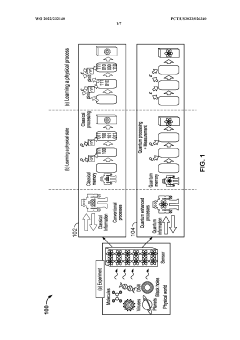
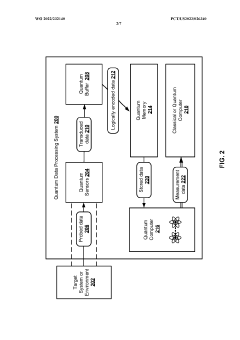
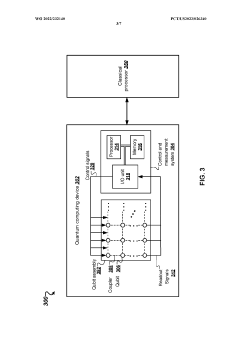
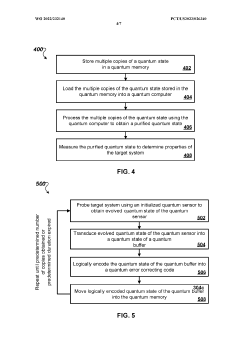
Quantum data processing system
PatentWO2022232140A1
Innovation
- The quantum data processing system interfaces quantum sensors with quantum devices for transduction and storage, implementing quantum error correction and linear distillation techniques to store and process multiple copies of quantum states, reducing the need for measurement and enhancing sensitivity and noise reduction.
Quantum Technology Standards and Certification Requirements
The deployment of quantum sensors for predictive maintenance applications necessitates comprehensive standardization frameworks to ensure reliability, interoperability, and safety across industrial implementations. Currently, the quantum technology sector lacks unified international standards, creating significant challenges for widespread adoption in critical maintenance applications where real-time response capabilities are essential.
International standardization bodies including ISO, IEC, and IEEE are actively developing quantum technology standards, with particular focus on quantum sensing applications. The ISO/IEC JTC 1/SC 27 committee has initiated work on quantum cryptography standards, while similar efforts are emerging for quantum sensing technologies. These standards must address measurement accuracy, calibration procedures, environmental operating conditions, and data integrity requirements specific to predictive maintenance scenarios.
Certification requirements for quantum sensors in industrial environments present unique challenges due to the sensitive nature of quantum states and their susceptibility to environmental interference. Traditional certification approaches used for classical sensors require substantial modification to accommodate quantum decoherence effects, temperature sensitivity, and electromagnetic interference considerations that directly impact sensor performance and reliability.
The European Union's Quantum Flagship program has established preliminary certification frameworks focusing on quantum device characterization and performance validation. These frameworks emphasize traceability to national measurement standards and require demonstration of consistent performance across specified operating conditions. Similar initiatives in the United States through NIST and in Asia through national metrology institutes are developing complementary certification protocols.
Key certification parameters for quantum sensors include quantum coherence time, sensitivity thresholds, response time characteristics, and long-term stability metrics. These parameters must be validated through standardized testing protocols that account for real-world industrial environments where temperature fluctuations, vibrations, and electromagnetic fields can significantly impact quantum sensor performance.
The integration of quantum sensors into existing industrial systems requires compliance with established safety and cybersecurity standards. This includes adherence to functional safety standards such as IEC 61508 for safety-critical applications and cybersecurity frameworks that protect quantum-generated data from potential threats. The unique characteristics of quantum information processing demand specialized security protocols beyond conventional data protection measures.
Future standardization efforts must address interoperability between quantum sensors from different manufacturers and compatibility with classical predictive maintenance systems. This includes standardized communication protocols, data formats, and calibration procedures that enable seamless integration across diverse industrial platforms while maintaining the quantum advantages essential for enhanced predictive maintenance capabilities.
International standardization bodies including ISO, IEC, and IEEE are actively developing quantum technology standards, with particular focus on quantum sensing applications. The ISO/IEC JTC 1/SC 27 committee has initiated work on quantum cryptography standards, while similar efforts are emerging for quantum sensing technologies. These standards must address measurement accuracy, calibration procedures, environmental operating conditions, and data integrity requirements specific to predictive maintenance scenarios.
Certification requirements for quantum sensors in industrial environments present unique challenges due to the sensitive nature of quantum states and their susceptibility to environmental interference. Traditional certification approaches used for classical sensors require substantial modification to accommodate quantum decoherence effects, temperature sensitivity, and electromagnetic interference considerations that directly impact sensor performance and reliability.
The European Union's Quantum Flagship program has established preliminary certification frameworks focusing on quantum device characterization and performance validation. These frameworks emphasize traceability to national measurement standards and require demonstration of consistent performance across specified operating conditions. Similar initiatives in the United States through NIST and in Asia through national metrology institutes are developing complementary certification protocols.
Key certification parameters for quantum sensors include quantum coherence time, sensitivity thresholds, response time characteristics, and long-term stability metrics. These parameters must be validated through standardized testing protocols that account for real-world industrial environments where temperature fluctuations, vibrations, and electromagnetic fields can significantly impact quantum sensor performance.
The integration of quantum sensors into existing industrial systems requires compliance with established safety and cybersecurity standards. This includes adherence to functional safety standards such as IEC 61508 for safety-critical applications and cybersecurity frameworks that protect quantum-generated data from potential threats. The unique characteristics of quantum information processing demand specialized security protocols beyond conventional data protection measures.
Future standardization efforts must address interoperability between quantum sensors from different manufacturers and compatibility with classical predictive maintenance systems. This includes standardized communication protocols, data formats, and calibration procedures that enable seamless integration across diverse industrial platforms while maintaining the quantum advantages essential for enhanced predictive maintenance capabilities.
Data Security and Privacy in Quantum Sensing Networks
The deployment of quantum sensors in predictive maintenance systems introduces unprecedented data security challenges that require comprehensive protection frameworks. Quantum sensing networks generate highly sensitive operational data that could reveal critical infrastructure vulnerabilities, equipment specifications, and maintenance schedules. This information, if compromised, could enable malicious actors to predict system failures or identify optimal attack windows, making robust security protocols essential for industrial applications.
Quantum key distribution (QKD) emerges as a natural security solution for quantum sensing networks, leveraging the fundamental principles of quantum mechanics to detect eavesdropping attempts. The integration of QKD protocols with quantum sensor communications ensures that any interception of measurement data is immediately detectable through quantum state collapse. However, implementing QKD in industrial environments presents practical challenges including distance limitations, environmental interference, and the need for specialized infrastructure that may not align with existing maintenance workflows.
Privacy preservation in quantum sensing networks requires sophisticated data anonymization techniques that maintain analytical utility while protecting sensitive operational information. Differential privacy mechanisms must be adapted to handle the unique characteristics of quantum measurement data, including inherent uncertainty and correlation patterns across sensor arrays. The challenge lies in balancing privacy protection with the precision requirements of predictive maintenance algorithms, as excessive noise injection could compromise failure prediction accuracy.
Network architecture security becomes critical when quantum sensors operate in distributed maintenance systems across multiple facilities or geographic locations. Edge computing implementations must incorporate quantum-safe cryptographic protocols to protect data processing nodes from both classical and quantum computing attacks. The distributed nature of these networks creates multiple potential attack vectors, requiring comprehensive security monitoring and incident response capabilities specifically designed for quantum sensing infrastructures.
Regulatory compliance adds another layer of complexity, as quantum sensing data may fall under various data protection regulations depending on the industry and geographic deployment. Organizations must establish clear data governance frameworks that address quantum measurement data classification, retention policies, and cross-border transfer restrictions. The evolving nature of quantum technology regulations requires adaptive compliance strategies that can accommodate future regulatory developments while maintaining operational effectiveness in predictive maintenance applications.
Quantum key distribution (QKD) emerges as a natural security solution for quantum sensing networks, leveraging the fundamental principles of quantum mechanics to detect eavesdropping attempts. The integration of QKD protocols with quantum sensor communications ensures that any interception of measurement data is immediately detectable through quantum state collapse. However, implementing QKD in industrial environments presents practical challenges including distance limitations, environmental interference, and the need for specialized infrastructure that may not align with existing maintenance workflows.
Privacy preservation in quantum sensing networks requires sophisticated data anonymization techniques that maintain analytical utility while protecting sensitive operational information. Differential privacy mechanisms must be adapted to handle the unique characteristics of quantum measurement data, including inherent uncertainty and correlation patterns across sensor arrays. The challenge lies in balancing privacy protection with the precision requirements of predictive maintenance algorithms, as excessive noise injection could compromise failure prediction accuracy.
Network architecture security becomes critical when quantum sensors operate in distributed maintenance systems across multiple facilities or geographic locations. Edge computing implementations must incorporate quantum-safe cryptographic protocols to protect data processing nodes from both classical and quantum computing attacks. The distributed nature of these networks creates multiple potential attack vectors, requiring comprehensive security monitoring and incident response capabilities specifically designed for quantum sensing infrastructures.
Regulatory compliance adds another layer of complexity, as quantum sensing data may fall under various data protection regulations depending on the industry and geographic deployment. Organizations must establish clear data governance frameworks that address quantum measurement data classification, retention policies, and cross-border transfer restrictions. The evolving nature of quantum technology regulations requires adaptive compliance strategies that can accommodate future regulatory developments while maintaining operational effectiveness in predictive maintenance applications.
Unlock deeper insights with Patsnap Eureka Quick Research — get a full tech report to explore trends and direct your research. Try now!
Generate Your Research Report Instantly with AI Agent
Supercharge your innovation with Patsnap Eureka AI Agent Platform!