Quantum Sensors vs Gyroscopes: Angular Velocity Accuracy
APR 20, 20269 MIN READ
Generate Your Research Report Instantly with AI Agent
PatSnap Eureka helps you evaluate technical feasibility & market potential.
Quantum Sensor Angular Velocity Background and Objectives
Angular velocity measurement has been a cornerstone of navigation, robotics, and precision instrumentation for decades. Traditional mechanical gyroscopes, first developed in the 19th century, evolved through various technological iterations including spinning wheel systems, vibrating structure gyroscopes, and fiber optic gyroscopes. These conventional systems have served critical roles in aerospace navigation, autonomous vehicles, and industrial automation, yet they face fundamental limitations in precision, drift characteristics, and environmental sensitivity.
The emergence of quantum sensors represents a paradigm shift in angular velocity measurement technology. Quantum gyroscopes leverage quantum mechanical phenomena such as atomic interferometry, nuclear magnetic resonance, and quantum entanglement to achieve unprecedented measurement precision. Unlike classical gyroscopes that rely on mechanical or optical principles, quantum sensors exploit the wave-particle duality of matter and the coherent properties of quantum states to detect rotational motion with extraordinary sensitivity.
Current market demands for angular velocity measurement span diverse applications requiring varying degrees of precision. Aerospace and defense sectors demand ultra-high accuracy for inertial navigation systems, while consumer electronics require cost-effective solutions for smartphone stabilization and gaming applications. Autonomous vehicles represent an emerging market segment requiring reliable, drift-free angular velocity sensing for safe navigation. Industrial robotics and precision manufacturing also drive demand for stable, long-term accurate rotational sensing capabilities.
The fundamental objective of quantum sensor development in angular velocity measurement centers on overcoming the inherent limitations of classical gyroscopes. Primary goals include achieving sub-micro-radian per second sensitivity, eliminating long-term drift characteristics, reducing temperature sensitivity, and maintaining measurement stability over extended operational periods. Quantum sensors aim to provide absolute angular velocity references without the cumulative errors that plague traditional inertial systems.
Technical objectives encompass developing practical quantum gyroscope implementations that can operate outside laboratory environments. This includes miniaturization of quantum sensing apparatus, reduction of power consumption, and integration with existing navigation systems. The ultimate goal involves creating quantum angular velocity sensors that combine the theoretical precision advantages of quantum mechanics with the robustness and manufacturability required for commercial applications across multiple industry sectors.
The emergence of quantum sensors represents a paradigm shift in angular velocity measurement technology. Quantum gyroscopes leverage quantum mechanical phenomena such as atomic interferometry, nuclear magnetic resonance, and quantum entanglement to achieve unprecedented measurement precision. Unlike classical gyroscopes that rely on mechanical or optical principles, quantum sensors exploit the wave-particle duality of matter and the coherent properties of quantum states to detect rotational motion with extraordinary sensitivity.
Current market demands for angular velocity measurement span diverse applications requiring varying degrees of precision. Aerospace and defense sectors demand ultra-high accuracy for inertial navigation systems, while consumer electronics require cost-effective solutions for smartphone stabilization and gaming applications. Autonomous vehicles represent an emerging market segment requiring reliable, drift-free angular velocity sensing for safe navigation. Industrial robotics and precision manufacturing also drive demand for stable, long-term accurate rotational sensing capabilities.
The fundamental objective of quantum sensor development in angular velocity measurement centers on overcoming the inherent limitations of classical gyroscopes. Primary goals include achieving sub-micro-radian per second sensitivity, eliminating long-term drift characteristics, reducing temperature sensitivity, and maintaining measurement stability over extended operational periods. Quantum sensors aim to provide absolute angular velocity references without the cumulative errors that plague traditional inertial systems.
Technical objectives encompass developing practical quantum gyroscope implementations that can operate outside laboratory environments. This includes miniaturization of quantum sensing apparatus, reduction of power consumption, and integration with existing navigation systems. The ultimate goal involves creating quantum angular velocity sensors that combine the theoretical precision advantages of quantum mechanics with the robustness and manufacturability required for commercial applications across multiple industry sectors.
Market Demand for High-Precision Angular Velocity Measurement
The global market for high-precision angular velocity measurement systems is experiencing unprecedented growth driven by the convergence of multiple technological sectors demanding enhanced accuracy and reliability. Traditional applications in aerospace and defense continue to represent substantial market segments, where navigation systems, missile guidance, and satellite stabilization require angular velocity measurements with exceptional precision. The increasing complexity of modern aircraft and spacecraft systems has elevated performance requirements beyond the capabilities of conventional mechanical gyroscopes.
Autonomous vehicle development has emerged as a transformative market driver, creating substantial demand for precise inertial measurement systems. Self-driving cars, drones, and robotic platforms require real-time angular velocity data with minimal drift and high stability across varying environmental conditions. The automotive industry's shift toward advanced driver assistance systems and full autonomy has intensified the search for sensor technologies that can deliver consistent performance while meeting cost and size constraints.
Industrial automation and robotics sectors represent rapidly expanding market opportunities for high-precision angular velocity sensors. Manufacturing processes increasingly rely on precise motion control systems, where accurate angular velocity feedback enables improved product quality and operational efficiency. Robotic arms, CNC machinery, and automated assembly lines demand sensors capable of detecting minute angular changes while maintaining long-term stability.
The telecommunications industry has created additional market demand through the deployment of satellite communication networks and ground-based antenna systems. Precise pointing and tracking capabilities require angular velocity sensors that can maintain accuracy over extended periods while operating in challenging environmental conditions. The proliferation of low Earth orbit satellite constellations has further amplified these requirements.
Emerging applications in virtual and augmented reality systems have introduced new market segments with unique performance requirements. Head-mounted displays and motion tracking systems require sensors with extremely low latency and high sensitivity to provide seamless user experiences. These applications often prioritize miniaturization and power efficiency alongside accuracy.
Scientific instrumentation represents a specialized but significant market segment where quantum sensors demonstrate particular advantages over traditional gyroscopes. Research applications in gravitational wave detection, fundamental physics experiments, and precision metrology require angular velocity measurements approaching theoretical limits of accuracy. These demanding applications often justify premium pricing for superior performance capabilities.
The market landscape reflects a clear trend toward applications requiring performance levels that challenge conventional gyroscope technologies, creating opportunities for quantum sensor solutions to address previously unattainable accuracy requirements across diverse industrial sectors.
Autonomous vehicle development has emerged as a transformative market driver, creating substantial demand for precise inertial measurement systems. Self-driving cars, drones, and robotic platforms require real-time angular velocity data with minimal drift and high stability across varying environmental conditions. The automotive industry's shift toward advanced driver assistance systems and full autonomy has intensified the search for sensor technologies that can deliver consistent performance while meeting cost and size constraints.
Industrial automation and robotics sectors represent rapidly expanding market opportunities for high-precision angular velocity sensors. Manufacturing processes increasingly rely on precise motion control systems, where accurate angular velocity feedback enables improved product quality and operational efficiency. Robotic arms, CNC machinery, and automated assembly lines demand sensors capable of detecting minute angular changes while maintaining long-term stability.
The telecommunications industry has created additional market demand through the deployment of satellite communication networks and ground-based antenna systems. Precise pointing and tracking capabilities require angular velocity sensors that can maintain accuracy over extended periods while operating in challenging environmental conditions. The proliferation of low Earth orbit satellite constellations has further amplified these requirements.
Emerging applications in virtual and augmented reality systems have introduced new market segments with unique performance requirements. Head-mounted displays and motion tracking systems require sensors with extremely low latency and high sensitivity to provide seamless user experiences. These applications often prioritize miniaturization and power efficiency alongside accuracy.
Scientific instrumentation represents a specialized but significant market segment where quantum sensors demonstrate particular advantages over traditional gyroscopes. Research applications in gravitational wave detection, fundamental physics experiments, and precision metrology require angular velocity measurements approaching theoretical limits of accuracy. These demanding applications often justify premium pricing for superior performance capabilities.
The market landscape reflects a clear trend toward applications requiring performance levels that challenge conventional gyroscope technologies, creating opportunities for quantum sensor solutions to address previously unattainable accuracy requirements across diverse industrial sectors.
Current State and Challenges of Quantum vs Gyroscope Technologies
The quantum sensor technology for angular velocity measurement represents a paradigm shift from classical mechanical gyroscopes to quantum-mechanical principles. Current quantum gyroscopes leverage atomic interferometry, utilizing the wave-particle duality of matter to detect rotational motion through phase shifts in atomic wave functions. Leading implementations include cold atom gyroscopes that trap and manipulate cesium or rubidium atoms using laser cooling techniques, achieving theoretical sensitivity limits approaching the fundamental quantum noise floor.
Traditional mechanical gyroscopes, particularly fiber optic gyroscopes (FOGs) and ring laser gyroscopes (RLGs), dominate the current market due to their mature manufacturing processes and established reliability records. These systems achieve angular velocity accuracies in the range of 0.001 to 0.1 degrees per hour for high-end applications, with operational lifespans exceeding 20 years in aerospace environments. MEMS-based gyroscopes offer cost-effective solutions for consumer applications but suffer from drift and temperature sensitivity limitations.
The primary challenge facing quantum gyroscope development lies in maintaining quantum coherence in practical operating environments. Environmental decoherence caused by magnetic field fluctuations, vibrations, and temperature variations significantly degrades measurement precision. Current quantum systems require sophisticated isolation chambers and magnetic shielding, making them unsuitable for mobile applications. The interrogation time needed for high-precision measurements in quantum sensors creates a fundamental trade-off between accuracy and response time.
Manufacturing scalability presents another critical obstacle for quantum sensor adoption. While laboratory demonstrations have achieved remarkable sensitivity levels surpassing classical gyroscopes by several orders of magnitude, translating these results to commercially viable products requires overcoming complex engineering challenges. The need for ultra-high vacuum systems, precise laser stabilization, and cryogenic cooling in some implementations significantly increases system complexity and cost.
Integration challenges persist in bridging the gap between quantum sensor capabilities and practical system requirements. Classical gyroscopes benefit from decades of integration experience and standardized interfaces, whereas quantum sensors require specialized control electronics and signal processing algorithms. The power consumption of current quantum gyroscope prototypes remains substantially higher than classical alternatives, limiting their applicability in power-constrained environments such as autonomous vehicles or portable navigation systems.
Traditional mechanical gyroscopes, particularly fiber optic gyroscopes (FOGs) and ring laser gyroscopes (RLGs), dominate the current market due to their mature manufacturing processes and established reliability records. These systems achieve angular velocity accuracies in the range of 0.001 to 0.1 degrees per hour for high-end applications, with operational lifespans exceeding 20 years in aerospace environments. MEMS-based gyroscopes offer cost-effective solutions for consumer applications but suffer from drift and temperature sensitivity limitations.
The primary challenge facing quantum gyroscope development lies in maintaining quantum coherence in practical operating environments. Environmental decoherence caused by magnetic field fluctuations, vibrations, and temperature variations significantly degrades measurement precision. Current quantum systems require sophisticated isolation chambers and magnetic shielding, making them unsuitable for mobile applications. The interrogation time needed for high-precision measurements in quantum sensors creates a fundamental trade-off between accuracy and response time.
Manufacturing scalability presents another critical obstacle for quantum sensor adoption. While laboratory demonstrations have achieved remarkable sensitivity levels surpassing classical gyroscopes by several orders of magnitude, translating these results to commercially viable products requires overcoming complex engineering challenges. The need for ultra-high vacuum systems, precise laser stabilization, and cryogenic cooling in some implementations significantly increases system complexity and cost.
Integration challenges persist in bridging the gap between quantum sensor capabilities and practical system requirements. Classical gyroscopes benefit from decades of integration experience and standardized interfaces, whereas quantum sensors require specialized control electronics and signal processing algorithms. The power consumption of current quantum gyroscope prototypes remains substantially higher than classical alternatives, limiting their applicability in power-constrained environments such as autonomous vehicles or portable navigation systems.
Existing Angular Velocity Measurement Solutions
01 Quantum sensing technology for angular velocity measurement
Quantum sensors utilize quantum mechanical effects such as atomic interference and quantum entanglement to measure angular velocity with enhanced precision. These sensors exploit the sensitivity of quantum states to rotation, enabling detection of minute changes in angular motion. The technology offers superior accuracy compared to classical sensors by leveraging quantum coherence and superposition principles for gyroscopic applications.- Quantum sensing technology for angular velocity measurement: Quantum sensors utilize quantum mechanical effects such as atomic interference and quantum entanglement to measure angular velocity with enhanced precision. These sensors exploit the sensitivity of quantum states to rotation, enabling detection of extremely small angular velocities. The technology provides superior accuracy compared to classical gyroscopes by leveraging quantum coherence and superposition principles.
- Error compensation and calibration methods for gyroscope accuracy: Various calibration techniques and error compensation algorithms are employed to improve the accuracy of angular velocity measurements in gyroscopes. These methods address systematic errors, drift, and environmental factors that affect measurement precision. Advanced signal processing and mathematical models are used to correct for bias, scale factor errors, and cross-coupling effects.
- Multi-axis gyroscope configurations for enhanced accuracy: Multi-axis gyroscope systems integrate multiple sensing elements arranged in specific geometric configurations to measure angular velocity in three-dimensional space. These configurations enable redundancy, cross-validation, and improved accuracy through sensor fusion techniques. The arrangement allows for compensation of individual sensor errors and provides more reliable angular velocity measurements.
- Optical and laser-based gyroscope systems: Optical gyroscopes utilize the Sagnac effect and laser interferometry to detect angular velocity with high precision. These systems employ ring lasers or fiber optic coils where counter-propagating light beams experience phase shifts proportional to rotation rate. The technology offers advantages in terms of accuracy, stability, and absence of moving parts.
- MEMS-based gyroscope accuracy improvement techniques: Micro-electromechanical systems gyroscopes incorporate advanced structural designs and signal processing methods to enhance angular velocity measurement accuracy. These techniques include temperature compensation, vibration isolation, and optimized resonator geometries. The miniaturized sensors achieve improved performance through innovative fabrication processes and electronic readout circuits.
02 Error compensation and calibration methods for gyroscope accuracy
Advanced calibration techniques and error compensation algorithms are employed to improve the accuracy of angular velocity measurements in gyroscopes. These methods address systematic errors, drift, and environmental factors that affect sensor performance. Compensation strategies include temperature correction, bias estimation, and dynamic calibration procedures that enhance measurement precision across varying operational conditions.Expand Specific Solutions03 Multi-axis and integrated gyroscope configurations
Multi-axis gyroscope systems integrate multiple sensing elements to simultaneously measure angular velocity in different directions. These configurations improve overall measurement accuracy through redundancy and cross-axis correlation. Integration techniques combine multiple sensors in compact arrangements, enabling comprehensive motion detection while reducing cumulative errors through sensor fusion algorithms.Expand Specific Solutions04 Signal processing and noise reduction techniques
Sophisticated signal processing methods are applied to enhance the accuracy of angular velocity measurements by filtering noise and extracting relevant motion data. These techniques include digital filtering, adaptive algorithms, and statistical processing methods that improve signal-to-noise ratio. Advanced processing approaches enable detection of weak signals and suppression of interference, resulting in more precise angular velocity determination.Expand Specific Solutions05 Optical and laser-based gyroscope systems
Optical gyroscopes utilize light propagation and interference effects to measure angular velocity with high precision. These systems employ laser sources, optical resonators, and interferometric detection to sense rotation through the Sagnac effect. The technology provides excellent accuracy and stability without moving parts, making them suitable for applications requiring precise angular velocity measurements over extended periods.Expand Specific Solutions
Key Players in Quantum Sensor and Gyroscope Industry
The quantum sensors versus gyroscopes market for angular velocity measurement represents an emerging competitive landscape characterized by early-stage technological development and significant market potential. Traditional MEMS gyroscope manufacturers like Murata Manufacturing, InvenSense, and Samsung Electro-Mechanics dominate the current multi-billion dollar market with mature, cost-effective solutions. However, quantum sensor technology remains in nascent stages, with companies like Anello Photonics pioneering silicon photonic optical gyroscopes and major players such as Thales, NEC, and Apple investing in next-generation sensing capabilities. The technology maturity gap is substantial, as established firms like Sony, Canon, and Qualcomm continue optimizing conventional gyroscopes while quantum approaches promise superior accuracy but face commercialization challenges. Research institutions including Northwestern Polytechnical University and École Polytechnique Fédérale de Lausanne are advancing quantum sensing fundamentals, suggesting future market disruption as quantum technologies mature and manufacturing costs decrease.
Murata Manufacturing Co. Ltd.
Technical Solution: Murata develops advanced MEMS gyroscopes utilizing proprietary 3D MEMS technology for enhanced angular velocity measurement accuracy. Their gyroscopes feature low noise density of 0.004°/s/√Hz and bias stability of ±10°/h, incorporating temperature compensation algorithms and vibration rejection capabilities. The company's sensor fusion technology combines multiple gyroscope axes with accelerometers to achieve sub-degree accuracy in angular velocity detection, particularly optimized for automotive and industrial applications requiring high precision motion sensing.
Strengths: Excellent temperature stability and vibration resistance, proven automotive-grade reliability. Weaknesses: Higher power consumption compared to quantum sensors, limited by fundamental MEMS noise floor.
Anello Photonics, Inc.
Technical Solution: Anello Photonics specializes in silicon photonic optical gyroscopes (SiPhOG) technology that bridges the gap between MEMS gyroscopes and fiber optic gyroscopes. Their approach utilizes integrated photonic circuits on silicon chips to measure angular velocity through the Sagnac effect, achieving bias stability of <1°/h and angular random walk of <0.1°/√h. The technology offers quantum-limited sensitivity while maintaining the form factor and cost advantages of semiconductor manufacturing, providing superior accuracy compared to traditional MEMS gyroscopes.
Strengths: Higher accuracy than MEMS gyroscopes, immune to electromagnetic interference, solid-state reliability. Weaknesses: More complex manufacturing process, higher cost than traditional gyroscopes, still developing market presence.
Core Quantum Sensing Innovations for Angular Velocity
Coaxial Angular Velocity Sensor System
PatentActiveUS20200217871A1
Innovation
- A coaxial angular velocity sensor system with multiple gyroscopes arranged coaxially and in the same plane, combined with a signal processing algorithm that includes a Kalman Observer and a compact design with a mechanical cover, uses a hardware module with a top layer containing gyroscopes, an analog-to-digital converter, and a bottom layer with a microcontroller and temperature sensor, optimized for low power consumption and high-frequency interference reduction.
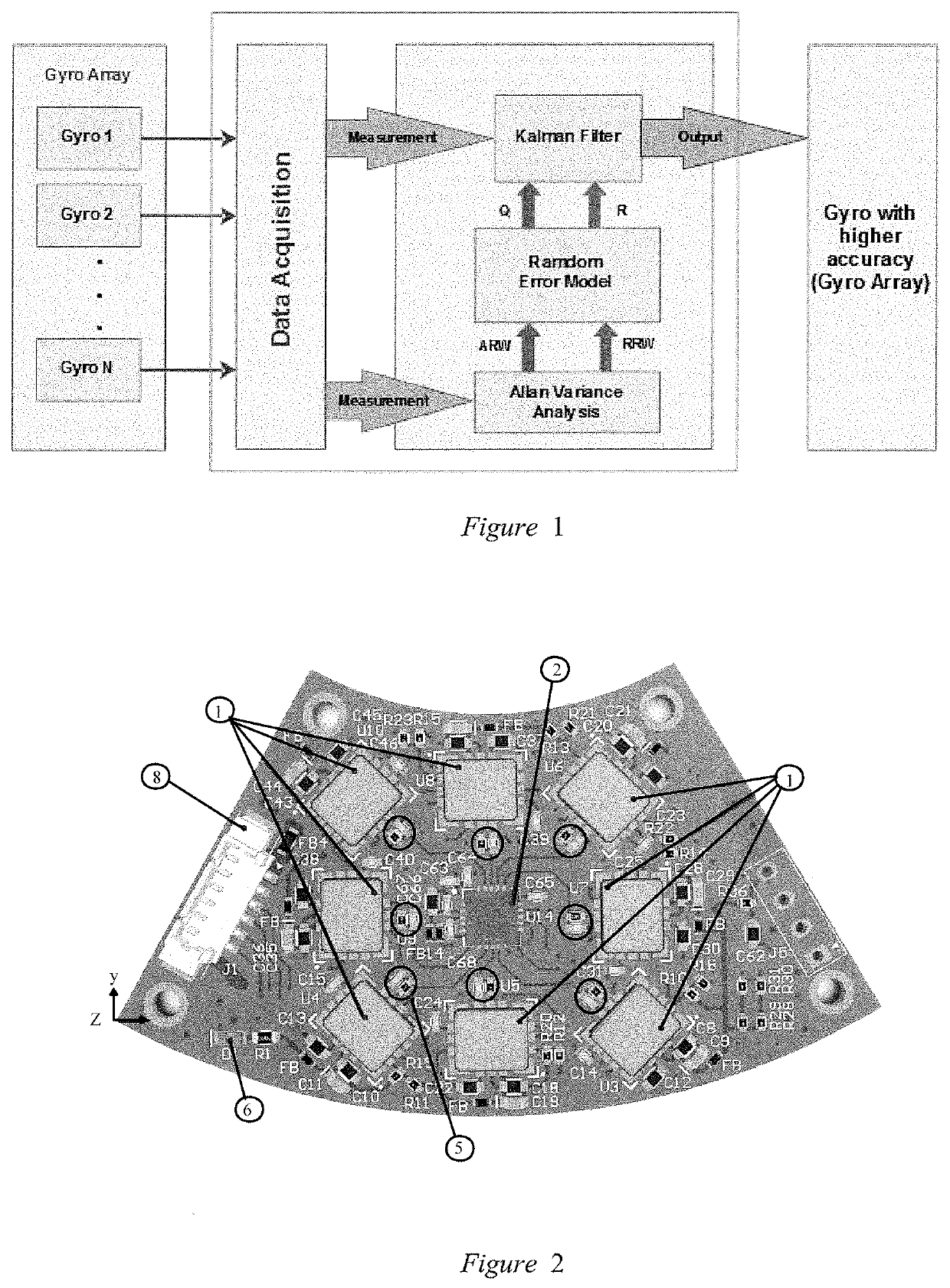
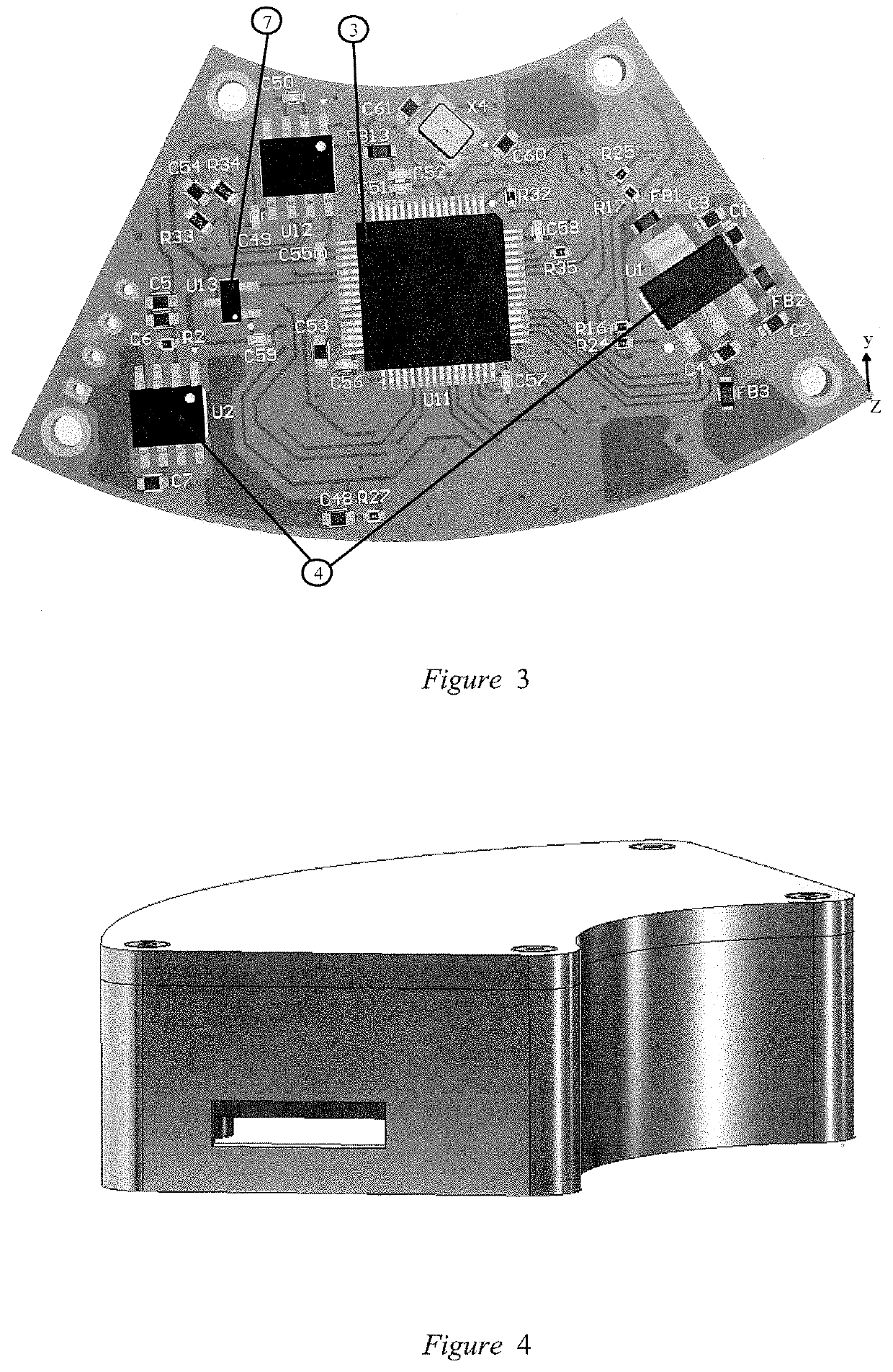
Angular velocity sensor
PatentActiveUS20220178695A1
Innovation
- The design incorporates a substrate with a structural component comprising a weight member, frame-shaped members, elastic members, anchor members, and electrodes, where the elastic members connect the weight member to the frame-shaped members and are elastically deformable, allowing for enhanced sensitivity and reduced size through optimized electrode placement and elastic deformation.


Quantum Technology Export Control and Regulations
The development and deployment of quantum sensors for angular velocity measurement face increasingly complex regulatory landscapes across major global markets. Export control regimes have evolved significantly to address the dual-use nature of quantum technologies, recognizing their potential applications in both civilian and military domains. The Wassenaar Arrangement has expanded its scope to include specific quantum sensing technologies, while individual nations have implemented additional restrictions tailored to their national security priorities.
In the United States, the Export Administration Regulations (EAR) classify advanced quantum sensors under Category 7 (Navigation and Avionics) and Category 9 (Aerospace and Propulsion), with specific controls on quantum gyroscopes and inertial measurement units achieving certain accuracy thresholds. The Commerce Control List designates quantum sensors capable of angular velocity measurements below specific noise floors as controlled items requiring export licenses for most destinations.
European Union regulations under the Dual-Use Regulation (EU) 2021/821 have established parallel controls, with member states implementing additional national restrictions. The EU framework particularly focuses on quantum sensors that demonstrate superior performance characteristics compared to classical gyroscopes, especially those achieving quantum-limited sensitivity or operating in GPS-denied environments.
China has implemented comprehensive quantum technology export controls through its National Security Law and Export Control Law, restricting the transfer of quantum sensing technologies that could enhance navigation capabilities. These regulations specifically target quantum sensors with military applications, including those used in autonomous vehicles, aerospace systems, and precision guidance applications.
International cooperation frameworks are emerging to harmonize quantum technology controls while preserving legitimate research collaboration. The Quantum Economic Development Consortium and similar international bodies are working to establish technical parameters that distinguish between controlled and non-controlled quantum sensing technologies, focusing on performance metrics such as bias stability, angular random walk, and operational environmental ranges.
Compliance challenges arise from the rapid technological advancement in quantum sensors, where performance improvements can quickly transition previously uncontrolled technologies into regulated categories. Organizations developing quantum angular velocity sensors must implement robust compliance programs that monitor technological capabilities against evolving regulatory thresholds and maintain detailed technical documentation for export control determinations.
In the United States, the Export Administration Regulations (EAR) classify advanced quantum sensors under Category 7 (Navigation and Avionics) and Category 9 (Aerospace and Propulsion), with specific controls on quantum gyroscopes and inertial measurement units achieving certain accuracy thresholds. The Commerce Control List designates quantum sensors capable of angular velocity measurements below specific noise floors as controlled items requiring export licenses for most destinations.
European Union regulations under the Dual-Use Regulation (EU) 2021/821 have established parallel controls, with member states implementing additional national restrictions. The EU framework particularly focuses on quantum sensors that demonstrate superior performance characteristics compared to classical gyroscopes, especially those achieving quantum-limited sensitivity or operating in GPS-denied environments.
China has implemented comprehensive quantum technology export controls through its National Security Law and Export Control Law, restricting the transfer of quantum sensing technologies that could enhance navigation capabilities. These regulations specifically target quantum sensors with military applications, including those used in autonomous vehicles, aerospace systems, and precision guidance applications.
International cooperation frameworks are emerging to harmonize quantum technology controls while preserving legitimate research collaboration. The Quantum Economic Development Consortium and similar international bodies are working to establish technical parameters that distinguish between controlled and non-controlled quantum sensing technologies, focusing on performance metrics such as bias stability, angular random walk, and operational environmental ranges.
Compliance challenges arise from the rapid technological advancement in quantum sensors, where performance improvements can quickly transition previously uncontrolled technologies into regulated categories. Organizations developing quantum angular velocity sensors must implement robust compliance programs that monitor technological capabilities against evolving regulatory thresholds and maintain detailed technical documentation for export control determinations.
Cost-Performance Trade-offs in Quantum vs Classical Sensors
The cost-performance analysis between quantum sensors and classical gyroscopes for angular velocity measurement reveals significant disparities across multiple dimensions. Classical mechanical and fiber optic gyroscopes currently dominate the market due to their established manufacturing processes, with production costs ranging from $100 to $10,000 depending on precision requirements. These systems benefit from decades of optimization, standardized components, and mature supply chains that enable cost-effective mass production.
Quantum sensors, particularly those based on atomic interferometry and nitrogen-vacancy centers, present substantially higher initial investment requirements. Current quantum gyroscope prototypes cost between $50,000 to $500,000, primarily driven by sophisticated laser systems, ultra-high vacuum chambers, and precision magnetic field control apparatus. The complexity of quantum state preparation and readout electronics further escalates manufacturing expenses.
Performance metrics demonstrate quantum sensors' superior theoretical capabilities, achieving angular velocity sensitivities approaching 10^-11 rad/s/√Hz compared to classical systems' typical 10^-6 to 10^-9 rad/s/√Hz range. This represents orders of magnitude improvement in measurement precision, particularly valuable for applications requiring exceptional stability over extended periods without external calibration references.
The operational cost structure differs significantly between technologies. Classical gyroscopes require periodic recalibration, maintenance of mechanical components, and eventual replacement due to wear. Quantum sensors eliminate mechanical drift but demand continuous cooling systems, stable laser sources, and sophisticated environmental isolation, resulting in higher operational power consumption and specialized maintenance requirements.
Market adoption trajectories suggest a bifurcated development path. Classical systems will likely maintain dominance in cost-sensitive applications such as consumer electronics, automotive systems, and standard navigation equipment. Quantum sensors are positioned to capture high-value markets including precision scientific instrumentation, advanced defense applications, and next-generation inertial navigation systems where performance justifies premium pricing.
The cost-performance crossover point is projected to occur within the next decade as quantum sensor manufacturing scales and component costs decrease through technological maturation and supply chain development.
Quantum sensors, particularly those based on atomic interferometry and nitrogen-vacancy centers, present substantially higher initial investment requirements. Current quantum gyroscope prototypes cost between $50,000 to $500,000, primarily driven by sophisticated laser systems, ultra-high vacuum chambers, and precision magnetic field control apparatus. The complexity of quantum state preparation and readout electronics further escalates manufacturing expenses.
Performance metrics demonstrate quantum sensors' superior theoretical capabilities, achieving angular velocity sensitivities approaching 10^-11 rad/s/√Hz compared to classical systems' typical 10^-6 to 10^-9 rad/s/√Hz range. This represents orders of magnitude improvement in measurement precision, particularly valuable for applications requiring exceptional stability over extended periods without external calibration references.
The operational cost structure differs significantly between technologies. Classical gyroscopes require periodic recalibration, maintenance of mechanical components, and eventual replacement due to wear. Quantum sensors eliminate mechanical drift but demand continuous cooling systems, stable laser sources, and sophisticated environmental isolation, resulting in higher operational power consumption and specialized maintenance requirements.
Market adoption trajectories suggest a bifurcated development path. Classical systems will likely maintain dominance in cost-sensitive applications such as consumer electronics, automotive systems, and standard navigation equipment. Quantum sensors are positioned to capture high-value markets including precision scientific instrumentation, advanced defense applications, and next-generation inertial navigation systems where performance justifies premium pricing.
The cost-performance crossover point is projected to occur within the next decade as quantum sensor manufacturing scales and component costs decrease through technological maturation and supply chain development.
Unlock deeper insights with PatSnap Eureka Quick Research — get a full tech report to explore trends and direct your research. Try now!
Generate Your Research Report Instantly with AI Agent
Supercharge your innovation with PatSnap Eureka AI Agent Platform!