

Racetrack Memory vs SSD: Power Efficiency at Scale
MAY 14, 20269 MIN READ
Generate Your Research Report Instantly with AI Agent
PatSnap Eureka helps you evaluate technical feasibility & market potential.
Racetrack Memory Technology Background and Objectives
Racetrack memory represents a revolutionary approach to data storage that emerged from fundamental research into magnetic domain wall dynamics. This technology, first conceptualized by IBM Research in the mid-2000s, leverages the controlled movement of magnetic domain walls along nanoscale magnetic tracks to achieve ultra-high density storage with exceptional power efficiency characteristics.
The foundational principle underlying racetrack memory stems from spintronics research, where information is encoded in magnetic domains separated by domain walls within ferromagnetic nanowires. Unlike conventional storage technologies that rely on mechanical movement or charge-based operations, racetrack memory manipulates magnetic states through spin-polarized current pulses, enabling data access without physical displacement of storage media components.
The technology's development trajectory has been driven by the escalating demands of large-scale data centers and enterprise storage systems, where power consumption has become a critical limiting factor. Traditional solid-state drives, while offering superior performance compared to mechanical storage, still consume significant power during read/write operations and require continuous energy for data retention in volatile cache systems.
Racetrack memory addresses these limitations through its unique operational characteristics. The technology promises non-volatile storage with near-instantaneous access times, potentially eliminating the need for complex memory hierarchies that contribute to power inefficiencies in current storage architectures. The magnetic domain manipulation requires minimal energy input, as the switching mechanism relies on spin transfer torque rather than charge accumulation or mechanical actuation.
The primary technical objectives for racetrack memory development focus on achieving scalable manufacturing processes that can deliver storage densities exceeding current NAND flash limitations while maintaining power consumption levels significantly below existing SSD technologies. Research efforts concentrate on optimizing domain wall velocity, improving data retention reliability, and developing efficient read/write head designs that can operate at the nanoscale dimensions required for competitive storage density.
Current development initiatives target enterprise applications where power efficiency at scale directly impacts operational costs and environmental sustainability. The technology aims to provide a storage solution that combines the speed advantages of DRAM, the non-volatility of flash memory, and power consumption characteristics that enable more sustainable large-scale storage deployments.
The foundational principle underlying racetrack memory stems from spintronics research, where information is encoded in magnetic domains separated by domain walls within ferromagnetic nanowires. Unlike conventional storage technologies that rely on mechanical movement or charge-based operations, racetrack memory manipulates magnetic states through spin-polarized current pulses, enabling data access without physical displacement of storage media components.
The technology's development trajectory has been driven by the escalating demands of large-scale data centers and enterprise storage systems, where power consumption has become a critical limiting factor. Traditional solid-state drives, while offering superior performance compared to mechanical storage, still consume significant power during read/write operations and require continuous energy for data retention in volatile cache systems.
Racetrack memory addresses these limitations through its unique operational characteristics. The technology promises non-volatile storage with near-instantaneous access times, potentially eliminating the need for complex memory hierarchies that contribute to power inefficiencies in current storage architectures. The magnetic domain manipulation requires minimal energy input, as the switching mechanism relies on spin transfer torque rather than charge accumulation or mechanical actuation.
The primary technical objectives for racetrack memory development focus on achieving scalable manufacturing processes that can deliver storage densities exceeding current NAND flash limitations while maintaining power consumption levels significantly below existing SSD technologies. Research efforts concentrate on optimizing domain wall velocity, improving data retention reliability, and developing efficient read/write head designs that can operate at the nanoscale dimensions required for competitive storage density.
Current development initiatives target enterprise applications where power efficiency at scale directly impacts operational costs and environmental sustainability. The technology aims to provide a storage solution that combines the speed advantages of DRAM, the non-volatility of flash memory, and power consumption characteristics that enable more sustainable large-scale storage deployments.
Market Demand for Power-Efficient Storage at Scale
The global data storage market is experiencing unprecedented growth driven by the exponential increase in data generation across industries. Cloud computing, artificial intelligence, machine learning, and Internet of Things applications are creating massive storage requirements that traditional solutions struggle to meet efficiently. This surge in demand has intensified focus on power consumption as a critical factor in storage infrastructure decisions.
Enterprise data centers are facing mounting pressure to reduce operational costs while scaling storage capacity. Power consumption represents a significant portion of total cost of ownership, with storage systems contributing substantially to overall energy usage. The need for power-efficient storage solutions has become particularly acute as organizations seek to balance performance requirements with sustainability goals and regulatory compliance.
Hyperscale cloud providers are driving demand for storage technologies that can deliver superior power efficiency at massive scales. These organizations operate thousands of servers and require storage solutions that minimize power consumption per unit of data stored and accessed. The economic impact of power efficiency becomes magnified when deployed across large-scale infrastructure, making even marginal improvements in power consumption highly valuable.
The emergence of edge computing has created additional demand for power-efficient storage solutions. Edge deployments often operate in power-constrained environments where traditional storage technologies may not be viable. This has opened new market segments for innovative storage technologies that can deliver performance while operating within strict power budgets.
Financial institutions, healthcare organizations, and government agencies are increasingly prioritizing power efficiency in their storage procurement decisions. These sectors handle vast amounts of data while facing pressure to reduce operational costs and environmental impact. The growing emphasis on environmental, social, and governance criteria in corporate decision-making has further elevated the importance of power-efficient storage solutions.
The market demand extends beyond pure power consumption metrics to include thermal management considerations. Storage systems that generate less heat reduce cooling requirements, creating additional operational cost savings. This holistic approach to power efficiency encompasses both direct power consumption and indirect cooling costs, expanding the addressable market for innovative storage technologies.
Manufacturing and automotive industries are experiencing rapid growth in data generation through Industry 4.0 initiatives and autonomous vehicle development. These sectors require storage solutions that can handle high-throughput workloads while maintaining power efficiency, creating opportunities for next-generation storage technologies that can outperform traditional solid-state drives in power consumption metrics.
Enterprise data centers are facing mounting pressure to reduce operational costs while scaling storage capacity. Power consumption represents a significant portion of total cost of ownership, with storage systems contributing substantially to overall energy usage. The need for power-efficient storage solutions has become particularly acute as organizations seek to balance performance requirements with sustainability goals and regulatory compliance.
Hyperscale cloud providers are driving demand for storage technologies that can deliver superior power efficiency at massive scales. These organizations operate thousands of servers and require storage solutions that minimize power consumption per unit of data stored and accessed. The economic impact of power efficiency becomes magnified when deployed across large-scale infrastructure, making even marginal improvements in power consumption highly valuable.
The emergence of edge computing has created additional demand for power-efficient storage solutions. Edge deployments often operate in power-constrained environments where traditional storage technologies may not be viable. This has opened new market segments for innovative storage technologies that can deliver performance while operating within strict power budgets.
Financial institutions, healthcare organizations, and government agencies are increasingly prioritizing power efficiency in their storage procurement decisions. These sectors handle vast amounts of data while facing pressure to reduce operational costs and environmental impact. The growing emphasis on environmental, social, and governance criteria in corporate decision-making has further elevated the importance of power-efficient storage solutions.
The market demand extends beyond pure power consumption metrics to include thermal management considerations. Storage systems that generate less heat reduce cooling requirements, creating additional operational cost savings. This holistic approach to power efficiency encompasses both direct power consumption and indirect cooling costs, expanding the addressable market for innovative storage technologies.
Manufacturing and automotive industries are experiencing rapid growth in data generation through Industry 4.0 initiatives and autonomous vehicle development. These sectors require storage solutions that can handle high-throughput workloads while maintaining power efficiency, creating opportunities for next-generation storage technologies that can outperform traditional solid-state drives in power consumption metrics.
Current State of Racetrack vs SSD Power Efficiency
The current landscape of power efficiency between racetrack memory and solid-state drives reveals significant disparities in energy consumption patterns and operational characteristics. Traditional NAND flash-based SSDs consume approximately 2-8 watts during active operations, with power draw varying substantially based on workload intensity and device capacity. Enterprise-grade SSDs typically exhibit higher power consumption due to enhanced performance requirements and additional controller complexity.
Racetrack memory technology demonstrates fundamentally different power consumption characteristics, primarily due to its reliance on magnetic domain wall manipulation rather than charge-based storage mechanisms. Current prototypes indicate power consumption levels ranging from 0.1 to 1 watt during active operations, representing a potential 80-90% reduction compared to conventional SSDs. This dramatic improvement stems from the elimination of high-voltage programming operations required in NAND flash technology.
The standby power consumption comparison reveals even more pronounced differences. SSDs maintain power draw of 0.5-2 watts in idle states to preserve data integrity and maintain controller functionality. Racetrack memory exhibits near-zero standby power consumption due to its non-volatile magnetic storage properties, requiring energy only during active read/write operations and domain wall movements.
Write operation power efficiency presents another critical distinction. SSD write operations consume significantly more energy than read operations due to program/erase cycling requirements, with power spikes reaching 10-15 watts during intensive write workloads. Racetrack memory maintains relatively consistent power consumption across read and write operations, as both processes involve similar magnetic field manipulations without requiring high-voltage charge pumps.
Thermal management considerations further impact overall power efficiency. SSDs generate substantial heat during operation, necessitating additional cooling infrastructure that increases total system power consumption. Racetrack memory operates at lower temperatures due to reduced power dissipation, potentially eliminating active cooling requirements in many applications.
Current scalability assessments indicate that power efficiency advantages of racetrack memory become more pronounced at larger capacities. While SSD power consumption scales approximately linearly with capacity, racetrack memory demonstrates sub-linear power scaling due to shared control circuitry and reduced peripheral power requirements. However, racetrack memory technology remains in early development stages, with commercial implementations still facing significant manufacturing and reliability challenges that currently limit widespread deployment.
Racetrack memory technology demonstrates fundamentally different power consumption characteristics, primarily due to its reliance on magnetic domain wall manipulation rather than charge-based storage mechanisms. Current prototypes indicate power consumption levels ranging from 0.1 to 1 watt during active operations, representing a potential 80-90% reduction compared to conventional SSDs. This dramatic improvement stems from the elimination of high-voltage programming operations required in NAND flash technology.
The standby power consumption comparison reveals even more pronounced differences. SSDs maintain power draw of 0.5-2 watts in idle states to preserve data integrity and maintain controller functionality. Racetrack memory exhibits near-zero standby power consumption due to its non-volatile magnetic storage properties, requiring energy only during active read/write operations and domain wall movements.
Write operation power efficiency presents another critical distinction. SSD write operations consume significantly more energy than read operations due to program/erase cycling requirements, with power spikes reaching 10-15 watts during intensive write workloads. Racetrack memory maintains relatively consistent power consumption across read and write operations, as both processes involve similar magnetic field manipulations without requiring high-voltage charge pumps.
Thermal management considerations further impact overall power efficiency. SSDs generate substantial heat during operation, necessitating additional cooling infrastructure that increases total system power consumption. Racetrack memory operates at lower temperatures due to reduced power dissipation, potentially eliminating active cooling requirements in many applications.
Current scalability assessments indicate that power efficiency advantages of racetrack memory become more pronounced at larger capacities. While SSD power consumption scales approximately linearly with capacity, racetrack memory demonstrates sub-linear power scaling due to shared control circuitry and reduced peripheral power requirements. However, racetrack memory technology remains in early development stages, with commercial implementations still facing significant manufacturing and reliability challenges that currently limit widespread deployment.
Existing Power Optimization Solutions for Storage
01 Racetrack memory architecture and domain wall manipulation
Racetrack memory utilizes magnetic domain walls in nanowires to store and manipulate data. The technology involves moving domain walls along magnetic tracks using spin-polarized currents, enabling high-density storage with reduced power consumption compared to traditional memory technologies. The architecture allows for three-dimensional memory structures that can significantly improve storage density while maintaining low power operation.- Racetrack memory architecture and domain wall manipulation: Racetrack memory utilizes magnetic domain walls in nanowires to store and manipulate data. The technology involves controlling the movement of magnetic domains through current pulses, enabling high-density storage with reduced power consumption compared to traditional memory technologies. The architecture allows for three-dimensional memory structures that can significantly increase storage capacity while maintaining low power requirements.
- Power management and voltage regulation in solid-state drives: Advanced power management techniques for solid-state drives focus on dynamic voltage scaling and intelligent power gating to reduce energy consumption during idle and active states. These methods include adaptive voltage regulation, sleep mode optimization, and selective component shutdown to maximize battery life in portable devices while maintaining performance standards.
- Memory controller optimization for energy efficiency: Memory controllers implement sophisticated algorithms to optimize data access patterns and reduce power consumption through intelligent caching, predictive prefetching, and adaptive refresh rate control. These controllers manage the balance between performance and power efficiency by dynamically adjusting operational parameters based on workload characteristics and system requirements.
- Thermal management and heat dissipation in high-density storage: Thermal management systems for high-density storage devices incorporate advanced heat dissipation techniques, temperature monitoring, and thermal throttling mechanisms to maintain optimal operating conditions while minimizing power consumption. These systems prevent overheating-induced performance degradation and extend device lifespan through intelligent thermal control strategies.
- Error correction and data integrity with low power consumption: Low-power error correction mechanisms ensure data integrity in memory systems while minimizing energy overhead through efficient encoding algorithms, selective error checking, and adaptive correction strategies. These systems balance reliability requirements with power constraints by implementing hardware-accelerated correction codes and intelligent error detection schemes.
02 Power management and voltage regulation in solid-state drives
Advanced power management techniques for solid-state drives focus on dynamic voltage scaling, sleep mode optimization, and intelligent power gating. These methods reduce overall power consumption by selectively powering down unused components and optimizing voltage levels based on workload requirements. The implementation includes sophisticated power controllers that monitor and adjust power delivery to different memory components.Expand Specific Solutions03 Memory controller optimization for energy efficiency
Memory controllers incorporate advanced algorithms for data management, wear leveling, and garbage collection that minimize power consumption. These controllers implement intelligent scheduling mechanisms that reduce unnecessary read/write operations and optimize data placement to minimize energy usage. The technology includes predictive algorithms that anticipate memory access patterns to improve overall system efficiency.Expand Specific Solutions04 Thermal management and heat dissipation in high-density storage
Thermal management systems for high-density storage devices incorporate advanced heat dissipation techniques and temperature monitoring to maintain optimal operating conditions while minimizing power consumption. These systems include dynamic thermal throttling, intelligent cooling mechanisms, and temperature-aware power management that prevent overheating while maintaining performance efficiency.Expand Specific Solutions05 Error correction and data integrity with low power consumption
Low-power error correction coding schemes and data integrity mechanisms are designed specifically for energy-efficient storage systems. These implementations include advanced error detection and correction algorithms that operate with minimal power overhead while maintaining high reliability. The technology incorporates adaptive error correction that adjusts correction strength based on memory condition and power constraints.Expand Specific Solutions
Key Players in Racetrack Memory and SSD Industry
The racetrack memory versus SSD power efficiency landscape represents an emerging competitive arena where the industry is transitioning from mature SSD technology to experimental next-generation storage solutions. The market is currently dominated by established SSD manufacturers including Samsung Electronics, SK Hynix, Micron Technology, Intel, and KIOXIA, who collectively control a multi-billion dollar storage market with well-established supply chains and manufacturing capabilities. However, racetrack memory technology remains in early research phases, primarily driven by IBM's pioneering work alongside academic institutions like Huazhong University of Science & Technology and National University of Defense Technology. While SSD technology has reached commercial maturity with proven power efficiency metrics, racetrack memory's theoretical advantages in power consumption and density remain largely unproven at scale, creating a significant technology maturity gap that favors current SSD solutions in enterprise deployments.
International Business Machines Corp.
Technical Solution: IBM is the pioneer and leading developer of racetrack memory technology, having invented this revolutionary magnetic storage concept. Their racetrack memory utilizes magnetic domain walls in nanowires to store data, offering theoretical power consumption that is 100-1000 times lower than traditional DRAM while maintaining non-volatility like flash storage. IBM's approach involves using spin-polarized currents to move magnetic domains along racetrack nanowires, enabling ultra-dense storage with minimal power requirements. The technology promises to bridge the gap between volatile and non-volatile memory, potentially replacing both DRAM and SSD storage with a single, more power-efficient solution. IBM has demonstrated working prototypes and continues to refine the manufacturing processes and control mechanisms for commercial viability.
Strengths: Revolutionary power efficiency, non-volatile storage with DRAM-like speed, ultra-high density potential. Weaknesses: Still in development phase, manufacturing complexity, unproven commercial scalability.
Samsung Electronics Co., Ltd.
Technical Solution: Samsung has developed advanced SSD technologies focusing on power efficiency through innovative controller designs and 3D NAND flash architectures. Their approach includes implementing sophisticated power management algorithms, utilizing low-power 3D V-NAND technology, and developing energy-efficient controllers that can dynamically adjust power consumption based on workload demands. Samsung's enterprise SSDs feature advanced power scaling capabilities, achieving up to 50% better power efficiency compared to previous generations. They have also invested in research for next-generation storage technologies including magnetic memory solutions that could compete with racetrack memory concepts. Their power optimization strategies include intelligent caching, predictive power management, and hardware-level power gating mechanisms.
Strengths: Market leadership in SSD technology, proven manufacturing capabilities, strong power optimization expertise. Weaknesses: Limited involvement in racetrack memory development, dependency on existing NAND flash technology limitations.
Core Innovations in Racetrack Memory Power Design
Racetrack memory with low-power write
PatentInactiveUS8750013B1
Innovation
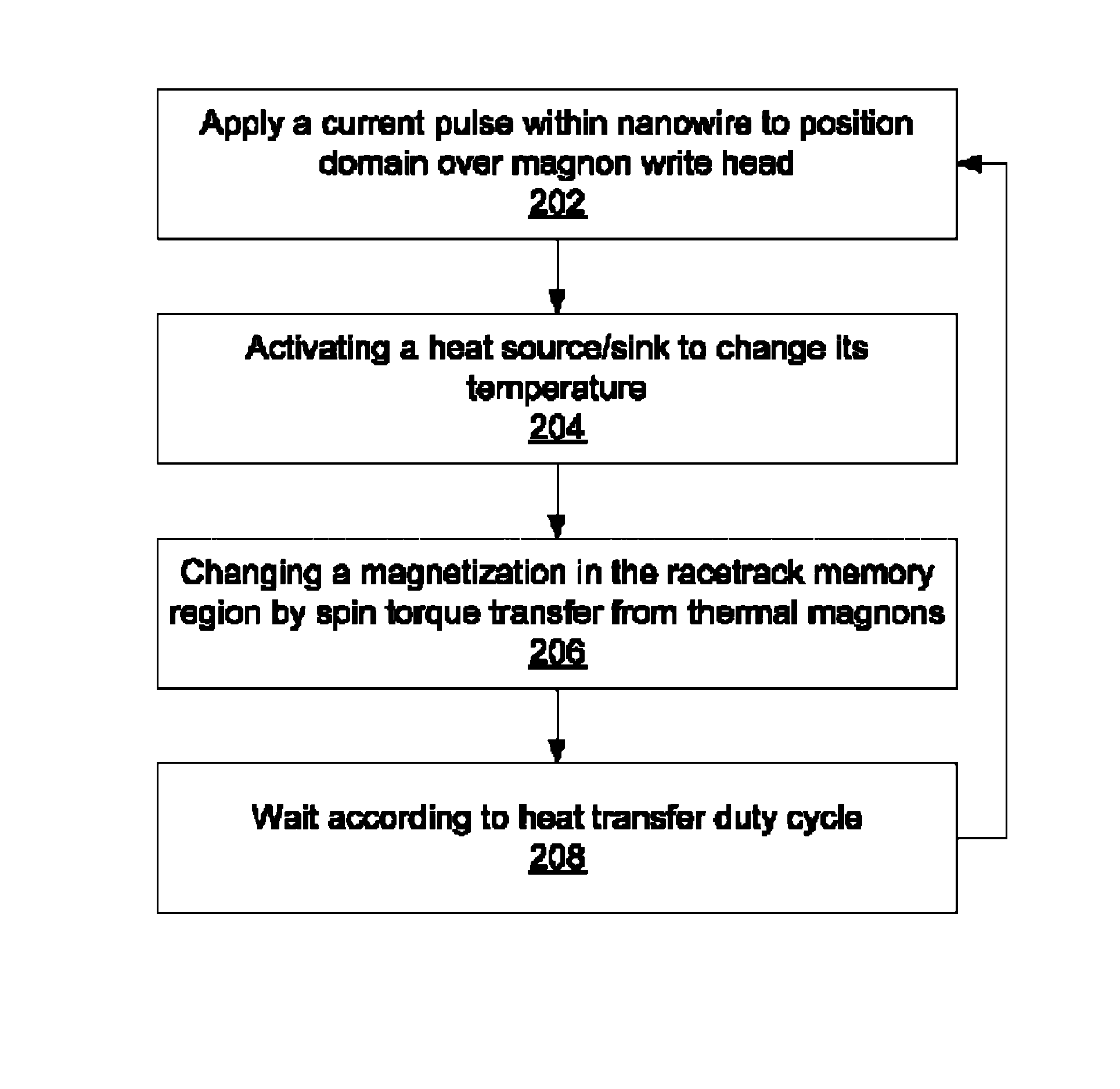
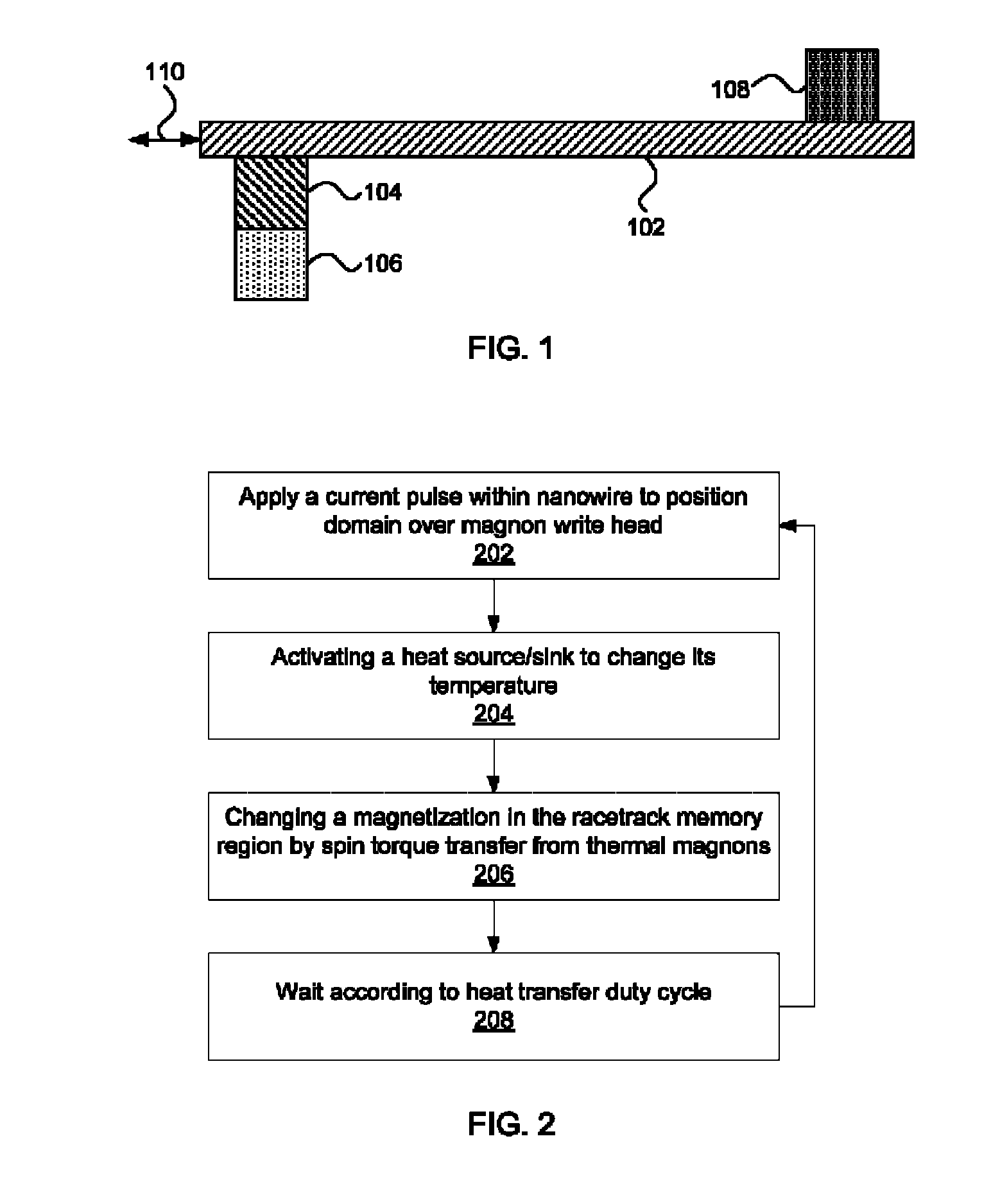
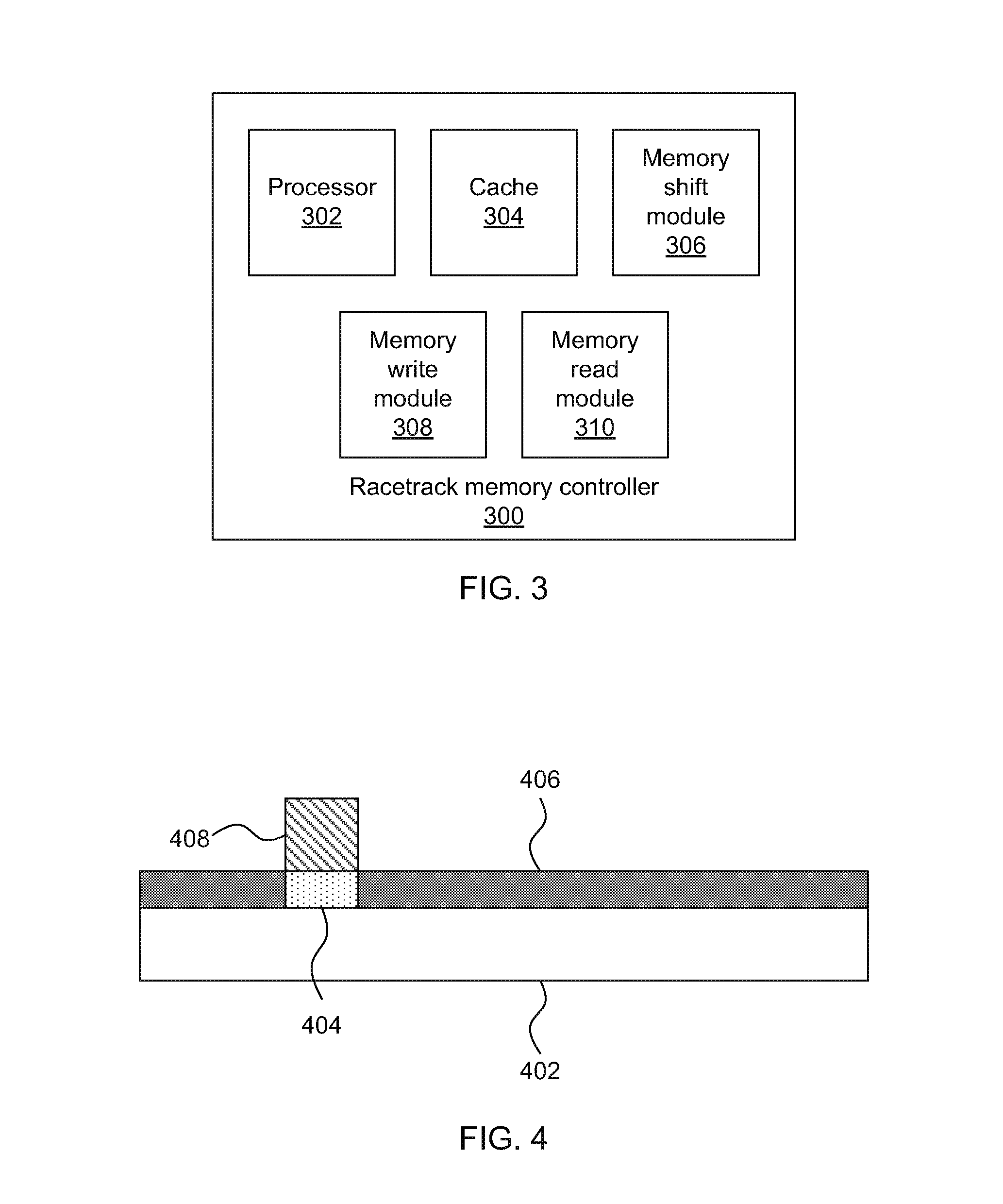
- A racetrack memory unit utilizing a heat source/sink to generate magnons, which propagate and inject domain walls through spin torque transfer, reducing the need for high currents and enhancing the stability of the memory device.

Solid state drive with improved power efficiency
PatentActiveUS9966143B2
Innovation
- The SSD incorporates a voltage regulator and an energy management device that charges a discrete capacitor, allowing non-volatile memory devices to operate on a programming voltage during normal operation and power failures, reducing the need for internal voltage conversion and enhancing power efficiency by using the supercapacitor's voltage to extend the hold-up time.


Data Center Energy Regulations and Standards
The global data center industry operates under increasingly stringent energy efficiency regulations that directly impact storage technology selection decisions. The European Union's Energy Efficiency Directive mandates that large data centers achieve specific Power Usage Effectiveness (PUE) targets, with requirements becoming more demanding through 2030. Similarly, California's Title 24 Building Energy Efficiency Standards impose strict power consumption limits on data center operations, while China's national guidelines target a PUE of 1.3 or lower for new facilities by 2025.
These regulatory frameworks create significant pressure for data center operators to evaluate storage solutions based on their power consumption characteristics. Traditional SSD deployments, while offering proven reliability, face scrutiny under emerging standards that measure energy efficiency at the rack and facility level. The regulations typically assess total cost of ownership including cooling overhead, which can represent 30-40% of storage-related power consumption in conventional deployments.
Compliance requirements extend beyond simple power limits to include mandatory energy reporting and efficiency improvement targets. The EU's Corporate Sustainability Reporting Directive requires detailed disclosure of energy consumption metrics, making storage power efficiency a key performance indicator for publicly traded companies. These reporting obligations drive technical decision-making toward solutions that demonstrate measurable efficiency gains.
International standards bodies have established specific benchmarks for storage system efficiency. The Storage Performance Council's SERT (Server Efficiency Rating Tool) methodology provides standardized testing protocols that enable direct comparison between different storage technologies under regulated conditions. These standards increasingly influence procurement decisions as organizations seek to demonstrate compliance with environmental regulations.
The regulatory landscape also encompasses emerging carbon pricing mechanisms and renewable energy mandates that affect the total environmental impact of storage infrastructure. As governments implement more aggressive climate policies, the power efficiency advantages of next-generation storage technologies become critical factors in meeting both regulatory requirements and operational cost targets in large-scale deployments.
These regulatory frameworks create significant pressure for data center operators to evaluate storage solutions based on their power consumption characteristics. Traditional SSD deployments, while offering proven reliability, face scrutiny under emerging standards that measure energy efficiency at the rack and facility level. The regulations typically assess total cost of ownership including cooling overhead, which can represent 30-40% of storage-related power consumption in conventional deployments.
Compliance requirements extend beyond simple power limits to include mandatory energy reporting and efficiency improvement targets. The EU's Corporate Sustainability Reporting Directive requires detailed disclosure of energy consumption metrics, making storage power efficiency a key performance indicator for publicly traded companies. These reporting obligations drive technical decision-making toward solutions that demonstrate measurable efficiency gains.
International standards bodies have established specific benchmarks for storage system efficiency. The Storage Performance Council's SERT (Server Efficiency Rating Tool) methodology provides standardized testing protocols that enable direct comparison between different storage technologies under regulated conditions. These standards increasingly influence procurement decisions as organizations seek to demonstrate compliance with environmental regulations.
The regulatory landscape also encompasses emerging carbon pricing mechanisms and renewable energy mandates that affect the total environmental impact of storage infrastructure. As governments implement more aggressive climate policies, the power efficiency advantages of next-generation storage technologies become critical factors in meeting both regulatory requirements and operational cost targets in large-scale deployments.
Scalability Challenges in Enterprise Storage Systems
Enterprise storage systems face unprecedented scalability challenges as data volumes continue to grow exponentially across industries. Traditional storage architectures struggle to maintain performance, reliability, and cost-effectiveness when scaling from terabytes to petabytes and beyond. The comparison between Racetrack Memory and SSD technologies becomes particularly critical in this context, as organizations seek storage solutions that can scale efficiently without compromising operational requirements.
The primary scalability challenge lies in maintaining consistent performance across distributed storage nodes. As storage clusters expand, the complexity of data management, load balancing, and fault tolerance increases exponentially. SSDs, while offering superior performance compared to traditional hard drives, face limitations in write endurance and cost per gigabyte at massive scales. The NAND flash technology underlying SSDs experiences wear leveling issues that become more pronounced as storage density increases, potentially leading to unpredictable performance degradation in large-scale deployments.
Racetrack Memory presents unique scalability advantages through its fundamentally different architecture. The technology's ability to store multiple bits per device without the complex multi-level cell structures of NAND flash enables higher density storage with potentially better scaling characteristics. However, the manufacturing complexity and current technological maturity pose significant challenges for immediate large-scale deployment.
Power consumption scaling represents another critical challenge in enterprise environments. As storage arrays grow, power requirements often scale non-linearly due to cooling needs, redundancy requirements, and management overhead. The power efficiency characteristics of both technologies must be evaluated not just at the device level, but across entire storage ecosystems including controllers, interconnects, and supporting infrastructure.
Data consistency and coherence become increasingly complex challenges as storage systems scale horizontally. The latency characteristics and power profiles of storage technologies directly impact the feasibility of maintaining strong consistency guarantees across distributed systems. Enterprise applications requiring real-time data access must balance between consistency requirements and the power efficiency benefits that different storage technologies can provide at scale.
The primary scalability challenge lies in maintaining consistent performance across distributed storage nodes. As storage clusters expand, the complexity of data management, load balancing, and fault tolerance increases exponentially. SSDs, while offering superior performance compared to traditional hard drives, face limitations in write endurance and cost per gigabyte at massive scales. The NAND flash technology underlying SSDs experiences wear leveling issues that become more pronounced as storage density increases, potentially leading to unpredictable performance degradation in large-scale deployments.
Racetrack Memory presents unique scalability advantages through its fundamentally different architecture. The technology's ability to store multiple bits per device without the complex multi-level cell structures of NAND flash enables higher density storage with potentially better scaling characteristics. However, the manufacturing complexity and current technological maturity pose significant challenges for immediate large-scale deployment.
Power consumption scaling represents another critical challenge in enterprise environments. As storage arrays grow, power requirements often scale non-linearly due to cooling needs, redundancy requirements, and management overhead. The power efficiency characteristics of both technologies must be evaluated not just at the device level, but across entire storage ecosystems including controllers, interconnects, and supporting infrastructure.
Data consistency and coherence become increasingly complex challenges as storage systems scale horizontally. The latency characteristics and power profiles of storage technologies directly impact the feasibility of maintaining strong consistency guarantees across distributed systems. Enterprise applications requiring real-time data access must balance between consistency requirements and the power efficiency benefits that different storage technologies can provide at scale.
Unlock deeper insights with PatSnap Eureka Quick Research — get a full tech report to explore trends and direct your research. Try now!
Generate Your Research Report Instantly with AI Agent
Supercharge your innovation with PatSnap Eureka AI Agent Platform!