

Rarefaction Wave vs Torsional Wave: Material Response Analysis
MAR 11, 20269 MIN READ
Generate Your Research Report Instantly with AI Agent
Patsnap Eureka helps you evaluate technical feasibility & market potential.
Rarefaction and Torsional Wave Fundamentals and Objectives
Wave propagation in materials represents a fundamental aspect of solid mechanics, with rarefaction and torsional waves constituting two distinct yet critical phenomena in understanding material behavior under dynamic loading conditions. The study of these wave types has evolved significantly since the early theoretical foundations established by pioneers such as Pochhammer and Chree in the late 19th century, progressing through decades of experimental validation and computational advancement to become essential tools in modern material characterization and structural analysis.
Rarefaction waves, characterized by their tensile nature and ability to induce material separation, emerge when compressive stress waves reflect from free surfaces or interfaces, creating regions of reduced pressure that can lead to spallation and fracture initiation. These waves propagate at velocities determined by the material's elastic properties and density, following the relationship established by classical wave theory. The phenomenon gained particular attention during the mid-20th century with the development of high-velocity impact testing and explosive loading applications.
Torsional waves represent a fundamentally different mechanism, involving shear deformation that propagates through materials as rotational disturbances around the wave propagation axis. These waves travel at shear wave velocities and induce complex stress states that can reveal material properties not accessible through conventional longitudinal wave analysis. The mathematical framework governing torsional wave propagation incorporates both material anisotropy and geometric effects, making it particularly valuable for characterizing composite materials and complex structural components.
The primary objective of comparative analysis between rarefaction and torsional waves centers on developing comprehensive understanding of material response mechanisms under different loading conditions. This involves establishing correlations between wave-induced stress states and material failure modes, enabling prediction of structural performance under dynamic conditions. Advanced characterization techniques seek to leverage the complementary information provided by both wave types to create more accurate material models.
Contemporary research objectives focus on integrating multi-physics approaches that account for temperature effects, strain rate sensitivity, and microstructural evolution during wave propagation. The development of real-time monitoring systems capable of simultaneously detecting and analyzing both wave types represents a significant technological goal, with applications spanning from aerospace structural health monitoring to geophysical exploration and materials processing optimization.
Rarefaction waves, characterized by their tensile nature and ability to induce material separation, emerge when compressive stress waves reflect from free surfaces or interfaces, creating regions of reduced pressure that can lead to spallation and fracture initiation. These waves propagate at velocities determined by the material's elastic properties and density, following the relationship established by classical wave theory. The phenomenon gained particular attention during the mid-20th century with the development of high-velocity impact testing and explosive loading applications.
Torsional waves represent a fundamentally different mechanism, involving shear deformation that propagates through materials as rotational disturbances around the wave propagation axis. These waves travel at shear wave velocities and induce complex stress states that can reveal material properties not accessible through conventional longitudinal wave analysis. The mathematical framework governing torsional wave propagation incorporates both material anisotropy and geometric effects, making it particularly valuable for characterizing composite materials and complex structural components.
The primary objective of comparative analysis between rarefaction and torsional waves centers on developing comprehensive understanding of material response mechanisms under different loading conditions. This involves establishing correlations between wave-induced stress states and material failure modes, enabling prediction of structural performance under dynamic conditions. Advanced characterization techniques seek to leverage the complementary information provided by both wave types to create more accurate material models.
Contemporary research objectives focus on integrating multi-physics approaches that account for temperature effects, strain rate sensitivity, and microstructural evolution during wave propagation. The development of real-time monitoring systems capable of simultaneously detecting and analyzing both wave types represents a significant technological goal, with applications spanning from aerospace structural health monitoring to geophysical exploration and materials processing optimization.
Market Demand for Advanced Wave-Based Material Testing
The global materials testing industry is experiencing unprecedented growth driven by increasing demands for precision characterization across multiple sectors. Advanced wave-based testing methodologies, particularly those utilizing rarefaction and torsional wave analysis, are becoming essential tools for understanding complex material behaviors under dynamic loading conditions. This surge in demand stems from the critical need to evaluate material performance in aerospace, automotive, defense, and energy applications where traditional static testing methods prove insufficient.
Aerospace manufacturers represent one of the most significant market drivers, requiring sophisticated testing capabilities to validate composite materials, lightweight alloys, and advanced ceramics used in next-generation aircraft and spacecraft. The industry's shift toward additive manufacturing and novel material compositions necessitates comprehensive wave-based analysis to ensure structural integrity under extreme operational conditions. Similarly, the automotive sector's transition to electric vehicles and autonomous systems demands rigorous testing of battery materials, crash-resistant structures, and sensor components.
The defense and security sectors continue to fuel market expansion through requirements for ballistic protection materials, armor systems, and explosive-resistant structures. Wave-based testing provides crucial insights into material response under high-strain-rate conditions that cannot be replicated through conventional testing methods. Energy sector applications, including wind turbine components, nuclear reactor materials, and oil drilling equipment, further amplify demand for advanced characterization techniques.
Emerging applications in biomedical engineering, particularly for implant materials and tissue engineering scaffolds, are creating new market segments. The ability to analyze material response to dynamic loading conditions becomes critical for ensuring long-term biocompatibility and mechanical performance in physiological environments.
Market growth is also driven by regulatory requirements and industry standards that increasingly mandate comprehensive material characterization. Quality assurance protocols across industries now require detailed understanding of material behavior under various loading conditions, making wave-based testing methodologies indispensable for compliance and certification processes.
The integration of artificial intelligence and machine learning with wave-based testing systems is creating additional market opportunities. These technologies enable real-time analysis, predictive modeling, and automated defect detection, significantly enhancing testing efficiency and accuracy while reducing operational costs for end users across diverse industrial applications.
Aerospace manufacturers represent one of the most significant market drivers, requiring sophisticated testing capabilities to validate composite materials, lightweight alloys, and advanced ceramics used in next-generation aircraft and spacecraft. The industry's shift toward additive manufacturing and novel material compositions necessitates comprehensive wave-based analysis to ensure structural integrity under extreme operational conditions. Similarly, the automotive sector's transition to electric vehicles and autonomous systems demands rigorous testing of battery materials, crash-resistant structures, and sensor components.
The defense and security sectors continue to fuel market expansion through requirements for ballistic protection materials, armor systems, and explosive-resistant structures. Wave-based testing provides crucial insights into material response under high-strain-rate conditions that cannot be replicated through conventional testing methods. Energy sector applications, including wind turbine components, nuclear reactor materials, and oil drilling equipment, further amplify demand for advanced characterization techniques.
Emerging applications in biomedical engineering, particularly for implant materials and tissue engineering scaffolds, are creating new market segments. The ability to analyze material response to dynamic loading conditions becomes critical for ensuring long-term biocompatibility and mechanical performance in physiological environments.
Market growth is also driven by regulatory requirements and industry standards that increasingly mandate comprehensive material characterization. Quality assurance protocols across industries now require detailed understanding of material behavior under various loading conditions, making wave-based testing methodologies indispensable for compliance and certification processes.
The integration of artificial intelligence and machine learning with wave-based testing systems is creating additional market opportunities. These technologies enable real-time analysis, predictive modeling, and automated defect detection, significantly enhancing testing efficiency and accuracy while reducing operational costs for end users across diverse industrial applications.
Current State of Wave Propagation Material Analysis Methods
Wave propagation material analysis has evolved significantly over the past decades, with current methodologies encompassing both experimental and computational approaches. Traditional experimental techniques include split Hopkinson pressure bar (SHPB) testing for compression waves, torsional Kolsky bar systems for shear wave analysis, and laser interferometry for high-precision displacement measurements. These methods provide direct material response data under controlled loading conditions, enabling researchers to characterize dynamic material properties across various strain rates.
Computational fluid dynamics (CFD) and finite element analysis (FEA) represent the cornerstone of modern wave propagation simulation. Advanced software packages such as LS-DYNA, ABAQUS/Explicit, and ANSYS Autodyn incorporate sophisticated material models including Johnson-Cook, Steinberg-Guinan, and Zerilli-Armstrong constitutive equations. These platforms enable three-dimensional modeling of complex wave interactions, accounting for material nonlinearity, strain rate sensitivity, and temperature effects during dynamic loading events.
Digital image correlation (DIC) has emerged as a powerful non-contact measurement technique for full-field strain analysis during wave propagation experiments. Combined with high-speed photography systems operating at frame rates exceeding 1 million fps, DIC provides unprecedented spatial and temporal resolution for tracking material deformation patterns. This technology particularly excels in capturing the transition zones between rarefaction and compression regions in materials subjected to complex loading scenarios.
Machine learning algorithms are increasingly integrated into wave analysis workflows, particularly for pattern recognition in experimental data and optimization of material parameters. Neural networks trained on extensive datasets can predict material response characteristics and identify failure mechanisms that traditional analytical methods might overlook. These AI-driven approaches complement conventional analysis techniques by providing rapid screening capabilities for large parameter spaces.
Multiscale modeling frameworks represent another significant advancement, linking molecular dynamics simulations at the atomic level with continuum mechanics approaches at the macroscale. This hierarchical methodology enables researchers to understand fundamental mechanisms governing wave propagation while maintaining computational efficiency for engineering-scale problems. Such integrated approaches are particularly valuable for analyzing novel materials where experimental data may be limited.
Current limitations include computational constraints for real-time analysis of large-scale systems and challenges in accurately modeling material behavior at extreme conditions. Additionally, standardization of measurement protocols across different research institutions remains an ongoing concern, particularly for emerging techniques involving advanced sensor technologies and data processing algorithms.
Computational fluid dynamics (CFD) and finite element analysis (FEA) represent the cornerstone of modern wave propagation simulation. Advanced software packages such as LS-DYNA, ABAQUS/Explicit, and ANSYS Autodyn incorporate sophisticated material models including Johnson-Cook, Steinberg-Guinan, and Zerilli-Armstrong constitutive equations. These platforms enable three-dimensional modeling of complex wave interactions, accounting for material nonlinearity, strain rate sensitivity, and temperature effects during dynamic loading events.
Digital image correlation (DIC) has emerged as a powerful non-contact measurement technique for full-field strain analysis during wave propagation experiments. Combined with high-speed photography systems operating at frame rates exceeding 1 million fps, DIC provides unprecedented spatial and temporal resolution for tracking material deformation patterns. This technology particularly excels in capturing the transition zones between rarefaction and compression regions in materials subjected to complex loading scenarios.
Machine learning algorithms are increasingly integrated into wave analysis workflows, particularly for pattern recognition in experimental data and optimization of material parameters. Neural networks trained on extensive datasets can predict material response characteristics and identify failure mechanisms that traditional analytical methods might overlook. These AI-driven approaches complement conventional analysis techniques by providing rapid screening capabilities for large parameter spaces.
Multiscale modeling frameworks represent another significant advancement, linking molecular dynamics simulations at the atomic level with continuum mechanics approaches at the macroscale. This hierarchical methodology enables researchers to understand fundamental mechanisms governing wave propagation while maintaining computational efficiency for engineering-scale problems. Such integrated approaches are particularly valuable for analyzing novel materials where experimental data may be limited.
Current limitations include computational constraints for real-time analysis of large-scale systems and challenges in accurately modeling material behavior at extreme conditions. Additionally, standardization of measurement protocols across different research institutions remains an ongoing concern, particularly for emerging techniques involving advanced sensor technologies and data processing algorithms.
Existing Wave Analysis Solutions for Material Response
01 Split Hopkinson Pressure Bar (SHPB) testing apparatus and methods
Apparatus and methods for characterizing material response under high strain rate conditions using split Hopkinson pressure bar techniques. These systems generate stress waves to evaluate dynamic mechanical properties of materials, including their behavior under compression and tension. The testing setup typically includes incident bars, transmission bars, and specimen holders designed to capture material deformation characteristics at various strain rates.- Split Hopkinson Pressure Bar (SHPB) testing apparatus and methods: Apparatus and methods for characterizing material response under high strain rate conditions using split Hopkinson pressure bar techniques. These systems generate controlled stress waves to measure dynamic mechanical properties including stress-strain relationships, wave propagation characteristics, and material deformation behavior under impact loading conditions.
- Torsional wave testing devices and fixtures: Specialized testing equipment designed to apply torsional loading and measure material response to shear waves. These devices include torsional Hopkinson bar systems, rotational impact mechanisms, and fixtures for securing specimens during torsional testing to evaluate shear modulus, torsional strength, and dynamic shear properties.
- Wave propagation measurement and analysis systems: Systems incorporating sensors, strain gauges, and data acquisition equipment for measuring and analyzing stress wave propagation in materials. These systems capture wave velocity, amplitude, and dispersion characteristics to determine material properties such as elastic modulus, wave impedance, and energy absorption capabilities under dynamic loading.
- Specimen preparation and mounting configurations: Methods and devices for preparing, positioning, and securing test specimens in wave testing apparatus. These include specimen holders, alignment fixtures, coupling mechanisms, and sample geometries optimized for transmitting rarefaction and torsional waves while minimizing boundary effects and ensuring accurate measurement of material response.
- High strain rate material characterization techniques: Comprehensive testing methodologies for evaluating material behavior under rapid loading conditions including combined compression-tension waves, multi-axial stress states, and temperature-dependent effects. These techniques enable determination of dynamic yield strength, failure mechanisms, strain rate sensitivity, and constitutive relationships for materials subjected to shock and impact loading.
02 Torsional wave testing devices and fixtures
Specialized equipment and fixtures designed for applying torsional loads and measuring material response to torsional stress waves. These devices enable the study of shear properties and torsional behavior of materials under dynamic loading conditions. The apparatus includes mechanisms for generating controlled torsional waves and measuring the resulting deformation and stress distribution in test specimens.Expand Specific Solutions03 Wave propagation measurement and analysis systems
Systems and methods for measuring and analyzing stress wave propagation in materials, including sensors, data acquisition equipment, and signal processing techniques. These systems capture transient wave phenomena and material response characteristics during dynamic loading events. Advanced measurement techniques enable precise determination of wave velocities, stress amplitudes, and material strain rates.Expand Specific Solutions04 Material testing under combined loading conditions
Methods and apparatus for evaluating material behavior under simultaneous or sequential application of multiple loading modes, including compression, tension, and torsion. These testing configurations allow for comprehensive characterization of material response under complex stress states that simulate real-world loading scenarios. The systems incorporate multiple actuators and control mechanisms to apply precisely controlled combined loads.Expand Specific Solutions05 High-speed data acquisition and specimen mounting systems
Specialized data acquisition systems and specimen mounting fixtures designed for capturing rapid material response during dynamic testing. These systems feature high-speed sensors, strain gauges, and mounting mechanisms that ensure proper specimen alignment and load transfer during wave propagation experiments. The fixtures are designed to minimize wave dispersion and ensure accurate measurement of material properties under dynamic conditions.Expand Specific Solutions
Key Players in Wave-Based Material Characterization Industry
The rarefaction wave versus torsional wave material response analysis field represents an emerging niche within advanced materials testing and non-destructive evaluation, currently in early development stages with limited market penetration. The market remains relatively small but shows growth potential driven by aerospace, automotive, and energy sector demands for sophisticated material characterization. Technology maturity varies significantly across players, with established industrial giants like Toshiba Corp., Sony Group Corp., and Baker Hughes Co. leveraging their extensive R&D capabilities and manufacturing expertise to develop commercial applications. Academic institutions including Lanzhou University, Harbin Institute of Technology, and Tohoku University contribute fundamental research and theoretical frameworks. Specialized companies such as Arise Global Pte Ltd. focus on niche NDT inspection services, while electronics manufacturers like TDK Corp. and Murata Manufacturing explore sensor applications for wave analysis systems.
Toshiba Corp.
Technical Solution: Toshiba has developed ultrasonic testing and material characterization technologies that utilize both longitudinal (rarefaction) and transverse (torsional) wave analysis for non-destructive evaluation applications. Their ultrasonic systems employ phased array transducers capable of generating and detecting multiple wave modes simultaneously, enabling comprehensive material property assessment. The company's advanced signal processing algorithms analyze wave velocity, attenuation, and scattering characteristics to determine material defects, thickness variations, and mechanical properties. Their technology incorporates adaptive beamforming techniques to optimize wave propagation paths and enhance detection sensitivity for various materials including metals, composites, and ceramics. Toshiba's systems feature real-time data acquisition and processing capabilities, providing immediate feedback on material condition and structural integrity. The technology finds applications in aerospace, automotive, and infrastructure inspection where precise material characterization is critical for safety and performance.
Strengths: Advanced phased array technology, real-time processing capabilities, broad industrial application experience. Weaknesses: Limited to surface and near-surface material analysis, requires direct contact or coupling medium, sensitivity to surface conditions and geometry.
Baker Hughes Co.
Technical Solution: Baker Hughes has developed comprehensive acoustic measurement technologies for material analysis in oil and gas operations, incorporating both rarefaction and torsional wave analysis capabilities. Their logging-while-drilling (LWD) and wireline acoustic tools utilize multi-pole acoustic sources to generate various wave modes for real-time formation evaluation. The company's SonicScope technology employs advanced waveform processing to analyze compressional, shear, and Stoneley waves, providing detailed insights into rock mechanical properties and stress conditions. Their acoustic imaging tools can detect and characterize fractures, bedding planes, and other geological features by analyzing wave reflection and transmission patterns. The technology includes sophisticated algorithms for wave separation and velocity analysis, enabling accurate determination of material elastic properties, anisotropy, and in-situ stress conditions in complex geological environments.
Strengths: Comprehensive acoustic logging portfolio, real-time measurement capabilities, strong integration with drilling operations. Weaknesses: Equipment complexity requires extensive maintenance, limited to wellbore applications, high operational costs in challenging environments.
Core Innovations in Rarefaction vs Torsional Wave Analysis
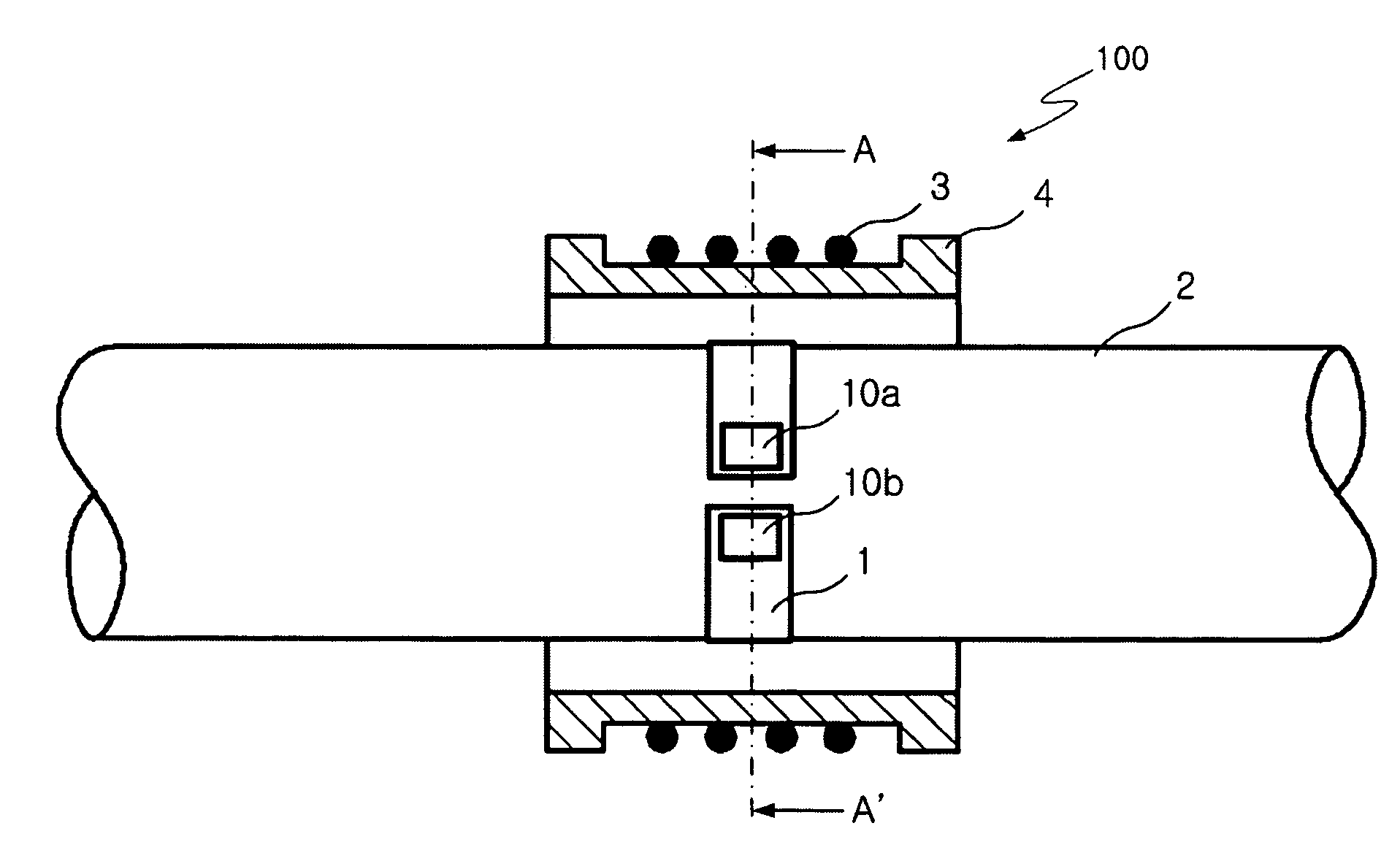
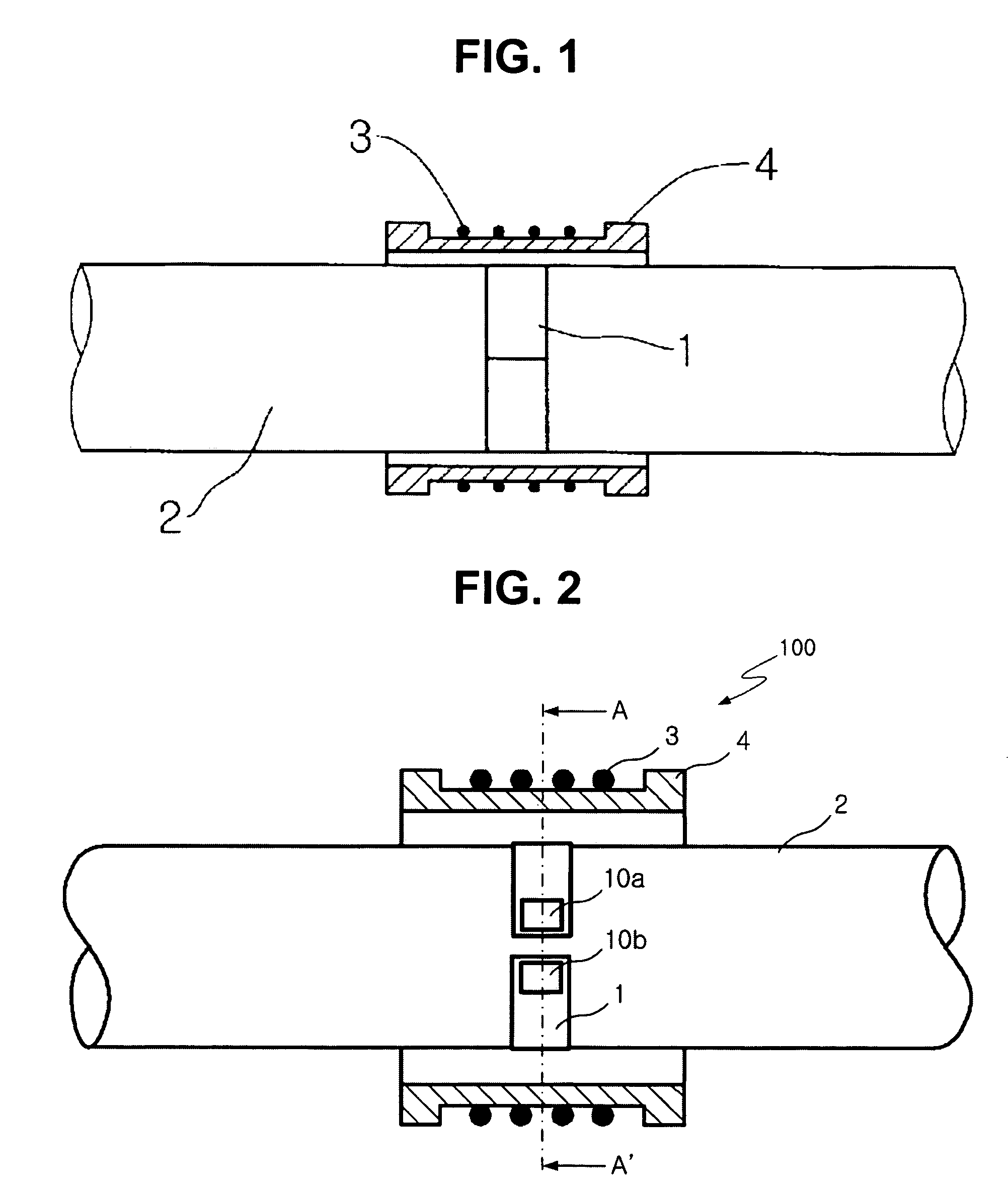
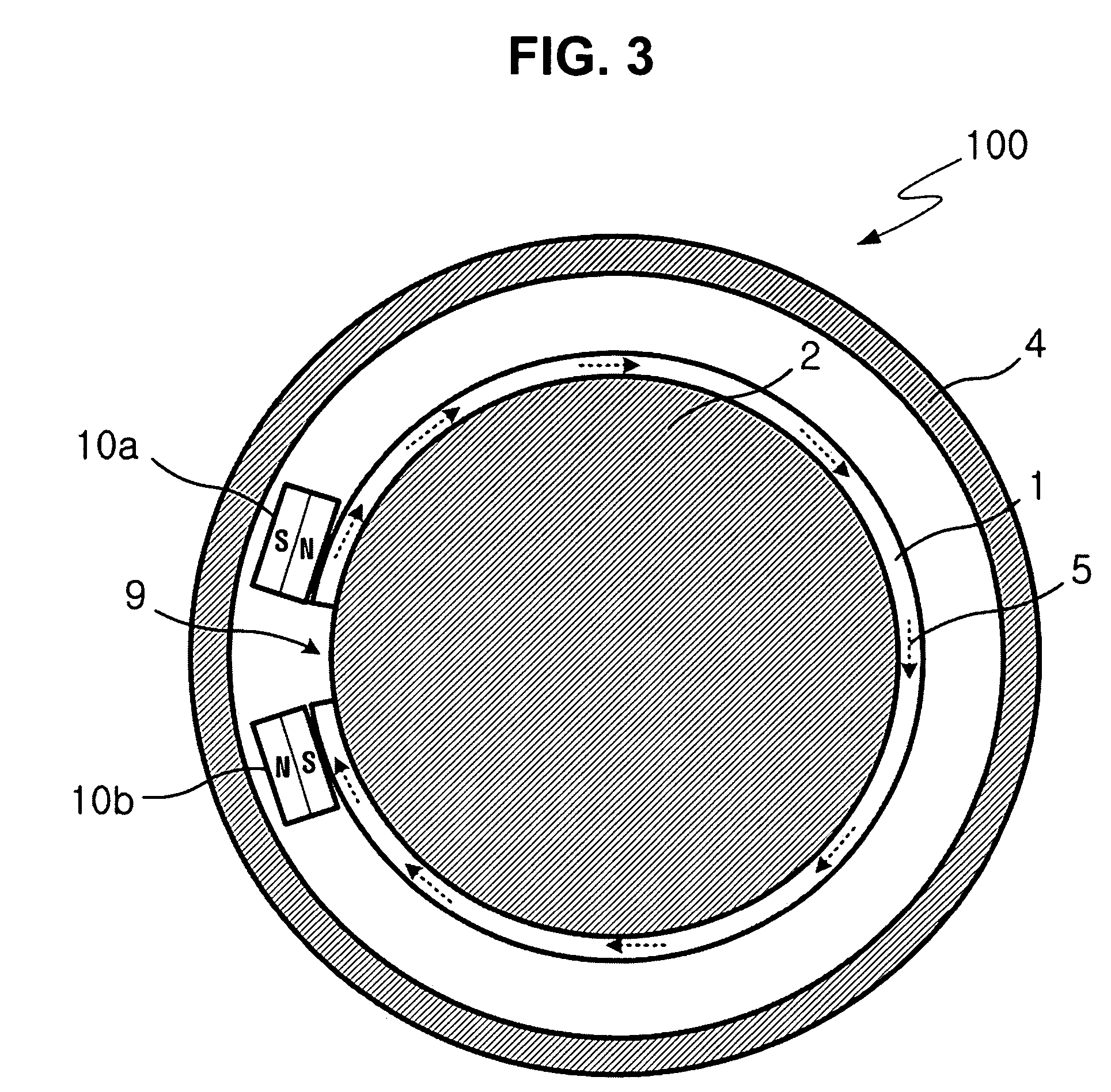
Method of generating and measuring torsional waves in cylindrical structure using magnetostrictive effect, and magnetostrictive transducer and structure diagnosis apparatus using the method
PatentActiveUS7614313B2
Innovation
- The transducer design includes multiple ferromagnetic strips attached to the rod member at predetermined intervals with strategically placed permanent magnets or electromagnets to provide a stable bias magnetic field, using yokes to enhance magnetic flux and minimize leakage, allowing for continuous and efficient generation and measurement of torsional waves.

Torsional wave logging tool
PatentInactiveUS4984652A
Innovation
- An acoustic logging tool is designed to generate and propagate torsional shear waves along the wellbore axis by controlling the incident angle of acoustic energy at the wellbore wall, using an array of transducer elements that convert energy into shear waves, which travel both axially and torsionally, allowing for improved formation characteristic analysis.


Safety Standards for Dynamic Material Testing Equipment
Dynamic material testing equipment operating under rarefaction and torsional wave conditions requires comprehensive safety frameworks to protect personnel and ensure reliable experimental outcomes. The inherently high-energy nature of these testing systems, combined with the unpredictable material failure modes under dynamic loading, necessitates robust safety protocols that address both operational hazards and equipment-specific risks.
International safety standards for dynamic testing equipment are primarily governed by ISO 26203 series for high-speed testing machines and ASTM E28 committee guidelines for mechanical testing safety. These standards establish fundamental requirements for protective barriers, emergency shutdown systems, and operator safety zones. However, specialized considerations for wave-based testing require additional safety measures beyond conventional mechanical testing protocols.
Equipment design safety features must incorporate fail-safe mechanisms for high-velocity impact systems and torsional loading apparatus. Primary safety systems include reinforced containment chambers capable of withstanding fragment velocities exceeding 500 m/s, redundant emergency stop circuits with response times under 50 milliseconds, and automated specimen alignment systems to minimize operator exposure during setup procedures.
Personnel protection protocols mandate comprehensive training programs covering wave propagation physics, material failure prediction, and emergency response procedures. Operators must demonstrate competency in recognizing pre-failure indicators specific to rarefaction and torsional loading modes, as these failure mechanisms often exhibit distinct acoustic and visual signatures compared to quasi-static testing conditions.
Environmental safety considerations encompass noise control measures for high-frequency torsional systems, vibration isolation to prevent structural damage to surrounding facilities, and specialized ventilation systems for managing debris and potential toxic emissions from exotic material specimens. Temperature monitoring systems are essential for detecting thermal buildup in high-frequency torsional testing scenarios.
Calibration and maintenance safety procedures require specialized protocols for handling precision instrumentation under dynamic conditions. Regular inspection schedules must account for accelerated wear patterns in wave-generating components, with particular attention to fatigue-critical elements in torsional drive systems and pressure vessel integrity in rarefaction wave generators.
Emergency response protocols must address rapid material failure scenarios unique to dynamic testing, including procedures for safe equipment shutdown during active testing cycles and contamination control measures for hazardous material specimens. Documentation requirements include detailed incident reporting systems and traceability protocols for safety-critical component maintenance histories.
International safety standards for dynamic testing equipment are primarily governed by ISO 26203 series for high-speed testing machines and ASTM E28 committee guidelines for mechanical testing safety. These standards establish fundamental requirements for protective barriers, emergency shutdown systems, and operator safety zones. However, specialized considerations for wave-based testing require additional safety measures beyond conventional mechanical testing protocols.
Equipment design safety features must incorporate fail-safe mechanisms for high-velocity impact systems and torsional loading apparatus. Primary safety systems include reinforced containment chambers capable of withstanding fragment velocities exceeding 500 m/s, redundant emergency stop circuits with response times under 50 milliseconds, and automated specimen alignment systems to minimize operator exposure during setup procedures.
Personnel protection protocols mandate comprehensive training programs covering wave propagation physics, material failure prediction, and emergency response procedures. Operators must demonstrate competency in recognizing pre-failure indicators specific to rarefaction and torsional loading modes, as these failure mechanisms often exhibit distinct acoustic and visual signatures compared to quasi-static testing conditions.
Environmental safety considerations encompass noise control measures for high-frequency torsional systems, vibration isolation to prevent structural damage to surrounding facilities, and specialized ventilation systems for managing debris and potential toxic emissions from exotic material specimens. Temperature monitoring systems are essential for detecting thermal buildup in high-frequency torsional testing scenarios.
Calibration and maintenance safety procedures require specialized protocols for handling precision instrumentation under dynamic conditions. Regular inspection schedules must account for accelerated wear patterns in wave-generating components, with particular attention to fatigue-critical elements in torsional drive systems and pressure vessel integrity in rarefaction wave generators.
Emergency response protocols must address rapid material failure scenarios unique to dynamic testing, including procedures for safe equipment shutdown during active testing cycles and contamination control measures for hazardous material specimens. Documentation requirements include detailed incident reporting systems and traceability protocols for safety-critical component maintenance histories.
Computational Modeling Integration in Wave Analysis
The integration of computational modeling in wave analysis has revolutionized the understanding of material responses to rarefaction and torsional waves. Modern computational frameworks leverage finite element analysis (FEA), finite difference methods, and molecular dynamics simulations to capture the complex interactions between different wave types and material structures. These integrated approaches enable researchers to model wave propagation phenomena with unprecedented accuracy, accounting for material nonlinearities, anisotropic properties, and multi-scale effects that traditional analytical methods cannot adequately address.
Advanced computational platforms now incorporate coupled wave-structure interaction algorithms that simultaneously solve for rarefaction and torsional wave propagation within the same material domain. Multi-physics simulation environments such as ANSYS, ABAQUS, and specialized research codes like LS-DYNA provide comprehensive toolsets for analyzing wave-induced material responses. These platforms integrate constitutive material models with wave equation solvers, enabling real-time visualization of stress distributions, strain patterns, and failure mechanisms under different wave loading conditions.
Machine learning integration represents a significant advancement in computational wave analysis. Neural networks and deep learning algorithms are increasingly employed to predict material responses based on wave characteristics, reducing computational time while maintaining accuracy. These AI-enhanced models can identify complex patterns in wave-material interactions that might be overlooked by conventional numerical methods, particularly in scenarios involving multiple wave types acting simultaneously on heterogeneous materials.
High-performance computing architectures have enabled the development of parallel processing algorithms specifically designed for wave analysis applications. GPU-accelerated computations and distributed computing frameworks allow for real-time simulation of large-scale wave propagation problems, making it feasible to analyze complex geometries and material configurations that were previously computationally prohibitive. These technological advances have opened new possibilities for parametric studies and optimization processes in wave-based material characterization and design applications.
Advanced computational platforms now incorporate coupled wave-structure interaction algorithms that simultaneously solve for rarefaction and torsional wave propagation within the same material domain. Multi-physics simulation environments such as ANSYS, ABAQUS, and specialized research codes like LS-DYNA provide comprehensive toolsets for analyzing wave-induced material responses. These platforms integrate constitutive material models with wave equation solvers, enabling real-time visualization of stress distributions, strain patterns, and failure mechanisms under different wave loading conditions.
Machine learning integration represents a significant advancement in computational wave analysis. Neural networks and deep learning algorithms are increasingly employed to predict material responses based on wave characteristics, reducing computational time while maintaining accuracy. These AI-enhanced models can identify complex patterns in wave-material interactions that might be overlooked by conventional numerical methods, particularly in scenarios involving multiple wave types acting simultaneously on heterogeneous materials.
High-performance computing architectures have enabled the development of parallel processing algorithms specifically designed for wave analysis applications. GPU-accelerated computations and distributed computing frameworks allow for real-time simulation of large-scale wave propagation problems, making it feasible to analyze complex geometries and material configurations that were previously computationally prohibitive. These technological advances have opened new possibilities for parametric studies and optimization processes in wave-based material characterization and design applications.
Unlock deeper insights with Patsnap Eureka Quick Research — get a full tech report to explore trends and direct your research. Try now!
Generate Your Research Report Instantly with AI Agent
Supercharge your innovation with Patsnap Eureka AI Agent Platform!