

Real-time Data Analysis Through Linear Pluggable Optics
APR 17, 20269 MIN READ
Generate Your Research Report Instantly with AI Agent
PatSnap Eureka helps you evaluate technical feasibility & market potential.
Linear Pluggable Optics Real-time Analysis Background and Goals
Linear pluggable optics technology has emerged as a critical enabler for modern data center architectures, representing a paradigm shift from traditional transceiver form factors toward more compact and efficient optical interconnect solutions. This technology addresses the growing demand for higher bandwidth density while maintaining cost-effectiveness and operational flexibility in high-performance computing environments.
The evolution of pluggable optics has been driven by the exponential growth in data traffic and the need for real-time processing capabilities across various industries. Traditional optical modules, while reliable, have faced limitations in terms of port density, power consumption, and thermal management. Linear pluggable optics addresses these constraints by offering a streamlined form factor that enables higher port counts per unit area while reducing overall system complexity.
Real-time data analysis through linear pluggable optics represents a convergence of optical networking and edge computing paradigms. This approach enables data processing at the point of optical signal reception, eliminating traditional bottlenecks associated with electrical conversion and centralized processing architectures. The technology leverages advanced signal processing algorithms integrated directly into the optical layer, enabling microsecond-level response times critical for applications such as financial trading, autonomous systems, and industrial automation.
The primary technical objectives center around achieving sub-millisecond latency performance while maintaining signal integrity across extended transmission distances. Current development efforts focus on integrating digital signal processing capabilities directly within the linear pluggable form factor, enabling real-time analysis of optical data streams without requiring full electrical conversion. This approach significantly reduces power consumption and thermal generation compared to conventional architectures.
Market drivers for this technology include the proliferation of artificial intelligence workloads, the expansion of edge computing infrastructure, and the increasing demand for low-latency applications in telecommunications and financial services sectors. The technology aims to bridge the gap between high-speed optical transmission and real-time computational requirements, enabling new classes of applications that were previously constrained by processing latency limitations.
The strategic importance of linear pluggable optics real-time analysis lies in its potential to fundamentally reshape data center architectures by enabling distributed intelligence at the optical layer, thereby reducing dependency on centralized processing resources and improving overall system responsiveness.
The evolution of pluggable optics has been driven by the exponential growth in data traffic and the need for real-time processing capabilities across various industries. Traditional optical modules, while reliable, have faced limitations in terms of port density, power consumption, and thermal management. Linear pluggable optics addresses these constraints by offering a streamlined form factor that enables higher port counts per unit area while reducing overall system complexity.
Real-time data analysis through linear pluggable optics represents a convergence of optical networking and edge computing paradigms. This approach enables data processing at the point of optical signal reception, eliminating traditional bottlenecks associated with electrical conversion and centralized processing architectures. The technology leverages advanced signal processing algorithms integrated directly into the optical layer, enabling microsecond-level response times critical for applications such as financial trading, autonomous systems, and industrial automation.
The primary technical objectives center around achieving sub-millisecond latency performance while maintaining signal integrity across extended transmission distances. Current development efforts focus on integrating digital signal processing capabilities directly within the linear pluggable form factor, enabling real-time analysis of optical data streams without requiring full electrical conversion. This approach significantly reduces power consumption and thermal generation compared to conventional architectures.
Market drivers for this technology include the proliferation of artificial intelligence workloads, the expansion of edge computing infrastructure, and the increasing demand for low-latency applications in telecommunications and financial services sectors. The technology aims to bridge the gap between high-speed optical transmission and real-time computational requirements, enabling new classes of applications that were previously constrained by processing latency limitations.
The strategic importance of linear pluggable optics real-time analysis lies in its potential to fundamentally reshape data center architectures by enabling distributed intelligence at the optical layer, thereby reducing dependency on centralized processing resources and improving overall system responsiveness.
Market Demand for High-Speed Optical Data Processing
The global demand for high-speed optical data processing has experienced unprecedented growth driven by the exponential increase in data generation and consumption across multiple industries. Cloud computing providers, telecommunications companies, and data center operators are facing mounting pressure to process massive volumes of information in real-time while maintaining low latency and high reliability standards.
Financial services represent one of the most demanding sectors for real-time optical data processing, where microsecond delays in high-frequency trading can result in significant financial losses. The need for instantaneous market data analysis, risk assessment, and algorithmic trading execution has created a substantial market for advanced optical processing solutions that can handle complex computations at the speed of light.
Telecommunications infrastructure modernization has emerged as another critical driver, particularly with the global rollout of 5G networks and the anticipated transition to 6G technologies. Network operators require sophisticated optical processing capabilities to manage dynamic bandwidth allocation, network slicing, and edge computing applications that demand real-time decision-making capabilities.
The artificial intelligence and machine learning sectors have generated substantial demand for optical processing solutions capable of handling massive parallel computations required for neural network training and inference. Traditional electronic processors face fundamental limitations in power consumption and processing speed when dealing with large-scale AI workloads, creating opportunities for optical alternatives.
Scientific research institutions and government agencies involved in climate modeling, genomics research, and national security applications require real-time processing of enormous datasets. These applications often involve complex pattern recognition and predictive analytics that benefit significantly from the parallel processing capabilities inherent in optical systems.
Manufacturing industries implementing Industry 4.0 initiatives are increasingly demanding real-time data processing for predictive maintenance, quality control, and supply chain optimization. The integration of Internet of Things sensors and automated systems generates continuous data streams requiring immediate analysis to maintain operational efficiency and prevent costly equipment failures.
The market potential extends beyond traditional computing applications to emerging fields such as autonomous vehicles, smart city infrastructure, and augmented reality systems, where real-time optical data processing capabilities are becoming essential for safety-critical operations and user experience optimization.
Financial services represent one of the most demanding sectors for real-time optical data processing, where microsecond delays in high-frequency trading can result in significant financial losses. The need for instantaneous market data analysis, risk assessment, and algorithmic trading execution has created a substantial market for advanced optical processing solutions that can handle complex computations at the speed of light.
Telecommunications infrastructure modernization has emerged as another critical driver, particularly with the global rollout of 5G networks and the anticipated transition to 6G technologies. Network operators require sophisticated optical processing capabilities to manage dynamic bandwidth allocation, network slicing, and edge computing applications that demand real-time decision-making capabilities.
The artificial intelligence and machine learning sectors have generated substantial demand for optical processing solutions capable of handling massive parallel computations required for neural network training and inference. Traditional electronic processors face fundamental limitations in power consumption and processing speed when dealing with large-scale AI workloads, creating opportunities for optical alternatives.
Scientific research institutions and government agencies involved in climate modeling, genomics research, and national security applications require real-time processing of enormous datasets. These applications often involve complex pattern recognition and predictive analytics that benefit significantly from the parallel processing capabilities inherent in optical systems.
Manufacturing industries implementing Industry 4.0 initiatives are increasingly demanding real-time data processing for predictive maintenance, quality control, and supply chain optimization. The integration of Internet of Things sensors and automated systems generates continuous data streams requiring immediate analysis to maintain operational efficiency and prevent costly equipment failures.
The market potential extends beyond traditional computing applications to emerging fields such as autonomous vehicles, smart city infrastructure, and augmented reality systems, where real-time optical data processing capabilities are becoming essential for safety-critical operations and user experience optimization.
Current State and Challenges of Linear Pluggable Optics Analytics
Linear pluggable optics technology has reached a critical juncture where traditional optical transceivers are being enhanced with integrated analytics capabilities. Current implementations primarily focus on basic monitoring functions such as temperature, voltage, and optical power measurements through digital diagnostics monitoring (DDM) interfaces. However, the integration of real-time data analysis capabilities within these compact form factors presents significant technical and operational challenges.
The primary technical constraint lies in the limited processing power available within standard pluggable optics modules. Most current linear pluggable optics, including SFP+, QSFP28, and emerging 400G modules, operate with minimal onboard processing capabilities designed primarily for basic transceiver functions. The integration of sophisticated analytics engines requires substantial computational resources that conflict with power consumption limitations and thermal management requirements inherent in these compact modules.
Power consumption represents another critical challenge, as current pluggable optics modules typically operate within strict power budgets ranging from 1.5W for SFP+ to 12W for QSFP-DD modules. Real-time analytics processing demands additional power for data processing units, memory systems, and enhanced digital signal processing capabilities. This creates a fundamental tension between analytical functionality and compliance with industry power standards, particularly in high-density deployment scenarios where thermal dissipation becomes increasingly problematic.
Data bandwidth limitations further constrain analytics implementation. While modern pluggable optics can handle high-speed data transmission, the simultaneous processing and analysis of this data stream requires dedicated bandwidth allocation that can impact primary transmission performance. Current architectures lack sufficient internal data pathways to support both full-rate data transmission and comprehensive real-time analysis without performance degradation.
Standardization challenges also impede widespread adoption of analytics-enabled linear pluggable optics. Existing industry standards such as SFF-8636 and SFF-8024 provide limited frameworks for advanced analytics integration. The absence of standardized interfaces for analytics data extraction and control mechanisms creates interoperability issues across different vendor implementations and network management systems.
Manufacturing complexity and cost implications present additional barriers to market adoption. Integrating analytics capabilities requires sophisticated semiconductor designs, enhanced memory systems, and more complex firmware development. These requirements significantly increase production costs and development timelines, making it challenging to maintain competitive pricing while delivering advanced functionality in the highly cost-sensitive pluggable optics market.
The primary technical constraint lies in the limited processing power available within standard pluggable optics modules. Most current linear pluggable optics, including SFP+, QSFP28, and emerging 400G modules, operate with minimal onboard processing capabilities designed primarily for basic transceiver functions. The integration of sophisticated analytics engines requires substantial computational resources that conflict with power consumption limitations and thermal management requirements inherent in these compact modules.
Power consumption represents another critical challenge, as current pluggable optics modules typically operate within strict power budgets ranging from 1.5W for SFP+ to 12W for QSFP-DD modules. Real-time analytics processing demands additional power for data processing units, memory systems, and enhanced digital signal processing capabilities. This creates a fundamental tension between analytical functionality and compliance with industry power standards, particularly in high-density deployment scenarios where thermal dissipation becomes increasingly problematic.
Data bandwidth limitations further constrain analytics implementation. While modern pluggable optics can handle high-speed data transmission, the simultaneous processing and analysis of this data stream requires dedicated bandwidth allocation that can impact primary transmission performance. Current architectures lack sufficient internal data pathways to support both full-rate data transmission and comprehensive real-time analysis without performance degradation.
Standardization challenges also impede widespread adoption of analytics-enabled linear pluggable optics. Existing industry standards such as SFF-8636 and SFF-8024 provide limited frameworks for advanced analytics integration. The absence of standardized interfaces for analytics data extraction and control mechanisms creates interoperability issues across different vendor implementations and network management systems.
Manufacturing complexity and cost implications present additional barriers to market adoption. Integrating analytics capabilities requires sophisticated semiconductor designs, enhanced memory systems, and more complex firmware development. These requirements significantly increase production costs and development timelines, making it challenging to maintain competitive pricing while delivering advanced functionality in the highly cost-sensitive pluggable optics market.
Existing Real-time Data Processing Solutions
01 Real-time monitoring and diagnostics of pluggable optical transceivers
Systems and methods for real-time monitoring of pluggable optical modules enable continuous diagnostics of operational parameters such as temperature, voltage, and optical power levels. These monitoring capabilities allow for immediate detection of performance degradation or failures in optical transceivers. Advanced diagnostic algorithms process the collected data to identify anomalies and predict potential issues before they cause network disruptions.- Real-time monitoring and diagnostics of pluggable optical transceivers: Systems and methods for real-time monitoring of pluggable optical modules enable continuous diagnostics of operational parameters such as temperature, voltage, and optical power levels. These monitoring capabilities allow for immediate detection of performance degradation or failures in optical transceivers. Advanced diagnostic features can predict potential issues before they cause network disruptions, improving overall system reliability and maintenance efficiency.
- Data collection and analysis from optical transceiver modules: Technologies for collecting operational data from pluggable optical modules and analyzing this information to optimize network performance. Data collection mechanisms gather various parameters including bit error rates, signal quality metrics, and environmental conditions. Analysis algorithms process this collected data to identify patterns, trends, and anomalies that can inform network management decisions and predictive maintenance strategies.
- Digital signal processing for optical communication systems: Advanced digital signal processing techniques applied to optical communication systems enable real-time analysis and optimization of transmitted data. These processing methods include error correction, signal equalization, and adaptive filtering to enhance data transmission quality. Implementation of sophisticated algorithms allows for dynamic adjustment of transmission parameters based on real-time channel conditions and performance metrics.
- Network management and control systems for optical modules: Comprehensive network management platforms that integrate data from multiple pluggable optical modules to provide centralized monitoring and control capabilities. These systems enable operators to remotely configure, monitor, and troubleshoot optical transceivers across distributed network infrastructure. Management interfaces provide visualization tools and automated alerts to facilitate rapid response to network events and optimize overall system performance.
- Performance optimization and adaptive control mechanisms: Intelligent control systems that utilize real-time data analysis to automatically optimize the performance of pluggable optical modules. These mechanisms employ machine learning algorithms and feedback control loops to dynamically adjust operational parameters such as laser bias currents, modulation amplitudes, and equalization settings. Adaptive optimization ensures maximum data throughput while minimizing power consumption and maintaining signal integrity under varying environmental and network conditions.
02 Data collection and analysis from optical transceiver modules
Techniques for collecting operational data from pluggable optical modules involve accessing digital diagnostic monitoring interfaces and extracting performance metrics. The collected data undergoes analysis to assess link quality, signal integrity, and overall system health. Statistical methods and machine learning algorithms can be applied to identify patterns and trends in the operational data for predictive maintenance and optimization.Expand Specific Solutions03 Performance optimization through real-time parameter adjustment
Dynamic adjustment of optical transceiver parameters based on real-time data analysis enables optimization of transmission performance. Feedback control mechanisms utilize analyzed data to automatically tune parameters such as laser bias current, modulation amplitude, and equalization settings. This adaptive approach ensures optimal signal quality and power efficiency across varying operating conditions and link distances.Expand Specific Solutions04 Integration of pluggable optics data with network management systems
Integration frameworks enable seamless communication between pluggable optical modules and centralized network management platforms. Data aggregation from multiple optical transceivers provides comprehensive visibility into network infrastructure health and performance. Standardized protocols and interfaces facilitate the exchange of diagnostic information and enable coordinated management of optical layer resources.Expand Specific Solutions05 Predictive analytics and fault detection for optical links
Advanced analytics techniques applied to historical and real-time data from pluggable optical modules enable predictive maintenance strategies. Machine learning models trained on operational data can forecast component failures and link degradation before they impact service quality. Automated fault detection algorithms identify deviations from normal operating conditions and trigger alerts for proactive intervention.Expand Specific Solutions
Key Players in Optical Transceiver and Analytics Industry
The real-time data analysis through linear pluggable optics market represents an emerging technological convergence at the intersection of optical networking and data analytics, currently in its early growth phase. The market demonstrates significant expansion potential as enterprises increasingly demand instantaneous processing capabilities for high-volume data streams. Technology maturity varies considerably across market participants, with established networking giants like Cisco Technology, Intel Corp., and Nokia of America Corp. leading infrastructure development, while specialized optical component manufacturers such as Ciena Corp., II-VI Delaware, and East Photonics drive hardware innovation. Research institutions including MIT, École Polytechnique Fédérale de Lausanne, and Technische Universität München contribute foundational research, particularly in photonic processing architectures. Companies like Google LLC and Cribl represent the software integration layer, developing platforms that leverage optical hardware for real-time analytics applications, indicating a maturing ecosystem with diverse technological approaches.
Cisco Technology, Inc.
Technical Solution: Cisco has developed comprehensive real-time data analysis solutions through linear pluggable optics, leveraging their Silicon One ASIC technology and 400G/800G coherent optics platforms. Their approach integrates advanced digital signal processing (DSP) algorithms with pluggable coherent optics modules, enabling real-time monitoring and analysis of optical network performance parameters including signal quality, latency, and throughput. The solution incorporates machine learning algorithms for predictive analytics and automated network optimization, supporting both metro and long-haul applications with hot-pluggable form factors that maintain network operations during upgrades.
Strengths: Market-leading position in networking equipment, extensive R&D capabilities, comprehensive ecosystem integration. Weaknesses: Higher cost compared to specialized vendors, complex implementation requiring significant technical expertise.
Ciena Corp.
Technical Solution: Ciena's WaveLogic coherent optical technology enables real-time data analysis through advanced pluggable optics solutions. Their approach utilizes probabilistic constellation shaping and adaptive modulation techniques within pluggable coherent modules, providing real-time performance monitoring and analytics capabilities. The system incorporates embedded telemetry and streaming analytics that process optical layer data in real-time, enabling proactive network management and optimization. Their Liquid Spectrum architecture supports dynamic bandwidth allocation and real-time traffic engineering based on continuous optical performance analysis, with support for 400G and 800G pluggable coherent optics.
Strengths: Specialized optical networking expertise, innovative coherent technology, strong performance in long-haul applications. Weaknesses: Limited market presence compared to larger competitors, dependency on optical networking market cycles.
Core Innovations in Linear Optical Signal Processing
Linear optical sampling method and apparatus
PatentInactiveUS20050185255A1
Innovation
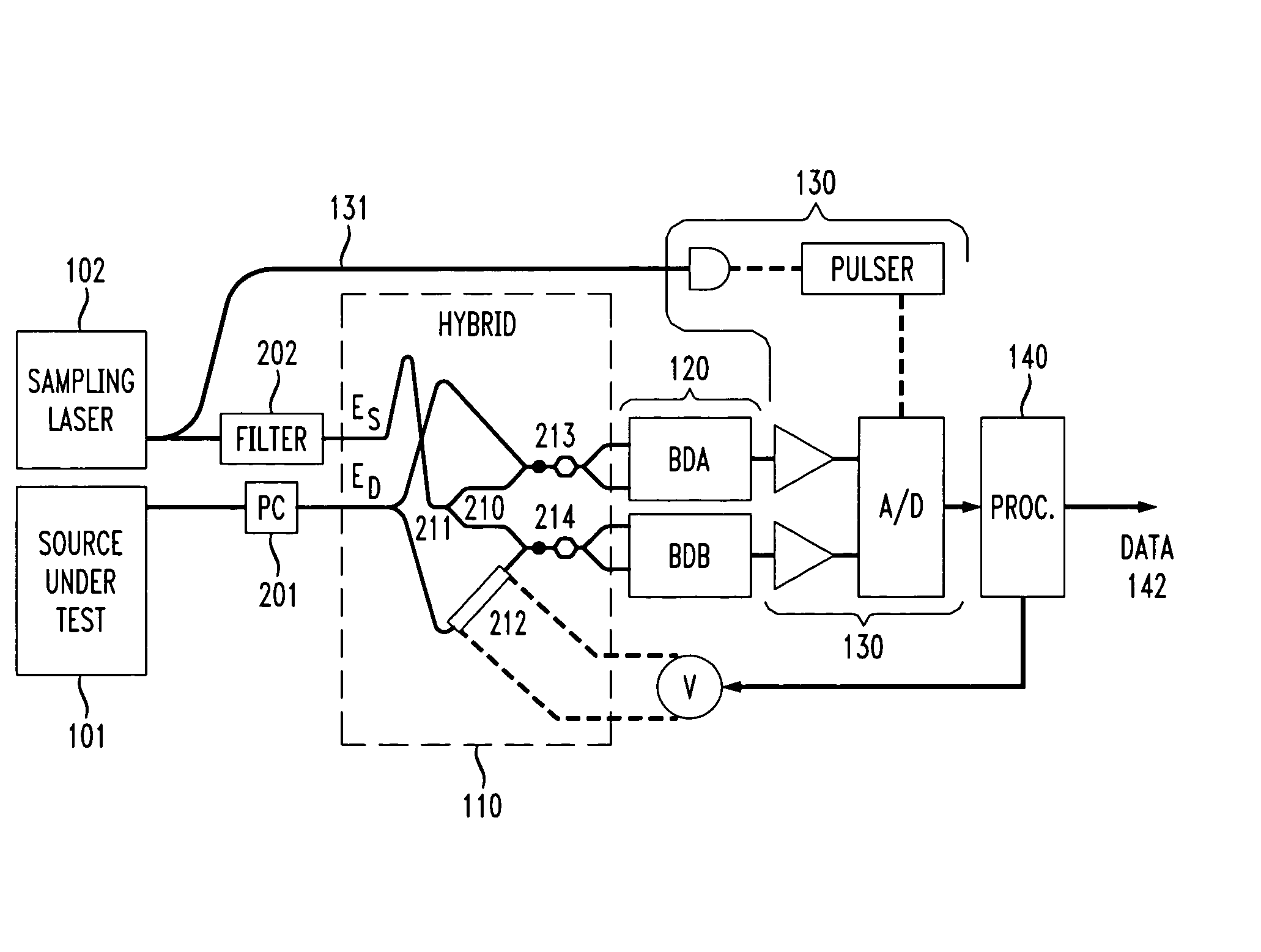
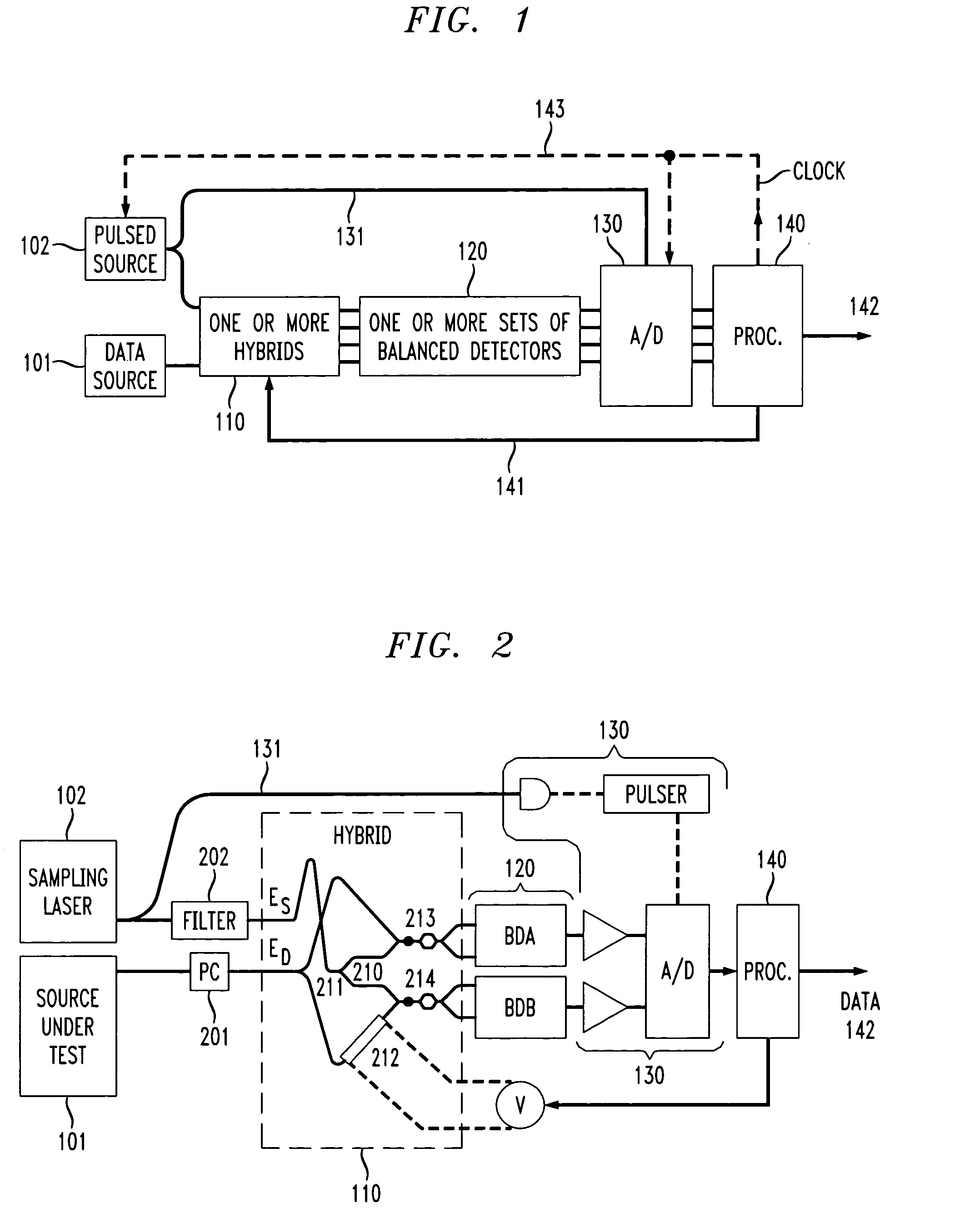
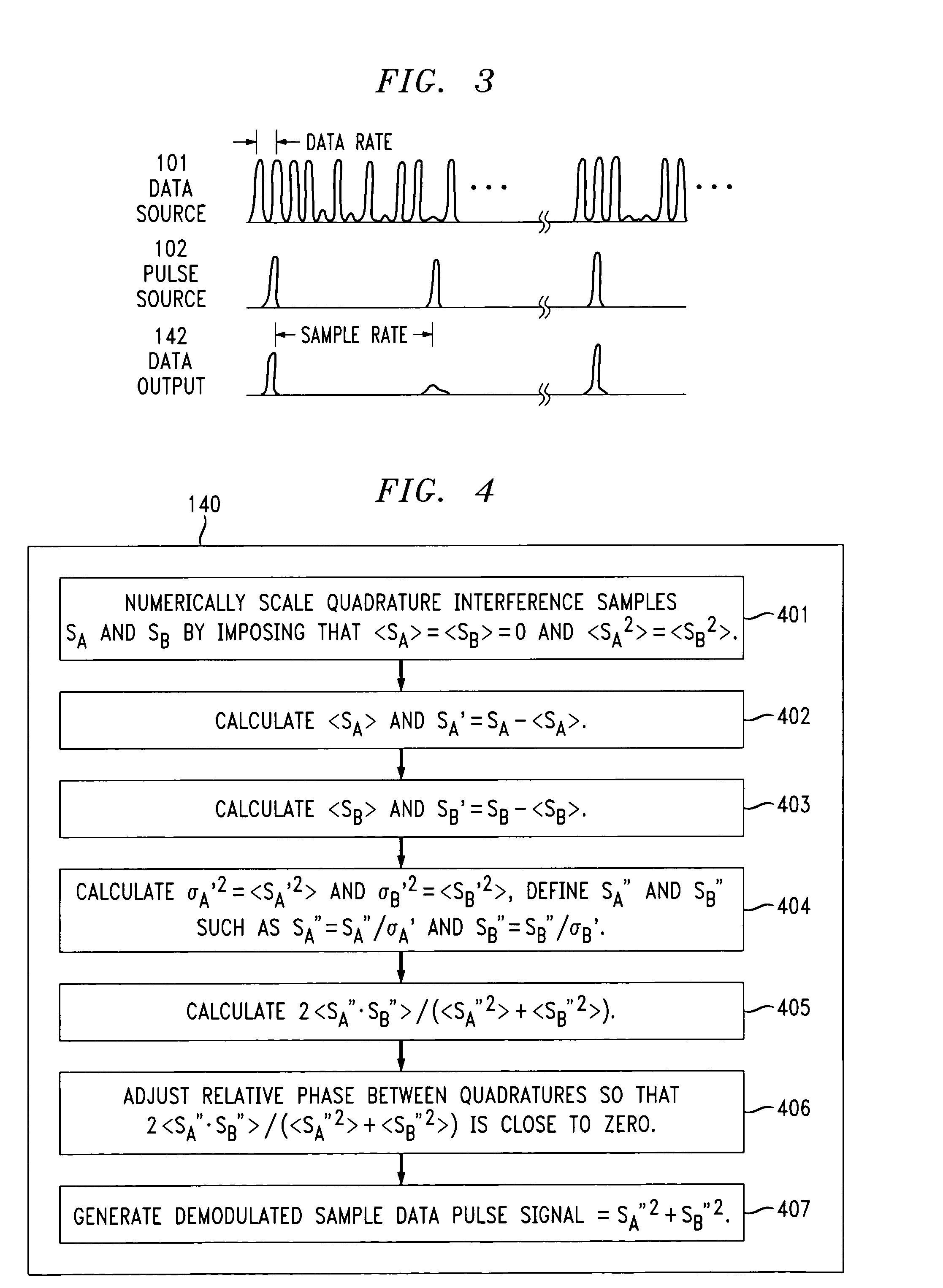
- A linear optical sampling apparatus utilizing a 90° optical hybrid and a processor that generates quadrature interference samples, compensates for signal handling imperfections, and adjusts phase to maximize sensitivity and temporal resolution, implemented using integrated silica waveguide technology.

Receiver monitoring in linear receiver optics
PatentPendingEP4661319A1
Innovation
- The implementation of linear receiver optics (LRO) with a re-timer eliminated at the receiver and maintained in the transmitter, incorporating continuous time linear equalization and signal equalization, along with advanced monitoring features like EECQ and re-timer capabilities, to improve performance and reduce power consumption.


Standardization Framework for Pluggable Optics
The standardization framework for pluggable optics in real-time data analysis applications represents a critical infrastructure requirement that ensures interoperability, performance consistency, and scalable deployment across diverse network environments. Current standardization efforts are primarily driven by industry consortiums including the Optical Internetworking Forum (OIF), Multi-Source Agreement (MSA) groups, and IEEE working groups, which collectively establish technical specifications for form factors, electrical interfaces, and optical performance parameters.
The foundation of pluggable optics standardization rests on well-established form factor specifications such as SFP, QSFP, and OSFP families, which define mechanical dimensions, thermal management requirements, and electrical pin configurations. These standards ensure physical compatibility across different vendor platforms while maintaining signal integrity for high-speed data transmission. For real-time analytics applications, additional considerations include latency specifications, jitter tolerance, and power consumption limits that directly impact processing capabilities.
Protocol standardization encompasses multiple layers, from physical layer specifications defining optical wavelengths and modulation formats to higher-layer protocols governing data encapsulation and timing synchronization. The IEEE 802.3 Ethernet standards provide the primary framework for data transmission, while specialized protocols like Precision Time Protocol (PTP) ensure temporal accuracy essential for real-time analysis applications.
Emerging standardization initiatives focus on advanced features including digital signal processing capabilities, telemetry interfaces, and programmable optical parameters. The Common Management Interface Specification (CMIS) defines standardized monitoring and control mechanisms, enabling dynamic optimization of optical performance based on real-time network conditions and analytical workload requirements.
Compliance frameworks establish testing methodologies and certification processes that validate interoperability between different vendor implementations. These frameworks address electrical compatibility, optical performance verification, and protocol conformance testing, ensuring reliable operation in production environments where real-time data processing demands consistent performance characteristics.
The evolution toward coherent pluggable optics introduces additional standardization challenges, particularly regarding digital signal processing algorithms, forward error correction schemes, and adaptive equalization techniques. Industry collaboration continues to develop comprehensive standards that balance innovation flexibility with interoperability requirements, supporting the deployment of advanced real-time analytics capabilities across heterogeneous optical network infrastructures.
The foundation of pluggable optics standardization rests on well-established form factor specifications such as SFP, QSFP, and OSFP families, which define mechanical dimensions, thermal management requirements, and electrical pin configurations. These standards ensure physical compatibility across different vendor platforms while maintaining signal integrity for high-speed data transmission. For real-time analytics applications, additional considerations include latency specifications, jitter tolerance, and power consumption limits that directly impact processing capabilities.
Protocol standardization encompasses multiple layers, from physical layer specifications defining optical wavelengths and modulation formats to higher-layer protocols governing data encapsulation and timing synchronization. The IEEE 802.3 Ethernet standards provide the primary framework for data transmission, while specialized protocols like Precision Time Protocol (PTP) ensure temporal accuracy essential for real-time analysis applications.
Emerging standardization initiatives focus on advanced features including digital signal processing capabilities, telemetry interfaces, and programmable optical parameters. The Common Management Interface Specification (CMIS) defines standardized monitoring and control mechanisms, enabling dynamic optimization of optical performance based on real-time network conditions and analytical workload requirements.
Compliance frameworks establish testing methodologies and certification processes that validate interoperability between different vendor implementations. These frameworks address electrical compatibility, optical performance verification, and protocol conformance testing, ensuring reliable operation in production environments where real-time data processing demands consistent performance characteristics.
The evolution toward coherent pluggable optics introduces additional standardization challenges, particularly regarding digital signal processing algorithms, forward error correction schemes, and adaptive equalization techniques. Industry collaboration continues to develop comprehensive standards that balance innovation flexibility with interoperability requirements, supporting the deployment of advanced real-time analytics capabilities across heterogeneous optical network infrastructures.
Power Efficiency Considerations in Real-time Optical Processing
Power efficiency represents a critical design parameter in real-time optical processing systems utilizing linear pluggable optics. The inherent advantage of optical processing lies in its ability to perform multiple operations simultaneously through wavelength division multiplexing and spatial parallelism, yet this capability must be balanced against power consumption constraints to ensure practical deployment viability.
Linear pluggable optical modules typically consume power across several domains: laser sources, photodetectors, electronic amplifiers, and thermal management systems. The power budget allocation becomes particularly challenging when processing high-bandwidth data streams in real-time, as increased processing throughput often correlates with higher optical power requirements and more sophisticated electronic control circuits.
Thermal management emerges as a significant power efficiency bottleneck in dense optical processing arrays. Linear optical components exhibit temperature-sensitive performance characteristics, necessitating active cooling systems that can consume substantial power. Advanced thermal design strategies, including micro-channel cooling and thermoelectric coolers, are being integrated to minimize this overhead while maintaining processing accuracy.
The modulation efficiency of electro-optic components directly impacts overall system power consumption. Silicon photonic modulators demonstrate improved power efficiency compared to traditional lithium niobate devices, achieving data encoding with reduced drive voltages. However, the trade-off between modulation speed and power efficiency requires careful optimization for specific real-time processing applications.
Power scaling considerations become critical when deploying multiple linear pluggable optical processors in parallel configurations. Dynamic power management techniques, including selective channel activation and adaptive processing depth control, enable systems to optimize power consumption based on real-time data processing demands while maintaining performance requirements.
Linear pluggable optical modules typically consume power across several domains: laser sources, photodetectors, electronic amplifiers, and thermal management systems. The power budget allocation becomes particularly challenging when processing high-bandwidth data streams in real-time, as increased processing throughput often correlates with higher optical power requirements and more sophisticated electronic control circuits.
Thermal management emerges as a significant power efficiency bottleneck in dense optical processing arrays. Linear optical components exhibit temperature-sensitive performance characteristics, necessitating active cooling systems that can consume substantial power. Advanced thermal design strategies, including micro-channel cooling and thermoelectric coolers, are being integrated to minimize this overhead while maintaining processing accuracy.
The modulation efficiency of electro-optic components directly impacts overall system power consumption. Silicon photonic modulators demonstrate improved power efficiency compared to traditional lithium niobate devices, achieving data encoding with reduced drive voltages. However, the trade-off between modulation speed and power efficiency requires careful optimization for specific real-time processing applications.
Power scaling considerations become critical when deploying multiple linear pluggable optical processors in parallel configurations. Dynamic power management techniques, including selective channel activation and adaptive processing depth control, enable systems to optimize power consumption based on real-time data processing demands while maintaining performance requirements.
Unlock deeper insights with PatSnap Eureka Quick Research — get a full tech report to explore trends and direct your research. Try now!
Generate Your Research Report Instantly with AI Agent
Supercharge your innovation with PatSnap Eureka AI Agent Platform!