

Real-Time Federated Learning for Sensor Networks
MAR 11, 202610 MIN READ
Generate Your Research Report Instantly with AI Agent
Patsnap Eureka helps you evaluate technical feasibility & market potential.
Federated Learning Background and Real-Time Objectives
Federated learning emerged as a revolutionary paradigm in machine learning during the mid-2010s, fundamentally addressing the growing concerns around data privacy and centralized processing limitations. Originally conceptualized by Google researchers in 2016, this distributed learning approach enables multiple participants to collaboratively train machine learning models without sharing raw data. The technology has evolved from simple averaging algorithms to sophisticated frameworks incorporating differential privacy, secure aggregation, and adaptive optimization techniques.
The evolution of federated learning has been driven by increasing regulatory pressures such as GDPR and CCPA, alongside growing awareness of data sovereignty issues. Early implementations focused primarily on mobile device applications, particularly keyboard prediction and recommendation systems. However, the paradigm has rapidly expanded to encompass healthcare, finance, autonomous vehicles, and critically, Internet of Things ecosystems where sensor networks play a pivotal role.
Traditional federated learning operates on periodic synchronization cycles, typically involving rounds of local training followed by global model aggregation. This batch-oriented approach, while effective for many applications, introduces inherent latency that proves inadequate for time-sensitive sensor network applications. The conventional framework assumes stable network conditions and tolerates communication delays measured in minutes or hours, which conflicts with the millisecond-level responsiveness required in many sensor-driven scenarios.
Real-time federated learning for sensor networks represents a paradigm shift toward continuous, streaming-based model updates that can accommodate the temporal constraints of critical monitoring and control systems. The primary objective centers on achieving sub-second model convergence while maintaining the privacy-preserving characteristics of traditional federated learning. This requires fundamental reimagining of aggregation protocols, communication strategies, and model architecture design.
The technical objectives encompass several critical dimensions. Latency minimization demands novel approaches to asynchronous model updates and partial aggregation techniques that can function effectively with incomplete participant sets. Bandwidth optimization becomes crucial given the resource constraints typical in sensor deployments, necessitating advanced compression algorithms and selective parameter sharing mechanisms.
Energy efficiency represents another paramount objective, as sensor networks often operate under severe power constraints. Real-time federated learning must minimize computational overhead while maximizing learning effectiveness, requiring careful balance between model complexity and processing requirements. Additionally, the framework must demonstrate robustness against network partitions, device failures, and varying data quality inherent in sensor environments.
The evolution of federated learning has been driven by increasing regulatory pressures such as GDPR and CCPA, alongside growing awareness of data sovereignty issues. Early implementations focused primarily on mobile device applications, particularly keyboard prediction and recommendation systems. However, the paradigm has rapidly expanded to encompass healthcare, finance, autonomous vehicles, and critically, Internet of Things ecosystems where sensor networks play a pivotal role.
Traditional federated learning operates on periodic synchronization cycles, typically involving rounds of local training followed by global model aggregation. This batch-oriented approach, while effective for many applications, introduces inherent latency that proves inadequate for time-sensitive sensor network applications. The conventional framework assumes stable network conditions and tolerates communication delays measured in minutes or hours, which conflicts with the millisecond-level responsiveness required in many sensor-driven scenarios.
Real-time federated learning for sensor networks represents a paradigm shift toward continuous, streaming-based model updates that can accommodate the temporal constraints of critical monitoring and control systems. The primary objective centers on achieving sub-second model convergence while maintaining the privacy-preserving characteristics of traditional federated learning. This requires fundamental reimagining of aggregation protocols, communication strategies, and model architecture design.
The technical objectives encompass several critical dimensions. Latency minimization demands novel approaches to asynchronous model updates and partial aggregation techniques that can function effectively with incomplete participant sets. Bandwidth optimization becomes crucial given the resource constraints typical in sensor deployments, necessitating advanced compression algorithms and selective parameter sharing mechanisms.
Energy efficiency represents another paramount objective, as sensor networks often operate under severe power constraints. Real-time federated learning must minimize computational overhead while maximizing learning effectiveness, requiring careful balance between model complexity and processing requirements. Additionally, the framework must demonstrate robustness against network partitions, device failures, and varying data quality inherent in sensor environments.
Market Demand for Distributed Sensor Network Intelligence
The global sensor network market is experiencing unprecedented growth driven by the proliferation of Internet of Things (IoT) applications across multiple industries. Traditional centralized data processing approaches are increasingly inadequate for handling the massive volumes of data generated by distributed sensor deployments, creating substantial demand for intelligent edge computing solutions that can process information locally while maintaining system-wide coordination.
Industrial automation represents one of the most significant demand drivers for distributed sensor network intelligence. Manufacturing facilities require real-time monitoring and predictive maintenance capabilities across thousands of sensors monitoring equipment health, environmental conditions, and production quality. The need for immediate response to anomalies and the prohibitive costs of transmitting all sensor data to centralized systems have created strong market pull for federated learning solutions that enable local intelligence while preserving operational insights.
Smart city initiatives worldwide are generating substantial demand for distributed intelligence in sensor networks. Urban infrastructure monitoring, traffic management, environmental sensing, and public safety systems require coordinated intelligence across geographically dispersed sensor arrays. Municipal governments and infrastructure operators seek solutions that can provide city-wide insights while maintaining data sovereignty and reducing bandwidth requirements for massive sensor deployments.
The healthcare and medical device sector presents growing opportunities for federated learning in sensor networks. Remote patient monitoring, hospital asset tracking, and medical equipment management require intelligent processing capabilities that can operate under strict privacy regulations while enabling collaborative learning across healthcare networks. The demand for personalized healthcare insights without compromising patient data privacy drives adoption of federated approaches.
Energy and utilities sectors demonstrate increasing demand for distributed sensor intelligence in smart grid applications, pipeline monitoring, and renewable energy management. These applications require real-time decision-making capabilities across vast geographical areas while maintaining system reliability and security. The critical nature of energy infrastructure creates strong demand for robust, distributed intelligence solutions.
Agricultural technology markets are embracing distributed sensor intelligence for precision farming applications. Large-scale agricultural operations require coordinated monitoring and control across multiple fields and environmental conditions, driving demand for federated learning solutions that can adapt to local conditions while leveraging collective agricultural knowledge.
The convergence of 5G networks, edge computing infrastructure, and advanced sensor technologies is creating favorable market conditions for federated learning adoption. Organizations across sectors recognize the strategic value of distributed intelligence capabilities that can reduce latency, improve privacy, and enable scalable sensor network deployments while maintaining centralized coordination and learning benefits.
Industrial automation represents one of the most significant demand drivers for distributed sensor network intelligence. Manufacturing facilities require real-time monitoring and predictive maintenance capabilities across thousands of sensors monitoring equipment health, environmental conditions, and production quality. The need for immediate response to anomalies and the prohibitive costs of transmitting all sensor data to centralized systems have created strong market pull for federated learning solutions that enable local intelligence while preserving operational insights.
Smart city initiatives worldwide are generating substantial demand for distributed intelligence in sensor networks. Urban infrastructure monitoring, traffic management, environmental sensing, and public safety systems require coordinated intelligence across geographically dispersed sensor arrays. Municipal governments and infrastructure operators seek solutions that can provide city-wide insights while maintaining data sovereignty and reducing bandwidth requirements for massive sensor deployments.
The healthcare and medical device sector presents growing opportunities for federated learning in sensor networks. Remote patient monitoring, hospital asset tracking, and medical equipment management require intelligent processing capabilities that can operate under strict privacy regulations while enabling collaborative learning across healthcare networks. The demand for personalized healthcare insights without compromising patient data privacy drives adoption of federated approaches.
Energy and utilities sectors demonstrate increasing demand for distributed sensor intelligence in smart grid applications, pipeline monitoring, and renewable energy management. These applications require real-time decision-making capabilities across vast geographical areas while maintaining system reliability and security. The critical nature of energy infrastructure creates strong demand for robust, distributed intelligence solutions.
Agricultural technology markets are embracing distributed sensor intelligence for precision farming applications. Large-scale agricultural operations require coordinated monitoring and control across multiple fields and environmental conditions, driving demand for federated learning solutions that can adapt to local conditions while leveraging collective agricultural knowledge.
The convergence of 5G networks, edge computing infrastructure, and advanced sensor technologies is creating favorable market conditions for federated learning adoption. Organizations across sectors recognize the strategic value of distributed intelligence capabilities that can reduce latency, improve privacy, and enable scalable sensor network deployments while maintaining centralized coordination and learning benefits.
Current State and Challenges of Real-Time FL in Sensor Networks
Real-time federated learning in sensor networks represents an emerging paradigm that combines distributed machine learning with edge computing capabilities. Current implementations primarily focus on wireless sensor networks, Internet of Things deployments, and industrial monitoring systems. The technology enables collaborative model training across distributed sensor nodes while maintaining data locality and privacy. However, existing solutions predominantly operate in semi-real-time or batch processing modes, with true real-time capabilities remaining limited to specific use cases such as environmental monitoring and predictive maintenance applications.
The computational constraints of sensor nodes present significant challenges for real-time federated learning deployment. Most sensor devices operate with limited processing power, memory capacity, and energy resources, restricting the complexity of machine learning models that can be executed locally. Current federated learning frameworks like FedAvg and FedProx require substantial computational overhead for model aggregation and communication, making them unsuitable for resource-constrained sensor environments. Additionally, the heterogeneity of sensor hardware across different manufacturers creates compatibility issues and complicates standardized implementation approaches.
Communication bottlenecks represent another critical challenge in real-time federated learning for sensor networks. Traditional federated learning relies on frequent model parameter exchanges between edge devices and central servers, creating substantial network traffic. In sensor networks with limited bandwidth and intermittent connectivity, this communication overhead becomes prohibitive for real-time operations. Network latency, packet loss, and varying connection quality further exacerbate these challenges, particularly in remote or mobile sensor deployments where reliable connectivity cannot be guaranteed.
Data heterogeneity and temporal synchronization issues significantly impact the effectiveness of real-time federated learning in sensor networks. Sensors often collect data with different sampling rates, measurement scales, and environmental conditions, leading to non-independent and identically distributed data patterns. This heterogeneity degrades model convergence and accuracy in federated learning scenarios. Furthermore, achieving temporal synchronization across distributed sensor nodes for real-time model updates remains technically challenging, especially when dealing with sensors operating in different time zones or experiencing varying network delays.
Security and privacy concerns pose additional obstacles to widespread adoption of real-time federated learning in sensor networks. While federated learning inherently provides privacy benefits by keeping raw data local, the frequent exchange of model parameters in real-time scenarios creates new attack vectors. Adversarial attacks, model poisoning, and inference attacks become more sophisticated when targeting real-time systems. Current security mechanisms often introduce additional computational and communication overhead, further constraining the already limited resources available in sensor network environments.
The computational constraints of sensor nodes present significant challenges for real-time federated learning deployment. Most sensor devices operate with limited processing power, memory capacity, and energy resources, restricting the complexity of machine learning models that can be executed locally. Current federated learning frameworks like FedAvg and FedProx require substantial computational overhead for model aggregation and communication, making them unsuitable for resource-constrained sensor environments. Additionally, the heterogeneity of sensor hardware across different manufacturers creates compatibility issues and complicates standardized implementation approaches.
Communication bottlenecks represent another critical challenge in real-time federated learning for sensor networks. Traditional federated learning relies on frequent model parameter exchanges between edge devices and central servers, creating substantial network traffic. In sensor networks with limited bandwidth and intermittent connectivity, this communication overhead becomes prohibitive for real-time operations. Network latency, packet loss, and varying connection quality further exacerbate these challenges, particularly in remote or mobile sensor deployments where reliable connectivity cannot be guaranteed.
Data heterogeneity and temporal synchronization issues significantly impact the effectiveness of real-time federated learning in sensor networks. Sensors often collect data with different sampling rates, measurement scales, and environmental conditions, leading to non-independent and identically distributed data patterns. This heterogeneity degrades model convergence and accuracy in federated learning scenarios. Furthermore, achieving temporal synchronization across distributed sensor nodes for real-time model updates remains technically challenging, especially when dealing with sensors operating in different time zones or experiencing varying network delays.
Security and privacy concerns pose additional obstacles to widespread adoption of real-time federated learning in sensor networks. While federated learning inherently provides privacy benefits by keeping raw data local, the frequent exchange of model parameters in real-time scenarios creates new attack vectors. Adversarial attacks, model poisoning, and inference attacks become more sophisticated when targeting real-time systems. Current security mechanisms often introduce additional computational and communication overhead, further constraining the already limited resources available in sensor network environments.
Existing Real-Time FL Solutions for Sensor Networks
01 Federated learning architecture for distributed real-time data processing
Systems and methods for implementing federated learning frameworks that enable distributed processing of real-time data across multiple nodes or devices. These architectures allow for collaborative model training while maintaining data privacy and reducing latency through decentralized computation. The frameworks support synchronous and asynchronous aggregation of model updates from participating clients in real-time scenarios.- Distributed model training architecture for federated learning: Systems and methods for implementing distributed model training architectures that enable multiple devices or nodes to collaboratively train machine learning models without centralizing raw data. The architecture typically involves a central server coordinating the training process while individual clients perform local computations on their private datasets. This approach allows for real-time model updates through iterative aggregation of locally computed gradients or model parameters, ensuring privacy preservation while maintaining model accuracy.
- Edge computing integration for low-latency federated learning: Techniques for integrating edge computing capabilities with federated learning frameworks to achieve real-time processing with minimal latency. By deploying computational resources closer to data sources, these methods enable faster local model training and reduce communication overhead between edge devices and central servers. The approach is particularly suitable for time-sensitive applications requiring immediate inference and continuous model improvement.
- Asynchronous aggregation mechanisms for real-time updates: Methods for implementing asynchronous aggregation strategies that allow federated learning systems to process and incorporate model updates in real-time without waiting for all participating clients to complete their local training. These mechanisms handle heterogeneous client capabilities and varying network conditions, enabling continuous model improvement while maintaining system responsiveness and reducing idle time in the training pipeline.
- Stream processing frameworks for continuous federated learning: Architectures that incorporate stream processing capabilities to handle continuous data flows in federated learning environments. These frameworks enable real-time model adaptation by processing incoming data streams from multiple sources simultaneously, allowing models to learn from fresh data as it arrives. The systems typically include mechanisms for handling concept drift and maintaining model relevance in dynamic environments.
- Resource optimization and scheduling for real-time federated learning: Techniques for optimizing computational resources and scheduling training tasks to ensure real-time performance in federated learning systems. These methods include intelligent client selection algorithms, adaptive communication protocols, and dynamic resource allocation strategies that balance training speed, model accuracy, and system efficiency. The optimization considers factors such as device capabilities, network bandwidth, and energy constraints to maintain consistent real-time processing capabilities.
02 Edge computing integration with federated learning for low-latency processing
Techniques for combining edge computing capabilities with federated learning to achieve real-time processing with minimal latency. These methods deploy federated learning models at edge devices or edge servers, enabling local data processing and model updates without requiring constant communication with central servers. This approach is particularly suitable for time-sensitive applications requiring immediate inference and adaptation.Expand Specific Solutions03 Communication optimization and bandwidth management in federated learning
Methods for optimizing communication protocols and managing bandwidth in federated learning systems to support real-time processing requirements. These techniques include compression algorithms for model updates, selective parameter transmission, and adaptive communication scheduling to reduce network overhead while maintaining model accuracy. The approaches enable efficient real-time collaboration among distributed participants.Expand Specific Solutions04 Real-time model aggregation and update mechanisms
Systems for performing rapid aggregation of model parameters and deploying updated models in real-time federated learning environments. These mechanisms employ efficient aggregation algorithms, weighted averaging techniques, and fast convergence methods to minimize the time between local training and global model updates. The solutions ensure that federated learning systems can respond quickly to changing data patterns and maintain model relevance.Expand Specific Solutions05 Privacy-preserving real-time federated learning with secure computation
Approaches for implementing privacy-preserving mechanisms in real-time federated learning systems through secure multi-party computation, differential privacy, and encryption techniques. These methods protect sensitive data during real-time model training and inference while maintaining computational efficiency. The solutions balance the trade-off between privacy guarantees, processing speed, and model performance in time-critical applications.Expand Specific Solutions
Key Players in FL and Sensor Network Industry
Real-time federated learning for sensor networks represents an emerging technology at the intersection of distributed machine learning and IoT infrastructure, currently in its early-to-growth stage with significant market potential driven by increasing sensor deployment across industries. The market is expanding rapidly as organizations seek privacy-preserving collaborative learning solutions. Technology maturity varies significantly among key players: established tech giants like IBM, NVIDIA, Google, and Huawei demonstrate advanced capabilities through comprehensive AI platforms and edge computing solutions, while telecommunications leaders including Ericsson and Qualcomm focus on network infrastructure optimization. Research institutions such as Beijing University of Posts & Telecommunications and Wuhan University contribute foundational algorithms, and specialized companies like Imagia Cybernetics develop domain-specific applications. The competitive landscape shows a convergence of cloud computing, edge AI, and telecommunications expertise, with most solutions still in prototype or pilot phases rather than full commercial deployment.
International Business Machines Corp.
Technical Solution: IBM has developed a comprehensive federated learning platform that enables real-time collaborative learning across distributed sensor networks without centralizing raw data. Their solution incorporates advanced aggregation algorithms that can handle heterogeneous sensor data streams while maintaining privacy through differential privacy mechanisms. The platform supports dynamic participant selection and adaptive communication protocols to optimize bandwidth usage in resource-constrained environments. IBM's approach includes robust fault tolerance mechanisms and secure multi-party computation techniques to ensure reliable operation even when some sensor nodes fail or become compromised.
Strengths: Strong enterprise-grade security, proven scalability, comprehensive privacy protection. Weaknesses: Higher computational overhead, complex deployment requirements, potentially higher costs for smaller networks.
Robert Bosch GmbH
Technical Solution: Bosch has developed a specialized federated learning framework tailored for industrial sensor networks and IoT applications with focus on manufacturing and automotive sectors. Their solution emphasizes energy efficiency and real-time performance for resource-constrained sensor devices. The platform incorporates domain-specific optimizations for industrial protocols and supports seamless integration with existing factory automation systems. Bosch's approach includes predictive maintenance algorithms and anomaly detection capabilities that can operate in federated manner across distributed sensor installations. Their solution features robust security mechanisms designed for industrial environments and supports both wired and wireless sensor network topologies.
Strengths: Deep industrial domain expertise, excellent energy efficiency, proven reliability in harsh environments. Weaknesses: Limited scope outside industrial applications, smaller AI research capabilities compared to tech giants, less flexible for general-purpose applications.
Core Innovations in Low-Latency Federated Learning
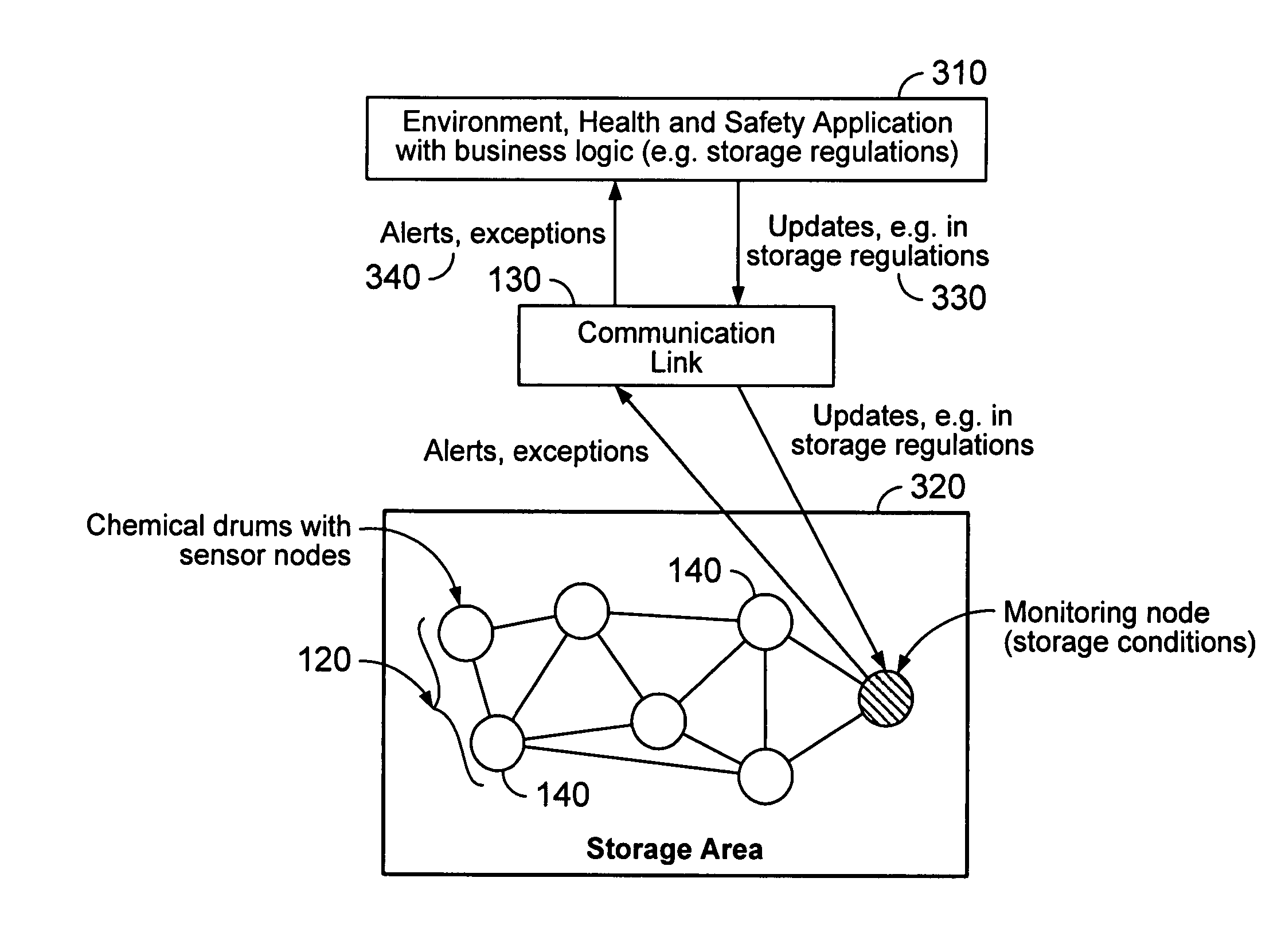
Real-time monitoring using sensor networks
PatentInactiveUS20060052882A1
Innovation
- Implementing a system where sensor networks receive and execute business logic, including rules and alerts, directly on sensor nodes with inter-node communication logic, allowing for localized processing and reduced communication with a backend system, with a monitoring node handling all communication between the sensor network and the business application.


Methods and apparatuses for configuring topology for articifical intelligence or machine learning
PatentWO2024036565A1
Innovation
- Introduces topology configuration methods for federated learning systems to address data heterogeneity and non-i.i.d distribution challenges in decentralized AI training.
- Provides apparatus-level solutions for optimizing federated learning network architecture to improve model convergence and training efficiency across heterogeneous edge devices.
- Addresses the fundamental challenge of maintaining model quality while preserving data privacy in distributed machine learning environments through innovative topology design.


Privacy Regulations Impact on Federated Sensor Data
The implementation of real-time federated learning in sensor networks faces unprecedented challenges from evolving privacy regulations worldwide. The General Data Protection Regulation (GDPR) in Europe, California Consumer Privacy Act (CCPA), and emerging data protection laws in Asia-Pacific regions have fundamentally altered how sensor data must be collected, processed, and shared across federated systems.
Privacy regulations impose strict requirements on data minimization, purpose limitation, and user consent that directly impact federated sensor architectures. Under GDPR Article 5, sensor networks must demonstrate that data processing serves specific, explicit purposes, while Article 25 mandates privacy-by-design principles that require built-in privacy protections rather than retrofitted solutions. These requirements necessitate fundamental changes in how federated learning algorithms access and utilize sensor data streams.
Cross-border data transfer restrictions present significant operational challenges for global sensor networks. GDPR's adequacy decisions and Standard Contractual Clauses create complex compliance frameworks that affect real-time data sharing between federated nodes in different jurisdictions. The Schrems II ruling has further complicated international data transfers, requiring additional safeguards that may introduce latency incompatible with real-time processing requirements.
Consent management mechanisms must be integrated into federated sensor systems to comply with regulatory requirements for lawful data processing. Dynamic consent frameworks are emerging as critical infrastructure components, enabling users to grant, modify, or withdraw permissions for specific data uses while maintaining system functionality. These mechanisms must operate seamlessly across distributed sensor nodes without compromising learning model performance.
Data retention and deletion requirements under privacy regulations create technical challenges for federated learning systems that rely on historical sensor data patterns. The "right to be forgotten" provisions require sophisticated data lineage tracking and selective deletion capabilities that can remove individual contributions from trained models without complete system retraining. This necessitates the development of machine unlearning techniques specifically adapted for sensor network environments.
Regulatory compliance monitoring and auditing requirements are driving the integration of privacy-preserving audit trails into federated sensor systems. These systems must demonstrate compliance through verifiable logs while protecting the privacy of underlying sensor data, creating a complex balance between transparency and confidentiality that influences system architecture decisions.
Privacy regulations impose strict requirements on data minimization, purpose limitation, and user consent that directly impact federated sensor architectures. Under GDPR Article 5, sensor networks must demonstrate that data processing serves specific, explicit purposes, while Article 25 mandates privacy-by-design principles that require built-in privacy protections rather than retrofitted solutions. These requirements necessitate fundamental changes in how federated learning algorithms access and utilize sensor data streams.
Cross-border data transfer restrictions present significant operational challenges for global sensor networks. GDPR's adequacy decisions and Standard Contractual Clauses create complex compliance frameworks that affect real-time data sharing between federated nodes in different jurisdictions. The Schrems II ruling has further complicated international data transfers, requiring additional safeguards that may introduce latency incompatible with real-time processing requirements.
Consent management mechanisms must be integrated into federated sensor systems to comply with regulatory requirements for lawful data processing. Dynamic consent frameworks are emerging as critical infrastructure components, enabling users to grant, modify, or withdraw permissions for specific data uses while maintaining system functionality. These mechanisms must operate seamlessly across distributed sensor nodes without compromising learning model performance.
Data retention and deletion requirements under privacy regulations create technical challenges for federated learning systems that rely on historical sensor data patterns. The "right to be forgotten" provisions require sophisticated data lineage tracking and selective deletion capabilities that can remove individual contributions from trained models without complete system retraining. This necessitates the development of machine unlearning techniques specifically adapted for sensor network environments.
Regulatory compliance monitoring and auditing requirements are driving the integration of privacy-preserving audit trails into federated sensor systems. These systems must demonstrate compliance through verifiable logs while protecting the privacy of underlying sensor data, creating a complex balance between transparency and confidentiality that influences system architecture decisions.
Energy Efficiency Considerations in Real-Time FL Systems
Energy efficiency represents a critical bottleneck in real-time federated learning systems for sensor networks, where resource-constrained devices must balance computational demands with power limitations. Traditional centralized machine learning approaches consume substantial energy through continuous data transmission, making them impractical for battery-powered sensor deployments. Real-time FL systems introduce additional complexity by requiring immediate processing and model updates, creating tension between performance requirements and energy conservation.
The computational overhead of local model training constitutes the primary energy drain in FL-enabled sensor networks. Edge devices must execute forward and backward propagation algorithms while maintaining real-time responsiveness, often leading to CPU-intensive operations that rapidly deplete battery reserves. Modern sensor nodes typically operate with power budgets measured in milliwatts, making energy-aware algorithm design essential for practical deployment.
Communication energy consumption presents another significant challenge, particularly during model aggregation phases. While FL reduces raw data transmission compared to centralized approaches, the exchange of model parameters and gradients still requires substantial radio activity. Wireless communication modules often consume 10-100 times more power than processing units, making transmission frequency and payload optimization crucial for system sustainability.
Dynamic resource allocation strategies have emerged as promising solutions for energy optimization. Adaptive sampling techniques allow sensors to adjust their participation rates based on battery levels and environmental conditions. Smart scheduling algorithms can distribute computational loads across network nodes, preventing individual devices from experiencing premature power depletion while maintaining overall system performance.
Hardware-software co-optimization approaches offer additional energy savings through specialized processing units and algorithm modifications. Low-power AI accelerators, neuromorphic chips, and approximate computing techniques can significantly reduce energy consumption during model inference and training phases. Quantization methods and pruning algorithms further minimize computational requirements without substantially compromising learning accuracy.
Energy harvesting integration represents a transformative approach for sustainable real-time FL systems. Solar panels, vibration harvesters, and thermal generators can supplement battery power, enabling longer operational lifespans. Predictive energy management systems can anticipate harvesting opportunities and adjust FL participation accordingly, creating self-sustaining sensor networks capable of continuous operation.
The computational overhead of local model training constitutes the primary energy drain in FL-enabled sensor networks. Edge devices must execute forward and backward propagation algorithms while maintaining real-time responsiveness, often leading to CPU-intensive operations that rapidly deplete battery reserves. Modern sensor nodes typically operate with power budgets measured in milliwatts, making energy-aware algorithm design essential for practical deployment.
Communication energy consumption presents another significant challenge, particularly during model aggregation phases. While FL reduces raw data transmission compared to centralized approaches, the exchange of model parameters and gradients still requires substantial radio activity. Wireless communication modules often consume 10-100 times more power than processing units, making transmission frequency and payload optimization crucial for system sustainability.
Dynamic resource allocation strategies have emerged as promising solutions for energy optimization. Adaptive sampling techniques allow sensors to adjust their participation rates based on battery levels and environmental conditions. Smart scheduling algorithms can distribute computational loads across network nodes, preventing individual devices from experiencing premature power depletion while maintaining overall system performance.
Hardware-software co-optimization approaches offer additional energy savings through specialized processing units and algorithm modifications. Low-power AI accelerators, neuromorphic chips, and approximate computing techniques can significantly reduce energy consumption during model inference and training phases. Quantization methods and pruning algorithms further minimize computational requirements without substantially compromising learning accuracy.
Energy harvesting integration represents a transformative approach for sustainable real-time FL systems. Solar panels, vibration harvesters, and thermal generators can supplement battery power, enabling longer operational lifespans. Predictive energy management systems can anticipate harvesting opportunities and adjust FL participation accordingly, creating self-sustaining sensor networks capable of continuous operation.
Unlock deeper insights with Patsnap Eureka Quick Research — get a full tech report to explore trends and direct your research. Try now!
Generate Your Research Report Instantly with AI Agent
Supercharge your innovation with Patsnap Eureka AI Agent Platform!